The Ultimate Crystal Guide: Everything Beginners Need to Know in 2026
May 14, 2026
The Ultimate Crystal Guide: Everything Beginners Need to Know in 2026
Walk into any crystal shop and you'll see hundreds of stones in every color imaginable, each with a handwritten label listing properties you've never heard of. It's overwhelming. I remember my first visit — I stood there for forty minutes and left with nothing because I couldn't figure out where to start.
This guide is the one I wish I'd had. It covers what crystals actually are, how to choose your first ones, how to tell real from fake, basic care, storage, and the practical stuff most guides skip. Think of it as a hub — each section links to deeper articles if you want to go further down the rabbit hole.
What Crystals Actually Are (And Aren't)
A crystal is a solid material whose atoms are arranged in a repeating, ordered pattern. That's it. It's a geological term, not a mystical one. Quartz, amethyst, citrine, rose quartz — they're all silicon dioxide (SiO₂) with different trace elements or radiation exposure that creates their colors.
Some crystals form in magma cooling over millions of years. Others precipitate from mineral-rich water in caves. A few, like moldavite, are created by meteorite impacts. The diversity comes from the incredible range of conditions inside the Earth.
What crystals are not is magical in the supernatural sense. They won't cure diseases or grant wishes. But they are genuinely fascinating natural objects with measurable physical properties — piezoelectricity (quartz), thermoluminescence (fluorite), photochromism (hackmanite), and dozens of others that make each mineral unique.
If you want to understand the science behind crystal durability, the Mohs hardness scale is the foundation — it tells you which stones will scratch which, and which ones need careful handling.
Choosing Your First Crystals
Don't overthink this. Starting a crystal collection is about finding stones that interest you, not completing a checklist. That said, there are practical considerations:
Budget-friendly starting stones (under $10 each):
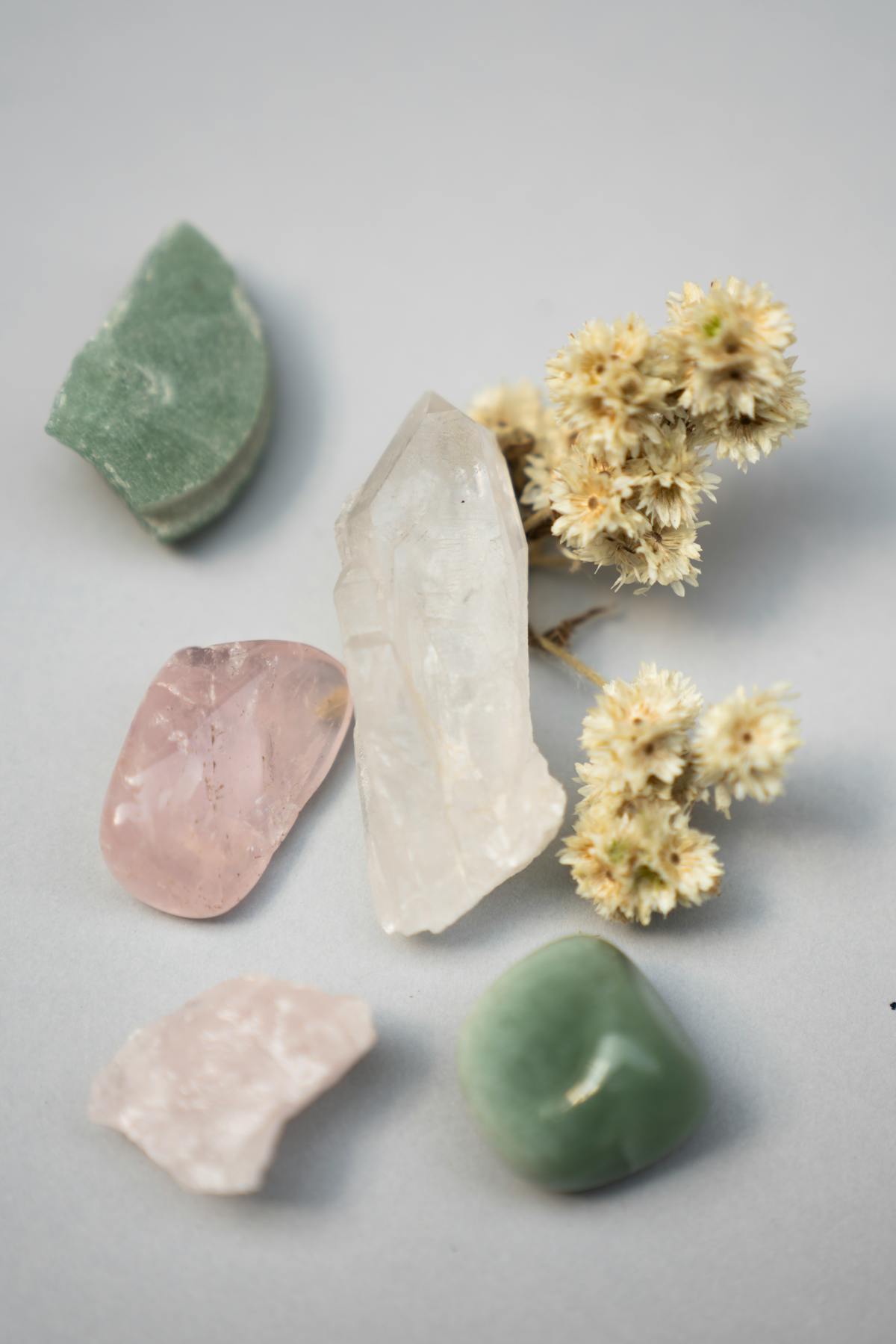
- Clear quartz — the most common mineral on Earth, cheap and beautiful
- Amethyst — purple quartz, widely available, Mohs 7 (durable)
- Rose quartz — pink quartz, gentle color, very affordable
- Tiger's eye — chatoyant golden-brown, looks expensive but isn't
- Black tourmaline — one of the most popular stones for grounding, widely available
Stones to avoid as a beginner:
- Selenite — beautiful but Mohs 2, scratches if you look at it wrong
- Malachite — toxic when wet or powdered, needs sealing
- Amber — not a mineral (fossilized tree resin), soft, melts under heat
- Anything described as "treated" or "enhanced" without specifics — learn to spot dyed stones early
How to Tell Real Crystals from Fake
The market is flooded with imitations. Glass dyed to look like lapis lazuli, plastic resin sold as amber, heat-treated amethyst relabeled as citrine. Here are quick tests:
- Temperature test: Real stones feel cold to the touch and take a moment to warm up. Glass and plastic warm up fast.
- Scratch test: Quartz (Mohs 7) will scratch glass. If your "quartz" can't scratch a glass bottle, it's probably glass itself.
- Bubble test: Air bubbles inside the stone that are perfectly round and uniformly distributed usually indicate glass or resin, not natural crystal.
- Color uniformity: Natural stones have color variation, zoning, and inclusions. Perfectly uniform color is suspicious, especially in stones like malachite or lapis that naturally have banding and patterns.
- Price check: Genuine moldavite for $5? It's glass. Real larimar for $2? Probably dyed howlite.
For a more thorough approach, our crystal authentication guide covers dye tests, UV fluorescence, and streak testing in detail.
Crystal Care and Cleansing
Despite what you'll read on most crystal blogs, "cleansing" a crystal means physically cleaning it — not removing negative energy. Different stones require different care:
Safe to rinse with water: Quartz varieties (amethyst, clear quartz, rose quartz, smoky quartz), garnet, topaz, tourmaline, ruby, sapphire
Never put in water:
- Selenite — dissolves
- Pyrite — rusts (iron disulfide + water = sulfuric acid + rust)
- Lepidolite — contains lithium, can degrade
- Halite — literally salt, dissolves rapidly
- Any stone containing copper (malachite, azurite, chrysocolla) — toxic runoff
We tested seven common cleansing methods and found that lukewarm water with mild soap is the most effective for water-safe stones. For water-sensitive stones, a soft brush or compressed air works best.
Storage: Don't Ruin What You've Collected
Bad storage destroys crystals faster than anything else. The three enemies are scratching, sunlight, and humidity.
- Scratching: Never store hard stones (quartz, Mohs 7) touching soft stones (selenite, Mohs 2). The hard one will scratch the soft one every time.
- Sunlight: Amethyst, rose quartz, citrine, kunzite, and aquamarine will fade under prolonged UV exposure. Keep them out of direct sun.
- Humidity: Pyrite and marcasite will rust in humid environments. Proper storage with silica gel packets prevents this.
Understanding Crystal Categories
There are thousands of mineral species, but most crystals you'll encounter fall into a few families:
Quartz Family (Most Common)
Includes clear quartz, amethyst, citrine, rose quartz, smoky quartz, milky quartz, and rutilated quartz. All are Mohs 7, chemically stable, and relatively inexpensive. If you're building a collection, start here. Our individual guides cover the most popular: rose quartz, labradorite, green aventurine, obsidian, sugilite, and tiger's eye.
Feldspar Family
Moonstone, labradorite, sunstone, and amazonite. Known for their optical effects — adularescence (moonstone's glow), labradorescence (labradorite's flash), and aventurescence (sunstone's sparkle). Mohs 6-6.5, moderately hard.
Beryl Family
Emerald, aquamarine, morganite, heliodor. Mohs 7.5-8. These tend to be more expensive, especially emerald. Tanzanite is a related precious stone worth knowing about.
Carbonate Minerals
Calcite, malachite, azurite, rhodochrosite. Softer (Mohs 3-4) and chemically reactive — they dissolve in acids, including vinegar and some household cleaners. Handle with care and never expose to chemicals.
Where to Buy Crystals
Local rock shops and gem shows: Best for seeing stones in person before buying. Gem shows and fairs offer the widest selection and you can often negotiate prices.
Online retailers: Convenient but risky. Buying gemstones online requires checking seller reviews, return policies, and being skeptical of photos that look too perfect.
Direct from mines: Some mines sell rough and tumbled stones directly. Crystal mining sites in the United States like the ones in Arkansas (quartz) and North Carolina (emeralds) sometimes offer mail-order programs.
Your own backyard: Seriously. Common minerals are hiding in plain sight — gravel driveways, stream beds, and garden soil all contain crystals if you know what to look for.
Crystals and Jewelry
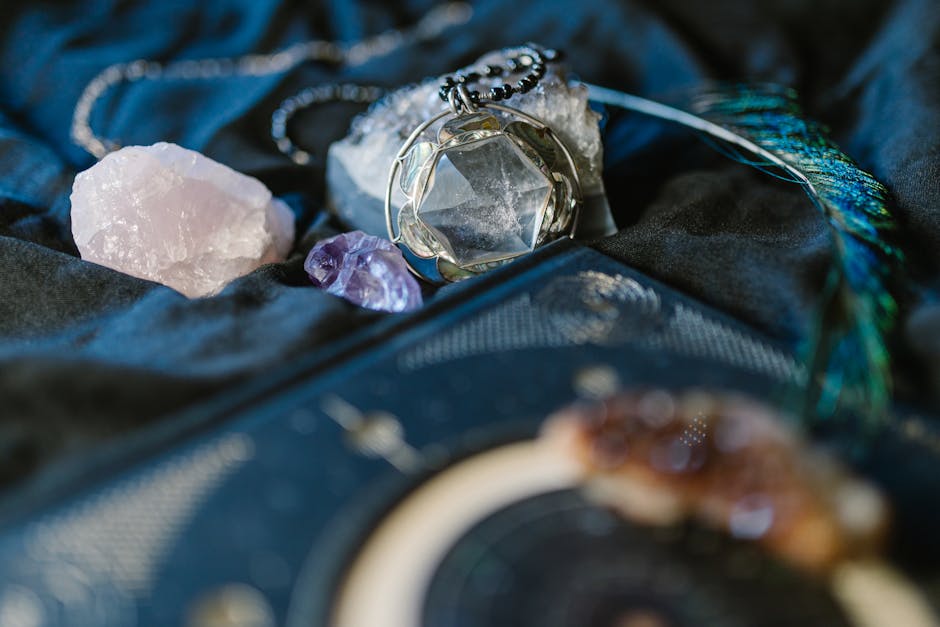
Many people's first crystal is actually a piece of jewelry — a pendant, ring, or beaded bracelet. This is a great entry point, but there are some practical considerations:
- Durability matters for daily wear: Rings take the most abuse. Stick with Mohs 7+ stones (quartz, topaz, sapphire) for rings. Save softer stones for pendants and earrings.
- Wire wrapping is beginner-friendly: Wire wrapping crystals requires minimal tools and no soldering — just wire, pliers, and patience.
- Metal choice affects the stone: Gold vs silver isn't just about aesthetics — silver tarnishes and needs regular polishing, while gold is more inert.
- Storage for crystal jewelry: Keep pieces separated. Tarnish prevention is especially important for silver-set crystal jewelry.
Crystal Activities Beyond Collecting
Crystals aren't just for looking at on a shelf. Some practical and creative things you can do:
- Rock tumbling: Turn rough stones into polished gems with a basic tumbler (about $60-80 for a starter kit)
- Glass etching and Dremel work: Use a Dremel tool to engrave and polish
- Photography: Crystal photography is a skill in itself — lighting, backgrounds, and macro techniques make a huge difference
- Crystal gridding: Arranging crystals in geometric patterns for meditation or decoration
- Rock polishing without a tumbler: Eight methods using household tools
- Crystal mining trips: Crater of Diamonds State Park in Arkansas lets you keep whatever you find — including real diamonds
Activities for Kids and Families
Crystals are a great way to get kids interested in science. Some ideas:
- Crystal bingo — learn mineral names while playing a game
- Crystal scavenger hunt — identify stones around the house or neighborhood
- Crystal gifts by age — age-appropriate stone recommendations for children
Common Myths Worth Knowing About
The crystal world has no shortage of misinformation. A few worth addressing:
- "Crystals have healing frequencies." No measurable evidence for this. Quartz oscillators in watches do vibrate at precise frequencies, but that requires an electrical circuit — not proximity to your body.
- "You must cleanse crystals under a full moon." Aesthetic choice, not a physical necessity. Your crystals will be fine without it.
- "Bigger crystals are more powerful." Physical properties don't change with size. A 1-carat sapphire is chemically identical to a 10-carat one.
- "Crystals absorb negative energy." There's no known mechanism for this. But the ritual of caring for something can be genuinely calming — that's psychology, not mineralogy.
What to Read Next
This guide covers the basics. If you want to go deeper on specific topics:
- Individual stone guides: We have deep dives on moonstone, jade, lapis lazuli, ruby, tourmaline, kyanite, kunzite, and many more
- Crystal care deep dive: Which crystals are safe for elixirs and water contact
- Shipwreck crystals: Which minerals survive centuries underwater — a fascinating look at crystal durability
- Selling crystals: A practical guide to selling crystals online
Collecting crystals is a hobby that scales — you can enjoy it with a $5 quartz point or a $5,000 gem-quality specimen. The entry point is low, the learning curve is gentle, and the community is welcoming. Pick up a stone that catches your eye, learn its name, and go from there.

Comments