Sugilite: the purple stone that costs more than you'd expect
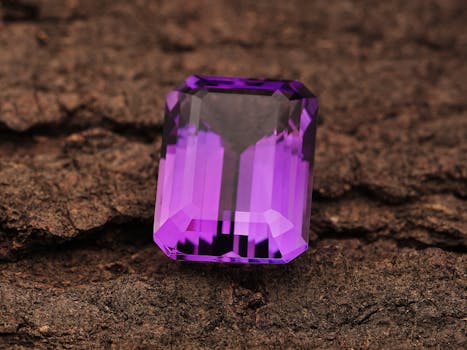
Purple gemstones are popular. Amethyst is cheap and everywhere. Kunzite is pretty but fades in sunlight. Charoite has a wild pattern but is obscure. And then there is sugilite, which most people have never heard of, and which can cost more per carat than stones that are household names. The reason comes down to a simple equation: one mine, now closed, with material that ranges from unremarkable to extraordinary, and no new supply on the horizon.
The discovery and the geology
A Japanese petrologist named Ken-ichi Sugi first identified the mineral in 1944, on Iwagi Island in the Ehime Prefecture of Japan. The material he found was tiny, translucent, brownish-yellow crystals — nothing like the purple gemstone that later made sugilite famous. In fact, the original sugilite was not gem-quality at all. It was a mineralogical curiosity, interesting to geologists but useless for jewelry.
The purple gem variety was discovered much later, in the 1970s, in the Kalahari Manganese Field of South Africa. Specifically, it came from the Wessels Mine, a manganese operation in the Northern Cape province. The conditions there — high manganese content, specific temperature and pressure conditions, the presence of potassium and lithium — created sugilite in colors that ranged from pale lilac to deep grape purple to an almost black-purple. The best material was a translucent, jelly-like purple that gem dealers started calling "gel sugilite," and it immediately attracted attention from collectors and lapidaries.
How the manganese field produced purple sugilite while Japan produced brownish-yellow sugilite comes down to trace element chemistry. The manganese-rich environment in South Africa introduced the right impurities to shift the color into the purple range. It is the same mineral, same crystal structure, but with different trace elements that completely change its appearance. Geology does that sometimes.
The Wessels Mine is closed, and that matters
The Wessels Mine was the primary source of gem-quality sugilite for decades. It was not a sugilite mine per se — it was a manganese mine that happened to produce sugilite as a byproduct. The sugilite occurred in specific layers and pockets within the manganese ore body, and miners would set aside particularly promising pieces for the gem market. This arrangement worked for a long time because manganese mining was the main economic activity and sugilite was a bonus.
The mine has since closed. The exact date is a bit fuzzy because mining operations in the Kalahari Manganese Field have been complex and intermittent, but the Wessels Mine effectively stopped producing significant sugilite years ago. Other mines in the same field — like N'Chwaning and Wessels' neighboring operations — have produced small amounts, but nothing approaching the volume or quality that came from the original Wessels find.
What this means in practical terms: the supply of new gem-quality sugilite entering the market is essentially a trickle. Most of the material currently available is from old stock — pieces that were mined years or decades ago and have been sitting in dealer inventories. As that stock gets bought up and set into jewelry or added to collections, the available pool shrinks. This is the fundamental driver of sugilite prices, and it is not going to change.
There have been small finds of sugilite in other locations — Italy, India, Canada, Australia — but none of them have produced gem-quality purple material in any meaningful quantity. The Japanese material is the wrong color. The Italian finds produced small crystals that were more mineralogical specimens than gem rough. For all practical purposes, if you want purple sugilite, it came from South Africa.
Understanding sugilite quality grades
Sugilite quality is not a simple good-better-best scale. The material spans an enormous range, and the price differences between grades can be staggering. At the bottom, you have opaque, low-grade sugilite that is a muddy purple-gray with lots of included material. This is the stuff that gets cut into cheap beads and carved into decorative objects. It is recognizably purple, but it lacks the depth and translucency that makes sugilite desirable. Prices for this grade are very low, typically $5 to $20 per carat for cut stones, and you can find strands of beads for surprisingly little money.
Mid-grade sugilite is where things get interesting. This material has better color — a more saturated purple with some translucency, especially at the edges — and fewer obvious inclusions. It is the grade most commonly used in cabochons and better-quality bead jewelry. Prices for mid-grade material typically run $20 to $80 per carat, depending on color intensity and translucency. A nice cabochon of mid-grade sugilite is a genuinely attractive gemstone that looks good in silver or gold settings.
Then there is gel sugilite, which is in a completely different category. Gel sugilite is translucent to semi-transparent, with a rich, uniform purple color and a smooth, jelly-like consistency. It is the rarest and most valuable form of the stone. When you hold a good piece of gel sugilite up to the light, it glows from within in a way that is hard to capture in photographs. The color is sometimes described as "grape jelly" or "Royal Purple," and those descriptions are not far off. Gel sugilite commands prices of $200 to $500 per carat, and exceptional pieces with the deepest color and highest translucency have sold for more. A small cabochon of gel sugilite — say 5 carats — could easily cost more than a diamond of the same weight.
What sugilite is actually used for
Despite the high prices for top material, sugilite is not a mainstream jewelry stone. It does not appear in mall jewelry stores or fashion catalogs. Its use is almost entirely in the lapidary, collector, and metaphysical markets. Bead jewelry is probably the single most common form — strands of sugilite beads in various grades, from the cheap opaque stuff to reasonably nice mid-grade material. The bead market absorbs a lot of the lower and mid-grade output because sugilite beads have a distinctive look that people like for casual and bohemian-style jewelry.
Cabochons are the next most common form, used in pendants, earrings, rings, and brooches. Sugilite cabochons can be quite beautiful, especially in the mid to upper grades where the purple color is rich and there is some translucency. The stone takes a good polish and has a slightly waxy luster that works well in bezel settings. Faceted sugilite is rare because the material is usually too included for clean faceting, though gel sugilite can occasionally be cut into faceted stones with decent results.
Carvings are another category. Larger pieces of lower-grade sugilite are sometimes carved into decorative objects — small sculptures, worry stones, animal figurines. This is a way to use material that is not gem-quality but still has attractive color. The carving tradition is more developed in Asian markets, where sugilite has been used in much the same way as jade or nephrite for ornamental objects.
The fake sugilite situation
As with any stone that commands high prices, fake sugilite is out there. The most common counterfeit is dyed quartz, which is abundant and cheap. Quartz can be dyed to a reasonably convincing purple color, and since much of the low to mid-grade sugilite on the market is opaque and included, the visual difference is not always obvious. Dyed quartz beads are probably the single most common form of fake sugilite, and they circulate widely in online marketplaces and at gem shows.
Purple glass is another common substitute, especially for cabochons and carved pieces. Glass is easy to color, easy to shape, and can be made to look quite similar to opaque sugilite at first glance. The giveaway is usually in the surface texture and the internal characteristics — glass has a different kind of luster, different bubble patterns, and no crystalline structure when viewed under magnification.
There are also composite stones made from small fragments of genuine sugilite mixed with resin or other binding agents, then reformed into cabochons or beads. These contain real sugilite, but they are not solid stone, and they should be disclosed as composites. Some sellers do disclose this; others do not.
Identifying fake sugilite requires some experience and ideally a loupe or microscope. Look for unnatural color concentration in cracks and surface areas, which indicates dye. Check for gas bubbles, which suggest glass rather than mineral. Examine the surface texture — real sugilite has a slightly different feel and luster than glass or dyed quartz. And if you are buying expensive material, especially gel sugilite, get a lab certification. It is worth the cost.
The cultural angle
In crystal healing and metaphysical communities, sugilite is strongly associated with emotional healing and spiritual protection. It is sometimes called "the stone of the New Age" or "the healer's stone," and practitioners attribute a range of properties to it — soothing emotional turmoil, enhancing meditation, protecting against negative energy. Many people find the stone meaningful in their personal practice, and there is a long tradition of assigning symbolic significance to colored stones that predates any modern marketing.
I will say this: whether or not you believe in the metaphysical properties, the stone's rarity and beauty give it an inherent significance that does not need any supernatural justification. A piece of gel sugilite is a genuinely remarkable geological object — a purple mineral that formed under specific conditions in a specific place, from a mine that no longer produces it. That is interesting regardless of what else you think about it.
Should you buy sugilite?
If you are a collector of unusual gemstones, sugilite is absolutely worth considering, particularly if you can find good mid-grade or gel material. The supply situation means that prices are likely to continue climbing as old inventory gets absorbed, so buying now is probably better than waiting. Focus on color and translucency over size — a small, well-colored piece is more valuable and more beautiful than a large, muddy one.
For everyday jewelry, stick with mid-grade material in protective settings. Pendants and earrings are safer choices than rings. If you are buying beads, be realistic about the grade — cheap sugilite beads are usually low-quality material, and they look it. For investment purposes, gel sugilite is the grade to target, but expect to pay significant prices and verify authenticity carefully. There is no substitute for buying from knowledgeable, reputable dealers who specialize in the stone.
Comments