Rose Quartz Benefits: The Complete Guide to the Stone of Unconditional Love
What Exactly Is Rose Quartz?
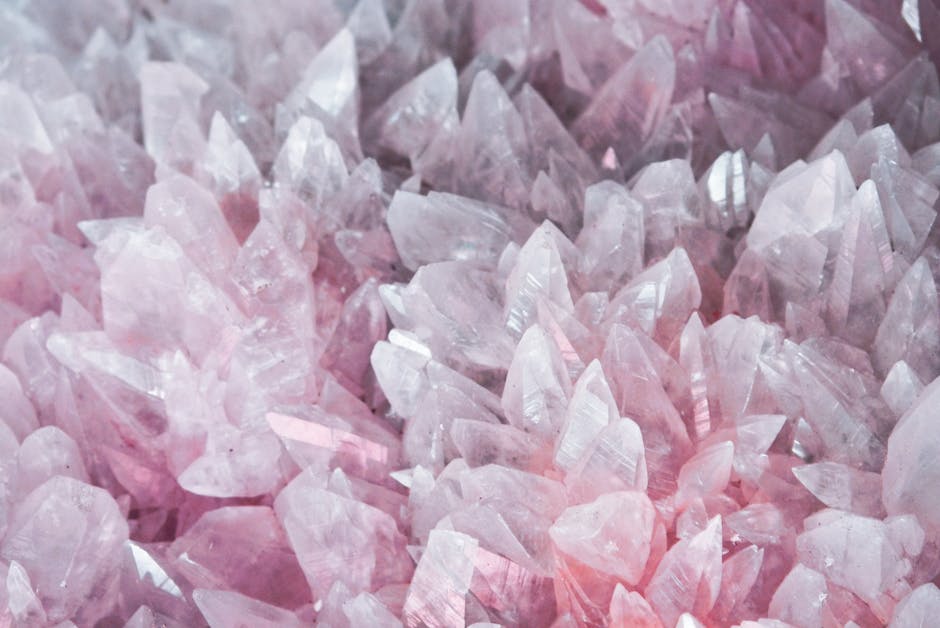
If you've ever walked into a crystal shop or scrolled through a wellness feed, you've seen it — that soft, translucent pink stone that seems to glow from the inside. That's rose quartz, and it happens to be one of the most sought-after crystals on the planet. But what actually makes it pink?
Rose quartz is a variety of quartz, which means its base composition is silicon dioxide (SiO₂) — the same mineral that makes up regular clear quartz, amethyst, and citrine. The pink color comes from trace amounts of titanium, iron, or manganese that got mixed in during the crystal's formation deep underground over millions of years. Some specimens even contain microscopic dumortierite inclusions, which contribute to a deeper, more saturated pink.
On the Mohs hardness scale, rose quartz sits at a solid 7. That puts it right alongside amethyst and standard quartz — hard enough to resist everyday scratches but soft enough to be cut and polished into beads, cabochons, and carved figures. It's found in significant deposits in Brazil, Madagascar, India, South Africa, and the United States (particularly South Dakota), with Brazilian material often considered the finest for jewelry due to its consistent color and clarity.
Unlike some crystals that form in distinct geometric points, rose quartz typically grows in massive, blocky formations rather than individual terminated crystals. This is why you'll see it most often shaped into tumbled stones, spheres, hearts, and beads rather than natural crystal points. The rare star rose quartz — which displays a six-rayed asterism when cut en cabochon — is a collector's prize and comes primarily from Madagascar.
A Stone With a Long History
Rose quartz didn't just become popular yesterday. People have been drawn to this pink stone for thousands of years, and the stories attached to it span multiple continents and civilizations.
Ancient Greece and Rome
The Greeks and Romans associated rose quartz with Aphrodite (Venus to the Romans), the goddess of love and beauty. According to one version of the myth, Aphrodite's blood stained white quartz pink when she tried to save her dying lover Adonis from a wild boar attack. Another version says Cupid himself gave rose quartz to humans as a gift of love, reconciliation, and peace. Roman women carried rose quartz talismans and used rose quartz face rollers in their beauty routines — a practice that's ironically experiencing a massive resurgence right now.
Ancient Egypt
Cleopatra's legendary beauty regime reportedly included rose quartz. The Egyptians believed the stone could prevent wrinkles and maintain a youthful complexion. Facial masks and massage tools made from rose quartz have been found in Egyptian burial sites, suggesting that the association between this crystal and skincare goes back at least three millennia. Egyptian healers also placed rose quartz on the chests of the deceased, believing it would help the heart transition into the afterlife.
East Asian Traditions
In Chinese culture, rose quartz has been used in feng shui for centuries. Practitioners place it in the southwest corner of a home or bedroom — the area traditionally associated with love and marriage — to attract romantic energy and strengthen existing relationships. In Japanese folklore, rose quartz was sometimes called "the stone of gentle love" and was given as a token between partners to symbolize devotion and tenderness. Both cultures have historically valued the stone's association with harmony, emotional balance, and the heart.
Emotional Healing: What Rose Quartz Is Known For
Let's get the obvious out of the way: no crystal is going to solve your problems overnight, and rose quartz is not a substitute for therapy, medication, or professional support. What it can do is serve as a meaningful focal point for emotional work — a physical reminder of intentions you're setting for yourself.
Many people who work with rose quartz describe it as a "comfort stone." The practice of holding a smooth piece of rose quartz during moments of anxiety, grief, or self-doubt isn't about magical properties — it's about mindfulness, grounding, and creating a small ritual that helps regulate your nervous system. The cool, weighty texture of the stone in your hand gives you something tangible to focus on when your thoughts start spinning.
Working Through Heartbreak
Rose quartz has a long-standing reputation as a stone for mending emotional wounds. The idea isn't that the crystal absorbs your pain — it's that incorporating it into a grieving or healing practice gives structure to the process. Some people journal while holding rose quartz, meditate with it placed over their heart, or keep it on their nightstand as a reminder to practice self-compassion during difficult periods. These are all mindfulness techniques dressed in a physical object, and there's genuine value in that.
Building Self-Love
Perhaps the most commonly cited use of rose quartz is for cultivating self-love and self-worth. Practitioners suggest placing rose quartz near a mirror, carrying it in a pocket, or wearing it as jewelry as a daily reminder to treat yourself with kindness. Again, the stone itself isn't doing the work — you are. But having a consistent physical anchor for an intention can make it easier to stick with.
Improving Relationships
In many crystal traditions, rose quartz is recommended for fostering empathy, patience, and open communication in relationships. Couples sometimes keep a piece of rose quartz in a shared space or exchange rose quartz gifts as a symbol of their commitment. Whether this has any effect beyond the psychological impact of shared rituals and symbols is debatable, but the intention behind it — prioritizing kindness and understanding — is unambiguously positive.
Traditional Physical Healing Associations
Before diving in, it's important to note that these associations come from folk traditions and alternative healing systems, not from clinical research. Rose quartz should never replace medical treatment for any condition.
Skin Health
This is where rose quartz has the most crossover with mainstream wellness. Rose quartz facial rollers and gua sha tools have become mainstream skincare products, and while the crystal itself isn't doing anything chemically to your skin, the massage action can improve blood circulation, reduce facial tension, and help with lymphatic drainage. The coolness of the stone feels pleasant and can temporarily reduce puffiness. Many dermatologists acknowledge these benefits while noting that any smooth, cool tool would produce similar results.
Heart and Circulation
In traditional crystal healing, rose quartz is associated with the heart — both literally and metaphorically. Practitioners have historically placed the stone on the chest during healing sessions, believing it supports cardiovascular health and emotional balance. Some traditions link rose quartz to improved circulation and blood flow, though there's no scientific evidence to support this specific claim.
Fertility and Reproductive Health
Certain healing traditions associate rose quartz with the reproductive system, particularly for women. Some practitioners recommend placing rose quartz over the lower abdomen or wearing it near the pelvis to support fertility and ease menstrual discomfort. These associations likely stem from the stone's broader connection to love, nurturing, and the heart center rather than any documented physiological effect.
How to Use Rose Quartz in Meditation
If you're interested in incorporating rose quartz into a meditation practice, there are several approaches that people find meaningful.
Heart Chakra Meditation
The heart chakra (anahata in Sanskrit) sits at the center of the chest and is traditionally associated with love, compassion, and emotional balance. To use rose quartz in heart chakra meditation, lie down or sit comfortably and place the stone directly over your sternum. Close your eyes and focus your attention on the area where the stone touches your body. Breathe slowly and deeply, visualizing a soft pink light expanding from your chest with each inhale. There's no right or wrong way to do this — the goal is simply to create a quiet space for self-reflection.
Crystal Grids
A crystal grid is an arrangement of stones laid out in a specific geometric pattern, often around a central "focus stone." For a love and compassion grid, rose quartz typically serves as the center piece, surrounded by complementary stones like clear quartz (amplification), amethyst (spiritual awareness), or green aventurine (growth and opportunity). The arrangement is deeply personal — some people follow traditional sacred geometry patterns, while others arrange stones intuitively. The act of creating the grid can itself be a meditative practice.
Pairing With Other Chakras
Rose quartz isn't limited to the heart chakra. Some practitioners place it at the third eye during meditation to encourage self-awareness and emotional clarity, or at the crown to foster a sense of universal compassion. Pairing rose quartz with root chakra stones (like black tourmaline or hematite) is sometimes recommended for grounding emotional work, while combining it with throat chakra stones (like blue lace agate) can support honest, compassionate communication.
Wearing Rose Quartz: Jewelry Guide
One of the reasons rose quartz is so popular is that it makes genuinely beautiful jewelry. Its soft pink color works with virtually any skin tone and wardrobe, and at Mohs 7, it's durable enough for daily wear. Here's what different placements traditionally represent.
Bracelets
Rose quartz bracelets are probably the most common way people wear the stone, and for good reason — a bracelet keeps the stone in constant contact with your skin on the pulse point of your wrist. In crystal traditions, the left wrist is considered the "receiving" side, so wearing rose quartz on your left hand is said to help you receive love, compassion, and emotional healing. The right hand is the "giving" side, associated with sending those qualities outward. If you're new to crystal bracelets, rose quartz is an excellent starting point.
Necklaces and Pendants
A rose quartz pendant worn close to the heart is one of the most traditional ways to use the stone. The idea is straightforward — keeping the crystal near your chest keeps its associated qualities (love, compassion, emotional balance) close to your heart center. Pendants are also a subtle way to wear crystals in professional or formal settings where stacked bracelets might feel out of place.
Rings
Rose quartz rings are less common than bracelets or necklaces, mainly because rings take more direct impact during daily activities and the stone can chip if struck against hard surfaces. However, a rose quartz ring on the ring finger of your left hand has romantic symbolism in many cultures (it's the finger traditionally associated with matters of the heart). If you choose a ring, consider a protective setting like a bezel or halo to help shield the stone.
For those who think crystal jewelry is only for women — crystal bracelets for men are more common than you might think, and rose quartz is increasingly popular among men who appreciate its grounding, calming qualities without the flashier appearance of some other stones.
Rose Quartz vs Other Pink Stones
The pink crystal world is crowded, and it's easy to confuse rose quartz with similar-looking stones. Here's how it compares to the most common alternatives.
Rose Quartz vs Rhodonite
Rhodonite is typically darker and more opaque than rose quartz, often displaying black manganese oxide veining throughout the pink matrix. While rose quartz is associated with unconditional love and emotional healing, rhodonite is traditionally linked to emotional balance and recovery from trauma. Rhodonite is also slightly softer (5.5-6.5 on the Mohs scale), making it less suitable for everyday jewelry that takes a lot of wear.
Rose Quartz vs Rhodochrosite
Rhodochrosite has a distinctive banded appearance with alternating layers of pink, white, and sometimes brown. It's softer than rose quartz (3.5-4 on the Mohs scale), which means it scratches easily and isn't ideal for rings or bracelets. Rhodochrosite is traditionally associated with self-love and emotional processing, similar to rose quartz, but its softer nature and more dramatic banding pattern make it easier to distinguish visually.
Rose Quartz vs Pink Tourmaline
Pink tourmaline comes in a much wider range of pink shades — from pale blush to vivid hot pink — and often has better clarity than rose quartz. It's also harder (7-7.5 on the Mohs scale), making it slightly more durable for jewelry. However, pink tourmaline is significantly more expensive, especially in saturated colors. While amethyst might be quartz's most famous colored variety, rose quartz holds its own in terms of cultural significance and accessibility.
Rose Quartz vs Morganite
Morganite is a beryl (the same mineral family as emerald and aquamarine), which immediately sets it apart from rose quartz on a mineralogical level. Morganite tends to have a more peachy or salmon-pink tone compared to rose quartz's cooler, purplish pink. It's also harder (7.5-8 on the Mohs scale) and typically more expensive. Morganite has become a popular alternative to diamonds in engagement rings, while rose quartz is more commonly worn in casual, everyday jewelry.
How to Spot Fake Rose Quartz
The market is flooded with fake and misrepresented crystals, and rose quartz is one of the most commonly counterfeited stones. Understanding the difference between natural and synthetic materials is essential if you want to get what you're paying for.
Natural vs Dyed Quartz
Some sellers take pale or colorless quartz and dye it pink to pass it off as rose quartz. The biggest giveaway is color uniformity — natural rose quartz usually has slight variations, inclusions, and a "cloudy" translucency, while dyed quartz often looks unnaturally even in color. Check for concentrated color in cracks and crevices, which is a classic sign of dye. If you rub the stone with a cotton ball dipped in nail polish remover (acetone) and pink color comes off, it's dyed. Genuine rose quartz is colorfast.
Glass Imitations
Some fakes aren't even quartz — they're molded glass dyed pink. Glass feels different in your hand: it's typically colder, heavier for its size, and lacks the subtle internal characteristics of natural quartz. Under magnification, glass often shows tiny bubbles, swirl patterns from the manufacturing process, and a perfectly uniform color that natural stones rarely achieve. Glass is also more brittle and will chip or scratch more easily than genuine quartz.
Temperature and Hardness Tests
Genuine quartz warms up slowly in your hand, while glass reaches your body temperature much faster. You can also test hardness — genuine rose quartz (Mohs 7) will scratch glass, while a glass imitation won't scratch genuine quartz. Be careful with this test, as it can damage your stone or the testing surface.
Caring for Your Rose Quartz
Proper care keeps your rose quartz looking beautiful for years. Here are the essentials.
Cleaning
Warm water with mild soap is all you need. Use a soft cloth or a very soft toothbrush to gently remove dirt from crevices. Avoid ultrasonic cleaners, as they can cause internal fractures in included stones. Steam cleaning is also not recommended. After cleaning, pat dry with a soft cloth and let it air dry completely before storing.
Storing
Store rose quartz separately from harder stones (like diamonds, sapphires, and topaz) to prevent scratching, and separately from softer stones that rose quartz might scratch in turn. A soft pouch or a lined jewelry box compartment works well. Keep the stone out of direct sunlight for extended periods — prolonged UV exposure can cause the pink color to fade over time, though this is a slow process and requires significant exposure.
Charging and Clearing (Traditional Practice)
If you follow crystal traditions that involve charging and clearing your stones, rose quartz is said to respond well to moonlight (particularly during a full moon), burying in the earth, or placing it on a bed of sea salt. Smudging with sage or palo santo is another common practice. Again, these are cultural traditions rather than scientifically verified processes, but many people find the rituals themselves meaningful and calming.
Frequently Asked Questions
Can rose quartz go in water?
Yes, rose quartz is safe to rinse in water. It's non-porous and won't dissolve. However, avoid leaving it submerged for extended periods, especially in salt water or hot water, as this can potentially damage the surface over time. A quick rinse with lukewarm water and mild soap is the safest approach.
Why does my rose quartz have white streaks or cloudy patches?
That's completely normal. Natural rose quartz almost always contains internal inclusions, micro-fractures, and color variations. The cloudy, milky quality is actually one of the things that distinguishes genuine rose quartz from glass or dyed imitations. A perfectly clear, uniformly pink stone is more suspicious than one with natural variations.
Can I sleep with rose quartz under my pillow?
Many people do, and some find it calming. There's no harm in it — rose quartz isn't toxic, and at Mohs 7, it won't shed particles that could be dangerous. That said, if you're a restless sleeper, a hard stone under your pillow might be uncomfortable. A better option might be placing it on your nightstand within view.
Does rose quartz actually fade in sunlight?
It can, but very slowly. The trace minerals that give rose quartz its pink color (primarily titanium and iron) are generally stable, but prolonged, direct UV exposure over months or years can gradually lighten the color. This doesn't happen from normal daily wear, but leaving a stone on a sunny windowsill for weeks will eventually make a noticeable difference. Store your rose quartz away from direct sunlight when you're not wearing it.
Is rose quartz expensive?
Generally, no. Rose quartz is one of the more affordable gemstones. Small tumbled stones and basic beaded bracelets can be found for under $10. Larger, high-quality specimens, star rose quartz, and well-cut faceted pieces command higher prices, but compared to most colored gemstones, rose quartz remains very accessible. The price jumps significantly when the stone is set in fine jewelry (gold, sterling silver) or when it's an exceptionally large or clear specimen.
Final Thoughts
Rose quartz earned its popularity for a reason. It's beautiful, affordable, durable enough for everyday wear, and carries a rich tapestry of cultural associations spanning thousands of years. Whether you're drawn to it for its appearance, its symbolism, or simply because it feels good to hold, there's no wrong reason to appreciate this stone.
The most meaningful relationship you can have with any crystal is one based on genuine personal connection rather than marketing claims or Instagram aesthetics. If rose quartz resonates with you, trust that. And if it doesn't — that's perfectly fine too. The crystal world is vast, and there's something out there for everyone.
This article was created with the assistance of AI writing tools. While the information has been researched and reviewed for accuracy, we believe in transparency about how our content is produced. We encourage readers to verify health-related claims with qualified professionals and to make crystal choices based on personal preference and reputable sources.

Comments