12 Tourmaline Colors Explained: What Makes Each One Unique
Why Tourmaline Deserves More Attention Than It Gets
When most people think of colorful gemstones, they think of sapphire, ruby, and emerald — the "big three" that have dominated the colored stone market for centuries. Tourmaline, in my opinion, deserves to be in that conversation, and the reason comes down to one remarkable fact: no other gemstone species spans such an extraordinary range of colors.
Tourmaline is actually a group of related minerals (a "solid solution series" in geological terms) with the general chemical formula X₃Y₃(Al,Si)₆O₁₈(BO₃)₃(OH,F)₄. The incredible color diversity comes from trace elements substituting into this flexible crystal structure — iron produces green and blue, manganese produces pink and red, copper produces the vivid blue-green of Paraíba tourmaline, and various combinations produce the stunning bi-color and tri-color specimens that make collectors swoon.
The name "tourmaline" comes from the Sinhalese word "turmali," meaning "mixed colors," which was applied to various gemstones by Sri Lankan gem traders. Dutch merchants brought the term to Europe in the early 1700s. Sri Lanka has been producing tourmaline for over 2,500 years, and the country remains an important source today, though Brazil has overtaken it as the world's leading producer by volume.
What follows is a walkthrough of 12 distinct tourmaline colors. Some are common and affordable. Others are among the rarest and most valuable gemstones on Earth. Each has its own character, its own story, and its own reasons for being worth your attention.
1. Black Tourmaline (Schorl)
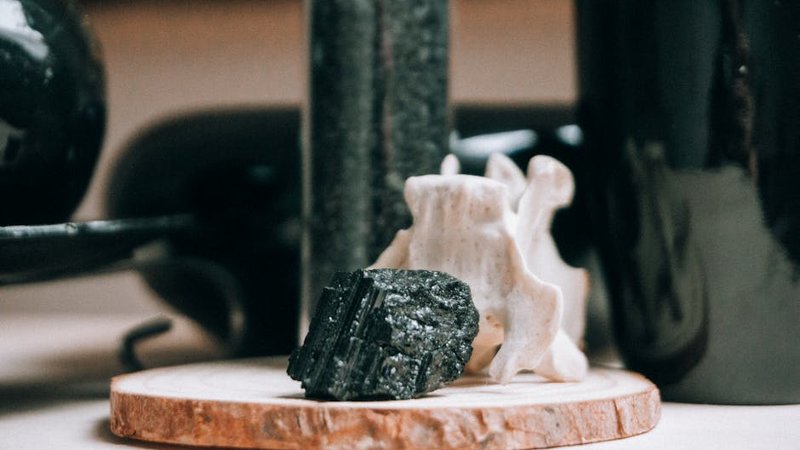
Black tourmaline, known mineralogically as schorl, accounts for roughly 95% of all tourmaline found in nature. It's the most common variety by an enormous margin, and it's found on every continent. Despite its abundance, schorl has a quiet dignity that I think is often overlooked in the rush toward more colorful specimens.
What makes schorl distinctive is its iron content — specifically, the iron ions (Fe²⁺) that give it that deep, opaque black color. Some schorl specimens from Alpine-type deposits in Switzerland and Italy display striking parallel crystal groupings, with dozens of needle-like crystals growing side by side. These "schorl fans" are prized by mineral collectors and can be genuinely breathtaking, even though the material itself is common.
From a practical standpoint, black tourmaline is one of the most durable tourmaline varieties. At Mohs 7–7.5, it's hard enough for daily wear in jewelry, and its opacity means that inclusions — which plague so many colored stones — are simply invisible. Prices are extremely low: $2–8 for tumbled stones, $10–30 for larger raw crystals. Brazil's Minas Gerais state produces enormous quantities of high-quality schorl, as does Madagascar and the US state of Maine.
Culturally, black tourmaline has become the most popular "protection" stone in contemporary crystal culture. This is a relatively recent association — historical texts don't particularly emphasize schorl's protective qualities — but it has taken hold with remarkable tenacity. Whether or not you subscribe to these beliefs, the stone's deep black color and substantial weight give it an undeniable psychological gravitas.
2. Pink and Red Tourmaline (Rubellite)
Pink and red tourmaline — the vivid varieties of which are called "rubellite" — gets its color from manganese. The distinction between pink and red is subjective and exists on a continuum, but rubellite specifically refers to the deeper, more saturated red tones that can approach the color of fine ruby.
The finest rubellite historically came from the San Diego County mines in California, particularly the Tourmaline Queen mine in Pala, which produced some of the most vivid red tourmaline ever found. These California specimens, mined primarily in the early 1900s, are now considered among the most valuable tourmaline in existence. The Chinese Empress Dowager Cixi (1835–1908) was reportedly so fond of pink tourmaline from California that she had tons of it imported for her personal collection and for carving.
Today, Brazil's Minas Gerais and Nigeria are the primary sources of pink and red tourmaline. Nigerian material, which began appearing on the market in significant quantities in the late 1990s, often displays exceptional color saturation and clarity. Prices for fine rubellite range from $200–2,000+ per carat for gem-quality material, with the most vivid, inclusion-free stones commanding the highest prices.
What I find particularly appealing about pink tourmaline is how it photographs. Something about the way manganese-colored tourmaline interacts with light creates a luminous quality that translates well to images — it always looks a bit more vibrant in person than in photos, which is the opposite of what happens with many colored stones.
3. Green Tourmaline (Verdelite)
Green tourmaline, or verdelite, is colored by iron and sometimes vanadium. The color range is enormous — from pale, almost yellowish-green to deep forest green to the vivid bluish-green of fine emerald. This range reflects the complexity of the trace element chemistry: iron in different oxidation states and concentrations, combined with varying amounts of manganese and titanium, produce the full spectrum of greens.
Brazil is the dominant producer, with the state of Minas Gerais yielding everything from commercial-grade green tourmaline to museum-quality specimens. The "chrome tourmaline" from Tanzania — colored by chromium and vanadium, the same elements that color fine emeralds — is a particularly prized sub-variety with a vivid, slightly bluish green that's unmistakable. Chrome tourmaline is rare and expensive ($500–3,000+ per carat for fine stones), and most pieces on the market are small (under 2 carats).
What distinguishes green tourmaline from emerald, in my experience, is its superior durability and typically greater clarity. Emerald is notoriously fragile and almost always heavily included. Green tourmaline, at Mohs 7–7.5, is significantly harder than emerald (Mohs 7.5–8, but with poor toughness due to common inclusions and treatments), and eye-clean stones are far more common. For a daily-wear green gemstone, tourmaline is arguably the more practical choice — you get a beautiful green stone without emerald's fragility anxiety.
Prices for standard green tourmaline range from $50–300 per carat for good quality, making it accessible for jewelry use. I've found that green tourmaline pairs particularly well with yellow gold settings, where the warm metal tone complements the stone's green hues.
4. Blue Tourmaline (Indicolite)
Blue tourmaline, known as indicolite, is one of the rarer tourmaline colors and one of the most valuable. Its color comes from iron (Fe²⁺ specifically), and the shade ranges from pale sky blue to deep, almost navy blue. The finest indicolite has a saturation and depth that rivals fine sapphire, though it tends to be slightly less intense than the best Kashmir or Burmese sapphires.
Brazil is the primary source of indicolite, with the state of Minas Gerais producing the most significant specimens. Nigeria has also produced notable blue tourmaline, though the color tends to be lighter and more greenish than Brazilian material. Some of the deepest indicolite ever found came from the Alto Ligonha district in Mozambique, which occasionally yields dark blue-green material that can be cut to show primarily blue faces.
Indicolite's rarity means that fine specimens command significant prices — $300–2,000+ per carat for vivid blue material. Most commercially available "blue tourmaline" is actually more of a blue-green or teal, and the truly deep blue stones are scarce enough that they appear at major gem shows rather than in retail jewelry stores.
I think indicolite is underrated as a sapphire alternative. It's slightly less hard (7–7.5 vs sapphire's 9) but much more affordable, and its pleochroism — the tendency to show different colors from different angles — gives it a depth and complexity that uniform-colored sapphires sometimes lack. Fine indicolite can show blue, green-blue, and nearly colorless faces depending on the viewing angle, which makes it a dynamic stone that rewards close inspection.
5. Watermelon Tourmaline
Watermelon tourmaline is arguably the most visually distinctive and Instagram-famous variety in the entire tourmaline family. It features a pink center surrounded by a green rim — like a cross-section of a watermelon — and when cut as slices, the effect is immediately striking and photogenic.
This bi-color patterning occurs because the chemical conditions changed during crystal growth. As the tourmaline crystal formed, the manganese-to-iron ratio shifted, causing the outer layers to incorporate more iron (producing green) while the inner core retained higher manganese content (producing pink). The boundary between the zones can be sharp or gradual, and both types have their admirers.
Brazil, specifically the Minas Gerais mining district around the town of Governador Valadares, has produced the most spectacular watermelon tourmaline specimens. Cross-section slices with vivid, well-defined color zoning can sell for $50–500+ depending on size and quality. Carved watermelon tourmaline pieces — particularly those carved into the shape of, yes, watermelon slices — are popular novelty items.
What I find interesting about watermelon tourmaline's popularity is that it's driven almost entirely by aesthetics. Mineralogically, it's not particularly rare or unusual — bi-color tourmaline is fairly common. But the specific pink-center-green-rim combination hits a visual sweet spot that makes it one of the most commercially successful tourmaline varieties, particularly in the fashion jewelry market.
6. Paraíba Tourmaline
Paraíba tourmaline is, without exaggeration, one of the most extraordinary gemstones discovered in the last century. First found in 1989 in the Brazilian state of Paraíba by a miner named Heitor Dimas Barbosa, who spent years searching based on his conviction that the area would yield exceptional gems, Paraíba tourmaline displays an almost electric neon blue-green color that is unlike anything else in the mineral kingdom.
The color comes from trace amounts of copper — an element that had not previously been identified as a coloring agent in tourmaline. This copper content, combined with the right manganese levels, produces colors that range from vivid turquoise to intense "swimming pool" blue to neon green. The effect is so striking that even people with no interest in gemstones tend to do a double-take when they see a fine Paraíba in good lighting.
The original Brazilian Paraíba deposits were relatively small and were largely exhausted within about a decade of discovery. In the mid-2000s, similar copper-bearing tourmaline was discovered in Nigeria and later in Mozambique, which expanded the supply but also created a debate about whether these African stones should be called "Paraíba" tourmaline (a geographical designation) or something else. The industry has generally settled on "Paraíba-type" or "copper-bearing tourmaline" for African material, with the original Brazilian stones commanding the highest prices.
Prices for Paraíba tourmaline are staggering. Fine Brazilian specimens have sold for over $50,000 per carat at auction, and stones over 5 carats are exceptionally rare. Even African material with good color typically costs $2,000–10,000+ per carat. To put this in perspective, Paraíba tourmaline is more expensive per carat than most diamonds and many rubies.
I've only handled Paraíba tourmaline a few times, and each time, the color stopped me in my tracks. It genuinely doesn't look like a natural stone — it looks like something from a science fiction film. If you ever have the chance to see a fine Paraíba in person, take it.
7. Bi-Color and Tri-Color Tourmaline
Beyond watermelon, tourmaline produces a wide variety of multi-color combinations that make it arguably the most visually creative gemstone species. Bi-color specimens can show any combination of pink-green, blue-green, pink-blue, green-yellow, or other pairings. Tri-color stones (sometimes called "tricolor" or "rainbow" tourmaline) display three distinct color zones, often pink, white (or colorless), and green.
The most famous bi-color tourmalines come from Brazil's Minas Gerais state and from the Alto Ligonha district in Mozambique. Some of the most dramatic specimens show half-and-half color division — literally one half of the crystal is pink and the other half is green, with a razor-sharp boundary. These "parti-colored" stones are particularly valued by collectors and by jewelry designers who want to create visually unique pieces.
From a cutting perspective, bi-color and tri-color tourmalines require exceptional skill. A poorly oriented cut can mix the colors into an unattractive muddy brown or green. The best cutters orient the stone so that each color zone shows through a different facet face, maximizing the visual distinction between zones. This is technically demanding and adds significantly to the cost of fine multi-color tourmaline jewelry.
Prices vary enormously depending on the specific color combination, the clarity of each zone, and the skill of the cutting. Common pink-green bi-color stones might cost $50–200 per carat, while exceptional tri-color specimens with vivid, well-defined zones can reach $500–2,000+ per carat.
8. Yellow Tourmaline (Canary Tourmaline)
Yellow tourmaline is among the rarer tourmaline colors, which might surprise people who assume yellow is common in gemstones. While citrine, yellow sapphire, and yellow diamond are all well-known, yellow tourmaline is comparatively scarce and was only recognized as a distinct variety relatively recently in gemological history.
The yellow color comes from manganese in specific oxidation states, and the shade ranges from pale champagne to vivid canary yellow. The most vivid yellow tourmalines — sometimes called "canary tourmaline" — come primarily from Zambia and from the Alto Ligonha district in Mozambique. The Malawi mines at Chimwadzulu have also produced notable yellow material.
What makes yellow tourmaline interesting from a collector's perspective is how quickly the market for it has developed. Twenty years ago, yellow tourmaline was barely known outside specialist circles. Today, fine canary tourmaline commands $200–1,000+ per carat, and the most vivid, inclusion-free specimens are actively sought by collectors and designers. I think this is a variety to watch — if supply remains limited (which seems likely given the geological conditions required), prices could appreciate significantly.
Aesthetically, yellow tourmaline has a warmth and brightness that I find particularly appealing. Unlike the cool tones of blue and green tourmaline, yellow tourmaline reads as cheerful and inviting. It's also relatively less known to the general public, which means you can own a genuinely rare gemstone without it looking like you're showing off — most people will simply see "a pretty yellow stone."
9. Colorless Tourmaline (Achroite)
Colorless tourmaline, called achroite (from the Greek "achroos," meaning colorless), is the rarest of all tourmaline varieties — rarer than Paraíba, rarer than fine rubellite. The reason is straightforward: the trace elements that color tourmaline are present in virtually all geological environments where tourmaline forms. For a tourmaline crystal to grow completely colorless, it must form in an environment that is exceptionally pure and free of the iron, manganese, copper, and other elements that typically find their way into the crystal structure.
The result is that truly clean, gem-quality achroite is extremely scarce. Most colorless tourmaline that appears on the market has a very faint tint — slightly pink, slightly blue, or slightly green — and only the most determinedly colorless specimens qualify as true achroite. Major sources include Brazil, Madagascar, and occasionally Afghanistan and Pakistan.
From a jewelry perspective, achroite occupies an interesting niche. It has the brilliance and fire of other tourmaline varieties (tourmaline has a refractive index of 1.624–1.644, which gives it respectable sparkle) without the color that usually identifies it as tourmaline. This makes it a potential diamond alternative for people who want something different but still traditional-looking. However, its rarity means it's not commonly used in commercial jewelry.
Pricing for fine achroite is hard to generalize because so little changes hands publicly. Expect to pay $100–500+ per carat for truly colorless material. Most mineral collectors acquire achroite as specimen crystals rather than cut gems.
10. Brown Tourmaline (Dravite)
Brown tourmaline, or dravite, is named after the Drava River in Carinthia, Austria, near where it was first scientifically described. The color ranges from light brown to dark chocolate, and it can sometimes show a yellowish or reddish cast depending on the specific trace element chemistry.
Dravite is generally one of the more affordable tourmaline varieties, with tumbled stones available for $3–10 and cut gems ranging from $20–100 per carat. Major sources include Sri Lanka, Brazil, Australia, and the United States. Some of the most interesting dravite specimens come from the gem gravels of Sri Lanka, where they're found alongside sapphire, ruby, and other gem minerals.
What's underappreciated about dravite is that, in certain lighting conditions, it can display a warm, golden-brown luster that's genuinely attractive. The best dravite specimens — particularly those from the Yinnietharra station in Western Australia — have a richness of color that reminds me of fine sherry or old wood. It's not a flashy stone, and it'll never compete with Paraíba for attention, but it has an understated, earthy quality that appeals to people who find more vivid gemstone colors overwhelming.
One interesting sub-variety is "chromium dravite" from Bolivia, which displays a deep green-brown color due to chromium content. This material is rare and commands higher prices than standard dravite, though it remains affordable compared to the more colorful tourmaline varieties.
11. Cat's Eye Tourmaline
Cat's eye tourmaline refers not to a color but to an optical phenomenon: chatoyancy. This "cat's eye" effect occurs when the tourmaline contains numerous microscopic, parallel needle-like inclusions (typically rutile or hollow tubes) that reflect light in a single sharp band across the stone's surface when it's cut as a cabochon. Move the stone, and the eye of light follows — it's genuinely mesmerizing.
Cat's eye tourmaline can occur in virtually any color, but the most commonly seen are green, pink, and colorless-to-honey varieties. The finest specimens have a sharp, well-centered eye that is bright and distinct against the body color. A blurry, off-center, or faint eye significantly reduces the value.
Brazil and Sri Lanka are the primary sources, with the Sri Lankan material often displaying particularly sharp chatoyancy. India's Orissa state has also produced notable cat's eye tourmaline, particularly in green and brown tones.
Pricing depends on both the color and the quality of the chatoyancy. A cat's eye tourmaline with a vivid body color and a sharp, centered eye can command $200–1,000+ per carat. More common specimens with weaker chatoyancy might sell for $30–100 per carat.
I think cat's eye tourmaline is one of the most interesting varieties for jewelry because of how dynamic it is. Unlike a faceted stone that shows the same face from every angle, a cat's eye cabochon changes constantly as you move it — the eye shifts, narrows, widens, and sometimes "opens" or "closes" as the viewing angle changes. This interactivity makes it a stone you never get tired of looking at.
12. Liddicoatite Tourmaline
Liddicoatite is a calcium-rich tourmaline species (as opposed to the sodium-rich elbaite that produces most of the colorful varieties discussed above) that deserves special mention for its extraordinary internal color zoning. Named after Richard T. Liddicoat, the longtime president of the Gemological Institute of America (GIA), liddicoatite is found primarily in Madagascar, with the Ambatofinandrahana and Anjanabonoina districts producing the finest specimens.
What sets liddicoatite apart is its triangular cross-section and its remarkable color zoning. When cut as slices parallel to the c-axis, liddicoatite crystals display concentric triangular zones of different colors — pink, green, blue, yellow, and colorless bands radiating from the center outward. Each slice is unique, and the finest specimens look like abstract art created by geological forces operating over millions of years.
These sliced specimens are highly prized by mineral collectors and can command prices of $100–1,000+ depending on size, color complexity, and aesthetic appeal. Gem-quality liddicoatite is occasionally faceted, but most of the material is too included for faceting and is valued as cross-section slices or crystal specimens.
I find liddicoatite to be the most geologically fascinating variety in the tourmaline family. The color zoning tells a story — each band represents a change in the chemical environment during crystal growth. A shift in temperature, a change in fluid composition, the introduction or depletion of a trace element — all of these are recorded in the stone's internal structure like the rings of a tree, except far more colorful and far more complex.
If you're interested in the science behind gemstones, liddicoatite is worth seeking out. It's a tangible record of geological processes that spans geological time, and it's beautiful enough to display in any setting.
Comments