What Crystal Gridding Actually Looks Like in
May 14, 2026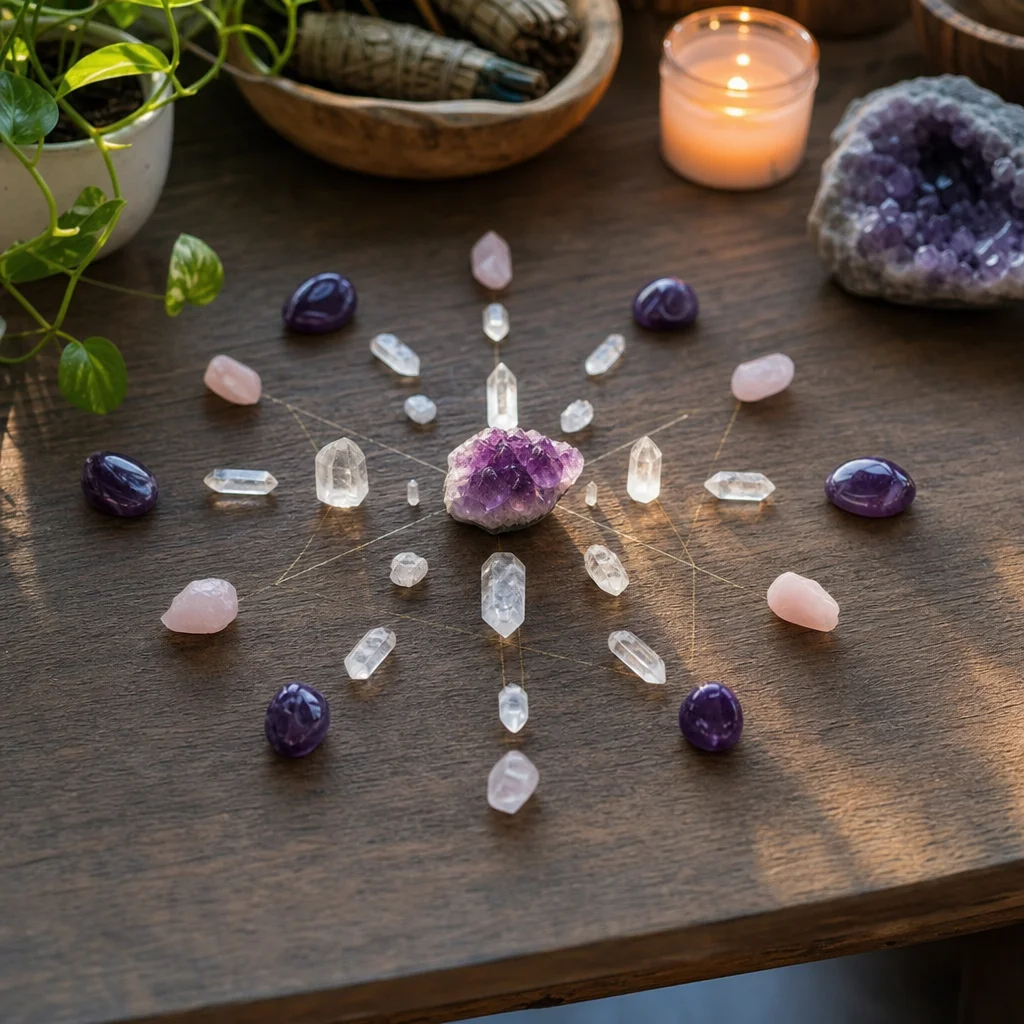
What Crystal Gridding Actually Looks Like in Practice
I'm going to be honest: the first time I tried crystal gridding, I spent forty-five minutes arranging seventeen stones in a "sacred geometry" pattern on my living room floor, following a diagram I'd found on Pinterest. I stepped back to admire it. My cat walked through it immediately. Stones scattered everywhere. I gave up and went to make coffee.
The second attempt went better. I used fewer stones, placed them on a surface the cat couldn't reach, and actually spent time sitting with the arrangement instead of just looking at it. That was three years ago, and I've been gridding regularly since — not because I believe the crystals are performing magic, but because the act of arranging them and sitting with the arrangement is a genuinely useful mindfulness practice.
Here's what crystal gridding actually involves in practice, stripped of the mystification.
What a Crystal Grid Is (Practically Speaking)
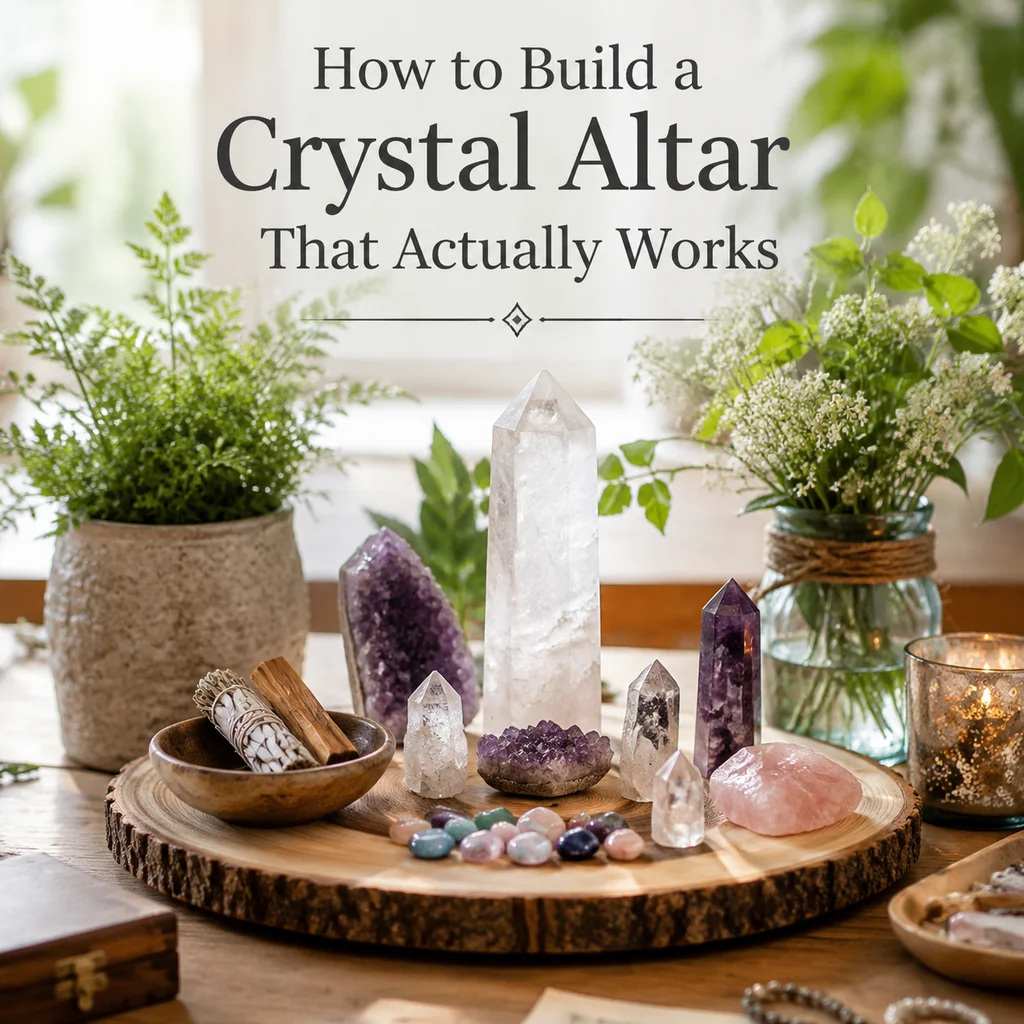
A crystal grid is a deliberate arrangement of stones in a geometric pattern, typically around a central "focal" stone, used as a physical anchor for a period of focused attention. That's the functional description. Whether you layer spiritual meaning on top of that is personal choice.
The mechanism that actually works: you're creating a visual and tactile focal point that draws your attention back when it wanders. Sitting in front of a grid gives your eyes somewhere to rest and your hands something to hold. The geometric pattern provides visual order, which the brain finds satisfying and calming. It's not magic — it's intentional environmental design.
The Minimal Equipment You Need
You do not need a grid cloth, a sacred geometry template, a specific number of crystals, or anything sold specifically as "crystal grid supplies." Here's what actually matters:
- A flat surface: A table, tray, or board that won't be disturbed. Cat access is the primary enemy.
- 4-8 crystals: More isn't better. A grid with five thoughtfully chosen stones works better than one with twenty randomly placed ones.
- One larger "center" stone: This anchors the arrangement visually. It can be anything you want to focus on.
- Optionally, a printed template: A simple geometric shape (circle, triangle, hexagon) drawn on paper gives you placement guides. Or just eyeball it.
Simple Grid Patterns That Actually Work
The Four Directions (Simplest)
Place the center stone. Place one stone to the north, south, east, and west. Done. This is a basic cross pattern and takes about thirty seconds to set up. It's where I recommend everyone starts, because the simplicity means you can focus on the experience rather than the arrangement.
The Triangle (Three-Point)
Center stone with three surrounding stones arranged in a triangle. The triangle is the simplest stable geometric shape, and the arrangement feels visually balanced. Good for small surfaces.
The Circle (Six or Eight Points)
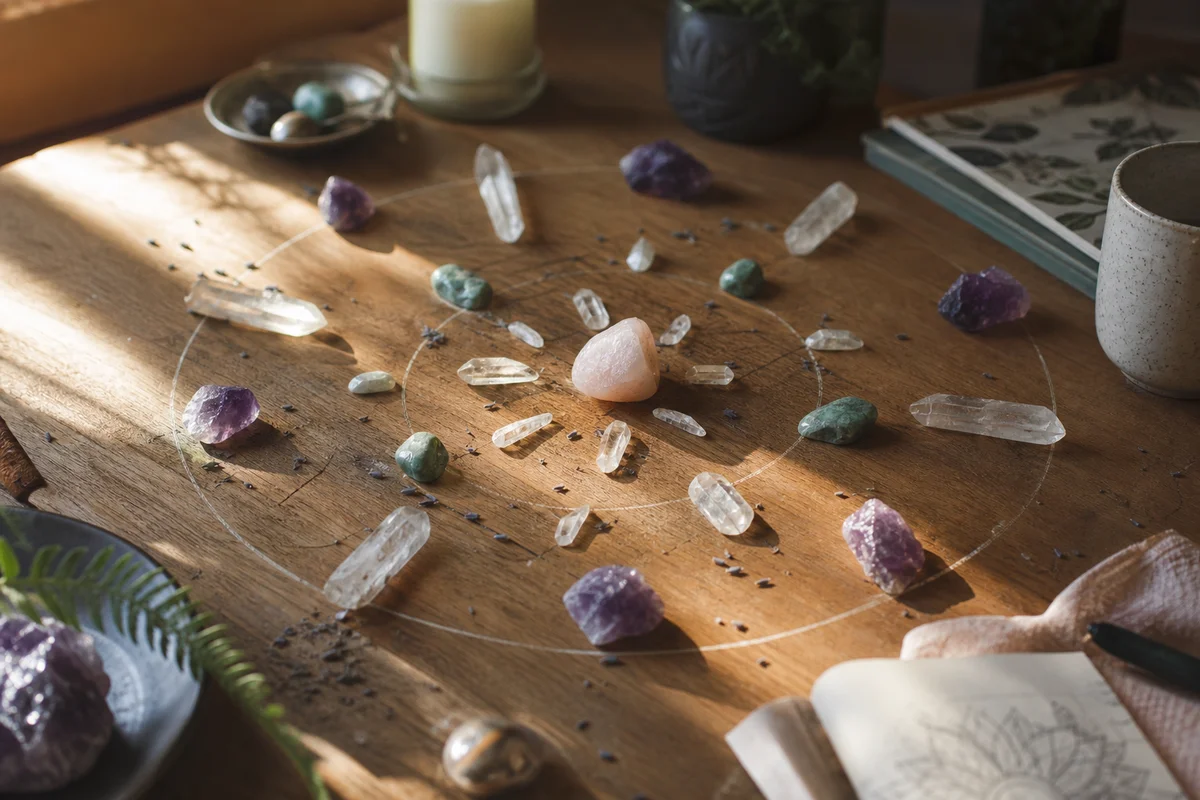
Center stone with six or eight stones arranged evenly around it. This creates a satisfying radial pattern. Use a small plate or bowl as a circle guide if you want even spacing.
The Square (Four-Point With Diagonals)
Center stone, four stones at the corners of a square, optionally with four more at the midpoints of each side. Creates a structured, grounded feeling. Good for intentions related to stability or boundaries.
That's it. You don't need to know about Metatron's Cube or the Flower of Life. Those patterns are visually appealing and mathematically interesting, but they're not necessary for the practice to function.
Choosing Stones for a Grid
The Practical Approach (No Metaphysics Required)
Pick stones you like looking at. That's genuinely sufficient. If you enjoy the visual combination, you'll enjoy sitting with the grid, and the practice will work better because you'll actually want to spend time with it.
Some combinations that look good together:
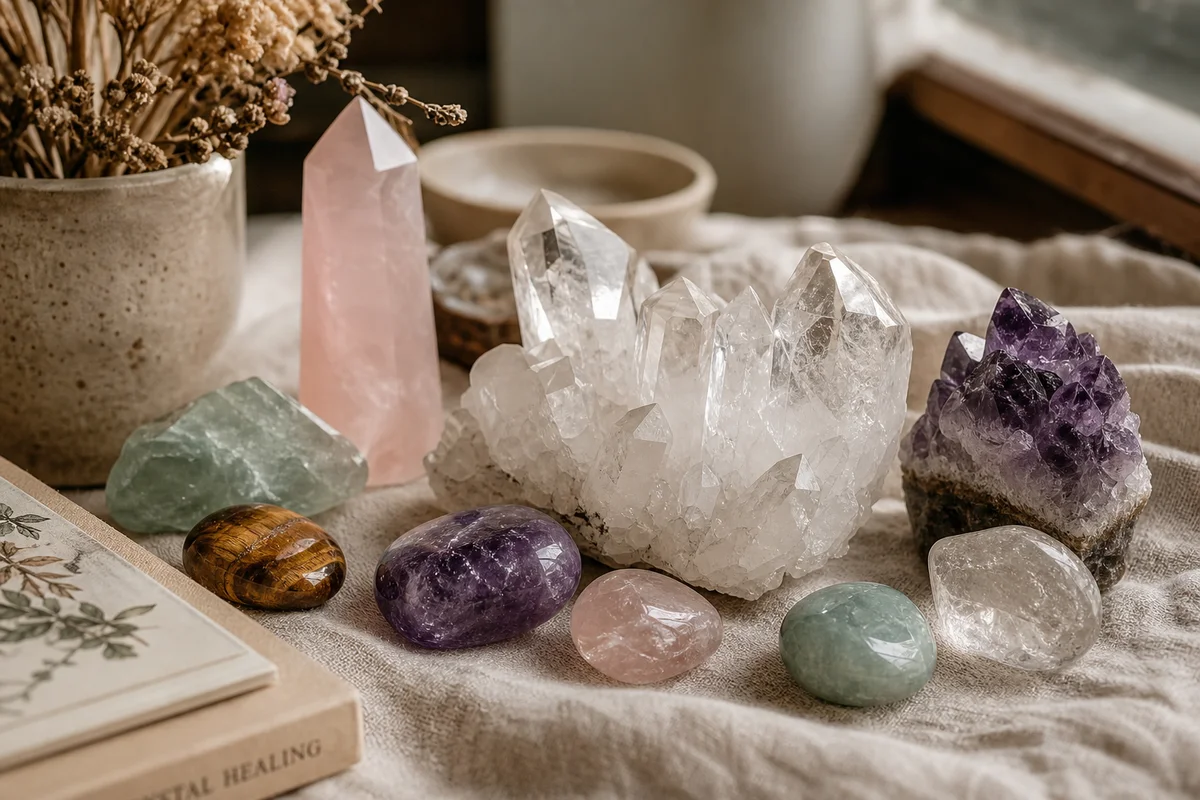
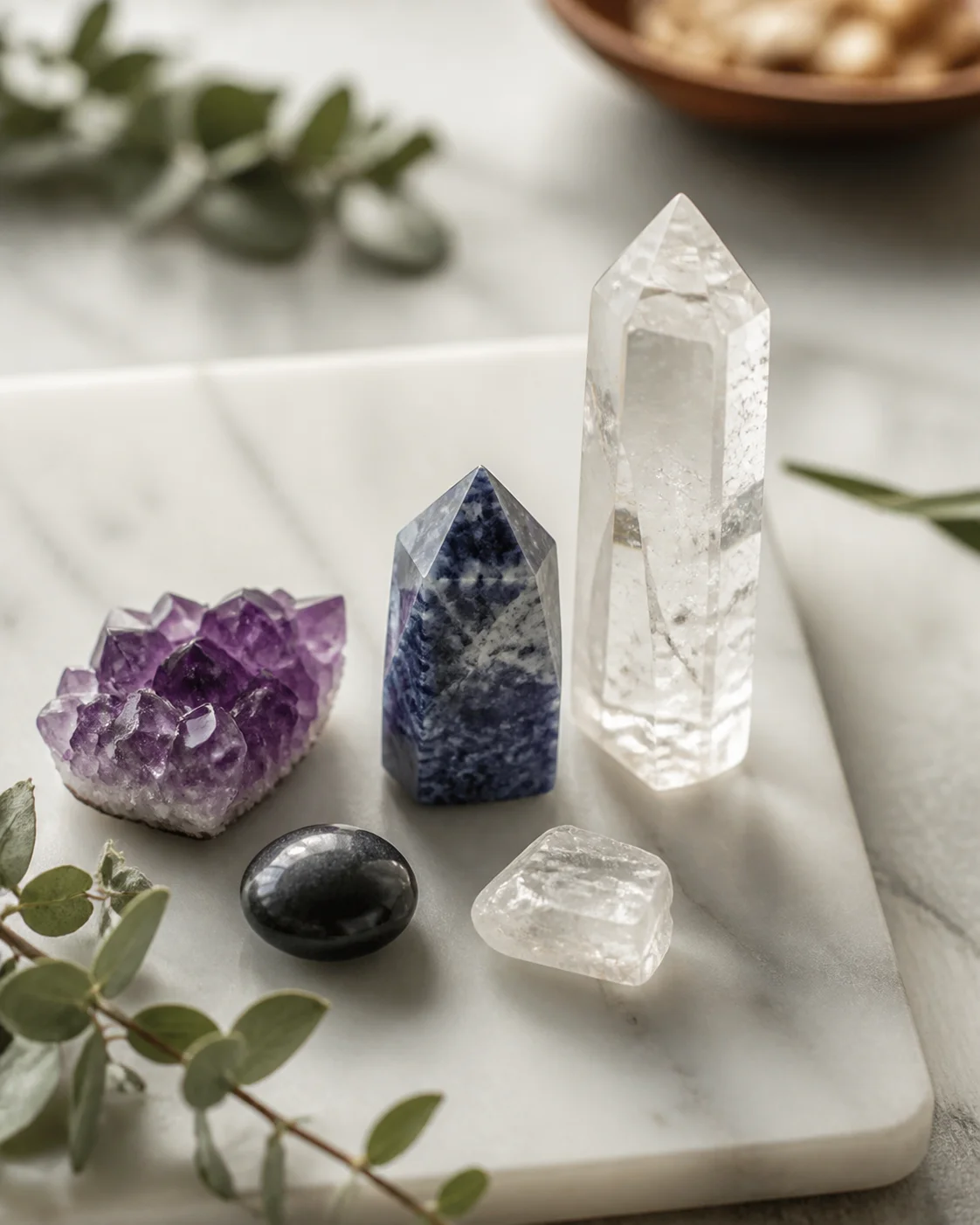
- Clear quartz + amethyst + lepidolite — cool tones, varied textures
- Citrine + carnelian + red jasper — warm palette, energetic feel
- Black tourmaline + hematite + obsidian — monochrome, grounding
- Labradorite + moonstone + amazonite — flash and color play
The Traditional Approach (If You Want It)
If you enjoy the traditional crystal associations, common grid configurations include:
- Clarity/focus: Clear quartz center, surrounded by fluorite and sodalite
- Calm/rest: Amethyst center, surrounded by lepidolite and howlite
- Grounding: Smoky quartz center, surrounded by black tourmaline and hematite
- Creativity: Carnelian center, surrounded by orange calcite and sunstone
Use these as starting points, not rules. Swap stones freely based on what you own and what appeals to you.
The Actual Practice: Sitting With Your Grid
Building the grid takes five minutes. The actual practice is what happens next.
Setting Up (5 Minutes)
- Clear your surface
- Place the center stone first
- Add surrounding stones one at a time, placing each deliberately rather than scattering them all at once
- Optionally, write a word or short phrase on a small card and place it under the center stone
The Sitting (5-15 Minutes)
- Sit where you can see the grid at a comfortable distance
- Let your eyes rest on the arrangement — don't stare intensely, just look softly
- When your mind wanders (it will), gently return your attention to the grid. The visual pattern makes this easier than closed-eye meditation for many people.
- You can hold one of the stones if that helps with focus. The physical sensation gives your hands something to do.
The Closing
- Thank the grid, say a word, bow, or just stand up. There's no required closing ritual. The practice is over when you decide it is.
- Leave the grid in place if you have the space, or disassemble it and return the stones to their storage. Either works.
When Grids Don't Work (And Why)
The main reasons people give up on gridding:
- Too complicated: You tried to use twelve stones in a complex pattern and spent more time arranging than experiencing. Simplify.
- Wrong location: You set it up somewhere that gets bumped, walked through, or climbed on by animals. Find a stable, protected spot.
- Performance anxiety: You think you're supposed to feel something specific during the practice and feel like you're doing it wrong when you don't. You're not supposed to feel anything specific. It's just sitting and paying attention.
- Inconsistency: You did it once, found it nice but not transformative, and never did it again. The benefit compounds with regularity, even if "regularity" means once a week for ten minutes.
Maintaining a Long-Term Grid
Some people leave grids in place for weeks or months, refreshing them periodically:
- Dust the stones every few days with a soft brush
- Rotate or rearrange when the pattern starts feeling invisible — when you stop noticing it, it's time for a change
- Replace the intention card monthly or seasonally
- Check for sunlight damage if the grid is near a window — amethyst, citrine, and fluorite will fade over time
Why I Still Do It
I grid because it gives me ten minutes of focused stillness that I wouldn't otherwise take. My brain is loud and busy and has opinions about everything constantly. Sitting in front of an arrangement of rocks, with nothing to do but look at them and breathe, is one of the few reliable ways I've found to genuinely slow down. The crystals aren't doing anything to me. I'm doing something for myself, and the grid is just the physical structure that makes the practice happen.
If that resonates, try it with whatever crystals you have on hand. If it doesn't, skip it. Either way, you now know what gridding actually looks like — five stones on a tray and ten minutes of quiet — rather than the over-produced version that makes the whole practice seem more complicated than it needs to be.
For a comprehensive overview, see our Ultimate Crystal Guide for Beginners.
Looking for more ways to work with crystal energy? The comprehensive crystal healing guide walks through the foundations step by step.
Choosing the Right Crystals for Your Grid
Now that we've established the basics of setting up a crystal grid, let's dig into into the heart of the matter: selecting the right crystals. This is where the personal aspect of crystal gridding really comes into play. The crystals you choose should resonate with you on a personal level. Here are some tips to help you pick the perfect crystals for your grid.
Personal Resonance
First and foremost, choose crystals that you feel drawn to. This could be because of their color, their texture, or something about their appearance. Your intuition is a powerful guide. If you feel a connection to a particular crystal, it's likely to be the right one for you.
Crystal Meanings
Once you've selected a few crystals, consider their meanings. Do you want to focus on abundance, protection, or emotional healing? Each crystal carries unique properties and can support different intentions. Here's a brief rundown of some popular crystals and their meanings:
- Amber: Brings warmth and clarity, encourages creativity.
- Rose Quartz: Known for its love and healing properties.
- Clear Quartz: The master healer, amplifies energy and enhances clarity.
- Aventurine: Promotes prosperity and success.
- Black Tourmaline: Protects against negative energy and enhances grounding.
Color Therapy
Color plays a significant role in crystal healing. Some people prefer to use crystals based on color therapy, where the color of the crystal is believed to correspond to specific physical and emotional states. For example, blue crystals are often associated with calm and stress relief, while red crystals are linked to passion and energy.
Advanced Grid Patterns
The Flower of Life
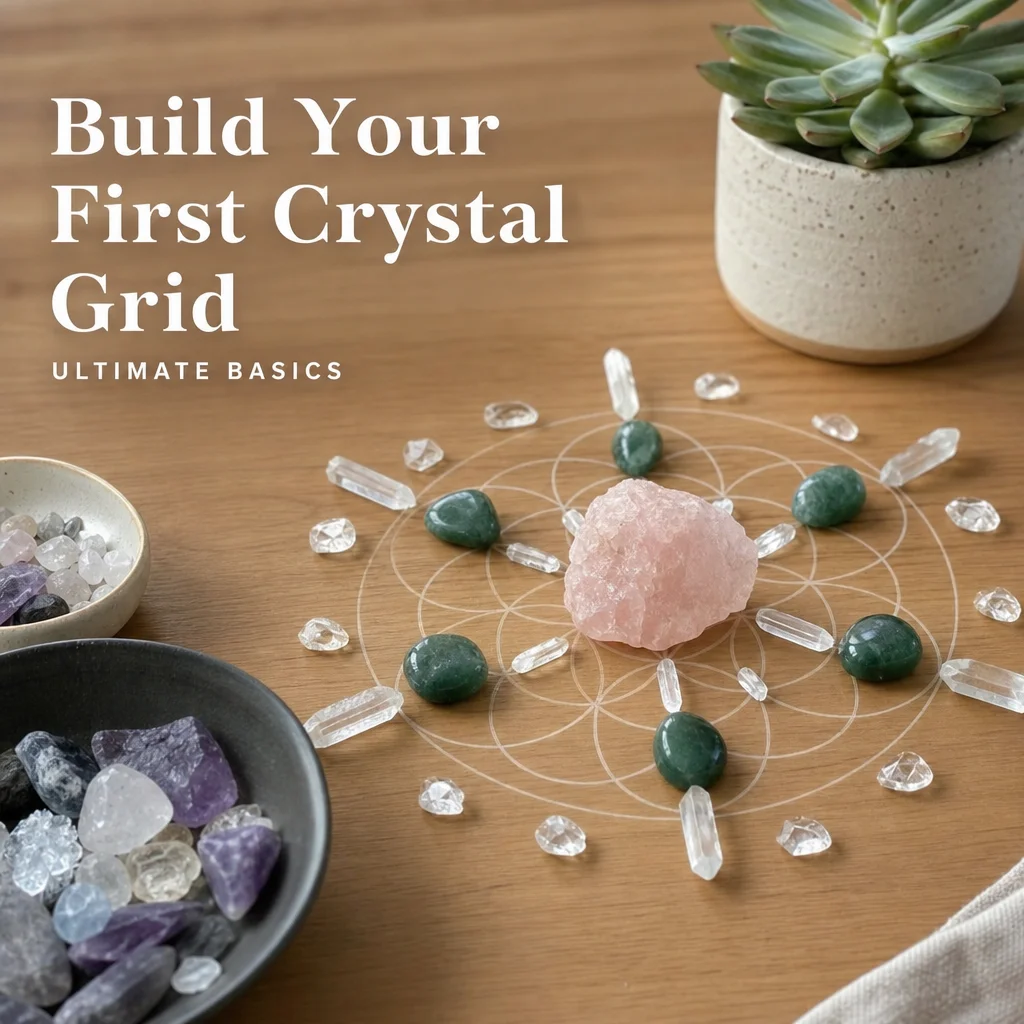
The Flower of Life is a complex geometric pattern that symbolizes the interconnectedness of all life. To create a Flower of Life grid, you'll need a template or the ability to draw it freehand. The pattern is symmetrical and requires precision. It's a bit more advanced but incredibly rewarding.
The Labyrinth Pattern
The labyrinth pattern is a spiral path that leads to the center. It represents a journey and is often used for meditation. To create a labyrinth grid, you can use a printed template or simply draw the pattern freehand. It's a visually stunning and deeply meditative grid.
The Tree of Life
The Tree of Life is another intricate pattern that represents the interconnectedness of all life. It's often used for protection and abundance. To create a Tree of Life grid, you'll need a detailed template and a steady hand. It's a challenging pattern but can be incredibly powerful.
Creating a Personalized Grid
Remember, there are no strict rules when it comes to creating a crystal grid. Feel free to experiment with different patterns, crystal combinations, and even include non-crystal elements like essential oils or sage for an added layer of personalization.
Setting Intentions for Your Grid
Once your grid is set up, take a moment to set clear intentions. This could be anything from asking for guidance to expressing gratitude. Whisper your intentions out loud or write them down. The act of setting intentions helps to focus your energy and intention on the grid.
Crystal Grid Maintenance
While crystal grids don't require much maintenance, it's good practice to cleanse your crystals regularly. You can use methods like smudging, running them under running water, or placing them in sunlight. This not only cleanses the crystals but also refreshes the energy of the grid.
FAQ
What's the best way to cleanse my crystals?
What's the best way to cleanse my crystals?
There are many methods to cleanse crystals, including smudging with sage, using salt water, or placing them in sunlight. Choose a method that resonates with you and your crystals.
How often should I cleanse my crystals?
How often should I cleanse my crystals?
It's a good idea to cleanse your crystals at least once a month, or more frequently if you feel they're absorbing negative energy.
Can I use any type of crystal in a grid?
Can I use any type of crystal in a grid?
Yes, you can use any type of crystal in a grid. The most important thing is that the crystals resonate with you and support your intentions.
How long should I sit with my grid?
How long should I sit with my grid?
There's no set time for sitting with your grid. It can be as short as a few minutes or as long as an hour. The key is to focus on your intentions and allow yourself to be present.
Can I use my grid for healing purposes?
Can I use my grid for healing purposes?
Crystal grids can be used for healing purposes, but they are not a substitute for professional medical treatment. They can complement healing practices and support emotional well-being.

Comments