<h2>The Complete Guide to Buying Crystals at Gem Shows and Fairs</h2>
What Exactly Is a Gem Show?
A gem show (sometimes called a mineral fair or gem and mineral showcase) is a temporary marketplace where dealers, miners, lapidary artists, and collectors gather to buy, sell, and trade gems, minerals, fossils, and jewelry. Most shows run over a weekend, though larger events like the Tucson Gem and Mineral Show stretch across two weeks in February.
Shows typically charge a small admission fee, anywhere from $5 to $15 for a day pass. Some offer multi-day or weekend passes at a discount. You'll find a mix of wholesale and retail vendors, and many shows open to the public (a few trade-only events require a business license or tax ID for wholesale access).
The atmosphere is part bazaar, part science fair, part treasure hunt. Long tables covered in velvet display cases, gallon ziplock bags full of tumbled stones selling for a dollar each, and dealers who can talk for an hour about the geology of a single crystal specimen. It's not like shopping online, where every stone is photographed under perfect lighting. At a gem show, you pick things up, turn them over, hold them against the light, and decide on the spot.
Who Sets Up at These Shows?
The vendor mix varies by show size, but you'll generally find four main types of sellers:
Miners and direct source dealers. These are people who either own mines or buy directly from mining operations. They tend to carry rough specimens, bulk material, and sometimes finished pieces. If you want to buy a quartz point that still has clay on it from the ground it came out of, these are your people.
Lapidary artists. These vendors cut, polish, and shape stones themselves. You'll find hand-cut cabochons, faceted gems, and custom-made jewelry. Prices run higher than mass-produced goods, but the craftsmanship shows. Many of them are happy to explain their process.
Jewelry makers. A mix of hobbyists and professionals selling finished pieces, from simple wire-wrapped pendants to elaborate silver and gold settings. Quality and pricing vary wildly, so shop around before committing.
Wholesale dealers. These are the bulk suppliers. They sell tumbled stones, chip beads, and common minerals in bags by weight or count. If you've ever bought a "grab bag" of crystals online, it probably came through one of these operations. Their per-piece prices are the lowest at the show.
What to Bring
A little preparation goes a long way. Here's what experienced gem show shoppers pack:
Cash. This is non-negotiable. Many vendors, especially the smaller ones and the wholesale dealers, don't take cards. Some will have a Square reader, but don't count on it. Bring small bills. A lot of dealers price things at round numbers like $5 or $10, and fumbling for change from a $100 bill at a busy table is no fun for anyone.
A list of stones you're looking for. Walking into a gem show without a plan is how you end up with $80 worth of rocks you didn't know existed 45 minutes earlier. That's not necessarily a bad thing, but if you have specific minerals on your wish list, write them down. You'll see hundreds of varieties and it's easy to forget what you came for.
A small bag or pouch. Most vendors provide bags, but having your own small pouch or ziplock for loose stones keeps things organized. Some shows have maps that take you through multiple buildings, and you don't want to be juggling fragile specimens in your pockets.
Something to reference. Your phone works fine. Keep a Mohs hardness scale bookmarked, a crystal identification app handy, and maybe a note with current market prices for stones you're actively shopping for. If you're serious about mineral collecting, a small jeweler's loupe (10x magnification) costs about $15 and lets you check for cracks and inclusions on the spot.
Comfortable shoes. This sounds silly until you've walked the floor of the Tucson show, which covers multiple hotels and convention centers across the city. Even at smaller regional shows, you'll be on your feet for hours. Wear something you can stand in all day.
How to Tell If You're Getting a Fair Price
Gem show pricing is not standardized. Two vendors three tables apart might charge wildly different prices for the same type of stone. Here's how to figure out what's reasonable:
Compare at least three vendors. Before buying anything, walk the entire floor and note prices for the type of stone you want. You'll quickly get a sense of the range. If someone is charging $25 for a tumbled rose quartz that another vendor has for $3, you'll know.
Ask about bulk pricing. Most dealers offer discounts when you buy multiple pieces. "Buy 5 get 1 free" is extremely common. Some vendors price by the bag: fill a small bag for $20, a large bag for $40. Others will negotiate if you're buying a handful of pieces from the same table.
Know the going rate for common stones. As a rough baseline, tumbled stones of common varieties (quartz, amethyst, rose quartz, citrine) typically sell for $1 to $5 each at shows. Rough pieces of the same materials run $2 to $10 depending on size and quality. Rare minerals, collector-grade specimens, and finished jewelry have no fixed range, which makes comparison shopping even more important.
Be wary of unusually cheap "rare" stones. If someone is selling "natural Moldavite" for $5 a piece, something is off. Real Moldavite is genuinely uncommon and commands high prices. The same goes for "natural pink diamond" or "authentic alexandrite" at bargain prices. If it seems too good to be true at a gem show, it almost certainly is.
How to Check Quality Before You Buy
At a gem show, you don't have the luxury of return policies. What you buy is what you get. So inspect everything:
Check for cracks and fractures. Run your fingernail along the surface. If it catches on a ridge, that's a crack. Hold the stone up to the light. Internal fractures will show up as lines or planes where light reflects differently. Small hairline cracks aren't always a dealbreaker, especially on rough material, but deep fractures that could cause the stone to split should make you think twice.
Look at color consistency. Natural stones have color variations, and that's part of their appeal. But if the color is suspiciously uniform, especially in cheaper stones, it might be dyed. Agate and quartz are the most commonly dyed stones. Ask the vendor directly: "Is this natural color or enhanced?" Honest dealers will tell you without hesitation. The ones who dodge the question or get defensive are telling you something by their reaction.
Check the polish on tumbled and cabochon stones. A well-polished stone has a smooth, even surface with no dull patches. Poorly tumbled stones will have rough spots, pits, or uneven edges. The quality of the polish tells you something about how much care went into the piece.
For jewelry, check the setting. Make sure stones are secure, clasps work properly, and solder joints are clean. It's easy to get excited about a pretty pendant and overlook the fact that the bail is barely attached.
Common Traps and How to Avoid Them
Gem shows are generally honest places, but there are a few recurring issues that catch newcomers off guard.
"Rare" labeling. The word "rare" gets thrown around a lot. Tourmalated quartz, banded agate, and even common amethyst sometimes get tagged as "rare specimen" or "limited find." Some of these stones are genuinely less common than quartz or amethyst, but they're not rare in the geological sense. If rarity is a selling point, ask where the stone was mined and how much of it comes out of that location annually. A vendor who can answer those questions is probably selling something legit.
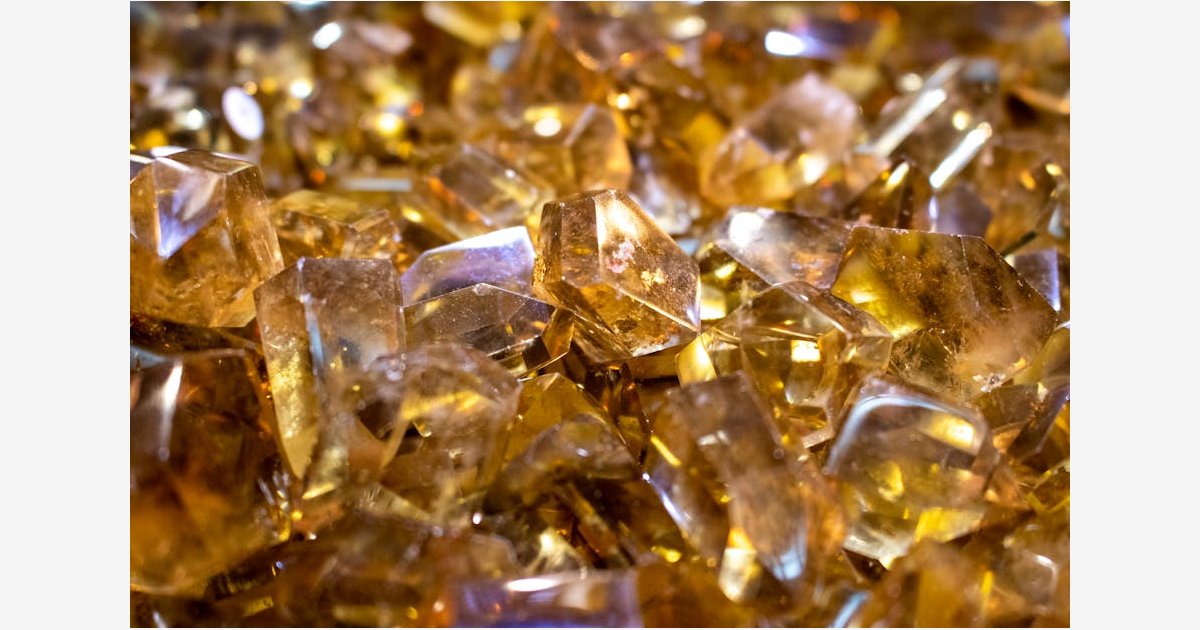
Heat-treated citrine sold as natural. Most citrine on the market is actually heat-treated amethyst. The two are chemically identical (both are varieties of quartz), but natural citrine is less common and commands higher prices. Heat treatment isn't inherently bad, and many dealers sell treated stones openly. The problem is when it's not disclosed. Natural citrine tends to have a more muted, honey-like color, while heat-treated citrine often has an orange-yellow or reddish tone that looks almost artificial.
Dyed quartz passed off as other minerals. Dyed quartz is sold under dozens of trade names: "Aqua Aura," "Angel Aura," "Rose Aura," and so on. These are real quartz crystals with a thin metallic coating applied through a vapor deposition process. They're pretty, and many people collect them for their colors alone. But they should be sold as what they are: treated quartz, not natural colored stones. The coating can scratch or wear off over time, which doesn't happen with natural color.
Fake fossils and minerals. Resin casts of fossils, glass sold as obsidian, and plastic imitations of amber show up at even reputable shows. For amber, the saltwater test helps (real amber floats, plastic sinks), and for fossils, looking at the surface under magnification will reveal casting seams on fakes.
Pro Tips From Experienced Show Shoppers
People who attend gem shows regularly develop strategies that save money and improve the experience.
Go on Sunday afternoon if you want deals. Vendors don't want to pack everything back up and haul it home. Sunday afternoon, especially in the last two hours before closing, is when prices drop. You can often negotiate 20-30% off listed prices. The tradeoff is less selection, since the best pieces get picked over by Saturday.
Bring a small UV flashlight. Some minerals fluoresce under ultraviolet light, and it's a fun way to discover things about the stones you're looking at. Willemite glows bright green. Calcite can fluoresce red, blue, or white depending on trace minerals. Fluorite, as the name suggests, often fluoresces. It's also useful for checking if a stone has been treated, since some coatings and dyes look different under UV.
Build relationships with vendors. If you find a dealer whose selection and pricing you like, get their card. Many vendors travel a circuit of shows throughout the year, and repeat customers sometimes get better pricing or first pick of new inventory. Some dealers will even set aside pieces for you if you let them know what you're looking for.
Don't be afraid to negotiate, but be respectful. Gem show pricing is not set in stone (pun intended). Vendors expect some haggling. A polite "Is there any flexibility on this one?" works better than lowballing. If you're buying multiple items, ask for a bundle price. But remember that these are often small businesses, and the margins on a $3 tumbled stone are already thin.
Start small. If it's your first show, set a budget before you walk in. $50 to $100 is plenty to have a good time and walk away with some nice pieces. The temptation to overspend is real when you're surrounded by beautiful things and every vendor is friendly.
Major Gem Shows in the United States
If you want to experience gem shows at their biggest, these are the ones worth traveling for:
Tucson Gem and Mineral Show (Tucson, Arizona). The largest gem and mineral show in the world, held every February. It's not one event but dozens of shows spread across hotels, convention centers, tents, and parking lots throughout the city. Over 4,000 vendors from around the world. Attendance estimates run north of 65,000 visitors. If you go to one gem show in your life, make it this one.
Denver Gem and Mineral Showcase (Denver, Colorado). Held every September, this is the second-largest show in the US. It's more focused on minerals and fossils than jewelry, and the specimen quality is outstanding. The Denver show has a long-running tradition (over 50 years) and draws serious collectors from across the country.
Franklin Gem and Mineral Show (Franklin, North Carolina). A smaller, more accessible show held multiple times per year. The Franklin area is known as the "Gem Capital of the World" because of its mineral deposits, and the local shows have a friendly, community feel. Good for beginners and families.
Other notable shows include the Springfield Mineral Show in Massachusetts, the Houston Gem and Mineral Show in Texas, and the Costa Mesa Gem and Mineral Show in California. Most states have at least one annual show, and a quick web search for "gem and mineral show near me" will usually turn up several options within driving distance.
Wrapping Up
Gem shows are one of the few places where you can handle hundreds of stones, talk to the people who found or made them, and walk away with something unique for less than you'd pay at a retail store. The first time you go, you'll probably make a few mistakes, buy something you later realize was overpriced, and leave wishing you'd brought more cash. That's normal. Every collector has those stories. Go, explore, ask questions, and enjoy the process. The stones aren't going anywhere, and there's always another show coming up.
Comments