Jade: The Complete Guide to the Stone of Harmony and Wisdom
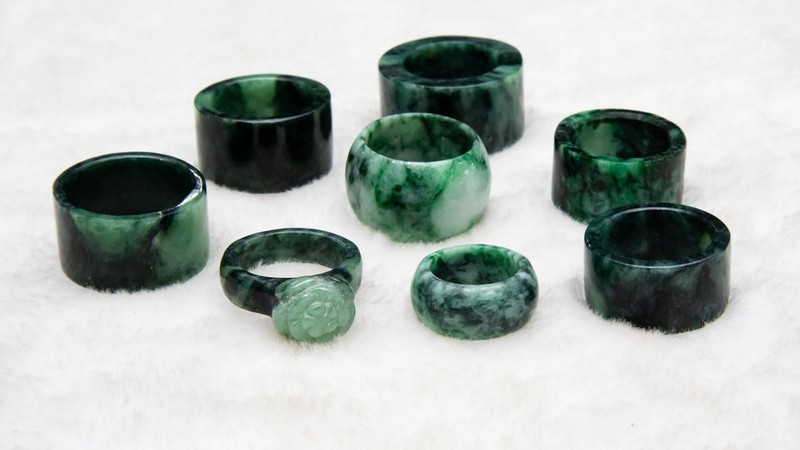
What Is Jade? The Stone That Shaped Civilizations
Jade is not a single mineral — it is a cultural icon, a symbol of power, and one of the most revered gemstones in human history. For over 7,000 years, jade has held a place of unmatched significance in Chinese culture, where it was considered more precious than gold. Emperors carved their seals from it, artisans shaped it into intricate ornaments, and healers prescribed it for ailments of both body and spirit.
Geologically speaking, "jade" refers to two distinct minerals: nephrite and jadeite. Both share a similar waxy luster and tough, compact structure, but they differ in chemistry, color range, and value. Nephrite is a calcium magnesium silicate, while jadeite is a sodium aluminum silicate. On the Mohs hardness scale, nephrite ranks at 6–6.5, and jadeite at 6.5–7. Despite their moderate hardness, both minerals are remarkably tough due to their interlocking microcrystalline structure — jade is actually tougher than steel when measured by resistance to breaking.
Jadeite vs Nephrite: Understanding the Two Faces of Jade
The distinction between jadeite and nephrite matters far more than most crystal enthusiasts realize. Jadeite, found primarily in Myanmar (Burma), is the rarer and more valuable variety. It comes in an extraordinary range of colors — imperial green, lavender, white, yellow, red, and even blue. The most prized "imperial jade" is a vivid, translucent green that can command astronomical prices at auction.
Nephrite, sourced mainly from China, Canada, Russia, and New Zealand (where it is known as greenstone or pounamu by the Māori), tends to be more muted in color — creamy whites, olive greens, and dark spinach greens. While generally less expensive than top-grade jadeite, nephrite has its own rich cultural heritage, particularly in Chinese and Māori traditions.
A simple way to tell them apart: jadeite has a more granular, sugary texture when polished, while nephrite has a smooth, almost buttery feel. Under a jeweler's loupe, jadeite shows fibrous crystals, whereas nephrite reveals felt-like interlocking fibers.
The Meaning of Jade: Harmony, Wisdom, and Longevity
In Chinese philosophy, jade embodies the concept of ren (仁) — benevolence, humanity, and moral integrity. Confucius himself compared the qualities of jade to the virtues of a cultured person: its smoothness represents kindness, its firmness represents justice, and its translucence represents honesty.
Jade is often called the Stone of Harmony because of its remarkable ability to bring opposing forces into balance. It bridges the gap between the physical and spiritual, the emotional and rational, the self and others. This is why jade has been worn as an essential crystal for beginners and seasoned collectors alike across millennia.
As a symbol of wisdom, jade was believed to sharpen the mind and deepen one's understanding of the world. Chinese scholars kept jade pendants close during study and meditation, believing the stone could calm turbulent thoughts and foster clarity of insight.
The association with longevity runs deep in Chinese culture. Jade was placed in tombs to protect the deceased in the afterlife, and living emperors consumed jade powder (a practice we do not recommend!) in pursuit of eternal youth. Today, we can appreciate this symbolism in a safer way — by carrying jade as a daily reminder of vitality, patience, and the slow, steady growth that leads to lasting well-being.
Jade and the Heart Chakra: Your Emotional Anchor
Jade's strongest energetic resonance is with the Heart Chakra (Anahata), the energy center governing love, compassion, forgiveness, and emotional balance. When the Heart Chakra is open and aligned, you feel a deep sense of connection — to yourself, to others, and to the natural world.
Wearing jade close to the heart — as a pendant, necklace, or bangle — creates a gentle, continuous influence on this chakra. Many people report feeling a noticeable reduction in anxiety and emotional reactivity when they begin working with jade regularly.
Emotional Healing Properties of Jade
Calm and Grounding
Life moves fast, and jade moves slowly — and that is precisely its gift. Jade energy is steady, nourishing, and deeply grounding. Holding a piece of jade during a stressful moment can help slow racing thoughts and bring you back to the present. It is an excellent companion for improving sleep quality when placed under your pillow or on your nightstand.
Reducing Fear and Worry
Jade is considered a protective stone in many traditions. It does not create an aggressive shield; instead, it builds quiet confidence from within. By strengthening your connection to your own inner wisdom, jade helps you face challenges with calm determination rather than reactive fear.
Enhancing Compassion and Self-Love
Because jade resonates so strongly with the Heart Chakra, it naturally encourages compassion — both for others and for yourself. If you struggle with self-criticism or have difficulty setting healthy boundaries while remaining kind, jade can help you find that balance. For deeper work on self-love, pair jade with rose quartz for a powerful heart-opening combination.
Releasing Negative Patterns
Jade is a stone of patience and gentle transformation. It does not force rapid change; instead, it supports you in slowly releasing old emotional patterns, grudges, and limiting beliefs that no longer serve you. Over weeks and months of consistent use, many people find that jade helps them become more resilient and emotionally adaptable.
Metaphysical Properties: Dream Work, Protection, and More
Dream Work and Spiritual Insight
Jade has a long-standing reputation as a dream stone. Placing jade under your pillow or on your bedside table is said to promote vivid, meaningful dreams and improve dream recall. Some practitioners use jade as a meditation aid specifically for accessing deeper layers of subconscious wisdom.
Protective Talisman
Across cultures, jade has been carried as a protective amulet. In Chinese tradition, jade bangles are passed down through generations as family heirlooms, believed to absorb negative energy and shield the wearer from misfortune. Many parents gift jade pendants to their children for this very reason. For comprehensive energetic protection, jade works beautifully alongside other grounding and protective crystals.
Attracting Good Fortune
In feng shui and Chinese metaphysics, jade is strongly associated with abundance, prosperity, and good luck. Jade plants (Crassula ovata, unrelated to the mineral but named for its color) are popular household decorations for this reason. For those specifically interested in manifesting financial abundance, jade can complement crystals for wealth and abundance as part of a broader practice.
How to Use Jade in Your Daily Life
Wearing Jade Jewelry
The most traditional and effective way to work with jade is to wear it. Jade bangles are perhaps the most iconic form — they should fit snugly but comfortably on your wrist. A well-fitting jade bangle is said to absorb the wearer's energy over time, becoming more attuned and powerful the longer you wear it. Jade pendants worn at heart level are ideal for Heart Chakra work. Rings, earrings, and beaded bracelets are also popular options.
Placing Jade in Your Home
Position jade objects in areas where you want to cultivate harmony and calm. A jade carving in the living room promotes family harmony, while a jade piece on your desk can enhance focus and wisdom during work. In feng shui, the southeast corner of your home is associated with wealth — placing jade there may support both productivity and prosperity.
Meditation with Jade
Hold a piece of jade in your receiving (non-dominant) hand during meditation. Focus on the cool, smooth texture against your skin and visualize its energy flowing into your Heart Chakra. Breathe deeply and allow any tension or emotional heaviness to dissolve. Jade pairs particularly well with cleansed and charged crystals for amplified meditation sessions.
Jade Elixir Water (Indirect Method Only)
While jade is generally considered safe for indirect elixir preparation, we strongly recommend the indirect method: place jade stones around (not in) a glass of water and let it charge overnight. This avoids any risk of mineral leaching while still infusing the water with jade's energetic signature.
How to Care for Your Jade
Jade is durable but not indestructible. Proper care will keep your jade beautiful for generations.
- Cleaning: Use warm water with a mild, unscented soap. Gently scrub with a soft toothbrush if needed. Avoid ultrasonic cleaners and steam cleaning, as they can damage jade over time.
- Storage: Store jade separately from harder gemstones (diamonds, sapphires) that could scratch it. A soft pouch or lined jewelry box works well.
- Avoid: Prolonged exposure to direct sunlight (may cause color fading), extreme heat (can cause cracking), harsh chemicals, perfumes, and hairsprays. Remove jade jewelry before swimming or bathing.
- Regular care: Jade benefits from being worn — the natural oils from your skin help maintain its luster. If your jade looks dull, a light buffing with a soft cloth can restore its shine.
- Energetic cleansing: Unlike some crystals, jade does not require frequent energetic cleansing. A monthly rinse under cool running water or an overnight rest on a selenite charging plate or in moonlight is sufficient.
How to Tell Real Jade from Fake
The jade market is unfortunately full of imitations. Here is what you need to know to protect yourself:
Common Jade Imitations
- Serpentine: Often sold as "new jade" or "Xinjiang jade." Softer than real jade (Mohs 2.5–5.5) and more translucent in a waxy, almost oily way.
- Dyed Quartz: Clear or white quartz dyed green to mimic jade. The color often looks unnaturally uniform and may bleed or fade over time.
- Glass and Plastic: The cheapest imitations. Glass feels too light, plastic feels too warm, and neither has jade's characteristic cool-to-touch sensation.
- Aventurine: Sometimes confused with jade due to its green color, but aventurine has visible sparkly inclusions (mica flecks) that real jade does not.
Authenticity Tests You Can Do at Home
The Temperature Test: Real jade feels distinctly cool to the touch and takes several seconds to warm up in your hand. Glass and plastic warm almost immediately. This is one of the easiest and most reliable tests.
The Weight Test: Jade is dense and heavy for its size (specific gravity: 2.9–3.4 for nephrite, 3.3–3.5 for jadeite). If a piece feels suspiciously light, it is likely glass or plastic.
The Scratch Test (use with caution): Real jade is harder than steel. A steel knife should not be able to scratch genuine jade. However, we recommend this test only on inconspicuous areas, as it can damage the surface polish.
The Transparency Test: Hold the piece up to a bright light. Real jadeite often shows translucent patches with visible internal grain. Nephrite is more uniformly opaque but still has a characteristic fibrous structure visible under magnification.
Professional Testing: For high-value pieces, the only definitive test is a professional gemological examination using refractive index measurement, spectroscopy, or X-ray diffraction. Reputable jade dealers will provide certification from recognized gemological laboratories.
Jade Combinations: Crystals That Pair Beautifully
Jade's gentle, balancing energy harmonizes well with many other crystals:
- Rose Quartz + Jade: A powerful Heart Chakra combination. Rose quartz opens the heart to love, while jade grounds that love in wisdom and patience.
- Amethyst + Jade: Amethyst's spiritual clarity combined with jade's emotional balance creates a wonderful meditation pairing.
- Citrine + Jade: Combine jade's steady growth energy with citrine's radiant abundance vibration for a prosperity practice that is both ambitious and sustainable.
- Moonstone + Jade: Both stones are associated with feminine energy, intuition, and emotional depth. Together, they create a deeply nurturing combination.
Frequently Asked Questions About Jade
Can jade go in water?
Yes, brief exposure to clean water is fine and is actually the recommended way to physically clean jade. However, avoid prolonged soaking, especially in hot water, and never use chemical cleaners.
Is jade expensive?
It depends entirely on the type and quality. Entry-level nephrite can be quite affordable, while top-grade imperial jadeite can cost more per carat than diamonds. Most jewelry-grade jade falls somewhere in between — beautiful pieces are available at various price points.
Which wrist should I wear a jade bangle on?
In Chinese tradition, jade bangles are worn on the left wrist, as it is believed to be closer to the heart and better able to receive jade's energy. However, personal comfort and intuition should guide your choice.
Can jade break?
Jade is extremely tough (resistant to breaking), but it can chip or crack if dropped onto a hard surface or struck with force. Handle your jade with reasonable care, and it will last a lifetime.
Does the color of jade matter?
Different colors are associated with slightly different energies in Chinese tradition. Green jade is for health and harmony, white jade for purity and calm, lavender jade for peace and spirituality, and yellow jade for wisdom and friendship. Choose the color that draws you in — your intuition knows what you need.
Conclusion: Why Jade Belongs in Your Crystal Collection
Jade is not a flashy stone. It does not demand attention the way a brilliant-cut diamond or a vivid amethyst cluster might. Instead, jade works quietly, steadily, and profoundly — much like wisdom itself.
Whether you are drawn to jade for its breathtaking beauty, its rich cultural heritage, or its powerful healing properties, you are joining a tradition that stretches back thousands of years. From ancient Chinese emperors to modern crystal healers, jade has consistently been recognized as one of the most important and beneficial stones on Earth.
Start simply. A jade bangle, a small pendant, or even a tumbled stone kept in your pocket is enough to begin experiencing the gentle, transformative energy of this extraordinary gemstone. Be patient — jade rewards those who take the long view.
Comments