Black Tourmaline: Ultimate Identification & Care
May 14, 2026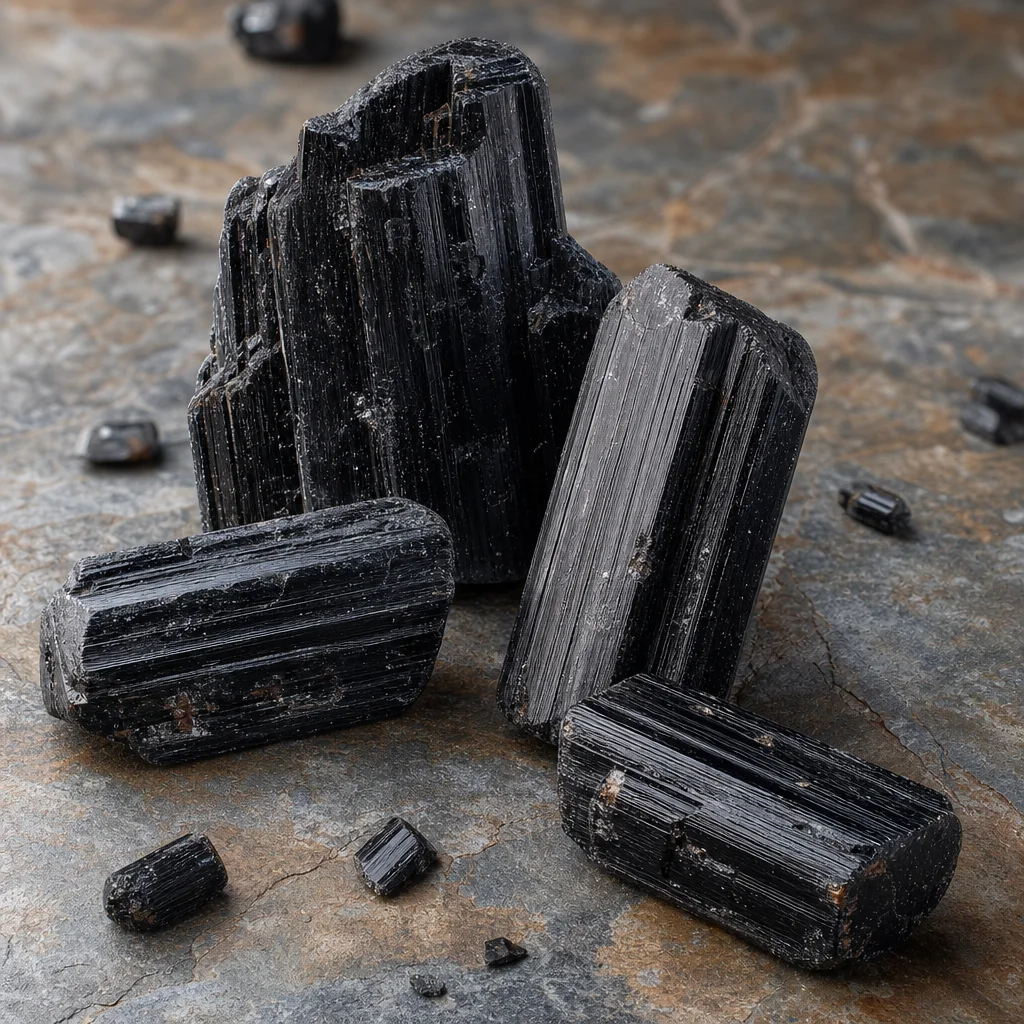
Black Tourmaline: The Complete Guide to Identification, Uses, and Care
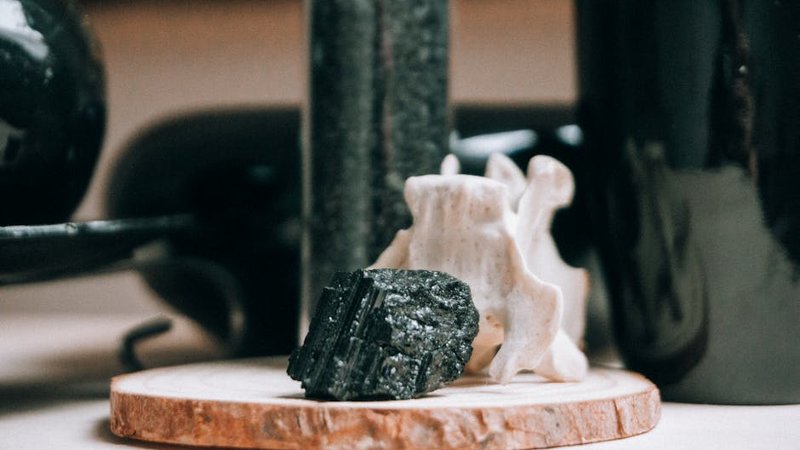
I bought my first piece of black tourmaline at a flea market for three dollars. The seller told me it was "protection stone" and I nodded politely, not really caring about any of that. I just liked how it looked — dense, opaque black with vertical striations running down its length like it had been squeezed out of a tube. That piece has been on my desk for six years now, and I've since learned enough about this mineral to fill a small book. Here's what I know.
What Is Black Tourmaline, Exactly?
Black tourmaline is the common name for schorl, an iron-rich member of the tourmaline group. Tourmaline itself is a boron silicate mineral that comes in more colors than almost any other gemstone — but schorl, the black variety, is by far the most abundant, making up roughly 95% of all tourmaline found in nature.
What makes schorl distinctive physically:
- Hardness: 7-7.5 on the Mohs scale — hard enough to scratch glass
- Density: Noticeably heavy for its size (specific gravity 3.0-3.2)
- Crystal habit: Typically forms as elongated, vertically striated prisms with a triangular cross-section
- Fracture: Uneven to conchoidal (shell-like curves when it breaks)
- Luster: Vitreous to submetallic — sometimes almost resinous on fractured surfaces
One unusual property: schorl is piezoelectric and pyroelectric. If you heat it or squeeze it, it develops an electrical charge. Dutch traders in the 1700s used tourmaline to remove ash from meerschaum pipes by taking advantage of this static charge — they called it "aschentrekker," meaning ash puller.
How to Identify Real Black Tourmaline
Fakes exist. Black glass, dyed howlite, and even plastic are sometimes sold as black tourmaline. Here's how to tell the difference without specialized equipment:
The Visual Check
- Look for vertical striations — real schorl crystals almost always have fine parallel ridges running lengthwise
- The cross-section should be roughly triangular or hexagonal, not perfectly round
- Color should be completely black with no translucency, even at thin edges
The Hardness Test
- Scratch it against a piece of glass (a jar or bottle works). Real tourmaline (Mohs 7+) will scratch glass easily. Glass imitations obviously won't.
- This test damages the glass, not the tourmaline. Use something you don't mind scratching.
The Weight Test
- Compared to a similar-sized piece of glass or plastic, tourmaline feels distinctly heavier. Pick up a known piece of glass in one hand and the specimen in the other — the difference is noticeable.
The Streak Test
- Drag the specimen across the unglazed bottom of a ceramic mug or toilet tank lid. Tourmaline leaves a white or very pale gray streak. Black glass leaves no streak (it's too hard to abrade). Dyed howlite leaves a white streak but fails the hardness test.
If a "black tourmaline" is perfectly smooth, perfectly round, and feels light — it's probably glass. No shame in that, but you shouldn't pay tourmaline prices for it.
Where Black Tourmaline Comes From
Major sources include Brazil (the Minas Gerais region produces enormous quantities), Pakistan, Afghanistan, Mozambique, Nigeria, and Maine/California in the United States. The Brazilian material tends to form the longest, most well-defined crystals — some over a foot in length.
It forms primarily in granite pegmatites and certain metamorphic rocks. If you're ever hiking in an area with exposed pegmatite veins (the Appalachian Mountains in the eastern US, for example), keep an eye out — schorl is one of the most common pegmatite minerals and fairly easy to spot as black crystal needles embedded in lighter rock.
Practical Uses Beyond the Crystal Shop
In Industry
Schorl has actual industrial applications that have nothing to do with wellness:
- Pressure gauges: Because of its piezoelectric properties, tourmaline is used in pressure measurement equipment
- Abrasives: Ground tourmaline has been used as an abrasive material
- Water treatment research: Studies have explored tourmaline's ability to generate weak electrical fields that may affect water molecule clustering, though this remains an active area of research rather than commercial technology
In Jewelry
Black tourmaline is popular in jewelry for practical reasons: it's durable, affordable, and genuinely black (unlike many "black" gemstones that are actually very dark green or brown). Common forms include:
- Faceted stones for rings and pendants — takes a good polish but can be tricky to cut due to its toughness
- Tumbled stones for beaded bracelets and necklaces
- Raw crystal points wire-wrapped as pendants
- Cabochons for statement rings
For everyday wear, black tourmaline holds up well. Mohs 7-7.5 means it resists scratching from most daily encounters. However, it can be brittle — a hard knock on a table edge or tile floor might chip it. Remove rings before heavy manual work.
Caring for Black Tourmaline
Compared to more delicate minerals, schorl is low-maintenance:
- Cleaning: Warm soapy water and a soft brush. No special solutions needed.
- Avoid: Ultrasonic cleaners (the vibrations can worsen internal fractures), harsh chemicals, and rapid temperature changes
- Storage: It won't scratch easily, but it can scratch softer stones. Store separately from calcite, fluorite, or anything under Mohs 6
- Sunlight: Unlike amethyst or kunzite, black tourmaline won't fade. It doesn't care about light exposure at all
One thing to watch: some black tourmaline has internal fractures that aren't visible until you've had it for a while. If you drop it on a hard surface and it splits along a plane you didn't know existed, that's a pre-existing fracture line giving way. It's normal for this mineral.
Buying Guide: What to Look For
Raw Specimens
- Look for well-defined crystal shape with visible striations
- Avoid pieces with too much matrix (host rock) unless you want it for geological interest
- Terminated crystals (intact pointed ends) command higher prices
- Price range: $2-20 for decent hand specimens, $20-100+ for large, well-formed crystals
Tumbled Stones
- Should be opaque black with a good polish
- Watch for dyed stones — genuine schorl doesn't need enhancement
- Price range: $1-5 each
Jewelry
- Check settings — tourmaline is tough but brittle, and prong settings should protect the stone from side impacts
- Faceted stones should have good symmetry and a consistent polish
- Price range: $15-50 for simple pieces, $50-200+ for fine jewelry settings
Why I Still Keep That Three-Dollar Piece
It's not the prettiest specimen in my collection. It's not even the best black tourmaline I own — I've since acquired cleaner crystals with better termination. But that first piece sits front and center because it taught me something important: you don't need to spend a lot to start engaging with minerals. A three-dollar rock from a flea market can teach you about crystal systems, hardness, specific gravity, and geological formation if you're willing to look closely enough.
Black tourmaline is the perfect entry point into mineral collecting. It's common, affordable, visually striking, and physically interesting. If you're going to own exactly one rock, you could do a lot worse than a chunk of schorl.
For a comprehensive overview, see our Ultimate Crystal Guide for Beginners.
If you found this helpful, the The Complete Crystal Guide: Identification, Meanings, and Properties covers similar ground across the full spectrum of crystal topics.
Black Tourmaline's Rich Cultural and Historical Significance
Black tourmaline's journey through history is as fascinating as its physical properties. It has been revered by various cultures for centuries, each with its own interpretations and uses.
**Ancient Egypt:** The Egyptians believed that black tourmaline was a gift from the gods and used it in their jewelry and amulets. They associated it with protection and strength, often wearing it into battle.
**Native American Tribes:** Many Native American tribes used black tourmaline for its protective qualities. They believed it could shield them from negative energy and evil spirits.
**Indigenous Brazilian Tribes:** The indigenous tribes of Brazil called black tourmaline "the stone of the night" and believed it could guide travelers safely through the dark.
**Modern Times:** Today, black tourmaline remains a popular gemstone, sought after for its protective properties. It's often used in talismans and protective amulets.
Black Tourmaline in Jewelry and Fashion
Black tourmaline's versatility makes it a favorite in the fashion world. It complements a wide range of metals and gemstones, and its unique striations add visual interest to any piece of jewelry.
Here are some creative ways to incorporate black tourmaline into your jewelry collection:
- Black Tourmaline Rings: Stack them with other rings or wear them alone for a minimalist look.
- Black Tourmaline Necklaces: Pair them with a pendant or wear as a standalone piece.
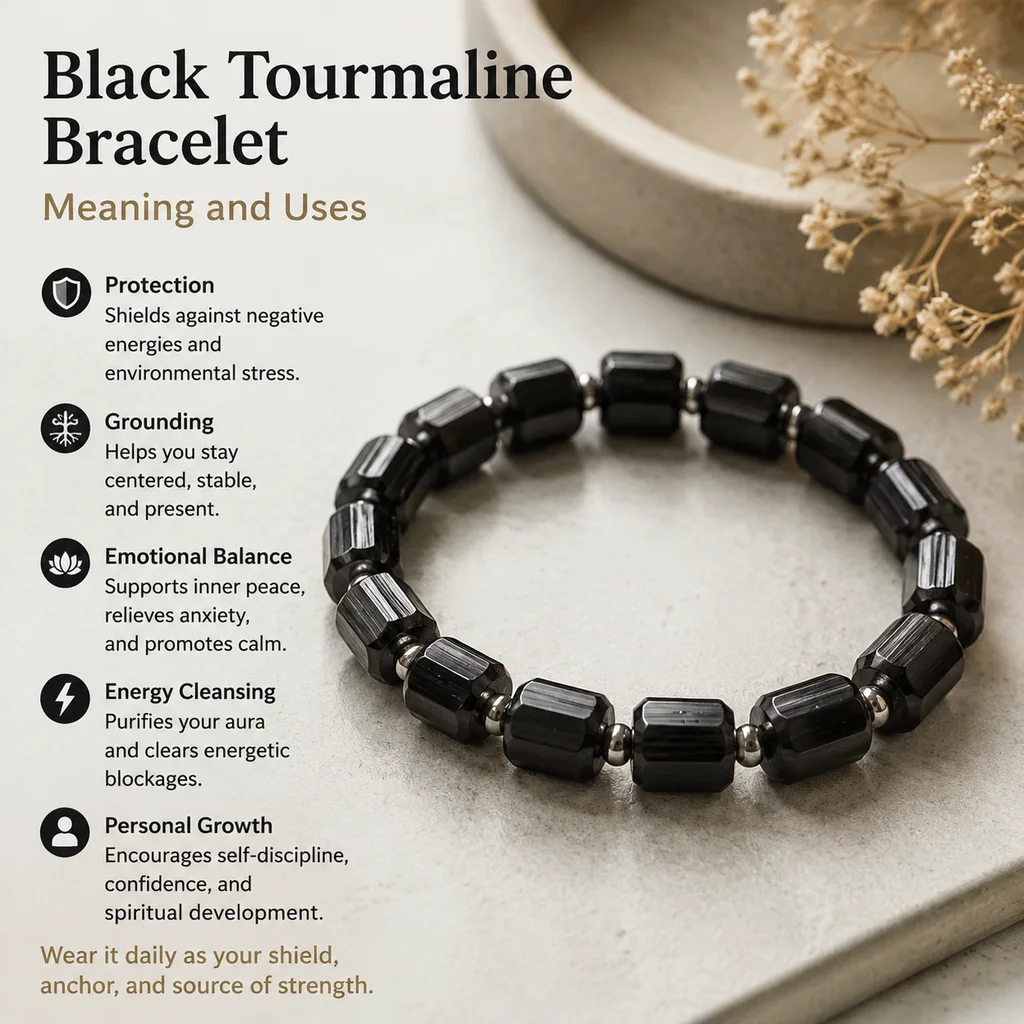
- Black Tourmaline Bracelets: Mix and match with other gemstones or wear as a statement piece.
- Black Tourmaline Earrings: Choose from studs, dangles, or hoop styles to suit your personal style.
Cleaning and Caring for Black Tourmaline
Black tourmaline is relatively durable and requires minimal care. Here are some tips to keep your piece looking its best:
- Regular Cleaning: Use warm water and a soft cloth to wipe down your black tourmaline jewelry. Avoid using harsh chemicals or abrasive cleaners.
- Storing: Store your black tourmaline jewelry in a fabric-lined box or soft pouch to prevent scratches and damage.
- Avoid Heat and Direct Sunlight: Excessive heat can cause black tourmaline to fade or crack. Keep it away from direct sunlight and heat sources.
Black Tourmaline vs. Other Black Gemstones
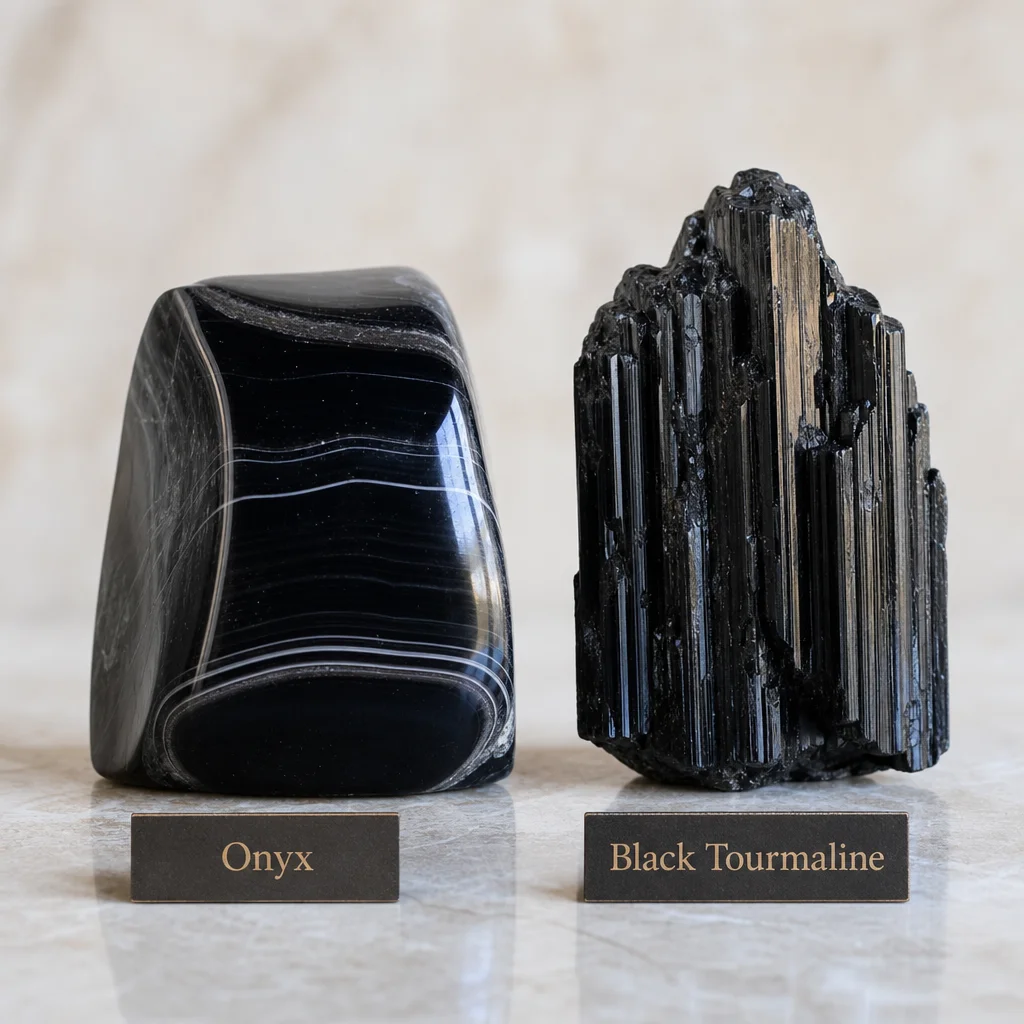
When shopping for black gemstones, it's easy to get overwhelmed by the choices. Here's a quick comparison table to help you differentiate between black tourmaline and other popular black gemstones:
| Gemstone | Color | Hardness | Origin |
|---|---|---|---|
| Black Tourmaline | Black with white or silver inclusions | 7-7.5 on the Mohs scale | Various countries, including Brazil, Madagascar, and the U.S. |
| Onyx | Black with a smooth, wavy pattern | 6.5-7 on the Mohs scale | Various countries, including India, Brazil, and Uruguay |
| Jet | Black with a glossy, smooth finish | 4.5-6.5 on the Mohs scale | Various countries, including the U.S., England, and Germany |
| Lodestone | Black with a metallic sheen | 3.5-4 on the Mohs scale | Various countries, including China, Russia, and the U.S. |
FAQ
Can black tourmaline be used for healing purposes?
Can black tourmaline be used for healing purposes?
No, black tourmaline is not used for healing purposes. It is primarily valued for its protective properties and its aesthetic appeal.
How can I tell if my black tourmaline is real?
How can I tell if my black tourmaline is real?
Real black tourmaline has vertical striations, a triangular or hexagonal cross-section, and is hard enough to scratch glass. It also feels heavier than similar-sized pieces of glass or plastic.
Can black tourmaline be dyed?
Can black tourmaline be dyed?
Yes, black tourmaline can be dyed to achieve a more vibrant or uniform color. However, dyed tourmaline is less valuable than natural black tourmaline.
Is black tourmaline suitable for everyday wear?
Is black tourmaline suitable for everyday wear?
Yes, black tourmaline is durable and can withstand everyday wear. However, it's always a good idea to remove your jewelry when engaging in activities that could cause damage.
Where can I find the best quality black tourmaline?
Where can I find the best quality black tourmaline?
The best quality black tourmaline can be found in countries like Brazil, Madagascar, and the U.S. Look for reputable jewelers or gemstone dealers to ensure you're getting a genuine piece.
Comments