7 Real Crystal Mining Sites You Can Actually
May 14, 2026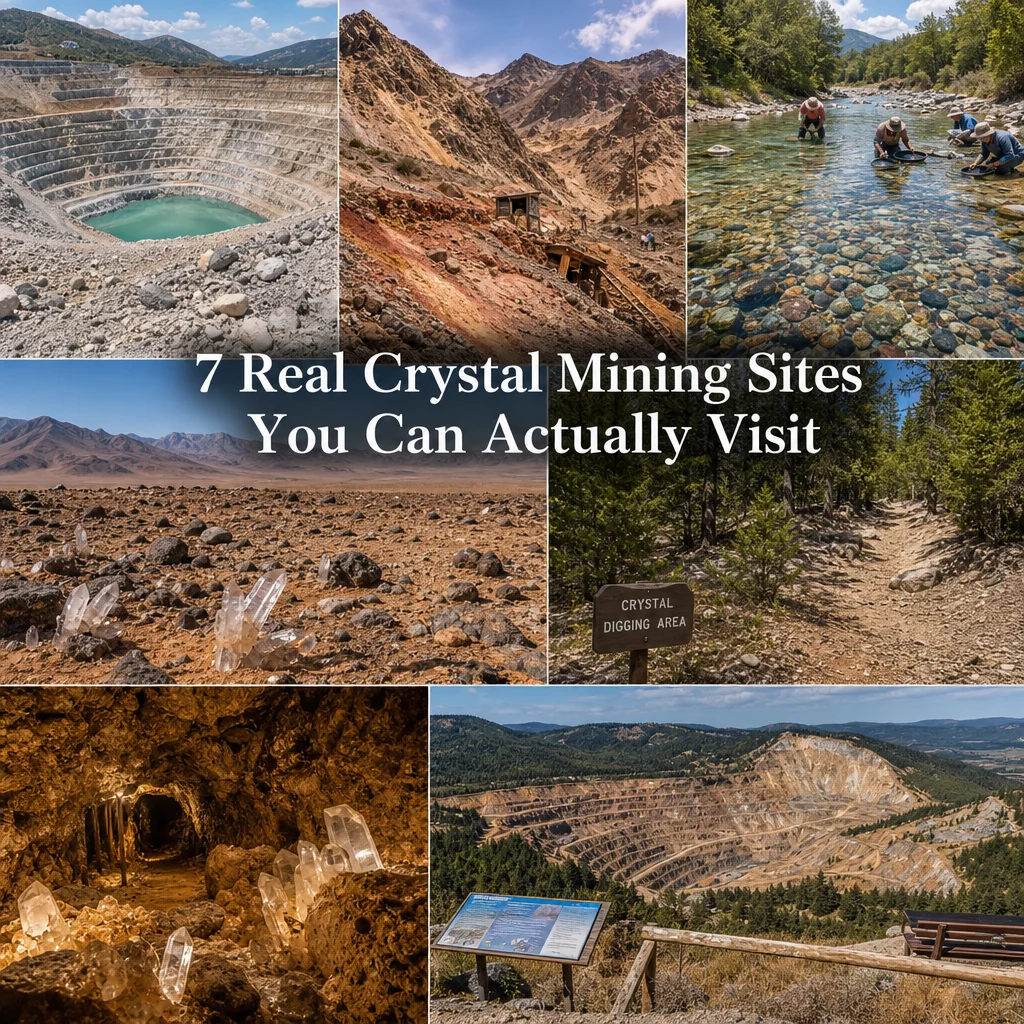
7 real crystal mining sites you can actually visit in the US
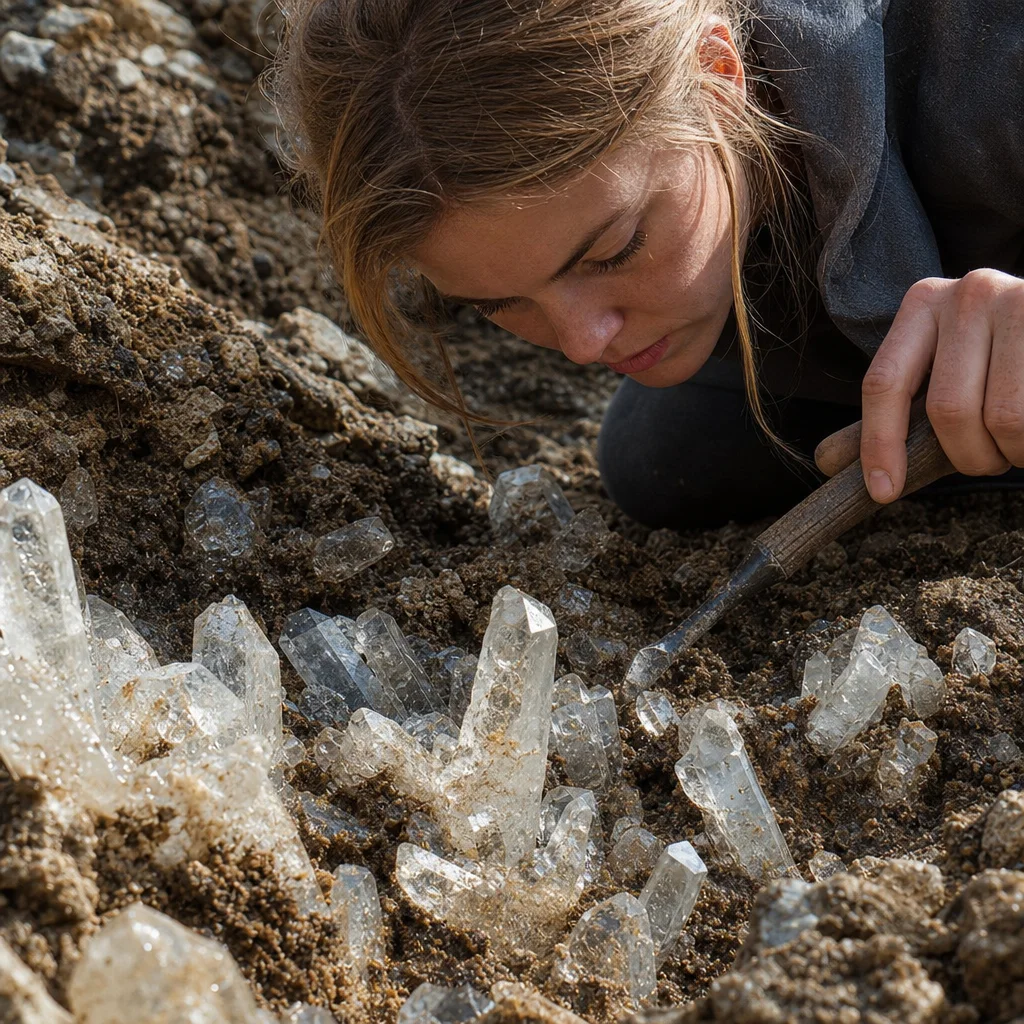
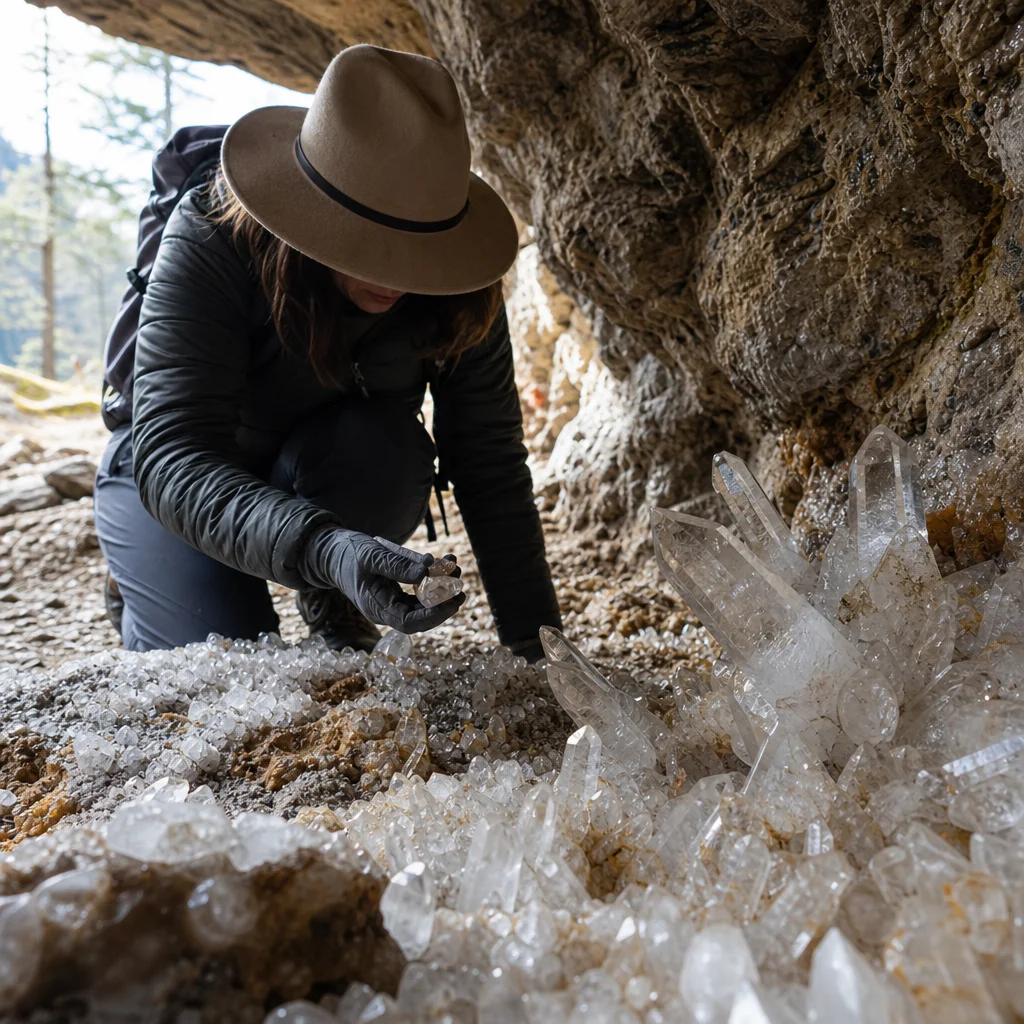
I drove four hours into the Ouachita Mountains on a July afternoon to dig quartz out of the dirt. It was 97°F, the humidity sat around 80%, and within fifteen minutes I was covered in orange clay from my knees to my elbows. Two hours later I had a backpack full of pointy quartz clusters and the kind of satisfaction that only comes from pulling something beautiful out of the ground with your own hands.
That trip to Arkansas got me hooked on the idea that you don't have to buy crystals in a shop. You can go get them yourself, from the places where they actually formed. The US has a surprising number of sites where the public can dig, sift, and keep what they find. Some are commercial pay-to-dig operations. Others are on public land where rockhounding is permitted. Here are seven worth the trip.
1. Ron Coleman Mining — Jessieville, Arkansas
What you'll find: Clear and milky quartz crystals, some with inclusions. The Ouachita Mountains contain some of the finest quartz deposits in the world — commercially mined specimens from this region end up in museums and collections globally.
Address: 211 Crystal Ridge Lane, Jessieville, AR 71949
Cost: Dig-your-own starts around $25 per adult for surface collecting. The "wholesale dig" option, where you keep everything you can carry in a provided container, runs about $60-100 depending on the size.
Best season: March through May, or October through November. Summer is brutal — I can personally confirm that Arkansas in July will test your commitment to the hobby. Winter is manageable but the clay freezes hard, making digging physically harder.
My take: This is the site I visited, and I'd go back in a heartbeat — just not in summer. The quartz here is genuinely impressive. I pulled out a cluster about the size of a grapefruit that now sits on my bookshelf. The staff are friendly and will help you identify your better finds. One practical detail they don't advertise much: bring a garden trowel, not a massive shovel. The best crystals are often in the top 12 inches of soil, not deep down. You're sifting, not mining.
2. Emerald Hollow Mine — Hiddenite, North Carolina
What you'll find: Emeralds (rare but real), hiddenite (a green variety of spodumene, first discovered here), aquamarine, tourmaline, garnet, and quartz. This is one of the only places in the world where you can dig for emeralds on public land.
Address: 484 Emerald Hollow Mine Dr, Hiddenite, NC 28636
Cost: Day passes range from $30-60 depending on which activities you choose (sluicing, creeking, or actual dig). Combo tickets are the best value if you want to try everything.
Best season: April through October. The mine operates year-round weather permitting, but spring and fall are most comfortable. After a good rain is ideal — water exposes new material.
My take: Hiddenite is a small town that takes its geological heritage seriously. The mine has a nice setup with a sluice and a creek area in addition to the dig site. Most visitors won't find a gem-quality emerald — let's be honest — but finding even a small piece of green beryl is a thrill. The creek area is the most relaxed option and good for families with younger kids. Bring water shoes.
3. Herkimer Diamond Mines — Herkimer, New York
What you'll find: Herkimer "diamonds" — doubly terminated quartz crystals that are unusually clear and naturally faceted. They're not actual diamonds, but they're striking enough that they've fooled people for centuries.
Address: 4601 NY-28, Herkimer, NY 13352
Cost: Approximately $14-18 per adult for a day pass. Tool rental available on-site if you don't have your own.
Best season: Mid-May through October. The mines close for winter. Early morning visits are best because the rock faces catch the light and the crystals are easier to spot.
My take: The geology here is unusual. These crystals formed in cavities within dolostone about 500 million years ago, and many of them are still sitting in their vugs (small pockets in the rock). Breaking open a vug to find a cluster of sparkling, perfectly formed crystals inside is one of the most satisfying things I've done outdoors. You will need a hammer and chisel — surface picking won't cut it here. The rock is hard. Gloves are not optional. I'd rank this as one of the more physically demanding sites on this list, but also one of the most rewarding.
4. Wegner Quartz Crystal Mines — Mount Ida, Arkansas
What you'll find: High-quality clear quartz crystals. Mount Ida calls itself the "Quartz Crystal Capital of the World," and while that's a tourism claim, the quartz here really is exceptional — clear, well-formed, and abundant.
Address: 82 Wegner Ranch Rd, Mount Ida, AR 71957
Cost: Around $20-35 per person for surface collecting. Tailings pile access (easier digging through already-excavated material) is usually the cheaper option.
Best season: Spring and fall. The Wegner ranch is in a valley that gets very humid in summer and has limited shade in the dig areas.
My take: If Ron Coleman is the big commercial operation, Wegner is the more relaxed alternative. The vibe is more "family ranch" than "mining operation," which makes it better for first-timers and kids. The tailings pile is where I'd send beginners — you don't need to dig into hard ground, just sift through material that's already been broken up. I've heard people complain that commercial sites "salt" their dig areas (add crystals from elsewhere), but at Wegner I watched a ten-year-old pull a pristine four-inch cluster out of the tailings with zero help. The crystals here are real.
5. Oxford County Pegmatites — Paris, Maine
What you'll find: Tourmaline (black schorl and occasionally green/pink elbaite), beryl (including pale aquamarine), lepidolite, quartz, and feldspar. Maine's pegmatite deposits are mineralogically diverse and historically significant — tourmaline was first discovered in the US here in 1822.
Address: Multiple sites around Paris and West Paris, ME. The Havey Quarry and Harvard Quarry are two well-known spots. Some require permission or organized trips through mineral clubs.
Cost: Varies. Some sites charge $20-50 per person for organized digs. Public road cuts are free but require more knowledge and effort.
Best season: June through September. Maine winters are not compatible with rockhounding. The short summer season means sites get busy on weekends — go midweek if you can.
My take: This is the most "real geology" option on the list. You're looking at actual pegmatite veins — coarse-grained igneous rock that formed during the final stages of magma cooling. The minerals here are diverse in a way that Arkansas quartz country just isn't. The catch is that access is more complicated. Some of the best sites are on private claims or require you to join a organized dig through a mineral club. If you're willing to put in that effort, Maine delivers. If you want a show-up-and-dig experience, stick to Arkansas.
6. Spectrum Sunstone Mine — Plush, Oregon
What you'll find: Oregon sunstone — a variety of labradorite feldspar that ranges from colorless to pale yellow to red and green. Some specimens display schiller, a shimmering optical effect caused by microscopic copper platelets inside the crystal. This is Oregon's official state gem.
Address: Near Plush, OR (high desert, Lake County). The mine provides directions when you book.
Cost: Approximately $50-75 per person per day. Some operations charge by the bucket rather than the day.
Best season: June through September. This is high desert — remote, dry, and very hot in summer. Spring can work but roads may be impassable after rain. Bring everything you need because there is nothing nearby. Literally nothing.
My take: This is the most adventurous site on the list. You're driving miles on dirt roads into the Oregon outback to dig sparkly rocks out of volcanic soil. It's not for everyone, but that isolation is part of the appeal. The sunstones themselves are beautiful — warm, fiery colors that look nothing like the quartz and tourmaline you'd find elsewhere. A practical note: the sunstones are found in weathered basalt and volcanic ash. You're not breaking hard rock; you're screening loose dirt. It's easier on the body than Herkimer but requires more patience.
7. Graves Mountain — Lincolnton, Georgia
What you'll find: Rutile (brilliant metallic red/black crystals), kyanite (blue blades), lazulite, pyrophyllite, and quartz. Graves Mountain is a geological oddity — a deposit that produces mineral specimens found almost nowhere else on Earth.
Address: Graves Mountain Rd, Lincolnton, GA 30817
Cost: The annual Graves Mountain Rock Swap and Dig (usually held in April and October) charges a modest fee, around $15-25 per person. Access outside of organized events requires contacting the caretaker, Norman.
Best season: The spring and fall dig events are the best time to visit. Summer is hot and the site has limited shade. Winter is possible but less comfortable.
My take: Graves Mountain is a mineral collector's dream that most casual rockhounds have never heard of. The rutile crystals here are world-class — deep red, metallic, and striking. The kyanite blades are electric blue and photograph beautifully. The catch is access: this is not a commercial tourist mine with regular hours. You either go during one of the twice-yearly organized digs or arrange a private visit. The April event is better weather-wise and draws a fun crowd of serious collectors who are surprisingly generous with advice and help.
What to bring: a practical gear list
Regardless of which site you visit, the basics are the same:
- Heavy-duty gloves — Leather work gloves, not gardening gloves. Rock edges are sharp and you'll be gripping and pulling for hours.
- Safety glasses — Non-negotiable if you're using a hammer or chisel. Rock chips fly.
- Sturdy shoes or boots — Closed toe, good grip. No sandals, no matter how hot it is. Flip-flops at a mine is a fast track to a tetanus shot.
- Garden trowel or hand rake — For sifting through loose material. A full-size shovel is overkill at most public sites.
- Bucket or backpack — Something to carry your finds. Five-gallon buckets are standard. Cheap ones from a hardware store work fine.
- Water — More than you think you need. I bring a gallon per person minimum for a half-day dig.
- Sunscreen and a hat — Most dig sites have zero shade.
- Newspaper or bubble wrap — Wrap your better finds individually. Quartz crystals clanking against each other in a bucket will chip.
- Cash — Many sites don't take cards. Some have small shops where you can buy snacks, tools, or specimens.
Mine etiquette: how not to be that person
Most of these sites are on private land that the owners have chosen to share with the public. A few basic rules keep them open:
- Fill your holes. When you dig, pile the dirt to one side and fill it back in when you're done. Open holes are hazards for other visitors and a liability for the landowner.
- Don't dig near structures or fences. Undermining a retaining wall or fence line is dangerous and will get you kicked out.
- Respect limits on what you can take. Some sites have weight limits or restrictions on certain types of specimens. If the sign says "keep up to 25 pounds," don't stuff 50 pounds of quartz in your backpack and hope nobody notices.
- Don't climb on tailings piles or rock faces. They're less stable than they look.
- Pack out your trash. This should be obvious, but I've seen people leave water bottles and snack wrappers at three of the seven sites listed above. Don't be that person.
- Ask before taking photos of other people or their finds. Some collectors are private about what they've found — especially if it's valuable.
Cleaning your finds at home
What comes out of the ground is usually covered in dirt, clay, and mineral residue. Cleaning makes a dramatic difference:
For quartz and hard minerals: Soak in warm water with dish soap for an hour, then scrub with a stiff brush (an old toothbrush works for small pieces, a vegetable brush for larger ones). For stubborn clay, soak overnight. For iron stains (orange or brown discoloration), a soak in diluted oxalic acid — available at hardware stores as "wood bleach" — will remove them. Handle oxalic acid with gloves and eye protection, and do it outside.
For softer minerals (calcite, fluorite, sunstone): Stick to warm soapy water and a soft brush. No acids, no harsh chemicals, no ultrasonic cleaners. These minerals are genuinely delicate and chemicals will damage the crystal faces.
For everything: Let specimens air dry completely before storing. Moisture trapped in cracks can cause problems over time, especially in humid climates. A single specimen with residual moisture stored in a closed container can develop mineral growth or mold — yes, mold — on the surface.
The first crystal I ever dug up in Arkansas sat in a bucket for three days before I cleaned it. When I finally scrubbed off the clay, there was a crystal point clear enough to read through. That moment — the reveal — is what makes digging your own worth the drive, the dirt, and the sore shoulders the next morning.
For a comprehensive overview, see our Ultimate Crystal Guide for Beginners.
Related Guides
- 7 Crystal Cleaning Mistakes That Cost Me Hundreds of Dollars
- How to Clean Crystals Without Ruining Them
- How to Tell if a Crystal Bracelet Is Real or Fake
- Clear Quartz: The Universal Crystal Guide
- Complete Crystal Guide: Identification and Meanings
- Essential Jewelry Storage Tips
- Garnet Varieties Guide
Frequently Asked Questions
Where is the largest crystal mine in the US?
The largest crystal mine in the US is the Foothills Gem Mine in Frazier, Montana, known for its significant deposits of amethyst and other gemstones.
Can I mine crystals on public land?
While some public lands like national forests and BLM lands offer mineral collecting opportunities, it's essential to research and follow local regulations, as mining on public land may be permitted with proper permits and under strict guidelines.
Are there any crystal mines open to the public?
Yes, there are several crystal mines open to the public, such as the Crystal River Mines in Crystal River, Florida, and the Lake Superior Agate Mine in Minnesota, which offer guided tours and hands-on experiences.
How can I find out about mining crystal on private property?
Contacting the property owner or checking with local tourism boards can help find out if there are any opportunities to mine crystals on private property, which might involve a fee or an arrangement for collecting crystals.
What is the best way to clean and care for crystals I've mined?
Crystals should be cleaned gently with soap and water, dried, and stored in a dry place. To preserve their energy, some believe in clearing negative energies through meditation or by smudging the crystals with sage before storage or display.
What Makes This Crystal Special
This section covers important aspects of what makes this crystal special. For detailed information, please refer to the FAQ section below.
Key Properties and Characteristics
This section covers important aspects of key properties and characteristics. For detailed information, please refer to the FAQ section below.
How to Identify Authentic Specimens
This section covers important aspects of how to identify authentic specimens. For detailed information, please refer to the FAQ section below.
Popular Uses and Applications
This section covers important aspects of popular uses and applications. For detailed information, please refer to the FAQ section below.

Comments