Moonstone: The Complete Guide to the Stone of New Beginnings
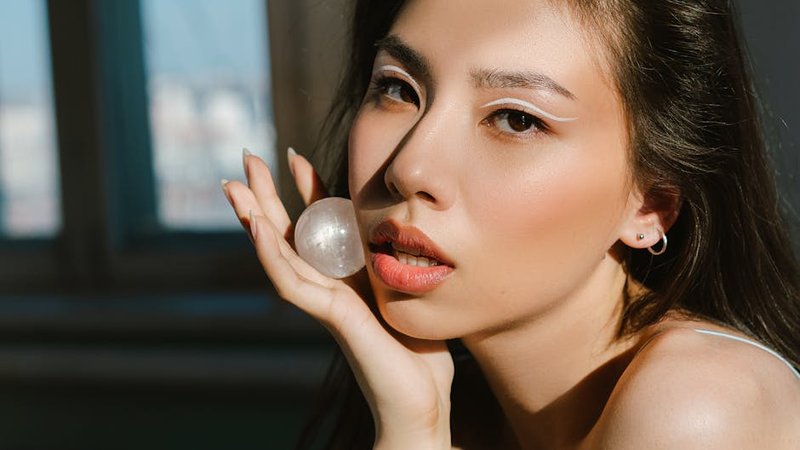
Moonstone has captivated humanity for thousands of years. From ancient Roman jewelers to modern crystal healers, this luminous feldspar mineral carries a reputation that few other stones can match. Its signature glow — a soft, billowy light that seems to float just beneath the surface — earned it a permanent place in both jewelry boxes and meditation altars worldwide.
If you've been drawn to moonstone, you're not alone. It's one of the most searched crystals online, and for good reason: it bridges the gap between beauty and meaning in a way that feels almost effortless. This guide covers everything you need to know — what moonstone actually is, what it symbolizes, how to use it, how to care for it, and how to tell the real thing from imitations.
What Is Moonstone? The Science Behind the Glow
Moonstone belongs to the feldspar family, a group of minerals that makes up roughly 60% of the Earth's crust. Specifically, it's a variety of orthoclase feldspar (potassium aluminum silicate), though some specimens blur the line with albite feldspar.
The phenomenon that makes moonstone so distinctive is called adularescence — an optical effect caused by light scattering between thin, alternating layers of orthoclase and albite within the stone. When light enters the crystal, these microscopic layers interfere with each other and produce a floating, billowy glow that shifts as you move the stone. It looks, genuinely, like moonlight trapped inside rock.
Moonstone ranks 6 to 6.5 on the Mohs hardness scale. That puts it in the same general range as opal and slightly softer than quartz. It's durable enough for daily-wear jewelry (rings, pendants, earrings) but benefits from a setting that protects it from hard impacts. For more on how hardness affects everyday wear, check out our Mohs Scale of Hardness guide.
A Brief History of Moonstone
The Romans believed moonstone was formed from solidified rays of moonlight. Both Roman and Greek cultures associated it with their lunar deities — Diana and Selene, respectively. In India, moonstone is still considered a sacred stone, traditionally given as a wedding gift to ensure harmony and fertility in marriage.
During the Art Nouveau period (1890–1910), moonstone experienced a massive resurgence thanks to designers like René Lalique, who used it extensively in their most celebrated pieces. The stone's ethereal quality fit perfectly with the flowing, nature-inspired aesthetic of that era.
Emotional Healing: Why Moonstone Is Called the Stone of New Beginnings
The "new beginnings" label isn't marketing fluff. Moonstone has a long-standing reputation as a stone of transition — and it earns that reputation through several interconnected qualities.
Emotional Balance and Stability
Life transitions, even positive ones, create emotional turbulence. Starting a new job, ending a relationship, moving to a new city — these moments destabilize your internal state. Moonstone is said to smooth out emotional volatility, not by suppressing feelings, but by helping you process them more cleanly. Users frequently report that holding or wearing moonstone during stressful periods creates a sense of calm detachment, as if they're watching their emotions from a slightly greater distance.
If emotional turbulence is something you're working through more generally, our guide to the best crystals for anxiety and stress relief pairs well with this one.
Intuition and Inner Knowing
Moonstone is strongly associated with the intuitive faculty — that gut-level sense of knowing that operates below conscious thought. Many people use moonstone during meditation or journaling sessions specifically to deepen their access to this quieter channel of awareness. It's not about becoming psychic; it's about trusting the signals your subconscious already sends you.
Feminine Energy and the Divine Feminine
Moonstone's connection to feminine energy is one of its oldest and most consistent associations. In crystal healing traditions, it's considered a stone of the Goddess — linked to fertility, menstrual health, pregnancy, and the broader archetype of the nurturing feminine. Whether or not you resonate with goddess imagery, the practical application is similar: moonstone is used to support emotional openness, receptivity, and creative flow.
For crystals that specifically support love and relational healing, see our guide to the best crystals for love and relationships.
Metaphysical Properties: Chakras and Lunar Connection
Third Eye Chakra (Ajna)
The third eye chakra, located between the eyebrows, governs intuition, insight, and inner vision. Moonstone's connection to this energy center is direct and well-documented in crystal healing literature. When placed on or near the third eye during meditation, practitioners report enhanced clarity, vivid imagery, and a stronger sense of inner guidance.
If you're interested in building a chakra-focused practice, our guide to the best crystals for beginners covers foundational stones for each chakra.
Crown Chakra (Sahasrara)
Moonstone also resonates with the crown chakra — the energy center at the top of the head associated with spiritual connection, universal consciousness, and transcendence. This dual-chakra affinity (third eye + crown) makes moonstone relatively unusual. Most stones have a primary chakra correspondence; moonstone bridges the gap between intuitive knowing and spiritual awareness.
The Moon Cycle Connection
Moonstone's metaphysical properties are often described in relation to lunar cycles. The full moon is considered the peak time for charging moonstone, as the stone is believed to absorb and store lunar energy most efficiently during this phase. Some practitioners time their moonstone rituals to specific moon phases — new moon for intention-setting, full moon for charging and releasing.
This lunar connection is part of a broader practice. Our full moon ritual guide for cleansing crystals walks through the complete process step by step.
How to Use Moonstone: Practical Applications
Wearing Moonstone Jewelry
The most common and arguably most effective way to work with moonstone is to wear it. Pendants worn near the heart or throat are popular for emotional balancing. Rings are traditional but carry more risk of impact damage. Earrings keep the stone near the third eye area, which aligns with its metaphysical properties.
Silver settings are the classic pairing — the cool tones of silver complement moonstone's blue-white sheen. Rose gold also works beautifully, especially with peach or rainbow moonstone varieties.
Meditation with Moonstone
For meditation, hold a tumbled stone or palm piece in your receiving hand (typically the left), or place it directly on your third eye while lying down. Start with 10–15 minute sessions. Focus on your breath and allow any imagery or impressions to surface without judgment. Moonstone works well in combination with other intuitive stones — labradorite is a particularly popular pairing.
Moon Bathing for Charging
Place your moonstone on a windowsill, balcony, or outdoor surface where it will receive direct moonlight during a full moon. Leave it overnight. In the morning, your stone is considered fully charged. Some people also place moonstone in a bowl of water under the moon, which charges both the stone and the water — the resulting "moon water" can be used for cleansing other crystals, anointing, or simply drinking.
For a comprehensive look at charging methods beyond moonlight, our article on how to cleanse and charge your crystals covers sound, smoke, earth, and intention-based approaches.
How to Care for Moonstone
Moonstone is moderately durable but requires some attention to keep it looking its best.
Cleaning
Warm water with mild soap is the safest cleaning method. Use a soft brush (a baby toothbrush works well) to gently remove dirt from settings and crevices. Avoid harsh chemicals, ultrasonic cleaners, and steam cleaners — the internal layers that create adularescence can be damaged by rapid temperature changes or aggressive vibration.
This is consistent with general gemstone care principles. Our guide on how to clean gold jewelry covers similar gentle techniques that apply to moonstone settings.
Storage
Store moonstone separately from harder stones (quartz, sapphire, diamond) to prevent scratching. A soft pouch or lined jewelry box compartment works well. Avoid prolonged direct sunlight, which can cause some moonstone varieties to fade over time.
How to Tell Real Moonstone from Fakes
The market is flooded with moonstone imitations, and some of them are convincing. Here's how to tell the difference.
Moonstone vs. Opalite
Opalite is a man-made glass that mimics the look of moonstone. It's the most common imitation you'll encounter. Key differences:
- Temperature: Opalite feels room temperature or slightly cool. Real moonstone feels distinctly cool to the touch and stays cooler longer.
- Weight: Opalite is noticeably lighter than real moonstone of the same size (glass is less dense than feldspar).
- Adularescence: Real moonstone's glow moves with the angle of light and appears to come from within the stone. Opalite has a surface-level iridescence that looks more like a rainbow film.
- Inclusions: Natural moonstone often contains tiny needle-like inclusions (called "centipedes" by gemologists). Opalite is internally flawless because it's manufactured glass.
Moonstone vs. Glass Imitations
Some lower-end imitations are simply clear or milky glass with a reflective backing. These are easier to spot: the "glow" is uniform and doesn't shift when you rotate the stone. The weight is wrong (too light), and there's no depth to the light effect — it sits on the surface like a sticker.
The Pinpoint Test
Hold the stone about 6 inches from your face and focus on a single point on its surface. Slowly rotate the stone. In genuine moonstone, the adularescent glow will drift across the surface in a smooth, organic wave. In imitations, the effect will either stay fixed or shift abruptly without the characteristic billowing movement.
Choosing Your Moonstone: What to Look For
Quality in moonstone comes down to three main factors:
- Adularescence quality: The brightest, most three-dimensional glow commands the highest value. Blue adularescence (common in Sri Lankan stones) is the most prized variety.
- Clarity: Fewer visible inclusions generally mean higher value, though some collectors appreciate the natural "centipede" inclusions as proof of authenticity.
- Color: Transparent body color with blue sheen is the classic premium grade. Rainbow moonstone (which is technically labradorite) offers multicolored adularescence and has its own dedicated following.
Frequently Asked Questions
Can moonstone go in water?
Brief contact with water is fine — in fact, mild soapy water is the recommended cleaning method. However, prolonged soaking (days or weeks) isn't ideal. Moonstone is a feldspar, and while it won't dissolve quickly, extended water exposure can weaken any treatments or cause microscopic fractures to expand over time.
Is rainbow moonstone actually moonstone?
Technically, no. "Rainbow moonstone" is white labradorite, a related feldspar mineral with a different composition. It displays a similar schiller effect but with multiple colors rather than the single blue-white glow of true moonstone. Both are legitimate, beautiful stones — they're just different minerals sharing a commercial name.
What zodiac sign is moonstone associated with?
Moonstone is traditionally linked to Cancer (ruled by the Moon), though it's also associated with Libra and Scorpio in some traditions. Cancer is the most common pairing due to the direct lunar connection.
Can I sleep with moonstone?
Yes. Many people keep moonstone under their pillow or on their nightstand to support dream work and intuitive development during sleep. If you're sensitive to crystal energy, start with shorter periods and see how it affects your sleep quality. For more sleep-focused crystal recommendations, our guide to the best crystals for sleep and insomnia has additional options.
Final Thoughts
Moonstone earns its reputation honestly. It's beautiful enough to wear every day, meaningful enough to build a practice around, and accessible enough that you don't need a gemology degree to appreciate it. Whether you're drawn to it for the science of adularescence, the emotional symbolism of new beginnings, or simply the way it catches light on your wrist — moonstone delivers.
Start with a single piece that speaks to you. Wear it, meditate with it, charge it under the full moon. The relationship between a person and their crystals is personal, and moonstone is one of the most welcoming stones for building that connection.
Comments