Green Aventurine Guide: Identify & Use This
May 14, 2026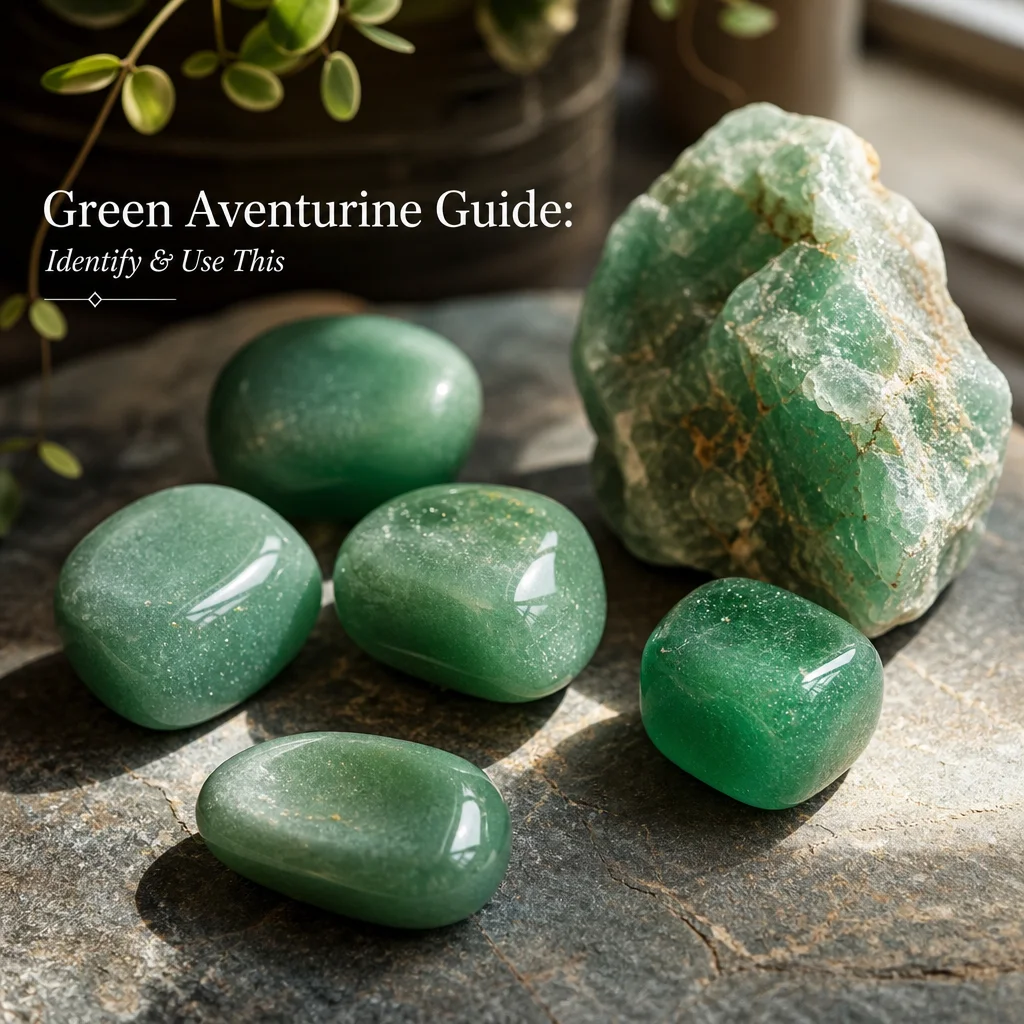
Green Aventurine: The Practical Guide to Its Properties, Uses, and Identification
Green aventurine is one of those stones that shows up everywhere — tumbled in gift shop bins, set in earrings, carved into hearts and stars, and sold by the handful at craft fairs. It's common, affordable, and easy to identify once you know what to look for. It's also frequently confused with jade, malachite, and green quartz, which are very different stones.
Here's a thorough guide to what green aventurine actually is, how to tell it apart from lookalikes, and what makes it useful beyond the "lucky stone" marketing.
What Green Aventurine Actually Is
Aventurine is a variety of quartz (silicon dioxide) that contains tiny inclusions of other minerals — primarily fuchsite (a type of green mica) — which give it its characteristic sparkle and green color. The technical term for that sparkle is "aventurescence," and it's the defining feature of the stone.
The Mohs hardness is 6.5-7, which makes it durable enough for daily-wear jewelry. It's found in Brazil, India, Russia, Austria, and Tanzania. Most of the tumbled green aventurine on the commercial market comes from India or Brazil.
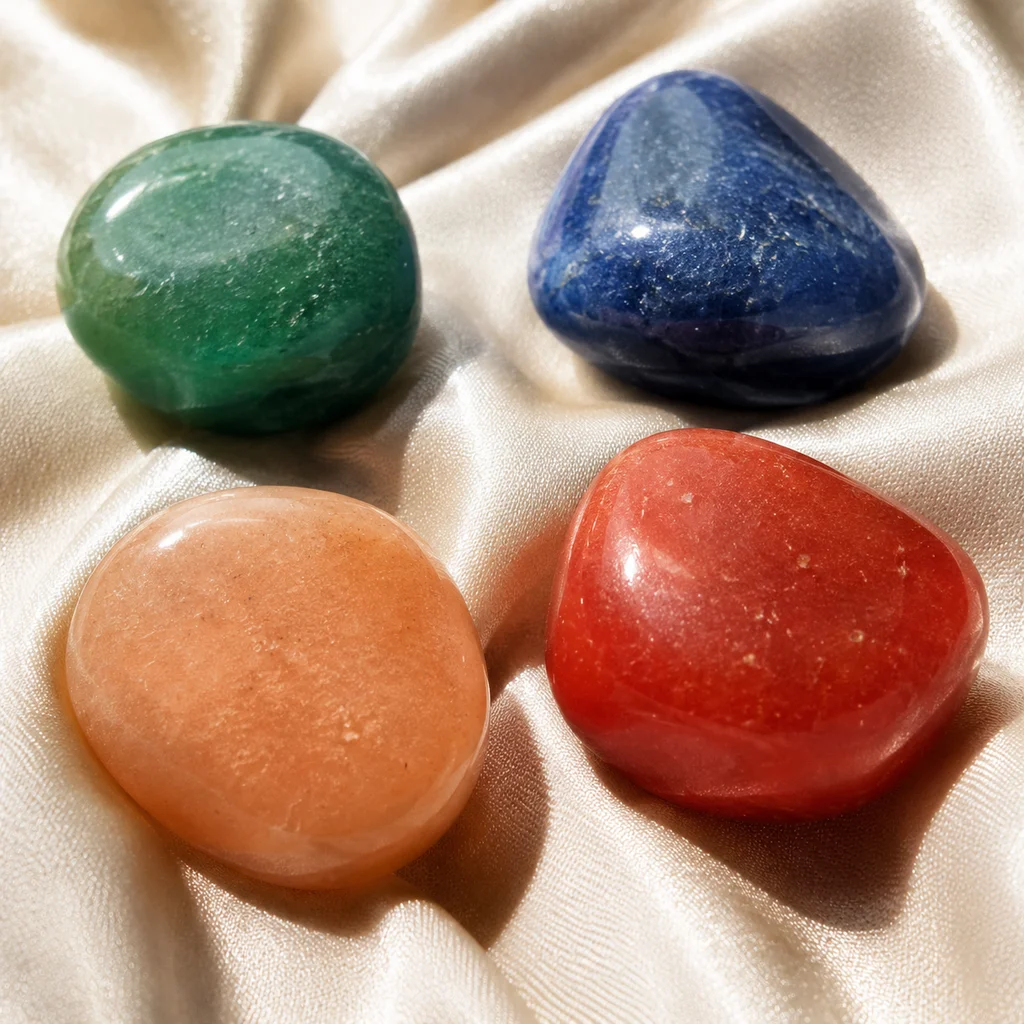
While green is the most common and well-known variety, aventurine also comes in blue (from dumortierite inclusions), red/brown (from hematite or goethite), and peach/orange (from hematite and pyrite). Green aventurine with its fuchsite inclusions is by far the most popular.
How to Identify Genuine Green Aventurine
The Sparkle Test
Hold the stone under a bright light and tilt it slowly. You should see tiny sparkles scattered across the surface — these are the mica inclusions catching light. The sparkles are usually silver-white or slightly golden, set against the green body of the stone. This aventurescence is the single most reliable identification feature.
If a green stone doesn't sparkle at all, it's probably not aventurine. If it has uniform, opaque color with no visible inclusions, it could be dyed howlite, green glass, or a low-grade jade.
The Color Range
Genuine green aventurine ranges from pale, almost mint green to deep forest green. The color is typically uneven — patches of darker and lighter green within the same stone, sometimes with visible layering or banding. Perfectly uniform green color is suspicious; aventurine is naturally variegated.
The Texture
Aventurine has a slightly granular texture due to its quartz composition and mineral inclusions. Run your fingernail across the surface — you shouldn't feel individual grains (it's too hard for that), but it doesn't have the glassy smoothness of polished agate or the waxy feel of jade.
Mohs Hardness
At 6.5-7, aventurine will scratch glass (Mohs 5.5) easily. If a supposed aventurine can't scratch glass, it's something softer — possibly serpentine or a dyed stone.
Aventurine vs. Common Lookalikes
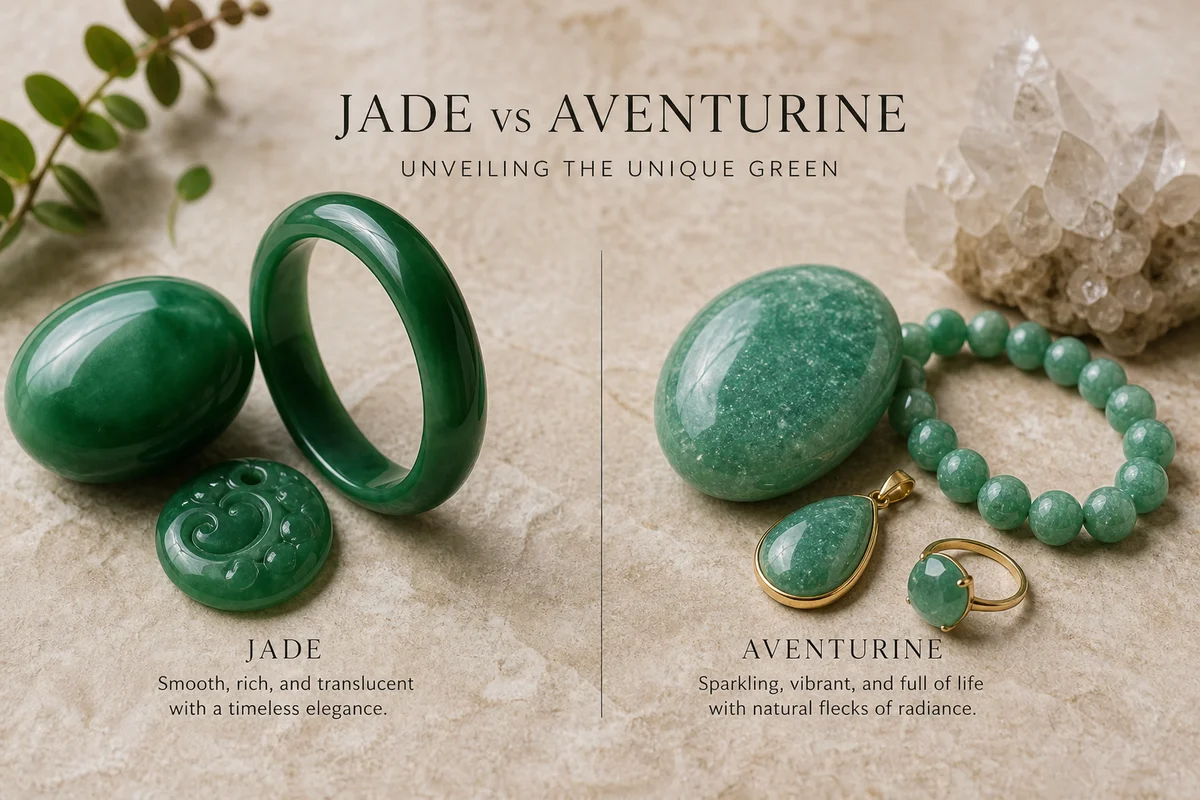
Green Aventurine vs. Jade
- Aventurine: Sparkles under light (aventurescence), granular texture, harder than steel
- Jade (nephrite/jadeite): No sparkle, waxy or greasy luster, feels heavier for its size (higher specific gravity), tougher (harder to break despite similar hardness)
- Quick test: The sparkle is the giveaway. Jade doesn't have mica inclusions, so it doesn't aventuresce.
Green Aventurine vs. Malachite
- Aventurine: Green with sparkles, relatively even color distribution
- Malachite: Bright green with distinctive concentric banding (bull's-eye patterns), no sparkle, much softer (Mohs 3.5-4), feels heavier
- Quick test: Malachite has obvious banding patterns. Aventurine doesn't. Also, malachite can be scratched with a steel knife; aventurine can't.
Green Aventurine vs. Green Glass/Slag
- Aventurine: Natural sparkle from mica, color variations within the stone, cool to touch initially then warms
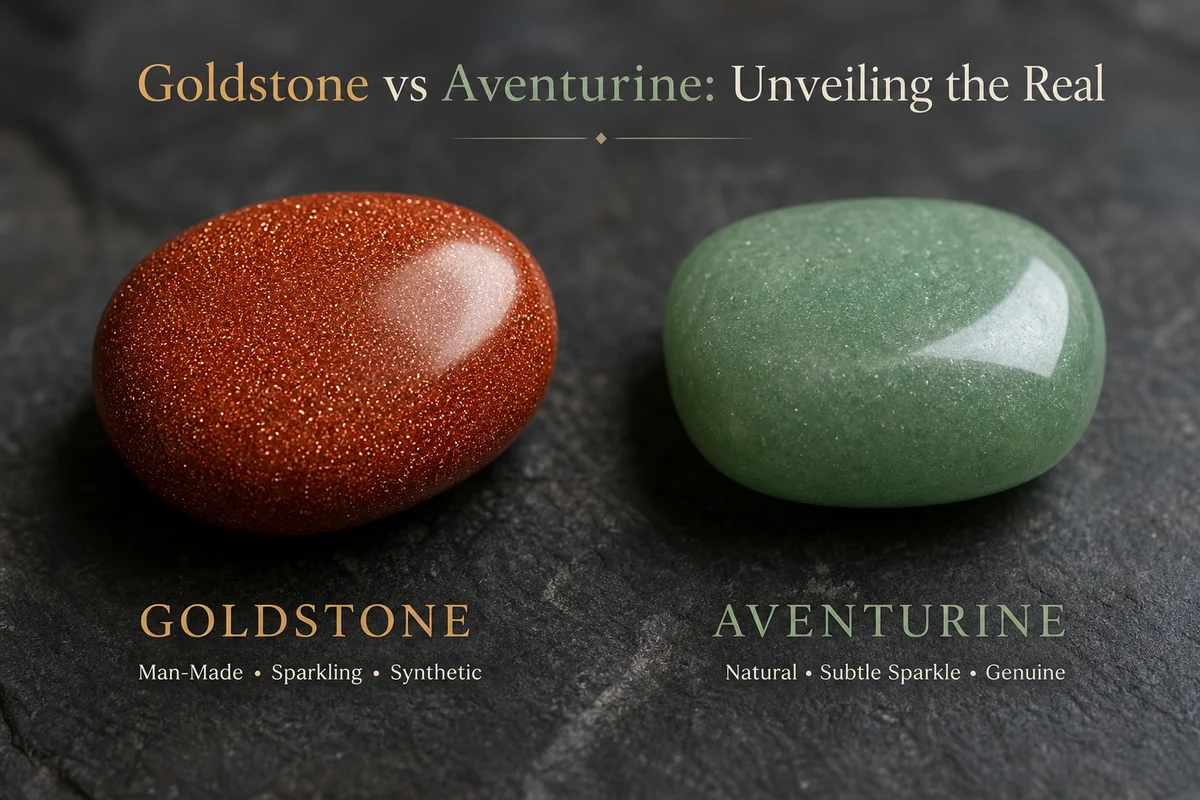
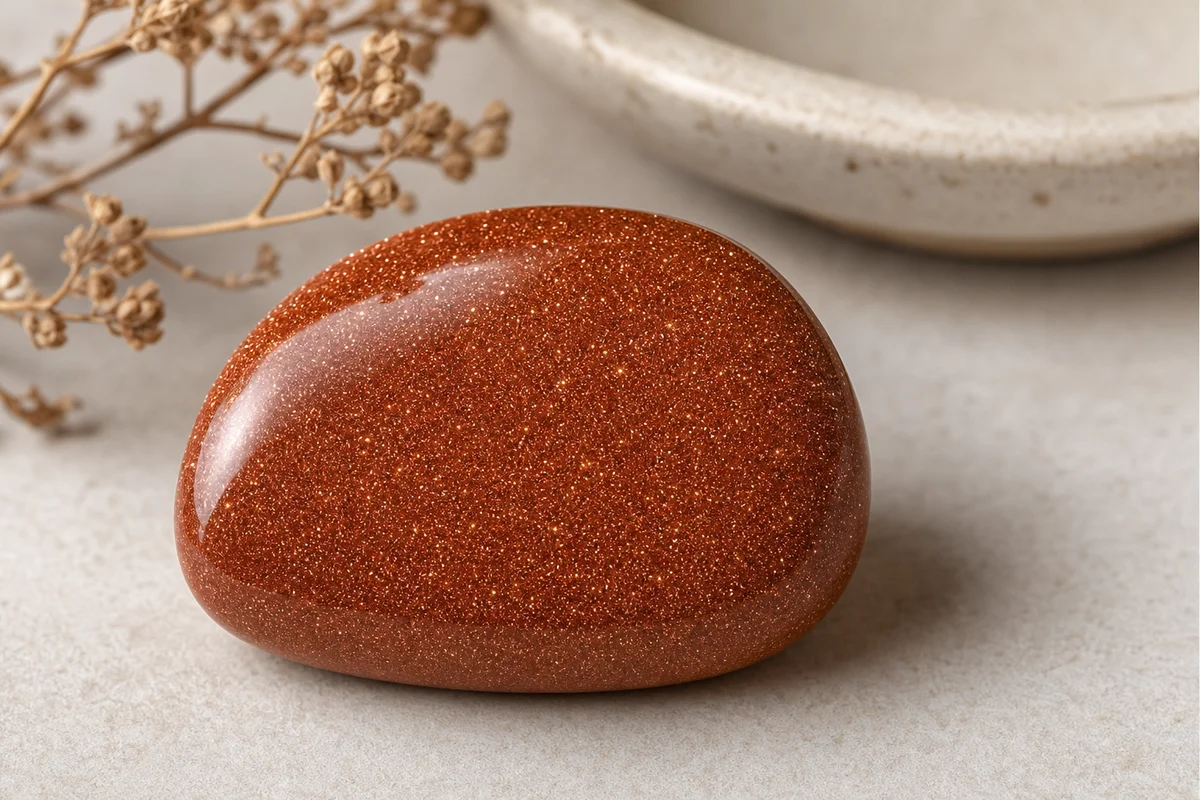
- Goldstone (aventurine glass): Extremely uniform sparkles in a glass matrix, often with visible bubbles, too perfect in distribution
- Quick test: Goldstone's sparkles are perfectly uniform copper crystals. Aventurine's mica sparkles are irregular and natural-looking. Also, goldstone is glass — it has conchoidal fractures (smooth, curved break surfaces) while aventurine fractures like quartz.
Practical Uses
Jewelry
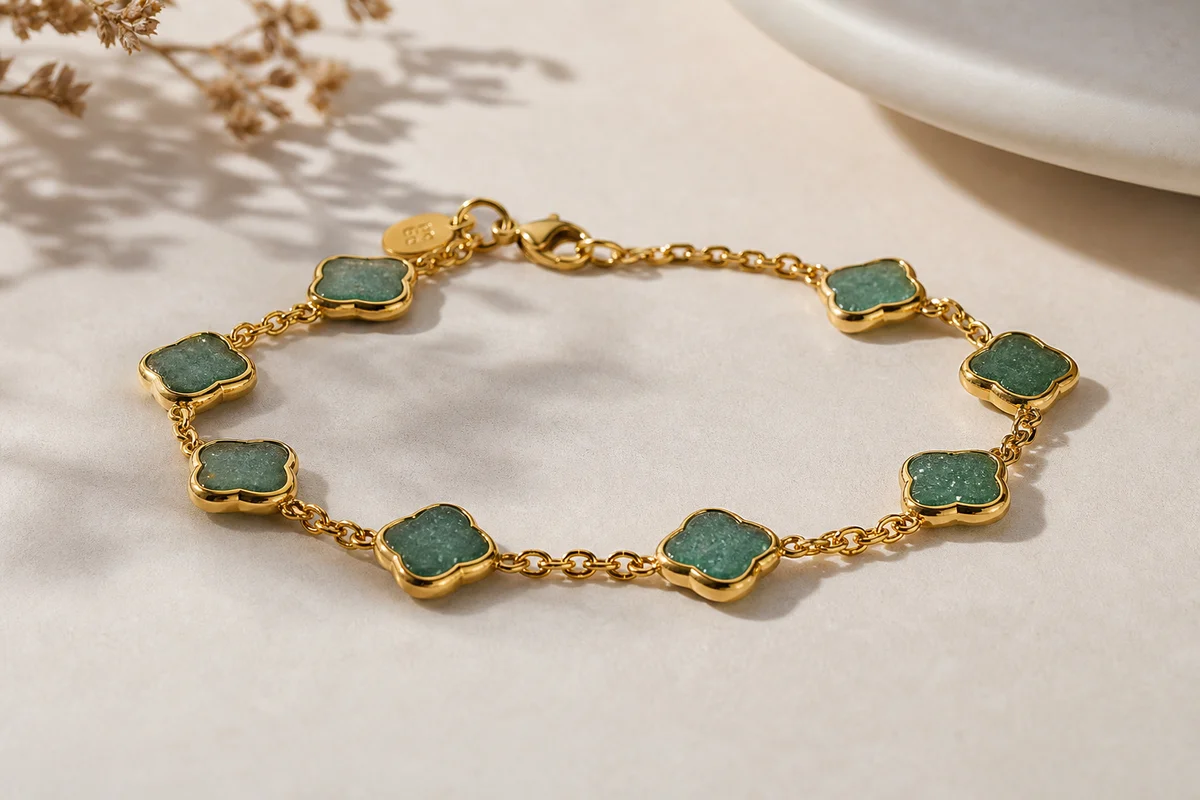
Green aventurine is excellent for jewelry because of its hardness and affordability:
- Rings: Hard enough (6.5-7) for daily wear. Faceted aventurine makes attractive, affordable rings.
- Necklaces: Tumbled pendants and bead strands are common. The natural sparkle looks particularly good in sunlight.
- Earrings: Lightweight enough for comfortable wear. The green color complements most skin tones.
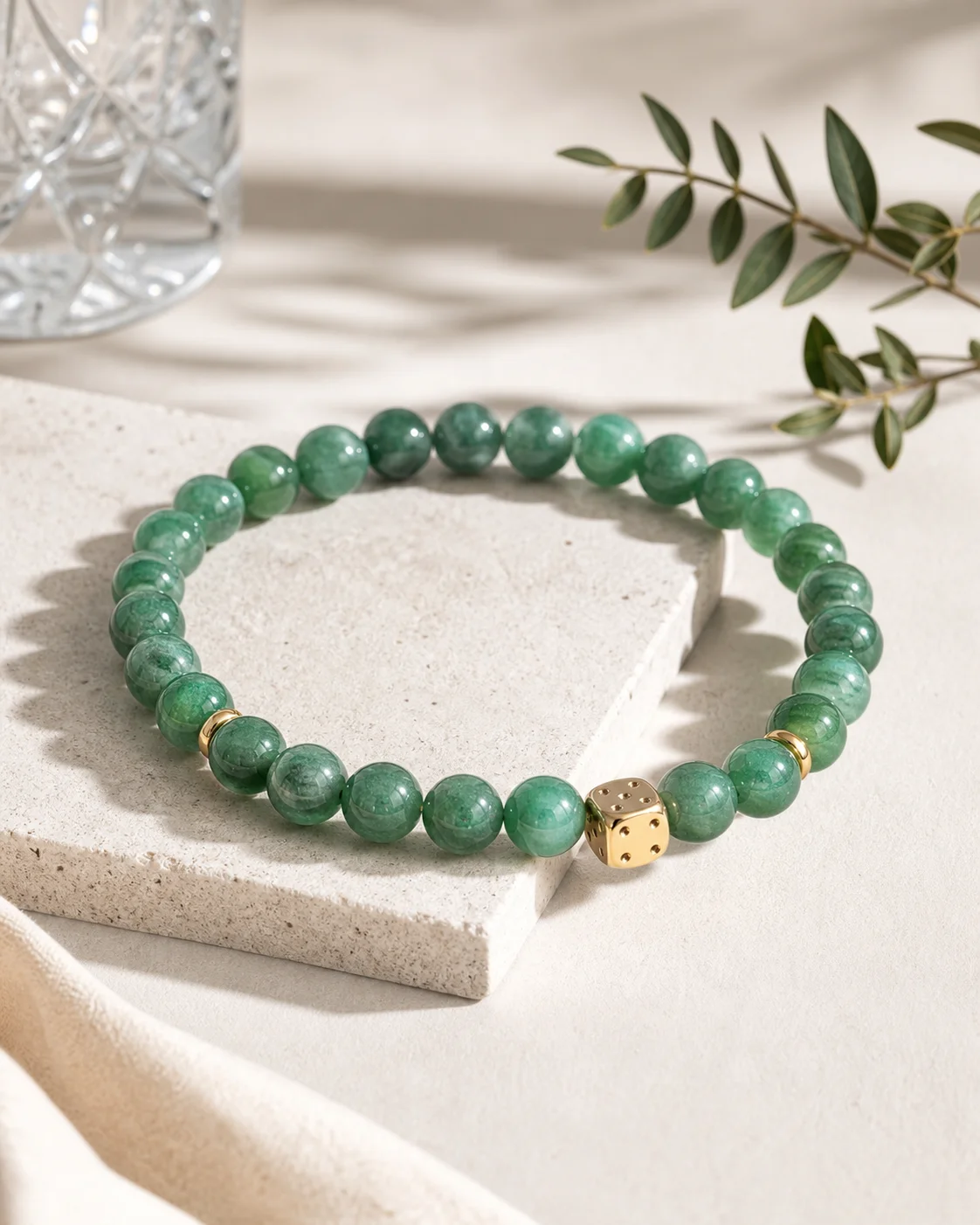
- Bracelets: Beaded aventurine bracelets are inexpensive and durable enough for regular wear.
Price range: tumbled stones cost $1-5. Beaded strands $8-15. Faceted stones $15-40 depending on quality and size. It's one of the most affordable semi-precious stones on the market.
Carvings and Decorative Objects
Because aventurine is abundant and relatively easy to carve, it's a popular material for:
- Heart-shaped carvings (the most common shape you'll see)
- Spheres and eggs
- Animal figurines
- Worry stones (smooth, oval stones with a thumb indentation)
- Coasters and bookends
Lapidary and Craft
Aventurine takes a good polish and is popular with amateur lapidaries. It's forgiving to work with — not too hard (like corundum) and not too soft (like calcite). If you're learning to cab (cut and polish cabochons), green aventurine is a good practice material.
Care and Maintenance
- Cleaning: Warm soapy water and a soft brush. Avoid ultrasonic cleaners if the stone has visible fractures or inclusions near the surface.
- Storage: Store separately from harder stones (topaz, corundum, diamond) to prevent scratching. Aventurine can be stored with other quartz varieties safely.
- Sunlight: The green color is generally stable, but prolonged UV exposure over months can slightly fade lighter specimens. Display out of direct sunlight if you want to preserve the richest color.
- Chemicals: Standard quartz resistance — it's inert to most household chemicals. Avoid hydrofluoric acid (nobody should have this at home anyway).
Buying Tips
- Buy from mineral shows or reputable dealers when possible. The markup at crystal shops is often 3-5x. Online mineral dealers and gem shows typically offer better prices for the same quality.
- Check for the sparkle. If there's no aventurescence, it's either very low-grade aventurine (possible but uncommon) or not aventurine at all.
- Look for natural color variation. Perfectly uniform color suggests dyeing. Some aventurine is dyed to enhance color — hold it under bright light and look for color concentrated in cracks or along surfaces.
- Transparency varies. Aventurine can be nearly opaque to semi-translucent. Neither is "better" — it's a matter of preference. More translucent pieces tend to show the sparkle better.
Green aventurine is a practical stone. It's attractive, durable, affordable, and easy to identify. It doesn't need special handling, it doesn't dissolve in water, and it doesn't scratch easily. For beginning collectors or anyone wanting a nice green stone without spending much, it's a solid choice — no luck required.
For a comprehensive overview, see our Ultimate Crystal Guide for Beginners.
This article is part of our crystal reference library. The The Complete Crystal Guide: Identification, Meanings, and Properties serves as the hub page with links to every major topic.
Common Uses and Benefits of Green Aventurine
Green aventurine is more than just a pretty stone; it has been used for centuries for its metaphysical and physical properties. Here's a breakdown of some common ways people incorporate it into their lives.Emotional Well-being: Green aventurine is often used to promote harmony, balance, and calmness. It's believed to be particularly effective for those who struggle with anxiety or stress, helping to bring a sense of peace and ease.
Personal Growth: This stone is associated with personal power, creativity, and confidence. It's often used to aid in decision-making and to empower individuals to stand up for themselves and their beliefs.
Financial Abundance: There's a long-standing belief that green aventurine can attract wealth and prosperity. It's said to be particularly useful for those who are starting a new business or looking to increase their financial stability.
How to Cleanse and Charge Your Green Aventurine
Just like any other crystal, green aventurine benefits from regular cleansing and charging. Here's how to do it:
Use Sea Salt: Fill a bowl with water and add a tablespoon of sea salt. Submerge your aventurine in the water for about an hour. This method is especially effective for stones that have been worn and may have accumulated negative energy.
Sunlight and Moonlight: Place your aventurine in direct sunlight for a few hours to charge it with solar energy. Alternatively, leave it out overnight under the moonlight for a lunar charge.
Smudging: Light some sage and waft the smoke around your aventurine to clear away any negative energy.
Crystal Grids: Incorporate your aventurine into a crystal grid for enhanced energy and focus. Just be sure to cleanse and charge the grid periodically.
How to Wear Green Aventurine
There are several ways to wear green aventurine:
Jewelry: From rings and bracelets to pendants and necklaces, green aventurine is versatile for any style. Just be sure to keep it away from chemicals and harsh abrasives.
Charging Crystal Holders: Place your aventurine in a holder designed for crystals, such as a small dish or a stand. This makes it easy to keep the stone on display while also charging it with the energy of your surroundings.
Personal Altars: Incorporate your aventurine into a personal altar or meditation space. It can serve as a reminder of your intentions and goals.
Combining Green Aventurine with Other Crystals
Green aventurine pairs well with many other crystals, each enhancing its unique properties. Here are a few combinations to consider:
Amethyst: Combine these stones to amplify the effects of calmness and emotional healing.
Citrine: The joy and abundance of citrine can be complemented by the growth and confidence of green aventurine.
Clear Quartz: Use clear quartz to amplify the energy of your green aventurine, enhancing its ability to manifest abundance and success.
Black Tourmaline: This combination is great for protection and grounding, especially when working on personal empowerment.
Common Mistakes When Working with Green Aventurine
While green aventurine is a relatively forgiving stone, there are still a few common mistakes to avoid:
Overlooking Quality: Just because it's common and affordable doesn't mean all green aventurine is equal. Look for high-quality stones with vibrant color and clear, sparkling inclusions.
Not Charging and Cleansing Regularly: Like all crystals, green aventurine requires regular charging and cleansing to maintain its energy and effectiveness.
Ignoring Intuition: When choosing your aventurine, listen to your intuition. The stone should feel right for you, not just in terms of appearance but also in your hand.
Using Harsh Cleaning Methods: Avoid using harsh chemicals or abrasive materials when cleaning your aventurine, as this can damage the stone's surface and inclusions.
Not Using the Stone for Intention: While green aventurine has many beneficial properties, it won't work magic on its own. Set clear intentions and use the stone as a tool to help you achieve your goals.
Frequently Asked Questions (FAQ)
How do I know if my green aventurine is genuine?
How do I know if my green aventurine is genuine?
Look for the characteristic aventurescence (sparkles), a natural color range with uneven patches, a granular texture, and a Mohs hardness of 6.5-7. If the stone lacks these features, it may not be genuine.
Can green aventurine be used for meditation?
Can green aventurine be used for meditation?
Yes, green aventurine is a great crystal for meditation. Its calming energy can help you focus and bring a sense of peace during your practice.
Is it okay to sleep with green aventurine?
Is it okay to sleep with green aventurine?
Yes, it's perfectly fine to sleep with green aventurine. It's believed to promote restful sleep and can be a helpful tool for those who struggle with insomnia.
Can green aventurine be used to improve my creativity?
Can green aventurine be used to improve my creativity?
Yes, green aventurine is often associated with creativity and personal power. It can be a great tool for artists, writers, and anyone looking to boost their creative flow.
How often should I cleanse my green aventurine?
How often should I cleanse my green aventurine?
Cleansing your green aventurine once a month is a good practice, but you can also cleanse it whenever you feel it's necessary. This may be after wearing it, after using it in a grid, or if it feels particularly heavy or weighed down.
Comparing Green Aventurine with Other Green Crystals
| Crystal | Color | Source | Properties | Metaphysical Benefits |
|---|---|---|---|---|
| Green Aventurine | Green | India, Brazil, Russia | Quartz, fuchsite inclusions | Harmony, balance, personal power, creativity |
| Malachite | Green | Africa, South America | Calcium carbonate | Protection, abundance, emotional balance |
| Green Jade | Green | China, Russia, Myanmar | Silicate mineral | Prosperity, tranquility, harmony, health |
| Chrysoprase | Green | California, Mexico, Russia | Chlorine-rich silicon dioxide | Healing, growth, creativity, peace |
When comparing green aventurine with other green crystals, it's clear that each stone has its unique properties and benefits. While green aventurine is known for its harmony and personal power, malachite is often associated with protection and abundance, green jade with prosperity and tranquility, and chrysoprase with healing and peace.
Comments