DIY Crystal Bingo Game: Kids' Road Trip Fun
May 14, 2026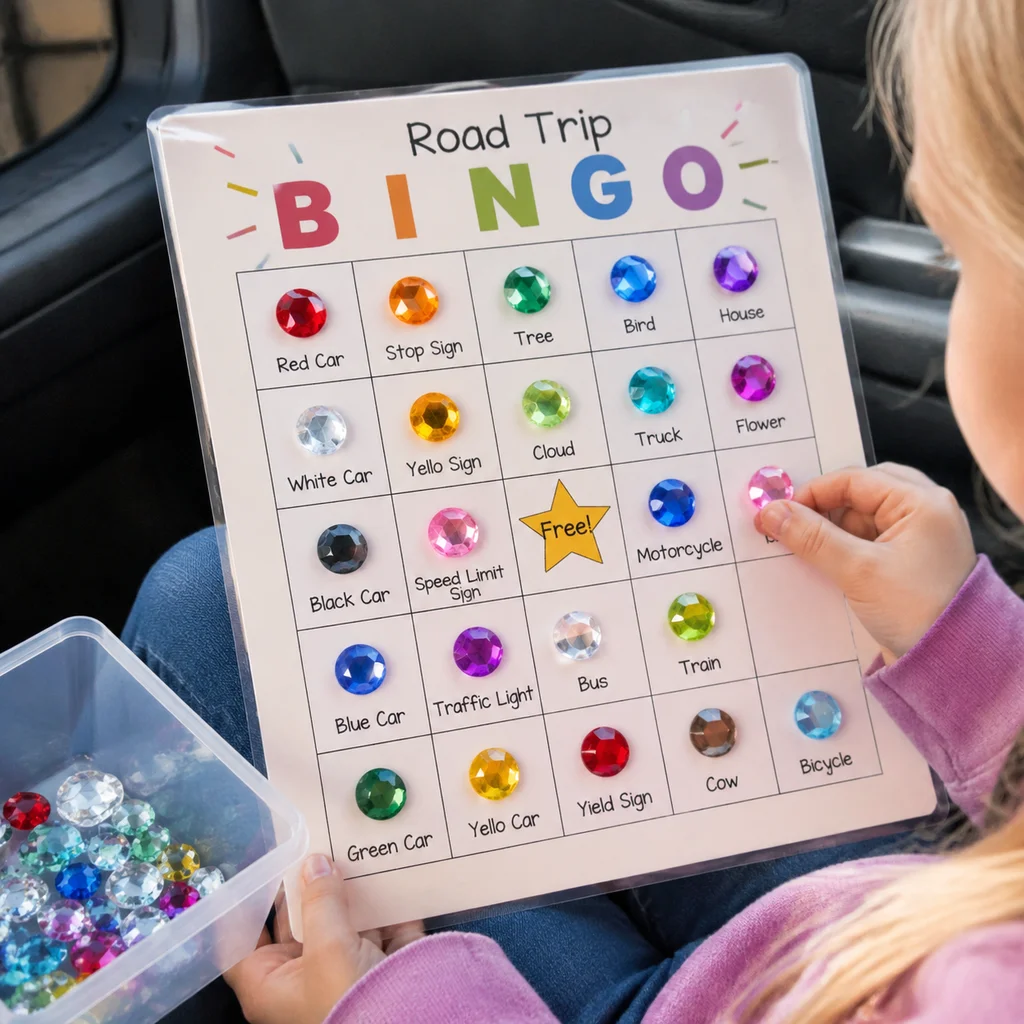
Crystal Bingo: A Printable Game for Road Trips and Rainy Days
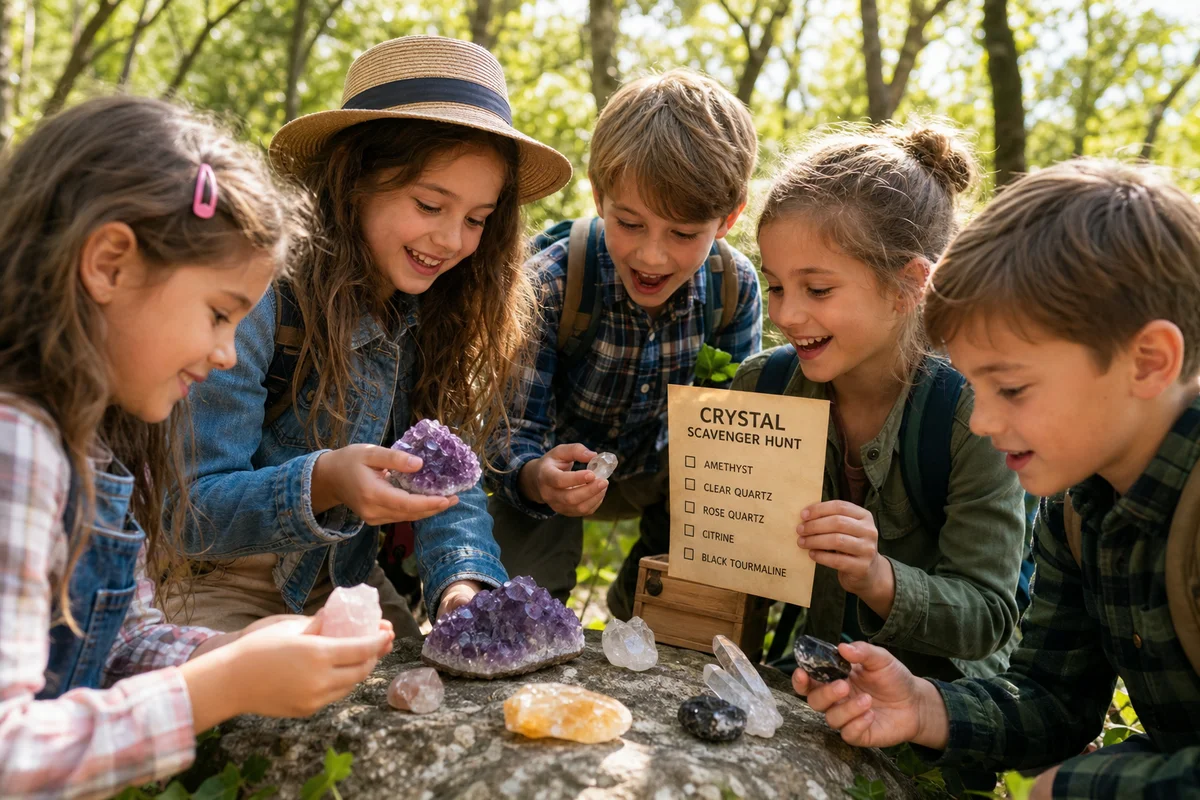
My sister's kids were coming to stay for a long weekend, and I needed something that would occupy three children (ages 5, 8, and 11) simultaneously without involving screens. I'd recently reorganized my crystal collection and had a bunch of small tumbled stones I didn't need. So I made bingo cards. It worked better than I expected — the kids played for over an hour, learned some mineral names, and each went home with a small bag of stones they'd "won."
Here's the complete setup so you can do it too. It costs about five dollars in materials if you don't already have crystal collections or the necessary stones.
What You Need
- A collection of tumbled stones or small crystal specimens: At least 20-25 different pieces with some variety in color and type. You don't need to know exactly what each one is — mystery is part of the game.
- Bingo cards: I've described how to make them below. You need one per player, plus a few extras if you want to play multiple rounds.
- A bag or bowl: For drawing stones randomly.
- Small markers: Pennies, buttons, dried beans — anything to mark squares. Alternatively, use a pencil and cross off squares.
- A reference sheet: A piece of paper listing each stone type with a brief description or photo, so kids can match what they've drawn to the card.
Making the Bingo Cards
You have two options: quick or polished.
The Quick Version
Take a piece of paper and draw a 4x4 grid (for younger kids) or 5x5 grid (for older kids). In each square, write the name of a crystal or mineral and a simple description:
- "Something pink" (rose quartz, rhodonite, pink calcite)
- "Something with stripes" (rhodonite, banded agate, tiger's eye)
- "Something you can see through" (clear quartz, fluorite, calcite)
- "Something black" (black tourmaline, obsidian, hematite)
- "Something smooth and round" (any tumbled stone)
- "Something with a point" (quartz point, amethyst cluster)
- "Something that sparkles in light" (leopard stone, aventurine, mica)
- "Something heavy for its size" (hematite, galena, pyrite)
Mix descriptive clues with specific mineral names. Younger kids work from the descriptions; older kids can match by name. Make each card different — shuffle which clue goes in which square.
The Polished Version
If you have access to a printer, create cards using a simple grid template. Include small photos or colored circles next to each description so pre-readers can match by color. Free bingo card generators online (myfreebingocards.com) can randomize grids for you if you input your list of items.
How to Play
Setup (5 Minutes)
- Lay out the reference sheet in the center of the table so everyone can see it
- Give each player a bingo card and markers
- Put all the stones in the bag or bowl
- Decide the win condition: single row, two rows, or full card (blackout)
Gameplay
- One person (adult or rotating player) draws a stone from the bag without looking
- Show the stone to all players and name it (or describe it if unnamed)
- Players check their cards — if they have a matching square, they mark it
- The drawn stone goes into a "won" pile for the winner at the end of the round
- Continue drawing until someone gets a bingo
Winning
First player to complete a row (horizontal, vertical, or diagonal) wins the round and gets to keep the stones drawn during that round. For a longer game, play until someone fills their entire card.
Age Variations
Ages 3-5: Color and Shape Bingo
Skip the mineral names entirely. Cards have colors and shapes: "something pink," "something round," "something rough," "something shiny." This age group doesn't need accurate identification — they're practicing observation, color matching, and the fine motor skill of marking squares.
Keep games short (one row to win) and expect cards to get crumpled. Have extras ready.
Ages 6-8: Named Minerals With Hints
Use actual mineral names on the cards, but include a color hint: "Amethyst (purple)" or "Citrine (yellow)." Kids this age are capable of learning and remembering names, especially if there's a physical object to associate with each word.
After a few rounds, try removing the color hints and see how many they remember. My 8-year-old nephew correctly identified amethyst, rose quartz, and tiger's eye after just two games — kids retain information when it's attached to tangible things.
Ages 9-12: Full Identification Challenge
Cards list only mineral names, no color hints. Include some less common specimens to increase difficulty. Add bonus squares like "Name the mineral family" or "What number is this mineral on the Mohs scale?"
For competitive kids in this age range, add a speed element: the first person to correctly name the drawn stone gets a bonus mark on their card.
Mixed Ages: Handicap System
When playing with kids of different ages, give younger players 4x4 cards with descriptions and older players 5x5 cards with names only. Everyone draws from the same bag, so it feels like one game, but the difficulty is age-appropriate.
Extending the Activity
Crystal Journaling (After the Game)
Give each kid a small notebook and have them pick their three favorite stones from the ones they won. For each stone: draw it, write the name, and write one thing they noticed about it (color, weight, texture, what it reminds them of). This turns a 30-minute game into a 90-minute activity.
Classification Challenge
After bingo, dump all the stones in the center and challenge kids to sort them by different criteria: color, hardness (scratch test against a penny), transparency, weight. No right or wrong answers — the point is observation and reasoning.
Crystal Trading
Let kids trade stones with each other after the game. This is surprisingly popular and teaches negotiation and valuation — kids naturally start assessing which stones are "worth more" based on size, color, or novelty.
Road Trip Version
For car trips, you can't easily draw physical stones. Instead:
- Create cards with things you might see out the window that relate to geology or crystals: "a rocky cliff," "a river with stones," "a building with stone walls," "something red like jasper," "something white like quartz," "a mountain," "a gravel driveway," "a crystal shop sign"
- Use the license plate game format — first to spot it marks the square
- Works best on highway drives through varied terrain
What I'd Do Differently Next Time
A few adjustments I'd make after running this once:
- More stones than you think you need. I started with 24 stones for three kids and ran low by round three. Have 30-40 available.
- Laminate the cards. Paper cards got torn and spilled on within an hour. Cardstock or laminated cards would survive multiple play sessions.
- A "mystery stone" square on each card. One square that matches any stone the drawer can't identify. This adds excitement and removes the pressure of naming every specimen correctly.
- Prizes beyond the stones. Small crystal-themed stickers or temporary tattoos as end-of-session rewards add incentive without cost.
The whole thing — making the cards, gathering stones, playing three rounds, and doing the journaling activity — filled about two and a half hours on a rainy Saturday morning. The kids asked to play again the next day. For something I threw together with materials I already had, that's about the best outcome I could ask for.
For a comprehensive overview, see our Ultimate Crystal Guide for Beginners.
Enhancing the Crystal Bingo Experience
Once you've got the basics down, there are several ways to enhance the Crystal Bingo experience for kids and even adults. Here are some ideas to make the game more engaging and educational:
Theme-Based Bingo Cards
Choose a specific theme for your bingo cards to make the game more interesting. For example, you could have a "Mythical Creatures" theme where the kids have to find stones that represent different creatures, like "Dragon's Scale" (red jasper) or "Unicorn Horn" (moonstone). This can also be a great opportunity to introduce the cultural significance of different crystals.
Crystal Trivia
Before you start the game, share some fun facts about the crystals. You can ask trivia questions related to the stones they're searching for. For instance, "What is the hardness of quartz?" or "Which crystal is known as the 'Stone of Truth'?" This not only keeps the game interesting but also teaches them something new about crystals.
Crystal Art Project
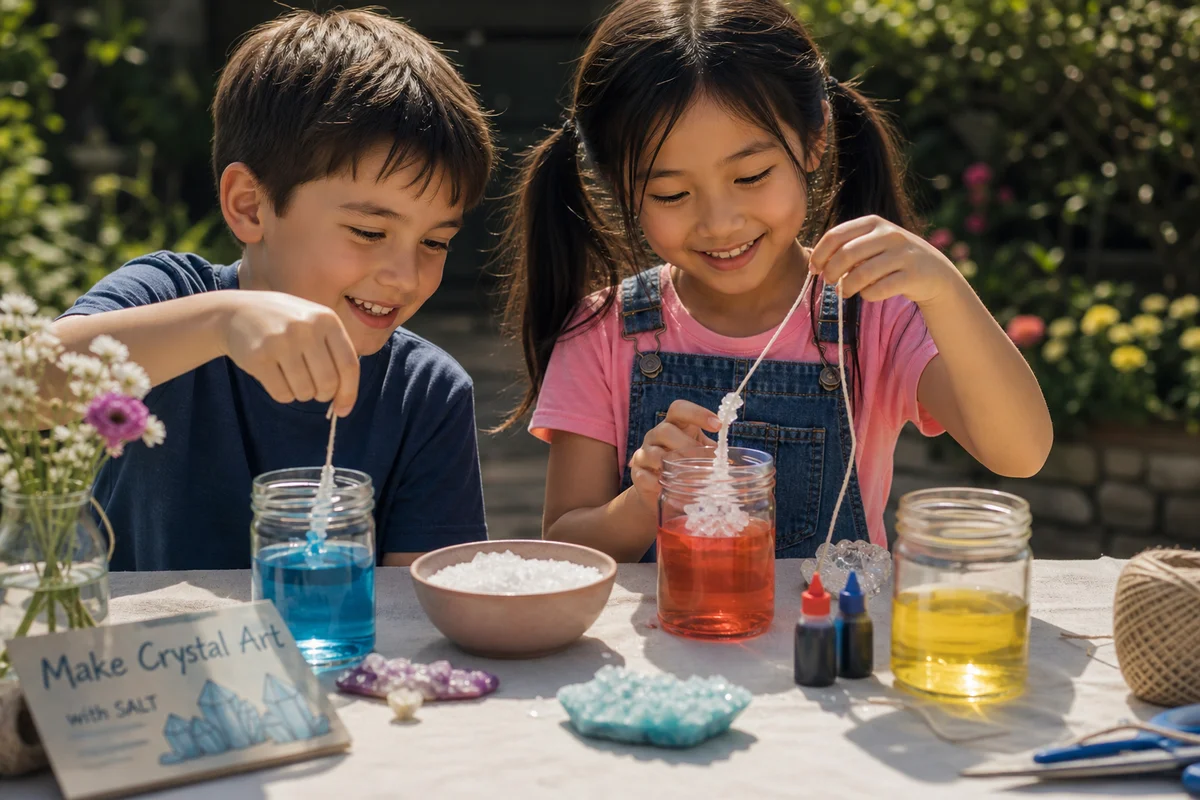
After the game, encourage the kids to create their own crystal art. They can use their collected stones to make a collage, a mosaic, or even a crystal painting. This is a great way to extend the learning and creativity of the game.
Crystal Bingo with a Twist
For an extra challenge, you can create "Crystal Bingo" cards with a twist. Instead of just matching the stones to the descriptions, you can have special "Free" spaces that require the kids to perform a task, like "Find a stone that sparkles in the sun" or "Identify a stone by touch." This adds an interactive element to the game and encourages exploration.
Crystal Bingo for Multiple Players
For larger groups, you can adapt the game to be played by multiple teams. Each team can have their own bingo card, and the first team to get a full line wins. This can add a competitive edge and make the game even more fun for everyone involved.
Crystal Bingo FAQ
Can I use any type of stone for the game?
Can I use any type of stone for the game?
Yes, you can use any type of stone, but tumbled stones are often the best choice because they're smooth and easy for kids to handle. Just make sure they're small enough to fit on the bingo cards.
How can I make the game more challenging for older kids?
How can I make the game more challenging for older kids?
For older kids, you can use more specific descriptions or include the scientific names of the crystals. You can also ask them to match the stones by their chemical composition or crystal system.
Can I play Crystal Bingo outdoors?
Can I play Crystal Bingo outdoors?
Absolutely! Crystal Bingo can be a fun outdoor activity. Just make sure you have a clear area where kids can spread out their cards and easily see the stones you're drawing.
How do I store the stones after the game?
How do I store the stones after the game?
After the game, you can store the stones in small, labeled bags or containers. This way, the kids can keep their collection organized and use it for future games or projects.
Can I use this game as an educational tool in a classroom setting?
Can I use this game as an educational tool in a classroom setting?
Yes, Crystal Bingo can be a great educational tool in a classroom. It can help kids learn about different minerals, their properties, and their cultural significance. Just make sure to adapt the difficulty level to the age group of your students.
Crystal Bingo: A Comparison Table
| Game Aspect | Quick Version | Polished Version |
|---|---|---|
| Card Creation | Hand-drawn with simple descriptions | Printed with photos and descriptions |
| Difficulty Level | Easy to moderate | Moderate to hard |
| Age Appropriate | Great for younger kids | More suitable for older kids |
| Materials Needed | Paper, pen, and crystal collection | Printer, paper, pen, and crystal collection |
| Cost | Low | Medium |
Whether you're playing at home or in a classroom, Crystal Bingo is a fun and educational way to engage with crystals. So why not give it a try and see how much fun you can have with a simple game and a collection of stones?
Comments