<h2>Lapis Lazuli: Complete Guide to Meaning, Properties, and Uses</h2>
What Is Lapis Lazuli?
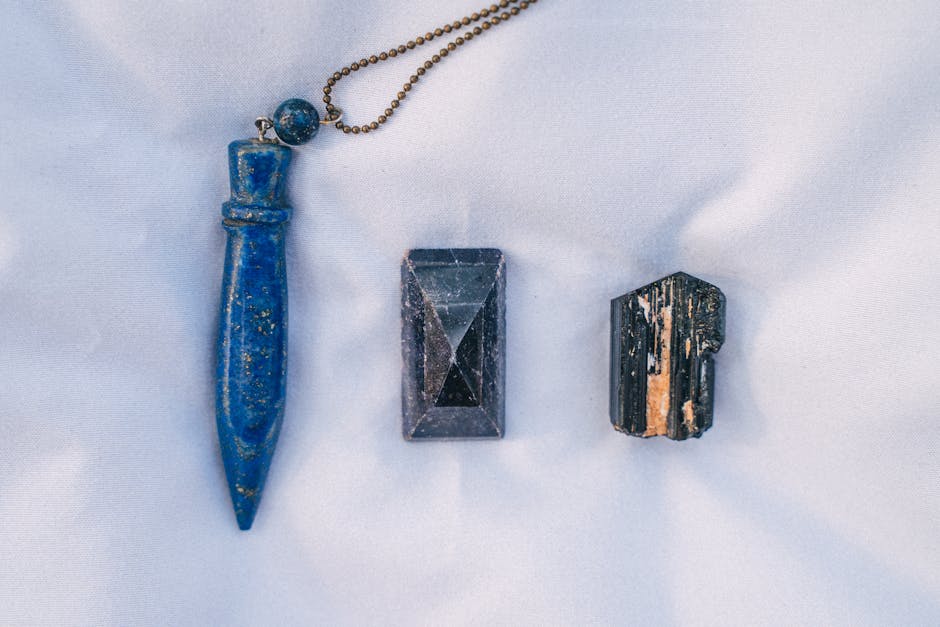
Lapis lazuli (often simply called "lapis") is not a single mineral — it's a rock. Specifically, it's a contact metamorphic rock composed primarily of three minerals: lazurite, calcite, and pyrite, with smaller amounts of diopside, augite, mica, and hornblende. This combination is what gives lapis its distinctive deep blue color with golden flecks.
The name comes from the Medieval Latin lapis lazuli, meaning "stone of azure," which itself derives from the Persian lāzhward, meaning "blue." The color blue was so rare and valuable in the ancient world that lapis was worth more than gold in many markets.
Chemical Composition and Physical Properties
Understanding lapis lazuli means understanding its three main components:
Lazurite (Na₃Ca(Si₃Al₃)O₁₂S) — This is the mineral responsible for the blue color. Lazurite is a tectosilicate mineral and a member of the sodalite group. Its distinctive blue comes from trisulfur radical anions (S₃⁻) within its crystal structure. The more lazurite in the stone, the deeper and more uniform the blue.
Calcite (CaCO₃) — White calcium carbonate veining that creates the characteristic white streaks and patches in lower-grade lapis. Stones with visible calcite are generally considered lower quality, as collectors prefer a uniform deep blue.
Pyrite (FeS₂) — Iron sulfide that appears as golden flecks or inclusions. Unlike calcite, pyrite inclusions are generally considered desirable — they add visual interest and are a sign of natural, untreated lapis. The best quality lapis has an even distribution of tiny pyrite inclusions that look like gold dust scattered through deep blue.
Key physical properties:
• Mohs hardness: 5–6 (varies depending on composition; higher lazurite content = harder)
• Specific gravity: 2.7–2.9
• Refractive index: 1.50 (approximately)
• Crystal system: Lazurite is isometric (cubic); lapis as a rock is massive
• Luster: Waxy to vitreous
• Diaphaneity: Opaque
The relatively low hardness (5–6 on the Mohs scale) means lapis is softer than quartz, feldspar, and most other popular gemstones. It scratches more easily and requires gentler care than harder stones like sapphire (Mohs 9) or topaz (Mohs 8).
Geological Formation
Lapis lazuli forms through contact metamorphism — when limestone rich in lazurite-forming minerals is subjected to heat and pressure from nearby igneous intrusions, typically granite. This process requires very specific geological conditions, which is why lapis deposits are rare and geographically concentrated.
The formation temperature ranges from approximately 400–600°C, and the process occurs at relatively shallow depths in the earth's crust. The requirement for a specific combination of limestone, the right mineral precursors, and an appropriate heat source is why lapis is found in only a handful of locations worldwide.
Major Sources and Mining History
Afghanistan: The Source of the Finest Lapis
The Sar-e-Sang mines in the Badakhshan province of northeastern Afghanistan are the world's most important and historically significant source of lapis lazuli. These mines have been in continuous operation for approximately 6,000 years — making them among the oldest continuously mined deposits on Earth.
Afghan lapis from Sar-e-Sang is considered the finest in the world due to its intense, uniform deep blue color with minimal calcite veining and fine pyrite inclusions. The mines are located in a remote, mountainous region at elevations above 3,000 meters (about 10,000 feet), and mining conditions remain difficult and dangerous.
The geological reserve at Sar-e-Sang is estimated to contain significant remaining deposits, but the remoteness of the location and the political instability of the region make extraction challenging and unpredictable.
Other Sources
Russia: The Lake Baikal region produces lapis with a lighter, greener-blue color and more visible calcite veining. While less intensely colored than Afghan material, Russian lapis has been commercially important since the 18th century.
Chile: Chile is currently the world's largest commercial producer of lapis. The deposit near Ovalle produces material that tends to be lighter blue with more prominent white calcite patterns. It's more affordable and widely available, though generally considered lower quality than Afghan material.
Minor sources: Small deposits exist in Myanmar (Burma), the United States (California and Colorado), Canada, Italy, Mongolia, and Pakistan. None of these produce material comparable in quality or quantity to the Afghan or Chilean sources.
A History Spanning Civilizations
Lapis lazuli is one of the few gemstones with a documented history stretching back to the earliest civilizations, and its story is intertwined with art, religion, trade, and power.
Ancient Mesopotamia and Egypt
The earliest known use of lapis comes from ancient Mesopotamia (modern-day Iraq), where it was used for jewelry, seals, and inlays as early as 4000 BCE. The Sumerians believed lapis contained the soul of the gods and associated it with their chief deity, Inanna.
In ancient Egypt, lapis was considered the most precious of all stones. Cleopatra reportedly used ground lapis as eye shadow. The most famous Egyptian use is the funeral mask of Tutankhamun (c. 1323 BCE), which features extensive lapis lazuli inlays for the eyes, eyebrows, and stripes of the nemes headdress. The stone was imported from Afghanistan — a trade route spanning over 3,000 kilometers that operated for millennia.
The Renaissance and Ultramarine
Perhaps the most culturally significant use of lapis was as the source of ultramarine pigment. From the 14th through the 17th centuries, ground lapis lazuli was the only source of the brilliant blue pigment known as ultramarine (from the Latin ultramarinus, meaning "beyond the sea").
The process of extracting ultramarine from lapis was extraordinarily labor-intensive. The stone was ground, mixed with wax, oil, and resin, then kneaded in a lye solution for weeks to separate the blue lazurite particles from the calcite and pyrite. The resulting pigment was so expensive that it rivaled gold in price — sometimes costing more per ounce than the artist's annual salary.
Artists reserved ultramarine for their most important works and most significant subjects. Vermeer's "Girl with a Pearl Earring" features an ultramarine-blue turban. Michelangelo used it in the Sistine Chapel ceiling. Raphael, Titian, and countless other Renaissance masters considered it the finest blue available.
The development of synthetic ultramarine in 1828 by the French chemist Jean-Baptiste Guimet finally made the color affordable. Synthetic ultramarine (french ultramarine) is chemically identical to the natural pigment but can be produced at a fraction of the cost. Today, natural lapis-derived ultramarine is still produced in small quantities for art restoration and traditional painting.
How to Identify Genuine Lapis Lazuli
With increasing demand comes increasing imitation. Here's how to tell real lapis from common substitutes:
Visual Tests
Color uniformity: Natural lapis has color variation — areas of deeper and lighter blue, white calcite veins, and golden pyrite flecks. If a stone is a perfectly uniform, electric blue with no inclusions whatsoever, it's suspicious. Natural lapis is a rock, and rocks are rarely uniform.
Pyrite distribution: Genuine lapis often contains pyrite inclusions that look like small gold flecks. These should look metallic and randomly distributed. Imitations sometimes use gold-colored paint or foil, which looks too uniform or too perfectly placed.
Physical Tests
Hardness test: Lapis has a Mohs hardness of 5–6. It can be scratched by a steel knife (Mohs 6.5) or a quartz crystal (Mohs 7). If a stone scratches glass (Mohs 5.5) easily but can itself be scratched by quartz, it's consistent with lapis.
Streak test: Rub the stone on unglazed porcelain. Genuine lapis produces a light blue streak. Many imitations (glass, plastic, dyed howlite) produce a white or no streak.
Dye test: Some lower-grade lapis is dyed to enhance the blue color. Rub the stone with a cloth dampened with acetone or nail polish remover. If color transfers to the cloth, the stone has been dyed. This test won't damage genuine, untreated lapis.
Common Imitations
Sodalite: Often confused with lapis because it's also blue and from the same mineral family. Sodalite lacks pyrite inclusions and typically has a more uniform, slightly grayish blue. It's also less expensive.
Dyed howlite or dyed jasper: White or light-colored stones dyed blue to mimic lapis. The dye test (acetone) will reveal these.
Reconstituted lapis: Ground lapis fragments mixed with resin and pressed into blocks. These are technically lapis, but they're manufactured composites, not natural stone. They often look too uniform and lack the depth of natural material.
Glass and plastic: The cheapest imitations. These feel wrong in the hand — too light (plastic) or too perfectly uniform (glass). The streak test and acetone test will identify these.
How to Care for Lapis Lazuli
Lapis requires more careful handling than harder gemstones. Its relatively low hardness and porous nature mean it's vulnerable to scratching, chemical damage, and color fading.
Cleaning
Clean lapis with warm water, mild soap, and a soft cloth or very soft brush. Avoid ultrasonic cleaners and steam cleaners — the heat and vibration can damage the stone and any treatments or dyes it may have received. Never use harsh chemicals, bleach, or acids, which can dissolve the calcite component and damage the surface.
Storage
Store lapis separately from harder stones and metals. Quartz, topaz, and even harder feldspar can scratch lapis during contact. A soft cloth pouch or a separate compartment in a jewelry box works well. Avoid prolonged direct sunlight, which can cause the blue color to fade over time — this is particularly true for dyed material.
Wearing
Lapis jewelry should be removed before activities that involve impact, abrasion, or exposure to chemicals. This includes household cleaning, swimming (chlorine can damage the stone), exercising, and gardening. Lapis is suitable for earrings, pendants, and brooches that receive less physical contact, but rings and bracelets require more caution.
What About Lapis in Water?
Lapis is sometimes promoted in crystal circles for making "gemstone elixirs" by soaking the stone in water. This is not advisable for several reasons. The calcite component of lapis is soluble in acidic water. Even neutral water can leach minerals from the stone over time. Some lapis on the market has been dyed or treated, and soaking can release these chemicals into the water. If you want the aesthetic of a crystal in water, use a glass container and keep the stone separate from the water.
Common Questions About Lapis Lazuli
Is lapis lazuli expensive?
It depends on quality. High-grade Afghan lapis with deep, uniform blue and fine pyrite inclusions can cost $50–$200+ per carat for jewelry-grade material. Lower-grade material with visible calcite from Chile or Russia is much more affordable, often $5–$30 per carat. The most expensive lapis is the deep blue "denim lapis" with minimal calcite and fine, evenly distributed pyrite.
Can lapis lazuli be worn every day?
In earrings or pendants, yes — these receive minimal physical contact. In rings or bracelets, daily wear is risky given the stone's 5–6 hardness. Reserve lapis rings for occasional wear, or choose a protective bezel setting for added security.
Does lapis lazuli fade in sunlight?
Natural, untreated lapis is generally light-stable. However, dyed lapis and lower-grade material can fade with prolonged sun exposure. As a general practice, store lapis away from direct sunlight and intense heat sources.
What's the difference between lapis lazuli and sodalite?
Both are blue members of the sodalite mineral group, but they're compositionally different stones. Lapis contains lazurite (which provides the intense blue), calcite, and pyrite. Sodalite is a single mineral with no pyrite inclusions and typically a grayer, less intense blue. Sodalite is also harder (Mohs 5.5–6) and less expensive.
Is lapis lazuli the same as "denim lapis"?
"Denim lapis" is a trade name for lapis with a lighter, more denim-like blue color and prominent calcite veining. It's a real variety of lapis, not a separate stone. It's generally more affordable than deep blue material and is popular in casual, everyday jewelry.
Why Lapis Lazuli Still Matters
Very few materials can claim a 6,000-year history of continuous human use. Lapis lazuli has decorated pharaohs, illuminated Renaissance masterpieces, and adorned modern jewelry. Its geological rarity — formed only under specific metamorphic conditions in a handful of locations — gives it a story that goes far beyond its visual beauty.
Whether you're drawn to the deep blue of Afghan material, the casual charm of denim lapis, or the historical weight of a stone that once cost more than gold, lapis lazuli offers something unusual in the gemstone world: a stone with a genuine narrative, backed by geology, chemistry, and thousands of years of human culture.
Comments