Ultimate Crystal Guide: Identify & Decode
May 15, 2026
Why a Crystal Guide Matters
Walk into any crystal shop and you'll see hundreds of stones, each one labeled with a name you may or may not recognize and a price tag that seems to have been assigned by rolling dice. That's the problem this guide exists to solve. Crystal collecting has grown from a niche hobby into something mainstream, but the information surrounding it hasn't kept pace. You'll find contradictory advice, inflated claims, and enough marketing language to make your head spin.
Online marketplaces have made the problem worse, not better. It's easier than ever to buy crystals, but it's also easier than ever to buy something that isn't what the listing claims. Photos can be enhanced, descriptions can be misleading, and the gap between what you see on screen and what arrives in the mail can be significant.
This guide pulls together the topics that actually matter: how to identify real crystals, what different stones are used for, how to build a collection without wasting money, and where the science meets the tradition. It's designed as a reference you can come back to, with links to deeper dives on each topic throughout.
There's a lot of ground to cover here, and you don't need to read it all at once. Each section stands on its own. If a particular stone or topic catches your attention, follow the links — that's what they're there for.
If you're brand new to crystals, start with The Ultimate Crystal Guide: Everything Beginners Need to Know in 2026 or How to Choose Your First Crystal (A Completely Honest Guide). Those will give you the basics before you dig into the specifics here.
How to Identify Real Crystals
Fake crystals are everywhere. The market is flooded with glass dyed to look like agate, resin molded to mimic amber, and lab-grown material sold as natural stone. Knowing how to tell the difference isn't optional — it's a survival skill for anyone who collects.
The good news is that you don't need a laboratory. Simple tests — checking for air bubbles, testing hardness, observing color distribution under light — can weed out the worst fakes. A real crystal will have imperfections, slight asymmetries, and natural color variation. Fakes tend to look too uniform, too perfect, or too vivid. These aren't foolproof rules, but they catch the majority of what's out there. We cover these methods in detail in 5 Practical Tests to Tell Real Crystals From Fakes — No Lab Required.
Certain crystals get counterfeited more often than others. Moldavite, for instance, commands high prices because it formed from a meteorite impact, and fake moldavite has become an industry of its own. Our article on What Is Moldavite and Why Is It So Expensive explains what to look for. Similarly, The Most Counterfeited Crystals and How to Tell Real From Fake covers the top offenders and what makes them tricky to authenticate.
Amber has its own set of challenges. Real amber floats in saltwater and produces a pine scent when heated — tests that most imitations fail. The full breakdown is in How to Tell if Amber Is Real: A Practical Guide to Amber Identification.
For those who want to understand the scientific side of what they're looking at, 14 Minerals You Probably Think Are Crystals But Actually Aren't is worth reading. The distinction between mineral, crystal, and rock matters more than most people realize.
If you've ever picked up a raw stone and wondered what you were holding, The Thrill of Finding Something in the Dirt walks through the practical experience of identifying raw specimens in the field.
Understanding Crystal Types and Varieties
Crystals aren't a single category — they're an enormous family of minerals, each with its own chemical structure, formation process, and visual signature. Understanding the major families helps you make sense of what you're looking at and why certain stones behave the way they do. A quartz crystal and a feldspar crystal might look similar at first glance, but they formed under completely different conditions and have different physical properties.
Part of what makes crystal collecting so engaging is that you never really run out of new things to learn. Just when you think you understand quartz, you find out there are fifteen distinct varieties you hadn't considered. Just when you think you can identify tourmaline on sight, you encounter a color you didn't know existed.
Quartz Family
Quartz is the most abundant mineral in the Earth's crust, and it shows up in more forms than most people imagine. 15 Types of Quartz You Probably Didn't Know Existed covers varieties from rose quartz to rutilated quartz to the surprisingly common smoky quartz. Clear quartz, often called the "master healer," gets its own deep dive in Clear Quartz Properties and Uses: The Complete Guide to the Master Healer Crystal and a concise overview in Clear Quartz Guide.
Tourmaline
Tourmaline is one of the most colorful mineral families, and no two specimens look exactly alike. 10 Colors of Tourmaline and What Makes Each Unique and the expanded 12 Tourmaline Colors Explained: What Makes Each One Unique break down why tourmaline comes in so many colors and what causes the variation. Black tourmaline, the most common variety, is covered extensively in Black Tourmaline: The Complete Guide to Identification, Uses, and Care and our more focused Black Tourmaline Meaning: Protection, Grounding & Healing.
Look-Alike Stones
One of the trickiest parts of crystal identification is telling apart stones that look nearly identical. 8 Gemstones That Look Identical But Are Completely Different Minerals covers pairs that trip up even experienced collectors. For instance, amethyst and citrine are both varieties of quartz, and their differences (and similarities) are explored in Amethyst vs Citrine: Which Is Right for You?. Meanwhile, Crystals That Look Alike But Aren't: Same Mineral, Different Story addresses cases where the same mineral can look dramatically different depending on conditions.
Color-Changing and Unusual Stones
Some crystals do things that seem almost magical. Alexandrite shifts from green to red under different light sources, which is explained in Alexandrite: The Rarest Color-Changing Gemstone in the World. The broader phenomenon of color-change in gemstones is covered in 11 Gemstones That Change Color and the Science Behind Why. And then there are crystals that simply look like something they're not — 12 Crystals That Look Like Ice and Why They Form That Way is exactly what it sounds like.
Crystal Meanings and Properties
The tradition of assigning meaning to stones goes back thousands of years, and while modern crystal enthusiasts don't all agree on what each stone does, certain associations have remained remarkably consistent across cultures. Below are the major stones and what people use them for.
Amethyst
Amethyst is one of the most popular crystals in the world, and for good reason — it's affordable, widely available, and visually striking. Its associations with calm and clarity are explored in three separate guides: Amethyst Crystal Benefits: 7 Science-Backed Reasons People Swear by This Purple Stone, Amethyst Crystal Guide: Meaning, Properties & How to Use It, and Amethyst Crystal Meaning: Properties, Healing Uses, and How to Use It.
Rose Quartz
Rose quartz is the stone most commonly associated with love and emotional healing, and it shows up in everything from jewelry to home decor. We cover it from several angles: Rose Quartz: Complete Guide to Meaning, Uses & Care, Rose Quartz Guide: Meaning, Healing Properties & Uses, and the comprehensive The Complete Guide to Rose Quartz: Meaning, Properties, and Uses. And if you're choosing between rose quartz and amethyst for a bracelet, Rose Quartz vs Amethyst Bracelet: Which One Should You Choose? lays out the practical differences.
An interesting technical point: rose quartz and pink quartz are not the same mineral, despite being sold interchangeably. A Rose Quartz by Any Other Name explains why the distinction matters.
Citrine
Citrine carries associations with abundance and energy, but there's also genuine confusion about what citrine actually is, especially since much of what's sold as citrine is heat-treated amethyst. What Is Citrine, Exactly? addresses this head-on, while Citrine Crystal Meaning and Benefits and Citrine Crystal Meaning: Properties, Healing Uses, and How to Use It cover its uses and properties in detail.
Labradorite
Labradorite is prized for its flash — the iridescent play of color that appears when you move the stone under light. It's covered from multiple perspectives: Labradorite Crystal Meaning and Uses Guide, Labradorite Crystal Meaning, Properties & Uses, and the comprehensive Labradorite: The Complete Guide to Its Meaning, Properties, and Uses. A personal account of learning to appreciate this stone appears in How I Discovered the Power of Labradorite After Years of Ignoring It.
Labradorite is often compared to moonstone since both show iridescence, but they're different minerals with different properties. Labradorite vs Moonstone: Which Iridescent Gem Is Right for You? breaks down the comparison, while Opal vs Moonstone vs Labradorite: A Side-by-Side Comparison adds opal into the mix.
Other Notable Crystals
- Black Tourmaline — Grounding and protection. See Black Tourmaline: The Complete Crystal Guide and Why Black Stones Matter.
- Carnelian — Energy and creativity. Covered in Carnelian Crystal Meaning, Healing Properties & How to Use It.
- Garnet — Passion and regeneration. Full guide at Garnet Stone Meaning, Healing Properties, and Complete Crystal Guide.
- Tiger's Eye — Confidence and focus. Often misunderstood, as explained in Why Tiger's Eye Is One of the Most Misunderstood Gemstones. Full properties at Tiger's Eye Stone Meaning, Properties, and Uses.
- Selenite — Clarity and cleansing. Covered in Selenite Crystal Meaning, Properties, and How to Use It.
- Blue Lace Agate — Calm and communication. See Blue Lace Agate — The Gentle Stone That Helps You Speak Your Truth.
- Obsidian — Protection and truth. See Obsidian Stone: Complete Guide to Meaning, Types, Uses, and Care and The Obsidian Mirror: From Ancient Prophecy Tools to Modern Jewelry.
- Lapis Lazuli — Wisdom and truth. Lapis Lazuli: Complete Guide to Meaning, Properties, and Uses and the historical perspective in The Blue That Changed How Ancient People Thought About Color.
- Jade — Luck and harmony. Jade Stone Meaning, History & Complete Guide and Jade Stone Meaning: History, Healing Properties, and Cultural Significance.
- Green Aventurine — Opportunity and growth. Full breakdown in Green Aventurine: The Practical Guide to Properties, Uses, and Identification.
- Phantom Quartz — Growth and transformation. Phantom Quartz Meaning: The Growth and Transformation Stone.
Lesser-Known Crystals Worth Knowing
Some of the most interesting crystals are the ones you rarely see in mainstream shops. These stones often have unusual origins, striking appearances, or properties that set them apart from the usual suspects.
- Charoite — A vivid purple stone found only in one location in Siberia. Charoite: the purple stone that only comes from one place on Earth explains why it's so geographically restricted.
- Pietersite — Looks like a storm frozen in stone. Pietersite: the tempest stone and why it looks like a storm frozen in rock covers its unusual formation.
- Kyanite — One of the few crystals that supposedly never needs cleansing. Kyanite: The Crystal That Doesn't Need Cleansing (And Other Things Nobody Mentions) digs into why.
- Seraphinite — Features feathery silver patterns that resemble angel wings. Seraphinite: The Angel Wing Stone from Siberia.
- Thulite — A pink stone from Norway with an unusual speckled appearance. Thulite: Norway's pink stone and what it's actually used for.
- Shungite — A carbon-rich stone from Russia with some genuinely unusual physical properties. Shungite: The Russian Carbon Stone With Unusual Properties.
- Apatite — A stone that has historically confused gemologists due to its variable appearance. Apatite: the stone that confuses gemologists.
Choosing Crystals for Specific Purposes
Most people come to crystals with a specific goal in mind — reducing anxiety, improving focus, attracting love, or something else entirely. While the scientific evidence for crystal healing is limited, the tradition is rich, and many people find genuine comfort in working with specific stones.
For Anxiety and Stress
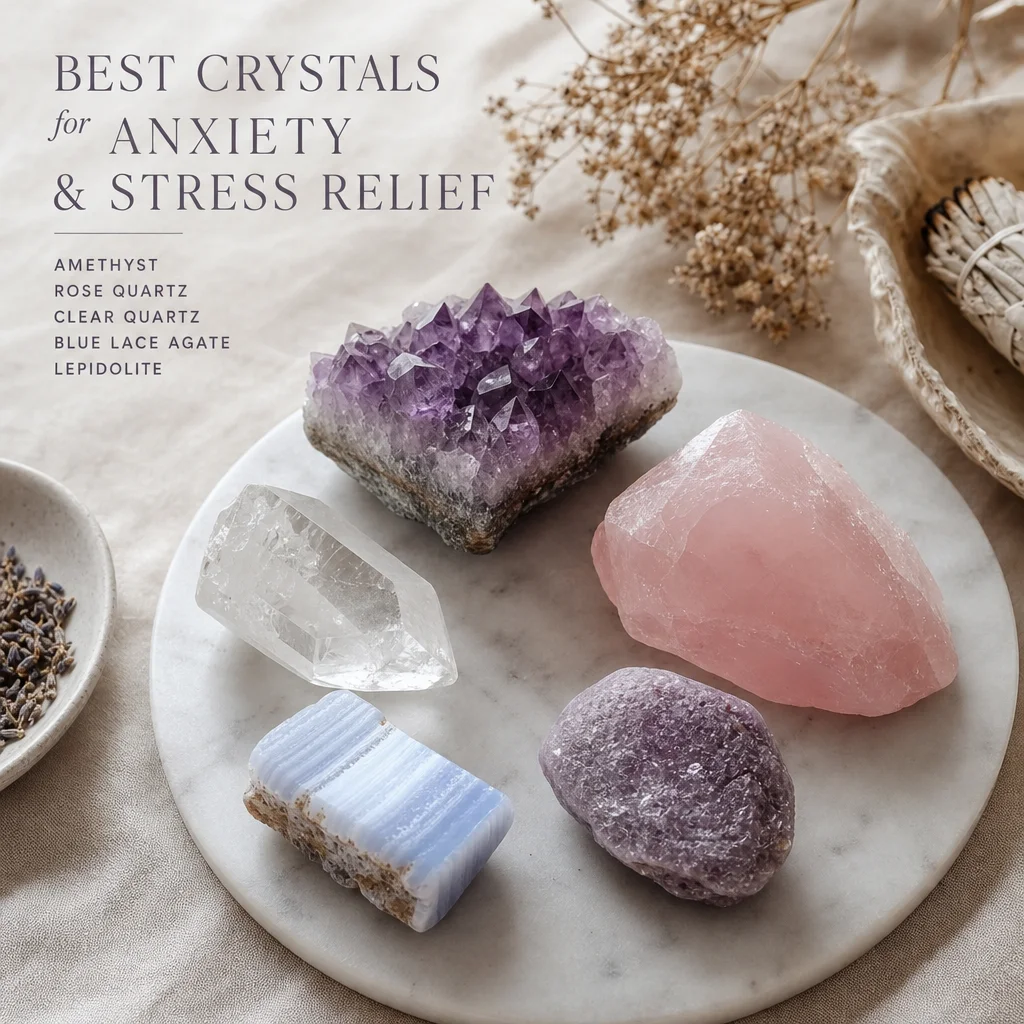
Crystals commonly recommended for anxiety include amethyst, rose quartz, and black tourmaline. The full list with honest assessments is in 10 Best Crystals for Anxiety: An Honest Guide. For workplace stress specifically, 10 Crystals That Actually Belong on Your Office Desk offers practical suggestions. For a quick reference on the most common workplace crystal questions, see Crystals for Your Home Office: An Honest FAQ.
For Beginners
If you're just starting out, the sheer number of options can be paralyzing. We have several guides tailored to new collectors: 10 Best Crystals for Beginners: A Complete Starter Guide, Best Crystals for Beginners: A No-Nonsense Guide, and How to Choose Your Very First Crystal — A No-Nonsense Beginner Guide all approach the topic from slightly different angles.
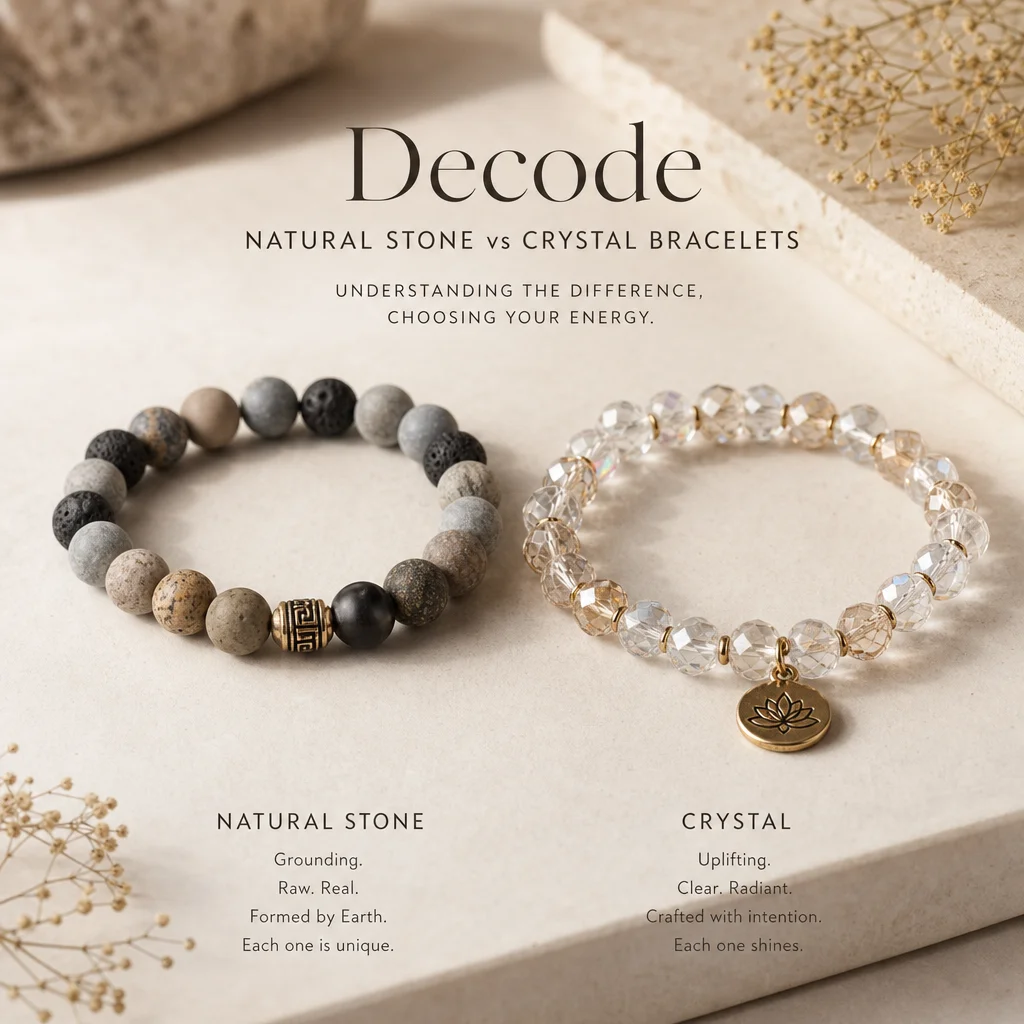
Choosing your first crystal bracelet has its own considerations, covered in How to Choose Your First Crystal Bracelet (Beginner Guide).
For Chakra Work
Chakra stones are selected based on their color and traditional association with specific energy centers. Not all of these associations are well-founded, and Chakra Stones for Beginners: Which Ones Actually Matter and Why takes an honest look at which correspondences hold up.
By Zodiac Sign
Gift guides that pair crystals with zodiac signs are popular, and while the associations are entirely traditional rather than scientific, they make for thoughtful gifts. Best Crystals for Every Zodiac Sign: The Complete Gift Guide covers all twelve signs.
For Protection
Protection is one of the oldest use cases for stones and crystals, spanning multiple cultures and centuries of tradition. Why Protection Stones Matter Across Cultures explores the history, while Why Black Stones Matter focuses specifically on the role of dark-colored stones in protection practices.
Building Your Crystal Collection
Starting a collection is easy. Building a good one takes some knowledge and restraint. There are more "how to start" guides in the crystal space than almost any other topic, which tells you something about how overwhelming it feels at first.
We've published several approaches: How to Start a Crystal Collection: A Beginner's Guide, How to Start a Crystal Collection: A Complete Beginner's Guide, How to Start a Crystal Collection Without Wasting Money, How to Start a Crystal Collection: A Real Beginner's Guide (No Fluff), and How to Start a Crystal Collection on a Budget.
For building a collection without going broke, How to Build a Crystal Collection Without Breaking the Bank offers practical strategies. And for those who've been collecting for a while, My First Year of Collecting Crystals: What I Wish Someone Had Told Me is full of lessons learned the hard way.
Crystal Pricing
Pricing in the crystal market is inconsistent and often exploitative. Two nearly identical pieces can have wildly different price tags depending on where you shop. Understanding how pricing works — and how shops manipulate it — is essential. Crystal Pricing: 7 Tricks Shops Use to Make You Overpay (And How to Fight Back) is the most detailed resource on this topic, and Crystal Pricing Is Broken: Why You Are Probably Overpaying provides an updated perspective.
Buying at Gem Shows
Gem shows and mineral fairs are one of the best places to find unique specimens at fair prices, but they can also be overwhelming if you don't know what you're doing. Vendors range from wholesale dealers with museum-quality pieces to hobbyists selling extras from their personal collection. The variety is staggering, the prices are often negotiable, and the opportunity to handle stones before buying is something online shopping can never replicate.
The Complete Guide to Buying Crystals at Gem Shows and Fairs covers what to bring, what to look for, and how to negotiate. The short version: bring cash, set a budget before you walk in, and don't buy the first thing that catches your eye.
Crystal Shapes and What They Mean
The shape of a crystal isn't just aesthetic. In crystal traditions, different forms are believed to serve different purposes — towers for directing energy, spheres for radiating it, raw pieces for maintaining a stone's natural state. Whether or not you take this literally, understanding shapes helps you make sense of what you see in shops and why certain forms command higher prices than others.
Crystal shapes also affect the price you pay. A raw chunk of amethyst might cost a fraction of what a polished tower or carved sphere of the same material costs. Neither is inherently better — the raw piece retains the crystal's natural form, while the shaped piece has had labor invested in it. Your preference depends on what you plan to do with the stone and what visually appeals to you.
We cover this topic from three angles: Crystal Shapes Explained: What Tumbled Stones, Raw Crystals, Points, and Spheres Actually Do for practical differences, Crystal Shapes Explained: Why Cut and Form Actually Matter for the reasoning behind different cuts, and Crystal Shapes and Meanings: A Complete Guide for the symbolic associations.
Crystal Grids and Arrangements
Crystal grids — arrangements of multiple stones in geometric patterns — are used in various traditions to focus intention. The practice is straightforward in concept but can feel intimidating when you see elaborate layouts online. The basic idea is that combining stones in specific patterns can amplify their individual effects, similar to how a lens focuses scattered light into a single beam.
You don't need expensive equipment or rare stones to build a grid. A few tumbled stones, a flat surface, and a clear intention are enough to start. Sacred geometry patterns — like the Flower of Life or a simple star shape — provide the structure, but there's no rule saying you have to follow them exactly. Many experienced grid builders simply arrange stones in whatever pattern feels right for their purpose.
The mechanics are simpler than they look. Crystal Grids for Beginners: A Complete Guide explains the basics, while Crystal Grids Look Intimidating but the Mechanics Are Simple strips away the complexity. For a step-by-step walkthrough, How to Build Your First Crystal Grid: A Step-by-Step Guide for Beginners covers the process from start to finish.
Jewelry and Gifting
Crystal jewelry is how most people first encounter stones, and it remains the most popular way to carry a crystal throughout the day. Choosing the right piece involves both aesthetic preferences and practical considerations like durability and skin sensitivity. A beautiful pendant that turns your skin green after two days isn't a bargain, no matter how little it cost.
Materials
The metal setting matters as much as the stone. Sterling Silver vs Stainless Steel: Which Is Better for Jewelry? compares the two most common options, while Gold Plated vs Gold Filled: What You Need to Know explains why one costs five times more than the other. For chain length, Necklace Chain Length Guide: What Works for You provides a practical reference. Clasp types, often overlooked, are covered in Types of Jewelry Clasps Explained.
Gifting
Crystals and crystal jewelry make popular gifts, but choosing the right one can feel risky if you're not sure what the recipient likes. Crystal Jewelry Gift Guide — What to Buy for Every Occasion provides occasion-based recommendations. For romantic gifts specifically, Rose Quartz — The Ultimate Gift Guide for Every Romantic Occasion focuses on the stone most associated with love.
Trends
For a broader view of what's currently popular, Jewelry Trends 2026: What People Are Actually Wearing looks at the styles and materials gaining traction this year.
Famous Stones and Historical Curiosities
Some crystals carry stories far bigger than the stones themselves. The Hope Diamond, for example, has a curse attached to it that has persisted for centuries. We explore the fact and fiction in The Real Story Behind the Hope Diamond and Its Curse and The Curse of the Hope Diamond: Fact vs Fiction.
The Koh-i-Noor Diamond has its own dramatic history, involving colonial disputes and national ownership claims that continue to this day. The Diamond That Refused to Stay Put and The Koh-i-Noor Diamond: History, Controversy, and True Value both cover this storied gem.
Other historical deep dives include History of Turquoise: from ancient Egypt to modern jewelry, A Symbol Older Than Written History (about the evil eye), and Same Family, Different Personalities (about sapphire and ruby). For a more detailed comparison of sapphire and ruby, see Sapphire vs Ruby: Which Should You Choose?.
Tanzanite is a modern gemological curiosity — found in only one small area of Tanzania, and the supply is finite. Tanzanite: The Gemstone That's Rarer Than Diamond (And Running Out) explains why geologists think it may be mined out within a generation.
Cleansing, Care, and Maintenance
Crystal care encompasses both physical maintenance (cleaning, storing, avoiding damage) and the traditional practice of "cleansing" a stone's energy. Whether or not you believe in energetic cleansing, the physical care advice is universally applicable. Some stones are soft and scratch easily. Others are porous and absorb water. A few — like selenite — can actually dissolve if you get them wet. Knowing which is which prevents expensive mistakes.
Physical cleaning is straightforward: most crystals can be gently wiped with a soft cloth. Avoid harsh chemicals, ultrasonic cleaners (unless you know the stone can handle it), and prolonged sun exposure for colored stones that might fade. Storage matters too — harder stones can scratch softer ones if they're tossed together in a bag.
Sage, lavender, and rosemary are the most commonly used herbs for smoke cleansing, and each has its own traditional associations. A Complete Guide to Sage, Lavender and Rosemary Cleansing covers all three. For stones that supposedly never need energetic cleansing, see the Kyanite guide mentioned earlier.
Opals deserve special mention when it comes to care — they contain significant water content and can crack if they dry out. The World of Opals: Facts You Didn't Know covers this and other opal-specific considerations.
Personal Stories and Practical Wisdom
Sometimes the most useful information doesn't come from a textbook — it comes from someone who made a mistake and wrote about it. The crystal community thrives on shared experience, and personal accounts often teach lessons that no buyer's guide can. Knowing what someone else got wrong helps you avoid the same traps.
- How I Accidentally Bought a $10,000 Herkimer Diamond and What I Learned — A lesson in asking questions before paying.
- The Rock That Changed How I Think About Patience — The experience of cracking open a geode for the first time.
- I Found a 5,000-Year-Old Stone in a Tiny Arizona Jewelry Shop — A turquoise story with historical roots.
- This Is the Moon's Tear — A reflective piece on the emotional connection people form with specific stones.
- My Experience With Lab-Grown Diamonds: What I Learned After Buying One — Practical takeaways from the lab-grown vs. natural debate.
Each of these stories shares a common thread: the author learned something they didn't expect. That's the nature of crystal collecting. You come for the pretty stones and end up absorbed in mineralogy, history, or the surprising difficulty of telling one green stone from another. The hobby has a way of pulling you deeper than you intended to go.
Where to Go From Here
Crystal collecting is one of those hobbies that rewards curiosity. The more you learn, the more you realize how much there is to know — but you don't need to know everything to start enjoying it. Pick a stone that interests you, learn what you can about it, and let your curiosity guide you from there.
If you're looking for a next step, How to Choose Your First Healing Crystal: Answers to the Questions Nobody Tells You and How to Pick Your Very First Crystal: A No-Nonsense Guide both offer grounded, practical advice for getting started. And if you've been collecting for a while but feel like you're not getting anywhere, Why I Wrote This Crystal Beginner Guide explains the thinking behind our approach to crystal education.
For ongoing care and maintenance reference, bookmark this guide and come back whenever you encounter a new stone or a new question. The Crystal Guide section of our site continues to grow as we cover more stones, more identification techniques, and more of the stories that make this hobby so compelling.
The crystals aren't going anywhere. Take your time, ask questions, and don't let anyone — including us — tell you there's a "right" way to do this. The only wrong way to collect crystals is to spend money you can't afford on stones you haven't researched. Everything else is just preference.
Frequently Asked Questions
How can I tell if a crystal is real or fake?
To identify genuine crystals, look for natural imperfections, cool temperature, and variations in color. Glass or plastic imitations often have tiny air bubbles and feel lighter. At SagStone, we meticulously hand-select each natural stone for our artisan jewelry, ensuring you always receive authentic, high-quality crystals straight from the earth.
What is the best crystal to wear every day?
Clear quartz, amethyst, and rose quartz are excellent choices for daily wear. They carry gentle, versatile energies that harmonize with any lifestyle. Wearing handcrafted crystal jewelry daily not only elevates your personal style but also keeps your favorite healing stones within your energetic field, promoting continuous balance and well-being.
How do I cleanse and activate my crystal jewelry?
You can cleanse your crystal jewelry by placing it under moonlight, using sound bowls, or resting it on a selenite plate. Activating your piece is easy: simply hold it in your hands, set a clear intention, and visualize your goal. Regular cleansing keeps your handcrafted SagStone pieces vibrating at their highest frequency.
What do different crystal shapes mean for jewelry?
The shape of a crystal alters how its energy flows. Raw stones offer bold, untamed energy, while tumbled stones provide a gentle, soothing vibration. Pointed crystals direct energy outward. When you choose artisan-crafted SagStone jewelry, the shape—whether a rounded bezel or a raw pendant—tailors the stone's natural energy to your specific needs.
Which crystals are best for anxiety and stress relief?
Amethyst, black tourmaline, and lepidolite are widely regarded as the best stones for anxiety and stress relief. Wearing these grounding stones as artisan handcrafted jewelry allows their calming vibrations to soothe your nervous system throughout the day. They act as beautiful, wearable shields against overwhelming daily stress and negative energy.

Comments