I Found a 5,000-Year-Old Stone in a Tiny Arizona Jewelry Shop
I Found a 5,000-Year-Old Stone in a Tiny Arizona Jewelry Shop
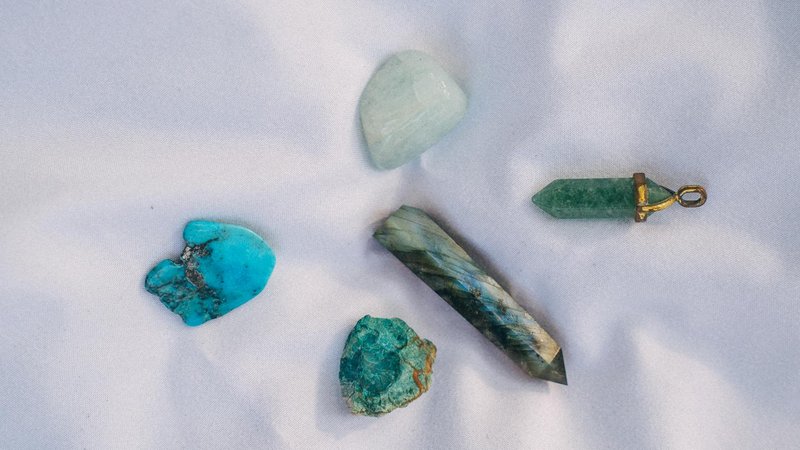
A few years back I was driving through northern Arizona on a road trip and stopped at this unassuming little jewelry shop in Sedona. You know the type — dusty shelves, a bell on the door, an older guy behind the counter who looked like he'd been selling stones since the Stone Age. I picked up a pendant — this incredible blue-green cabochon with delicate dark veins running through it — and the owner said, "Good eye. People have been wearing that stone for 5,000 years."
He clarified that he didn't mean this specific stone was 5,000 years old (though it might have been close). He meant humans have been using turquoise for jewelry and decoration for at least five millennia. The ancient Egyptians buried their pharaohs with it. Persian kings wore it as protection. Native American tribes across the Southwest built entire artistic traditions around it. And here I was, a tourist from the 21st century, holding a piece of that same tradition in my hand.
I bought the pendant. And then I went down a rabbit hole that I'm still crawling out of. Turquoise isn't just a pretty blue stone — it has a depth of history, symbolism, and lore that almost no other gemstone can match. Whether you're into crystals for their meaning or you just think the color is gorgeous, here's everything worth knowing about turquoise.
What Is Turquoise, Exactly?
Turquoise is a hydrous copper aluminum phosphate mineral. Its chemical formula is CuAl₆(PO₄)₄(OH)₈·4H₂O, which sounds like alphabet soup but tells you something important: the copper is what gives turquoise its blue color, and iron is what pushes it toward green. More copper means bluer stone; more iron means greener stone. Everything in between — the aqua, the teal, the blue-green — is just different ratios of those two elements.
On the Mohs hardness scale, turquoise ranks between 5 and 6. That puts it softer than quartz but harder than apatite. In practical terms, it's durable enough for everyday jewelry — rings, necklaces, bracelets — but it's not indestructible. A good knock against a hard surface can chip or scratch it, and you definitely don't want to wear it while doing heavy manual work.
One of turquoise's most distinctive characteristics is its porosity. Unlike diamonds or sapphires, which are essentially non-porous, turquoise can absorb liquids, oils, and chemicals. This is why turquoise jewelry care is such a big deal — and why so much of the turquoise on the market has been treated or "stabilized" in some way. More on that later.
The major sources of turquoise today are the southwestern United States (Nevada, Arizona, New Mexico, Colorado), Iran (which historically produced some of the finest turquoise in the world under the name "Persian turquoise"), China, and Egypt. Each source produces stone with slightly different characteristics — color, matrix patterns, hardness — which is part of what makes collecting turquoise so interesting.
A Stone That Changed the World: The History of Turquoise
It's hard to overstate how important turquoise has been to human civilization. This isn't a stone that just looked pretty in a display case. It shaped trade routes, religious practices, and artistic traditions across multiple continents.
Ancient Egypt
The Egyptians were mining turquoise in the Sinai Peninsula as early as 3000 BCE — that's over 5,000 years ago. They called it "mefkat," which meant "joy" or "delight," and they associated it with the goddess Hathor. When Howard Carter opened Tutankhamun's tomb in 1922, the burial mask was covered in turquoise inlays. The Egyptians used it in everything from scarab amulets to royal jewelry to the gold-and-turquoise collar necklaces you see in museum collections. For them, turquoise wasn't just decorative — it was a connection to the divine.
Persia
The Persians took turquoise even further. They believed the stone could protect against unnatural death — specifically, they thought it would change color to warn the wearer of impending danger or illness. Persian turquoise was considered the finest in the world for centuries, prized for its intense sky-blue color with minimal matrix (the dark veining). The domes of Iranian mosques were often decorated with turquoise tiles, and Persian royalty wore turquoise rings and amulets as status symbols and protective talismans.
Native American Traditions
In North America, turquoise has been central to the cultural and spiritual life of Pueblo and Navajo peoples for over a thousand years. The Navajo, particularly, elevated turquoise silversmithing into a major art form starting in the mid-1800s, after learning silversmithing techniques from Mexican plateros. Zuni artisans developed their own distinctive inlay and needlepoint styles using turquoise.
For many Native American traditions, turquoise represents the sky and water — the two elements that sustain life. It's used in healing ceremonies, given as gifts to strengthen relationships, and set into weapons and tools for protection. The famous Squash Blossom necklace, a Navajo design that combines silver beads with turquoise stones, is one of the most recognizable pieces of Native American jewelry in the world.
China and Tibet
In Chinese culture, turquoise has been valued since at least the Yin Dynasty (1600–1046 BCE). In Tibetan Buddhism, turquoise is one of the most important ritual stones. It's called "gyu" in Tibetan, and it's used in prayer beads, amulets, and ritual objects. Many Tibetans believe turquoise carries the wearer's life force — a good-quality stone will grow greener and more vibrant as it absorbs the wearer's essence, while a poor-quality stone will fade and crack. They also see it as a stone of success and prosperity, which is why you'll see it set into everything from rings to horse saddles to furniture.
Turquoise Crystal Meaning and Healing Properties
I want to be upfront here: there's no scientific evidence that turquoise (or any crystal) has inherent healing properties. What follows is the traditional, metaphysical, and cultural framework around turquoise — and whether you take it literally or just appreciate it as a symbolic tradition is entirely up to you.
In crystal healing traditions, turquoise is primarily associated with the throat chakra, which governs communication, self-expression, and truth. This connection makes sense when you think about it — turquoise is one of the few stones whose name is literally the color it represents. It's a stone about clarity: clear thoughts, clear words, clear intentions.
The traditional healing properties attributed to turquoise include:
Communication and self-expression. Turquoise is said to help you speak your truth calmly and clearly, especially in situations where you'd normally hold back. Some people wear it during public speaking, difficult conversations, or creative work where they need to articulate ideas.
Emotional balance and calm. Turquoise has a long association with soothing turbulent emotions. It's described as a grounding stone that helps stabilize mood swings and reduce anxiety. The color itself — that calm blue-green — is psychologically associated with tranquility, which might be part of why the association exists.
Protection for travelers. This is one of the oldest and most widespread turquoise beliefs. Across cultures, from Persian horsemen to Native American warriors to Tibetan traders, turquoise has been carried as a protective amulet during travel. The idea is that the stone creates a kind of energetic shield around the wearer.
Physical healing (in traditional systems): turquoise has been historically associated with respiratory health, immune system support, and detoxification. In some folk medicine traditions, powdered turquoise was even ingested — though I absolutely do not recommend eating your jewelry.
Again, these are traditional and metaphysical claims, not medical advice. But the cultural weight behind them is genuinely fascinating, and the fact that so many independent civilizations arrived at similar conclusions about turquoise's significance suggests there's something about this stone that resonates deeply with the human psyche.
How to Use Turquoise in Your Daily Life
You don't need to be a crystal healer or a spiritual practitioner to get something out of turquoise. Here are the most common and practical ways people incorporate it into their lives:
Wearing Turquoise Jewelry
This is the most traditional and probably the most effective way to benefit from turquoise — if you believe in that sort of thing — simply because it keeps the stone in close contact with your body. Pendants are especially popular for throat chakra work since they sit right near the throat. Rings are great for daily wear and keep the stone in constant skin contact. Bracelets and beaded strands work well for layering — turquoise looks amazing stacked with other stones and metals.
If you're going to wear turquoise regularly, sterling silver is the classic pairing. The cool silver highlights the blue-green of the stone, and it's the most authentic combination historically (think Native American silversmithing). Gold also works beautifully, especially with green turquoise, but it's a more modern pairing.
Meditation
Some people hold a piece of turquoise in their hand during meditation or place it at their throat chakra (the hollow at the base of your throat). The idea is to focus on clear communication and honest self-expression. I've tried this a few times and I'll say this: whether it's the stone or just the act of holding something and focusing, it does help me feel more centered during meditation. The tactile element of holding a smooth, cool stone seems to have a grounding effect that goes beyond any specific crystal property.
Workspace and Home
A piece of turquoise on your desk or in your workspace is said to promote clear communication and creative thinking. I keep a small turquoise stone next to my laptop — partly because I like how it looks, partly because it's a nice visual reminder to stay calm and clear-headed during stressful work. Whether it's doing anything metaphysically, I can't say. But it makes me smile when I look at it, and that's worth something.
In the home, turquoise is sometimes placed in entryways (for protection, following the traveler's amulet tradition) or in living spaces where people gather and communicate.
Travel Companion
Given turquoise's long history as a traveler's stone, many people carry a small piece when they travel — in a pocket, a pouch, or worn as jewelry. It's a nice ritual regardless of what you believe about its protective properties. I brought that Sedona pendant on a trip to Japan once and yeah, nothing bad happened. Coincidence? Almost certainly. But I still bring it on trips.
Crystal Pairings: What Goes Well With Turquoise?
If you're into layering jewelry or building crystal grids, turquoise plays well with a lot of other stones. Here are some classic combinations:
Turquoise + Red Coral. This is the iconic Southwestern pairing. The blue-green of turquoise against the warm red-orange of coral is one of the most visually striking combinations in jewelry. Navajo and Zuni artists have been using this combination for over a century, and it still looks modern and fresh.
Turquoise + Black Obsidian. This combines turquoise's communication energy with obsidian's protective and grounding properties. It's a popular pairing for people who want to speak their truth while staying emotionally protected — useful in workplace situations or difficult conversations.
Turquoise + Lapis Lazuli. Both stones are associated with the throat chakra, so this is a double-down on communication energy. Lapis adds its own deep blue and gold-flecked beauty to the mix. Visually, it's a rich, regal combination.
Turquoise + Clear Quartz. Quartz is often called an "amplifier" in crystal work, so pairing it with turquoise is said to enhance turquoise's properties. It's also a clean, bright visual combination — the clarity of quartz next to the opaque color of turquoise.
How to Care for Turquoise (This Is Important)
Turquoise requires more care than most popular gemstones, and getting it wrong can permanently damage your stone. Because of its porosity, turquoise is sensitive to chemicals, heat, and even prolonged exposure to water.
Clean with a dry, soft cloth. This is the safest approach for regular cleaning. Just wipe it gently with a lint-free cloth. If it's visibly dirty, you can use a slightly damp cloth — just barely moist, not wet — and dry it immediately afterward.
Occasional light rinsing is okay. If your turquoise has gotten genuinely dirty, a quick rinse under cool running water followed by immediate drying with a soft cloth is fine. The key word is "quick." Do not soak turquoise.
Never use ultrasonic or steam cleaners. The vibrations from ultrasonic cleaners and the heat from steam cleaners can both damage turquoise. This includes the porous structure, any treatments the stone may have received, and any adhesives used in the jewelry setting.
Keep it away from chemicals. Perfume, lotion, sunscreen, cleaning products, hair spray, and even soaps can discolor or damage turquoise. Put your turquoise jewelry on after applying all products, and take it off before cleaning, swimming, or applying anything chemical to your body.
Don't soak turquoise. This is the big one that catches people off guard. Because turquoise is porous, prolonged exposure to water can cause it to absorb liquid, which changes its color and can weaken the stone over time. No soaking, no wearing it in the shower or pool, no leaving it sitting on a wet counter.
Store it carefully. Keep turquoise in a soft pouch or a separate compartment in your jewelry box. It can be scratched by harder stones and can scratch softer ones. Ideally, store it in a cool, dry place away from direct sunlight, which can cause some turquoise to fade over time.
Buying Turquoise: How to Choose Quality Stone
The turquoise market is complicated, and prices range from a few dollars to thousands per stone. Here's how to navigate it.
Color affects value. In general, more evenly colored, intense blue turquoise commands the highest prices. Spider-web turquoise — stones with a network of dark matrix lines that look like a web — is also highly valued when the web pattern is fine and symmetrical. Green turquoise tends to be less expensive than blue, though there are exceptions.
Treatment levels matter. Turquoise is sold in several categories:
Natural turquoise — untreated, unaltered stone, just cut and polished. This is the most valuable and the most expensive. It's also the most fragile and requires the most careful handling. A good piece of natural turquoise will develop a beautiful patina over time as it absorbs oils from your skin.
Stabilized turquoise — the stone has been treated with a resin or polymer to harden it and prevent color change. This is the most common type on the market, and it's perfectly legitimate. Stabilization makes turquoise more durable and more affordable. Most of the turquoise jewelry you see at reasonable price points is stabilized.
Treated or enhanced turquoise — the stone has been dyed or had its color enhanced beyond simple stabilization. This is where you need to be careful. Reputable sellers will disclose treatment. If a deal seems too good to be true — impossibly blue turquoise at a bargain price — it's probably dyed.
Reconstituted turquoise — turquoise dust and fragments mixed with resin and pressed into a solid shape. This is basically turquoise "particle board." It's the cheapest and least valuable form. It looks turquoise-ish but lacks the depth and character of real stone.
Natural matrix (the dark veins) is a feature, not a flaw. Those dark lines running through turquoise are part of the stone's natural structure — they're formed by the surrounding rock matrix that the turquoise grew in. Spider-web patterns, particularly from mines like Number 8 in Nevada or Kingman in Arizona, are highly prized. A completely clean, matrix-free turquoise is actually quite rare and commands premium prices.
Sleeping Beauty turquoise — from a now-depleted mine in Globe, Arizona — is the gold standard for "clean" turquoise. It has a uniform, intense sky-blue color with little to no matrix. It's the most expensive turquoise on the market, and since the mine closed in 2012, existing stones continue to appreciate in value. If you see Sleeping Beauty turquoise at a reasonable price, it's almost certainly stabilized or imitation.
How to Spot Fake Turquoise
The market is flooded with imitations, and some of them are convincing. Here's what to watch for:
Too blue, too uniform. If a piece of turquoise is an impossibly vivid, perfectly uniform blue with no matrix whatsoever and no visible imperfections, be suspicious. Natural turquoise almost always has some variation in color, some slight imperfections, or some visible matrix. Perfect uniformity at a low price is a red flag.
Plastic-looking surface. Real turquoise, even polished, has a certain depth and quality to its surface. Fakes often look overly glossy or have a "plastic" quality — like a resin rather than a stone. If it looks more like a hard candy than a mineral, it might not be real.
Weight and temperature. Turquoise is a natural mineral and has the heft and coolness you'd expect from stone. Many fakes — dyed howlite, plastic, glass — are noticeably lighter than real turquoise. And real turquoise feels cool to the touch initially, while plastic and resin feel closer to room temperature.
The acetone test. If you're willing to risk a small, inconspicuous spot, a cotton swab with nail polish remover (acetone) can reveal dyed stone — the acetone will pull color out of dyed howlite or magnesite. This will damage the finish, so only do it if you're prepared for that. And honestly, if you're at the point of needing to test it, you probably shouldn't buy it.
Buy from reputable sources. This is the best defense against fakes. Established turquoise dealers, Native American artists, and well-reviewed jewelers are far more likely to sell genuine stone and accurately disclose any treatments. If a seller can't or won't tell you where the stone came from and whether it's been treated, that's your answer right there.
Turquoise Is More Than Just a Color
What strikes me most about turquoise — after years of learning about it, wearing it, and occasionally geeking out over it — is how consistently humans across time and geography have valued it. The Egyptians, the Persians, the Navajo, the Tibetans — none of these cultures were in contact with each other when they independently decided that this particular blue-green stone was special. There's something about turquoise that speaks to people on a level that goes beyond aesthetics.
Maybe it's the color itself — that blue-green that mirrors the sky meeting the earth, the ocean meeting the horizon. Maybe it's the fact that every piece is unique, with its own pattern of matrix and color variation. Maybe it's the weight of all that history — 5,000 years of humans deciding this stone matters.
Whatever it is, I'm glad I walked into that little shop in Sedona. The pendant I bought that day is still one of my favorite pieces of jewelry. It's not the most valuable stone I own, and it's certainly not the most perfect. But it has character, it has a story, and every time I put it on, I think about all the people across all those centuries who felt the same thing I do when they held a piece of turquoise in their hands.
That it's beautiful is obvious. That it means something is harder to explain. But if you've read this far, you probably already get it.
Comments