This Is the Moon's Tear
"This Is the Moon's Tear"
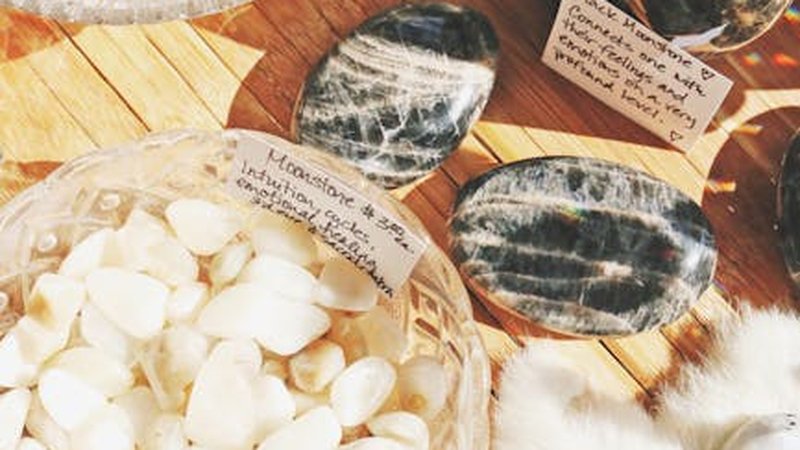
I was wandering through a small crystal market on the night of a full moon — the kind of place with folding tables, dim string lights, and that earthy smell of sage and incense everywhere. One table had a shallow basket filled with these milky white stones, some with a faint blue sheen that seemed to move when you tilted them. I picked one up and the woman running the table looked at me with this knowing smile and said, "That one's a moonstone. Some people call it the moon's tear."
I bought it for five bucks. Didn't know anything about it at the time — I just liked the way the light played inside the stone, like something was alive in there. That was two years ago. Since then I've probably read more about moonstone than any reasonable person should, and I've accumulated a small collection that sits on my windowsill and catches light in ways that still make me stop what I'm doing.
Here's everything I've learned — the geology, the lore, the practical stuff about choosing and caring for moonstone, and the honest truth about what it can and can't do for you.
What Is Moonstone, Actually?
Moonstone is a member of the feldspar mineral family, which also includes labradorite and sunstone. It's not a single mineral but rather a combination of two types of feldspar — orthoclase and albite — that form in alternating microscopic layers as the crystal cools from magma.
These alternating layers are what give moonstone its signature effect, called adularescence. When light enters the stone, it scatters between these thin layers and creates a soft, floating glow that seems to sit just beneath the surface. It moves as you tilt the stone — kind of like moonlight rippling on water, which is exactly where the name comes from. The best moonstones have a bright, centered blue sheen that follows you as you move the stone around.
On the Mohs hardness scale, moonstone comes in at 6 to 6.5. That puts it somewhere in the middle — harder than glass but softer than quartz. It's durable enough for jewelry, but you do need to be a little careful with it. More on that later.
The most significant sources of quality moonstone are India and Sri Lanka, which have been producing these stones for centuries. You'll also find moonstone from Myanmar (Burma), Brazil, Madagascar, and the United States (mostly in Virginia and New Mexico). Indian moonstone tends to have that classic blue sheen, while Sri Lankan stones often have a more silvery-white glow.
Adularescence vs. Labradorescence — Know the Difference
This is one of the most common mix-ups in the crystal world, and it's worth understanding because they look similar but come from very different stones.
Adularescence is the effect you see in genuine moonstone (orthoclase feldspar). It's a soft, blue or white glow that floats beneath the surface and moves smoothly as you tilt the stone. It's subtle, ethereal, and usually monochromatic — one color of light that shifts position.
Labradorescence is the effect you see in labradorite, which is also a feldspar but a different variety. Instead of a single floating glow, labradorite flashes with multiple colors — blues, greens, golds, sometimes pinks and purples — all at once. It's more dramatic, more colorful, and more "in your face."
If someone tries to sell you a "rainbow moonstone" and it's flashing multiple vivid colors, there's a good chance you're looking at labradorite, not moonstone. I'll get into that distinction more below, but the key takeaway here is: moonstone glows softly in one color, labradorite flashes in many.
What Moonstone Represents
Almost every culture that encountered moonstone naturally associated it with the moon. The connection isn't just visual — the way light moves through the stone genuinely resembles moonlight on water. But the symbolism goes deeper than aesthetics.
In ancient Rome, moonstone was believed to be solidified moonbeams. The Romans associated it with Diana, the goddess of the moon, and thought that wearing moonstone would bring her favor, especially for lovers. Roman women reportedly wore moonstone in their hair or as amulets during the full moon to enhance fertility and attract love.
In Hindu mythology, moonstone is considered a sacred stone. It's one of the navaratna (nine sacred gems) in Vedic astrology, associated with the planet Moon (Chandra). Traditionally, it was believed to bring good fortune, enhance intuition, and promote emotional balance.
The common thread across cultures is the association with feminine energy, intuition, cycles, and new beginnings. The moon waxes and wanes, dies and is reborn — and moonstone is seen as a physical embodiment of that cycle. It's the stone you reach for during transitions: starting something new, ending something old, moving through a period of change.
I keep a moonstone on my desk when I'm working through a creative block. I have no idea if it actually helps, but the act of picking it up and looking at that floating light does seem to shift something in my thinking. Placebo? Maybe. But the result is the same.
Healing Properties — The Honest Version
Crystal healing is a traditional practice, not a medical treatment. I think it's important to say that upfront because there's a lot of misinformation out there. No crystal is going to cure an illness or replace professional medical care. What crystals can do — for people who find value in them — is serve as focal points for intention, meditation, and mindfulness.
That said, here's what moonstone is traditionally associated with in crystal healing traditions:
Hormonal balance. Moonstone has a long association with the female reproductive system. In crystal healing, it's often recommended for women dealing with menstrual discomfort, fertility challenges, or menopausal symptoms. The connection to the lunar cycle and the menstrual cycle is obvious, and many people find comfort in having a physical object that represents that connection.
Emotional healing. Moonstone is considered a stone of emotional balance and calm. It's said to help stabilize erratic emotions, ease stress, and encourage a more reflective state of mind. If you're going through a breakup, a loss, or any kind of emotional turbulence, moonstone is one of the first stones people reach for.
Enhanced intuition. This is the one I hear about most from people who actually work with crystals regularly. Moonstone is believed to strengthen your "gut feelings" and help you trust your instincts. Whether that's a metaphysical property or just the psychological benefit of having a quiet moment with a beautiful object, the outcome is similar — people report feeling more centered and clear-headed.
Sleep and dreams. Placing moonstone under your pillow is a common practice for people who want to improve their sleep quality or have more vivid, meaningful dreams. Some people report more "lucid" dreams — dreams where they're aware they're dreaming and can sometimes control the narrative.
Again: none of these claims have been validated by scientific research. If you're drawn to moonstone, use it as a tool for mindfulness and self-care, not as a substitute for actual medical treatment.
How to Use Moonstone in Your Daily Life
One of the things I like most about moonstone is how easy it is to incorporate into everyday life. You don't need elaborate rituals or crystal grids. Here are the most common and practical ways people use it:
Wear It as Jewelry
This is probably the most popular way to use moonstone, and for good reason — it makes genuinely beautiful jewelry. A cabochon moonstone set in silver is one of the most classic gemstone looks out there. The silver enhances the cool tones of the stone, and the cabochon cut (smooth, dome-shaped, not faceted) maximizes the adularescence effect.
Pendants are my personal favorite because they sit close to the heart chakra (or at least that's what people who are into chakras will tell you). A moonstone on a silver chain just works — it's elegant without being fussy, and you can wear it with basically anything.
Bracelets are great too, especially if you want the stone in direct contact with your skin. Rings are lovely, but remember that moonstone is only 6-6.5 on the Mohs scale, so a ring will show wear faster than harder stones. Reserve moonstone rings for occasional wear, not daily.
Place It Under Your Pillow
This is the classic sleep-and-dreams technique. Put a tumbled moonstone or a small raw piece under your pillow (or on your nightstand if under the pillow is uncomfortable) before bed. The idea is that the stone's energy promotes calmer sleep and more vivid dreams.
Does it work? I've tried it, and I did notice my dreams were more memorable for the first few nights. After that, it kind of faded. Whether that was the stone or just the novelty effect paying attention to my dreams more, I genuinely can't say. But it's a pleasant ritual either way.
Charge It in Moonlight
If there's one tradition that feels genuinely special, it's charging moonstone under the full moon. On the night of a full moon, place your moonstone on a windowsill or outside where moonlight can reach it. Leave it overnight. That's it.
Some people add sage smudging or set an intention while doing this. Others just put the stone out and go to bed. There's no wrong way to do it. I think the real value is in the act of pausing once a month to pay attention to the lunar cycle — something most of us never do anymore.
Use It in Meditation
Hold a moonstone in your hand during meditation, or place it on your forehead (the third eye chakra area). The physical sensation of a smooth, cool stone in your palm can be surprisingly grounding. It gives your hands something to do, your mind something to focus on, and creates a tangible anchor for the meditation session.
Some people prefer tumbled stones for this because they're smooth and comfortable to hold. Others like raw pieces because the natural texture adds a tactile dimension. Either way works.
Crystal Pairings — What Goes Well With Moonstone?
If you're into combining crystals (and a lot of people who like moonstone are), here are some pairings that complement it well:
Moonstone + Rose Quartz. This is probably the most popular feminine energy combination. Rose quartz brings love, compassion, and emotional warmth. Moonstone brings intuition, cycles, and inner wisdom. Together, they're supposed to create a balanced, nurturing energy that supports self-love and emotional healing. I keep both on my windowsill and they look beautiful next to each other — the pink and the white/cream.
Moonstone + Clear Quartz. Clear quartz is often called the "amplifier" stone because it's believed to enhance the properties of other crystals around it. Pairing moonstone with clear quartz is supposed to strengthen moonstone's intuitive and emotional benefits. It's a simple, clean combination that works well for meditation.
Moonstone + Labradorite. This one's sometimes called the "light stones" pairing because both are feldspar minerals with light-related optical effects. Moonstone's soft blue glow combined with labradorite's colorful flash creates a visually stunning display. Metaphysically, moonstone handles the intuitive/emotional side while labradorite is said to protect against negative energy and strengthen the aura.
Moonstone + Amethyst. Both are associated with calming, spiritual energy. Amethyst is more about mental clarity and spiritual growth, while moonstone is more about emotional balance and intuition. Together they create a peaceful, meditative energy that a lot of people find helpful for anxiety and stress relief.
How to Clean and Care for Moonstone
Moonstone is a 6-6.5 on the Mohs scale, which means it can be scratched by harder materials (quartz is a 7, and dust often contains tiny quartz particles). It's not fragile, but it does need a little more care than something like diamond or sapphire.
Cleaning: Warm water and mild soap is all you need. Use a soft cloth or a very soft brush to gently clean the surface. Don't use harsh chemicals, bleach, or abrasive cleaners — they can damage the surface and dull the adularescence.
What to avoid: Ultrasonic cleaners are generally not recommended for moonstone. The vibrations can cause internal fractures, especially in stones that have natural inclusions or cleavage planes. Steam cleaning is also a bad idea for the same reason. Stick to the gentle soap-and-water method.
Charging and clearing: In crystal traditions, people "clear" their stones to reset their energy. Moonlight is the obvious choice for moonstone — it's gentle, it aligns with the stone's nature, and it's free. Running water (hold the stone under a natural stream or tap) is another traditional method. Some people use sage smoke or sound (singing bowls, tuning forks) to clear their stones. All of these are gentle enough for moonstone.
Storage: Store moonstone separately from harder stones to prevent scratching. A soft pouch or a lined jewelry box works well. Try to avoid leaving it in direct sunlight for extended periods — some moonstones can fade or lose their sheen with prolonged sun exposure (especially the more delicate blue sheen varieties).
How to Choose a Good Moonstone
If you're buying moonstone — whether it's a loose stone for your collection or a piece of jewelry — here's what to look for:
The adularescence is everything. This is the single most important factor in moonstone quality. A good moonstone should have a visible, centered glow that moves as you tilt the stone. The brightest, most vivid adularescence is always found in the center of the stone (not off to one side), and it should be visible from multiple angles.
Blue sheen is more valuable than white. Blue moonstones — stones with a clear blue adularescence — are the most sought-after and the most expensive. White or silvery adularescence is more common and more affordable. A strong, centered blue sheen in a transparent body is the gold standard.
Transparency matters. The best moonstones are semi-transparent to transparent, with the adularescent glow visible through the stone body. Opaque moonstones with a surface sheen are less valuable, though they can still be beautiful in their own way.
Cut matters a lot. Moonstone should always be cut as a cabochon (smooth dome) to maximize the adularescence. Faceted moonstone exists but it's unusual and generally not as visually appealing because the flat facets break up the floating light effect. The best cabochons are slightly high-domed with a smooth, well-polished surface.
Inclusions are normal but less is more. Tiny inclusions (internal imperfections) are extremely common in moonstone and generally acceptable. But large, visible inclusions or cracks will reduce both the beauty and the durability of the stone. Hold the stone up to light and look for anything that catches your eye in a bad way.
Rainbow Moonstone vs. Regular Moonstone — They're Not the Same Thing
This is one of the most misunderstood things in the crystal world, and it's worth getting right.
Regular moonstone (the "real" moonstone in mineralogical terms) is orthoclase feldspar. It has the classic blue or white adularescence — that soft, floating glow. This is the moonstone that all the historical and metaphysical traditions refer to.
Rainbow moonstone is actually a type of labradorite — specifically, a transparent to semi-transparent labradorite with a blue or multicolored sheen. It's a different mineral entirely (plagioclase feldspar, not orthoclase feldspar). The trade name "rainbow moonstone" was coined because it looks somewhat similar to moonstone, but it's technically mislabeled.
So when you buy "rainbow moonstone," you're buying labradorite. That's not necessarily a bad thing — rainbow moonstone is beautiful, often more affordable, and labradorite has its own rich set of metaphysical associations (protection, transformation, spiritual growth). But it's not the same stone as traditional moonstone.
If you specifically want the properties and energy traditionally associated with moonstone — feminine energy, intuition, lunar connection, emotional balance — you want orthoclase moonstone, not rainbow moonstone. If you're buying for aesthetics and don't care about the mineralogical distinction, rainbow moonstone is gorgeous and worth having in your collection.
The crystal industry is notoriously loose with naming conventions, so always ask or check descriptions carefully. A reputable seller will tell you exactly what mineral you're getting. If they can't or won't, that's a red flag.
Why Moonstone Keeps Drawing People In
I think the reason moonstone has been valued for thousands of years across dozens of cultures is simple: it looks alive. There aren't many stones where light behaves the way it does inside moonstone. That floating, shifting glow gives it a quality that feels organic, almost otherworldly. You can pick up a moonstone and stare at it for a while and feel like you're looking at something deeper than a piece of rock.
Whether you're into crystals for their metaphysical properties, their geological interest, or just because they're pretty, moonstone deserves a place in your collection. It's affordable enough to start with (you can get a decent tumbled stone for $5-10), interesting enough to learn about, and beautiful enough to wear every day.
That first stone I bought at the crystal market is still on my windowsill. It's not the most expensive or the highest quality moonstone I own now, but it's the one that started everything. Sometimes the best crystal is the one that found you.

Comments