Tanzanite: The Gemstone That's Rarer Than Diamond (And Running Out)
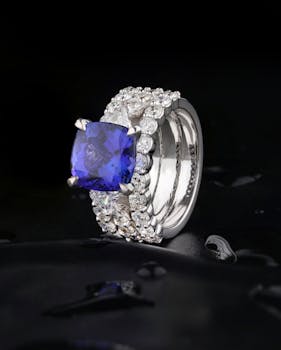
In 1967, a Masai herder named Ali Juuyawatu was walking near the base of Mount Kilimanjaro in northern Tanzania when he noticed a cluster of blue crystals sticking out of the ground. He did not know it, but he had found the only deposit of one of the rarest gemstones on Earth. Within two years, Tiffany and Company had named the stone "tanzanite," launched a marketing campaign, and turned a regional curiosity into a global phenomenon. The geology has not changed since 1967. There is still only one place on the planet where tanzanite forms, and that deposit is running out.
The single-source problem
Tanzanite comes from a roughly 5-square-mile area near Mirerani, Tanzania, at the foot of Mount Kilimanjaro. Five square miles. That is smaller than many farms, smaller than some shopping malls, and smaller than the footprint of a mid-sized airport. For comparison, diamonds come from at least 35 countries on six continents. Rubies come from Myanmar, Thailand, Mozambique, Madagascar, Vietnam, and several others. Emeralds span Colombia, Zambia, Brazil, Zimbabwe, and more. Tanzanite has one source. Period.
The geological reason comes down to a very specific set of conditions. Tanzanite is the blue variety of the mineral zoisite, which itself is not particularly rare. Zoisite forms in metamorphic rocks around the world, usually in green, gray, or pinkish colors. But the conditions that turn zoisite blue — specifically, the presence of vanadium in trace amounts within the crystal structure — occurred only in this one location, where the right rock chemistry met the right temperature and pressure during the formation of the East African Rift system.
This is not a case of "we have not found other deposits yet." Geologists have looked. The specific geochemical conditions that produce gem-quality blue zoisite simply do not appear to have been replicated elsewhere. After nearly 60 years of active prospecting, no one has found tanzanite anywhere else on Earth. The prevailing geological opinion is that there probably is not any to find.
Brown to blue: the heat treatment everyone should know about
Here is something most tanzanite buyers do not realize: virtually all the tanzanite you see on the market has been heat-treated. Tanzanite in its natural, freshly mined state is usually a brownish or reddish color — sometimes described as "truffle brown" or "dried blood." It is not particularly attractive. When heated to approximately 600 to 700 degrees Celsius (roughly 1,100 to 1,300 degrees Fahrenheit), the vanadium in the crystal structure shifts its oxidation state, and the stone transforms into the vivid blue to violet-blue color that made tanzanite famous.
This heat treatment is universal in the industry. It is not considered deceptive, not required to be disclosed in most jurisdictions, and not something that reduces the value of the stone. An unheated tanzanite with natural blue color is so rare that it would be a notable collector's piece, not a commercial product. When you buy tanzanite, assume it has been heated. The color you see is stable and permanent — this is not like the unstable coatings sometimes applied to other stones.
The heat treatment is also why the color range exists. Lighter heating produces a more violet-blue stone. Longer or hotter treatment pushes the color deeper toward pure blue. Skilled treatment technicians can control the final color to some degree, which is why you see such variation in tanzanite shades on the market.
Trichroic: three colors in one stone
Tanzanite has one of the most dramatic trichroic effects of any gemstone. Trichroism means the stone shows different colors when viewed from different crystallographic directions. In tanzanite's case, those three colors are blue, violet, and red-brown. Hold a tanzanite up to the light and rotate it slowly, and you will see the color shift between these three distinct hues.
Most of the time, the blue and violet dominate what you see face-up, because gem cutters orient the stone to show those colors. The red-brown direction is usually tilted away from the viewer. But it is there, and you can catch glimpses of it at certain angles, especially in larger stones with good transparency. This optical property is unique to the zoisite structure and is one of the things that makes tanzanite genuinely special from a gemological standpoint.
The trichroism also explains why tanzanite photographs so inconsistently. Depending on the lighting and the angle of the camera relative to the crystal axes, the same stone can look blue, purple, or something in between. If you are shopping for tanzanite online, be aware that the color in photos may not match what you see in person, and it is not necessarily because the seller is being dishonest — it is because the stone literally looks different from different directions.
How long until it runs out?
This is the question that drives tanzanite's market and its mystique, and the honest answer is: nobody knows exactly, but the range of estimates is not encouraging. Geological surveys of the Mirerani deposit have produced various figures over the years, but most serious estimates put the remaining economically mineable supply at somewhere between 20 and 30 years of production at current rates. Some more pessimistic projections say less than 15 years.
The deposit is deep — mining operations have reached depths of several hundred meters, and the cost of extraction increases as they go deeper. The Tanzanian government has attempted to regulate the mining to extend the life of the resource, including periodically closing small-scale operations and restricting export volumes. These interventions have had mixed results and have sometimes driven more mining underground (literally and figuratively) rather than extending the deposit's life.
What happens when the deposit is exhausted is unclear. Tanzanite will not disappear — existing stones will remain in circulation, and the price of fine specimens will almost certainly increase significantly. But no new tanzanite will enter the market, and the stone will transition from an active commercial gemstone to a purely collectible one. Think of it as a geological clock that is ticking, and nobody can stop it.
Hardness, durability, and daily wear
Tanzanite rates 6 to 6.5 on the Mohs scale of hardness. That puts it between feldspar (orthoclase, 6) and quartz (7). It is harder than apatite but softer than garnet. What this means in practical terms: tanzanite can be worn in jewelry, but it requires some care. It is not as durable as sapphire or diamond, and it will accumulate scratches over time if worn in rings that take daily abuse.
Tanzanite also has one direction of perfect cleavage, which means it can split along a specific plane if struck with sufficient force. A sharp knock against a countertop edge or a doorframe could, in theory, cleave a tanzanite. In practice, this is not common, but it is a real vulnerability that does not exist with harder, tougher stones like sapphire.
Pendants and earrings are the safest bets for tanzanite jewelry. Rings are possible but are best reserved for occasional wear rather than daily use. If you do wear a tanzanite ring daily, be prepared for it to show wear over time and budget for occasional repolishing. Protective settings — bezel settings or halo designs that shield the stone — help extend the life of ring-mounted tanzanite.
What tanzanite actually costs
Tanzanite pricing is heavily dependent on color, size, and clarity. A small (< 2 carat), moderately colored stone with visible inclusions might cost $200 to $400 per carat. A medium stone (2 to 5 carats) in good violet-blue color with decent clarity runs $400 to $700 per carat. Stones over 5 carats with excellent, deeply saturated blue-violet color and high clarity can exceed $1,000 per carat, and exceptional specimens over 10 carats have sold for significantly more.
The per-carat price jumps sharply with size, because large, clean tanzanite crystals are genuinely uncommon. A 1-carat tanzanite and a 10-carat tanzanite of equivalent quality will not have a 10x price difference — the larger stone will cost disproportionately more, sometimes 20 to 50 times the per-carat price of the small one. This exponential scaling is typical of single-source stones with limited production.
Color is the single biggest price factor. The most valued tanzanite color is a vivid, saturated blue with a violet modifier — not too purple, not too gray, and definitely not greenish. Stones that lean too far toward violet or that have a grayish or brownish mask sell for considerably less, sometimes at half the price of top-color material of the same size.
The market and the future
Tanzanite occupies an interesting position in the gemstone market. It is rare enough to generate excitement and price appreciation, available enough to be found in jewelry stores worldwide, and has a compelling origin story that Tiffany's marketing team crafted into one of the most effective gemstone branding campaigns of the 20th century. The 2002 decision to add tanzanite as an alternative birthstone for December gave it additional market presence.
But the finite supply is the shadow hanging over everything. Unlike diamonds, which have multiple sources and a well-developed secondary market, tanzanite's value is fundamentally tied to a single depleting resource. When the Mirerani mines eventually close, the dynamics of the tanzanite market will change completely. Fine, well-cut stones in strong colors will almost certainly appreciate. Commercial-grade material may not fare as well, because the supply of that exists in sufficient quantity to meet collector demand for a very long time.
My take: if you want a tanzanite, buy one now while the supply chain is still functioning normally. You do not need to rush or panic-buy, but the geological reality is straightforward — this stone is not being made anymore, and the earth is not making any more deposits. At current mining rates, the window for buying newly mined tanzanite at anything approaching current prices is probably measured in a couple of decades, give or take.
Comments