Queen of Cups Tarot Card: Complete Meaning Guide
May 17, 2026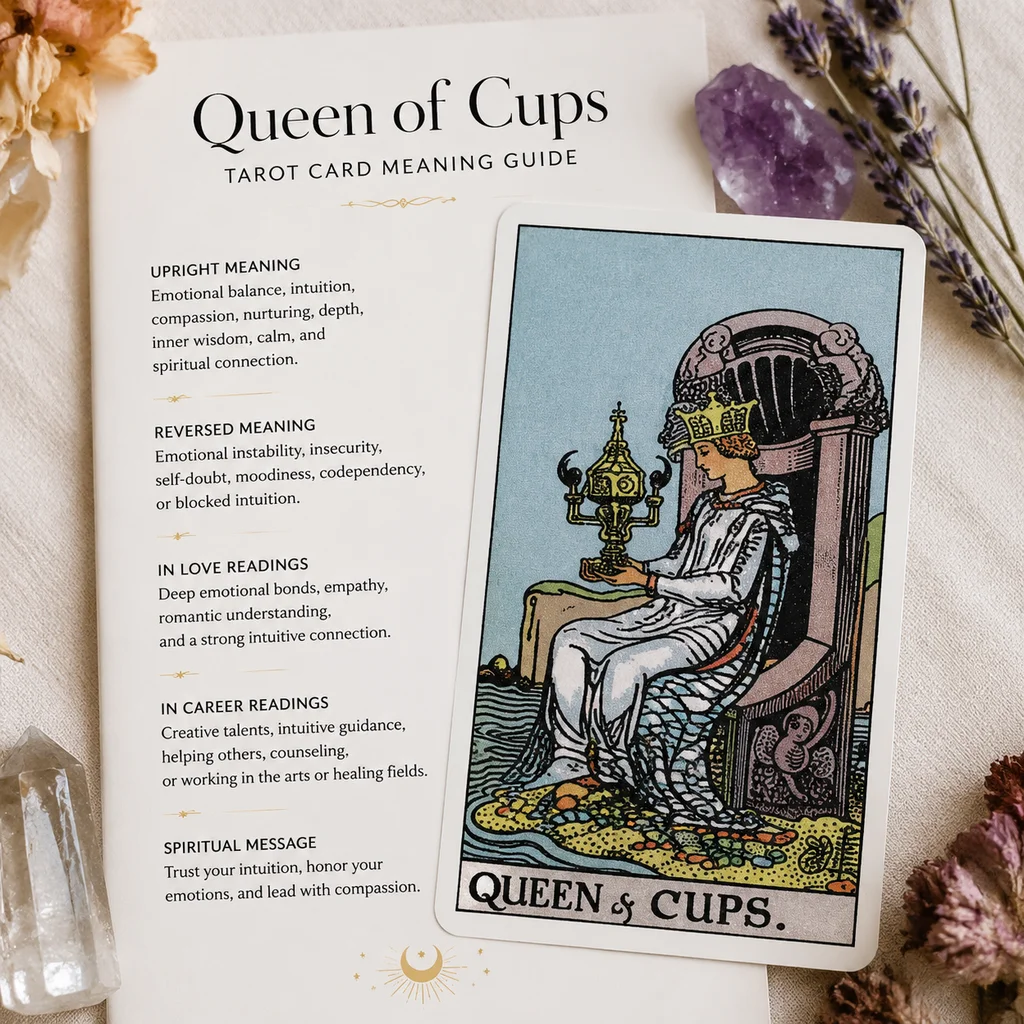
I Pulled the Queen of Cups Every Day for a Week and It Changed How I Trust Myself
I didn't want to hear what the Queen of Cups had to say. It was a Tuesday, I was shuffling my deck with coffee in one hand and a vague question about a work decision in the other, and there she was — seated, calm, holding a cup that seemed to hold the entire ocean. The card felt smug. Like she already knew the answer and was waiting for me to catch up.
She showed up again Wednesday. And Thursday. By Friday I was annoyed. By Sunday I was paying attention.
Here's the thing about the Queen of Cups: she doesn't shout. She doesn't wave a sword around or point at the horizon like some of the flashier cards in the deck. She just sits there, radiating this quiet certainty that says I already know, and deep down, so do you. And that's exactly what makes her one of the hardest cards in the tarot to actually listen to.
In this guide, I'm going to walk you through everything I've learned about the Queen of Cups — from the layers of symbolism packed into her image, to what she means upright and reversed, to how she shows up in love, career, and daily pulls. I'll also share some crystal pairings and journal prompts that have genuinely helped me connect with her energy.
If you're new to tarot and still figuring out how the whole thing works, my complete beginner's guide to reading tarot covers the basics. But if you're here specifically for the Queen of Cups — pull up a chair. She's been waiting.
Who Is the Queen of Cups? Historical Roots of Feminine Intuition
The Queen of Cups isn't just a tarot card. She's part of a lineage that stretches back thousands of years — a tradition of associating water, the moon, and the deep unconscious with feminine knowing.
In ancient Greece, the Oracle of Delphi sat over a chasm in the earth, breathing vapors and delivering prophecies that shaped the course of empires. She wasn't reading tea leaves or interpreting symbols. She was channeling — acting as a vessel for something that came from deep below the surface. Sound familiar? The Queen of Cups operates the same way. Her wisdom doesn't come from analysis or logic. It rises from somewhere older and quieter.
In Norse tradition, the goddess Freyja ruled over love and a form of magic called seiðr — practiced by wandering seeresses who sat on high platforms to see what ordinary eyes couldn't. Their power wasn't brute force. It was knowing.
Across the Pacific, Hawaiian kahunas practiced divination through dreams and bodily sensations — what they called "gut knowing." In Japan, miko shrine maidens served as intermediaries between the human world and spirits through water rituals.
What connects all of these figures isn't gender, exactly. It's a mode of perception that privileges feeling over thinking, intuition over evidence, inner knowing over external authority. And that's precisely what the Queen of Cups represents in the tarot.
When I first started reading tarot, I was suspicious of this kind of knowing. I'd spent my entire adult life trained to trust data, spreadsheets, pros-and-cons lists. The idea that my body might know something before my brain caught up felt, frankly, ridiculous. But then I pulled the Queen of Cups during a period when I was agonizing over whether to leave a stable job for something uncertain. My logical mind had produced an elaborate decision matrix that leaned toward staying. My gut said go. I stayed. And within six months, I regretted it.
That experience didn't make me abandon rationality. But it did make me reconsider what counts as "evidence." If you're curious about how the tarot's court cards map to these deeper archetypes, my guide to the Major Arcana meanings explores the bigger structural story.
Visual Symbolism: Reading the Queen's Image
The Rider-Waite-Smith image of the Queen of Cups is deceptively simple, but every detail carries weight.
She sits on a throne at the edge of the sea. The water is choppy behind her — waves crashing, unstable, the unconscious in its raw, unprocessed form. But where she sits, the water is still. She has tamed the chaos not by fighting it, but by sitting with it long enough to understand its rhythms.
In her hands, she holds a cup covered in handles shaped like angels. The cup is closed. This is crucial. Unlike the Page of Cups, who holds an open cup with a fish peeking out (raw emotion, surprises, messages from the deep), the Queen's cup is contained. She isn't overwhelmed by her feelings. She holds them deliberately, reverently. The closed cup also means she protects what's inside — she doesn't pour her emotional energy into everything that asks for it.
Her robe flows into the water, suggesting a seamless connection between her conscious self and the depths below. She doesn't stand apart from her emotions. She's in dialogue with them constantly.
The stones at her feet and the scallop shell imagery connect her to Venus — goddess of love, beauty, and the kind of knowing that can't be taught, only felt. If you've read my guide to The Empress, you'll notice some resonance here. Both cards channel Venusian energy, but where The Empress is about creation and abundance, the Queen of Cups is about reception and emotional clarity.
One more detail that most people miss: her gaze is directed slightly downward, toward the cup. She's not looking at you. She's not looking at the horizon. She's looking at what she holds. That posture — introspective, self-contained, unhurried — is the entire teaching of this card in a single image.
Upright Meaning: Emotional Mastery and Deep Intuition
When the Queen of Cups appears upright, she's inviting you into a specific kind of intelligence. Not the kind that aces tests or wins debates. The kind that knows something is off in a room before anyone speaks. The kind that can feel a shift in a relationship days before it becomes obvious. The kind that says this is right or this is wrong without being able to articulate why.
Core Themes
- Emotional maturity — You're not repressing feelings, and you're not drowning in them either. You're holding them with intention.
- Intuitive knowing — Trust the information that comes through your body, your dreams, your sudden hunches. They're data too.
- Compassion without collapse — You can hold space for someone else's pain without becoming their pain. The closed cup matters.
- Psychic receptivity — This is a card that often shows up when your sensitivity is heightened. Dreams may be vivid. You might pick up on things other people miss.
- Nurturing energy — The Queen of Cups cares deeply, but she's not a martyr. Her care comes from fullness, not depletion.
In a reading, I read this card as a mirror. It's either reflecting something back to you — "you already know the answer" — or it's pointing to a person in your life who embodies this energy. Sometimes it's both.
When I pull her for myself, I've learned to stop and ask: What am I feeling right now that I'm trying to think my way out of? Nine times out of ten, that's where the actual message lives.
Reversed Meaning: When the Cup Overflows
A reversed Queen of Cups is uncomfortable — and it's supposed to be.
The most common manifestation is emotional overwhelm. You're not holding the cup anymore; the cup is holding you. Every small thing feels enormous. You're crying at commercials, taking everything personally, and unable to distinguish between your own feelings and everyone else's. The boundary between self and other has dissolved.
But there's another reading that I think gets overlooked: emotional manipulation. The reversed Queen can show up when someone in your life is using their sensitivity as a weapon — playing the victim, guilt-tripping, or weaponizing tears. Or, honestly, when you're doing it yourself. It's not always pretty, and I say that as someone who has absolutely been that person.
What to Ask When She's Reversed
- Am I absorbing other people's emotions without realizing it?
- Is there a feeling I'm refusing to look at directly?
- Am I using emotional language to avoid being direct about what I need?
- Who in my life drains me while claiming to care?
If you want to go deeper into how reversals work (and whether you should even read them), I wrote about my experience with reversed tarot cards here — including the year I ignored them entirely and what I learned.
Love and Relationships
In love readings, the Queen of Cups is one of the most nuanced cards in the deck, and people tend to oversimplify her. She's not just "a loving partner" or "emotional connection." She's asking something much more specific: Can you be emotionally honest in this relationship?
If You're Single
The Queen of Cups suggests you already have everything you need to attract a deep connection — but you might be second-guessing your own worth. Stop performing. Stop trying to be what you think someone else wants. The Queen doesn't audition. She just is, and the right people recognize that. Trust your read on people. If someone feels off, they probably are, no matter how good they look on paper.
If You're in a Relationship
This card often points to a period of deepening intimacy. Not the dramatic, movie-kind. The quiet kind. The kind where you finally say the thing you've been holding back, and instead of exploding, the relationship grows. It can also signal that one partner is carrying the emotional weight for both — and that needs to shift.
If You're Healing From a Breakup
The Queen of Cups is your permission slip to feel it all. Not forever. Not wallowing. But fully. Cry. Journal. Sit with the ache. Don't rush to "get over it." The closed cup means you get to contain the process — it's yours, private, held — but it doesn't mean you skip it.
For more on how different cards show up in relationship contexts, my guide to The Lovers card covers relationship dynamics in depth.
Career and Finances
The Queen of Cups in a career reading is interesting because she doesn't map neatly onto traditional professional virtues. She's not about hustle, strategy, or climbing ladders. She's about something that modern workplaces claim to value but rarely actually do: emotional intelligence.
When she shows up in a career spread, I look at what's happening around her. If surrounded by cards about communication and collaboration, she's pointing to your ability to navigate team dynamics, read the room, and resolve conflicts without escalation. That's a real skill, and it's underrated.
If she's near cards about stagnation or frustration, she might be asking: Are you in a job that requires you to shut down your sensitivity? Some workplaces treat emotional awareness as a liability. If you're constantly being told you're "too sensitive" or "overthinking it," the Queen of Cups is validating that your sensitivity isn't the problem — the environment might be.
Financially, this card can indicate an intuitive approach to money decisions. Not reckless gambling based on vibes, but that sense of this opportunity feels right or something about this deal doesn't sit well with me. I've followed that feeling more than once, and while it hasn't always been profitable, it has always been instructive.
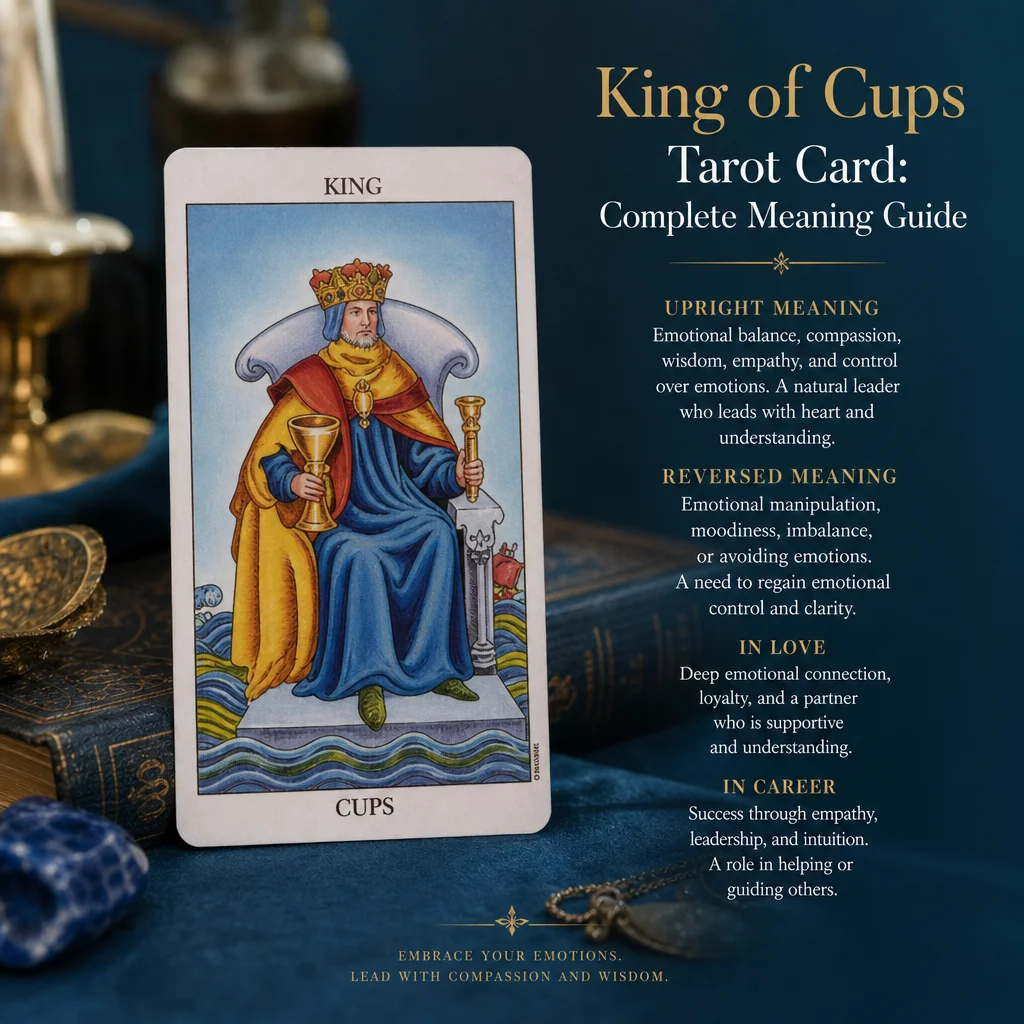
The Knight of Cups shares some of this emotional energy in career readings, but where the Knight charges forward with idealism, the Queen sits back and assesses. Different tactics, same water element.
Daily Pull: What the Queen of Cups Asks of You Today
When the Queen of Cups shows up as your daily card, she's usually asking you to do one thing: check in with yourself before you check in with the world.
Before you open your phone. Before you respond to that email. Before you say yes to something you'll regret. Take sixty seconds. Put your hand on your chest. Ask: What am I actually feeling right now?
Some days the answer is simple — tired, hungry, fine. Other days it opens a door you didn't know was there. The Queen of Cups isn't asking you to have a breakthrough every day. She's asking you to develop the habit of inner listening.
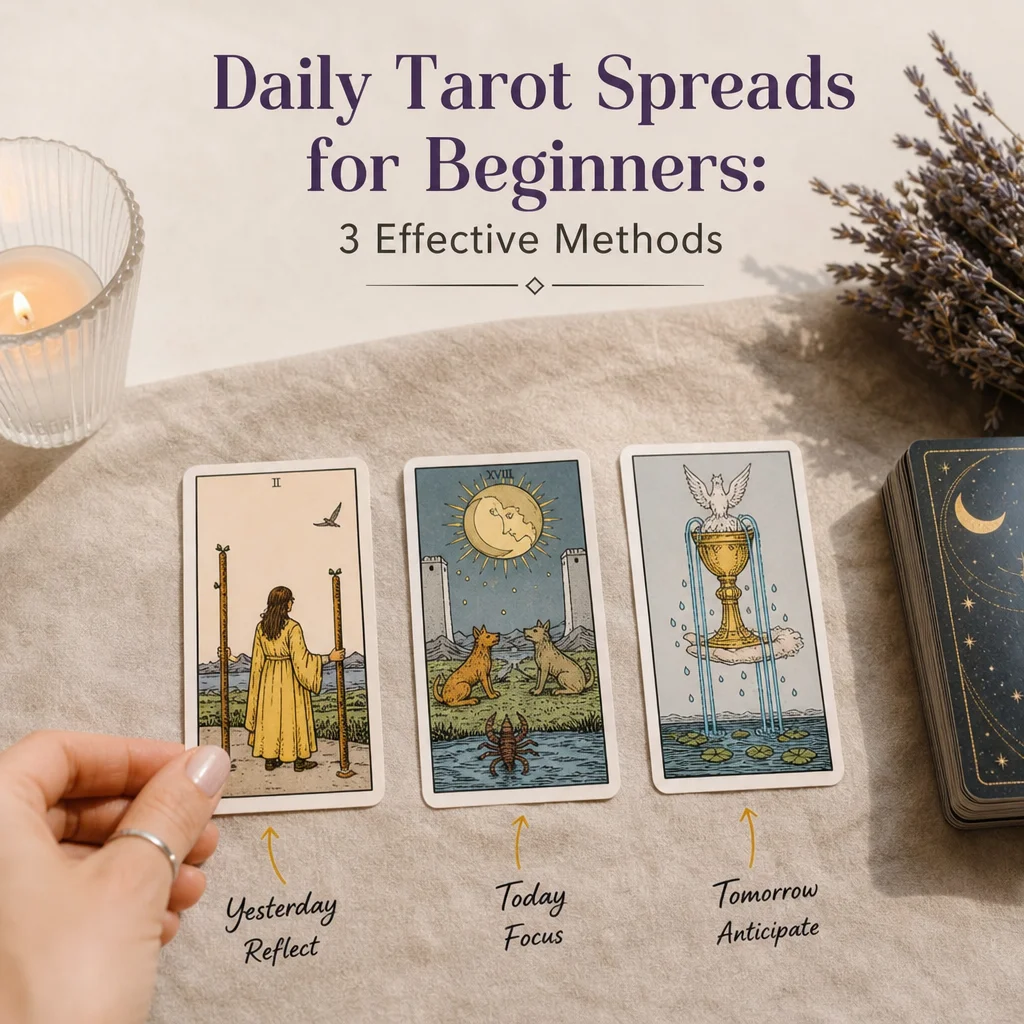
I use a simple daily tarot spread that incorporates this kind of reflective check-in, and it's been one of the most consistent practices in my life. Not because it's mystical. Because it forces me to pause.
Crystal Combinations for the Queen of Cups
Pairing crystals with tarot isn't mandatory, but I've found that it can sharpen your focus during readings — especially with a card as emotionally complex as the Queen of Cups. Here are the combinations I've tested and actually use.
Moonstone
The obvious choice, and for good reason. Moonstone is traditionally associated with intuition, the lunar cycle, and the kind of knowing that comes in waves rather than lightning bolts. Place it on your deck when working with the Queen of Cups, or hold it during meditation when you're trying to access emotional clarity. My complete moonstone guide goes deeper into why this stone and this card are natural companions.
Rose Quartz
Where moonstone sharpens intuition, rose quartz softens the heart. If you're pulling the Queen of Cups in a love reading — or if you're working through emotional walls — rose quartz creates a gentle, nonjudgmental space. I keep a piece on my reading table for this purpose. The rose quartz guide on this site covers its properties in detail.
Amethyst
Amethyst brings clarity to emotional chaos. If the Queen of Cups shows up reversed or you're feeling overwhelmed, amethyst helps you sort through the noise without shutting down. It's the "I need to think clearly about what I'm feeling" stone. I wrote about its properties at length in my amethyst crystal meaning guide.
Aquamarine
The water stone for a water card. Aquamarine is associated with courage in emotional expression — saying the hard thing, feeling the big feeling, not flinching. If the Queen of Cups is pushing you toward emotional honesty, aquamarine is the crystal equivalent of a deep breath before you speak.
For a broader look at how crystals and tarot work together, my piece on tarot and crystal combinations covers seven pairings I've personally tested.
Journal Prompts: Working With the Queen of Cups
I'm a big believer in tarot journaling as a practice — not just recording what cards you pulled, but actually engaging with them through writing. If you want to explore this approach, my tarot journaling guide lays out a 90-day framework. But here are five prompts specifically for the Queen of Cups:
- The Body Scan Prompt: Sit quietly for two minutes with the Queen of Cups in front of you. Then write: "Right now, my body is telling me __________." Don't edit. Don't think. Just write what comes.
- The Boundary Prompt: "Where in my life am I pouring from an open cup — giving emotionally without any container for myself? What would it look like to close the cup, just for a day?"
- The Intuition Audit: "Think of a time when you ignored a gut feeling and regretted it. What did the feeling feel like in your body? What would you recognize it as now?"
- The Emotional Inheritance Prompt: "What did you learn about emotions from your family? Which lessons serve you, and which ones are you ready to release?"
- The Queen's Question: "If the Queen of Cups were sitting across from you right now, what would she say that you already know but don't want to admit?"
Frequently Asked Questions
Is the Queen of Cups always a positive card?
I wouldn't call any tarot card universally positive or negative — that framework flattens what the cards are actually trying to do. The Queen of Cups upright generally points to emotional clarity and strong intuition, which most people experience as constructive. But even upright, she can be uncomfortable. She might be telling you something you've been avoiding. And reversed, she can point to emotional chaos, manipulation, or burnout. The card isn't good or bad. It's a mirror, and what you see depends on where you're standing.
Does the Queen of Cups represent a specific person?
Sometimes. In readings, court cards can represent people in your life, aspects of yourself, or energies you're being called to embody. The Queen of Cups often shows up when there's a highly sensitive, intuitive, and emotionally mature person in the picture — or when you need to become that person. Context matters. Look at the surrounding cards and your actual question to figure out which interpretation fits.
How is the Queen of Cups different from The High Priestess?
Great question, and one I had to wrestle with early on. Both cards deal with intuition and inner knowing, but their flavor is different. The High Priestess is about hidden knowledge — secrets, the unconscious, things that aren't ready to be revealed. She guards the threshold. The Queen of Cups is about embodied emotional knowing — what you feel in your body, your heart, your gut. She's less mysterious and more personal. Where the High Priestess says "sit with the mystery," the Queen says "sit with your feelings." I break down the High Priestess in more depth in my High Priestess meaning guide.
What tarot spread works best with the Queen of Cups?
Any spread that allows space for emotional exploration. I particularly like using her in a three-card spread where the positions are "What I'm feeling / What I'm avoiding / What I need to hear." She tends to dominate the center of a reading, so give her room. My guide to essential tarot spreads includes layouts that work well for this kind of inner-focused reading.
Final Thoughts: The Card That Taught Me to Stop Performing
I spent years thinking that being smart meant having quick answers. Tarot, and the Queen of Cups specifically, taught me that sometimes the smartest thing you can do is sit with not-knowing. Hold the cup. Don't pour it out just because someone asked you a question. Don't fill it with someone else's water. Just hold it and see what rises.
The Queen of Cups isn't asking you to become a psychic or an emotional genius. She's asking you to trust that the quiet voice underneath all the noise has been right more often than you've given it credit for.
I still pull her on days when I need the reminder. And I still, after all this time, find her a little bit annoying. Which is probably how I know she's telling the truth.
Frequently Asked Questions
What zodiac sign is the Queen of Cups associated with?
The Queen of Cups is most commonly linked to the water signs Cancer, Scorpio, and Pisces. Cancer is the strongest match because it shares the Queen's nurturing, emotionally protective, and deeply intuitive qualities. If you have prominent water sign placements in your birth chart, this card often feels especially personal when it appears in a reading. However, you do not need to be a water sign to connect with her energy. The Queen of Cups speaks to anyone learning to honor their feelings, set healthy emotional boundaries, and trust the quiet voice of inner knowing.
Comments