Beginner's Guide: Master Tarot Reading at 30!
May 16, 2026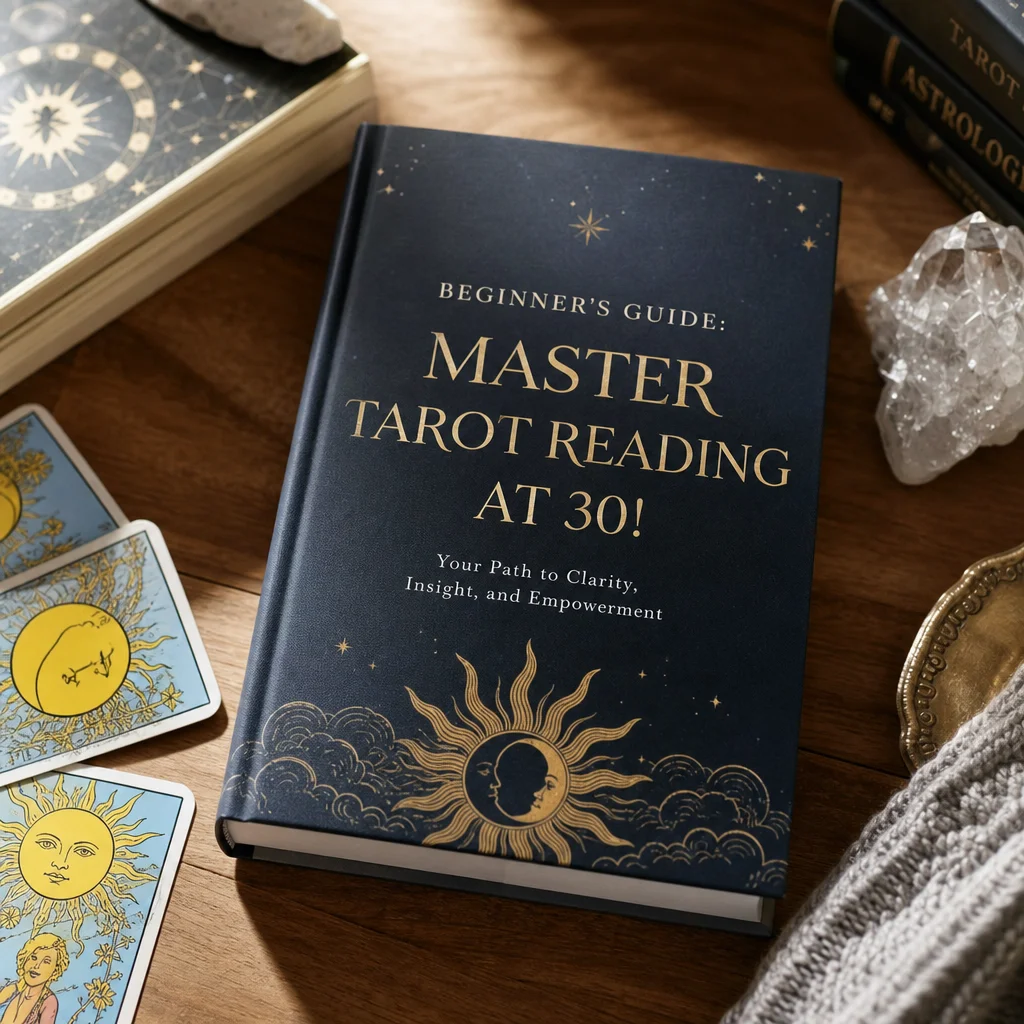
I Bought My First Tarot Deck at 30. I Should Have Started at 20.
I bought my first tarot deck at 30 in a dusty New Age shop in Portland. The woman behind the counter looked at me like I was late to the party. She was right.
The shop smelled like sandalwood and old paper. Shelves lined every wall, stuffed with crystals I couldn't name, books with cracked spines, and candles in jars with hand-written labels. I had walked past this place probably fifty times on my way to the coffee shop next door. Every time I told myself I'd go in "someday." Someday took ten years.
Here's what happened: I was going through a rough stretch. Not the dramatic kind you see in movies — more like a slow, grinding sense that I was living the wrong life and couldn't figure out why. Therapy helped. Running helped. But there was something else I needed, and I couldn't name it. A friend mentioned she'd started reading tarot and it helped her "hear herself think." That phrase stuck with me. I didn't want a psychic reading. I wanted to hear myself think.
So I walked in. The woman behind the counter was maybe sixty, with silver hair and rings on every finger. She watched me stare at the wall of decks — there must have been forty or fifty of them — and said, "First time?" I nodded. She sighed, not unkindly, and said, "You're about ten years later than most people who walk through that door."
She handed me the Rider-Waite-Smith deck. "Start here," she said. "Learn the bones. You can get creative later." I paid twenty-two dollars and change. I still have the receipt somewhere.
That night I sat on my apartment floor, spread all seventy-eight cards out in front of me, and felt two things simultaneously: complete overwhelm and a weird sense of coming home. The images were strange and familiar at the same time. The Fool stepping off a cliff. The Moon glowing over a path between two towers. The Three of Swords — a heart with three blades through it. I didn't need a book to tell me what that one meant.
I spent the next three months making every beginner mistake in the book. I memorized meanings from a little white booklet that came with the deck. I did daily three-card pulls and wrote them down in a notebook I later threw away because the entries were embarrassing. I tried to read for friends before I was ready and got everything wrong. I bought three more decks before I could actually read the first one.
But here's the thing — it worked. Not in the way I expected. Tarot didn't tell my fortune. It gave me a language for things I already knew but couldn't articulate. When The Hermit kept showing up in my readings, week after week, I couldn't ignore the message anymore: I needed to stop avoiding solitude and actually sit with myself. When the Page of Cups appeared the day I was considering signing up for an art class, it felt like a green light from some part of my brain I wasn't listening to.
That was five years ago. I now read professionally part-time, I've collected (and culled) dozens of decks, and I teach beginners. And every single person who sits down at my table, I tell them the same thing: you should have started ten years ago, but right now is the second best time.
This guide is the one I wish I'd had that night on my apartment floor. It won't make you an expert in a weekend. Nothing will. But it will give you a straight, honest path from "I just bought a deck and I'm confused" to "I can do a reading that actually means something to me." Let's go.
What Tarot Actually Is (And What It Definitely Isn't)
Let's clear something up right away: tarot is not fortune telling. I know that's what the movies show — a mysterious woman in a dimly lit room laying out cards and predicting your death. That image has done more damage to tarot than any skeptic ever could.
Tarot is a system of seventy-eight illustrated cards that you use as a tool for self-reflection. That's the plainest way I can say it. Each card represents an archetype, a situation, an emotion, or a phase of life. When you lay them out in a spread, they create a visual narrative — a story that you interpret through the lens of your own life and your own question.
The history is murky and people argue about it, but here's what most historians agree on: tarot cards originated in the mid-15th century in Europe as a card game called tarocchi, played mostly in Italy and France. The deck used for divination — the one you'll buy today — was standardized in 1909 when Arthur Edward Waite commissioned artist Pamela Colman Smith to illustrate a deck published by the Rider company. That deck, the Rider-Waite-Smith, is the one almost every modern tarot deck is based on.
A few things tarot is not:
- Tarot is not a religion. You don't need to believe in anything supernatural to use it. Some readers are deeply spiritual. Others are atheists who treat the cards as a psychological tool. Both approaches work.
- Tarot is not fortune telling. The cards don't predict a fixed future. They show you patterns, tendencies, and possibilities based on where you are right now. If your patterns change, your future changes.
- Tarot is not dangerous. I've had people ask me if opening a tarot deck "lets things in." No. They're pieces of cardboard with pictures on them. The power is in what you bring to them, not the other way around.
- Tarot is not therapy. It can be therapeutic, but it's not a substitute for professional help. If you're dealing with serious mental health issues, see a therapist. Tarot is a complement, not a replacement.
What tarot is, at its best, is a mirror. It reflects back what you already know but haven't admitted, or what you feel but can't articulate, or what you're avoiding but need to face. The cards are a framework. You're the one doing the actual work.
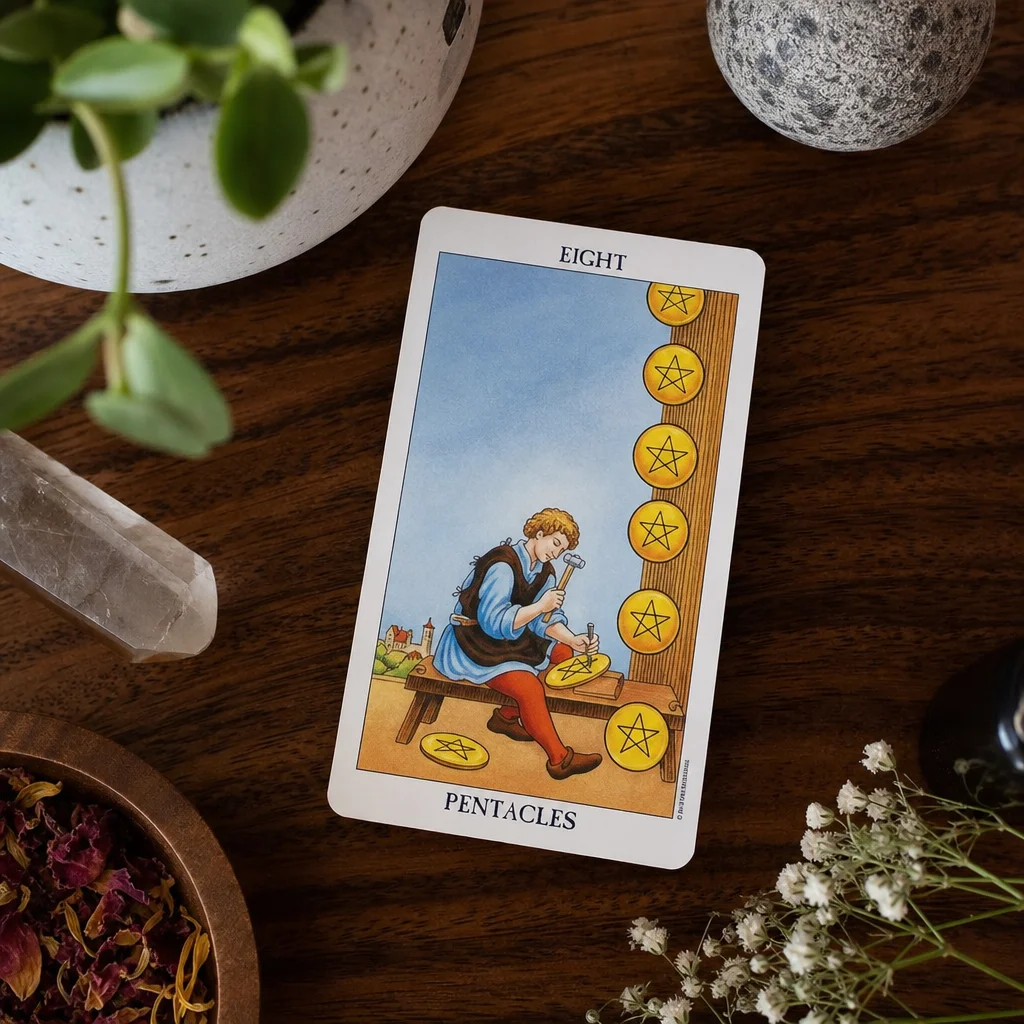
Think of it like journaling with images instead of words. When you ask "What do I need to know about my career right now?" and pull the Eight of Pentacles — a card about focused, dedicated craft — you're not receiving a mystical message. You're being prompted to consider whether you've been phoning it in. Maybe you have. Maybe you haven't. But now you're thinking about it, and that's where the value is.
Choosing Your First Deck
This is where most beginners get stuck, because there are literally thousands of tarot decks on the market and they all look cool. Here's my advice: buy one deck. Learn it. Then branch out if you want to.
Rider-Waite-Smith (RWS) — The One I Recommend
Price: $15–25
This is the deck that Portland shop owner handed me, and it's the one I hand to every beginner who asks. Why? Because almost every tarot book, website, and course uses RWS imagery as its reference system. When you look up "what does the Seven of Cups mean," the answer you find will be based on the RWS image — the figure standing before seven cups filled with different symbols, representing choices and illusions.
The art is simple compared to modern decks. Pamela Colman Smith's illustrations look like they belong in a storybook from 1909, which they do. But every card tells a clear visual story. You can look at the Three of Wands — a figure standing on a cliff, watching ships sail away — and feel the meaning without reading a word. That's the whole point.
Thoth Deck — For Later
Price: $20–35
Designed by Aleister Crowley and painted by Lady Frieda Harris, the Thoth deck is gorgeous and deeply layered. It's also a terrible first deck. The symbolism is dense, the naming conventions are different (Strength is called Lust, Temperance is called Art), and most beginner resources won't help you with it. Get this as your second or third deck, when you already know the structure.
Modern Decks — Tempting But Distracting
There are hundreds of beautiful modern decks: The Wild Unknown ($30–40), Modern Witch ($25), Moonchild Tarot ($35–45), Light Seer's Tarot ($22). They're gorgeous. I own several. But here's the problem: they often deviate from RWS imagery enough that when you're trying to learn, you can't match what you see on the card to what the book says. That friction slows you down.
My honest recommendation: get the Rider-Waite-Smith (or the slightly larger Universal Waite, which has the same images with softer coloring). Use it for at least three months. Then go wild.
Understanding the Structure: 78 Cards, Two Halalves
Every tarot deck has seventy-eight cards. That's not a suggestion — it's the structure. These seventy-eight cards are split into two groups:
The Major Arcana — 22 Cards
These are the big ones. The Fool, The Magician, The High Priestess, The Empress, The Emperor, The Hierophant, The Lovers, The Chariot, Strength, The Hermit, Wheel of Fortune, Justice, The Hanged Man, Death, Temperance, The Devil, The Tower, The Star, The Moon, The Sun, Judgement, The World.
Think of the Major Arcana as the major plot points in a story. When one of these cards shows up in a reading, it's saying "pay attention — this is important." They represent major life themes, turning points, and archetypal experiences. We have a full guide to every Major Arcana card here.
The Minor Arcana — 56 Cards
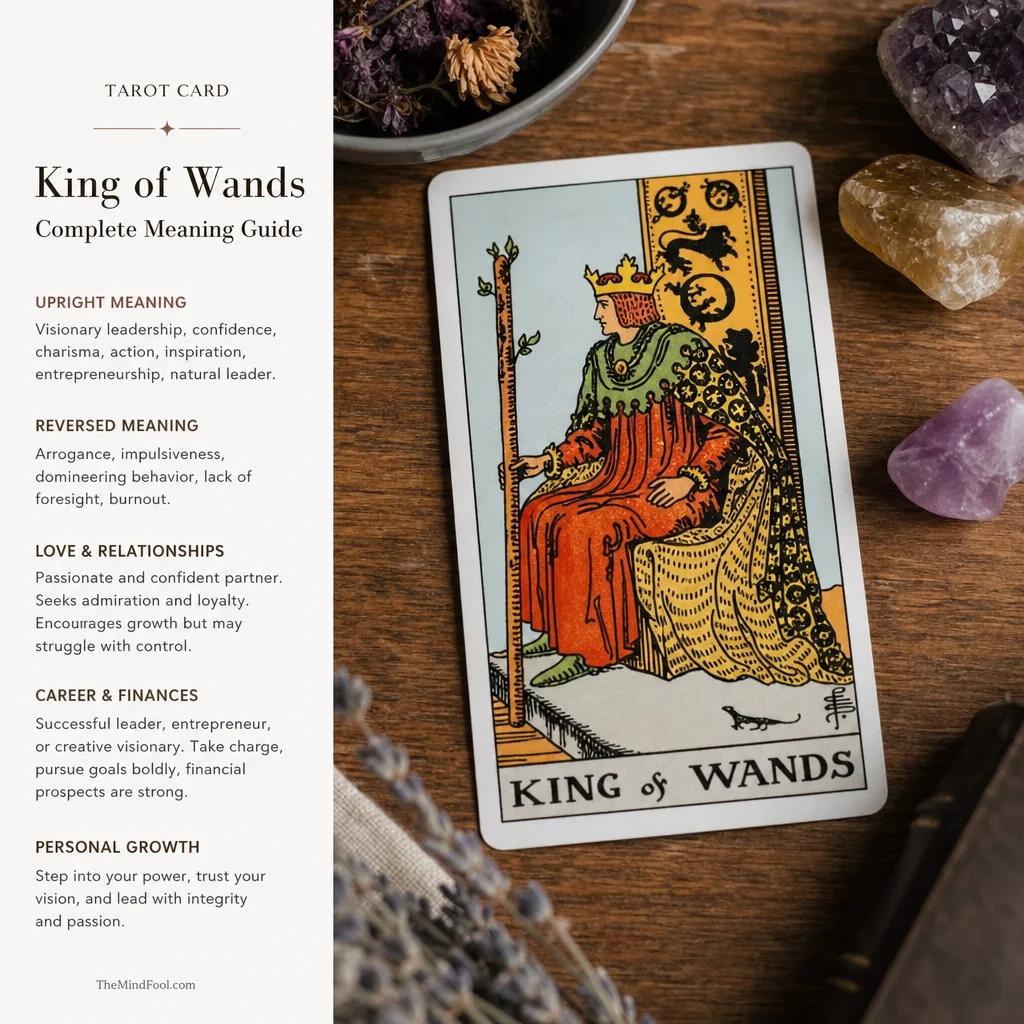
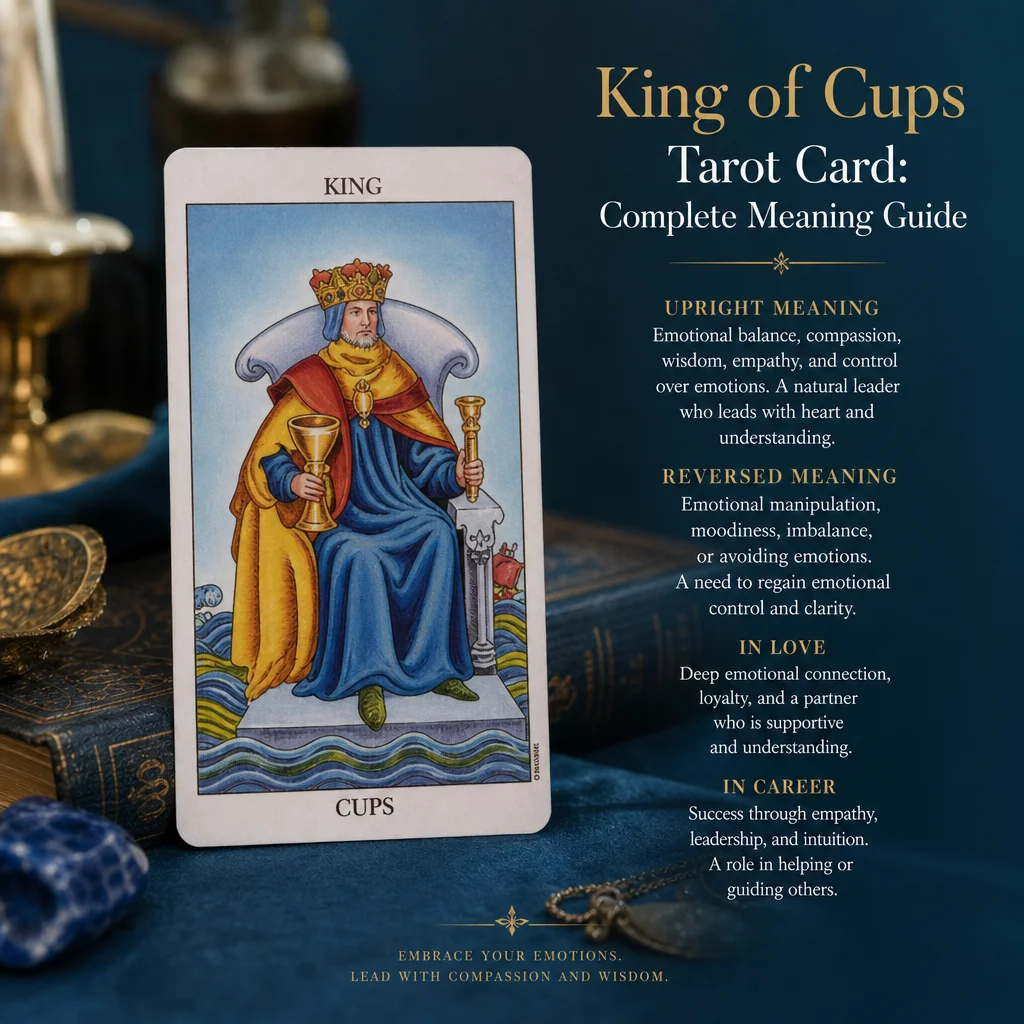
These are the day-to-day stuff. The minor arcana is divided into four suits, each with fourteen cards (Ace through Ten, plus four Court Cards: Page, Knight, Queen, King).
- Wands (associated with fire) — Action, creativity, passion, career. Think: getting things done, starting projects, chasing goals.
- Cups (associated with water) — Emotions, relationships, intuition, connection. Think: love, feelings, dreams, the heart.
- Swords (associated with air) — Thoughts, conflict, truth, decisions. Think: the mind, arguments, clarity, painful but necessary cuts.
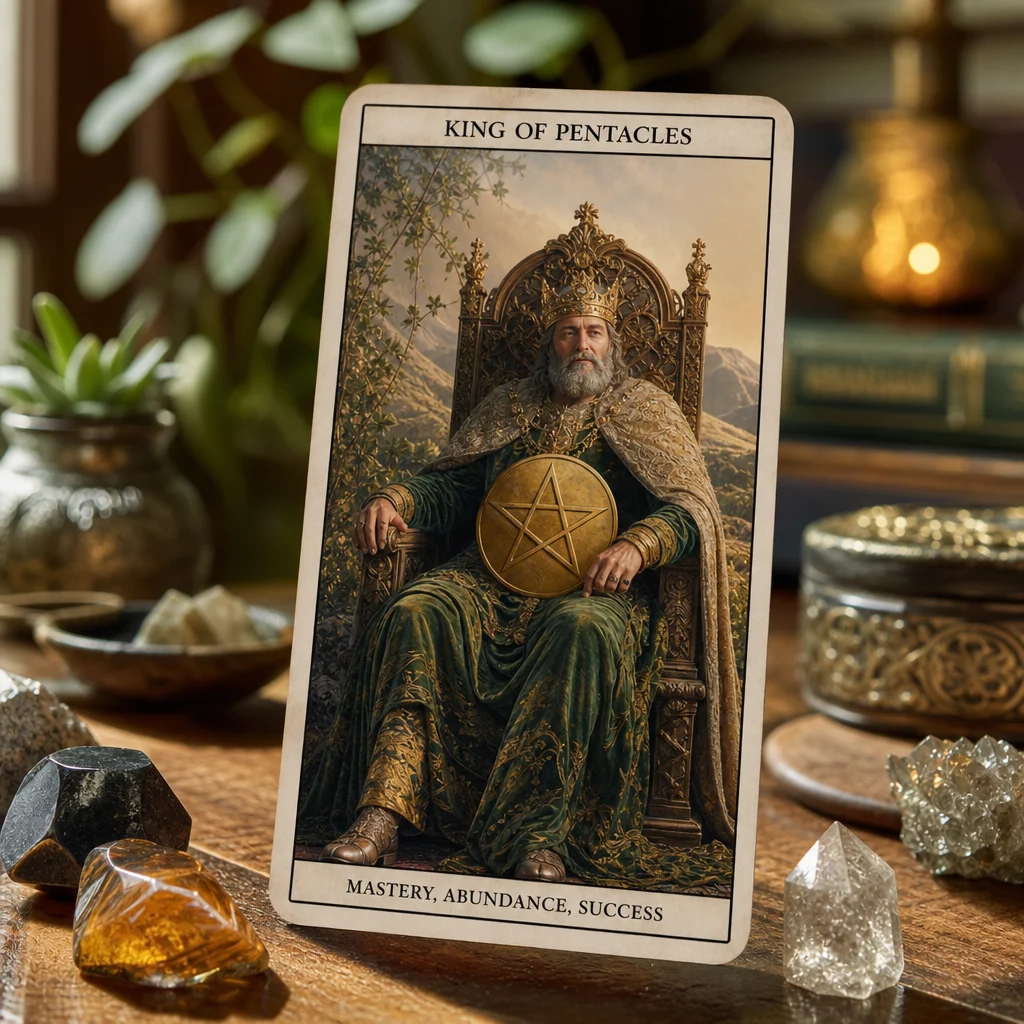
- Pentacles (associated with earth) — Money, work, body, material world. Think: career, home, health, the physical stuff you can touch.
That's it. That's the whole system. Four suits dealing with four areas of life, plus twenty-two major theme cards. When someone tells you tarot is impossibly complicated, they're either trying to sell you something or they've overcomplicated it themselves.
How to Actually Do a Reading: Step by Step
This is the part I was most confused about when I started. I had the cards. I had a vague idea of what they meant. But how do you actually do it? Here's the process I use, simplified for your first reading.
Step 1: Clear Your Space
This doesn't have to be ceremonial. You don't need to burn sage or chant. Just do something that signals to your brain: "I'm switching modes." Some people light a candle. Some take three deep breaths. Some place a crystal on the table — selenite is a popular choice for clearing energy. I personally just tidy the surface I'm working on and sit down. The point is the intentional pause.
Step 2: Formulate Your Question
This matters more than most beginners realize. Vague questions get vague answers. "What does my future hold?" is a terrible question — too broad, too passive. Better questions:
- "What do I need to focus on in my career this month?"
- "What's the underlying dynamic in my relationship with my mother?"
- "What am I not seeing about this decision?"
Notice how these are specific but open-ended. You're not asking for a yes or no. You're asking for perspective.
Step 3: Shuffle
Shuffle however you want. There's no wrong way. Casino-style riffle shuffle, overhand shuffle, spreading them on the table and swirling them around — whatever feels natural. Some people like to shuffle while thinking about their question. I do. Some people don't. Both are fine.
Stop shuffling when it feels right to stop. I know that's vague. You'll know what I mean after a few tries. Some readers say the cards "jump" or feel ready. For me, it's just a gut sense that I've shuffled enough.
Step 4: Draw Your Cards
For your first reading, use a simple three-card spread. Here's how it works:
- Card 1: Past — What led to this situation
- Card 2: Present — Where you are right now
- Card 3: Future direction — Where things are heading if nothing changes
Cut the deck wherever it feels natural, then draw the top three cards. Lay them face up from left to right.
Step 5: Interpret
Look at all three cards together before you look at any of them individually. What's the overall mood? Are there multiple cards from the same suit? Is there a Major Arcana card standing out? What's the story from left to right?
Then look at each card individually. If you don't know the meaning yet, that's fine — just describe what you see. What's happening in the image? How does it make you feel? What does it remind you of in your life right now?
Here's an example reading: You ask "What do I need to know about my current job situation?" and pull:
- Past: Eight of Pentacles — You've been working hard, putting in the hours, building your skills. Craftsmanship and dedication.
- Present: Four of Swords — You're burnt out or close to it. Rest is needed. This card literally shows a figure resting on a tomb, taking a break.
- Future: Page of Wands — A new creative opportunity or spark of inspiration is coming. But Pages are young energy — it's a beginning, not a guarantee. You'll need to act on it.
The story: you've been grinding, you're tired, and something new is on the horizon — but you need to rest first so you have the energy to pursue it. That's a coherent narrative. That's how a reading works.
For more spread layouts beyond the basic three-card, see our guide to five essential tarot spreads.
Reading for Yourself vs. Reading for Others
These are two completely different skills, and beginners often confuse them. Here's what I've learned from doing both for years.
Reading for Yourself
This is where you should start. Self-readings are how you learn the cards, build your intuition, and develop a relationship with the deck. You're the audience and the reader at the same time, which means you have maximum context — you know your own life, your own question, and your own baggage.
The challenge with self-readings is objectivity. It's hard to be honest with yourself. When I pull a card I don't like — say, the Tower, which typically means sudden upheaval — my first instinct is to rationalize it. "Oh, maybe it means something small, like my coffee order getting messed up." No. The Tower means what it means. Learning to sit with uncomfortable cards and actually listen to them is one of the hardest parts of reading for yourself.
Reading for Others
Reading for someone else is a different energy entirely. You don't have the full context of their life, so you're working with whatever they tell you (and whatever they don't). You're also holding space for another person's vulnerability, which is a responsibility I didn't fully appreciate until I started doing it.
Some tips for when you start reading for others:
- Don't pretend to be more certain than you are. If a card confuses you, say so. "I'm not sure what this card means in this position — what does it make you think of?" often leads to the best moments in a reading.
- Let the querent (the person you're reading for) talk. The best readings I've given were mostly the other person talking while I held the framework.
- Never read about someone who isn't present. If someone asks "what is my ex thinking right now," redirect. Focus on the person in front of you.
Common Beginner Mistakes I Made (So You Don't Have To)
I made every single one of these. Learn from my embarrassment.
1. Memorizing instead of feeling. I spent weeks trying to memorize keyword meanings for all seventy-eight cards. I could tell you that the Four of Cups meant "apathy" but I couldn't tell you what it looked like without checking. Once I stopped memorizing and started actually looking at the images — describing what I saw, noting how they made me feel — my readings got immediately better.
2. Doing daily draws too soon. A card a day sounds like a great way to learn. It's not. It's a great way to accumulate a pile of notes that mean nothing. I did daily draws for two months before I realized I wasn't learning anything — I was just going through the motions. Wait until you have a basic grasp of the suits and the Majors before you start daily practice.
3. Buying too many decks. I bought four decks in my first two months. Each one used slightly different imagery, and I kept confusing which meaning went with which deck's version of a card. Stick with one deck for at least three months. Seriously. One.
4. Ignoring reversed cards. When I started, every guide said "you don't have to read reversals if you don't want to." So I didn't. For six months I flipped every reversed card upright and missed half the nuance in my readings. Reversed cards aren't scary — they usually indicate blocked energy, delay, or an internal version of the upright meaning. Read them. It's worth the extra effort.
5. Reading for friends before I was ready. A friend asked me to read for her two weeks after I got my deck. I drew the Death card and panicked, thinking I had to deliver bad news. I stumbled through some vague warning that worried her for no reason. Death rarely means actual death — it usually means transformation, an ending of one phase and the beginning of another. I know that now. I didn't know it then, and my friend suffered for my ignorance.
6. Taking every card literally. The Devil doesn't mean something evil is coming. The Tower doesn't mean your life is about to collapse. The Three of Swords doesn't mean someone is going to break your heart this week. Cards represent themes and energies, not literal events. Learning the difference took me embarrassingly long.
Building Your Intuition
Intuition in tarot isn't a magical gift — it's a muscle. You build it the same way you build any muscle: consistent, focused practice. Here are the exercises that helped me most.
Card of the Week
Pull one card on Monday. Don't look up the meaning. Instead, spend five minutes writing down what you see in the image, what it makes you think of, and how it might relate to your week. At the end of the week, revisit your notes and see how the card's energy showed up. This taught me more in three months than any book did.
Blind Readings
Have a friend draw a card without showing it to you. Ask them a question, then try to describe the card's image and energy without knowing what it is. You'll be wrong a lot. That's the point. The exercise trains you to read energy and narrative rather than relying on visual cues from the card itself.
Journaling Prompt
Keep a tarot journal. After every reading, write down three things:
- What cards did I draw?
- What did I think they meant at the time?
- What actually happened?
Review this journal monthly. You'll start to notice patterns — cards that show up for you more than others, meanings you consistently misinterpret, situations where your gut instinct was right but you second-guessed yourself. This feedback loop is how you get better. There's no shortcut.
Tarot and Crystals: A Natural Pairing
A lot of tarot readers use crystals alongside their cards, and I'm one of them. Not because crystals have magical powers, but because they serve as physical anchors for intention. When I place a piece of amethyst on my reading table, I'm not expecting it to do anything supernatural. I'm signaling to myself: this is a focused, intentional space. The crystal is a prop for my own mindset, and it works.
Here are the crystals I see most commonly paired with tarot practice, and why people choose them:
- Clear Quartz — The general-purpose stone. People keep it near their deck for "clarity" during readings. Clear quartz is one of the most versatile crystals out there, and it's cheap. You can get a small piece for under ten dollars.
- Amethyst — Associated with intuition and calm. I keep a small amethyst cluster next to my deck when I'm doing readings that feel emotionally heavy. Amethyst has a long history of being linked to mental clarity and peace.
- Labradorite — The "flash" stone that looks different from every angle. Many readers love labradorite for its connection to transformation and the unseen. Labradorite is one of those stones that seems to shift depending on how you look at it — not unlike tarot itself.
- Rose Quartz — For readings about love, relationships, or self-compassion. Rose quartz is widely associated with love and emotional healing.
- Selenite — For clearing and resetting the energy of your space. Selenite is a soft, luminous stone that many people use to "cleanse" their tools, tarot decks included.
- Black Tourmaline — For grounding and protection, especially if you're reading for others and want to maintain your own energetic boundaries. Black tourmaline is widely regarded as the go-to protection stone.
You don't need crystals to read tarot. Let me be clear about that. But if you're already interested in both — and many people who find one find the other — they complement each other well. The tactile quality of holding a stone while you contemplate a card adds a dimension that I find genuinely useful, even if I can't fully explain why.
Where to Go From Here
If you've read this far, you have enough to get started. Buy a Rider-Waite-Smith deck, learn the basic structure (Majors + four suits), start with three-card spreads, and keep a journal. That's the foundation. Everything else builds on top of it.
Here's where to go next, depending on what's pulling you:
- Learn every Major Arcana card in depth: Major Arcana Meanings — The Complete Guide
- Expand beyond the three-card spread: Tarot Card Spreads — 5 Layouts You'll Actually Use
- Pair your readings with crystals: Tarot Reading Crystal Combinations
- Go deeper with specific suits: The Suit of Cups — Meanings and Interpretation Guide
- Learn to read reversals without fear: Reversed Tarot Cards — Why They're Not Scary and How to Read Them
Every tarot article we publish will link back to this guide. If you're ever lost, come back here. This is home base.
Frequently Asked Questions
Do tarot cards have to be a gift, or can I buy my own deck?
You can absolutely buy your own deck. The "tarot must be gifted" superstition is just that — a superstition. I bought my first deck myself, and so have most readers I know. Waiting for someone to gift you a deck is like waiting for someone to gift you running shoes before you start jogging. Just go get the shoes.
How long does it take to get "good" at reading tarot?
Depends on what "good" means. I could do a coherent three-card reading for myself after about a month of daily practice. I felt genuinely confident after about six months. I'm still learning after five years — I pulled a card last week that I swear I'd never seen before, even though I've drawn it dozens of times. Tarot is a lifelong study. The learning curve steepens but it never ends.
Can tarot predict the future?
No. Or rather: tarot can show you likely outcomes based on current patterns, but it cannot predict a fixed, inevitable future. If your readings consistently show conflict and avoidance, that's useful information about where you're heading — and you can choose to change direction. The future is not a destination. It's a tendency. Tarot helps you see the tendency.
What if I pull a "bad" card?
There are no bad cards. There are uncomfortable cards — Death, The Tower, the Ten of Swords, the Three of Swords — but they're not bad. They indicate necessary endings, difficult truths, and painful growth. The most valuable readings I've ever had were the ones where I pulled cards I hated. The cards you don't want to see are usually the ones you most need to see.
Do I need to cleanse my tarot deck?
Some readers cleanse their decks regularly using smoke, moonlight, sound, or crystals like selenite. I don't do it on any schedule — I just shuffle thoroughly and reset my own mental state before each reading. If you feel like your deck is "off" or giving muddled readings, by all means do whatever ritual helps you reset. But it's about your headspace, not the cardboard. Don't overthink it.
Related Guides You Might Enjoy
- The Fool Tarot Card: Complete Meaning Guide
- The Magician Tarot Card: Complete Meaning Guide
- The Star Tarot Card: Complete Meaning Guide
- The World Tarot Card: Complete Meaning Guide
- The High Priestess Tarot Card: Complete Meaning Guide
- The Empress Tarot Card: Complete Meaning Guide
- Cleansing Tarot Cards: 8 Methods I Tested
- Crystal Energy Guide: Healing Properties
- How to Cleanse and Charge Your Crystals
Comments