Daily Tarot Spreads for Beginners: 3 Effective
May 17, 2026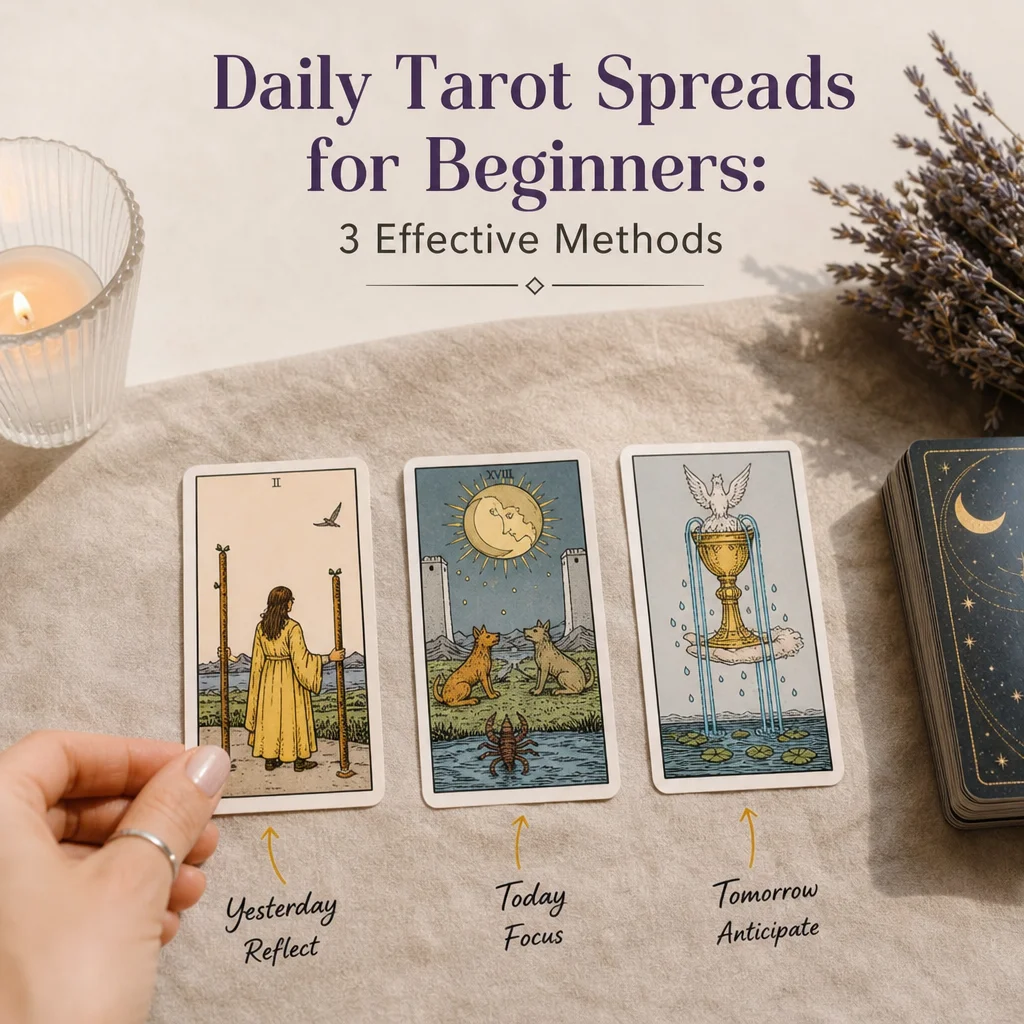
I Pulled One Card Every Morning for Six Months. I Was Almost Always Wrong.
Here's the thing nobody tells you about daily tarot: pulling a single card and trying to match it to your day is a terrible way to practice. I did it for half a year, and most evenings I'd stare at my journal thinking, "Well, that meant absolutely nothing."
The problem isn't the cards. It's the format. One card gives you a snapshot with no context — like trying to understand a movie from a single frame. You pull the Three of Swords and spend the whole day bracing for heartbreak, when really it was just telling you to stop overthinking that email you sent at midnight.
After months of frustration, I almost gave up on daily readings entirely. They felt forced, inaccurate, and honestly kind of useless. But something kept pulling me back (pun fully intended). I knew there had to be a better structure — something that gave me enough information to be meaningful without requiring a thirty-minute ritual before my coffee kicked in.
So I experimented. I tried elaborate Celtic Cross mornings (too much). I tried pulling three cards and arranging them in a triangle (confusing). I tried asking the cards what they wanted to tell me (they never answered that one). Eventually, I landed on three daily spreads that actually work — each one serving a different purpose, each one taking under five minutes, and each one consistently giving me something useful to carry into my day.
If you're just starting out with tarot or you've been stuck in the one-card rut like I was, these layouts might change your morning routine. I'm not exaggerating when I say finding the right daily spread was the single biggest leap in my tarot reading practice. It went from a chore I "should" do to the part of my morning I actually look forward to.
And I'll also share the one daily layout I stopped using entirely — because sometimes knowing what to avoid matters more than knowing what to try.
Why Bother With Daily Readings at All?
Before we get into the spreads, let's talk about why daily practice matters. Because I get it — pulling cards every single morning sounds like a lot. Some days you're rushed. Some days you're just not feeling it. But here's what I've noticed after doing this consistently:
It builds intuition faster than anything else. Reading tarot is like learning a language. You can study grammar rules all day, but fluency comes from daily conversation. A daily spread — even a small one — keeps you in dialogue with your deck. After a few weeks, you'll start noticing symbols and patterns you never saw before. Cards that used to feel random begin to speak in full sentences.
It creates a rhythm. My mornings used to start with scrolling my phone. Now they start with shuffling. The shift from passive consumption to active reflection is honestly one of the best changes I've made. There's something grounding about starting your day with a question instead of a notification. If you're curious about building this habit, I wrote about how to shuffle properly — because yes, there's a "properly" and it makes a difference.
It reveals patterns you'd otherwise miss. When you pull a card here and there, you see moments. When you pull every day and write it down, you see threads. The Queen of Cups showing up three mornings in a row isn't coincidence — it's your deck trying to tell you something about your emotional state that you've been ignoring. Pattern recognition is where tarot gets genuinely powerful, and you can't spot patterns without consistent data points.
Layout 1: The Three-Card Daily Snapshot
This is my go-to. I use it roughly four mornings out of five. It's simple, it's versatile, and it gives you just enough narrative to work with.
The Structure
Shuffle your deck however feels right, then pull three cards and lay them in a row, left to right:
- Card 1 — What I'm carrying into today. This isn't "what will happen." It's the energy, mood, or mindset you're bringing with you. Maybe you slept poorly and the Nine of Swords shows up — that's not a prediction of doom, it's an honest reflection of where your head is at.
- Card 2 — What to watch for. The thing that might trip you up or surprise you. Think of it as a heads-up, not a warning. The Page of Swords here might mean someone's going to challenge your ideas today.
- Card 3 — Where to focus my energy. Your best move. The card that points toward what actually deserves your attention. The Four of Pentacles might suggest holding your ground instead of people-pleasing.
This layout works because it's not trying to predict your day — it's giving you a lens. If you want to go deeper on different spread structures, check out these five essential layouts that cover everything from quick pulls to more involved readings.
Layout 2: The One-Card Yes/No (When You Just Need an Answer)
Some mornings you don't need a whole narrative. You have a specific question, and you want a straight answer. That's where this one comes in.
How It Works
Think of a clear yes-or-no question. Shuffle while holding that question in your mind. Pull one card. That's it — but the trick is in how you interpret it.
Upright cards lean yes. The Sun upright to "Should I go to that event tonight?" is a pretty clear green light.
Reversed cards lean no. The Hermit reversed to "Should I text my ex?" is your deck telling you to put the phone down.
But context matters more than position. The Tower upright isn't really a "yes" to anything you want. And the Four of Cups reversed might be a "yes" that's actually saying "stop being so bored and take the opportunity." This is where knowing your cards matters — and why asking the right question is half the battle. A vague question gets a vague answer.
I use this layout maybe twice a week, usually for small decisions I'm overthinking. It's not my primary daily spread, but it's the one I reach for when my brain is spinning on something specific and I need external input that isn't another pros-and-cons list.
Layout 3: Mind-Body-Spirit Daily Check-In
This is the layout I use when I actually have a few extra minutes and want something more reflective. It's not about predicting anything — it's about checking in with yourself before the day steamrolls you. I've come to rely on this one especially during stressful weeks when I tend to disconnect from how I'm actually doing.
The Structure
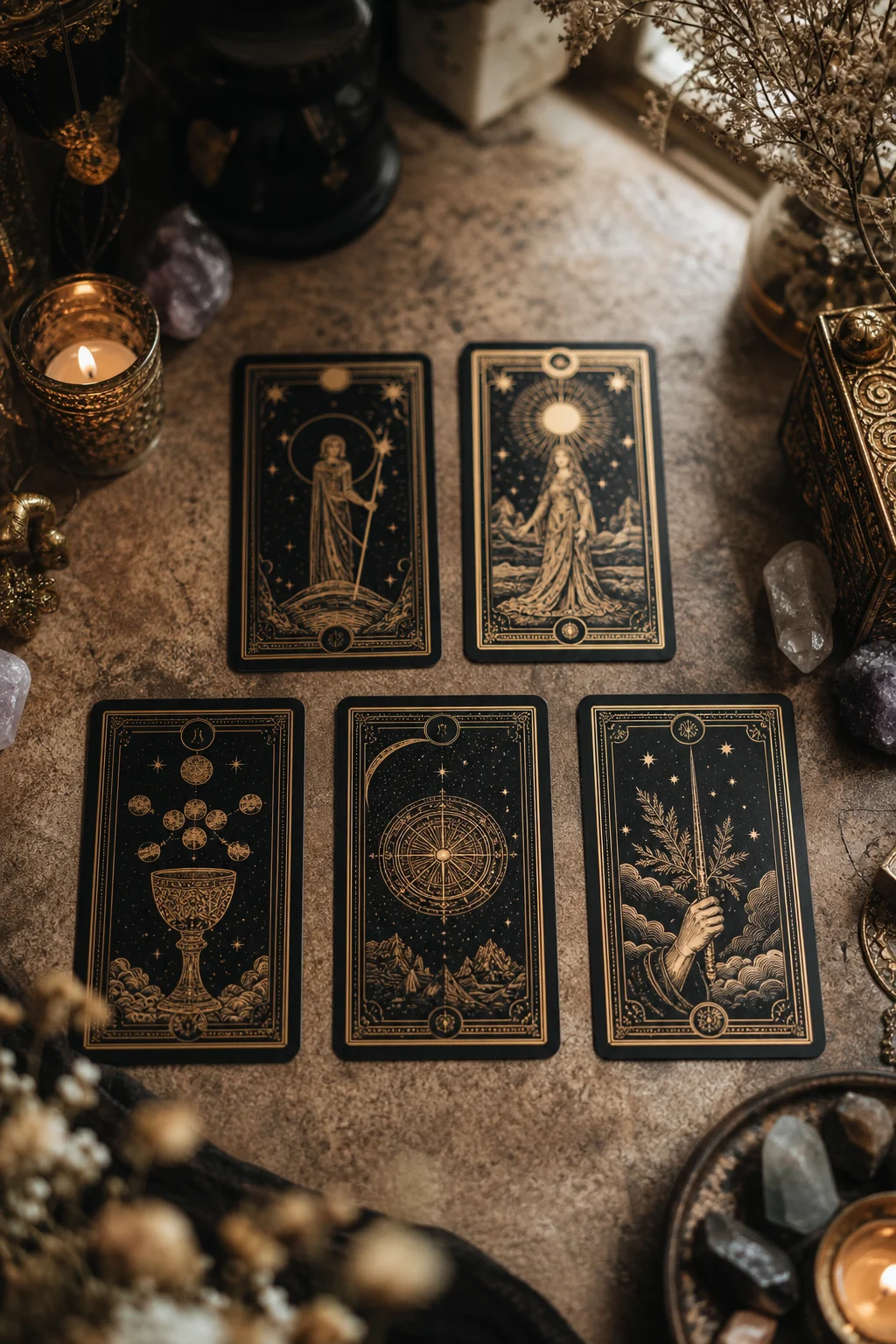
Three cards, arranged vertically (top to bottom):
- Top card — Mind: What's occupying my thoughts? What mental pattern is running the show today?
- Middle card — Body: What does my physical self need? Energy levels, tension, rest, movement?
- Bottom card — Spirit: What's the deeper current? What's the emotional or intuitive undercurrent I might be ignoring?
An Example Reading
Last Tuesday I pulled: Eight of Swords (Mind), Four of Swords (Body), and the Star (Spirit).
My mind was trapped in overthinking — the Eight of Swords literally shows a blindfolded figure surrounded by swords she could walk through if she'd just take the blindfold off. I'd been spiraling about a work decision for three days. The message was clear: you've already made the choice, you just haven't admitted it to yourself.
My body was asking for rest. The Four of Swords is the card of recovery and stillness. I'd been sleeping five hours a night and pretending it was fine. It wasn't.
And my spirit? The Star. Hope, renewal, trusting the process. Even though my mind was spinning and my body was exhausted, underneath it all I actually felt okay about where things were heading. I just needed to get out of my own way.
That reading took maybe four minutes, and it told me more about my state than an hour of journaling would have. I gave myself permission to stop overthinking the work thing, took a nap that afternoon, and the decision sorted itself out by Thursday.
This is also a great spread to do alongside cleansing your deck regularly — a clean deck and a clear check-in make for surprisingly sharp readings.
The One Layout I Stopped Using Entirely
Alright, time for the "one you should skip" from the title. It's the daily "Past-Present-Future" spread.
I know, I know — it's in every beginner book. It's probably the second spread anyone learns. And I'm not saying it's useless in general. But as a daily practice? It's a trap.
Here's why: "Past" in a daily reading is usually yesterday. You already know what happened yesterday. You don't need a card to tell you. And "Future" is tonight or tomorrow — too narrow to be meaningful, too vague to act on. You end up with three cards that feel like a weather report for a time zone you've already left.
Worse, it trains you to read tarot as prediction rather than reflection. You start treating cards like a Magic 8-Ball instead of a mirror. And that habit — treating tarot as fortune-telling rather than self-inquiry — is exactly what makes people give up when the "predictions" don't come true.
The three layouts I shared above are all grounded in the present moment: what are you carrying, what should you watch for, how are you actually doing. That's where daily tarot shines. Save Past-Present-Future for bigger weekly or monthly readings where the time spans are wide enough to mean something.
When I Do My Daily Reading (And Why Timing Matters)
I used to do my daily pull right before bed. That was a mistake — not because there's anything wrong with evening readings, but because by then the day is already over and you can't act on anything the cards show you. It becomes an autopsy instead of a roadmap.
Now I read first thing in the morning, after water but before coffee. Sounds pretentious, but there's a practical reason: my mind is still quiet. The mental chatter hasn't kicked in yet. I'm not yet wound up about emails or deadlines or whatever happened in the group chat overnight. The cards land differently when your brain isn't already at full speed.
I keep my deck on my nightstand specifically for this — no digging through drawers, no setup time. Grab, shuffle, pull, interpret. Total time: three to five minutes. If I'm using the Mind-Body-Spirit layout, maybe seven.
Some people swear by doing their daily reading at the same exact time every day. I'm not that disciplined. I just do it in the morning window — somewhere between waking up and starting work. The consistency that matters isn't the clock time, it's the placement in your routine. Anchor it to something you already do (after brushing teeth, before breakfast, whatever) and it sticks.
Five Mistakes That Ruined My Morning Readings
I made every one of these. Maybe you recognize some.
1. Reading the card literally every time. The Death card does not mean someone is going to die. The Three of Cups does not mean you're going to a party. Learn the symbols, but also learn to feel into them. Death in a daily pull usually means something is ending — a habit, a phase, a way of thinking. That's it. Nobody's in danger.
2. Asking the same question every day. "What does today hold?" is a lazy question and you'll get lazy answers. Vary your approach. Some days ask about energy. Some days ask about focus. Some days ask what you need to let go of. Your deck responds to curiosity, not routine.
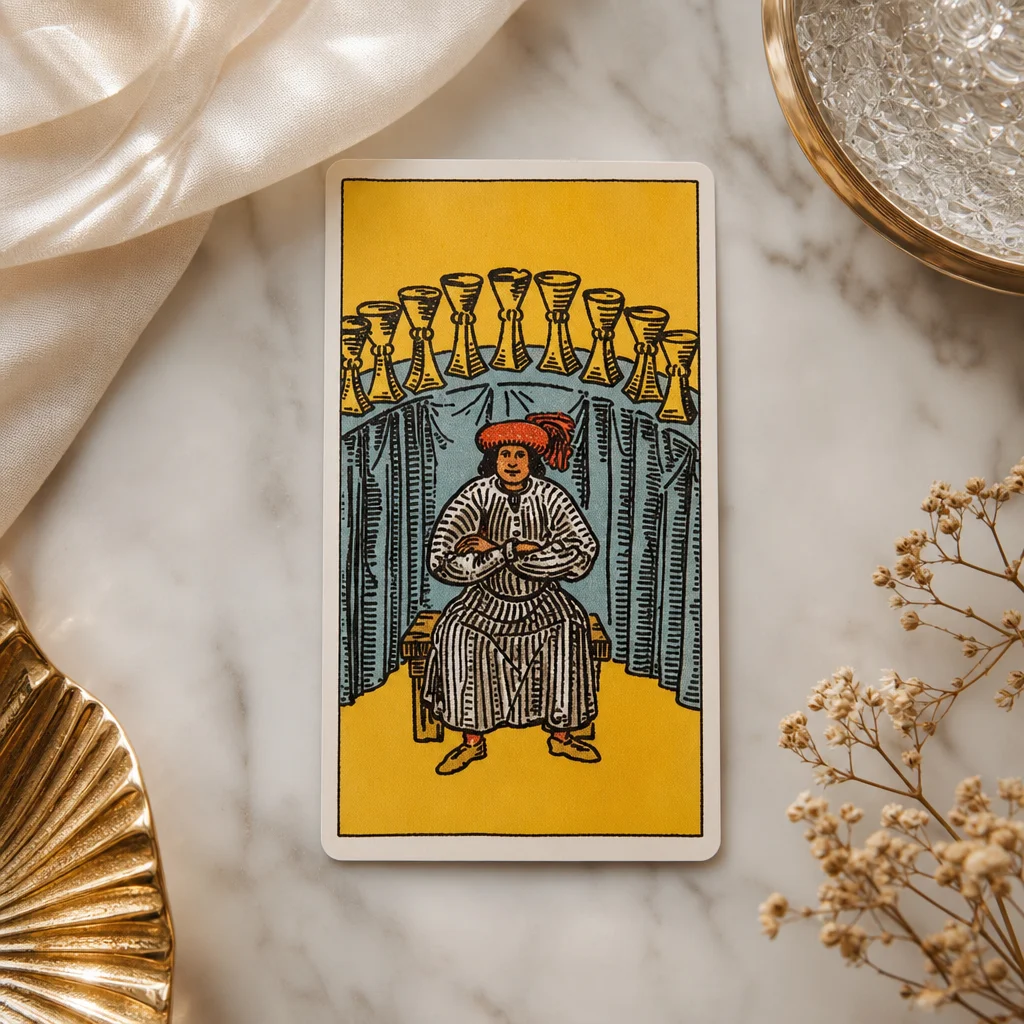
3. Ignoring reversals. For months I only read upright meanings because reversals felt "too advanced." I was leaving half the vocabulary on the table. Reversed cards aren't negative — they're specific. The Seven of Cups upright might mean too many options; reversed, it might mean you're finally narrowing things down. That's a very different message.
4. Not writing anything down. If you pull cards and don't record them, you're just doing parlor tricks. The real value of daily readings builds over time. You need to be able to look back and say, "Huh, the Five of Pentacles showed up four times last month — maybe I should look at my relationship with scarcity." No journal, no patterns.
5. Forcing a meaning that isn't there. Some mornings the cards are clear. Some mornings they're cryptic. That's fine. Don't twist a card's meaning to fit the narrative you want. If the cards don't make sense, sit with that discomfort. Sometimes "I don't understand this yet" is the most honest and useful reading you can get.
How I Track My Daily Readings
Nothing fancy. I use a plain notebook — one page per day. I write the date, the spread I used, the cards I pulled (with position), and two or three sentences about what I think they mean. That's it.
At the end of each week, I flip back through and look for repeats. Same card multiple times? Same suit dominating? Those patterns are gold. I started noticing that Cups cards cluster when I'm avoiding emotional conversations, and Swords pile up when I'm overthinking instead of acting. I never would have caught that without a written record.
Some people use apps or spreadsheets. If that works for you, great. I like pen and paper because it forces me to slow down and actually think about what I'm writing. The act of handwriting an interpretation cements it in a way that typing doesn't.
From Daily to Weekly: How My Practice Evolved
After about three months of daily readings, I started feeling pulled toward something bigger. Not replacing my daily practice, but adding to it. So I began doing a weekly spread every Sunday evening — a broader look at the week ahead, usually five to seven cards.
The daily practice gave me the foundation. By the time I started weekly readings, I could read cards fluidly instead of scrambling for my guidebook every pull. My intuition had been trained by three months of daily repetition.
I still do my daily pull every morning. The weekly reading is a separate practice — a zoom-out to complement the zoom-in. Together they give me both the granular daily awareness and the bigger-picture perspective that neither one offers alone.
Frequently Asked Questions
Do I need a specific deck for daily readings?
Nope. Use whatever deck you connect with. I rotate between two — a Rider-Waite-Smith for straight talk and a more artistic deck for reflective readings. The important thing is that you know your deck's visual language. A deck you're not familiar with will give you readings you can't interpret, which defeats the purpose of daily practice.
What if my daily reading feels negative?
It's probably not negative — it's honest. The Tower showing up doesn't mean your day is going to explode. It might mean something unexpected will shift your perspective. "Negative" cards in daily readings are usually invitations to pay attention, not predictions of disaster. If a card genuinely upsets you, that's worth noting — it probably hit a nerve you've been ignoring.
Can I do a daily reading for someone else?
You can, but I wouldn't make it your primary daily practice. Daily readings are most powerful when they're self-reflective. Reading for others every day turns your practice into a service rather than a personal tool. If you want to read for others, do that as a separate session.
What if I miss a day?
Miss it and move on. Don't try to "catch up" by doing two days in one session — that's not how intuition works. The power of daily practice is in the consistency over time, not in perfection. I miss maybe two or three days a month, and it hasn't derailed anything. Just pick up your deck the next morning like nothing happened. Because nothing did happen — you just had a day off.
Related Guides
- How to Read Tarot Cards: Beginner Complete Guide
- 7 Crystal Cleaning Mistakes That Cost Me Hundreds of Dollars
- How to Tell if a Crystal Bracelet Is Real or Fake
- How to Clean Crystal Jewelry: A Complete Care Guide
- How to Clean Crystals Without Ruining Them
- Crystal Energy Guide: Healing Properties
- Complete Guide to Crystal Healing and Energy Work
Frequently Asked Questions
What should I ask my tarot cards during a daily reading?
Keep your daily question open-ended. Instead of yes/no questions like "Will today go well?" try "What energy should I focus on today?" or "What do I need to pay attention to?" Open questions give the cards room to offer guidance rather than forcing predictions. I rotate between three go-to questions so I never overthink it. The best daily prompts invite awareness and reflection, not fortune-telling.


Comments