Master Reversed Tarot Cards: A Beginner's
May 17, 2026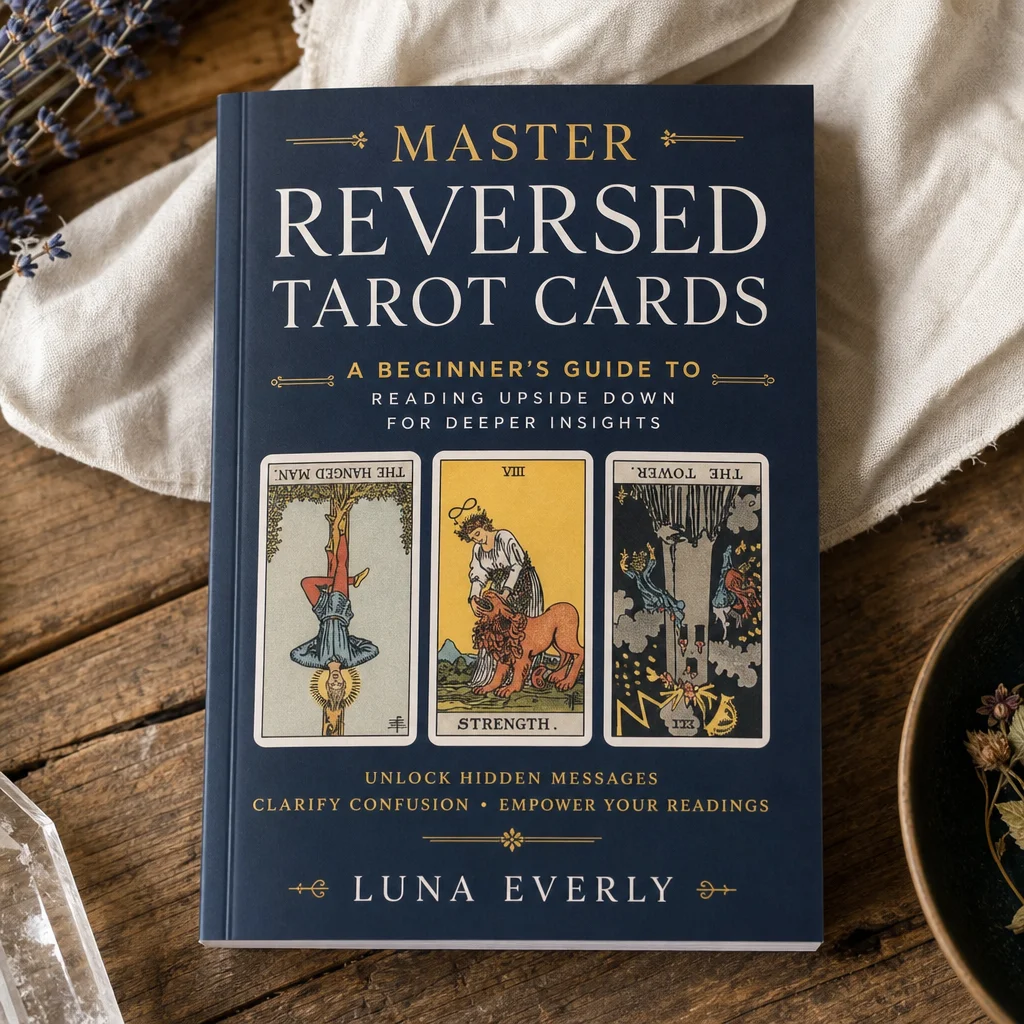
For My First Year of Reading Tarot, I Pretended Reversed Cards Didn't Exist
Here's something I'm not proud of: for my entire first year of reading tarot, I deliberately ignored reversed cards. Every time a card came out upside down, I'd casually flip it upright and read it as if nothing happened. Nobody was watching, so nobody could call me out on it.
I had my reasons, or so I thought. I was still learning the 78 upright meanings — adding another 78 reversed interpretations felt like asking someone who'd just learned to drive to parallel park on a highway. Too much, too fast. And honestly? Reversed cards scared me a little. The Tower reversed seemed worse than the Tower upright. The Three of Swords reversed felt like a punch I wasn't ready to take.
My rationalization was watertight, too. "Plenty of experienced readers don't use reversals," I'd tell myself. And that's true — some don't. But I wasn't making an informed choice. I was making a fear-based choice and dressing it up as a methodology.
The crack in my defense appeared during a self-reading about a freelance project I was deeply invested in. I pulled the Eight of Pentacles reversed, flipped it upright without thinking, and interpreted it as steady, dedicated work paying off. I poured three more weeks into that project. It collapsed. The client ghosted. I never got paid.
When I looked back at that reading with honest eyes, the reversed Eight of Pentacles wasn't hard to decode. It was telling me exactly what I needed to hear: the effort I was putting in wasn't aligned with the right kind of work. The energy was scattered. The dedication was there, but the direction was wrong. If you're just starting out with tarot, I put together a complete beginner's guide to reading tarot cards that covers the foundations I wish I'd had from day one.
That moment — sitting at my kitchen table, staring at a spread I'd deliberately misread — was when I stopped running from reversals. Not because I suddenly loved them, but because I realized my fear of them was making my readings dishonest. And a dishonest reading is worse than no reading at all.
What Reversed Cards Actually Mean (Spoiler: Nothing "Bad")
Here's the biggest misconception I had to unlearn: reversed cards are not "bad" versions of upright cards. That's not how this works. A reversed card represents the same energy as its upright counterpart, but the expression of that energy is different — blocked, delayed, internalized, or in transition.
Think of it like water. Upright, the card is a river flowing freely. Reversed, it might be a dam holding the water back, or it might be water going underground — still moving, just not visible on the surface. The water hasn't turned into poison. It's the same water, in a different state.
Some readers interpret reversals as energy that's being resisted. Others see them as energies that are still developing — seeds that haven't sprouted yet. I've come to understand them as an invitation to look closer, to notice what's happening beneath the obvious. When the spread you're working with throws a reversal, it's saying "pay more attention here."
The Lovers reversed doesn't mean your relationship is doomed. It might mean you need to look at whether you're actually choosing this partnership, or whether you're in it out of habit. The Sun reversed doesn't mean happiness is gone — it might mean the joy is there but you're having trouble accessing it. That's a fundamentally different reading than "something bad is happening."
The Case for Reading Reversals
Once I started reading reversals, the depth of my readings expanded in a way I didn't expect. It wasn't just about having more interpretations available — it was about the conversations the cards could now have with each other.
Imagine watching a movie where every character only speaks in one emotional register. That's what readings without reversals felt like, in retrospect. Adding reversals gave the cards a fuller emotional range. The Three of Cups next to the Five of Cups reversed tells a story about finding joy after grief — a much more specific and useful narrative than two cards at face value.
Reversals also force honesty in a way that upright-only readings sometimes don't. When you can't hide behind "well, it came out upright, so it must be positive," you develop a more nuanced relationship with each card. You learn that the Ten of Swords isn't always about rock bottom — sometimes it's about the relief of finally hitting bottom because now you can start climbing. Asking the right questions before a reading becomes even more important when reversals are in play, because the answers you get will be more layered.
For me, the strongest argument is simple: about half the cards in any given shuffle will naturally come out reversed if you're shuffling thoroughly. By ignoring them, I was throwing away roughly half the information the cards were offering me. That's a lot of wasted data.
The Case Against Reversals (Yes, Valid Reasons Exist)
I want to be fair here. Some experienced readers — people with decades more practice than me — choose not to read reversals, and they have legitimate reasons.
The most compelling one: 78 upright meanings already contain enormous complexity. Every card can mean different things depending on context, position, surrounding cards, and the question being asked. Adding reversals doubles the symbol set, and for some readers, that doesn't double the insight — it just doubles the confusion.
Other readers find that the energy of a reading comes through clearly without needing the reversed/upright distinction. They'll pick up on subtleties through intuition and card combinations rather than orientation. For readings that incorporate crystals or other tools, the multi-modal approach can already feel information-dense enough.
I respect this perspective. The key word is choice — these readers made an informed decision, not a fear-based one. There's a real difference.
My 4-Step Method for Learning Reversals
When I committed to learning reversals, I didn't try to memorize 78 new meanings overnight. That would've been a fast track to burnout. Instead, I developed a four-step approach that took me from confused to genuinely confident over about six weeks.
Step 1: Start With One Card Per Day
I pulled a single card each morning — reversed or upright, I let it be random. If it came out reversed, I sat with it for ten minutes before looking anything up. I'd write down my gut reaction first, then check a reference. Most of the time, my initial instinct was in the right neighborhood. Building that trust in my own intuition was half the battle.
Step 2: Learn the "Blocked, Internalized, Exaggerated" Framework
Instead of memorizing 78 separate reversed meanings, I learned three lenses to apply to any reversed card:
- Blocked: The energy is present but something is preventing it from flowing naturally. The Empress reversed might mean creative energy that's being stifled by self-doubt.
- Internalized: The energy is turned inward rather than expressed outwardly. The Emperor reversed might mean you have strong leadership qualities but you're not exercising them externally.
- Exaggerated: The energy is present but overdone, unbalanced, or expressed in an unhealthy way. The Magician reversed might mean you're using your skills manipulatively rather than ethically.
Step 3: Compare and Contrast
Once a week, I'd take one card and journal about both its upright and reversed meanings side by side. This wasn't about memorizing — it was about understanding the relationship between the two states. The contrast made both meanings clearer.
Step 4: Read for Fictional Characters
This was the breakthrough exercise. I'd pull small spreads for characters from books or TV shows and interpret reversals in context. Fictional characters are lower stakes than real people, which gave me room to practice without the pressure of "getting it right." If you want a structured approach, a simple three-card past-present-future layout works beautifully for this kind of practice.
Five Reversal Myths That Held Me Back
Myth 1: Reversed cards always mean the opposite of upright. Nope. Reversals are more like shadows than mirrors. The Hermit reversed isn't the life of the party — it's the Hermit energy turned inward to an unhealthy degree, or isolation that's become loneliness rather than chosen solitude.
Myth 2: More reversals in a spread means a "worse" reading. I once pulled a nine-card spread with seven reversals and panicked. That reading turned out to be one of the most helpful I've ever done. The reversals were showing me energy that was ready to shift — not energy that was doomed.
Myth 3: You need to memorize all 78 reversed meanings before you start. This is like saying you need to know every word in a language before you can have a conversation. Learn as you go. Start with the cards that appear most often in your readings.
Myth 4: Reversals are only for advanced readers. This myth keeps beginners stuck. If you're comfortable with the upright meanings of the Major Arcana, you're ready to start exploring their reversals. Don't wait for some arbitrary level of expertise that doesn't have a clear threshold.
Myth 5: Some decks "don't work" with reversals. Any deck works with reversals if you want it to. The orientation of the card isn't a property of the deck — it's a property of how you choose to read. If you shuffle in a way that allows cards to flip, reversals will happen naturally.
How Reversals Shift Meaning Across Spread Positions
One thing that took me too long to learn: a reversed card means different things depending on where it sits in a spread. Context isn't just about the surrounding cards — it's about the position's purpose.
In a past position, a reversal often points to energy that was blocked or a situation that didn't resolve cleanly. The Four of Wands reversed in a past position might indicate a celebration that fell flat or a milestone that didn't feel as meaningful as expected. It's already happened — the reversal adds shading to the memory.
In a present position, reversals tend to show active tension. Something is happening now that requires attention. The energy isn't wrong — it's in flux. The Two of Swords reversed in the present might mean a decision you've been avoiding is becoming impossible to ignore.
In a future or outcome position, I read reversals as energy that hasn't fully formed yet. It's a heads-up, not a verdict. The Star reversed as an outcome doesn't mean hope is lost — it means the path to hope requires more active effort than you might expect. The future position is where asking precise, intentional questions before the reading pays off the most, because the reversal's nuance depends heavily on what you actually asked.
In advice positions, reversals often suggest an indirect approach. Instead of charging forward with the upright energy, the reversed card is saying: ease off, look sideways, try the back door.
The Reading That Changed Everything
Three months into reading reversals, I did a spread about whether to accept a job offer that looked perfect on paper. The salary was right, the title was a step up, and the company had a great reputation. Every logical signal said yes.
The reading told a different story. The Page of Swords reversed sat in the "what you don't know" position. The Eight of Cups reversed was in the "hidden influences" spot. And the Ten of Pentacles — upright, the card of lasting security and legacy — was reversed in the outcome position.
I read that spread and felt my stomach drop. The Page of Swords reversed was whispering about information I didn't have. The Eight of Cups reversed was saying that walking away from my current situation wasn't actually the right move — I was just restless. And the Ten of Pentacles reversed warned that the long-term stability I assumed this job offered might not be as solid as it appeared.
I turned the offer down. Six months later, that department went through massive layoffs. Half the team was let go, including the position I would have filled. My reversal-heavy reading had seen something my rational analysis completely missed. That's when I stopped seeing reversals as complications and started seeing them as allies.
A Daily Practice Exercise for Beginners
If you're just starting to explore reversals, here's the exercise that helped me more than anything else. It takes about ten minutes a day and requires no special setup.
Each morning, shuffle your deck and pull one card. Don't force a reversal — let it come naturally. If the card is upright, spend a minute considering how this energy might look reversed. If it comes out reversed, sit with it before reaching for a book.
Write down three things: what the card's upright energy feels like to you, what feels different about it reversed, and one situation in your life where this reversed energy might be showing up. Don't worry about being right — worry about being honest.
Keep a small notebook or a notes app for this. After a month, flip through your entries. You'll start seeing patterns. The same cards will come up reversed around similar situations. Your personal relationship with each card's reversed meaning will develop organically, and it'll be far more reliable than anything you could memorize from a reference book.
I did this for 40 days straight. By the end, I wasn't just reading reversals — I was having conversations with them. That's the real goal here, not perfection, but relationship.
Frequently Asked Questions
Should beginners read reversed tarot cards?
I think beginners should start engaging with reversals as soon as they feel comfortable with the basic upright meanings of the Major Arcana — usually after a few weeks of regular practice. Waiting too long creates a mental block, like I had. Start small, one card a day, and build from there. There's no entrance exam.
Do I need to shuffle differently to get reversals?
Not necessarily. If you shuffle by cutting and restacking the deck, some cards will naturally end up reversed. If you rifle shuffle and always rotate cards the same way, you might not get reversals. Try mixing in a few intentional card flips during shuffling, or just cut the deck and rotate one section 180 degrees before reassembling. It takes two seconds and changes the whole reading.
Can a reading have too many reversed cards?
No. I've had spreads where eight out of ten cards were reversed, and they were among the most coherent readings I've ever done. A cluster of reversals usually points to a significant theme — energy in transition, resistance to change, or a situation where a lot is happening beneath the surface. It's not bad luck. It's information density.
What if my interpretation of a reversed card feels wrong?
Step back and ask yourself what story the reading as a whole is telling, rather than fixating on one card in isolation. Sometimes the meaning becomes clear only when you see how the reversed card connects to the others around it. And sometimes your first instinct is right but your rational mind rejects it because it's not what you wanted to hear. Trust the process. It gets easier.
Related Guides
- Crystal Care 101: How to Clean, Store, and Protect Your Jewelry
- How to Clean Crystals Without Ruining Them
- 7 Crystal Cleaning Mistakes That Cost Me Hundreds of Dollars
- How to Clean Crystal Jewelry: A Complete Care Guide
- Complete Guide to Crystal Healing and Energy Work
- Crystal Shapes Explained: Tumbled, Raw, Points, Spheres
- The Complete Guide to Crystal and Jewelry Care
Frequently Asked Questions
Do reversed tarot cards always mean the opposite of the upright card?
No, reversals rarely mean a simple opposite. A reversed card can signal blocked energy, delayed timing, internal rather than external expression, or an invitation to explore the card's shadow side more deeply. Sometimes a reversal actually intensifies the upright meaning. The surrounding cards, your question, and the spread position all shape how a reversal communicates in that specific moment.

Comments