Gemstone Types: Properties and ID
May 15, 2026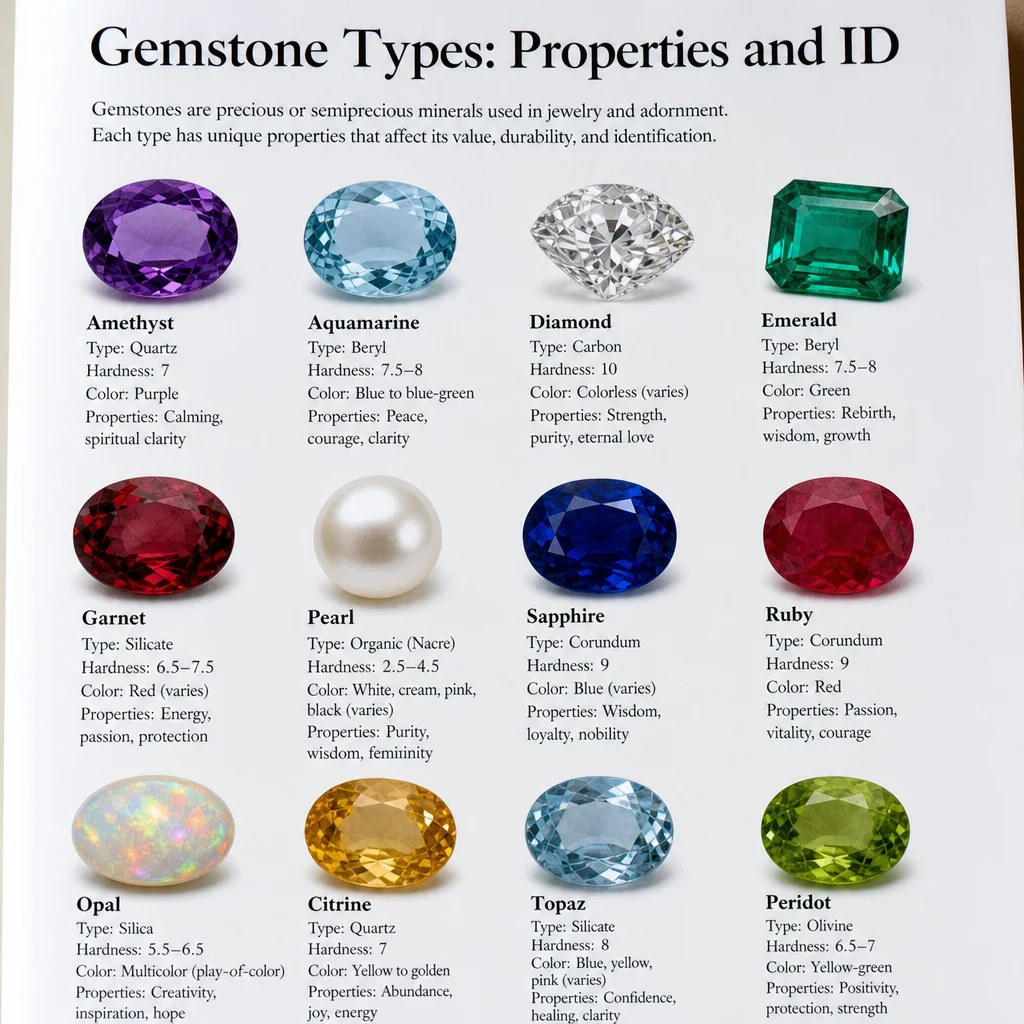
Understanding Gemstones: More Than Just Pretty Rocks
People have been fascinated by gemstones for thousands of years. Not because someone told them to be — there's something about picking up a polished stone and seeing light bounce around inside it that just hits different. Whether it's the flash of labradorite or the deep blue of lapis lazuli, gemstones have a way of grabbing attention without trying.
But what actually makes a gemstone a gemstone? And why do some stones cost pennies while others cost thousands? This guide covers the major gemstone types, their physical properties, how to identify them, where they come from, and what makes each one worth paying attention to. If you're building a collection, shopping for jewelry, or just curious why your friend won't shut up about their moldavite, this is the place to start.
How Gemstones Form: A Quick Geology Lesson
Every gemstone started as minerals or organic material that underwent specific geological processes over millions (sometimes billions) of years. How crystals are formed depends on three main factors: temperature, pressure, and the chemical composition of the surrounding environment.
Igneous rocks produce gems like amethyst and citrine — both varieties of quartz that formed in volcanic cavities. Metamorphic rocks, which are transformed by heat and pressure deep underground, give us gems like garnet and kyanite. Sedimentary processes create materials like malachite and turquoise.
Some stones have more unusual origins. Bismuth forms distinctive rainbow-colored staircase crystals in lab conditions. Moldavite is a tektite — glass formed when a meteorite impact melted terrestrial rock and flung it across central Europe. And peridot can literally fall from space inside meteorites, though most commercial peridot comes from mining.
Mineral Families and Crystal Systems
Gemstones are classified by their mineral family and crystal structure. Understanding these groupings helps explain why certain stones look similar, behave similarly, or share physical properties.
The Quartz Family
Quartz is the most abundant mineral in Earth's crust and one of the most diverse gemstone families. Clear quartz is the baseline — silicon dioxide in its purest crystalline form. Add trace elements, irradiation, or inclusions, and you get the full spectrum:
- Amethyst — purple from iron and irradiation
- Citrine — yellow to orange from heat-treated amethyst or natural iron
- Rose quartz — pink from titanium, iron, or manganese traces
- Smoky quartz — brown to black from natural irradiation
- Tiger's eye — chatoyant quartz with crocidolite inclusions
- Aventurine — sparkly quartz with fuchsite or hematite inclusions
The quartz family also includes cryptocrystalline varieties like agate, jasper, and onyx, which have microcrystalline structures that create their distinctive patterns.
The Beryl Family
The beryl family includes some of the most prized gemstones in the world. Beryl is beryllium aluminum cyclosilicate, and different trace elements create dramatically different colors:
- Emerald — green from chromium and vanadium
- Aquamarine — blue from iron
- Morganite — pink from manganese
- Red beryl (bixbite) — extremely rare, found primarily in Utah
The price range within this single family is staggering. A decent aquamarine bracelet might cost $30-80, while a fine emerald of the same carat weight could run into thousands.
The Feldspar Family
Feldspars are the most common minerals on Earth's surface, and several make attractive gemstones. Labradorite is famous for its labradorescence — that blue-green flash that appears when light hits the stone at the right angle. Sunstone contains tiny copper platelets that create a glittery effect called aventurescence. Moonstone produces adularescence, a soft floating light effect caused by light scattering between thin feldspar layers.
The Tourmaline Family
Tourmaline comes in more colors than almost any other gemstone. The chemical formula is complex, and small variations in composition produce dramatically different hues. Watermelon tourmaline has a pink center and green rim. Paraíba tourmaline, with its electric neon blue, can cost more per carat than diamond. More common varieties include black tourmaline (schorl), which is affordable and widely used in protective jewelry.
The Corundum Family
Corundum (aluminum oxide) produces two of the "big four" precious gemstones. Ruby is red corundum colored by chromium, while sapphire is every other color of corundum. Both are extremely hard (9 on the Mohs scale), making them practical for daily-wear jewelry. The finest rubies from Myanmar can command higher per-carat prices than colorless diamonds.
Organic Gemstones: Pearls, Amber, and Coral
Not all gemstones are minerals. Some come from living organisms, and their properties reflect their biological origins.
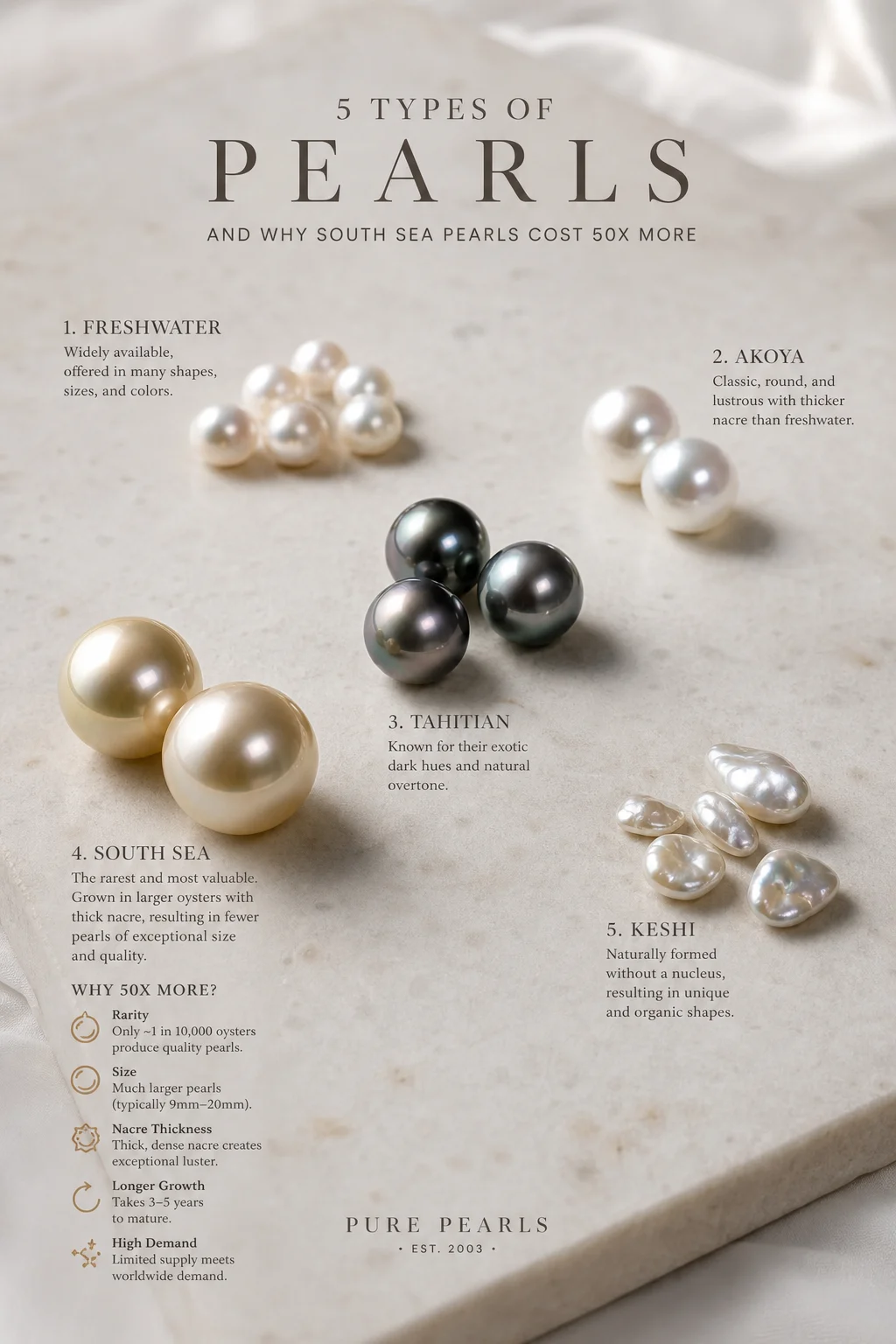
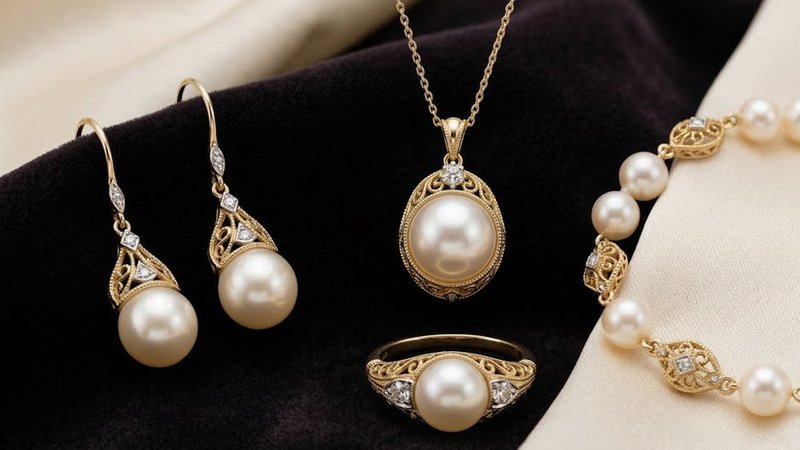
Pearls form when a mollusk coats an irritant with layers of nacre. The different types of pearls — freshwater, Akoya, Tahitian, and South Sea — vary dramatically in size, color, luster, and price. Freshwater pearls are affordable and widely available, while South Sea pearls can cost hundreds or thousands per pearl.
Amber is fossilized tree resin, often containing insect or plant inclusions that are millions of years old. Coral is the calcium carbonate skeleton of marine polyps. Both have been used in jewelry for millennia, though environmental concerns have made coral increasingly regulated.
Physical Properties That Matter
Several measurable properties determine a gemstone's durability, appearance, and value.
Hardness (Mohs Scale)
The Mohs scale ranks minerals from 1 (talc) to 10 (diamond) based on scratch resistance. For jewelry that gets worn daily, hardness matters a lot. Diamonds at 10 and corundum at 9 hold up beautifully. Quartz at 7 is decent but will accumulate scratches over years of wear. Stones below 6 — like fluorite (4) or selenite (2) — are better suited for occasional wear or display pieces.
Cleavage and Fracture
Cleavage describes how a mineral breaks along flat planes of weakness in its crystal structure. Topaz has perfect cleavage in one direction, meaning a sharp impact at the right angle can split it cleanly. Obsidian, being volcanic glass with no crystal structure, has conchoidal fracture — it breaks in smooth, curved surfaces like glass, which is exactly why ancient peoples used it to make razor-sharp tools.
Specific Gravity and Density
Some gemstones are noticeably heavier than others for their size. Hematite has a specific gravity around 5.3, making it feel surprisingly heavy in hand compared to quartz (2.65). This density difference is one way gemologists identify stones — a simple heaviness test can narrow down possibilities significantly.
Optical Properties
Refractive index, dispersion, and pleochroism are the optical properties that give gemstones their visual appeal. High refractive index makes moissanite sparkle more than diamond. Pleochroism in stones like tanzanite means they show different colors when viewed from different angles. These properties aren't just aesthetic — they're diagnostic tools for identification.
Identifying Gemstones: Tests You Can Do
Professional gemologists use a suite of instruments — refractometers, spectrometers, microscopes — to identify stones. But there are practical tests anyone can do.
Visual Inspection
Color is the first clue, but it's unreliable on its own. Ruby and garnet can look nearly identical — both red, both used in jewelry. Sodalite and lapis lazuli are both blue with white veining. The trick is looking beyond color to inclusions, luster, and transparency. Lapis lazuli typically contains pyrite flecks (gold sparkles), while sodalite usually doesn't.
Inclusions are nature's fingerprints. Opal's play-of-color comes from microscopic silica spheres diffracting light. Rutilated quartz contains needle-like rutile inclusions that look like golden threads frozen inside the stone.
Hardness Testing
Can the stone scratch glass? Can a steel nail scratch it? Simple scratch tests using common materials of known hardness can narrow down identification significantly. Testing crystal authenticity often starts with a hardness check — if a supposed quartz specimen scratches easily, it's probably glass or a softer mineral.
UV Light Testing
Many gemstones fluoresce under UV light, showing colors invisible under normal lighting. Some fluorite specimens glow vivid blue or green. Natural amber often fluoresces blue-white, while plastic imitations usually don't. This is one of the easiest and most dramatic identification tests.
Specific Gravity
By weighing a stone in air and then in water, you can calculate its specific gravity. This works because each mineral has a characteristic density range. It won't give you an exact identification alone, but combined with color and hardness, it's remarkably effective.
Notable Gemstones by Color
Color is the first thing most people notice about a gemstone, and it drives the majority of purchasing decisions. Here's a breakdown of standout stones by color family.
Blue and Green Stones
Blue stones hold a particular fascination, perhaps because blue is rare in nature. Turquoise has been mined and traded for over 5,000 years. Larimar, found only in the Dominican Republic, ranges from pale sky blue to deep ocean blue. Apatite produces vivid blues and greens that rival much more expensive stones at a fraction of the cost.
Azurite-malachite combines deep blue and green in a single specimen, while charoite from Siberia shows swirling purple and blue patterns found nowhere else. Serpentine offers affordable green stones that have been carved into ornaments for centuries.
Red and Pink Stones
Ruby is the king of red gemstones, but good rubies are expensive. Bloodstone provides dark green with red spots at a much lower price. Red jasper has been used as a carving and ornamental stone since ancient Egypt. Rhodonite offers pink with black manganese oxide veining that makes each piece unique.
For pink stones, kunzite provides delicate pastel pink with an unusual property — it fades in prolonged sunlight. Rose quartz is the most accessible pink stone, while morganite vs rose quartz comparisons often come down to budget and desired hardness.
Thulite from Norway and sugilite from South Africa round out the pink-to-purple spectrum with stones that most people have never encountered.
Black and Dark Stones
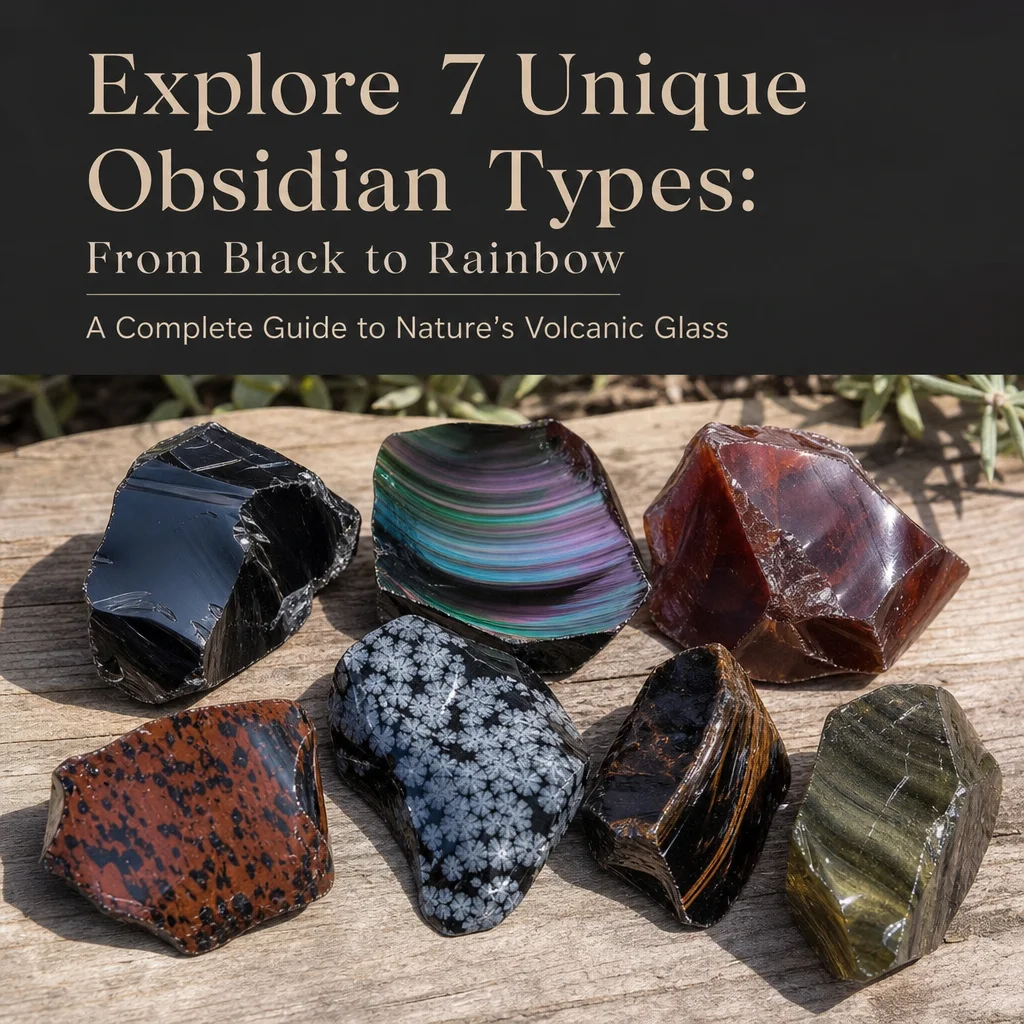
Black stones have seen a surge in popularity for jewelry. Black tourmaline is probably the most commonly recommended "protection stone" in crystal circles. Black obsidian is volcanic glass — glossy, affordable, and available in several varieties including rainbow, snowflake, and mahogany obsidian. Shungite from Russia is technically a carbon mineraloid, not a crystal, and has become popular for its claimed EMF-blocking properties.
Color-Changing and Phenomenal Stones
Some gemstones display optical phenomena that make them particularly interesting. Alexandrite is the most famous color-change stone, appearing green in daylight and red under incandescent light. Labradorite's labradorescence creates flashes of blue, green, and gold that shift as the stone moves. Moonstone's adularescence produces a ghostly floating light effect.
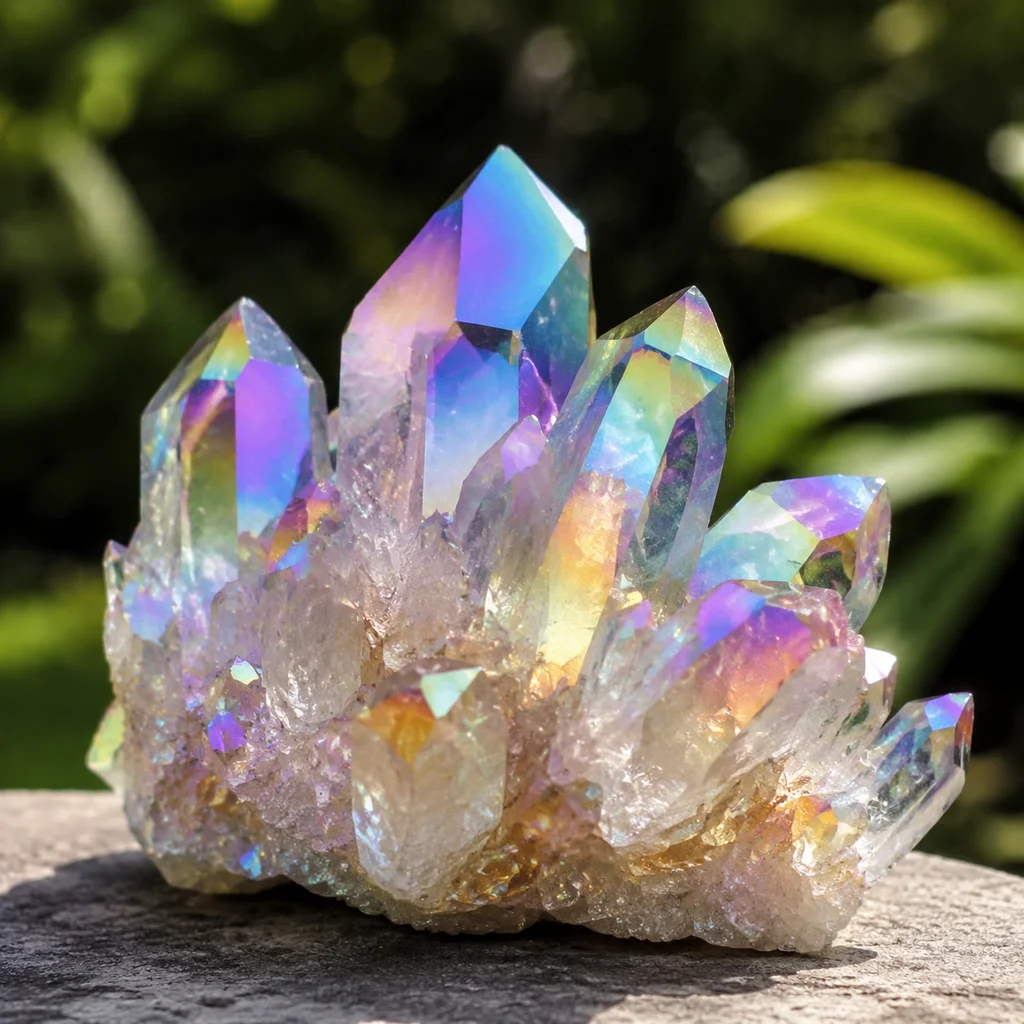
Aura quartz deserves mention here — it's created by bonding titanium or other metals to quartz in a vacuum chamber, producing rainbow iridescence. It's not natural, but the result is striking enough that many collectors include it anyway.
Where Gemstones Come From: Major Sources
Geographic origin affects both value and character of gemstones. Some stones are so closely tied to their source that location becomes part of their identity.
Notable Single-Source Stones
Larimar comes exclusively from a single mountain range in the Dominican Republic. Charoite is found only along one river in Siberia. Zebra stone comes from a single locality in Australia. Tanzanite exists in a small area near Mount Kilimanjaro in Tanzania. These geographic restrictions create natural scarcity that drives prices.
Major Mining Regions
Brazil produces enormous quantities of quartz varieties, tourmaline, beryl, and topaz. Madagascar is a major source of gem-quality labradorite. Myanmar (Burma) has historically produced the finest rubies and jade. Chinese jade culture has driven demand for jadeite from Myanmar for centuries. Colombia produces the world's finest emeralds. Australia was once the dominant source of opal, though Ethiopian opal has become a major competitor.
The Crater of Diamonds State Park in Arkansas deserves special mention — it's the only public diamond mine in the world where visitors can dig and keep what they find. Most people leave empty-handed, but some have walked away with stones worth thousands.
Shopping Smart: What to Know Before Buying
The gemstone market is full of opportunities and pitfalls. Knowing what to look for saves money and disappointment.
Treatments and Enhancements
Most gemstones on the market have been treated in some way. Heat treatment is standard for citrine, aquamarine, and many sapphires — it improves color without fundamentally altering the stone. Dyeing is common in howlite, which is naturally white but frequently sold dyed blue to imitate turquoise. Irradiation produces vivid colors in some quartz varieties. These treatments aren't inherently bad, but sellers should disclose them.
Natural vs Synthetic vs Imitation
The distinction between natural and synthetic stones matters for value and authenticity. Synthetic stones have the same chemical composition and physical properties as their natural counterparts — they're grown in labs rather than mined. Lab-grown diamonds are real diamonds, just made faster. Imitations (like glass or plastic pretending to be gemstones) are a different matter entirely.
Jewelry Metals and Settings
The metal a gemstone is set in affects both durability and appearance. Sterling silver vs stainless steel is a common practical debate — silver looks better but tarnishes, while steel is nearly indestructible but lacks warmth. Gold-filled vs gold-plated is another important distinction — gold-filled has a much thicker layer of gold that won't wear through quickly. For a complete picture, comparing silver, gold, and rose gold helps match metal to budget and skin tone.
Why jewelry turns skin green is one of the most common questions — it's usually a reaction to copper in the alloy, not an allergy. Metal allergies are real, though, and worth understanding before investing in pieces you'll wear daily.
Birthstones and Personal Significance
Birthstones by month give each month a designated gemstone (or several), creating a personal connection that drives a huge portion of gemstone jewelry sales. Birthstone bracelets are among the most popular entry points into gemstone jewelry because they feel personal without requiring deep gemological knowledge.
Gemstones in History and Culture
Gemstones have carried cultural significance far beyond their physical properties for thousands of years. The ancient Egyptians mined turquoise in the Sinai Peninsula over 5,000 years ago. Lapis lazuli from Afghanistan traveled trade routes to Egypt, Mesopotamia, and eventually Europe — it was so valued during the Renaissance that ground lapis was used as ultramarine pigment in paintings, costing more than gold ounce for ounce.
Malachite's ancient mining history includes use as eye cosmetics in Egypt and as carved ornamental objects in Russia, where the enormous columns of St. Isaac's Cathedral in St. Petersburg are made from malachite. Jade holds such cultural importance in Chinese civilization that it was considered more valuable than gold, used in burial suits for royalty, and assigned moral qualities — Confucius compared jade's properties to the virtues of a gentleman.
Obsidian's history is primarily practical — its conchoidal fracture produces edges sharper than surgical scalpels, making it invaluable for tools and weapons across cultures from the Aztecs to the Neolithic peoples of the Mediterranean. The name comes from Obsius, a Roman who supposedly first described the stone.
The tradition of assigning gemstones to months has roots in both the biblical breastplate of Aaron (with twelve gemstones representing the twelve tribes of Israel) and ancient astrological traditions. The modern standardized birthstone list was established in 1912 by the American National Association of Jewelers and has been updated several times since.
Copper jewelry has been worn for its purported health benefits since ancient Egypt. While modern science hasn't confirmed most of these claims, copper's antimicrobial properties are well-documented, and the green skin discoloration it causes is harmless — it's just a chemical reaction between copper and your skin's natural oils.
Gold and Metal Choices for Gemstone Jewelry
The metal setting for a gemstone affects more than just appearance — it influences durability, cost, maintenance, and even skin reactions. Understanding metal options is essential context for buying gemstone jewelry.
Rose gold has cycled in and out of fashion for over a century. Its warmth complements pink and warm-toned stones beautifully, and the copper content that gives it color also makes it slightly more durable than yellow gold. Rose gold's history includes a fascinating chapter during World War II, when platinum was restricted to military use and rose gold filled the gap.
Rose gold vs yellow gold comes down to skin tone and personal preference. Yellow gold is classic and doesn't need rhodium plating like white gold. Rose gold is warmer and more contemporary-looking. Neither is objectively better, but each pairs differently with stone colors.
For understanding jewelry metal constructions, gold plated vs vermeil vs gold filled represents a spectrum of gold content and durability. Gold-filled jewelry has a mechanically bonded layer of gold that's much thicker than plating, making it durable enough for daily wear. Durability testing shows the clear difference — gold plating can wear through in months, while gold-filled pieces last years or decades.
For the complete picture, comparing gold-filled, gold-plated, and solid gold side by side helps match budget to expectations. Solid gold is ideal but expensive. Gold-filled offers most of the benefits at a fraction of the price. Gold plating is fine for occasional pieces but disappointing for anything worn daily.
Spotting Fakes and Misrepresentations
The gemstone market has its share of misrepresented material, and learning to spot common fakes protects your wallet and your collection.
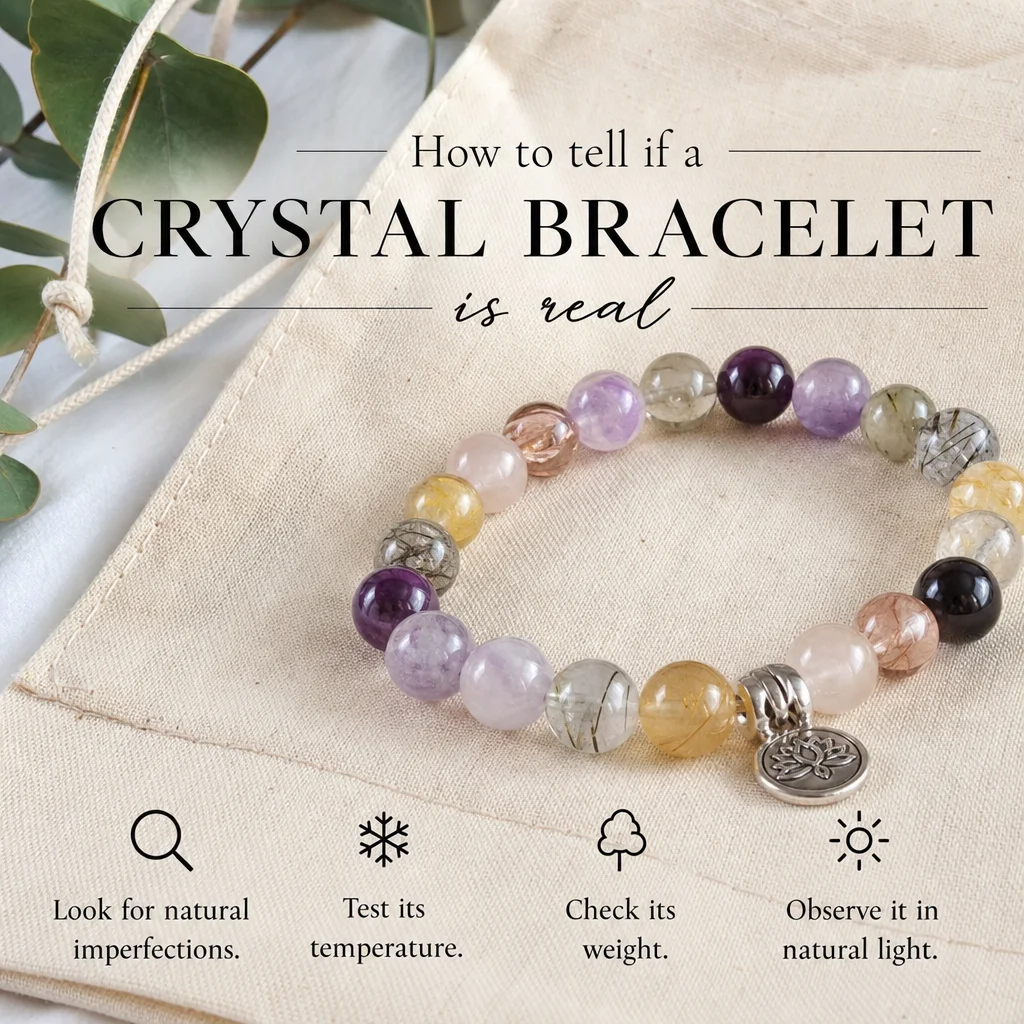
Fake crystal bracelets are widespread online. Glass dyed to look like lapis, plastic resin mimicking amber, and reconstituted stone (ground up mineral mixed with resin and pressed into shapes) are among the most common fakes. Telling if a crystal is real involves checking for uniform inclusions (too-perfect patterns suggest manufacturing), weight (glass and resin feel different from natural stone), and temperature (real stones feel cooler to the touch than plastic).
One particularly tricky case: selenite vs satin spar. Most "selenite" sold in shops is actually satin spar — a different form of gypsum with fibrous, chatoyant appearance. True selenite is transparent and forms flat, tabular crystals. Both are gypsum, both are real minerals, but they're different varieties sold under the wrong name.
Aura quartz transparency is worth noting. It's created through a legitimate process (vacuum deposition of metal films on natural quartz), and reputable sellers disclose this. The issue arises when it's sold as "natural" rainbow quartz, which doesn't exist in nature. The same goes for most commercial citrine, which is actually heat-treated amethyst — real citrine exists but is uncommon, and the vast majority of "citrine" on the market started life as purple amethyst that was baked until it turned yellow.
Moldavite fakes have flooded the market as prices for genuine specimens have risen. Real moldavite has distinctive surface texture (called "sculpturing"), internal bubbles and swirls, and a specific gravity that distinguishes it from bottle glass. When in doubt, buy from dealers who provide certificates of authenticity from recognized gemological labs.
Gemstone Cutting and Its Impact on Appearance
The way a gemstone is cut affects its appearance as much as its inherent color and clarity. Gemstone cutting styles and techniques range from simple cabochons (domed, polished surfaces) to intricate faceted cuts designed to maximize light return.
Cabochon cuts work best for stones with phenomena — chatoyant stones like tiger's eye, asteriated stones that show star patterns, and opaque stones where faceting wouldn't improve brilliance. Faceted cuts suit transparent stones where the goal is to bounce light around inside the gem and return it through the top.
The quality of the cut matters enormously. A well-cut opal displays its play-of-color across the entire surface. A poorly cut one has dead patches where color barely shows. Cut quality is one of the hardest things for beginners to evaluate, but it's also one of the biggest factors in whether a stone looks impressive or forgettable.
Popular cuts include round brilliant (maximizes sparkle), oval (common for colored stones, saves weight), emerald cut (shows off clarity in transparent stones), and pear or teardrop (versatile for pendants and earrings). Cabochon cuts in various shapes are standard for turquoise, moonstone, and other stones where surface phenomena are the main attraction.
Gemstone Valuation: What Drives Price
Several factors combine to determine a gemstone's market value, and understanding them helps explain why two stones that look similar to an untrained eye can have wildly different price tags.
Color is the most important factor for colored gemstones. In most cases, vivid, saturated color commands the highest prices. For rubies, the ideal is "pigeon's blood" red — a specific intense red with a hint of blue. For sapphires, "cornflower blue" from Kashmir or "royal blue" from Myanmar set the standard. Subtle differences in hue, tone, and saturation can translate to orders of magnitude in price.
Clarity matters differently for different stones. In diamonds and colored gems, eye-visible inclusions lower value. But some inclusions are expected and even characteristic — emerald's "jardin" (garden) of inclusions is so typical that a flawless emerald would immediately raise suspicion about whether it's natural.
Carat weight affects price exponentially, not linearly. A 2-carat ruby isn't twice the price of a 1-carat ruby of equal quality — it might be four or five times the price, because larger stones of fine quality are exponentially rarer.
Origin adds a premium for certain sources. Burmese rubies, Kashmir sapphires, and Colombian emeralds command significant premiums over stones of equal quality from other locations, partly because of historical reputation and partly because these sources produce consistently exceptional material.
Treatment status is increasingly important. Untreated stones of fine color are worth far more than treated stones of similar appearance. Heat treatment is so common in some varieties (like sapphire) that untreated specimens can command 2-5x premiums.
For buyers who aren't looking to invest but just want attractive stones for jewelry, the complete guide to buying colored gemstones focuses on getting the best visual impact for your budget rather than chasing investment-grade material.
Lesser-Known Stones Worth Knowing
Beyond the well-known varieties, there's a whole world of interesting gemstones that most people never encounter. These are often affordable, visually distinctive, and carry interesting stories.
Pietersite looks like a storm captured in stone — swirling blues, golds, and reds caused by brecciated (broken and re-cemented) tiger's eye. It was discovered in Namibia in the 1960s and remains relatively obscure.
Apophyllite forms distinctive pyramid-shaped crystals, often found in the basalt quarries of India. While too soft for jewelry (4.5-5 Mohs), it makes stunning display specimens with their glassy, transparent to white crystals perched on green celadonite matrix.
Staurolite "fairy stones" naturally form cross-shaped twins that have been collected as good-luck charms for centuries. Found primarily in Virginia and Georgia, these brown minerals crystallize in intersecting patterns that look intentionally carved but are entirely natural.
Unakite is a mottled green and pink stone from Virginia that combines epidote (green) and feldspar (pink) in a single rock. It's affordable, takes a good polish, and has a distinctive look that doesn't resemble anything else.
Aventurine's color varieties — green, blue, peach, and red — are all the same quartz family stone with different mineral inclusions. Each color has its own character while sharing aventurine's characteristic sparkle from tiny included platelets.
Blue lace agate produces delicate blue and white banding that looks almost like frozen clouds. It's a quieter stone than most — no flashy color shifts or sparkles, just subtle, calming patterns that reward close inspection.
Charoite might be the most visually striking stone most people have never seen. Deep purple with swirling, fibrous patterns, it occurs only in a single region of Siberia and was unknown to the Western world until the 1970s. There's nothing else that looks like it.
Building a Meaningful Collection
A gemstone collection doesn't need to be expensive to be interesting. Some of the most knowledgeable collectors focus on mineralogical diversity rather than monetary value. Building a collection of unusual gemstones — stones most people haven't heard of — can be more rewarding than chasing the same dozen popular varieties.
Crystal pairings based on complementary colors or mineral families can create interesting display arrangements. Raw crystals vs tumbled stones is partly aesthetic preference and partly practical — raw specimens show crystal habit and natural faces, while tumbled stones highlight color and translucency.
Understanding crystal shapes — from natural crystal points to carved spheres, towers, and freeforms — adds another dimension to collecting. Each shape shows different aspects of the same mineral. A geode cracked open reveals a crystal-lined cavity you'd never see in a polished specimen.
Common Questions and Misconceptions
Let's address some things people frequently get wrong about gemstones.
"Real crystals don't have flaws." Actually, the opposite is often true. Perfect clarity in a natural stone can be a red flag — many natural gems have characteristic inclusions that help confirm authenticity. Herkimer "diamonds" (double-terminated quartz from New York) are valued partly for their exceptional clarity, but most quartz has visible inclusions.
"Harder stones are better." Hardness measures scratch resistance, not toughness. Diamonds are the hardest natural material but can chip along cleavage planes. Jade is relatively soft (6-7 Mohs) but incredibly tough due to its interlocking microcrystalline structure — which is why it's been carved into tools and ornaments for thousands of years.
"Color determines species." Rose quartz vs pink quartz might sound like the same thing, but they can refer to different materials with different properties. Similarly, green beryl and emerald are both beryl — the distinction is based on color saturation and chromium content, not a different chemical formula.
"Lab-grown stones are fake." Lab-grown gems have identical chemical and physical properties to natural ones. The main differences are origin and price. For lab-grown diamonds specifically, even gemologists sometimes need specialized equipment to distinguish them from natural stones.
Caring for Your Gemstones
Proper care keeps gemstones looking their best and prevents damage. The basics are straightforward: store stones separately to prevent scratching, avoid exposing them to harsh chemicals or extreme temperature changes, and clean them with methods appropriate to their hardness and stability.
Soft or porous stones like howlite, selenite, and pearls should never soak in water or be cleaned with ultrasonic cleaners. Harder stones like quartz, corundum, and beryl are more forgiving but still benefit from gentle treatment.
Some stones are photosensitive — kunzite can fade with prolonged sun exposure, and amethyst may lighten over time if kept in direct sunlight. When in doubt, store colored stones away from windows and bright light.
Why This Stuff Matters
Understanding gemstones isn't just about shopping smarter, though that's a practical benefit. It's about appreciating the intersection of chemistry, physics, geology, and human culture that every stone represents. That piece of fluorite on your desk crystallized from hydrothermal fluids deep underground. The dalmatian stone in your bracelet formed when tourmaline crystals broke down and their minerals recrystallized in spotted patterns. The prehnite pendant you wear was forged in the cracks of basalt formations.
Each stone has a story that started millions of years before anyone picked it up. Learning to read those stories — through color, crystal structure, inclusions, and hardness — is what turns a rock collection into something genuinely interesting.
Frequently Asked Questions
What is the difference between precious and semi-precious gemstones?
Traditionally, diamonds, rubies, sapphires, and emeralds are considered precious due to their rarity. All other natural stones, like amethyst or topaz, are semi-precious. However, at SagStone, we believe every handcrafted crystal has its own unique beauty and energy, regardless of this outdated commercial label! We focus on the artisan quality and natural charm of each piece.
How can I tell if a natural gemstone is real?
While professional gemologists use specialized tools, you can look for natural imperfections like tiny inclusions or slight color variations, which are hallmarks of genuine stones. Glass or plastic fakes often look too perfect. When you shop our artisan jewelry, you can trust that every crystal is carefully chosen and naturally authentic, crafted with care by our expert hands.
Are pearls and amber considered real gemstones?
Yes! While most crystals form deep within the earth through heat and pressure, pearls and amber belong to a special category called organic gemstones. Pearls are created by living mollusks, and amber is formed from ancient fossilized tree resin. These natural wonders are highly prized in our handcrafted jewelry collections for their warm, unique origins and timeless aesthetic.
Which natural gemstones are best for everyday jewelry?
If you want a piece of handcrafted jewelry that withstands daily wear, look for crystals with a high hardness rating on the Mohs scale. Quartz, topaz, and sapphires are excellent choices because they resist scratching and chipping. Softer stones require a bit more care. Our artisans can help you select the perfect, durable crystal design that fits your everyday lifestyle.
Do different colored gemstones have specific meanings?
Absolutely! Throughout history, different crystal colors have been associated with various energies and cultural meanings. For example, blue stones like lapis lazuli often represent tranquility and wisdom, while warm reds like garnet symbolize passion and vitality. When creating our handcrafted jewelry, we love blending these natural hues so you can wear a piece that resonates.
Comments