The First Time I Held a Piece of Rough Turquoise
The First Time I Held a Piece of Rough Turquoise
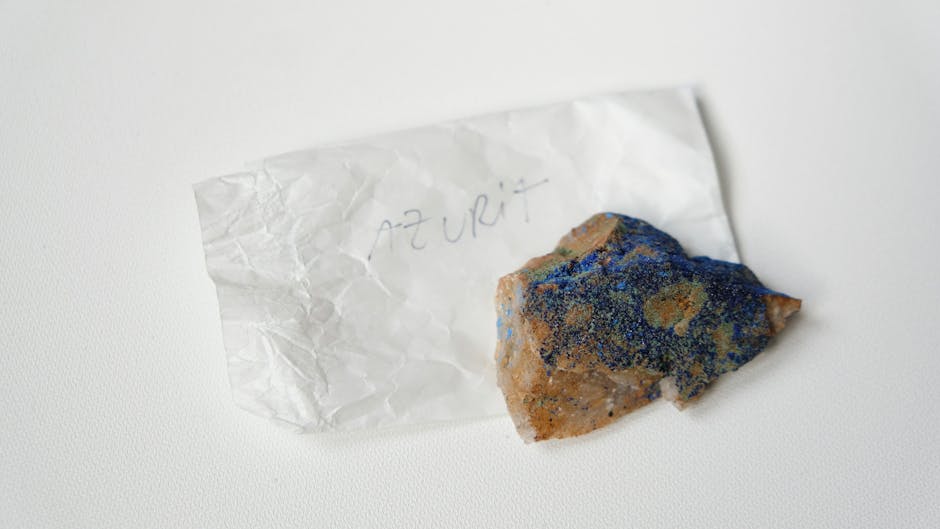
It didn't look like jewelry. It looked like a chunk of dirty blue chalk someone had dropped in a parking lot. The vendor at the Tucson Gem and Mineral Show had it sitting in a cardboard box alongside dozens of other unremarkable-looking stones, each tagged with a number and a mine name I didn't recognize. I picked it up, turned it over, and almost put it back down.
Then I noticed the matrix. That web of brown and black running through the blue — not a flaw, but the thing that made it interesting. The vendor, a weathered guy from Nevada who looked like he'd been mining since birth, saw me staring and said something that stuck with me: "Every piece of turquoise has a story. That one just hasn't told you yet."
I bought it for twelve dollars. I still have it. And over the next few years, I fell down the rabbit hole of how turquoise actually forms, where it comes from, and why the stuff in that cardboard box is nothing like what you find in a mall jewelry store. Here's what I learned.
What Turquoise Actually Is (Geology, Not Marketing)
Turquoise is a hydrated phosphate of copper and aluminum. That sentence alone tells you most of what matters: the copper gives it the blue, the aluminum contributes structure, and the water content (the "hydrated" part) is why turquoise can change color and become brittle over time if it dries out. It forms at a molecular level when copper-bearing groundwater interacts with aluminum-rich rocks, usually over hundreds of thousands of years.
The conditions have to be specific. You need copper in the water. You need aluminum phosphates in the host rock. You need the right temperature range — not too hot, not too cold. And you need time. Lots of it. The turquoise deposits in the American Southwest started forming somewhere between 30 and 40 million years ago, during volcanic activity that left copper-rich solutions percolating through fractured rock.
This is why turquoise isn't found everywhere. You can't just dig a hole and find it. It shows up in arid and semi-arid regions where evaporation concentrates those mineral solutions, and where the geological conditions line up just right. Iran, China, the American Southwest, Egypt, and parts of Chile and Australia are the main sources, but even within those regions, deposits are scattered and unpredictable.
The Mining Process Is Nothing Like What You'd Imagine
I used to think mining turquoise was like mining anything else — big machines, open pits, conveyor belts. For some operations, sure, that's accurate. But a lot of turquoise mining, especially in the American Southwest, looks more like patient excavation than industrial extraction.
Many of the most prized American turquoise mines — Sleeping Beauty, Kingman, Morenci, Bisbee — started as copper mines. Turquoise was a byproduct, found in the same geological formations that produced copper ore. Miners would encounter seams of turquoise while chasing copper veins, and some of them started collecting it separately. At Bisbee, miners famously pocketed turquoise they found during their shifts, which is why genuine Bisbee turquoise with verified provenance is so rare and expensive today.
Small-scale turquoise mining still happens in places like Nevada and Colorado. It's pick-and-shovel work, often done by individual prospectors or small family operations. They follow mineral indicators — iron staining, altered rock faces, certain geological formations — and dig by hand. The yield is unpredictable. A prospector might work a claim for weeks and find nothing, or hit a pocket of high-grade turquoise that makes the whole season worthwhile.
In Iran, the traditional source of some of the world's finest turquoise, mining has been happening for over a thousand years in the Neyshabur region. The methods have modernized somewhat, but the geography hasn't changed: turquoise is still pulled from veins in weathered volcanic rock, sorted by color and matrix pattern, and graded by hand.
Open pit vs. underground
Large commercial turquoise operations, like the Sleeping Beauty mine in Arizona (now closed), used open-pit methods. You remove the overburden, expose the turquoise-bearing zone, and extract it with heavy equipment. It's efficient, but it produces a lot of lower-grade material that needs sorting.
Smaller operations often work underground, following veins by hand. This is slower and more labor-intensive, but it tends to produce better-quality stone because the miners can be selective about what they pull out. They can see the turquoise in the vein wall and decide whether it's worth extracting or whether the vein is too fractured or discolored.
Color, Matrix, and What Determines Value
Turquoise color ranges from pale sky blue to deep green, with everything in between. The blue comes from copper content — more copper means bluer stone. Iron in the mineral mix pushes the color toward green. The most valued color historically has been a pure, intense robin's egg blue, which is why Sleeping Beauty turquoise (known for its clean, uniform blue with little to no matrix) became so popular.
But matrix — the web of host rock running through the turquoise — has its own following. Some people prefer matrix turquoise because it's visually interesting and harder to imitate. Spiderweb turquoise, where the matrix forms a delicate web-like pattern throughout the stone, is highly sought after in certain markets. Number 8 turquoise from Nevada, with its distinctive golden-brown spiderweb matrix, regularly commands premium prices.
The hardness of turquoise matters too. On the Mohs scale, turquoise ranges from about 5 to 6, which makes it softer than quartz but harder than calcite. Softer turquoise is easier to cut and shape but more prone to scratching and damage in jewelry. Harder turquoise, like some of the material from the Kingman mine, holds up better in rings and bracelets where it takes daily wear.
Stabilized vs. natural turquoise
Here's where things get complicated for buyers. Only a small percentage of mined turquoise is hard enough and stable enough to be used in jewelry without treatment. The rest gets stabilized — impregnated with a clear resin or polymer under pressure. This fills pores, hardens the stone, and prevents color change. Stabilized turquoise isn't fake; it's still real turquoise, just treated to make it durable.
Natural, untreated turquoise is rarer and more expensive. It can change color over time as it absorbs oils from your skin and the environment (this is called a patina, and some collectors actually prefer it). But it's also more fragile and needs more careful handling.
Reconstituted turquoise is a different story. That's turquoise dust and fragments mixed with resin and pressed into blocks. It contains real turquoise, but it's essentially a composite material. It's cheap, uniform in color, and widely available. Nothing wrong with it as a material, but it shouldn't be sold at natural turquoise prices.
Notable Mines and What Makes Each One Different
Every turquoise deposit has a character. If you spend enough time around the stone, you start to recognize where a piece came from based on its color, matrix pattern, and general vibe. Here are the ones that come up most often:
Sleeping Beauty (Arizona)
The Sleeping Beauty mine in Globe, Arizona, produced some of the cleanest, most uniform blue turquoise in the world. Very little matrix, a consistent sky-blue color, and relatively hard stone. It was a favorite for inlay work because the color was so predictable. The mine closed around 2012, and prices for Sleeping Beauty turquoise have been climbing ever since. If you see a piece of bright blue turquoise with no matrix at all, there's a decent chance it's from this mine — or an imitation of it.
Kingman (Arizona)
Still producing, Kingman turquoise comes in a wide range of blues and greens, often with beautiful matrix patterns. It's one of the more available American turquoises on the market. The high-grade material, especially the bright blue with black matrix, is excellent. Lower grades are commonly stabilized. Kingman also produces a distinctive "high blue" material that's been treated with electricity to darken the color — technically enhanced, but still real stone underneath.
Bisbee (Arizona)
Bisbee turquoise is famous for its deep blue color and chocolate-brown matrix. The copper mine that produced it (the Lavender Pit) closed in the 1970s, and most of the turquoise that exists today came from miners who collected it during their regular shifts. Genuine Bisbee with solid provenance is one of the most expensive American turquoises you can buy. There's a lot of fake Bisbee on the market, partly because the real thing is so rare and partly because the "Bisbee" name carries weight.
Neyshabur (Iran)
Persian turquoise from the Neyshabur mines has been prized for over a thousand years. It tends to be a smooth, even blue with minimal matrix — similar in appearance to Sleeping Beauty but with a different quality of color that some people describe as deeper or more saturated. Iranian turquoise has historically been the standard against which all other turquoise is measured, though American material has largely caught up in terms of quality and variety.
Hubei and Yunxiao (China)
China is currently the largest producer of turquoise by volume. Hubei province produces a lot of material that ranges from low-grade stabilized stone to surprisingly good natural turquoise. The Yunxiao mines produce green turquoise with interesting matrix patterns. Chinese turquoise gets a mixed reputation because the low-end material floods the market, but the high-end stuff from the right mines is genuinely good.
Buying Turquoise: What I Wish I'd Known
After spending way too much money on turquoise I later realized was stabilized, reconstituted, or misidentified, here's what I've settled on as a practical buying approach:
First, assume nothing. Ask what the stone is and where it's from. A reputable seller will tell you if it's natural, stabilized, or reconstituted. If they won't say, or if they claim "100% natural" on material that looks suspiciously uniform, be skeptical. Natural turquoise has variation — in color, in matrix, in texture. If a strand of beads looks like it was manufactured to exact specifications, it probably was.
Second, know your mines. You don't need to memorize every deposit in the Southwest, but knowing the difference between Sleeping Beauty, Kingman, and Chinese material will save you from paying premium prices for mass-produced goods. A piece labeled "Sleeping Beauty" that costs twenty dollars is almost certainly not from the Sleeping Beauty mine.
Third, handle it. Turquoise should feel cool to the touch, dense, and substantial for its size. Reconstituted material often feels lighter and more plastic-like. If it feels warm immediately or has a plasticky texture, that's a red flag.
Fourth, check the price against the quality. Genuine natural turquoise from a named American mine, set in quality silver, costs real money. There's no way around it. If you're seeing "natural Bisbee turquoise" rings for thirty dollars, something's off. That doesn't mean you can't find good deals, but the deal should be proportional — maybe slightly below market, not at fire-sale prices.
That Twelve-Dollar Piece of Turquoise
I still have the stone I bought in Tucson. It's a chunky, asymmetrical piece with brown matrix running through a medium-blue body. It's not the most valuable turquoise I own, and it's certainly not the prettiest. But it's the one that started my education.
What I've come to appreciate about turquoise is that it's one of the few gemstones where the geology, the mining, and the culture are all still closely connected. When you hold a piece of Number 8 turquoise, you're holding something that came out of a specific hillside in Nevada. When you wear a Persian turquoise pendant, you're participating in a trade tradition that's over a millennium old. The stone carries all of that with it.
That's what that vendor in Tucson meant, I think. Every piece of turquoise has a story. You just need to know enough to listen.
Comments