Fluorite: The Most Colorful Mineral on Earth
Why Fluorite Deserves More Attention Than It Gets
Walk into any mineral show and you will find fluorite. It is everywhere. Cubes, octahedrons, clusters, massive slabs, and occasionally bizarre twinned formations that look like they were designed by someone with a vivid imagination. Fluorite comes in virtually every color imaginable: purple, green, blue, yellow, pink, colorless, brown, black, and multi-colored specimens that seem to have been painted by nature itself. Despite this extraordinary variety, fluorite sits in an odd position in the gem and mineral world. Mineral collectors adore it. Jewelry designers use it occasionally. But the general public often overlooks it in favor of more familiar gemstones. That is a shame, because fluorite is genuinely one of the most interesting minerals you can encounter.
The name fluorite comes from the Latin word fluere, meaning to flow. This refers to its historical use as a flux in smelting, where it was added to iron ore to lower the melting point and make the metal flow more easily. The mineral has been known and used for at least two thousand years. The ancient Romans carved decorative vessels from it and valued certain colorful varieties. But the full scope of what makes fluorite special goes far beyond its historical uses. It is a mineral that bridges the worlds of geology, chemistry, optics, and industry in ways that few other minerals can match.
The Chemistry and Structure Behind the Colors
Fluorite is calcium fluoride, CaF2. That simple chemical formula, one calcium atom bonded to two fluorine atoms, forms a crystal structure that belongs to the isometric system. This cubic structure is the reason fluorite so commonly forms perfect cubes and octahedrons. The symmetry is built into the chemistry. When conditions are right during crystal growth, the atoms arrange themselves into these geometrically precise shapes with almost mathematical perfection.
The color range of fluorite is extraordinary. Purple is the most common and widely recognized color, particularly the deep violet material from England's historic Derbyshire mines and the blue-green material from China. Green fluorite is also very common and can range from pale mint to deep emerald-like shades. Blue fluorite from locations like Bingham, New Mexico, has a soft, sky-blue quality that is quite distinctive. Yellow fluorite is less common and often occurs as color zones within otherwise purple or green crystals. Pink and red fluorite are rare and highly sought by collectors.
What Causes Fluorite's Colors
The color mechanisms in fluorite are surprisingly diverse for such a chemically simple mineral. The purple and blue colors in most fluorite are caused by what mineralogists call color centers. These are structural defects in the crystal lattice where an electron is trapped at a site that is missing a fluorine atom. When light hits these trapped electrons, they absorb certain wavelengths and transmit others, producing the purple or blue color. This is different from the trace element coloring seen in many other minerals. In fluorite, the color comes from the crystal structure itself being slightly imperfect.
Green fluorite gets its color from different mechanisms depending on the locality. In some cases, it involves rare earth elements like yttrium or cerium substituting for calcium in the crystal lattice. In other cases, it involves yet another type of color center. Yellow fluorite is often associated with organic inclusions or hydrocarbons trapped within the crystal during growth. Some fluorite even contains microscopic inclusions of other minerals that contribute to its color. The diversity of coloring mechanisms is one reason fluorite's color range is so extensive compared to minerals that rely on a single chromophore.
The Fluorescence Connection
Here is a fun fact that surprises many people: the word fluorescent was actually derived from fluorite. In 1852, the British physicist George Gabriel Stokes observed that certain specimens of fluorite glowed with a blue-white light when exposed to ultraviolet radiation. He named this phenomenon fluorescence after the mineral that demonstrated it so clearly. Not all fluorite fluoresces, but many specimens do, and the effect can be quite dramatic. Under shortwave ultraviolet light, some fluorite specimens that appear ordinary in daylight transform into glowing, otherworldly objects. Blue is the most common fluorescent color, but green, white, yellow, and even red fluorescence occur in different specimens.
The fluorescence in fluorite is caused by the same types of defects and impurities that produce its visible colors. Trace amounts of rare earth elements, particularly europium, yttrium, and samarium, are the primary activators. Different activators produce different fluorescent colors. Europium tends to produce blue fluorescence. Manganese can contribute to orange or red. The specific combination of activators in a given specimen determines its fluorescent response. Collecting fluorescent minerals is a popular sub-specialty within mineral collecting, and fluorite is one of the cornerstone species of that field.
Notable Fluorite Localities Around the World
Fluorite is found on every continent, and certain localities have become legendary among collectors for producing exceptional specimens. The historic mines of Derbyshire in England, collectively known as the Blue John mines, have been producing purple-blue banded fluorite since Roman times. Blue John fluorite is distinctive for its alternating bands of purple, blue, and white, and it has been used for centuries to create ornamental objects, particularly vases and bowls. The name Blue John is believed to be a corruption of the French bleu-jaune, meaning blue-yellow, which describes its characteristic banding.
China has become the dominant source of fluorite specimens in recent decades. The mines of Hunan and Hunan provinces produce enormous quantities of fluorite in a wide range of colors and crystal habits. Green fluorite from China, often with cubic crystals perched on quartz or calcite matrices, has flooded the mineral market and made dramatic display specimens affordable for collectors at every price level. The quality can be variable, but the best Chinese fluorite is truly world-class.
The American Fluorite Deposits
The United States has produced some of the finest fluorite specimens ever found. The Cave-in-Rock district in southern Illinois was historically one of the world's most important fluorite mining areas. The district produced fluorite from the early 19th century until the last mine closed in the 1990s. The best specimens from Cave-in-Rock feature gemmy, deeply colored cubic crystals, often in combinations of purple, blue, and yellow. Some of these specimens are preserved in major museum collections and are considered classics of American mineralogy.
New Mexico has also contributed notable fluorite, particularly from the Bingham district. The Bingham fluorite is known for its soft blue color and often occurs in attractive cubic crystal groups. Other significant American localities include the Elmwood mine in Tennessee, which produces sphalerite-associated fluorite, and various deposits in Colorado and Arizona. While American fluorite mining has declined substantially from its peak, the specimens already extracted remain important reference material for collectors and researchers.
Fluorite in Industry and Technology
Beyond its appeal to collectors, fluorite is a critically important industrial mineral. The largest single use of fluorite is in the production of hydrofluoric acid, which is derived from fluorite through a chemical reaction with sulfuric acid. Hydrofluoric acid is essential for manufacturing a wide range of products including refrigerants, pharmaceuticals, high-octane gasoline, aluminum, and fluoropolymers like Teflon. Without fluorite, modern industry would look very different. The mineral is also used as a flux in steelmaking and in the production of certain types of glass and ceramics.
Optical-grade fluorite has specialized applications in scientific instruments. Because fluorite has very low dispersion, meaning it separates light into its component colors less than glass does, it is used in high-performance camera lenses, telescope optics, and microscope objectives. Fluorite lenses produce sharper images with less chromatic aberration than conventional glass lenses. The Apollo space program used fluorite optics in some of its camera systems. While synthetic fluorite has largely replaced natural fluorite in most optical applications, the natural mineral's role in developing this technology was significant.
Is Fluorite Suitable for Jewelry
Fluorite has a hardness of 4 on the Mohs scale, which is quite soft by gemstone standards. For comparison, quartz is 7, topaz is 8, and diamond is 10. This means fluorite scratches easily and is not suitable for rings or bracelets that will be worn daily. However, it can be used successfully in earrings, pendants, and brooches where it is less likely to encounter abrasion. The key is understanding its limitations and treating it accordingly. Fluorite jewelry should be stored separately from harder gemstones and cleaned gently with mild soap and water.
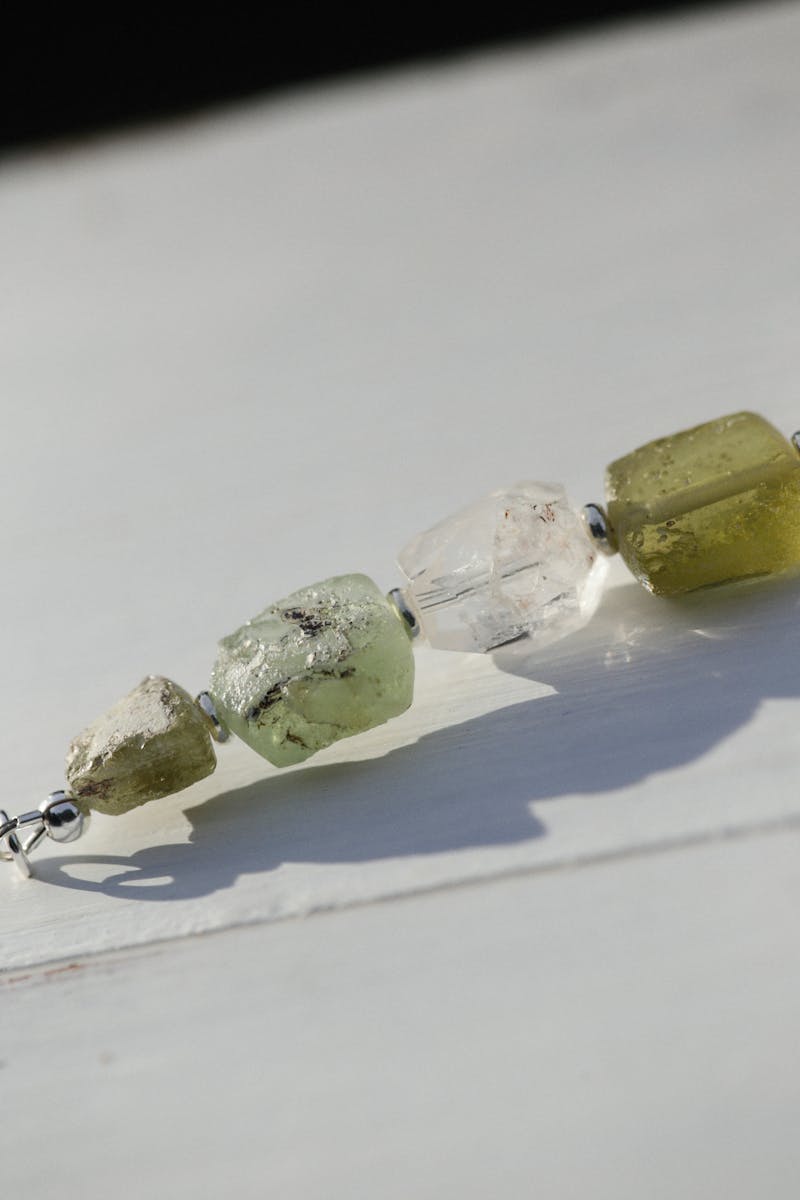
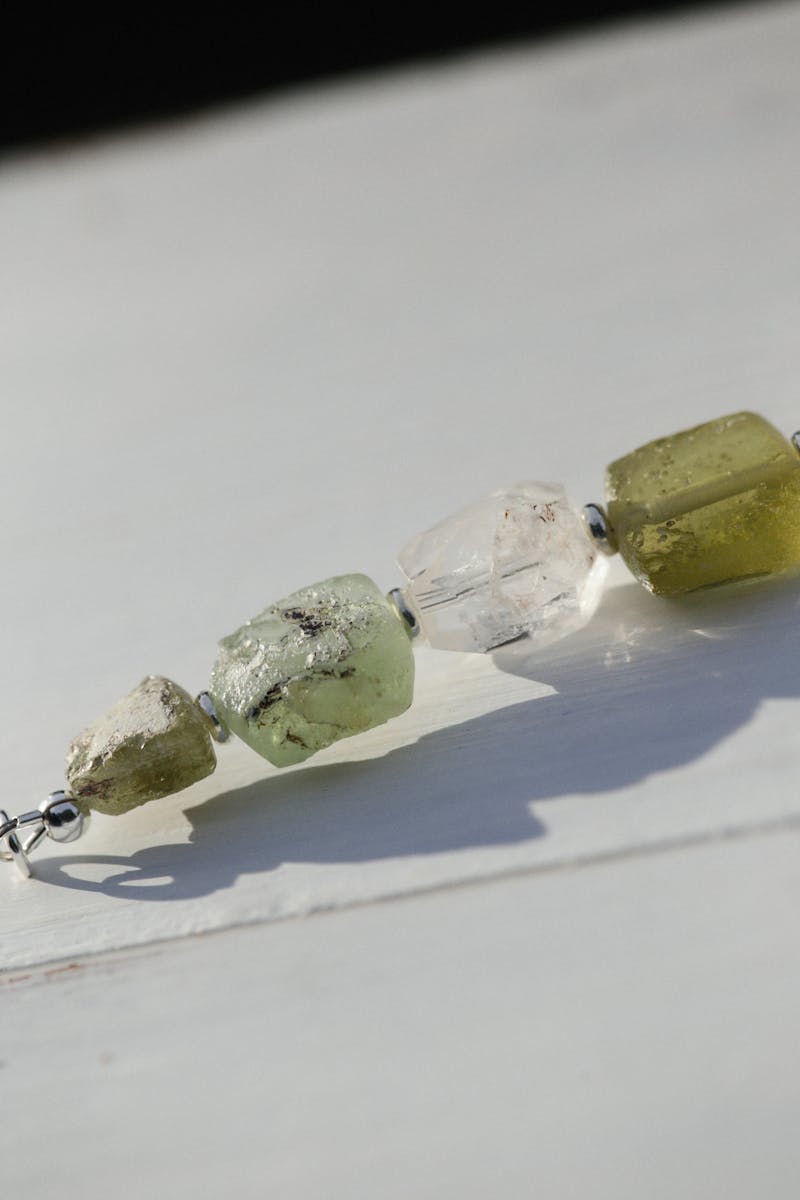
Despite its softness, fluorite has a loyal following among jewelry designers who appreciate its vivid colors and interesting optical properties. Large, well-cut fluorite cabochons can display stunning color banding and internal patterns that make each piece truly unique. Some designers specifically seek out banded or multi-colored fluorite rough to create one-of-a-kind statement pieces. The affordability of fluorite compared to harder gemstones also makes it attractive for experimental and artistic jewelry designs where the cost of the material is less important than its aesthetic qualities.
Starting a Fluorite Collection
Fluorite is one of the best minerals for a beginning collector because it is widely available, affordable, and endlessly varied. You can find small fluorite specimens at rock shops, mineral shows, and online for just a few dollars. At the same time, the finest fluorite specimens from famous localities can sell for thousands of dollars, so there is plenty of room to grow as a collector. The variety of colors, crystal habits, and associations means you could build a large and diverse collection while still being focused on a single mineral species.
When starting out, consider collecting by color or by locality. A color-based collection might aim to acquire specimens representing every major fluorite color. A locality-based collection might focus on specimens from a particular region or mine. Either approach provides structure and makes the collecting process more focused and rewarding. Display your specimens under good lighting, and if possible, keep a small ultraviolet lamp handy to check for fluorescence. Some of the most unassuming fluorite specimens reveal their true beauty only under UV light, and discovering that hidden glow is one of the enduring pleasures of mineral collecting.
Comments