How to Tell if Your Crystal Is Real: A Complete Authenticity Guide
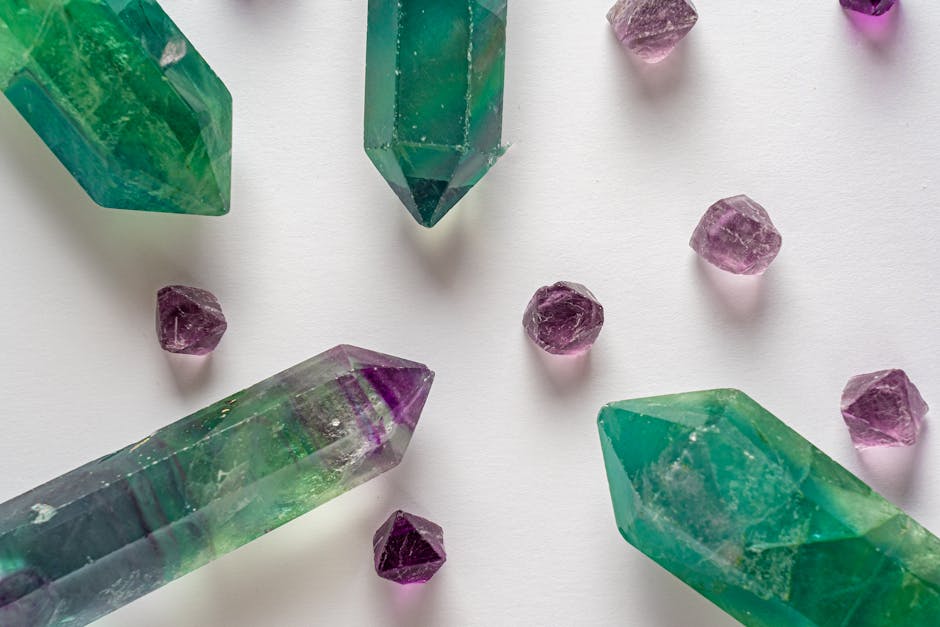
The crystal market has exploded in recent years, and with that growth comes an unfortunate reality: the market is flooded with fakes. Whether you're buying online, at a gem show, or from a local shop, knowing how to identify genuine crystals can save you money and disappointment. This guide covers every method you need to distinguish real crystals from imitations.
Why Authenticity Matters
Real crystals form over thousands or even millions of years through natural geological processes. They carry unique mineral compositions, internal structures, and subtle variations that make each piece one of a kind. Fake crystals, on the other hand, are typically made from glass, plastic, resin, or dyed stones. They may look pretty, but they lack the energetic properties, durability, and value of genuine gemstones.
Beyond the monetary loss, fake crystals can cause skin reactions (especially if dyed with cheap chemicals) and simply don't hold up over time. A glass "amethyst" will chip and scratch easily, while a real one can last generations with proper care.
Visual Inspection: What to Look For First
Color Consistency and Variation
Natural crystals almost never have perfectly uniform color. Look closely at the stone — real crystals will show subtle variations, bands, color zoning, or inclusions. If the color looks too perfect, too vibrant, or completely even throughout, that's a red flag.
**Inexpensive natural crystals with uniform color do exist** (like clear quartz or black obsidian), but for colorful stones like amethyst, citrine, and rose quartz, some variation is expected.
Inclusions and Imperfections
Mother Nature doesn't make flawless crystals very often. Small inclusions, tiny cracks (called "feathers" in gemology), mineral deposits, or slight cloudiness are actually good signs. These imperfections prove the crystal grew naturally.
Fake crystals made from glass will often appear too clear and too perfect. If you see tiny perfectly round bubbles inside the stone, it's almost certainly glass.
Surface Texture
Real crystals typically have some texture — even polished stones will have microscopic irregularities. Run your finger over the surface. Natural stones feel slightly different from glass, which tends to be unnaturally smooth and uniform.
The Temperature Test
This is one of the simplest and most reliable quick tests. Real crystals feel cold to the touch when you first pick them up, and they take a while to warm up in your hand. Glass and plastic warm up almost immediately.
Place the crystal against your cheek or the inside of your wrist (sensitive areas). If it feels warm right away, it's probably not a natural stone.
The Hardness Test (Mohs Scale)
The Mohs hardness scale measures a mineral's resistance to scratching. Each crystal type has a known hardness range, and testing this can help verify authenticity.
Important: Only test hardness on an inconspicuous area or a small chip, as this test can damage the crystal.
- Quartz varieties (amethyst, citrine, rose quartz): 7 on the Mohs scale. They should scratch glass easily.
- Garnet: 6.5-7.5. Should scratch glass.
- Turquoise: 5-6. Cannot scratch glass but is harder than a copper coin.
- Obsidian: 5-5.5. Can be scratched by a steel knife.
- Calcite (including many "color-enhanced" stones): 3. Can be scratched by a copper coin.
If your "quartz" can't scratch glass, or your "obsidian" scratches glass easily, something is wrong.
**To test:** Try to scratch a piece of glass (like a glass bottle or jar) with the crystal. Then try to scratch the crystal with a steel nail. Compare results against the known hardness for that crystal type.
The Light Test
Hold the crystal up to a bright light source and look through it:
- Real crystals: You'll see natural inclusions, color variations, and possibly small internal fractures. The light may refract in interesting ways.
- Glass fakes: Often show perfectly round air bubbles. The color may look painted on rather than coming from within.
- Resin/plastic fakes: Usually look completely uniform inside with no inclusions at all.
Common Fakes and How to Spot Them
Fake Amethyst
Real amethyst gets its purple color from trace amounts of iron exposed to natural radiation. Fake amethyst is often just glass dyed purple, or cheap pale amethyst that's been heat-treated to intensify the color.
**Signs of fake amethyst:** Too-perfect purple color, visible dye concentrated in cracks, scratches too easily, feels warm to the touch.
Fake Citrine
Most commercial "citrine" is actually heat-treated amethyst or smoky quartz. While heat-treated amethyst is still a real crystal, it's worth knowing the difference. Natural citrine is much rarer and has a warmer, more honey-like color.
**Signs of completely fake citrine:** Bright orange-yellow that looks dyed, white spots showing through where dye didn't penetrate.
Fake Turquoise
Real turquoise is expensive and increasingly rare. Most affordable turquoise on the market is either dyed howlite, dyed magnesite, or reconstructed turquoise (real turquoise powder mixed with resin).
**Signs of fake turquoise:** Perfectly uniform blue-green color, visible white matrix that looks painted on, suspiciously low price for the size.
Fake Moldavite
Moldavite has become incredibly popular and expensive, making it a prime target for counterfeiters. Fake moldavite is often made from green glass with bubbles and texture added to mimic natural formations.
**Signs of fake moldavite:** Regular bubble patterns (real moldavite has irregular, elongated bubbles), too-shiny surface, uniform green color, suspiciously cheap price.
Fake Rose Quartz
Genuine rose quartz ranges from very pale pink to a deeper rose color. Fakes are often glass or dyed quartz with an unnaturally vivid pink.
**Signs of fake rose quartz:** Color that looks more pink than rose, visible dye in scratches or chips, perfectly clear (real rose quartz usually has some cloudiness or inclusions).
Advanced Verification Methods
UV Light Test
Some crystals fluoresce under ultraviolet light. While this isn't definitive proof of authenticity, it can be a useful supplementary test:
- Real fluorite: Strong fluorescence in various colors
- Real amber: Greenish or bluish fluorescence under UV
- Fake amber (copal or plastic): May not fluoresce or fluoresce differently
Specific Gravity Test
Each mineral has a specific gravity (density relative to water). Using a jeweler's scale, you can weigh the crystal in air and in water to calculate its specific gravity. If it doesn't match the known range for that mineral, it may be fake.
Professional Testing
When in doubt, take the crystal to a certified gemologist. They have tools like refractometers, spectrometers, and microscopes that can definitively identify most gemstones.
Red Flags When Buying
- Price too good to be true: A large amethyst cluster shouldn't cost $10
- Seller can't identify the mine or source: Vague origins are suspicious
- Every piece looks identical: Natural crystals vary; uniform pieces suggest mass production
- No returns policy: Reputable dealers stand behind their products
- Vague descriptions: "Natural stone" without specifying the actual mineral is a warning sign
Conclusion
Learning to identify real crystals takes practice, but these methods will help you make informed purchases. Start with the simple tests (temperature, visual inspection, light test) and work your way up to more advanced techniques as your experience grows. When shopping for crystals, buy from reputable sources who can tell you about the stone's origin and are willing to answer your questions about authenticity.
Remember: it's better to own a few genuine crystals than a large collection of fakes. Quality always trumps quantity.
Comments