Herkimer Diamond vs Regular Quartz: Is It Worth Paying 10 Times More
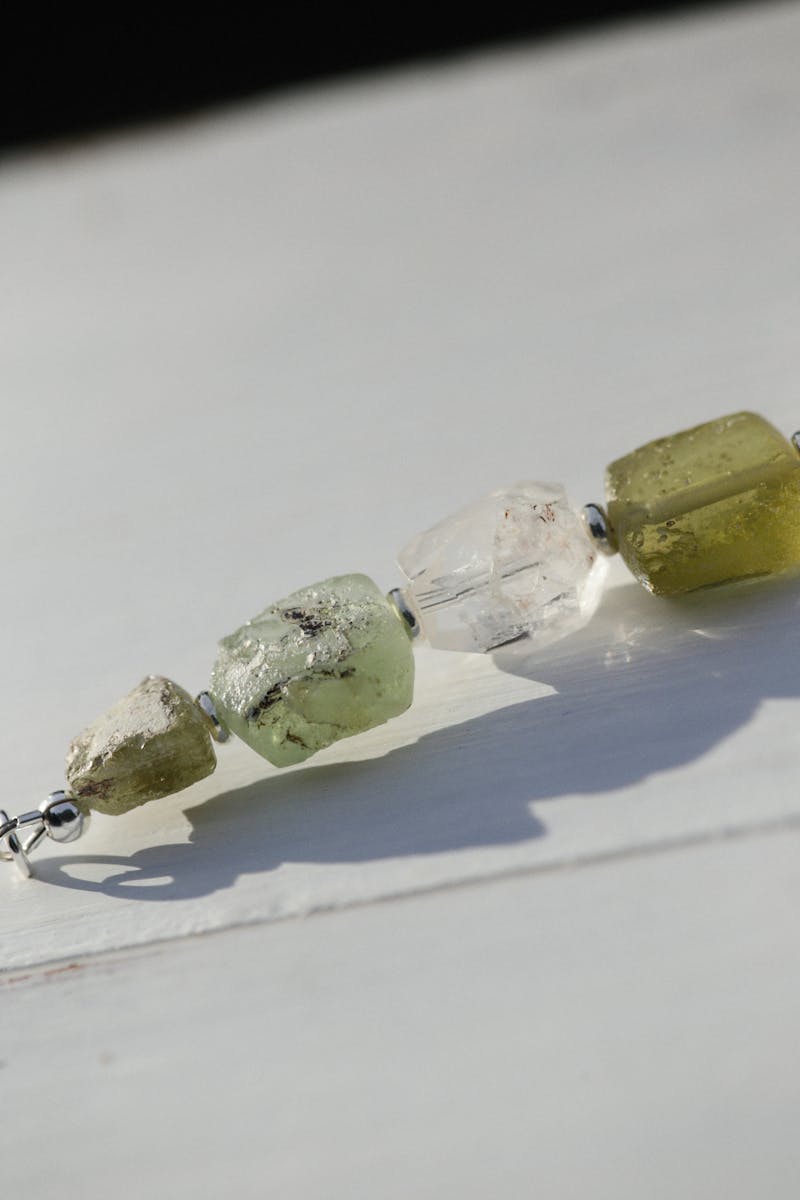
Herkimer Diamond vs Regular Quartz: Is It Worth Paying 10 Times More
Meta description: Herkimer diamonds aren't diamonds at all. They're a rare form of double-terminated quartz found in one New York county. Here's what actually makes them different from regular quartz and whether the price gap is justified.
A gem dealer at a small show in upstate New York handed me two stones and said, "Tell me which one is worth thirty dollars and which one is worth three." They looked like the same mineral. Both were clear, both had sharp crystal points, both were roughly the same size. One was a Herkimer diamond from a quarry 20 minutes away. The other was a clear quartz point from Brazil.
I guessed wrong.
That experience stuck with me because it highlighted how narrow the visual gap is between these two stones, and how wide the price gap is. Herkimer diamonds regularly sell for $1 to $5 per carat in good quality. Clear quartz from Brazil or Arkansas runs closer to $0.10 to $0.50 per carat. That's a 10x to 20x difference for what is, structurally speaking, the same mineral. So what are you actually paying for?
[IMG: Side by side comparison of a Herkimer diamond showing double termination and a regular single-terminated quartz point on white background]
What a Herkimer diamond actually is
Let me get the name confusion out of the way first. Herkimer diamonds are not diamonds. They're quartz, specifically silicon dioxide (SiO₂), the same chemical composition as amethyst, rose quartz, citrine, and the clear quartz you find in any crystal shop. They earned the "diamond" nickname because of their exceptional clarity and natural faceting, which gives them a brilliance that can approach actual diamond at a glance.
They come from dolostone cavities in the Mohawk River Valley of New York State, primarily in and around Herkimer County. The crystals formed roughly 500 million years ago in small pockets within the sedimentary rock, growing slowly enough to develop unusually well-formed terminations on both ends. That double termination is one of their defining characteristics and something most regular quartz doesn't have.
Regular quartz crystals, whether from Brazil, Arkansas, or Madagascar, typically grow from a matrix and terminate on one end while the other end attaches to the host rock. Herkimer quartz grew suspended in fluid-filled cavities, so both ends developed naturally pointed terminations. It's a structural difference that matters to collectors and crystal practitioners, even if the casual buyer might not notice.
How they look different up close
At a distance, a clear Herkimer and a clear Brazilian quartz point can look nearly identical. But hold them side by side and the differences show up pretty fast.
Herkimer diamonds tend to have more faces per crystal, typically 18 compared to the 6-sided prism of standard quartz. This extra faceting creates more internal reflections and gives the stone a flashier appearance under light. The terminations are also sharper and more geometrically precise than what you usually see in mined quartz, which often has slightly irregular or chipped tips from extraction.
Clarity is another dividing line. While both stones can be water clear, the percentage of Herkimer specimens that reach that level is notably higher. A rough estimate from dealers I've talked to suggests that perhaps 5-10% of Herkimer rough is gem clarity, compared to maybe 1-2% of clear quartz from major sources. This doesn't mean all Herkimers are perfect. Many contain inclusions, fractures, or cloudiness. But the odds of finding a clean stone are better.
The inclusions themselves are distinctive. Herkimer diamonds frequently contain anthraxolite, a black hydrocarbon material that forms tiny specks, threads, or phantoms within the crystal. Some collectors actually prefer Herkimers with visible anthraxolite because it proves the stone's origin and adds visual interest. Regular quartz can have inclusions too, but they tend to be mineral in nature rather than hydrocarbon.
[IMG: Close-up of a Herkimer diamond with visible anthraxolite inclusions suspended inside the clear crystal]
The price breakdown
I spent some time tracking Herkimer diamond prices across different channels. Here's what the market looks like right now for loose stones in the 1-3 carat range:
Small gem quality, under 1 carat: $3-8 each Medium, 1-3 carats, good clarity: $10-25 each Large, 3+ carats, collector grade: $30-100+ each Clusters and matrix specimens: $15-200 depending on size and quality
For comparison, a clear quartz point of similar size from Brazil typically costs $1-5 for small stones and $5-15 for medium ones. The price gap narrows slightly at the very top end because large, flawless Herkimers are genuinely rare and command collector premiums that distort the comparison.
The price difference comes down to a few factors. Supply is geographically limited to a relatively small area of New York. Mining is mostly done by small operations or individual collectors rather than large-scale commercial operations. The yield of jewelry-quality material is low compared to the volume of rock that needs to be moved. And there's a collector culture around Herkimers that doesn't exist for standard quartz, which adds a premium based on demand rather than inherent quality.
Is the price worth it?
This is where personal context matters more than mineralogy.
If you want a clear quartz crystal for a pendant, for a grid layout, or as a decorative piece in your home, regular quartz delivers 90% of the visual result at a fraction of the cost. The difference between a nice Brazilian clear quartz and a Herkimer diamond is real but subtle, and most people viewing your jewelry won't be able to tell which is which.
If you're a mineral collector, the Herkimer's double termination, extra faceting, and specific geological origin make it a distinct specimen worth the premium. It's not just clear quartz. It's clear quartz that grew under very specific conditions in a specific place, and collectors pay for that story as much as for the stone itself.
For crystal practitioners, the distinction is largely subjective. Some people feel that the double termination of Herkimer quartz makes it function differently in energy work, pointing out that energy can theoretically flow in both directions through the crystal. Others consider all clear quartz fundamentally equivalent regardless of source. There's no standardized framework for evaluating these claims, so it comes down to individual preference.
My honest take: if you've never held a really good Herkimer diamond, find one and compare it side by side with a regular quartz point. The difference in sparkle and precision is more apparent in person than in photographs. Whether that difference is worth 10x the price is something only you can answer. For a single special piece, I'd say yes. For a collection of multiple stones, probably not.
[IMG: A Herkimer diamond set in a simple bezel pendant, showing how natural faceting catches ambient light]
One more thing: fakes exist
As Herkimer diamonds have gotten more popular, synthetic and misrepresented stones have entered the market. The most common substitution is glass cut to look like double-terminated quartz. It's heavier than real quartz (glass is denser), feels warmer to the touch, and usually has perfectly smooth, uniform clarity that natural quartz rarely achieves.
There are also reports of regular quartz being sold as Herkimer diamonds, particularly in online marketplaces where provenance is hard to verify. A few indicators help: Herkimer diamonds almost always have some tiny imperfection, whether it's a micro-inclusion, a slight asymmetry, or a contact mark where it grew against another crystal. Perfectly clean, perfectly symmetrical double-terminated quartz should raise suspicion, especially at Herkimer-level pricing.
Buying from dealers who specialize in New York minerals or who can show you the rough matrix the crystal came from is the safest approach. If the price seems good for a Herkimer but the seller can't specify the mine or the county, that's worth questioning.
Related Articles
- Selenite vs Satin Spar: Why the Crystal You Bought Might Not Be Real Selenite
- What is aura quartz and why it has those rainbow colors on the surface
- Healing Stone Bracelets Meaning: The Complete Guide
- Ring Sizing Explained: How to Measure Your Ring Size at Home
- Why Do People Wear Bracelets? A Short History of Wrist Adornment

Comments