Six of Swords Tarot Card: Complete Meaning Guide
May 18, 2026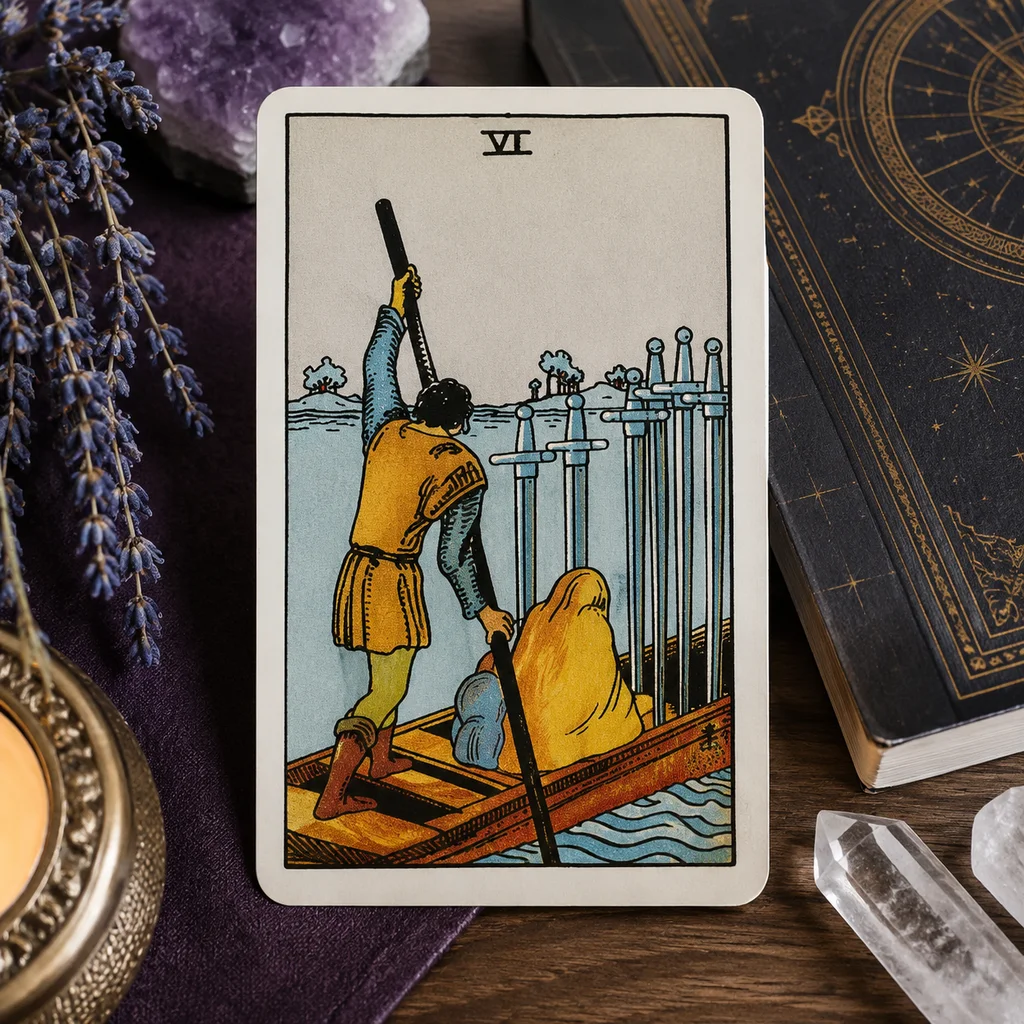
leaving what no longer serves you: my experience with the six of swords
I pulled the Six of Swords on a Tuesday morning in November, sitting on the floor of an apartment I had already packed into cardboard boxes. The lease ended in three days. I had a one-way ticket to a city where I knew almost no one. The card showed a figure in a boat, being ferried across calm water, and I remember thinking: that's exactly what this feels like. Not excitement. Not relief. Just quiet movement away from something that had become impossible to stay in.
The Six of Swords doesn't announce itself with fanfare. It shows up when you've already made the hard decision and now you're living through the transition. It's the card of leaving, of crossing over, of trading familiar suffering for uncertain peace. If you've drawn it recently, something in your life is shifting — and whether you initiated that shift or not, you're already in motion.
I should note that this transition isn't always dramatic or even external. The Six of Swords can represent a shift in mindset as much as a physical relocation. Moving from bitterness toward acceptance. Shifting from denial toward honesty. These internal crossings are just as real as the literal ones, and they often require just as much courage.
upright meaning
The Six of Swords in its upright position signals transition. Not the dramatic, life-altering kind that comes with the Tower or Death cards, but a more measured movement from difficulty toward something calmer. Traditionally, this card depicts a ferryman guiding passengers across water, and that imagery holds: you are moving away from troubled circumstances.
Key themes include:
- Leaving a difficult situation — This could be a job, a living situation, a relationship, or even a mindset that has been draining you.
- Seeking calmer waters — The destination isn't guaranteed to be perfect, but it's quieter than where you've been.
- Guided transition — You might not be doing this alone. A mentor, therapist, friend, or even circumstance itself is helping you cross.
- Intellectual growth — Swords correspond to the mind, and this card often appears when you're gaining clarity about what you actually need.
Something I've noticed in readings: the Six of Swords rarely shows up when you're still debating whether to leave. It appears when the decision has already been made, perhaps unconsciously, and your feet are already moving. The question isn't "should I go?" but "how do I handle the going?"
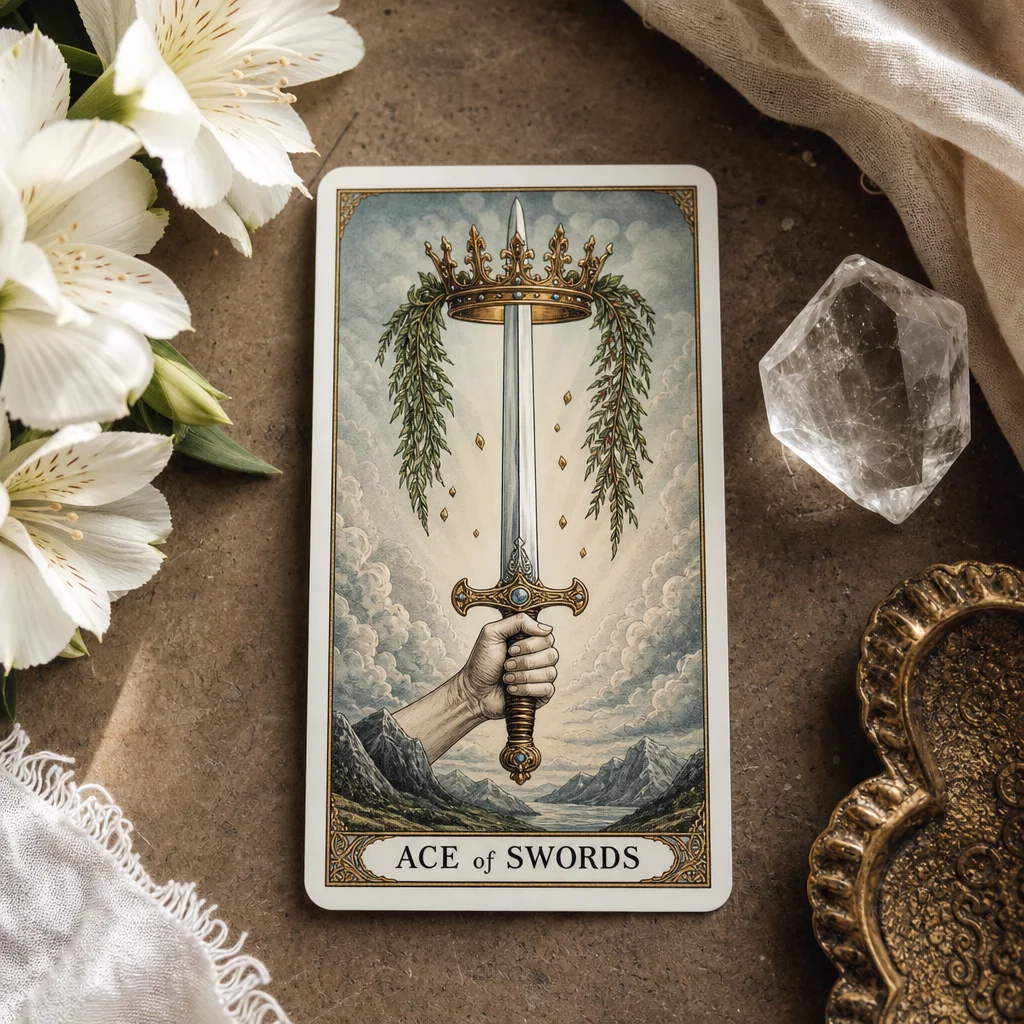
This card can also represent a literal move — relocating to a new city, changing schools, or transferring to a different department at work. The Ace of Swords might bring the initial flash of insight that something needs to change, but the Six of Swords is the follow-through.
who is the figure in the boat?
In the traditional Rider-Waite-Smith illustration, there are three figures in the boat: a ferryman, a woman, and a small child. The woman sits hunched, facing away from the shore she's leaving. The child clings to her. This detail matters. The Six of Swords isn't always a solo transition. Sometimes you're moving with dependents, with loved ones, with the parts of your life that can't be left behind. The transition affects them too.
The ferryman is faceless and calm. He represents the forces that help us move — circumstances, other people, even time itself. You don't have to row the boat alone. Recognizing that help is available (and accepting it) is part of the Six of Swords' lesson.
reversed meaning
When the Six of Swords appears reversed, the transition has stalled. You know you need to leave — a situation, a pattern, a way of thinking — but something is keeping you anchored. Sometimes it's fear. Sometimes it's guilt. Sometimes it's the peculiar comfort of a misery you've grown familiar with.
Reversed interpretations include:
- Resistance to change — You're avoiding the boat, even though the shore you're standing on is eroding.
- Unfinished transitions — You started the process of leaving but got stuck somewhere in the middle. Neither here nor there.
- Returning to difficulty — You left a situation only to circle back, perhaps because the unknown felt worse than the known.
- Personal stagnation — Your circumstances might be changing, but your mindset isn't keeping pace.
I once pulled this card reversed for a friend who had quit her toxic job, celebrated for a weekend, and then accepted a nearly identical position at a different company because the familiar discomfort felt safer than building something new. The reversed Six of Swords asked her: are you actually moving, or are you just rearranging the same furniture?
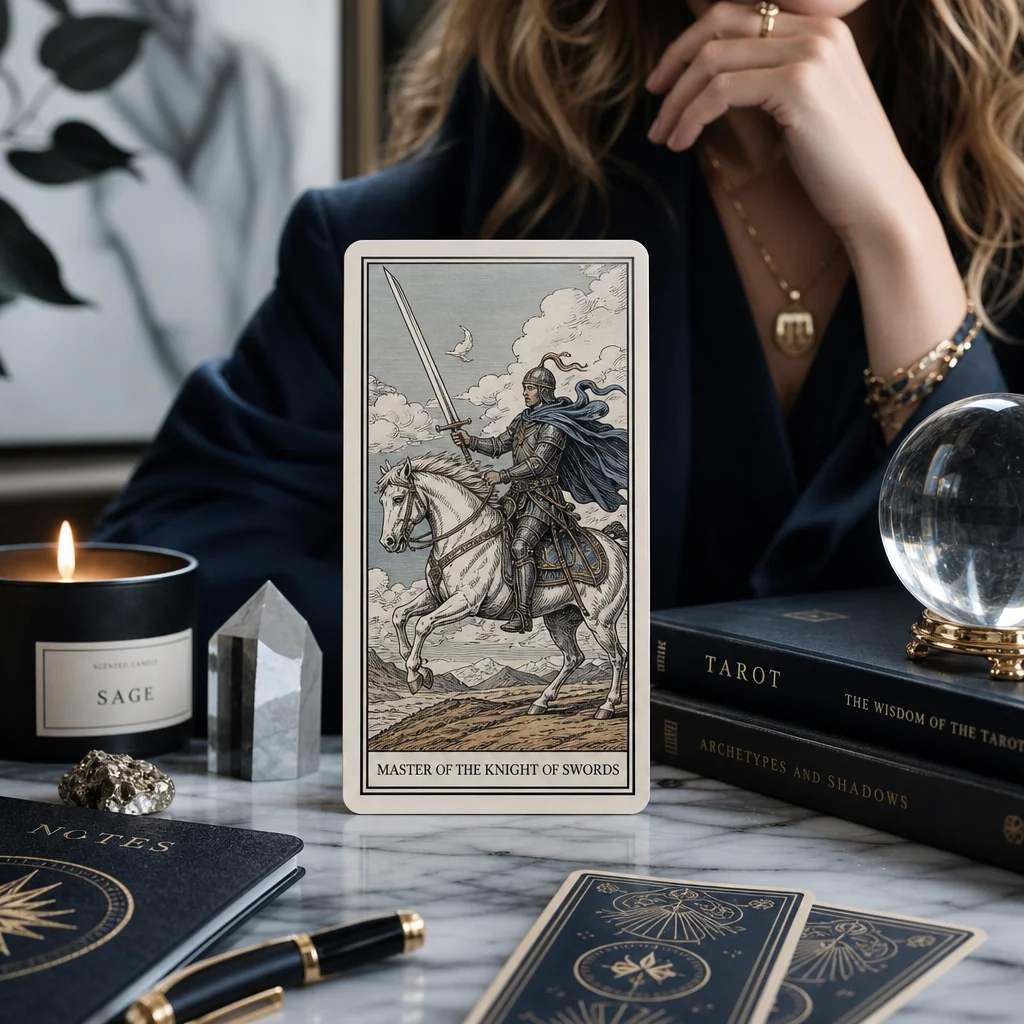
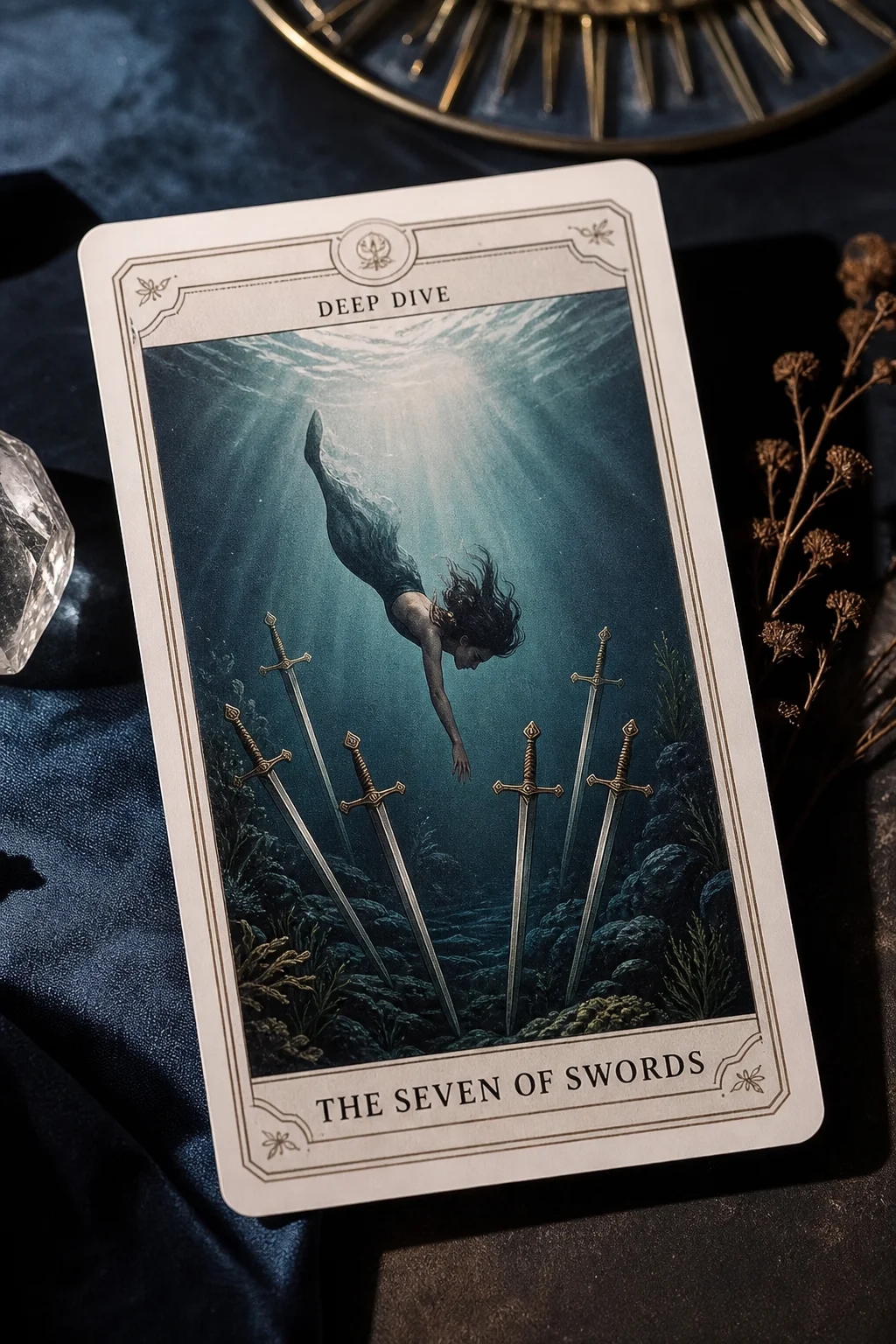
If you're seeing this reversed, it might be worth examining whether the obstacle is external (genuine barriers to leaving) or internal (the stories you tell yourself about why you can't). The Seven of Swords, which follows in the suit, often deals with the self-deception that keeps us stuck.
love and relationships
if you're single
The Six of Swords suggests you're still carrying emotional weight from a past relationship into new connections. This isn't necessarily a bad thing — it means you've learned from experience. But it does mean you might approach new dates with a certain guardedness. The card asks: have you actually processed the ending, or are you just putting distance between yourself and the pain?
Meeting someone new under this card's influence can feel tentative. You're interested but cautious. That's reasonable. Just make sure you're not comparing every new person to the one you left behind, and that you're giving new connections room to be what they are rather than what you expect them to become.
if you're in a relationship
In an established relationship, the Six of Swords can indicate that you and your partner are moving through a rough patch toward better understanding. You've weathered something difficult together — maybe a conflict, a period of distance, or an external stressor — and you're now in the "recovery" phase.
Less positively, this card can also signal that one or both of you have emotionally checked out. The relationship isn't ending in flames; it's quietly drifting. If that resonates, have an honest conversation before the distance grows. The communication style of the Queen of Swords might be exactly what's needed here.
for reconciliation
If you're asking whether an ex will return, the Six of Swords leans toward moving on rather than circling back. The boat is pointed away from the old shore. It doesn't mean reconciliation is impossible, but it suggests that revisiting the past would require genuine transformation from both people.
career and finances
In career readings, the Six of Swords is one of the more straightforward cards: something about your professional life is changing, and the change is generally positive, even if it doesn't feel thrilling. Think "transfer" rather than "promotion."
Possibilities include:
- Changing jobs — Moving from a stressful workplace to one with better boundaries and more stability.
- Relocating for work — A literal move that comes with professional benefits.
- Shifting perspective — You might not change jobs, but your approach to your work evolves. You stop caring about office politics and start focusing on what actually matters to you.
- Seeking guidance — Working with a mentor, coach, or advisor who helps you move through a career transition.
Financially, this card suggests a move from instability toward something more manageable. You might not be getting rich, but you're establishing better habits. Budgeting, paying down debt, or restructuring your finances so that money stress diminishes. Even small financial changes — setting up automatic savings, canceling unused subscriptions, creating a realistic budget — represent the Six of Swords energy of moving from financial turbulence toward calmer waters.
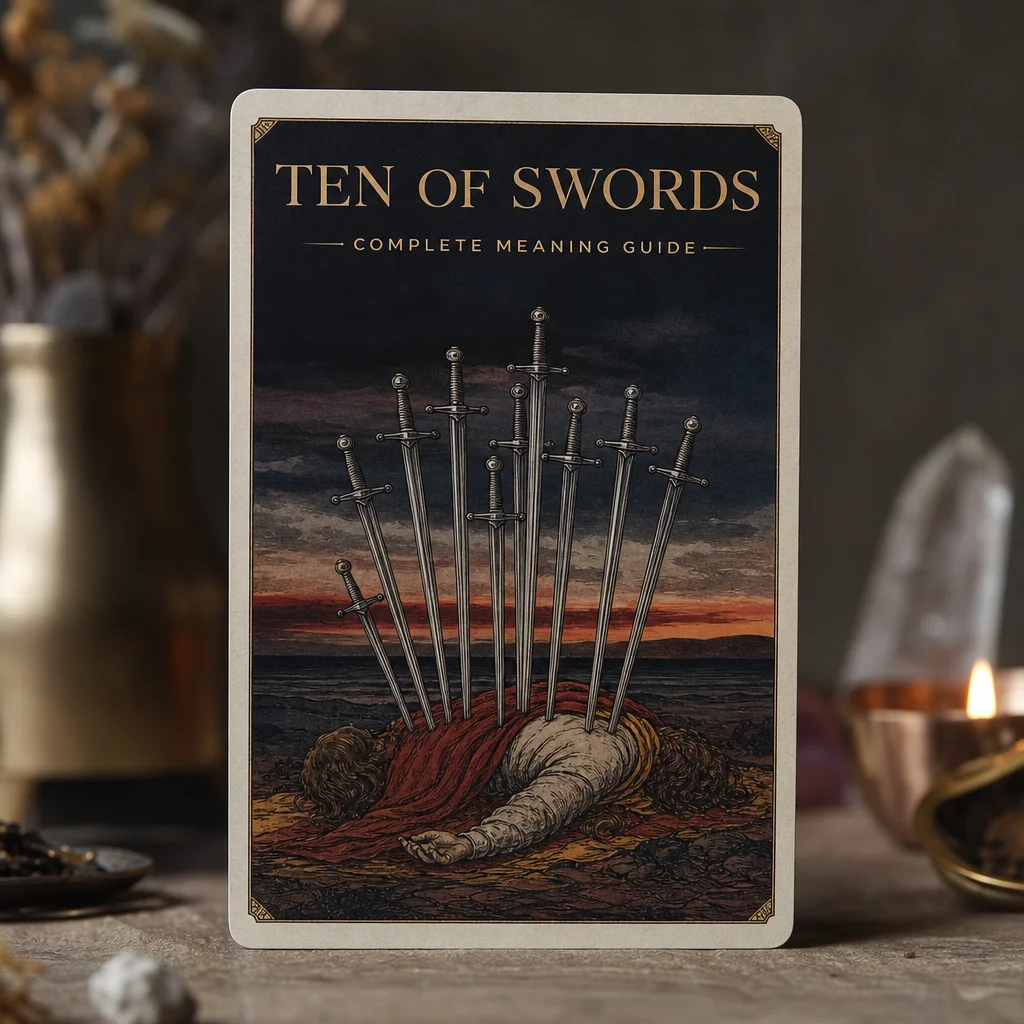
If you're considering a career change and you see this card alongside the Three of Swords, it might indicate that the decision to leave was born from genuine hurt or betrayal, and the Six of Swords represents your healing path forward.
yes or no
Upright: Yes, with conditions. The answer leans affirmative, but it's a qualified yes. The outcome you're hoping for is achievable, though it requires you to actually take the step you've been contemplating. The Six of Swords doesn't reward hesitation.
Reversed: No, not yet. Something is blocking the forward movement. Before you can get to "yes," you need to address what's keeping you stuck. This might be an internal block, an unresolved situation, or simply bad timing.
crystal pairings for the six of swords
When I work with the Six of Swords in personal practice, I reach for crystals that support transition, clarity, and emotional processing. These aren't magical fixes — they're tactile reminders of intention. Here's what I recommend:
labradorite
Labradorite is traditionally associated with transformation and intuition. When you're in a Six of Swords moment — caught between what was and what will be — labradorite can help you trust the unclear path ahead. How I use it: I keep a small labradorite palm stone in my pocket during travel, especially when I'm heading somewhere new. Holding it during moments of uncertainty reminds me that not knowing the destination doesn't mean I'm lost.
amethyst
Amethyst has a long cultural history as a stone of calm and mental clarity. Since the Six of Swords is a card of the mind (Swords suit), amethyst supports the mental sorting process that transitions demand. How I use it: During my own move, I placed amethyst on my nightstand in the new apartment. The first few nights in an unfamiliar space are always restless for me, and having it there was a small, grounding comfort.
moonstone
Moonstone is linked to new beginnings and emotional balance. It's a fitting companion for the Six of Swords because this card is fundamentally about starting fresh. How I use it: I wear a moonstone ring when I'm journaling about transitions — writing about what I'm leaving and what I'm hoping to find. It keeps me honest about my emotions rather than rushing to feel "fine."
tarot spread positions: what the six of swords means in different placements
The Six of Swords shifts meaning depending on where it falls in a spread. Here's how I interpret it across common positions:
past position
You've already survived something difficult. The transition happened, and even if you haven't fully processed it, the hardest part is behind you. This placement often brings a sense of quiet validation: you made it through.
present position
You're in the middle of a transition right now. The boat is on the water. Don't rush to the other shore — this in-between space has its own lessons. Pay attention to what you're learning about yourself as you move. The present position is also a reminder that transitions don't have to be rushed. The crossing takes as long as it takes, and trying to speed it up often creates more turbulence than necessary.
future position
Change is coming, and it's likely to be gentler than you expect. The future heralded by this card isn't dramatic or turbulent. It's a gradual improvement, a softening of circumstances that have been hard for too long.
advice position
Keep moving. Don't look back with longing at what you're leaving, and don't freeze up imagining worst-case scenarios at your destination. The advice of the Six of Swords is simple: trust the crossing.
outcome position
The situation resolves with a transition. You won't stay where you are — that much is certain. The outcome involves leaving, changing, or shifting, and the shift moves you toward greater peace. This outcome isn't about dramatic improvement or sudden happiness. It's quieter than that — a gradual settling, like water becoming still after being stirred. Trust that the direction is right, even if the arrival feels anticlimactic.
For a broader understanding of how this card fits within the suit of Swords, the Minor Arcana complete guide provides context for how each card builds on the one before it.
personal reflections
Here's what I've learned from living with this card: the Six of Swords doesn't promise that the other side will be perfect. The boat in the traditional illustration reaches a distant shore, but we never see what's waiting there. What the card promises is movement. And sometimes, when you've been stuck in a situation that was slowly grinding you down, movement is everything.
I think about that apartment, those cardboard boxes, that one-way ticket. The city I moved to didn't solve my problems. But it gave me enough distance to see them clearly for the first time in years. The Six of Swords is like that — it doesn't fix anything directly. It gives you the perspective to fix things yourself. The distance between where you were and where you're going isn't just physical. It's psychological. Emotional. Spiritual. Every mile of water between the old shore and the new one is a little more breathing room.
If you pulled this card, something in you already knows it's time to go. The question isn't whether to board the boat. The question is what you're carrying with you — and whether you've chosen it deliberately or just packed it out of habit.
Travel light. The water ahead is calm.
combinations: the six of swords with other cards
In practice, the Six of Swords gains nuance when it appears alongside other cards. Here are some combinations I've seen frequently in readings and how I interpret them:
- Six of Swords + The Fool: A leap of faith transition. You're not just leaving — you're stepping into genuine unknown territory. The combination suggests that the crossing is as much spiritual as it is practical. Trust the process.
- Six of Swords + Four of Cups: You're transitioning away from a situation but feeling emotionally numb or apathetic about it. The move is happening, but your heart hasn't caught up with your circumstances. Give yourself time to feel.
- Six of Swords + The Star: A deeply hopeful transition. Whatever you're leaving behind, the destination holds genuine promise of healing and renewal. This is one of the most encouraging combinations you can receive during a period of change.
- Six of Swords + Five of Pentacles: Leaving a period of financial or material hardship. The transition is from lack toward stability — not luxury, but enough. The combination validates how difficult things have been while confirming that improvement is underway.
- Six of Swords + Two of Wands: You're planning a significant move or life change. The Six of Swords confirms that the transition will happen; the Two of Wands suggests you're still deciding exactly what form it will take. The combination encourages bold planning.
These combinations illustrate how the Six of Swords functions not just as a standalone message about transition, but as part of a broader conversation between cards. Context always shapes meaning, and the cards surrounding the Six of Swords will clarify whether the transition is primarily emotional, practical, or spiritual.
Related Guides
- Complete Crystal Guide: Identification and Meanings
- Crystal Shapes Explained: Tumbled, Raw, Points, Spheres
- Amethyst Crystal Guide: Meaning and Properties
- The Complete Guide to Crystal and Jewelry Care
- Crystal Energy Guide: Healing Properties
- 5 Practical Tests to Tell Real Crystals From Fakes
- Moonstone Complete Guide
Frequently Asked Questions
Is the Six of Swords a yes or no card?
Generally, the Six of Swords is considered a "yes" for yes or no questions, particularly if you are moving away from a difficult situation. It indicates that while the journey ahead might require some transition, you are heading toward calmer waters and a more positive outcome, making it a favorable card for moving forward.
What does the Six of Swords mean for love and relationships?
In love and relationships, the Six of Swords signifies moving away from turbulence toward peace. If you are single, it suggests leaving past heartbreak behind so you can heal and welcome new, healthy connections. For those coupled, it indicates overcoming recent struggles and transitioning into a more harmonious, supportive phase together.
What crystals pair well with the Six of Swords?
To channel the transitional and healing energy of the Six of Swords, we recommend wearing or carrying soothing natural crystals. Amethyst provides emotional balance during stressful changes, while Aquamarine supports safe travels and smooth communication. Wearing handcrafted crystal jewelry featuring these stones can help anchor you during life's transitions.
What does the Six of Swords mean in a career reading?
In a career context, the Six of Swords points to a positive shift or transition. You might be leaving a toxic work environment, moving to a new department, or finding a role that better suits your skills. While it means leaving your comfort zone, the ultimate goal of this transition is to find a more peaceful, fulfilling, and stable professional path.
Comments