Crystal and Jewelry Care: Cleaning Tips
May 15, 2026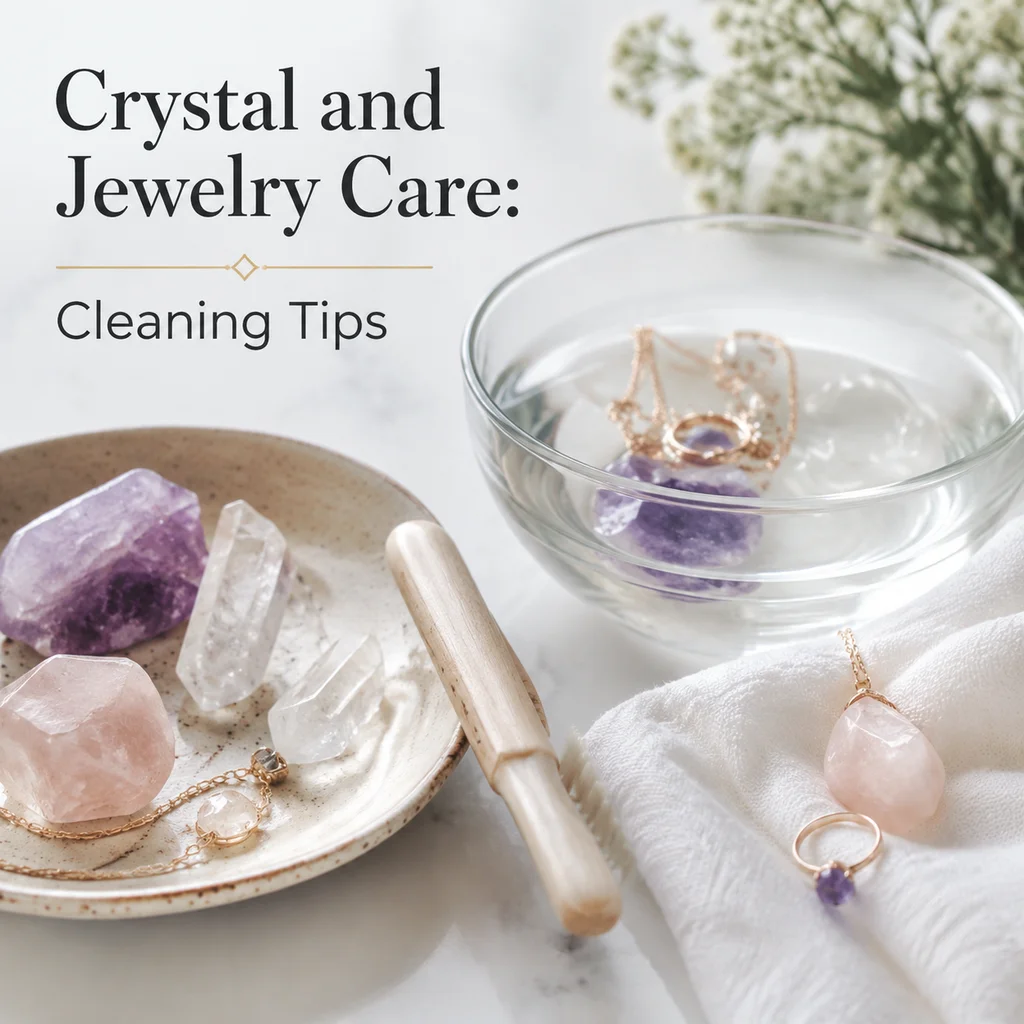
Why Crystal and Jewelry Care Matters More Than You Think
That silver ring you wear every day. The crystal bracelet you got as a gift. The pearl necklace handed down from your grandmother. These pieces carry meaning — and they also carry a shelf life, whether you realize it or not. Most jewelry damage doesn't happen in a single dramatic moment. It builds up slowly: a tiny scratch here, a bit of tarnish there, a stone that loses its color because it sat in direct sunlight for months.
The good news? Nearly all of this damage is preventable. You just need to understand a few basics about how different materials behave and what they need from you. This guide pulls together everything — cleaning methods, storage habits, material-specific care, repair advice, and the mistakes that quietly ruin pieces people thought they were taking care of.
We spent months researching and testing the advice in here. Some of it contradicts what you'll read on jewelry blogs and Pinterest. That's because a lot of popular "care tips" are based on tradition rather than chemistry, and they can actually cause long-term harm. When we say something works or doesn't, we mean we looked into the material science behind it.
If you want to start with the single most important habit, this rule saves more jewelry than any other. Everything else builds from there.
Understanding Your Materials: Not All Jewelry Is Created Equal
Before you clean or store anything, you need to know what you're working with. A cleaning method that's perfect for diamonds can destroy pearls. Storage that keeps silver safe might fog up certain crystals. The material dictates everything.
Most people own a mix of materials — silver chains, gold rings, crystal pendants, maybe some pearls or copper pieces. Each one has its own vulnerabilities, and treating them all the same way is the fastest path to damage. Let's walk through the major categories.
Silver and sterling silver
Sterling silver tarnishes when exposed to sulfur and moisture in the air. It's not a flaw — it's chemistry. Sterling silver turns black because of a natural reaction between silver and sulfur compounds, and understanding why it happens is half the battle. If you want the deeper story, here's a full explanation of silver tarnish and how to reverse it.
Sterling is an alloy — typically 92.5% silver and 7.5% copper. The copper content is what makes it harder than pure silver, but it also contributes to tarnishing. Fine silver (99.9%) tarnishes much more slowly but is too soft for most jewelry applications.
Gold
Gold is softer than most people realize, especially higher-karat gold. 24K gold is pure and extremely malleable — it scratches and dents easily. 14K and 18K are much more practical for daily wear because the alloy metals add hardness. Gold jewelry needs specific cleaning approaches that won't wear away the metal over time.
Gold-plated jewelry is a different story entirely. The gold layer is microscopic — often just a few microns thick. Once it wears through, the base metal underneath is exposed, and there's no way to fix it at home. This is why wearing gold-plated jewelry in the shower is such a bad idea.
Crystals and gemstones
Crystal and gemstones vary wildly. Some are porous (turquoise, pearls), some are heat-sensitive (amethyst, citrine), some dissolve in water (selenite, halite). Being able to identify what you actually have is the first step to caring for it properly.
The Mohs hardness scale is your best friend here. Stones rated 1-3 (like talc, selenite, calcite) scratch incredibly easily. Stones rated 6-7 (like quartz, feldspar) are reasonably durable for daily wear. Stones rated 8-10 (topaz, corundum, diamond) are tough enough to handle most situations. But hardness isn't the whole picture — some hard stones are still brittle, and some soft stones are surprisingly tough.
Pearls, copper, enamel, and resin
Pearls are organic gemstones — they're soft, porous, and react to acids, perfumes, and even the oils on your skin. Our complete pearl care guide covers everything from daily wear to long-term storage. Pearls are arguably the most maintenance-intensive jewelry material, but their luster is worth the effort.
Copper develops a patina over time, which some people love and others want to remove. Copper jewelry care is straightforward once you understand the basics. Copper also has antimicrobial properties, which is why some people wear copper bracelets for perceived health benefits.
Enamel — that colorful coating on many modern pieces — is more fragile than it looks. Enamel jewelry care requires a lighter touch than most people expect. Once enamel chips, it can't be repaired at home.
Resin jewelry is affordable and creative, but it comes with its own quirks. Resin has a low barrier to entry, which means quality varies a lot, and so does longevity. UV exposure yellows resin over time, and heat can soften it.
If you're not sure what material a piece is made from, this practical guide to identifying real vs. fake crystals can help you figure it out. Fake crystals are often made of glass, plastic, or dyed quartz — and each of those requires different care than the genuine stone.
Cleaning Methods That Work (and the Ones That Don't)
Jewelry cleaning is where most people cause the most damage — usually with good intentions. The internet is full of "miracle" cleaning hacks that either don't work or actively harm your pieces. Let's sort out what's actually effective.
The cleaning mistakes that ruin pieces silently
Before we get into what works, it's worth understanding what doesn't. Some popular crystal cleaning hacks are actually ruining your stones. Using salt, vinegar, baking soda, or toothpaste on the wrong material can cause micro-scratches, chemical reactions, or structural damage that you won't notice until it's too late.
Cleaning crystals with salt is one of the most common and most damaging mistakes — especially for softer or porous stones. Salt crystals are abrasive on a microscopic level, and when dissolved in water, the saline solution can react with certain minerals. It's not worth the risk when safer alternatives exist.
Toothpaste is another frequent offender. It contains abrasives designed for tooth enamel (which is harder than most gemstones) and often includes whitening agents that can discolor metals. For a broader look at what people get wrong, here's how to clean crystals without ruining them.
How to clean silver properly
Silver is probably the most commonly cleaned jewelry material, and also the one people get wrong most often. The key is matching your method to the level of tarnish and the type of piece.
For light tarnish, a polishing cloth is often enough. Here are five silver polishing methods that actually work. Polishing cloths are impregnated with micro-abrasive and anti-tarnish compounds, so they do more than just wipe — they chemically remove the tarnish layer.
For heavier tarnish, these six at-home methods cover everything from mild to aggressive. The aluminum foil and baking soda method is popular because it uses a chemical reaction to transfer the sulfur from the silver to the aluminum, effectively reversing the tarnish process without scrubbing.
If you want something chemical-free, natural cleaning methods for silver work surprisingly well for everyday pieces. Dish soap and warm water with a soft brush handles most daily grime on silver jewelry without any risk of damage.
If you're dealing with severely tarnished pieces that have been sitting in a drawer for years, you can clean tarnished silver with things already in your kitchen. For the full deep-dive, our complete silver cleaning guide covers every scenario, including what to do when sterling silver pieces have been neglected.
And if you're wondering whether commercial products or homemade solutions are better, we compared silver polish against DIY methods — the answer might surprise you. Commercial products are faster, but DIY methods are gentler and work almost as well with patience.
How to clean gold and other metals
Gold needs gentler treatment than most people think. Cleaning gold at home without causing damage is absolutely possible, but it requires the right approach. Warm water, a drop of dish soap, and a soft brush is the gold standard (pun intended) for most gold jewelry. Avoid abrasive cloths and harsh chemicals.
Here's a straightforward guide for gold cleaning that covers daily care and deeper cleaning. The main thing to remember is that gold is a soft metal — even 14K gold scratches under pressure that wouldn't faze steel or titanium.
For copper pieces, the approach is different — copper responds well to mild acids like lemon juice, but you need to be careful about how long you leave them on. Leaving lemon juice on copper too long can create uneven bright spots that look worse than the patina you were trying to remove.
How to clean crystals and gemstone jewelry
Crystal cleaning is where things get complicated, because different stones need completely different approaches. The do's and don'ts for cleaning crystal jewelry vary by stone type — what's safe for quartz might destroy amber.
Here's a quick framework: if a stone is harder than 7 on the Mohs scale, it can generally handle warm soapy water and a soft brush. If it's between 4 and 7, use only a damp cloth. Below 4, dry wiping only. And anything porous — turquoise, pearls, amber, opal — should never be soaked or exposed to chemicals.
Our crystal jewelry cleaning guide walks through the general principles, while this broader crystal collection care guide covers everything from raw specimens to polished pieces.
If you've inherited or found crystals that have been sitting in storage for years, cleaning old crystals requires extra patience and a lighter touch. Years of dust accumulation can become almost cemented onto the surface, and aggressive scrubbing will do more harm than the dirt ever did.
Specialty materials
Turquoise is one of the trickiest stones to clean because it's porous and sensitive to chemicals. Here's how to clean turquoise safely, and this complete turquoise care guide goes deeper into long-term maintenance. Turquoise can change color over time from skin oils alone — this isn't damage, it's a natural process that many collectors consider part of the stone's character.
Pearls should never be soaked or exposed to harsh cleaners. Pearl cleaning and storage are covered together because they're so closely linked — how you clean affects how you should store them, and vice versa. Wipe pearls with a soft, damp cloth after each wearing. That's genuinely all they need for regular maintenance.
Natural stone bracelets need their own approach too. Cleaning and caring for natural stone bracelets involves considerations about the stringing material as well as the stones themselves. Elastic cord degrades over time, especially when exposed to oils, water, and stretching. If your bracelet is on elastic, it will eventually need restringing — plan for it.
Watch bands are often overlooked in jewelry care. Here's how to clean every type of watch band, from leather to metal to silicone. Leather bands absorb sweat and oils and will deteriorate if not cleaned regularly. Metal bands collect grime in the links. Even silicone bands need occasional deep cleaning to prevent bacterial buildup.
Handmade jewelry often uses mixed materials and unusual construction that need extra care. The complete handmade jewelry care guide addresses these unique challenges. Wire-wrapped pieces can loosen over time, glued components can fail, and patinas applied by the artist may be sensitive to standard cleaning methods.
For a general cleaning approach that covers all types, here are seven cleaning methods that actually work (and three that will ruin your pieces). Having a reliable go-to method for each situation removes the guesswork from daily care.
Machine vs. hand cleaning
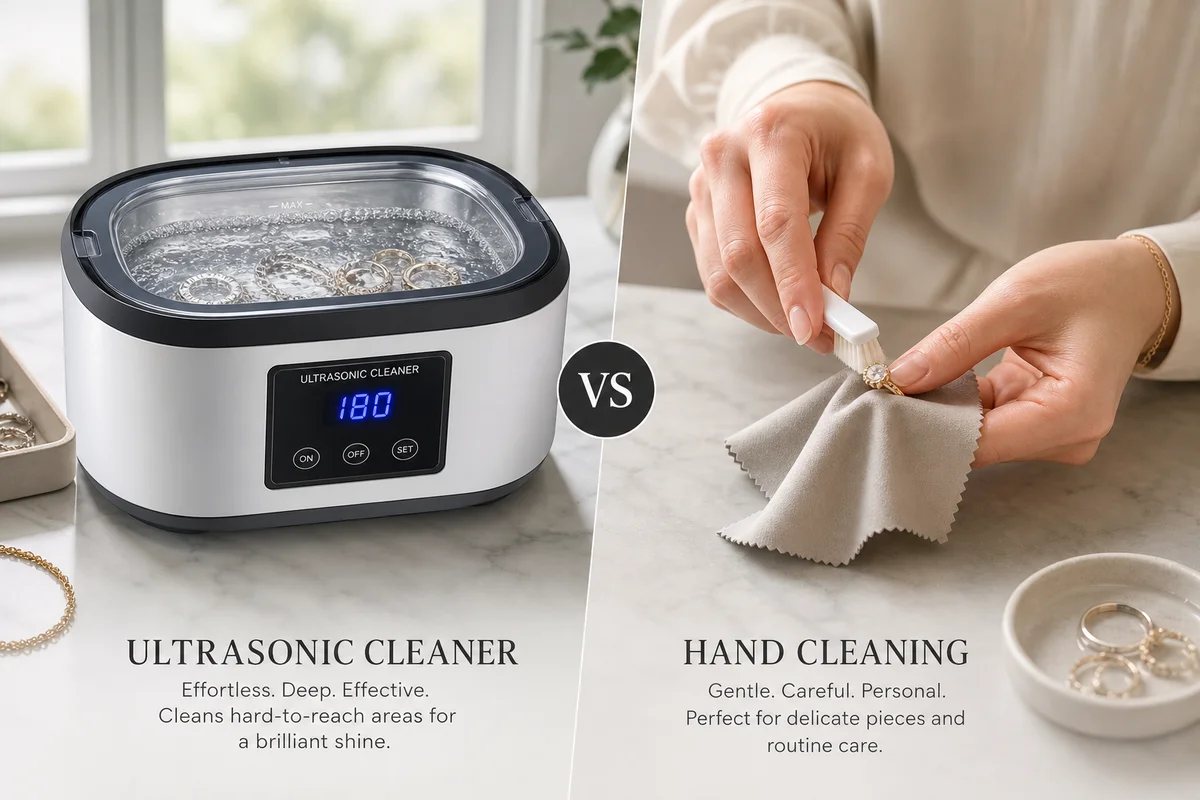
Ultrasonic cleaners are popular, but they're not a universal solution. Ultrasonic cleaners vs. hand cleaning isn't a simple comparison — some pieces benefit from ultrasonic cleaning, while others can be destroyed by it. The high-frequency vibrations that shake loose dirt can also shake loose stones from their settings.
Ultrasonic cleaners can ruin certain types of jewelry, and the damage is often irreversible. Stones with internal fractures (emeralds are notorious for this) can crack under ultrasonic vibration. Pearls, opals, and any stone treated with heat or dyes should never go in an ultrasonic cleaner.
In fact, your ultrasonic cleaner might be doing more harm than good depending on what you're putting in it. For a broader comparison, we looked at whether machines or hand cleaning actually works better.
And if you're deciding between a polishing cloth, ultrasonic cleaner, or steam cleaner, we compared all three to see which is worth buying. The short answer: a good polishing cloth handles 80% of cleaning needs, and you should only invest in machines if you have a large collection or deal with intricate pieces regularly.
Crystal Cleansing and Charging: What's Real and What's Not
In the crystal community, "cleansing" and "charging" refer to energetic practices rather than physical cleaning. Whether you believe in crystal energy or not, these practices often overlap with good physical care habits — and some common cleansing methods can physically damage your stones if done incorrectly.
Cleansing crystals without damaging them requires understanding which methods are physically safe. Water cleansing can dissolve certain stones (selenite, halite, calcite). Salt cleansing can scratch soft minerals and leave residue in crevices. Sunlight cleansing can fade color-treated or naturally sensitive stones. Sound cleansing (using singing bowls or bells) is one of the few methods that's universally safe from a physical standpoint.
Seven crystal cleansing methods that actually work covers approaches that are both energetically meaningful and physically safe. Smoke cleansing with sage or palo santo, moonlight exposure, and burial in soil are all gentle on the stones while satisfying the ritual aspect.
For the more analytical types, we tested five popular cleansing methods and measured the results — looking at both the energetic claims and the physical effects on the stones. The results were interesting: some methods that are energetically popular (like salt water soaks) showed measurable physical effects on softer stones.
When it comes to charging, we compared seven crystal charging methods to see which ones are worth the effort. Moonlight, selenite charging plates, and intentional meditation all scored well for ease and safety. And our deep dive into what actually happens when you charge crystals separates the science from the speculation.
If you're working with crystal jewelry specifically, cleansing crystal jewelry after negative experiences takes extra care because the metal components add complexity. You can't put a silver-crystal pendant in salt water without risking tarnish, for example.
Storage: The Single Most Underrated Factor in Jewelry Longevity
Most jewelry damage happens while it's sitting in a drawer, not while it's being worn. Improper storage causes tarnish, tangling, scratching, and chemical reactions between different materials. Getting storage right is arguably more important than how you clean.
General storage principles
Essential jewelry storage tips start with one simple rule: keep pieces separated. Metal-on-metal contact causes scratches. Silver stored next to rubber or wool tarnishes faster because those materials release sulfur compounds. Pearls stored in airtight containers dry out and crack because they need some moisture from the air to maintain their luster.
How you store jewelry directly affects tarnishing and damage. Anti-tarnish strips, proper humidity control, and the right containers make a huge difference. The ideal storage environment is cool, dry, and dark — which rules out most bathrooms, where humidity fluctuates wildly.
Expert tips for preventing tarnish through storage go into detail about which materials and environments are best. Zip-lock bags with anti-tarnish strips are surprisingly effective for silver pieces you don't wear often. Just squeeze the air out before sealing.
Crystal-specific storage
Crystals have their own storage needs. Common crystal storage mistakes include keeping them in direct sunlight, storing soft stones together with hard ones, and using the wrong type of container. Raw crystals with sharp edges can scratch polished stones, and some minerals react chemically when stored in direct contact with each other.
Proper crystal storage means considering hardness, light sensitivity, and chemical compatibility. A good rule of thumb: store each stone individually or with stones of similar hardness. Wrap softer stones in tissue or cloth. Keep light-sensitive stones in opaque containers.
Sunlight damage is real and it's permanent. Crystals can and do fade in sunlight, and some are more vulnerable than others. Amethyst, rose quartz, citrine, aquamarine, and kunzite are among the worst affected. Darker specimens fade more noticeably, but all colored crystals are at risk with prolonged exposure. The honest answer about sun fading is that it depends on the stone, the intensity of light, and how long the exposure lasts — but if you're unsure, keeping crystals out of direct sun is always the safer bet.
Pearl storage
Pearls are the most storage-sensitive jewelry material. They need moisture (but not wetness), air circulation, and soft surroundings. Storing pearls properly prevents yellowing and cracking. Never store pearls in plastic bags — the lack of air circulation causes them to dry out, which leads to cracking and yellowing.
Here's exactly how to store pearl jewelry so it stays lustrous for decades. Wrap them in a soft cloth, lay them flat (hanging stretches the silk thread), and store them somewhere with stable temperature and humidity. Re-string pearl necklaces every few years before the silk weakens and breaks.
If your pearls are already turning yellow, the condition is sometimes reversible if caught early, but prevention is far more effective than treatment.
Bracelet and general storage
Bracelet storage is its own challenge — they tangle easily and need structure to maintain their shape. Cuff bracelets should be stored open-side down to prevent distortion. Chain bracelets should be fastened closed before storage to prevent tangling.
Jewelry boxes vs. organizers is a debate worth having, because the right choice depends on your collection size and the types of pieces you own. Small collections do well with compartmentalized boxes. Larger collections benefit from organizers with dedicated hooks, rolls, and trays. For a deeper comparison, we compared organizers, boxes, and trays to see which storage method actually works best.
Collection organization
Once your collection grows beyond a few pieces, organization becomes essential. Organizing your crystal collection isn't just about aesthetics — it prevents damage from pieces knocking against each other and makes it easier to spot problems early. Grouping by hardness, by type, or by care requirements all work — the important thing is having a system.
Displaying crystals in a shadow box can be a beautiful solution that also protects your pieces. The key is choosing a location away from direct sunlight and ensuring the box provides adequate cushioning. Shadow boxes with glass fronts keep dust off while still letting you see your collection.
What Happens When You Wear Jewelry Wrong
Wearing jewelry seems simple, but there are situations where wearing causes damage that no amount of cleaning or storage can fix. The patterns of wear damage are surprisingly consistent — once you know what to look for, you'll start noticing it everywhere.
Water exposure
Can you shower with your bracelet on? It depends on the material. Solid gold, platinum, and most hard gemstones handle water fine. Silver will tarnish faster with repeated exposure. Plated jewelry will lose its coating. Anything with glue (including many crystal point pendants) will eventually come apart.
Gold-plated jewelry in the shower is generally a bad idea — the plating wears off faster with water exposure, soap, and shampoo. Once the plating goes, you're left with whatever base metal is underneath, and it won't match the original color.
Crystals in the shower or pool need a mineral-by-mineral breakdown to know what's safe. As a general rule, if a crystal is porous, water-soluble, or contains iron (which rusts), keep it dry. And swimming with crystals in the pool or ocean is almost always a bad idea — chlorine and salt water are harsh on most materials. Even if a piece survives one exposure, the cumulative damage adds up.
Sleeping with jewelry
Sleeping with bracelets on puts stress on clasps, links, and the metal itself. Over time, the pressure and movement during sleep can weaken structural components. You might also wake up with indentations in your skin or, worse, a bracelet that's gotten snagged and bent overnight. Chains are particularly vulnerable — the pulling force while you toss and turn can stretch links beyond repair.
Daily wear habits that add up
Nine everyday mistakes that ruin jewelry faster than you'd think — things like putting on lotion before your rings, spraying perfume near necklaces, or storing pieces in the bathroom where humidity fluctuates wildly. The chemicals in cosmetics, perfumes, and cleaning products react with metals and can discolor or degrade them over months and years.
Silver jewelry is especially vulnerable to everyday chemicals and habits. Rubber, wool, eggs, and latex all contain sulfur compounds that accelerate tarnishing. If you cook with your rings on, the sulfur in onions and eggs is working on your silver while you chop.
For a personal story about what happens when care goes wrong, this account of ruining a favorite silver ring is a good cautionary tale. And the ring that taught everything about silver care shows how one piece can change your entire approach to jewelry maintenance.
Tarnish Prevention: A Proactive Approach
Tarnish is the number one complaint people have about their jewelry, especially silver. Prevention is much easier than removal, and it doesn't require special products — just awareness and consistent habits.
What actually works for preventing tarnish (and what doesn't) comes down to a few key habits: wearing your silver regularly (the oils on your skin actually help create a protective barrier), storing it properly when you're not wearing it, and keeping it away from sulfur-containing materials.
The most effective anti-tarnish strategy is wearing the piece. Silver that's worn daily actually tarnishes less than silver that sits in a box, because the gentle friction from clothing and skin continuously removes the early tarnish layer before it builds up. This is counterintuitive for many people who "save" their silver for special occasions — those are exactly the pieces that end up black.
Understanding why sterling silver turns black helps you make smarter decisions about when and how to wear it. The chemistry is straightforward: silver reacts with sulfur compounds in the air, and the resulting silver sulfide is what causes the dark discoloration. Once you understand the mechanism, removing and preventing tarnish becomes much more logical — you're not just scrubbing at dark spots, you're reversing a chemical reaction.
For a deeply personal account of dealing with tarnish, this story about a silver necklace turning black covers everything the author learned through the experience — including which "expert tips" failed and what actually worked.
Repair and Restoration: When to DIY and When to Get Help
Not all damage is permanent, but not all damage should be tackled at home either. The decision to repair something yourself versus taking it to a professional depends on the piece's value (sentimental and monetary), the type of damage, and your skill level.
Scratches and surface damage
Fixing scratched crystals and gemstones is possible in some cases, but you need to be careful not to make things worse. The general approach is to use progressively finer abrasives, starting with something coarse enough to remove the scratch and ending with something fine enough to restore the polish. This is time-consuming but effective for minor surface damage.
Polishing scratched crystal at home works for minor surface scratches on harder stones (quartz and above), but deeper damage usually requires professional equipment. Professional lapidaries have diamond-impregnated wheels and polishing compounds that can achieve results impossible to replicate at home.
For raw stones and rocks, polishing by hand without a tumbler is absolutely doable — it just takes patience and the right technique. Wet sanding with progressive grits is the most reliable method, and you can get impressive results with materials from any hardware store.
Chips and breaks
Repairing chipped or broken crystals requires honest assessment first. Some breaks can be stabilized with adhesive (though the repair will be visible), some can be reshaped into a new form, and some mean the piece is permanently altered. The key is not making it worse in an attempt to fix it.
With broken crystals, you have three options: repair, reshape, or accept. Repair means reattaching pieces with epoxy designed for stone (not superglue). Reshape means grinding the break into an intentional new facet or shape. Accept means keeping the piece as-is and appreciating that imperfection is part of a crystal's story.
Knowing when to call a professional
Eight signs your jewelry needs professional repair rather than a DIY fix include: loose prongs, bent settings, cracked metal, missing stones, broken clasps that won't stay closed, stretched chain links, discolored solder joints, and any structural damage to pieces you care about. The general rule: if a piece has sentimental or monetary value, and you're not confident in the repair, take it to someone who does this for a living. A professional repair costs money but preserves value; a botched DIY repair can destroy value permanently.
Drilling and modifications
Drilling holes in crystals is a common request for people making their own jewelry. It can be done safely, but the technique matters enormously — one wrong move and the crystal cracks. The keys are: use a diamond-tipped bit, keep the stone wet during drilling, go very slowly, and start with a pilot hole. Even experienced lapidaries break stones occasionally, so practice on pieces you don't care about first.
Ring resizing and fitting
Even something as simple as ring sizing can go wrong. The ring that didn't fit is a story about the cascading problems that come from getting sizing wrong. A ring that's too large can slip off and be lost. A ring that's too small can restrict circulation and eventually become impossible to remove. Getting it right the first time saves stress and money.
Traveling With Jewelry and Crystals
Travel is where jewelry meets maximum risk. Movement, pressure, temperature changes, and unfamiliar environments all conspire to damage your pieces. A little planning goes a long way toward arriving with your collection intact.
Traveling with jewelry without tangling or losing anything requires specific packing techniques. Necklaces should be threaded through straws or laid flat between tissue paper. Earrings should be fastened through buttonholes or cards. Rings should go in a small rigid container, not loose in a bag.
Packing jewelry for air travel adds another layer of complexity because of security screening and cabin pressure. Keep valuable pieces in your carry-on, never in checked luggage. The TSA doesn't require you to remove jewelry at checkpoints, but bulky pieces may trigger additional screening.
If you're moving house, packing jewelry for a move deserves its own strategy — the stakes are higher because the pieces will be in transit longer and subjected to more rough handling. Use pill organizers for small items, wrap individual pieces in tissue, and keep everything in a dedicated container you can account for on moving day.
Crystal collectors face additional challenges. Traveling with a crystal collection means protecting against impacts, temperature swings, and the simple physics of heavy rocks in a bag. Wrap each piece individually, use rigid containers for fragile specimens, and never pack crystals in checked luggage unless they're extremely well padded.
Crystal Safety Around Pets and Children
If you have pets, crystal and pet safety is something you need to think about. Some crystals are toxic if ingested (malachite, cinnabar, realgar, anything containing arsenic or lead), and even non-toxic crystals can be choking hazards. Cats in particular seem drawn to batting small crystals off shelves.
This guide covers what's safe to have around, what needs to be kept out of reach, and how to display your collection responsibly. The main categories to worry about are water-soluble crystals (which can dissolve and concentrate toxins in puddles that pets might drink), fibrous crystals (like asbestos varieties, which can cause respiratory damage if broken), and heavy metal-containing minerals (which are toxic even in small amounts). When in doubt, keep it behind glass.
Photographing and Documenting Your Collection
This might seem out of place in a care guide, but documenting your jewelry and crystals serves a practical purpose: insurance claims, resale, and tracking condition over time. Photographing crystals with your phone doesn't require expensive equipment — good lighting and a few simple techniques produce results that are more than adequate for documentation.
Photograph each piece from multiple angles when you first acquire it. Note any existing chips, scratches, or inclusions. Date the photos. This baseline documentation is invaluable if you ever need to file an insurance claim, sell the piece, or track whether a crack is growing over time. It takes five minutes per piece and can save you hours of frustration later.
Building a Care Routine That Sticks
All the knowledge in the world doesn't help if you don't actually use it. The trick is building habits that fit naturally into your routine rather than trying to overhaul everything at once.
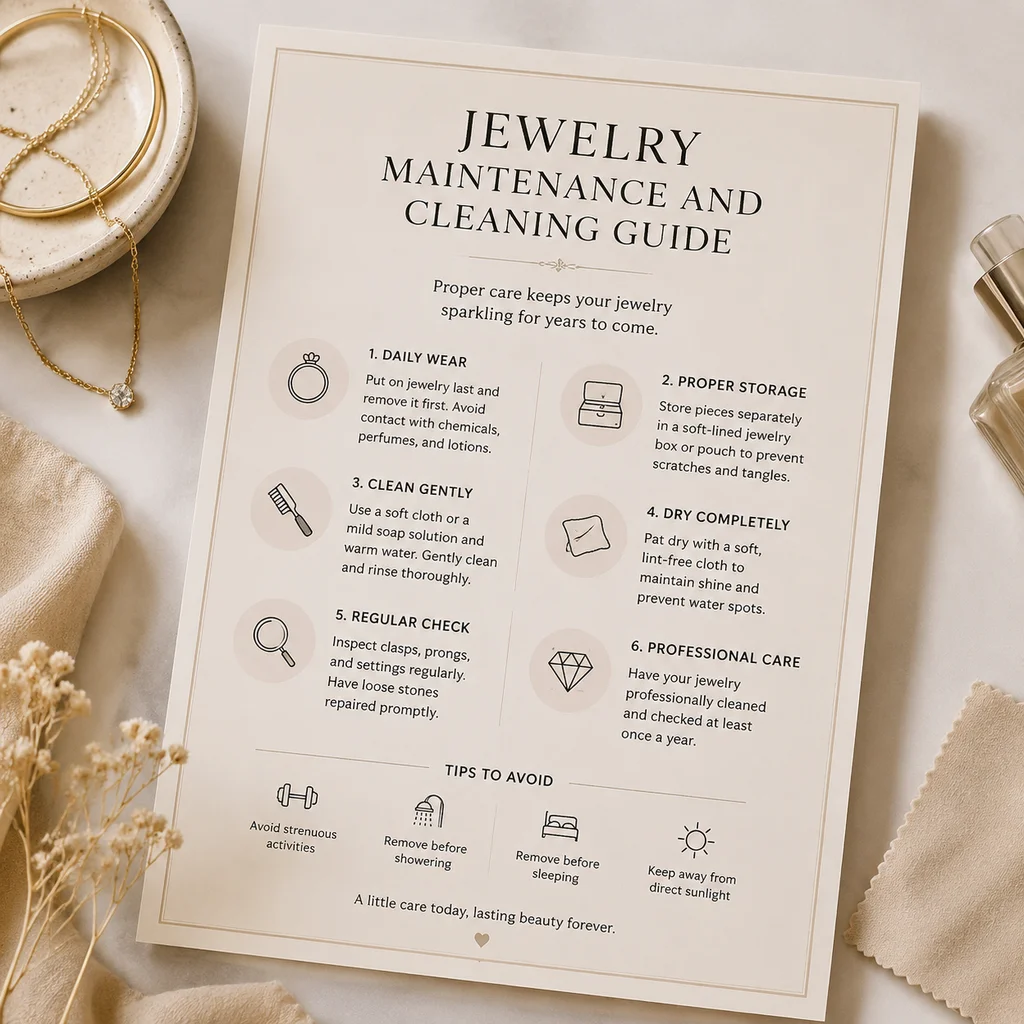
Daily: Put jewelry on last, take it off first. Avoid wearing pieces in water. Wipe silver with a soft cloth after wearing. These three habits prevent 80% of common damage.
Weekly: Quick visual check for loose stones, tarnish, or damage. Clean pieces that need it. A five-minute Sunday inspection catches problems before they become expensive repairs.
Monthly: Deep clean heavily worn pieces. Check storage conditions — are anti-tarnish strips still effective? Is humidity stable? Crystal Care 101 has a good framework for building this into a routine.
Quarterly: Full collection audit. Reorganize storage. Check for pieces that need professional attention. Essential jewelry care tips and the complete jewelry maintenance guide both provide good checklists for periodic care.
For daily habits that cover all your bases, the daily jewelry maintenance guide focuses on silver, gold, and gemstones in a practical, time-efficient format. It's designed to take less than two minutes per day.
And if you want the comprehensive reference for crystal care specifically, the complete crystal care guide covers cleaning, charging, storing, and repairing every type of stone. For a slightly different perspective, the crystal care, cleansing, and maintenance guide approaches the same topics with more emphasis on energetic practices alongside physical care.
The bottom line: most jewelry damage is gradual and preventable. You don't need expensive products or complicated routines. You need to understand what your pieces are made of, treat them accordingly, and build a few simple habits that become automatic over time. Your jewelry will last years — sometimes generations — longer because of it. And if nothing else, remember the one rule: clean pieces with the gentlest method that works. When in doubt, less is more.
Related Crystal and Jewelry Care Guides
Our complete crystal care series covers everything from basic cleaning to advanced maintenance:
- How to Clean Crystal Jewelry: A Complete Care Guide
- 7 Crystal Cleaning Mistakes That Cost Me Hundreds of Dollars
- Crystal Care 101: How to Clean, Store, and Protect Your Gemstone Jewelry
- How to Cleanse and Charge Your Crystals: Methods That Actually Work
- How to Clean Silver Jewelry at Home
- How to Clean Gold Jewelry at Home Without Damaging It
- How to Clean Turquoise Jewelry
- Pearl Jewelry Care: Why Your Pearls Are Turning Yellow
- 15 Creative Ways to Display and Store Your Crystal Collection
- Essential Jewelry Storage Tips
Crystal-Specific Care
- Selenite Care: Beautiful But Fragile
- How to Clean Crystals Without Ruining Them
- Why Ultrasonic Cleaners Can Ruin Your Jewelry
- The One Rule That Saves Most Jewelry
Frequently Asked Questions
Can I wear my crystal jewelry in the shower or pool?
It is best to remove your handcrafted crystal jewelry before showering or swimming. Harsh chemicals in soaps, lotions, and chlorine can dull the metals and damage softer natural stones. Prolonged exposure to hot water can also weaken the structural integrity of your piece. To preserve the natural beauty of your artisan jewelry, always take it off before water activities.
How do I cleanse and charge my crystal jewelry?
To energetically cleanse your natural crystal jewelry, use smoke from sage or place it on a selenite charging plate. To recharge your stones, leave them on a windowsill overnight under the full moon. Avoid using salt water, as salt can corrode metals and damage porous stones. Sound baths using singing bowls are another gentle, beautiful way to clear and revitalize your handcrafted pieces.
What is the best way to clean a natural crystal necklace?
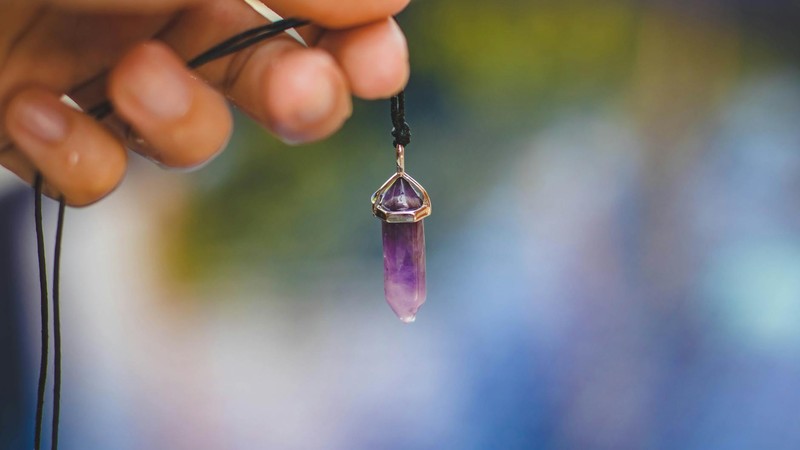
The safest way to clean your artisan crystal necklace is to use a soft, lint-free microfiber cloth to gently wipe away dust and body oils after each wear. If a deeper clean is needed, slightly dampen the cloth with warm water. Never use commercial jewelry cleaners, ultrasonic machines, or harsh chemical dips, as they can easily fracture delicate natural stones and ruin the artisan metalwork.
How should I store my handcrafted crystal jewelry to prevent scratches?
Proper storage is vital for extending the life of your pieces. Always store your handcrafted crystal jewelry separately, as harder stones will scratch softer minerals. Keep them in a dry place, ideally inside individual soft pouches or a lined jewelry box. Ensuring your pieces are completely dry and separated before storing them prevents tarnishing and keeps your artisan jewelry looking brand new.
How do I keep my sterling silver crystal jewelry from tarnishing?
To prevent tarnish on your handcrafted silver jewelry, keep it away from moisture and daily chemicals. Put your pieces on last, after applying perfumes, lotions, and makeup. When you are not wearing your jewelry, store it in airtight ziplock bags with anti-tarnish strips to minimize humidity exposure. Regularly wiping your necklace with a soft cloth after wear also removes body oils before oxidation occurs.
Comments