Ten of Swords Tarot Card: Complete Meaning Guide
May 18, 2026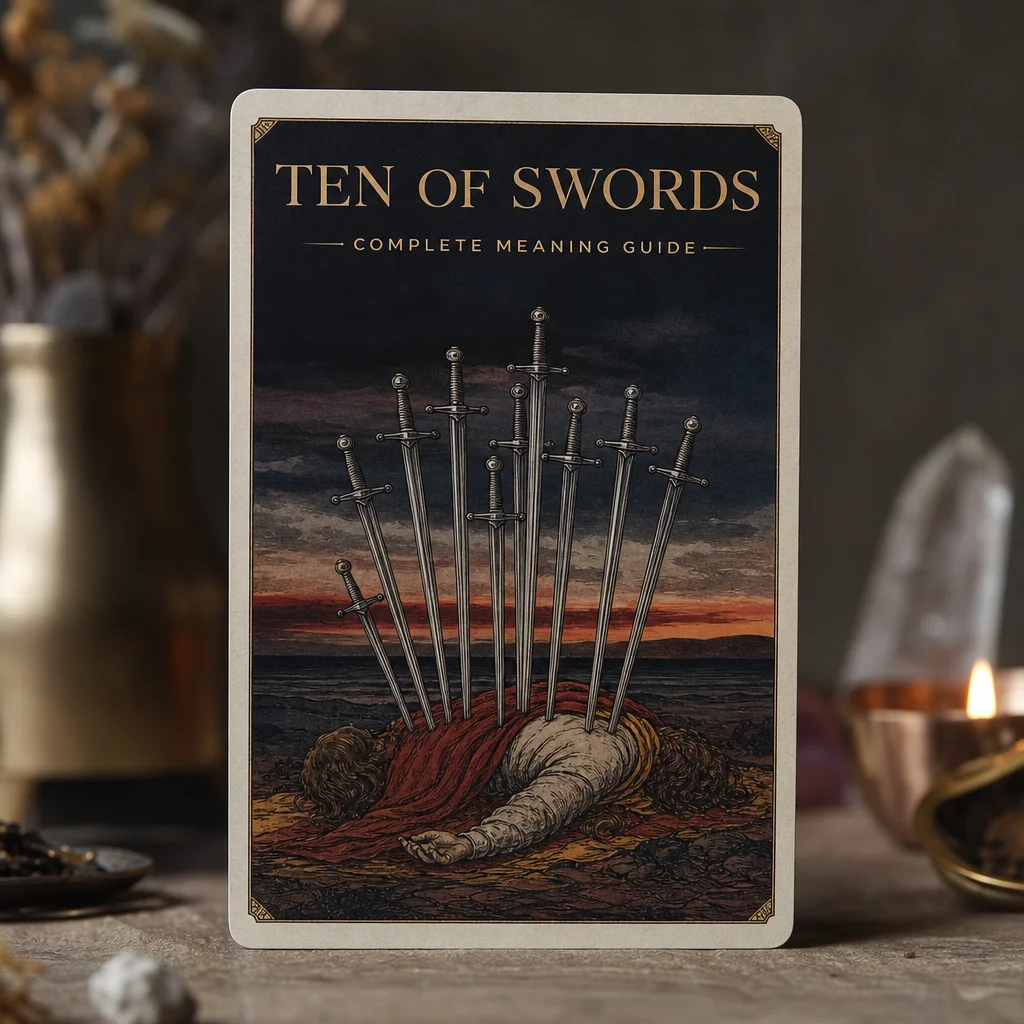
rock bottom has a ceiling
I remember the first time I pulled the Ten of Swords. I was sitting cross-legged on my bedroom floor, surrounded by the debris of a life that had just collapsed — a breakup, a layoff, and a friendship implosion, all in the same month. The card showed a figure lying face-down with ten swords in their back. The sky was black but lightening at the edges. I stared at it and thought: wow, tarot. Subtle.
But here's the thing about the Ten of Swords that I didn't understand that night: it's the last card in the Swords suit for a reason. There is no Eleven of Swords. Rock bottom is a floor, not a grave. The figure in the card has already been struck. The worst has already happened. And in the distance — you have to look carefully — the sun is rising.
If this card just appeared in your reading, something in your life has reached — or is about to reach — its absolute endpoint. That sounds terrifying, and I won't pretend it isn't painful. But I will say this: endings, even brutal ones, create space that nothing else can.
upright meaning
The Ten of Swords in its upright position signifies rock bottom, painful endings, betrayal, and the final conclusion of a difficult cycle. This is one of the most visually dramatic cards in the deck, and its meaning matches its imagery: you've been through something that knocked you flat.
Key upright themes:
- Painful endings — A situation, relationship, or phase of life has concluded in a way that hurts. Not gently. Not gradually. Definitively.
- Betrayal or backstabbing — The multiple swords in the figure's back traditionally symbolize being attacked from behind, often by someone trusted.
- Hitting rock bottom — You've reached the lowest point. The situation can't get worse because it's already at the absolute limit.
- The end of a mental cycle — In the context of the Swords suit (mind, thoughts, communication), this represents the conclusion of a period of mental suffering.
What I want to emphasize about this card: the Ten of Swords is not ongoing suffering. It's completed suffering. The blow has already landed. You're lying on the ground, yes — but the worst is over. Everything from this point forward is recovery.
why ten swords?
Ten is the number of completion in tarot's numbered cards. The suit reaches its absolute limit — and then stops. There's no Eleven of Swords because there doesn't need to be. The story of this particular kind of suffering is over. What comes next belongs to a different chapter.
The excess of swords in the figure's back is also significant. One sword would be enough to do the job. Ten is overkill — which is part of the card's message. When we hit rock bottom, the suffering often feels excessive, disproportionate, absurd in its totality. "Of course this would happen to me." The Ten of Swords acknowledges that feeling without agreeing that you deserve it. Bad things happen. Sometimes they happen all at once. The card doesn't explain why. It just says: you're here now, on the ground, and the only way to go is up.
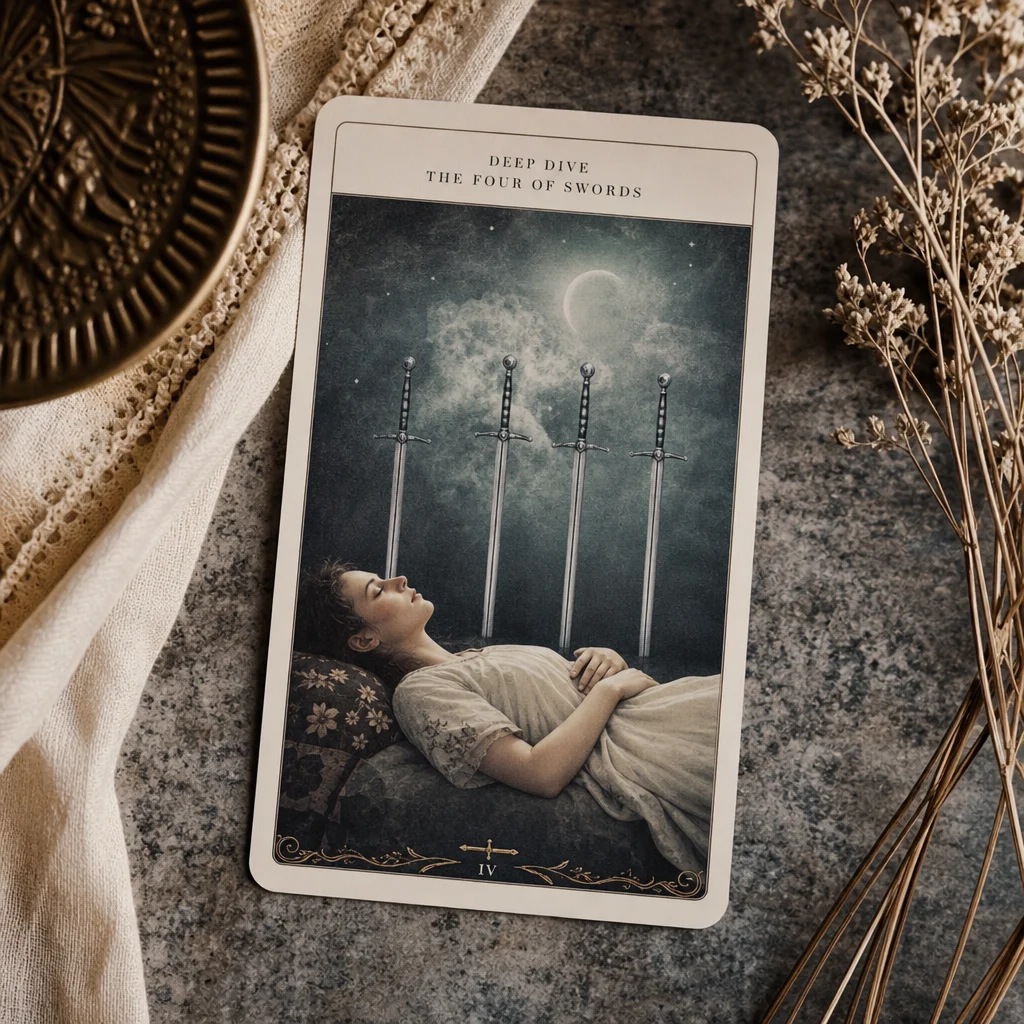
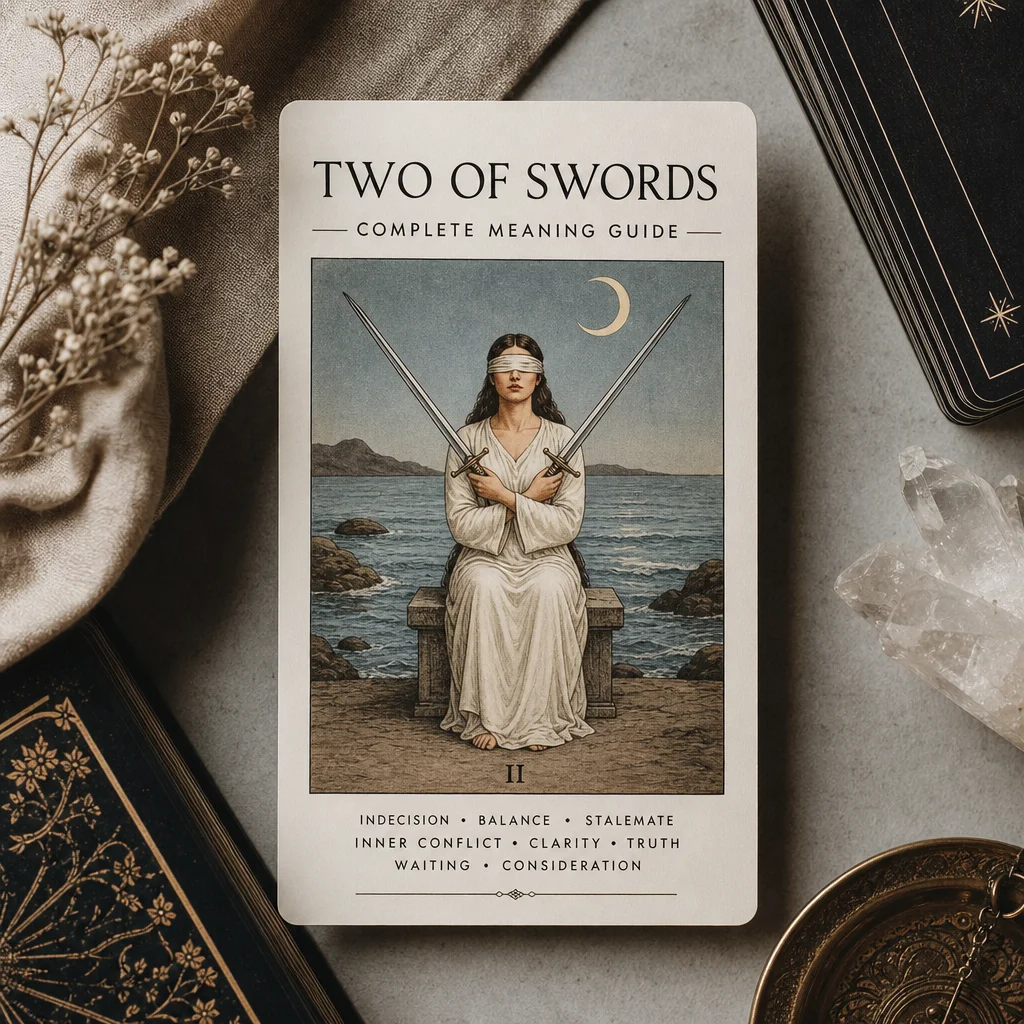
In the progression from the Nine of Swords (anxiety, sleepless nights) to the Ten, the escalation reaches its peak. The worry becomes reality. The feared outcome materializes. But then — it stops. The cycle completes. And completion, even painful completion, is a form of relief.
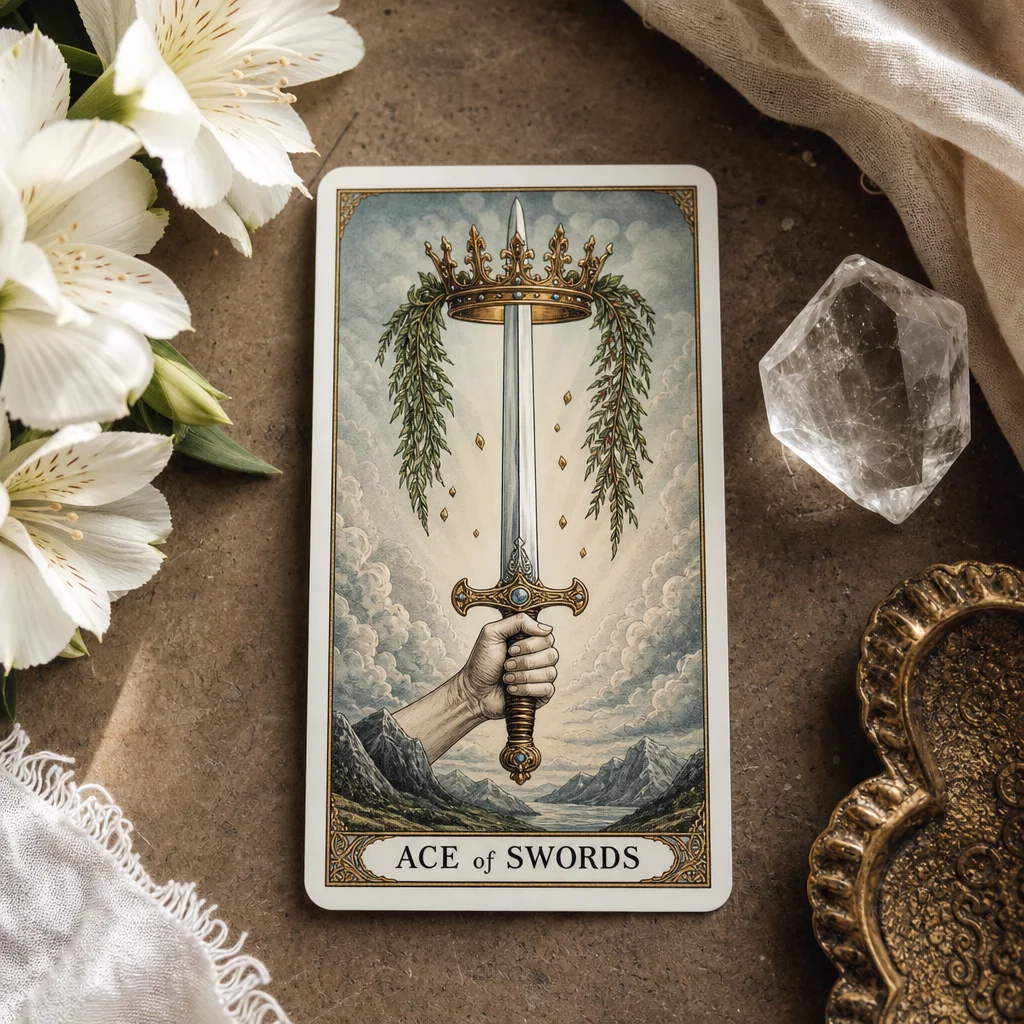
The Ace of Swords, which begins the suit with a flash of clarity and new thought, feels impossibly far away when you're looking at the Ten. But that's the architecture of the Minor Arcana: every ending is also a setup for the next beginning.
reversed meaning
When the Ten of Swords reverses, the worst is either not quite as bad as you feared, or you're beginning the slow process of getting back up. The card doesn't reverse into happiness — it reverses into recovery.
Reversed interpretations:
- Avoidable disaster — The catastrophe you're dreading might not be as total as you imagine. Some damage can still be mitigated.
- Slow recovery — You're pulling yourself up off the ground. It's not quick and it's not pretty, but it's happening.
- Refusing to accept an ending — Sometimes reversed, this card indicates resistance to a necessary conclusion. You're trying to revive something that's genuinely over.
- Repeating a pattern — You've been here before. The same type of ending, the same kind of betrayal, the same crash. The reversal asks: what haven't you learned yet?
I once pulled the Ten of Swords reversed for myself during a period when I kept reapplying for jobs in an industry that had clearly rejected me. Three rounds of layoffs, zero callbacks, mounting frustration. The card wasn't telling me I was incompetent — it was telling me to stop throwing myself onto the same swords. The ending had already happened. I was the one refusing to accept it.
love and relationships
if you're single
The Ten of Swords in a single reading can mean you're still recovering from a past relationship that ended badly — perhaps with betrayal, ghosting, or a discovery that shattered your trust. The card validates that pain without minimizing it. You went through something awful. It's okay to still be on the ground.
It also cautions against rushing into something new as a way to avoid feeling the pain of the ending. The swords in your back need time to be acknowledged before you can truly move forward.
if you're in a relationship
This is one of the most difficult cards to see in a relationship reading because it often signals a major, painful ending. The Ten of Swords in a relationship context suggests:
- A betrayal has occurred or is about to surface — infidelity, dishonesty, or a fundamental breach of trust
- The relationship has reached a point of no return — not a rough patch, but a genuine conclusion
- One or both partners feel emotionally devastated
- The ending is messy, not amicable
I want to be honest: the Ten of Swords is not a card I'd read as "work through it." It's a card that says "this ending is real and it hurts, and the only way forward is through the pain, not around it."
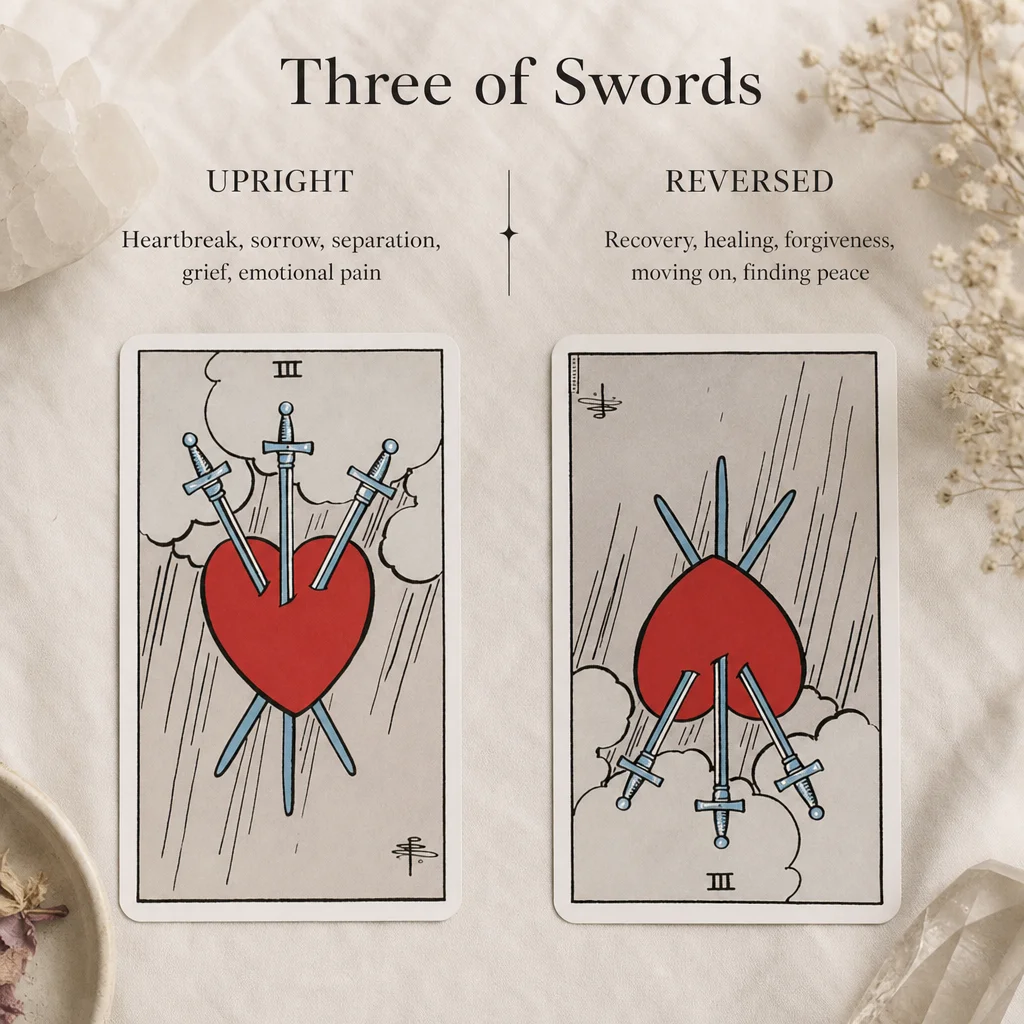
If you're wondering whether there's hope for reconciliation, this card leans strongly toward no. The Three of Swords represents heartbreak that can eventually heal. The Ten represents heartbreak that changes the landscape entirely — something ends that can't be put back together. The Six of Swords might appear nearby, offering the promise of eventual transition and calm after the storm.
career and finances
In career readings, the Ten of Swords is fairly direct: something has ended or is about to end in a way that feels devastating.
Possible scenarios:
- Job loss — Being laid off, fired, or realizing that your position is being eliminated.
- Professional betrayal — A colleague or mentor you trusted undermines you, or you discover that your contributions have been appropriated.
- Business failure — A project, venture, or business you've invested in collapses.
- Career identity crisis — The realization that the path you've been on is fundamentally wrong for you, and the admission feels like a kind of death.
Financially, this card can indicate a significant loss — unexpected expenses, investments gone wrong, or a financial situation that collapses suddenly. The advice is not to panic (hard, I know) but to remember that the Ten of Swords represents the bottom. You can't fall through the floor. From here, the only direction is up.
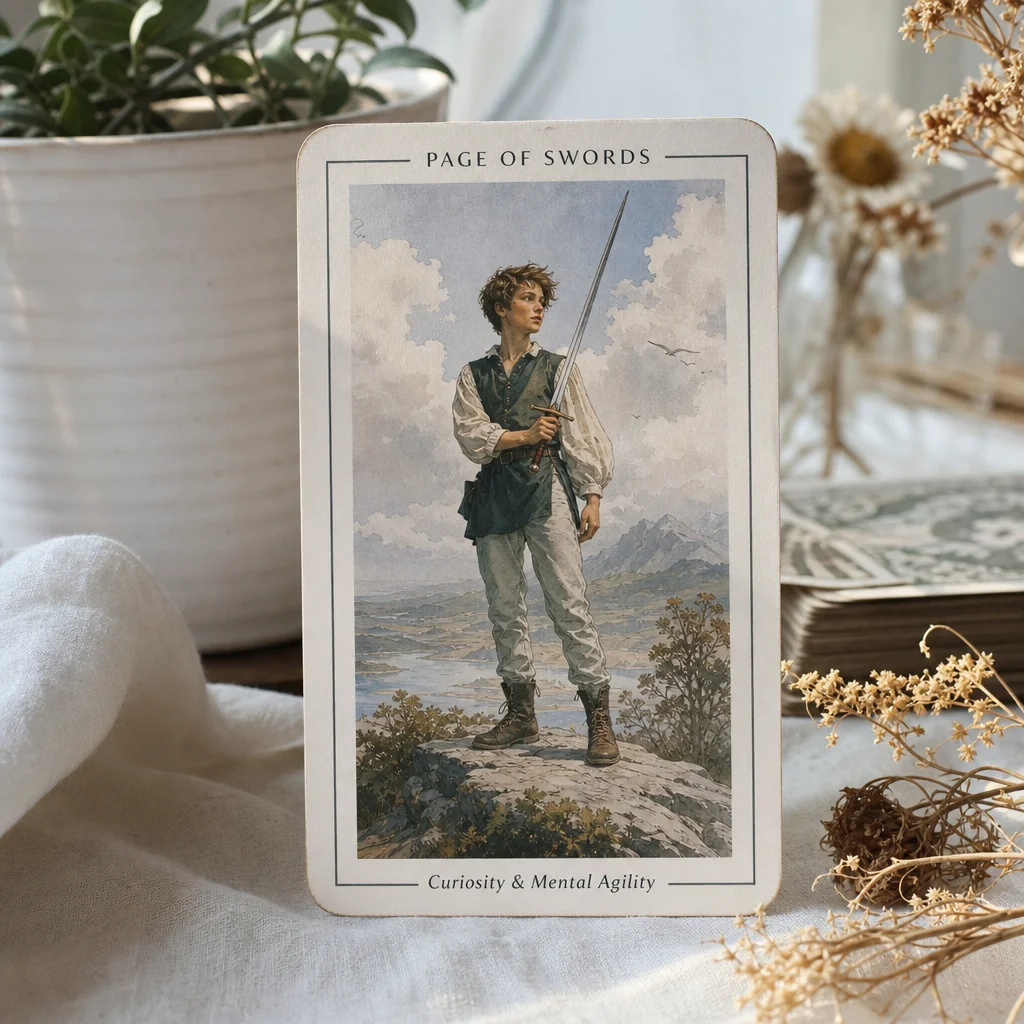
The decisive clarity of the King of Swords might be useful energy to channel here: assess the damage honestly, make clear-headed decisions about next steps, and don't let emotion cloud your practical judgment. The full Swords suit overview in the Minor Arcana guide can provide additional context for how this card fits into the broader pattern.
yes or no
Upright: No. A definitive no. The Ten of Swords is one of the clearest "no" cards in the deck. The situation has concluded, the door has closed, and the answer you're hoping for is not available in this form.
Reversed: No, but the worst is over. The answer is still no, but the pain of that no is beginning to ease. Recovery is underway. The no is no longer a fresh wound — it's becoming a scar.
crystal pairings for the ten of swords
When working with the Ten of Swords, I recommend crystals that support grief processing, resilience, and the very gradual process of getting back up after being knocked down.
black onyx
Black onyx is traditionally associated with inner strength and endurance during difficult times. When you feel like the Ten of Swords — flattened, depleted, unsure if you can stand up again — black onyx offers a grounding presence. How I use it: After my own "ten of swords" period, I wore a black onyx bracelet daily for months. It was a small, private ritual — a reminder on my wrist that I was still here, still breathing, still capable of putting one foot in front of the other even when everything felt destroyed.
rose quartz
Rose quartz is often linked to love and emotional healing. In the context of the Ten of Swords, it's not about romantic love — it's about self-compassion during a time when you might be blaming yourself for what happened. How I use it: I hold rose quartz during moments of self-blame. When the thought arises that I "should have seen it coming" or "should have prevented it," the stone is a physical reminder that going through something painful doesn't mean I caused it.
obsidian
Obsidian is a volcanic glass traditionally associated with protection and truth-telling. It has a sharp, uncompromising quality that matches the Ten of Swords: it shows you things as they are, without sugar-coating. How I use it: During the aftermath of a painful ending, I meditate with obsidian to help me face the truth of what happened — not the story I wish were true, but the reality I need to accept before I can move on. It's not comfortable, but it's clarifying.
tarot spread positions: what the ten of swords means in different placements
past position
A significant, painful ending occurred in your past. You may still be processing it — the Ten of Swords leaves marks. But it's behind you now, and the fact that it's in the past position (rather than present or future) is significant. You survived. The worst already happened, and you're still here.
present position
You're in the aftermath of something devastating. The present placement of this card validates your pain: yes, this is as bad as it feels. No, you're not overreacting. And yes, the sun is coming up, even if you can't see it yet.
future position
A significant ending is approaching. This isn't necessarily a prediction of catastrophe — it could be the conclusion of a difficult period that you've already been dreading. Sometimes knowing that the end is coming brings a strange relief. At least the uncertainty will be over.
advice position
Let it end. The Ten of Swords as advice is not gentle: stop trying to resuscitate something that's already gone. Accept the ending, feel the pain, and trust that the ground you're lying on is solid enough to push yourself back up from.
outcome position
The outcome involves a definitive conclusion. Something ends — thoroughly, completely, with no ambiguity about its finality. The outcome is painful but also liberating in a way that may only become clear in hindsight.
what I learned on the ground
I want to tell you something that the Ten of Swords taught me, something I couldn't see while I was lying on that bedroom floor: the bottom is a solid place to build from.
When everything falls apart — when the swords are in your back and the sky is dark and you can't imagine standing up again — you're also free in a way you weren't before. All the things you were afraid of losing? Gone. All the what-ifs that kept you up at night? Answered. The worst happened. And you're still breathing.
That doesn't make the pain worthwhile. I'm not one of those people who believes everything happens for a reason. Sometimes bad things happen because they happen, and there's no silver lining that makes them okay. But I do believe that what you do after the worst happens matters enormously. The Ten of Swords is not your whole story — it's one chapter. And the next chapter, whenever you're ready for it, starts with you deciding to get up.
The figure in the card has their face turned to the side. They could be looking at the ground in defeat. Or they could be looking at the horizon, where the sky is lightening. I choose to read it as the second one. Not because I'm an optimist — I'm really not — but because I've been there, and the sunrise is real. It's faint at first. You might miss it if you're not looking. But it's there.
If you pulled the Ten of Swords today: I'm sorry for what brought you here. Take your time on the ground. When you're ready — not before, not a moment sooner — the horizon is waiting.
combinations: the ten of swords with other cards
The Ten of Swords in combination often reveals whether the ending is truly final or whether hope exists within the devastation. Here are pairings I see regularly:
- Ten of Swords + Death: A profoundly transformative ending. Something isn't just concluding — it's being completely dismantled so that something entirely different can be built. This combination is intense but ultimately liberating. The old structure has to go.
- Ten of Swords + The Tower: A sudden, shocking collapse. Whatever happened wasn't gradual — it was a lightning strike that leveled something you thought was stable. The combination is devastating in the moment, but rebuilds happen faster when the destruction is total.
- Ten of Swords + The Star: Even in the worst moment, hope is present. The Star following the Ten of Swords is one of the most comforting combinations in the deck. It says: yes, this is as bad as it gets. And yes, you will recover. Healing is not just possible — it's promised.
- Ten of Swords + Four of Cups: You've hit bottom and you can't even muster the energy to care. Emotional numbness during a period of loss is common and not a sign that something is wrong with you. It's your psyche protecting itself. The feelings will return when you're ready.
- Ten of Swords + Judgement: A definitive ending that leads to a clear calling. Something dies so that something more authentic can be born. The combination suggests that the painful conclusion is actually a necessary step in finding your true path.
These combinations show that the Ten of Swords, despite its grim imagery, rarely appears in isolation. The cards around it almost always point toward what comes next — and what comes next is usually some form of recovery, however gradual.
Related Guides
- Crystal Energy Guide: Healing Properties
- How to Read Tarot Cards: Beginner Complete Guide
- Clear Quartz: The Universal Crystal Guide
- How to Clean and Care for Your Natural Stone Bracelet
- The Complete Guide to Crystal and Jewelry Care
- 5 Practical Tests to Tell Real Crystals From Fakes
- Rose Quartz: Complete Guide to Meaning, Uses and Care
Frequently Asked Questions
Q1 What is the significance of the Ten of Swords Tarot Card?
A1 The Ten of Swords Tarot Card symbolizes overwhelming defeat or surrender, often indicating the end of a long and difficult period of suffering or struggle.
Q2 How does the Ten of Swords Tarot Card influence personal growth?
A2 Despite its grim appearance, the Ten of Swords can prompt reflection and personal growth, leading to healing and transformation as the pain and conflict of the past are fully acknowledged and released.
Frequently Asked Questions
Is the Ten of Swords a bad card to get in a reading?
While it looks frightening, the Ten of Swords isn't strictly a bad card. It signifies that the worst is over and there is nowhere to go but up. It marks the definitive end of a painful cycle, clearing the path for a new beginning. Wearing grounding crystal jewelry, like a black tourmaline pendant, can help you find emotional stability and protection during this necessary transformation.
What should I do if I pull the Ten of Swords?
When you pull the Ten of Swords, the best action is to surrender and accept the ending. This card advises against fighting your circumstances, as the difficult situation has run its course. Focus fully on self-care and energetic renewal. Wearing a handcrafted amethyst or rose quartz crystal bracelet can support your emotional healing as you prepare to rebuild and rise from the ashes.
Comments