Deep Dive: The Seven of Swords Tarot Card
May 18, 2026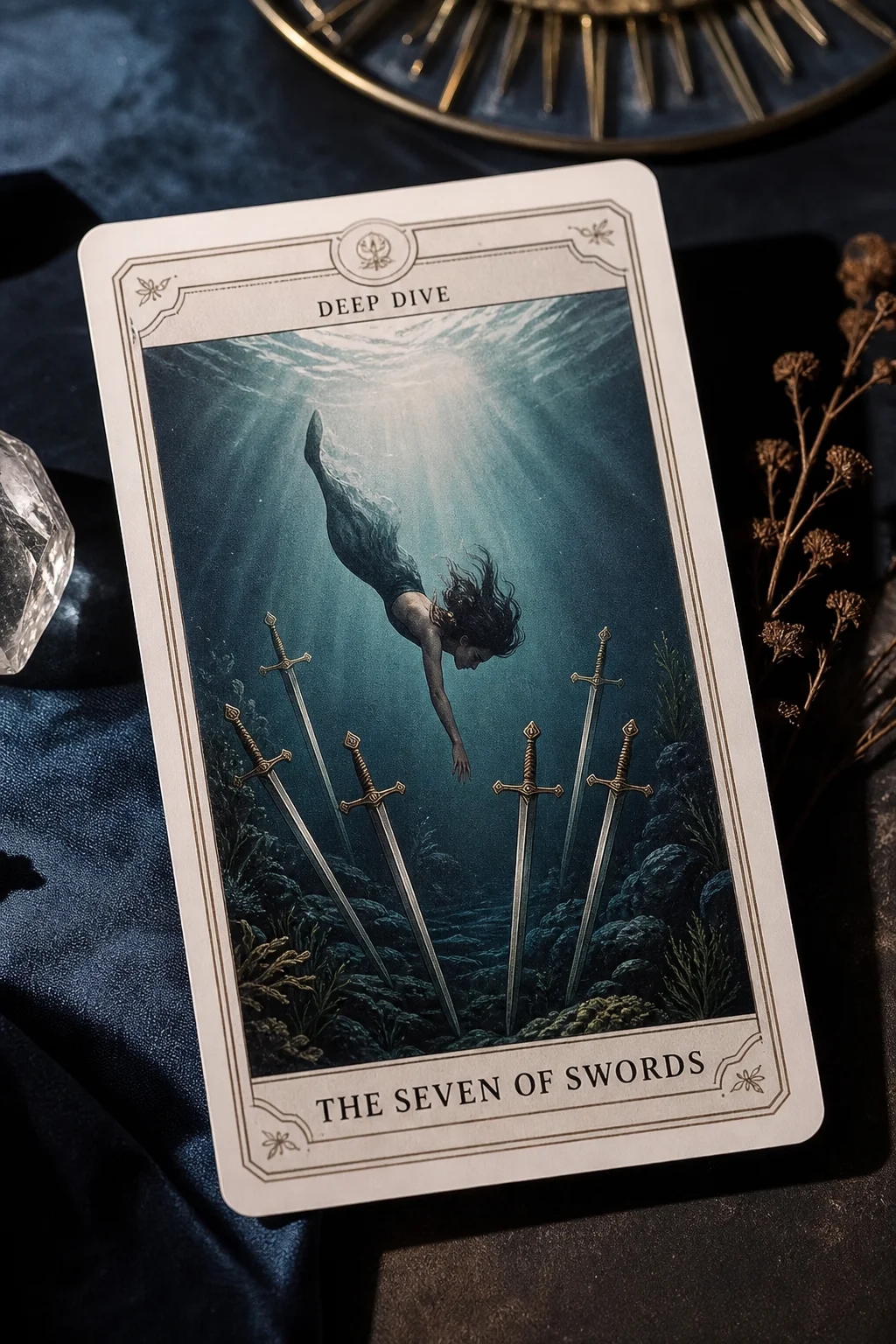
what are you hiding from yourself?
I used to lie. Not big, dramatic lies — just the small, everyday kind. Telling a friend I was "fine" when I wasn't. Saying I'd "lost" a document when I'd simply never started it. Agreeing to plans I intended to cancel at the last minute. Nothing that felt like real dishonesty. Just... strategic omissions. I was very good at them.
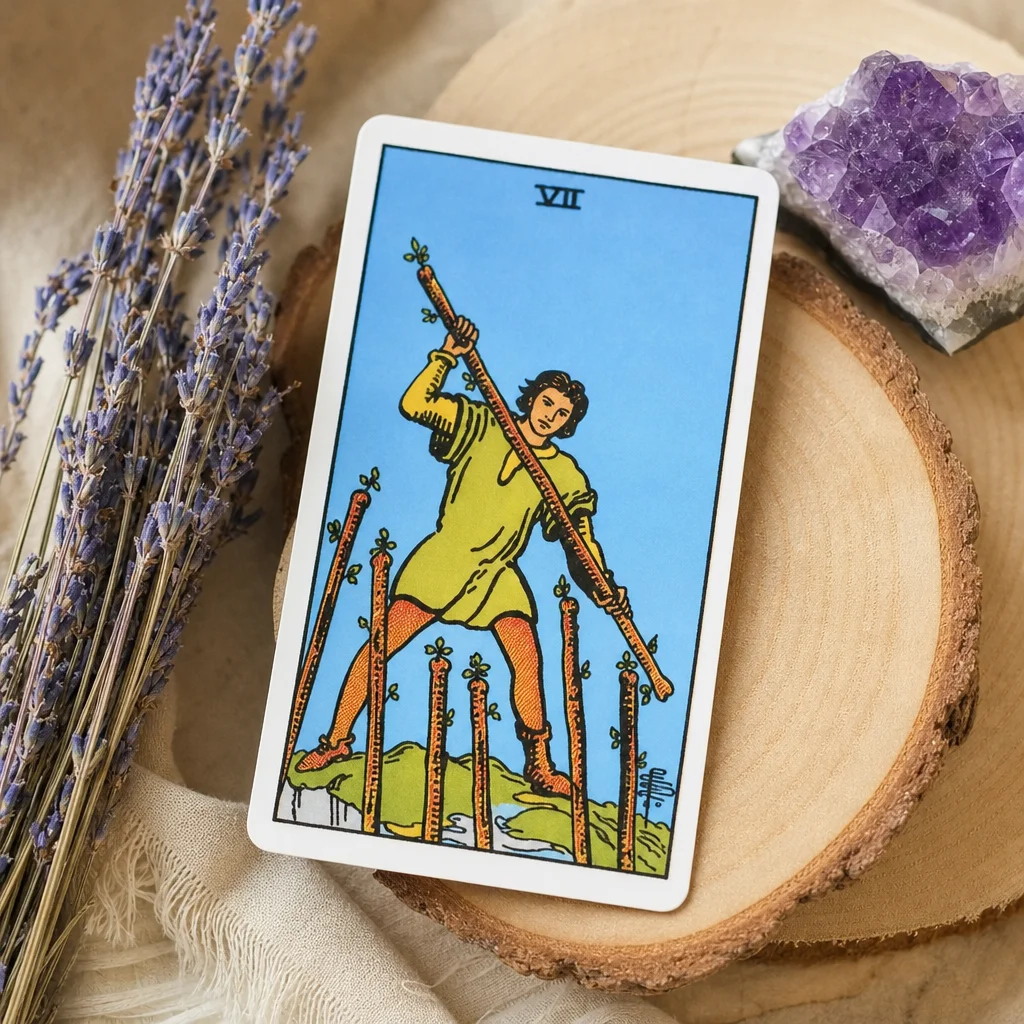
Then I pulled the Seven of Swords during a reading I was doing for myself, and the card stared back at me with an uncomfortable accuracy. The figure in the traditional illustration is sneaking away from a camp, carrying stolen swords, leaving two behind. One person's theft. Another person's loss. And that gap between what I showed the world and what I was actually doing — that was the card talking.
The Seven of Swords is one of the most personally confronting cards in the deck. It shows up when deception is present — sometimes from others, sometimes from yourself, often both. If you've drawn it, something in your life isn't being fully honest. The uncomfortable part is figuring out who's holding the swords and who's missing them.
It's worth noting that not all deception in the Seven of Swords is malicious. Sometimes we hide things to protect others. Sometimes we omitt details because the full truth feels too heavy to share. The card doesn't judge the reason — it just illuminates the reality that something is being concealed. What you do with that illumination is your choice.
upright meaning
In its upright position, the Seven of Swords signals deception, strategy, and covert action. This isn't the destructive chaos of the Tower or the painful clarity of the Three of Swords. It's subtler. Someone — possibly you — is operating beneath the surface.
Common upright interpretations:
- Deception or dishonesty — Someone in the situation isn't telling the full truth. This could be a colleague taking credit for your work, a partner hiding something, or a friend gossiping behind your back.
- Strategic withdrawal — You're choosing to disengage from a conflict rather than fight openly. Sometimes this is wisdom; sometimes it's avoidance.
- Self-deception — The lies you tell yourself are often more damaging than anything anyone else could say. This card appears when you're refusing to look at something honestly.
- Cleverness and resourcefulness — Not all readings are negative. The Seven of Swords can indicate that you're thinking creatively, finding unconventional solutions, or operating with necessary discretion.
One thing I've noticed after years of reading this card: it rarely shows up without reason. If it appears, something hidden needs to be seen. The question is whether you're ready to see it.
the swords that were left behind
In the traditional illustration, the figure carries five swords but leaves two behind. This detail has always struck me as significant. The theft is incomplete — there's something that couldn't be taken, something that remains at the camp. In readings, I interpret this as the parts of a situation that can't be hidden or taken away, no matter how clever the deception. The truth has a residue. Evidence remains. The two swords left behind are the clues that will eventually unravel whatever is being concealed.
This also means that the Seven of Swords contains its own resolution. The deception isn't permanent because it was never total. Something was left behind — a witness, a paper trail, an inconsistency, a gut feeling in someone who noticed something off. The truth doesn't need to be dramatic to be effective.
In the broader context of the Swords suit, this card sits between the Six of Swords (transition, moving away from difficulty) and the Eight of Swords (feeling trapped by your own thoughts). The progression makes sense: you leave a situation, but if you don't deal with it honestly, you end up in a mental prison of your own making.
reversed meaning
When the Seven of Swords reverses, the hidden comes to light. Secrets surface. The strategy that was working stops working. The careful facade cracks.
Reversed meanings include:
- Coming clean — You or someone else confesses, reveals, or gets caught. The truth was always going to come out; this is just the moment it does.
- Releasing deception — You choose honesty over convenience. This can be uncomfortable in the short term but freeing in the long run.
- Paranoia or suspicion — Sometimes reversed, this card indicates that you're seeing deception where none exists. Past betrayals have made you hypervigilant.
- Reclaiming stolen ground — If someone took something from you — credit, opportunity, trust — the reversal suggests you may get it back.
A friend once told me she pulled this card reversed every day for a week before finally admitting to her partner that she'd been hiding credit card debt. The card wasn't punishing her — it was inviting her to stop carrying the weight of secrecy. The relief she described after the conversation was immediate and enormous.
love and relationships
if you're single
The Seven of Swords in a single-person reading asks you to examine your dating patterns. Are you presenting an authentic version of yourself, or are you curating a persona designed to attract? There's nothing wrong with putting your best foot forward, but this card suggests the gap between who you really are and who you're pretending to be might be wider than you think.
It can also warn of potential deception from someone new. If something feels off about a new romantic interest — inconsistencies in their stories, vague answers about their life, a feeling that you're only seeing a carefully edited version — trust that instinct.
if you're in a relationship
In an established relationship, this card is a signal to look at what's not being said. Every relationship has its unspoken agreements and avoided topics, but the Seven of Swords suggests something more significant is being hidden.
Possibilities include:
- Financial secrets — hidden spending, undisclosed debt, secret accounts
- Emotional infidelity — a "friendship" that has crossed a line
- Withdrawing affection without explanation
- Saying what your partner wants to hear instead of what's true
Before you panic: not every Seven of Swords reading means catastrophe. Sometimes it simply highlights the small dishonesties that accumulate over time — the "I'm fine" when you're not, the "it doesn't matter" when it does. These aren't dealbreakers, but they are walls. And walls, left unexamined, eventually block everything.
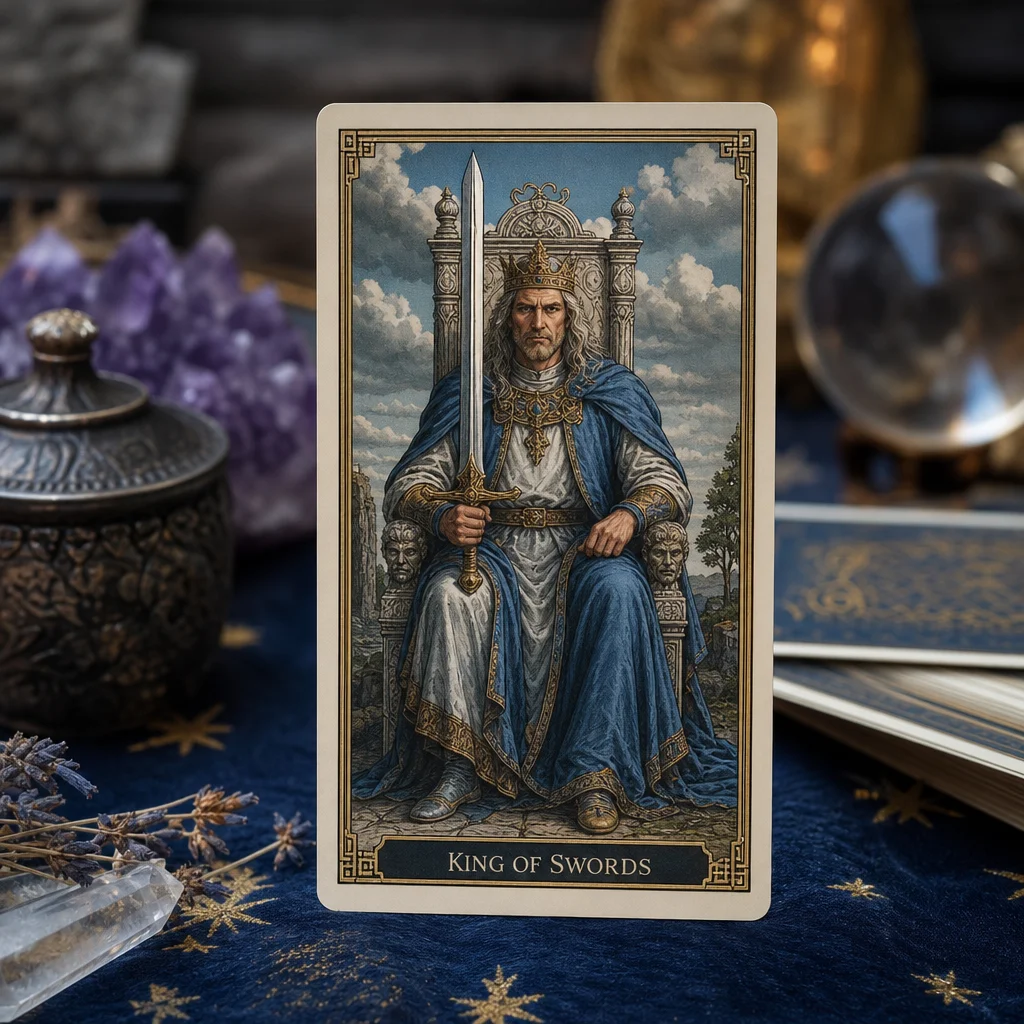
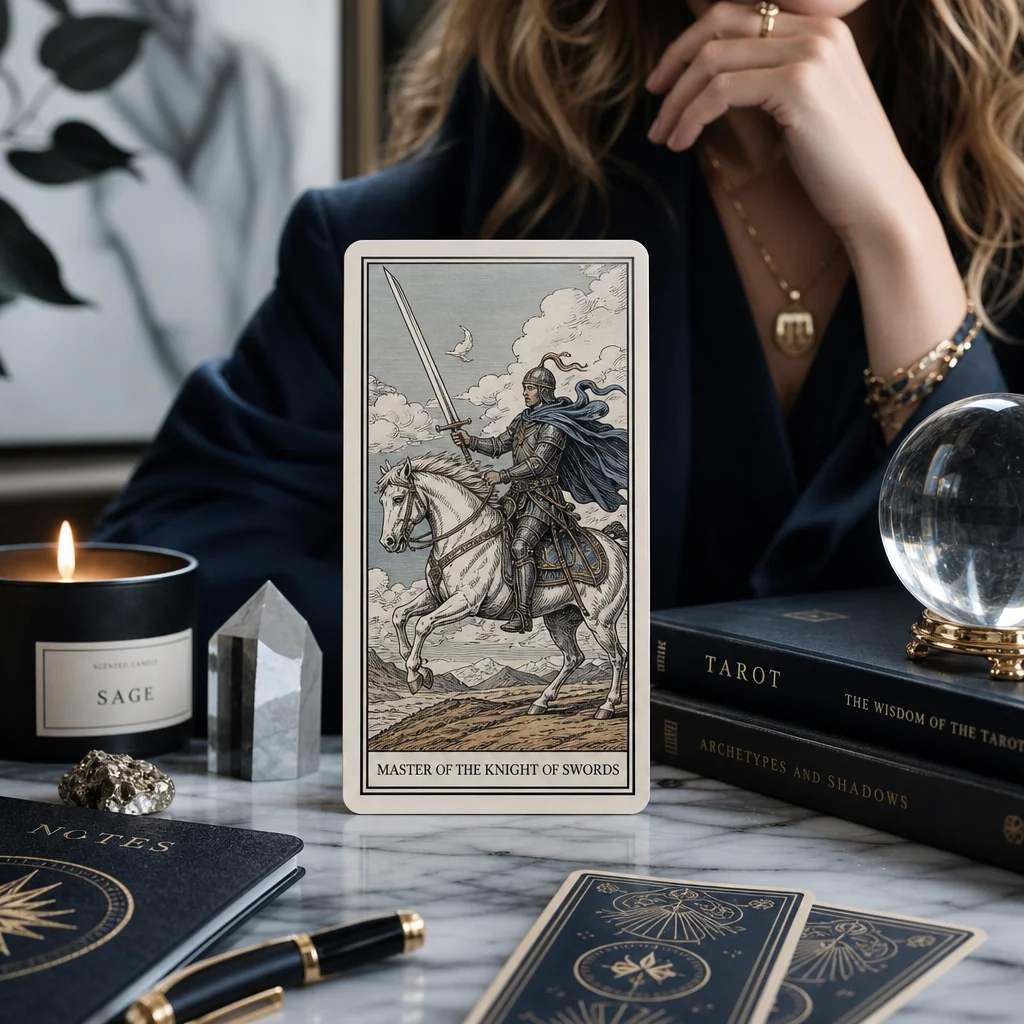
The directness of the King of Swords might offer a model here: say what's true, clearly and kindly, without drama.
after a breakup
If you're processing a separation, the Seven of Swords often indicates that you're only now seeing the full picture. Things that were hidden during the relationship become visible in retrospect. This can be painful, but it's also clarifying. You're finally working with accurate information.
career and finances
The Seven of Swords in a career reading is a card to pay close attention to. In workplace contexts, it often points to office politics, hidden agendas, or situations where information is being selectively shared.
Watch for:
- Someone taking credit for your work — A colleague or even a manager presenting your ideas as their own.
- Withheld information — You're not being told something that affects your position, project, or prospects.
- Your own corner-cutting — Are you cutting ethical corners to meet a deadline or hit a target? The card asks you to consider the long-term cost.
- Strategic maneuvering — You may need to be more politically savvy than usual. Not dishonest — just aware that not everyone has your interests at heart.
Financially, this card is a warning to double-check details. Review contracts carefully. Don't take financial claims at face value. If an investment or opportunity seems too good to be true, the Seven of Swords suggests it might be.
On a more personal level, this card can also appear when you're lying to yourself about your financial situation. Avoiding looking at your bank account, minimizing spending habits, or pretending that debt isn't a problem. The Seven of Swords in a financial reading often coincides with a moment where honest self-assessment would be more valuable than any investment strategy.
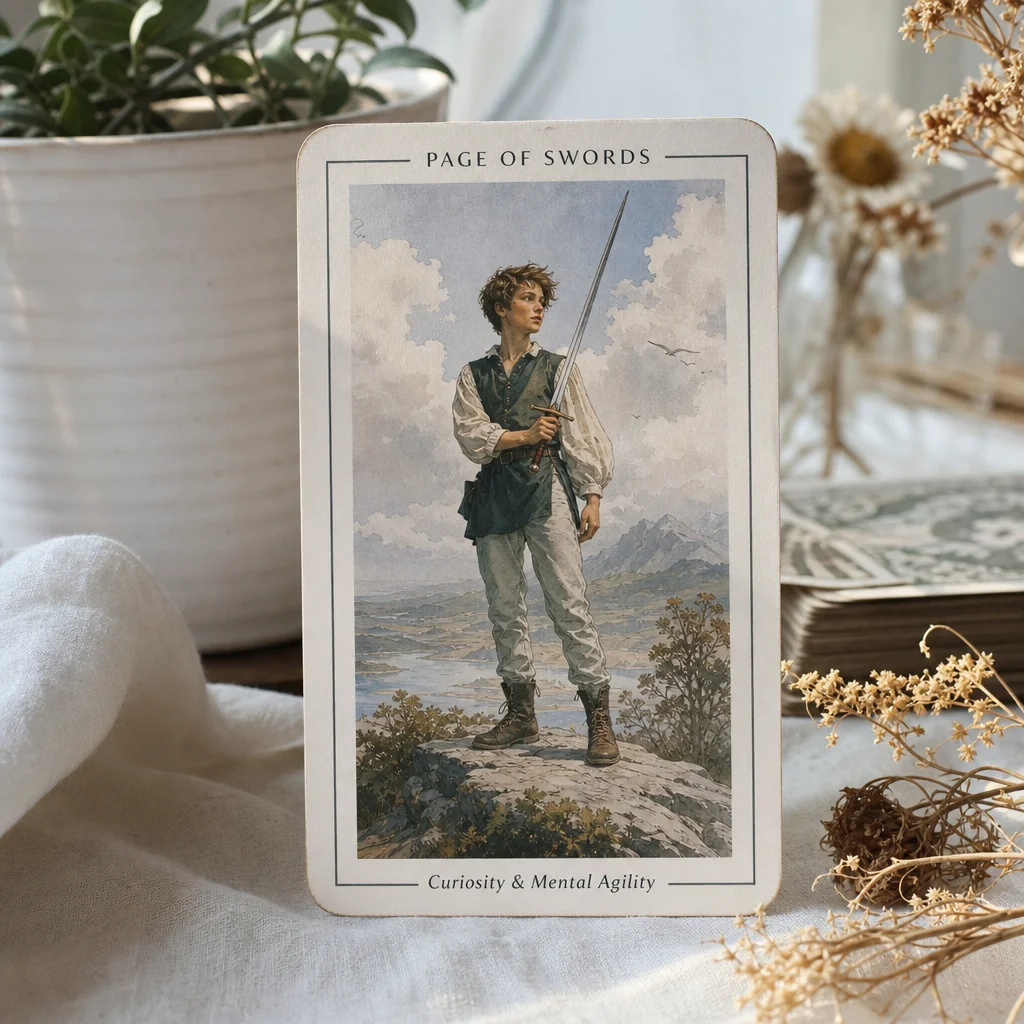
For broader career context within the Swords suit, the Page of Swords represents the curious, questioning energy that helps you uncover hidden truths, while the Minor Arcana guide provides the full framework for understanding how suit energies work in practical readings.
yes or no
Upright: No, or a very qualified yes. The Seven of Swords is not a straightforward card. If you're asking whether someone is being honest with you, the answer leans no. If you're asking whether a plan will succeed through the current approach, the answer is: not without some hidden complication that you're not seeing.
Reversed: Yes, after truth emerges. The situation becomes clearer once hidden information surfaces. The answer shifts toward yes, but only after the deception — whether internal or external — is addressed.
crystal pairings for the seven of swords
When working with the Seven of Swords, I gravitate toward crystals that support honesty, clarity, and protection. These stones don't make people tell the truth — but they can help you see more clearly and protect your energy when navigating deception.
lapis lazuli
Lapis lazuli has been valued across cultures for thousands of years, traditionally associated with truth, wisdom, and intellectual clarity. When you're dealing with deception — yours or someone else's — lapis lazuli helps you see through obfuscation. How I use it: I keep a lapis lazuli stone on my desk during difficult conversations or negotiations. It reminds me to speak honestly and listen carefully for what's not being said.
black tourmaline
Black tourmaline is one of the most widely recommended stones for protective energy. When the Seven of Swords appears, someone's boundaries have been crossed — yours or someone else's. Black tourmaline helps reinforce those boundaries. How I use it: After a situation where I felt manipulated or misled, I hold black tourmaline during a short meditation. It's my way of "resetting" and reminding myself that I get to choose who has access to my energy and attention.
fluorite
Fluorite is often linked to mental clarity and discernment. Given that the Swords suit governs the domain of thought and communication, fluorite is a natural match for cards in this suit that deal with confusion and hidden agendas. How I use it: When I'm trying to untangle a complex situation — figuring out who knew what, when, and why — I hold fluorite while journaling. It helps me organize my thoughts without spiraling into paranoia.
tarot spread positions: what the seven of swords means in different placements
past position
Someone was dishonest, or you were. The past position suggests the deception has already occurred and its effects are still rippling. You might be dealing with the consequences now, or you might only just be realizing the full extent of what happened.
present position
Something is currently being hidden. Either you're concealing something from others, others are concealing something from you, or you're all collectively avoiding an obvious truth. The present placement is a call to look beneath the surface.
future position
Deception or strategic action lies ahead. This doesn't necessarily mean something bad is coming — it might mean you'll need to be clever and strategic about an upcoming situation. Stay alert and trust your instincts.
advice position
Be smart, be observant, and protect your interests. The Seven of Swords as advice isn't telling you to be dishonest — it's telling you to be aware that not everyone is playing openly. Keep some cards close to your chest until you know who you're dealing with.
outcome position
The situation resolves with hidden information coming to light. The outcome isn't clean or straightforward — there will be complications, revelations, or a sense that the full picture was larger than anyone realized.
what the seven of swords taught me
I'll be honest: the Seven of Swords used to make me defensive. When it showed up in my readings, my first reaction was to think I'm not doing anything wrong. And maybe I wasn't, in any given moment. But the card kept appearing, and eventually I had to ask myself: why does honesty — real, unvarnished honesty — feel so threatening?
The answer was uncomfortable. I'd built a version of myself that was designed to be easy for other people. Agreeable. Low-maintenance. "Fine." And underneath that version was someone who was tired, sometimes resentful, and occasionally dishonest about what she needed. The Seven of Swords didn't create that dynamic. It just refused to let me pretend it wasn't there.
Here's what I know now: honesty is a practice, not a personality trait. It requires constant attention and willingness to be uncomfortable. The Seven of Swords shows up when you're ready for that discomfort — or when you've avoided it for so long that the avoidance itself has become the problem.
If this card found you today, ask yourself: what am I not saying? What am I not seeing? What would change if I stopped hiding — from others, from myself, from the truth that's been sitting in the corner of the room waiting to be acknowledged?
You don't have to answer right away. But the card will wait. It's patient that way.
combinations: the seven of swords with other cards
In practice readings, the Seven of Swords gains specificity from the cards around it. Here are common combinations I've encountered:
- Seven of Swords + The Moon: Deep confusion and hidden motives. Something is genuinely obscured, and you may not have enough information to discern truth from deception. Don't make major decisions until the fog lifts.
- Seven of Swords + Justice: The truth will come out and consequences will follow. This combination suggests that whatever deception is occurring won't remain hidden indefinitely. Fairness will be restored, but the process might be uncomfortable.
- Seven of Swords + Three of Wands: Strategic planning that involves some level of discretion. You might need to keep your plans quiet while you set things in motion. Not dishonest — just private. The combination supports careful, behind-the-scenes preparation.
- Seven of Swords + High Priestess: Trust your instincts about what's being hidden. You sense something beneath the surface, and that intuition is likely accurate. This combination encourages you to pay attention to what's not being said.
- Seven of Swords + Ten of Wands: You're carrying a burden that isn't entirely yours, possibly because someone has shifted their responsibilities onto you. The combination asks: what are you holding that belongs to someone else?
These pairings demonstrate that the Seven of Swords is rarely a simple "someone is lying" message. The context provided by surrounding cards reveals whether the deception is self-directed, other-directed, strategic, or destructive. Always read the full spread before jumping to conclusions.
Related Guides
- 5 Practical Tests to Tell Real Crystals From Fakes
- Complete Crystal Guide: Identification and Meanings
- Essential Jewelry Storage Tips
- How to Clean Crystals Without Ruining Them
- Crystal Shapes Explained: Tumbled, Raw, Points, Spheres
- Crystal Pricing: 7 Tricks Shops Use to Make You Overpay
- Crystal Care 101: How to Clean, Store, and Protect Your Jewelry
Frequently Asked Questions
Is the Seven of Swords a bad omen or a negative tarot card?
While often viewed as a challenging card, the Seven of Swords is not inherently a bad omen. It serves as a gentle warning to be mindful of deception, sneakiness, or boundary-crossing. Instead of bringing fear, this card encourages you to trust your intuition, protect your energy with grounding crystals like black tourmaline, and make strategic choices that serve your highest good.
Can the Seven of Swords represent cheating in a relationship?
Yes, the Seven of Swords is widely known as the card of deception and sneakiness, so it can sometimes indicate infidelity or a partner keeping secrets. However, it doesn't always mean literal cheating. It often points to a lack of trust or emotional withdrawal. If you pull this card, wear protective gemstones like amethyst to help clear mental fog and uncover the truth.
What does the Seven of Swords mean as someone's feelings?
When representing feelings, the Seven of Swords suggests someone may be guarded, secretive, or hiding their true emotions. They might be keeping their guard up to protect themselves from vulnerability. This energy calls for transparent communication. Using calming crystals like blue lace agate in your daily jewelry can help gently open the throat chakra and encourage honest dialogue.
What zodiac sign or element is associated with the Seven of Swords?
The Seven of Swords belongs to the Swords suit, meaning it is deeply connected to the element of Air. This element rules the realm of intellect, thoughts, and communication. Astrologically, it is often associated with the quick-thinking and sometimes elusive energy of Gemini, Libra, or Aquarius. Embodying this airy energy can be beautifully balanced with stabilizing stones like smoky quartz.
What should I do if I pull the Seven of Swords in a reading?
If you pull the Seven of Swords, take a step back and evaluate where you might need to set stronger boundaries or be more strategic in your life. It is a call to protect your energy and avoid impulsive decisions. Wearing handcrafted crystal jewelry featuring
Frequently Asked Questions
What crystals help balance the Seven of Swords energy?
To balance the tricky Seven of Swords energy, grounding stones like Black Tourmaline and Smoky Quartz are perfect. Black Tourmaline shields you from deception, while Clear Quartz provides profound mental clarity. Wearing handcrafted natural crystal jewelry from SagStone helps you stay grounded and honest with yourself when navigating deceptive situations or seeking the ultimate truth.
Comments