Easy Crystal Altar Setup Guide: Create Your
May 14, 2026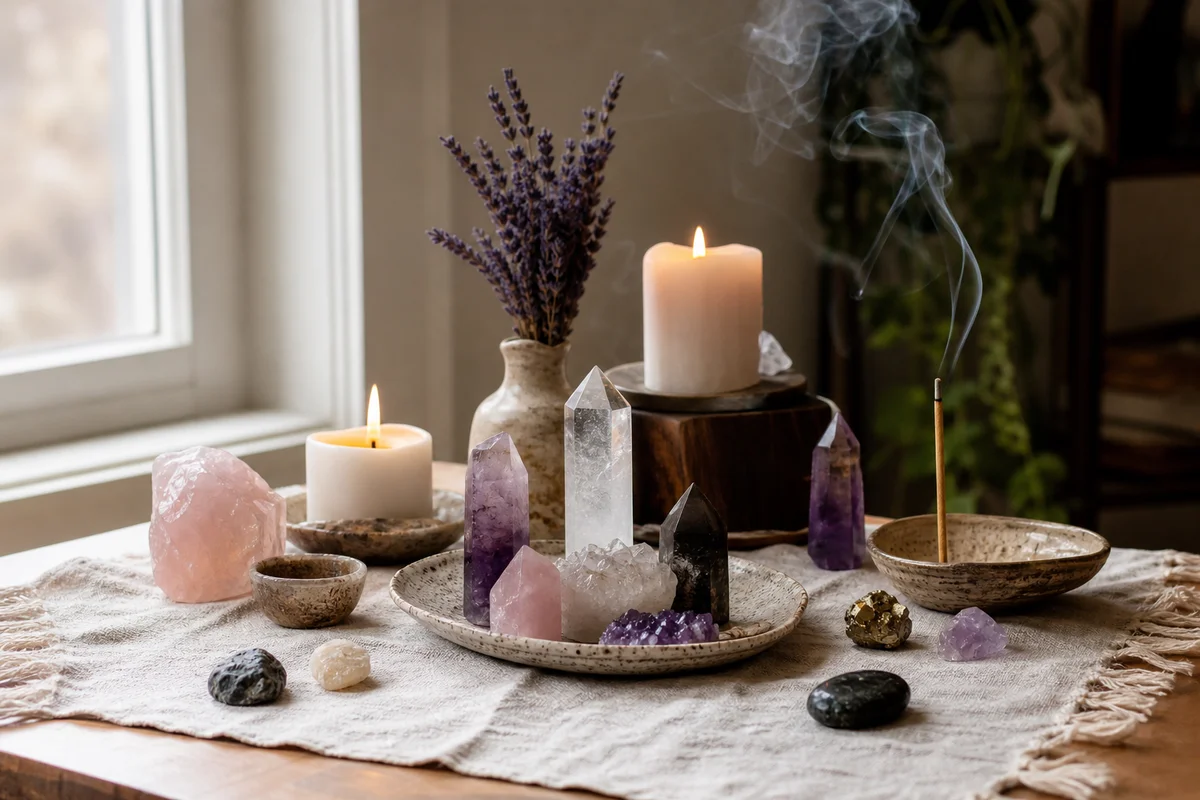
How to Create a Crystal Altar: A Practical Setup Guide for Any Space
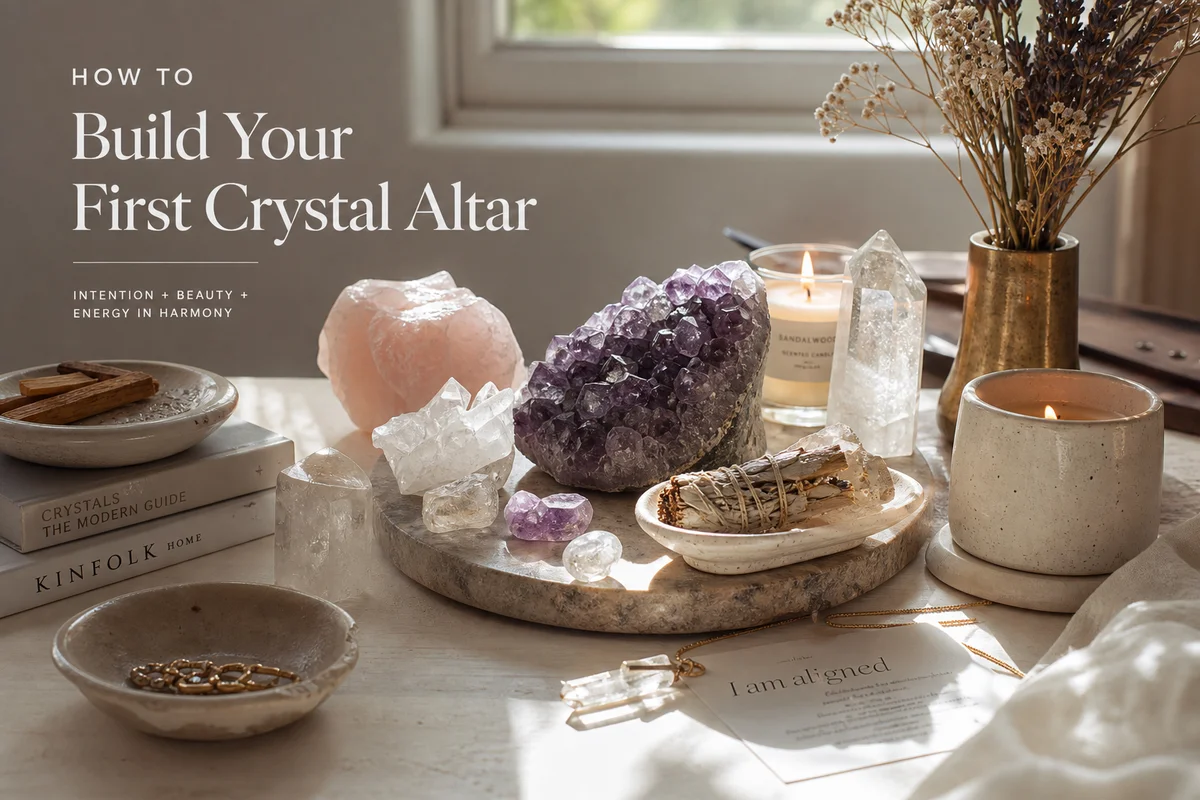
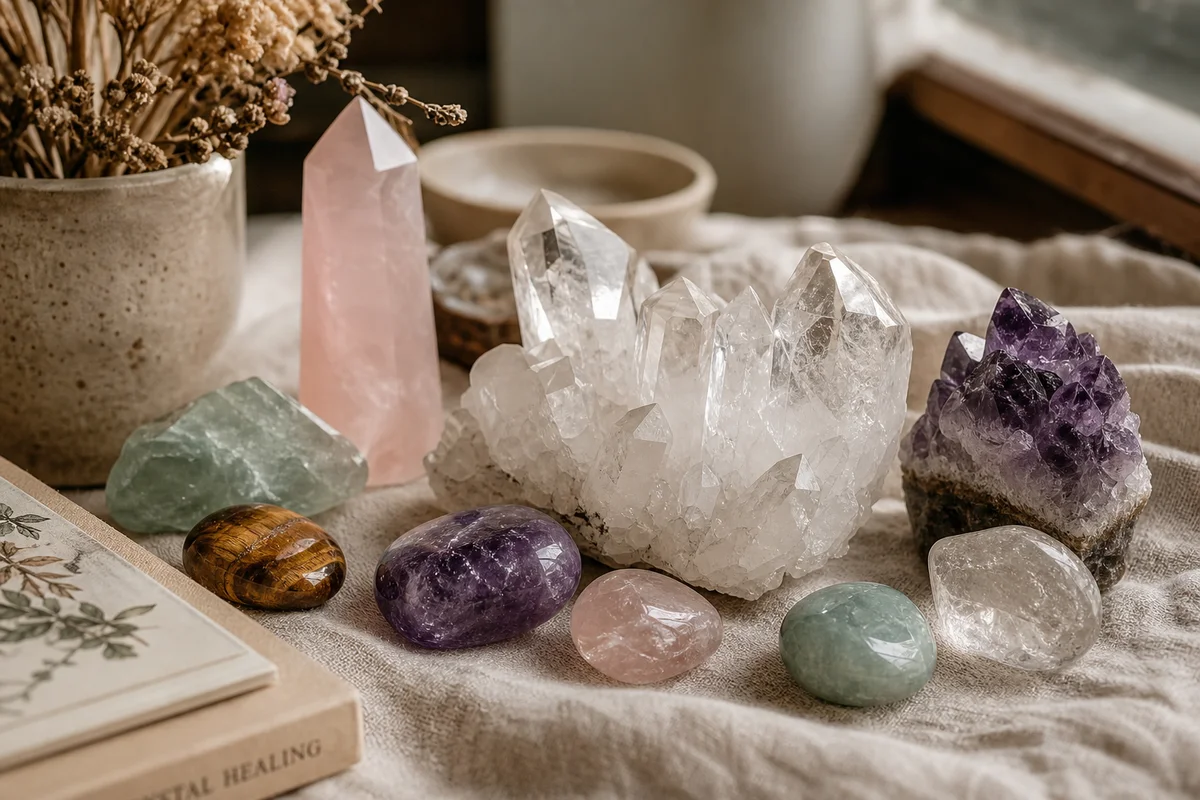
A crystal altar doesn't require a dedicated room, expensive stones, or any particular belief system. At its most basic, it's a designated surface where you keep stones that matter to you, arranged in a way that's visually calming. Whether you use it for meditation, as a mindfulness anchor, or just as a nice-looking display, the setup process is the same.
This guide covers practical considerations — what surface to use, how to arrange stones without them looking cluttered, lighting, maintenance, and common mistakes.
Choosing the Space
The surface matters more than the location. A small shelf, the corner of a desk, a windowsill, or a dedicated table all work. Key considerations:
- Stability: Don't put your altar somewhere it'll get bumped. Stones falling off surfaces is how they chip and crack — especially soft ones like selenite (Mohs 2) or calcite (Mohs 3).
- Light: Indirect natural light shows off translucent stones beautifully. Direct sunlight will fade amethyst, rose quartz, kunzite, and citrine over time. If you want your altar on a windowsill, choose stones that don't fade — obsidian, tiger's eye, and black tourmaline are safe.
- Size: Start small. A 12×12 inch space is enough for 5-8 stones plus a candle. You can always expand later.
Selecting Stones
There are two approaches: thematic or intuitive. Both are valid.
Thematic approach: Choose stones for a specific purpose. A "calm" altar might include lepidolite (lilac, soothing to look at), blue lace agate (soft blue, gentle), and clear quartz (clean visual). A "focus" altar might use hematite (heavy, grounding), fluorite (structured-looking with its cubic crystals), and black tourmaline (simple, visually quiet).
Intuitive approach: Pick stones you're drawn to. Walk through a crystal shop or look through your collection and pick the ones you want to see every day. This approach sounds less "serious" but actually results in altars people interact with more — because they chose stones they genuinely like looking at.
Mixed approach (recommended): Start with 2-3 stones chosen for a purpose, then add 1-2 purely because you like them. This keeps the altar intentional without making it rigid.
Arrangement Principles
The difference between an altar and a pile of rocks is arrangement. A few principles:
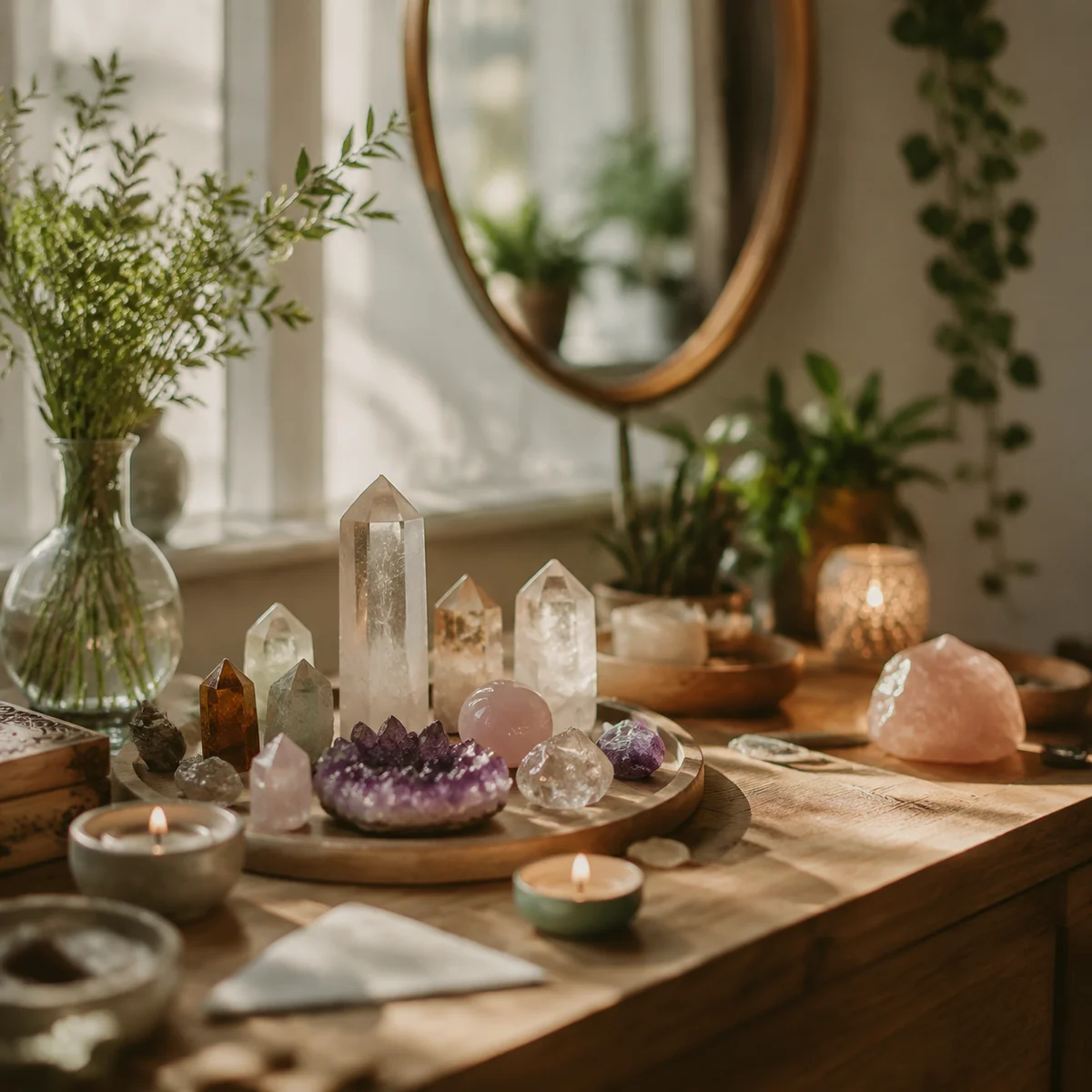
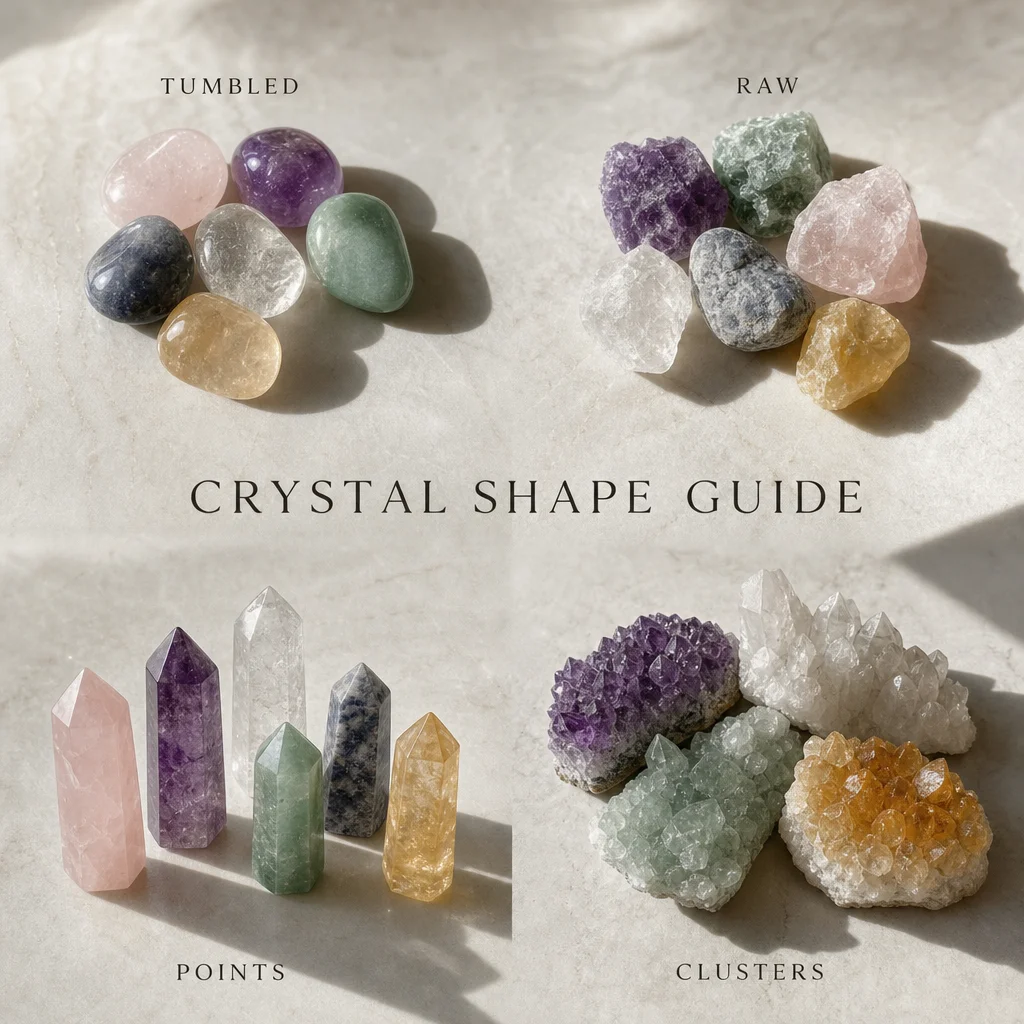
- Height variation: Place taller specimens (selenite towers, large quartz points) at the back, shorter ones (tumbled stones, small clusters) in front. This creates depth and lets you see everything.
- Color balance: Distribute colors evenly rather than grouping all warm tones on one side and cool tones on the other. Your eye should move across the arrangement naturally.
- Leave space: Don't cram stones together. Negative space (empty areas) makes each stone stand out more. Aim for 30-40% empty space on your surface.
- Odd numbers: 3, 5, or 7 stones look more natural than even numbers. This is a basic design principle — odd numbers prevent the brain from automatically pairing and grouping objects.
If you want to add structure, crystal grids provide geometric templates for arrangement. But a grid isn't necessary — free-form arrangements work perfectly well.
Non-Crystal Elements
Most crystal altars include a few other objects for visual balance and personal meaning:
- Candles: A small candle (LED if you're worried about fire near stones) adds warmth. Some stones contain water inclusions (enhydro quartz) that can crack if heated, so keep candles at a safe distance.
- Plants: A small succulent or air plant adds life. Avoid plants that need misting — moisture damages some minerals.
- Natural objects: Shells, dried flowers, feathers, driftwood. These bridge the gap between "crystal display" and "natural space."
- Personal items: Photos, handwritten notes, small objects with personal significance. These make the altar yours rather than a generic crystal display.
Maintenance
Crystal altars collect dust like any other surface. Here's how to keep it clean without damaging stones:
- Dusting: Use a soft brush (makeup brush works well) for delicate specimens. Compressed air works for hard-to-reach crevices in clusters.
- Water-sensitive stones: Selenite, halite, and calcite should never be wiped with a damp cloth. Dry brushing only.
- Rearranging: Every few weeks, rearrange. This keeps the altar fresh and gives you a reason to handle and look closely at your stones — which is the whole point of having them.
Common Mistakes
- Too many stones: If you can't see each individual stone clearly, you have too many. Remove some. Quality over quantity.
- Hard stones scratching soft stones: Quartz (Mohs 7) will scratch calcite (Mohs 3). Keep hard and soft stones separated.
- Direct sunlight on fade-prone stones: Amethyst and rose quartz will lose color. Test by leaving one stone in the sun for a week — if it fades, keep it in indirect light.
- Overcomplicating it: An altar doesn't need to be "activated," "charged," or aligned with cardinal directions. It's a personal space. Arrange it however makes sense to you.
Seasonal Updates
One nice practice is updating your altar with the seasons — not for mystical reasons, but because it keeps the space feeling fresh:
- Spring: Lighter stones (clear quartz, celestite, green aventurine), fresh flowers
- Summer: Warm tones (citrine, sunstone, carnelian), seashells
- Fall: Earth tones (smoky quartz, tiger's eye, jasper), dried leaves
- Winter: Cool and deep colors (labradorite, sugilite, garnet), evergreen sprigs
This gives you a reason to rotate your collection and interact with stones you might otherwise forget about.
A crystal altar is personal. There's no wrong way to do it as long as you're handling your stones safely and actually enjoying the space you've created. Start simple — a few stones on a clean surface — and let it evolve naturally.
Optimizing Your Crystal Altar for Meditation and Mindfulness
Creating a crystal altar is just the beginning. To truly make it a sacred space for meditation and mindfulness, you need to consider the energy flow and the overall atmosphere. Here are some tips to enhance your altar's purpose:First, ensure your altar is a place where you can sit comfortably and focus. A comfortable chair or cushion can make a world of difference. You want to be able to meditate for a few minutes without feeling restless or uncomfortable.
- Centering the Altar: Place your altar in a spot that feels central to your living space. This could be the middle of a room or against a wall where you can face it easily.
- Minimalist Design: Keep the altar clutter-free. Too many items can distract you from your meditation practice. Keep only what is essential to you and your practice.
- Personal Touches: Add personal touches like incense, a small plant, or a picture that inspires you. These can help you feel more connected to the space.
Using Crystals for Meditation
Crystals can be powerful allies in meditation. Here's how to use them effectively:Intention Setting: Before you begin meditating, hold each crystal and set an intention for what you want to achieve. This could be anything from relaxation to clarity or emotional healing.
- Placing Crystals: Arrange your crystals in a way that feels right to you. Some people like to have them around them, while others prefer to have them in front of them as a focal point.
- Crystal Chakra Alignment: You can also place crystals on or near your body's chakras during meditation. For example, place a red jasper on your root chakra, a citrine on your solar plexus, and a lapis lazuli on your third eye.
Care and Maintenance of Your Crystal Altar
An altar is an investment in your spiritual well-being, so it's important to take care of it. Here's how to keep your crystal altar looking beautiful and maintaining its energy:Cleaning: Dust your crystals regularly with a soft cloth. For crystals with a glossy finish, use a microfiber cloth. Some crystals can be cleaned with warm water and mild soap, but always check the care instructions first.
- Recharging: Crystals need to be recharged to maintain their energy. This can be done by placing them in sunlight or moonlight, using a crystal charger, or simply by holding them in your hands and visualizing their energy being refreshed.
- Storage: When not in use, store your crystals in a safe, dry place. Soft pouches or small boxes are great for this. Avoid storing them in direct sunlight or in places where they can be easily damaged.
Expert Tips for Your Crystal Altar
Here are some expert tips to help you get the most out of your crystal altar:- Experiment with Layouts: Don't be afraid to switch up the arrangement of your crystals. Sometimes a different layout can bring new insights or energy to your meditation practice.
- Use a Journal: Keep a journal of your experiences with your altar. Noting down what you feel during meditation or what insights you gain can be incredibly rewarding.
- Share Your Altar: If you're comfortable, share your altar with others. Sometimes the act of sharing can deepen your connection to the stones and the energy they hold.
Common Mistakes to Avoid When Setting Up a Crystal Altar
Even with the best intentions, it's easy to make mistakes when setting up a crystal altar. Here are some common pitfalls to avoid:- Overloading the Altar: Too many crystals can make the altar look cluttered and overwhelming. It's better to have a few carefully chosen stones than a crowded display.
- Ignoring Safety: Always consider the stability of your altar. Place it in a secure location and be mindful of the weight of the stones you're using.
- Ignoring Your Intuition: While it's important to have a purpose for your altar, don't ignore your intuition. Trust your instincts when choosing stones and arranging them.
FAQ Section
How often should I clean my crystal altar?
How often should I clean my crystal altar?
It's a good idea to dust your crystal altar weekly and give it a deeper cleaning once a month. This helps maintain the beauty of the stones and keeps the energy flowing.
Can I use any crystal for meditation?
Can I use any crystal for meditation?
Most crystals can be used for meditation, but some are particularly well-suited for this practice. Stones like clear quartz, amethyst, and malachite are known for their calming and grounding properties.
Should I use a specific type of cloth to dust my crystals?
Should I use a specific type of cloth to dust my crystals?
A soft, lint-free cloth is best for dusting crystals. Microfiber cloths are great because they are gentle and effective at picking up dust without scratching the surface.
How do I know if a crystal is charged or not?
How do I know if a crystal is charged or not?
Crystals are naturally charged with energy from the earth. You can recharge them by placing them in sunlight or moonlight, using a crystal charger, or simply by holding them and visualizing their energy being refreshed.
Can I put my crystal altar in a bedroom?
Can I put my crystal altar in a bedroom?
Absolutely! Many people find that having a crystal altar in their bedroom helps create a peaceful and calming environment for sleep. Just make sure the stones are safe from knocks and falls.

Comments