How to Build a Crystal Altar That Actually
May 14, 2026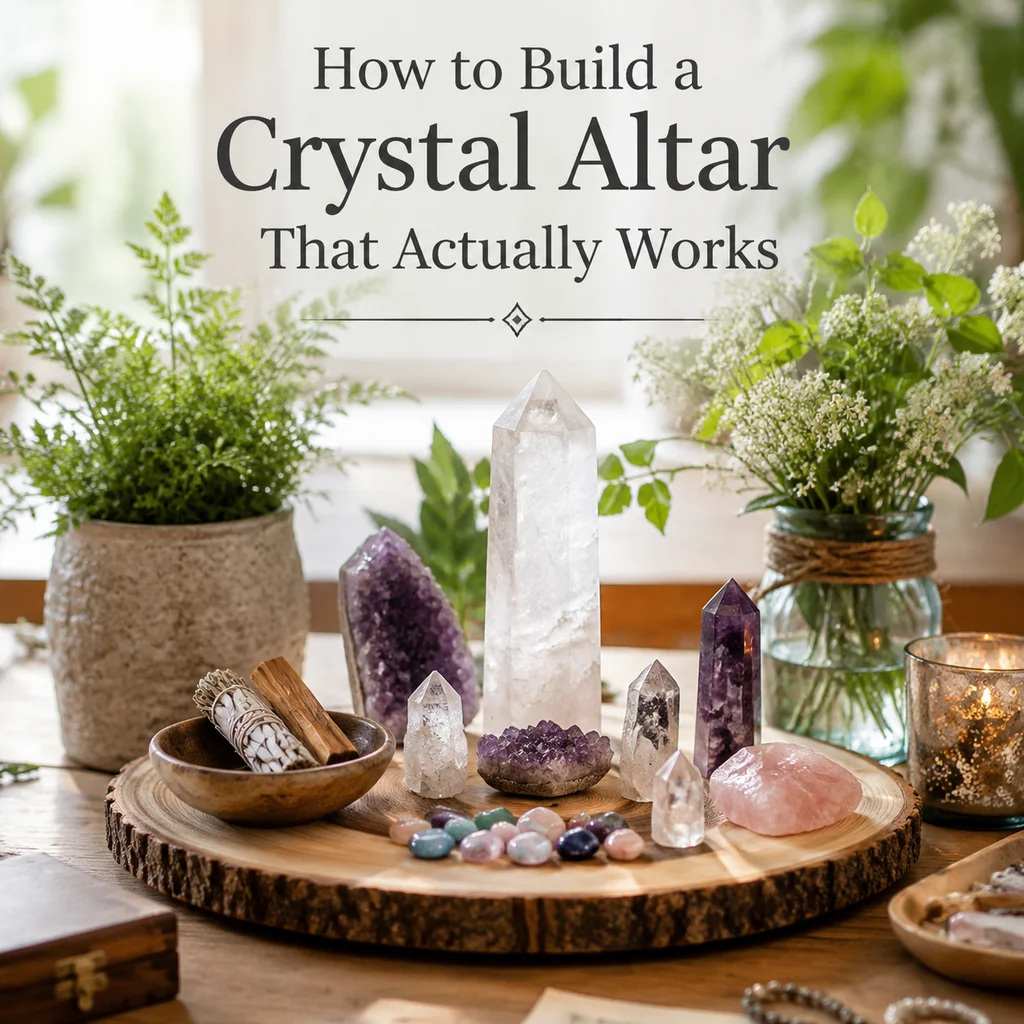
How to Build a Crystal Altar That Actually Looks Good
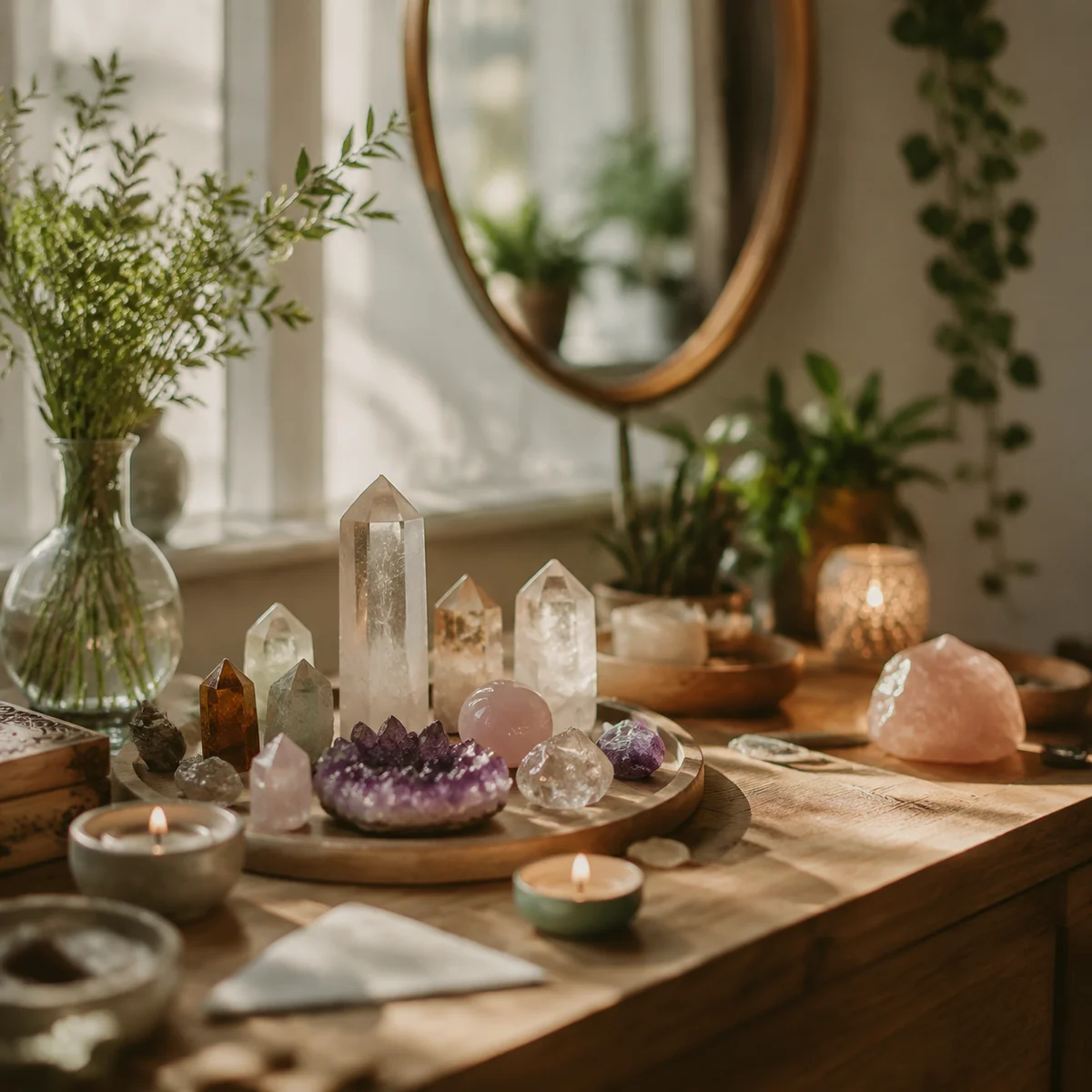
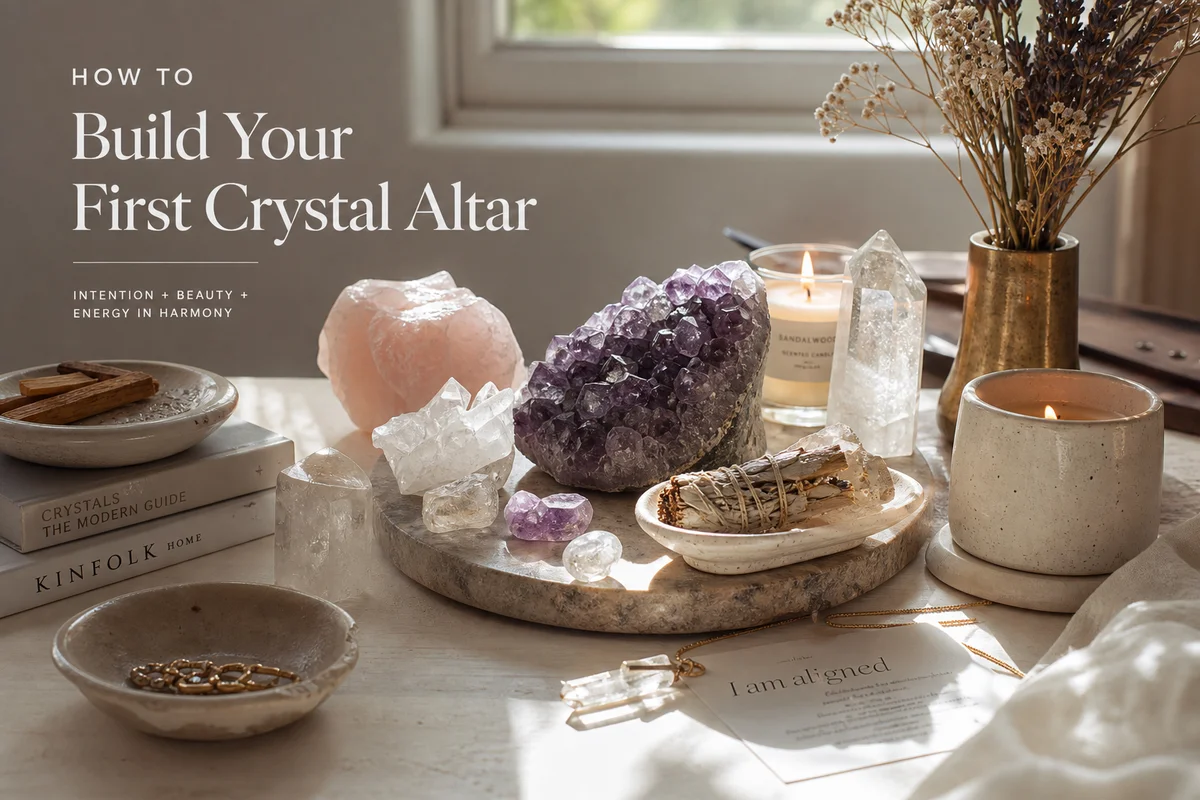
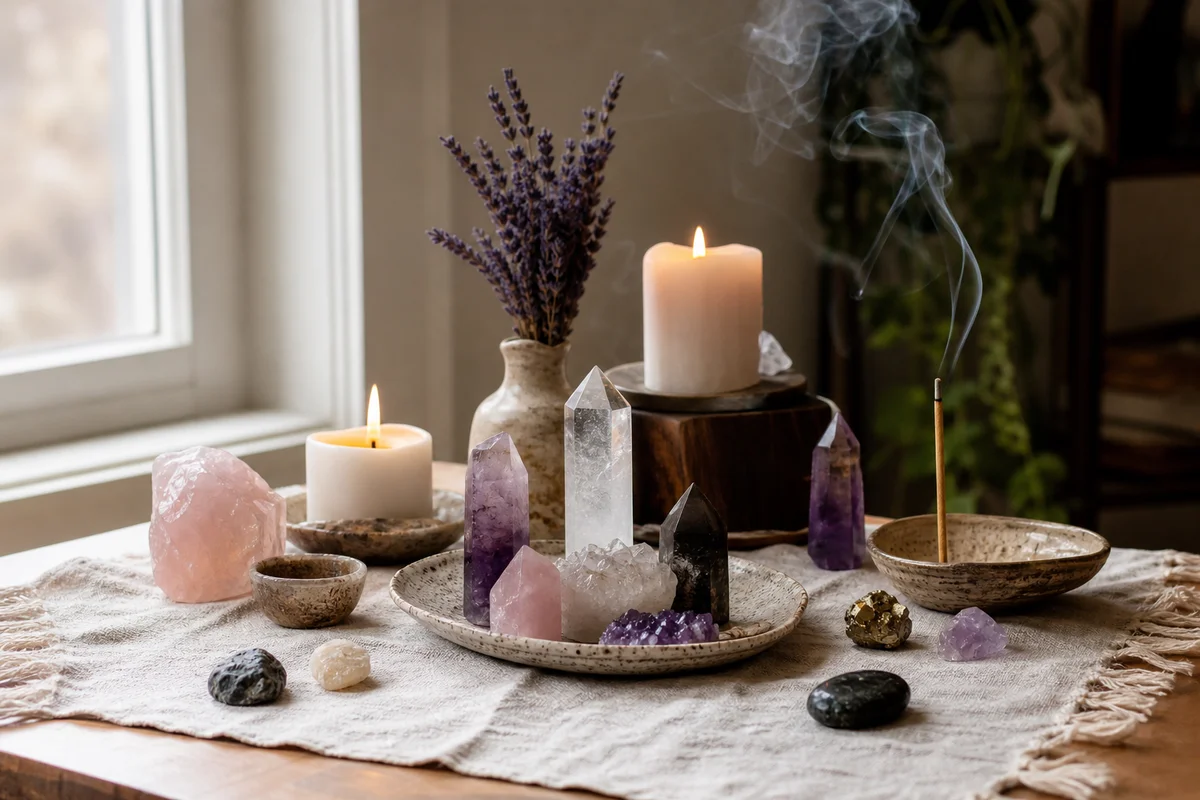
Most crystal altar guides online look like someone emptied a metaphysical shop onto a wooden tray and called it sacred. If that's your style, great. But if you want a crystal arrangement that looks intentional and works with your home decor — something guests would compliment rather than side-eye — this guide is for you.
I've designed crystal arrangements for bookshelves, bedside tables, and even office desks. The principles are the same whether you're building something spiritual or purely aesthetic.
Start With One Anchor Piece
Every good arrangement has a focal point. This is the piece that draws your eye first and around which everything else is organized. Good anchor pieces include:
- A tall crystal point — clear quartz or selenite tower ($10–$30)
- A medium geode half — amethyst or agate ($25–$60)
- A crystal sphere — obsidian, rose quartz, or fluorite ($15–$40)
- A large tumbled stone — palm-sized labradorite with good flash ($20–$35)
Place this piece slightly off-center. Symmetrical arrangements look formal and stiff; asymmetry looks natural and intentional. Think Japanese ikebana, not department store display.
Use Height Variation
Flat arrangements are boring. You want pieces at three different heights:
- Tall (8–12 inches): Your anchor piece, or a tall crystal point
- Medium (3–5 inches): Cluster specimens, smaller towers, or stacked stones
- Low (1–2 inches): Tumbled stones, flat agate slices, or a small dish of crystals
If all your crystals are roughly the same height (a common problem with tumbled stone collections), use risers. A wooden block, a stack of two books, or a small ceramic pedestal ($5–$10 at most home stores) creates instant visual interest.
Limit Your Color Palette
This is the single biggest difference between "crystal altar" and "pile of rocks." Pick 2-3 colors maximum:
- White + clear + one accent: Selenite, clear quartz, and one colored piece (amethyst, rose quartz, or fluorite)
- Black + gold: Black tourmaline, pyrite, and maybe a small gold-colored accent
- Earth tones: Smoky quartz, jasper, tiger's eye, and one piece of citrine for warmth
- Blues and greens: Amazonite, aquamarine, green aventurine, and maybe one crystal with contrasting texture
The mistake most people make is using every crystal they own. A curated arrangement of 5-7 pieces in a limited palette looks dramatically better than 30 random stones spread across a surface.
Think About Texture, Not Just Color
Crystals have distinct textures that create visual interest when contrasted:
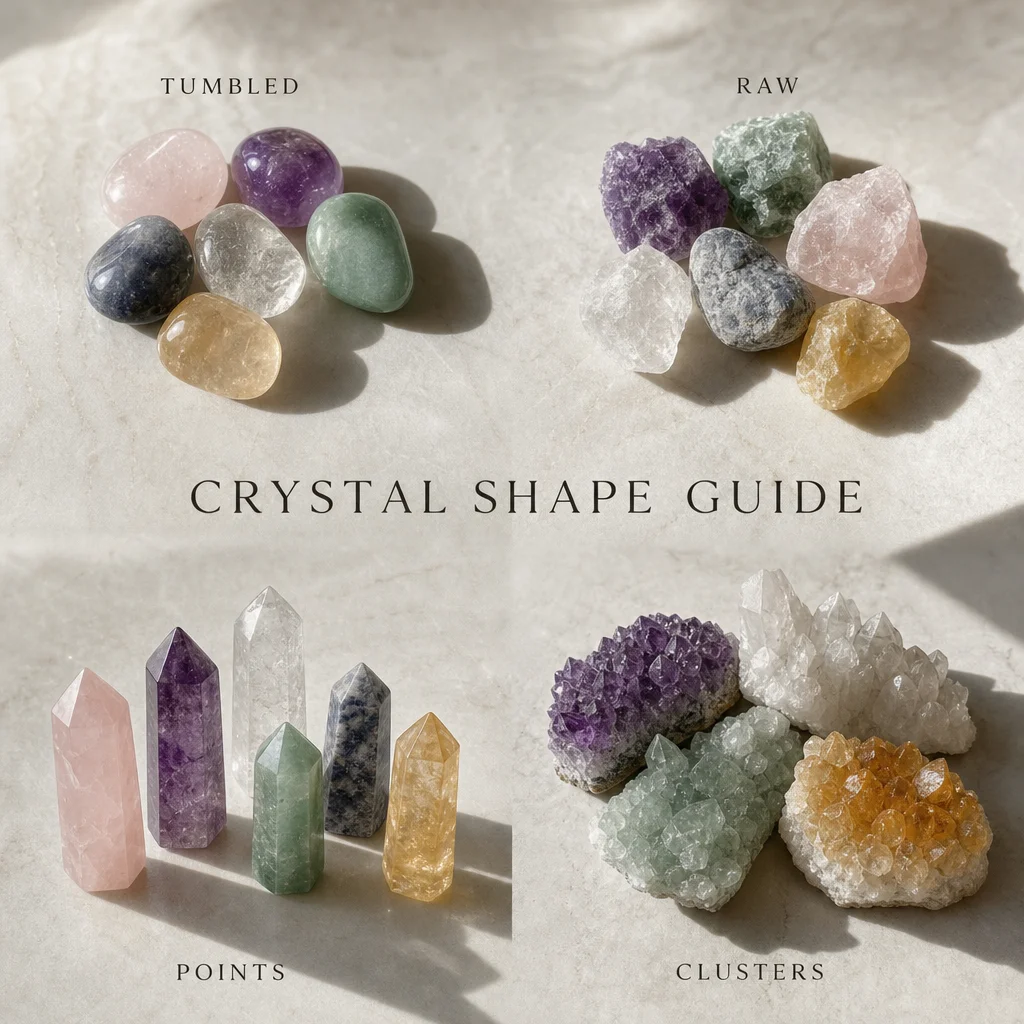
- Smooth and polished (spheres, palm stones) next to rough and raw (clusters, raw points)
- Translucent (quartz, fluorite) next to opaque (jasper, obsidian)
- Metallic (pyrite, hematite) next to matte (howlite, chalky stones)
- Banded or patterned (agates, malachite) next to solid color (rose quartz, amethyst)
Even within a single color, mixing textures keeps the arrangement dynamic. Three white stones that are selenite (smooth), calcite (rough/rhomboid), and howlite (matte with grey veining) look far more interesting than three polished white stones of similar shape.
Practical Placement by Location
Bookshelf
Place your crystal arrangement between groups of books, not on top of them. Leave about a hand's width of space on each side. A crystal point standing upright between two bookends is the easiest shelf arrangement that looks polished.
Bedside Table
Keep it simple: one medium piece (sphere or cluster) on a coaster or small dish, maybe with one small tumbled stone beside it. The bedside is not the place for a large arrangement — you want calm, not clutter, next to your sleeping space.
Desk or Workspace
Functional crystals work best here. A polished stone you can pick up and hold while thinking (worry stones, palm stones) plus one decorative piece. I keep a labradorite sphere on my desk — it catches the light from my monitor and looks good on Zoom calls.
Meditation or Yoga Space
This is where you can go bigger. A flat surface (wooden board, large agate slice, or fabric mat) with crystals arranged in a grid pattern works well. Crystal gridding combines visual appeal with intentional arrangement.
Lighting Makes or Breaks It
Crystals interact with light in ways that most decorative objects don't. Use this to your advantage:
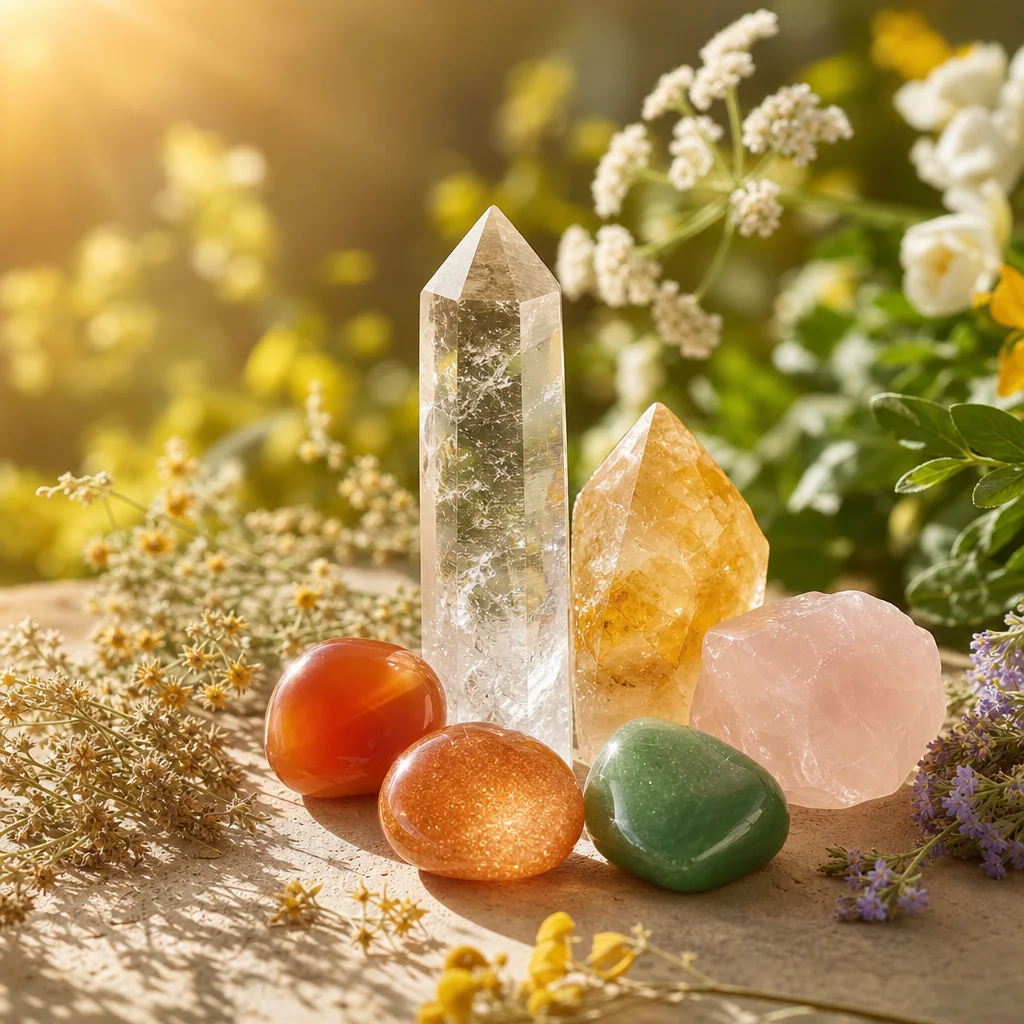
- Window light: Place translucent stones (quartz, calcite, fluorite) where they'll catch natural light. They literally glow from within when backlit.
- LED strip or fairy lights: A subtle warm LED strip behind or under crystals creates a display case effect for $10.
- Candles: Tea lights near selenite create a soft, warm glow. Keep candles at least 4 inches from crystals to avoid heat damage.
- Labradorite flash: Position labradorite so it catches light from a specific angle — the blue-green flash appears and disappears as you move around the room.
Don't put crystals in direct sunlight for long periods. Amethyst, rose quartz, citrine, and kunzite will fade. Direct sun damage is one of the most common ways people ruin their crystals without realizing it.
Maintenance: Keeping It Looking Good
Crystal displays collect dust. A few simple habits keep them looking their best:
- Dust smooth surfaces with a microfiber cloth (no water or chemicals needed)
- Use a soft brush (makeup brush works) for rough clusters and crevices
- Rotate pieces occasionally — both for even light exposure and because a fresh arrangement feels new again
- Keep a small dish of silica gel packets hidden behind larger pieces to control humidity
A well-designed crystal arrangement is like a small sculpture that you can rearrange whenever you want a change. Start with one anchor piece, add 3-4 supporting stones in a limited palette, pay attention to height and texture, and let the light do the rest. It doesn't need to be complicated to look beautiful.
Choosing the Right Crystals for Your Altar
Now that you have the basics down, it's time to think about the crystals you want to include. The right crystals can enhance the energy of your altar and align it with your personal intentions. Here's how to choose the perfect crystals for your space:
Align with Your Intentions
Before you start picking crystals, think about what you want to achieve with your altar. Are you looking to create a space for meditation, a place to focus on abundance, or a sanctuary for relaxation? Here are some crystals that align with different intentions:
- Meditation: Clear quartz, amethyst, selenite, and lapis lazuli
- Abundance: Citrine, jade, and carnelian
- Relaxation: Rose quartz, amethyst, and sodalite
- Protection: Black tourmaline, smoky quartz, and hematite
- Creativity: Fluorite, aventurine, and citrine
Consider the Energy of the Crystals
Each crystal has its own unique energy. Some are grounding, while others are uplifting. It's important to choose crystals that resonate with you and your personal energy. Here's a quick guide to the energy of some popular crystals:
- Clear quartz: Amplifies energy and enhances clarity
- Rose quartz: Promotes love and healing
- Amethyst: Provides protection and promotes spiritual growth
- Black tourmaline: Protects against negative energy and promotes stability
- Smoky quartz: Grounds and protects, especially from electromagnetic fields
Quality Over Quantity
It's tempting to fill your altar with as many crystals as possible, but quality matters more than quantity. Choose crystals that are well-polished and free of chips or cracks. A few high-quality crystals can create a more powerful and visually appealing arrangement than a lot of lower-quality ones.
Personal Touches
Make your crystal altar unique by adding personal touches. This could be a favorite photograph, a meaningful quote, or even a small plant. These elements can help create a space that feels truly yours.
Arranging Your Crystals
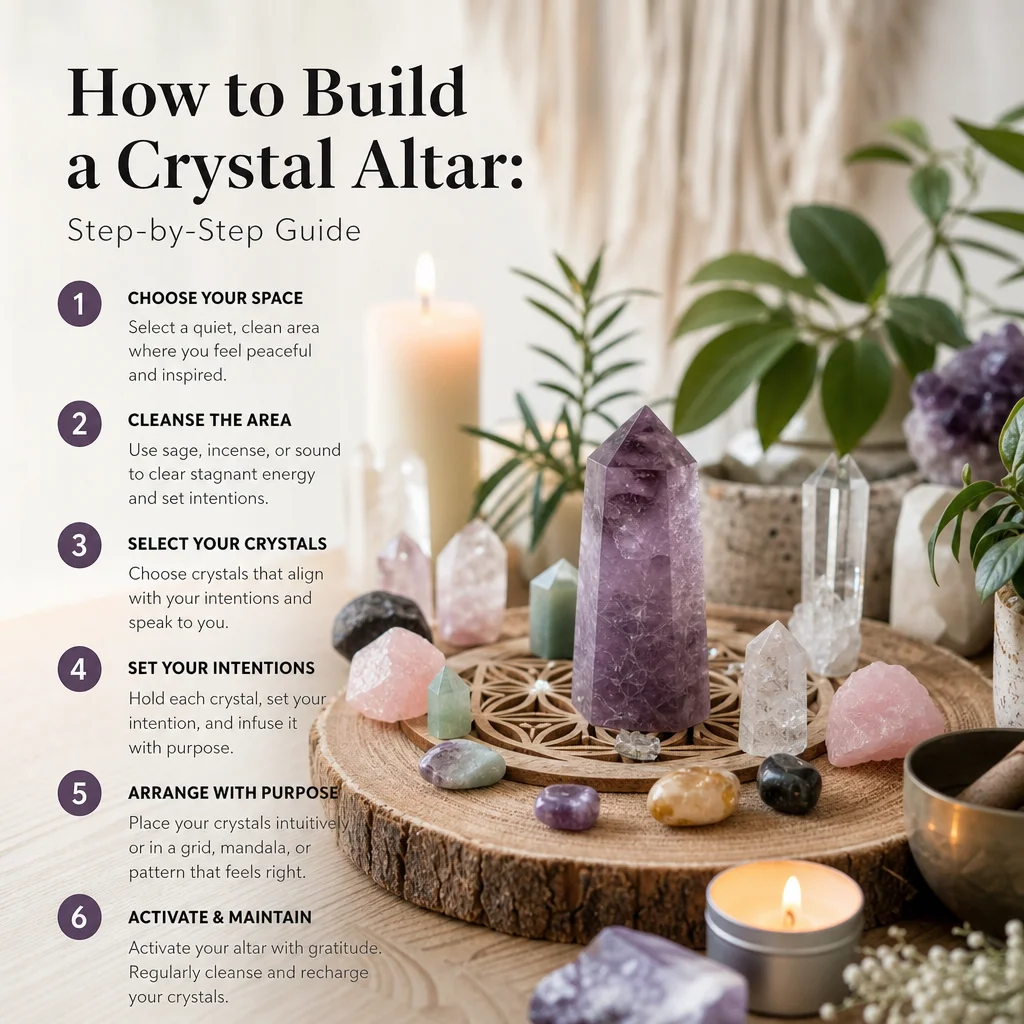
Once you have your crystals, it's time to arrange them. Here are some tips to help you create a visually appealing and energetically charged altar:
Start with the Anchor Piece
As mentioned earlier, start with your anchor piece. This will be the focal point of your altar and will help guide the rest of your arrangement.
Layer Your Crystals
Think of your altar as a layered composition. Start with the tallest pieces, then add medium-sized ones, and finish with the smallest. This creates a sense of depth and dimension.
Use Rhythms and Patterns
Creating rhythms and patterns can make your altar more visually interesting. For example, you could place a row of small tumbled stones in a straight line or group similar-sized crystals together.
Balance Your Arrangement
A balanced altar feels harmonious and inviting. Use a mix of textures, shapes, and sizes to create a balanced composition. Avoid placing all your crystals in one area; spread them out to create a sense of flow.
Care for Your Crystal Altar
Your crystal altar is a living space, and it requires care and attention. Here are some tips to keep your altar looking beautiful and energetically charged:
Clean Your Crystals Regularly
Crystals can accumulate negative energy over time. To keep them clean and charged, use a soft cloth to wipe them down regularly. You can also use a saltwater bath or a crystal cleaner designed specifically for this purpose.
Recharge Your Crystals
Crystals can be recharged using various methods, such as sunlight, moonlight, or by placing them on a quartz charger. Recharging your crystals helps to maintain their energy and keep them working effectively.
Refresh Your Arrangement
Every so often, it's a good idea to refresh your altar. This could mean rearranging your crystals, adding new ones, or simply giving the space a good cleaning. A fresh arrangement can help keep your altar feeling vibrant and alive.
FAQ
What's the best way to clean my crystals?
What's the best way to clean my crystals?
Use a soft cloth to wipe them down regularly. For a deeper clean, you can use a saltwater bath or a crystal cleaner designed specifically for this purpose.
How often should I recharge my crystals?
How often should I recharge my crystals?
It depends on the type of crystal and how much energy you use. As a general rule, recharge your crystals once a month or whenever you feel they need a boost.
Can I use any type of container for my crystal altar?
Can I use any type of container for my crystal altar?
Yes, you can use any type of container as long as it's stable and won't topple over. Some popular options include wooden boxes, glass bowls, and ceramic dishes.
How do I know which crystals to use for my altar?
How do I know which crystals to use for my altar?
Think about what you want to achieve with your altar and choose crystals that align with those intentions. You can also consider the energy of the crystals and how they resonate with you personally.
Can I use my crystal altar for meditation?
Can I use my crystal altar for meditation?
Absolutely! A crystal altar can be a powerful tool for meditation. It can help you focus and create a sacred space for reflection and relaxation.
Comparison Table: Crystal Altar Containers
| Container Type | Pros | Cons |
|---|---|---|
| Wooden Box | Classic, grounding, can be personalized | Can be expensive, may require maintenance |
| Glass Bowl | Transparent, visually appealing, easy to clean | Can be fragile, may not be as grounding as wood |
| Ceramic Dish | Classic, durable, can be personalized | Can be heavy, may not be as visually appealing as glass |
| Crystal Grid | Modern, versatile, can be used for specific purposes | Can be expensive, may require more setup |
Comments