Mixed Metal Wire Jewelry: Copper + Silver Des...
June 5, 2026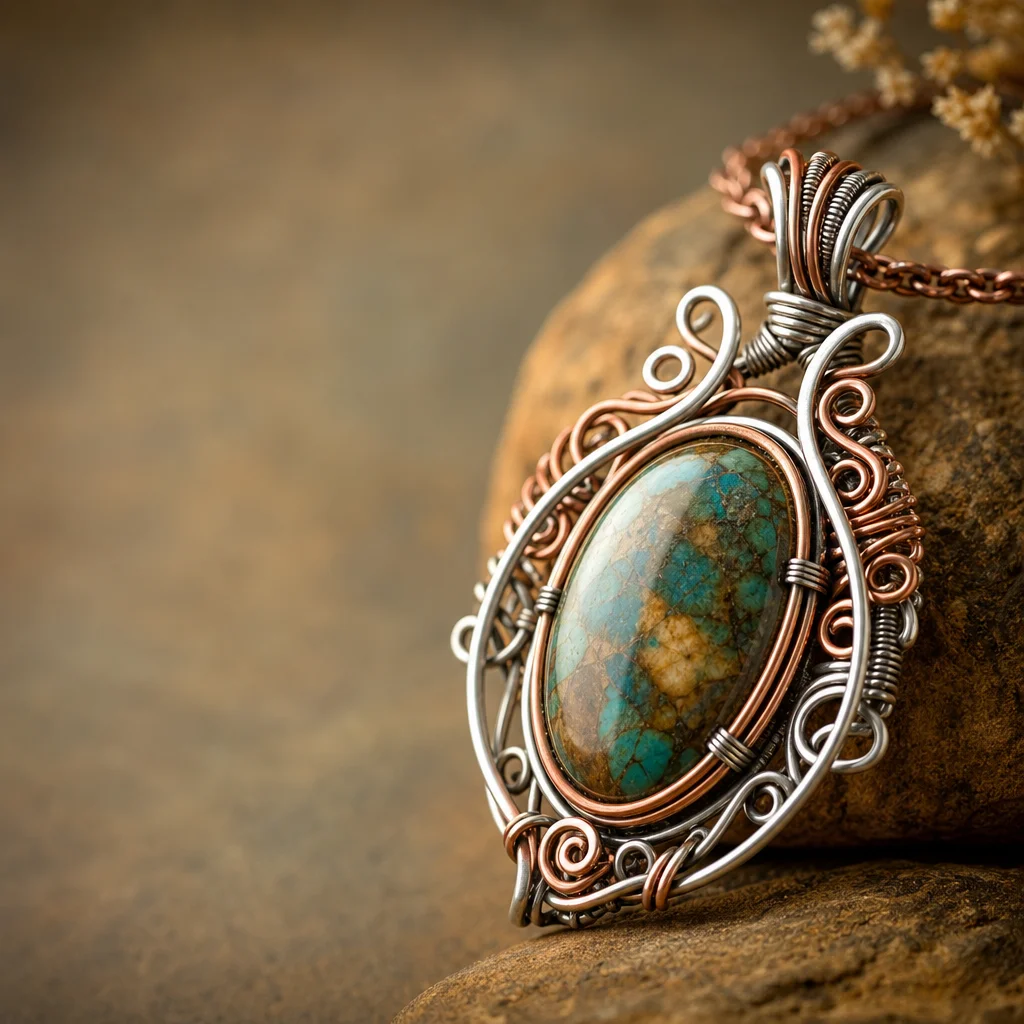
Why Mix Metals in Wire Wrapping?
Single-metal wire wrapping is where most people start and many people stay — and there's nothing wrong with that. A copper-wrapped amethyst or a silver-wrapped moonstone is a beautiful thing. But mixing copper and silver in the same piece adds a dimension that single-metal designs simply can't achieve: contrast.
Contrast in jewelry design works the same way as contrast in graphic design or interior design. It creates visual interest, directs the eye, establishes hierarchy, and prevents the piece from feeling flat or monotonous. When copper's warm, earthy tones meet silver's cool, reflective surface, the two metals make each other look better — copper appears richer next to silver, and silver appears brighter next to copper.
Mixed metal wire wrapping also solves practical design problems. Copper is affordable, easy to work with, and takes oxidation (patina) beautifully. Silver is more expensive, harder to manipulate, and stays bright. By using copper for the structural framework and silver for accent details — or vice versa — you get the best properties of both metals in one piece.
Understanding How the Two Metals Behave Differently
Before you start wrapping, you need to understand how copper and silver differ in their working properties. Treating them the same way leads to frustration.
Work hardening: Both copper and silver harden when bent, hammered, or twisted — but at different rates. Copper work-hardens slowly and can be bent many times before becoming stiff. Silver (especially dead soft) work-hardens quickly and may become brittle after just a few bends. This means if you're coiling wire around a stone and using both metals, the silver coils may become too tight to continue while the copper coils are still flexible. Solution: switch to half-hard silver for structural elements and save dead soft for decorative wrapping.
Melting point: Silver melts at 962°C (1763°F). Copper melts at 1085°C (1985°F). This 123°C difference means if you're using a micro-torch for any soldering or balling, silver will melt and flow before copper does. Important: most beginner wire wrappers use cold connections only (no torch work), but it's worth knowing in case you advance to soldered elements.
Oxidation: Copper oxidizes (tarnishes) to brown, green, or blue-green depending on the environment and the presence of acids on the wearer's skin. Silver oxidizes to yellow-brown and eventually black. Left to age naturally, copper develops a warm patina while silver develops a dark patina. Many mixed-metal designers intentionally accelerate and control this oxidation to create specific color contrasts.
Spring-back: When you bend wire past its yield point and release it, the wire "springs back" slightly — it doesn't hold exactly the shape you bent it into. Copper has moderate spring-back. Silver has more spring-back. When wrapping both metals in the same piece, you need to bend the silver slightly past your target shape to account for the greater spring-back, or you'll end up with the silver elements slightly more open than the copper elements.
The 70/30 Rule: Metal Proportion
The most common mistake in mixed metal design is using equal amounts of each metal. 50/50 copper and silver creates visual confusion — the eye doesn't know which metal to focus on, and the piece feels undecided rather than intentional.
The 70/30 rule states that one metal should dominate (roughly 70% of the visible surface) while the other serves as an accent (roughly 30%). This creates a clear hierarchy: the dominant metal establishes the overall tone of the piece, and the accent metal provides contrast and visual interest.
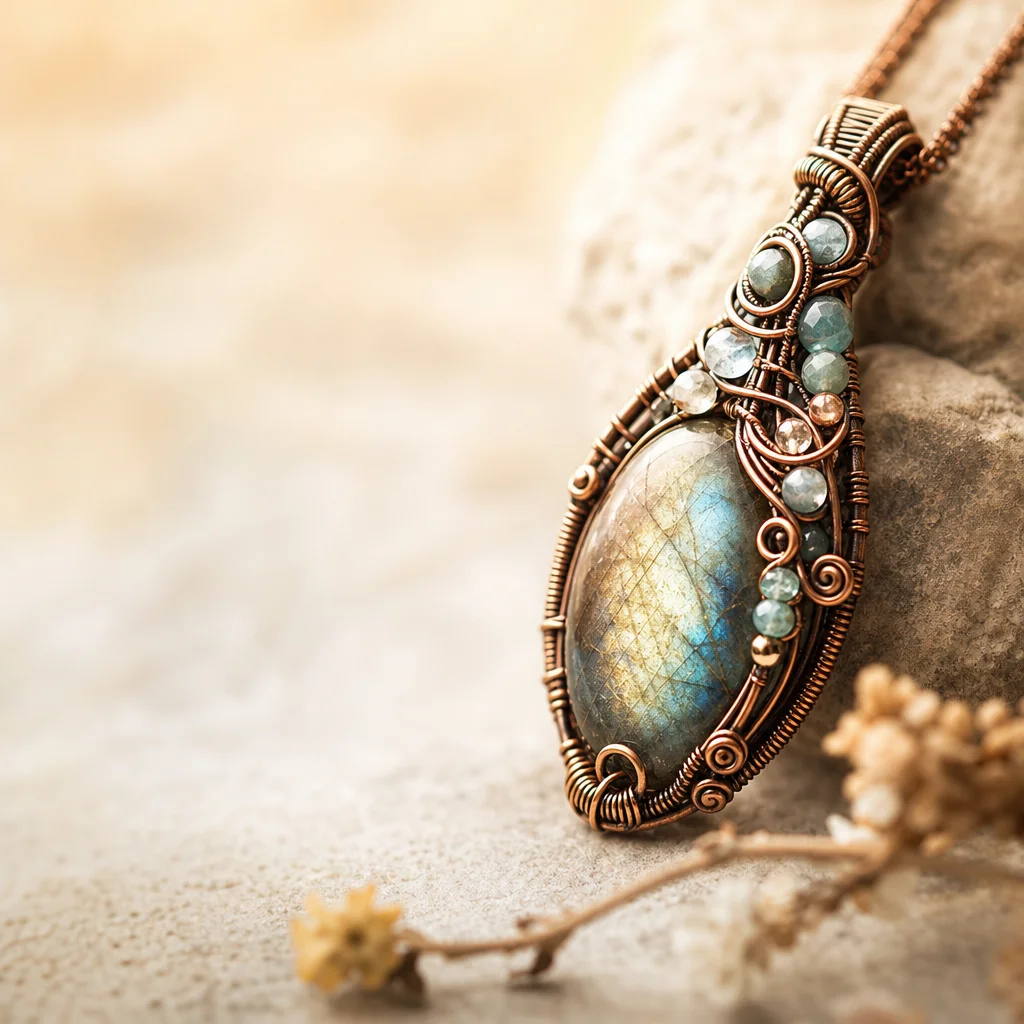
Copper dominant (70% copper, 30% silver): Use this when you want a warm, earthy, organic look. Copper provides the structural framework — the main wrapped section around the stone, the bail, the main chain. Silver appears as thin accent coils, small beads, or wire-wrapped details that catch the light and provide bright highlights against the warm copper background.
Silver dominant (70% silver, 30% copper): Use this for a cooler, more refined look. Silver forms the main structure, with copper appearing as warm accent lines, coiled details, or a copper wire core wrapped in silver. This combination is particularly effective with blue, purple, and green stones that complement silver's cool tones while the copper adds warmth and prevents the piece from feeling cold.
5 Mixed Metal Techniques
1. Copper Core with Silver Wrap
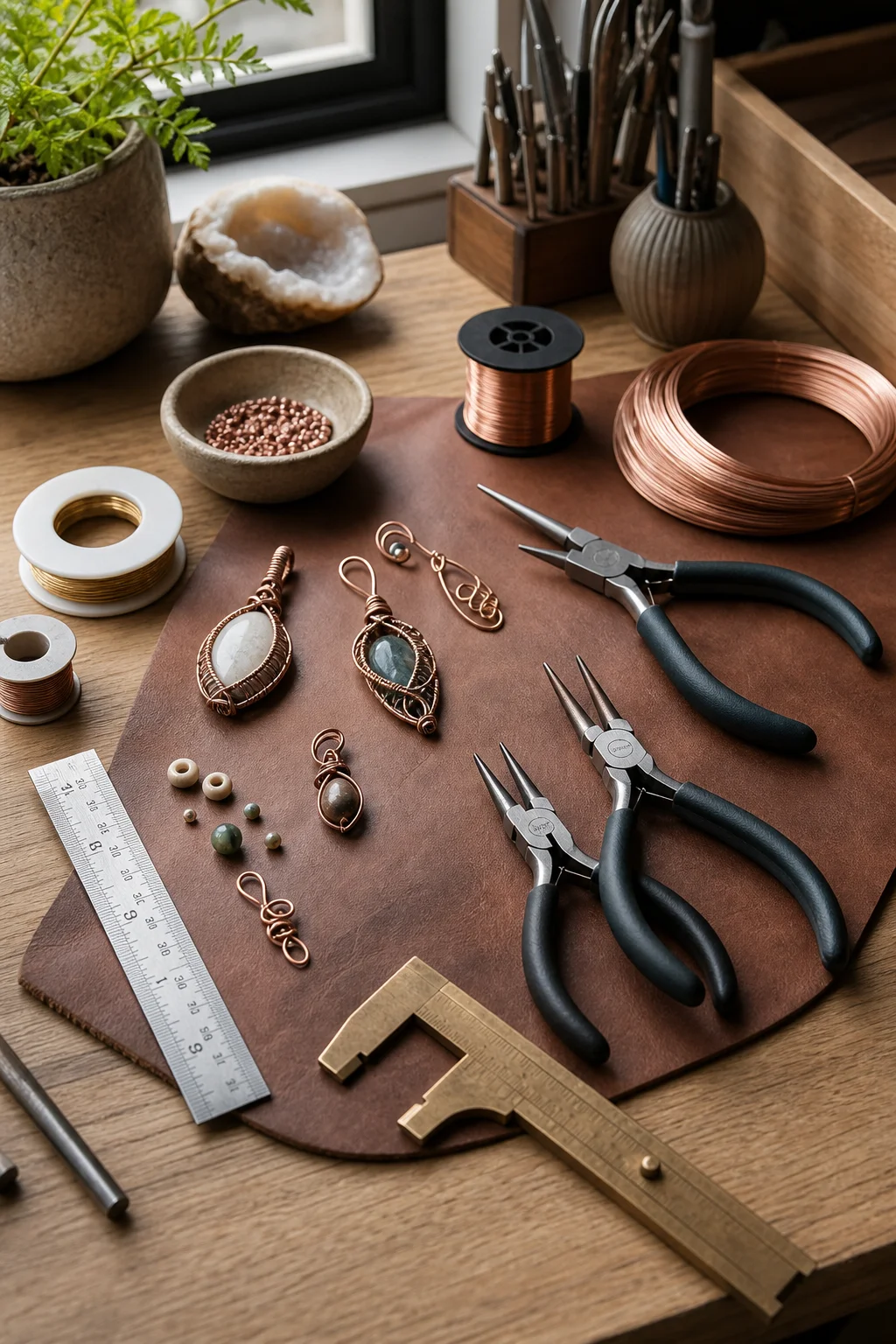
This is the simplest and most effective mixed metal technique. You wrap the stone with copper wire to create the structural frame, then add decorative wrapping with fine silver wire over the copper.
Process: Create the main wire frame from 18-gauge copper. Wrap the stone securely with copper (weaving, binding, or cage wrapping as appropriate for the stone shape). Then, using 22-gauge or 24-gauge fine silver wire, add 3-5 accent wraps at strategic points — around the stone's waist, at the bail connection, or along decorative spirals. The silver wraps should be visible but not overwhelming — think of them as jewelry for your jewelry.
Best for: Large statement pendants, cabochon wraps, and any design where you want a warm base with bright highlights.
2. Alternating Metal Coils
Create a pattern by coiling copper and silver wire side by side in alternating segments. The visual effect is a banded or striped pattern that draws the eye along the wire path.
Process: Use two spools of wire — one copper, one silver — both in the same gauge (22-gauge works well). Hold them together and coil them around the stone frame simultaneously, creating a two-tone spiral. Alternatively, coil one metal for 3-4 turns, then switch to the other for 3-4 turns, creating distinct color segments. The key is maintaining even tension on both wires so the coils sit flush against each other.
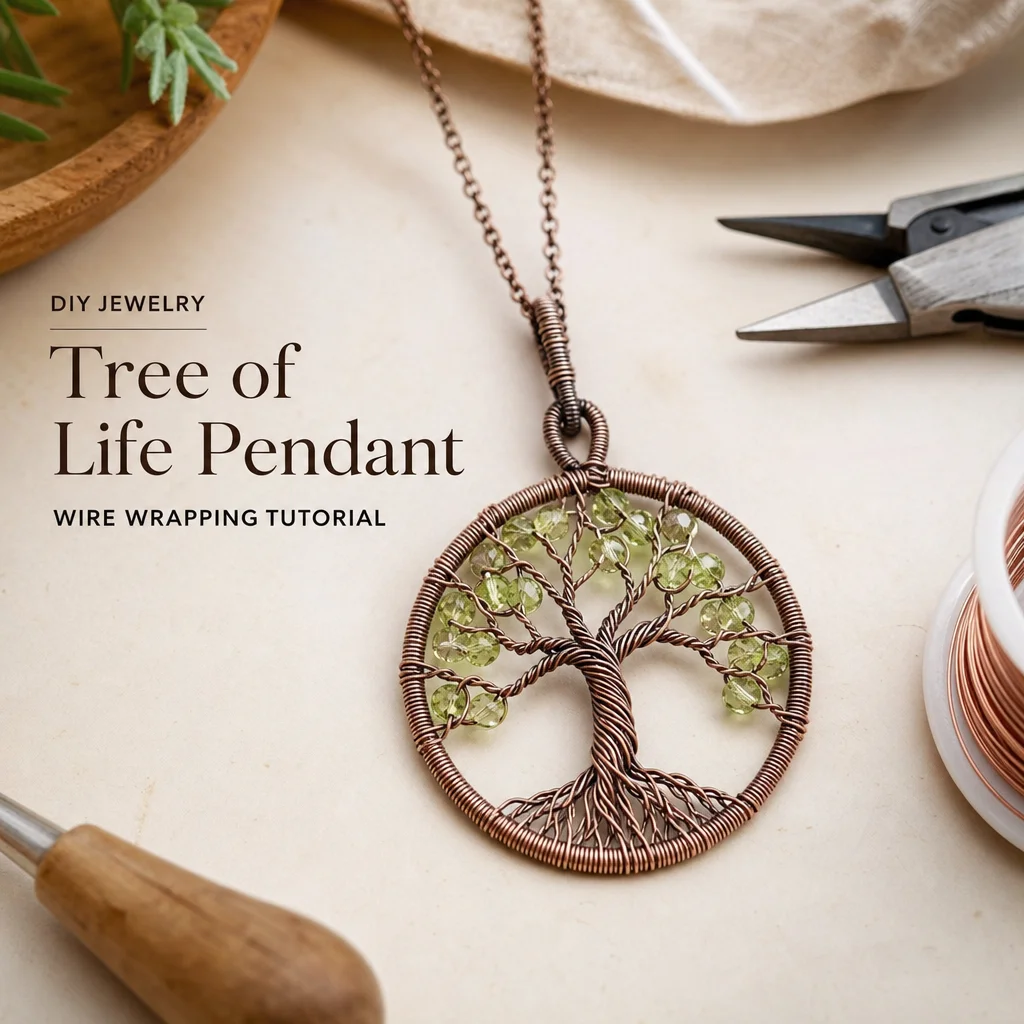
Best for: Tree of life pendants, coiled bails, and designs with long wire paths where the alternating pattern is fully visible.
3. Layered Wrapping (Copper Frame, Silver Details)
This technique uses copper for the visible structural frame and silver for the delicate finishing touches that require fine wire work.
Process: Build the entire frame from 18-gauge copper — the main prongs, the bail attachment, the structural basket holding the stone. Once the copper frame is complete and the stone is secure, add silver accents: tiny silver spirals at the bail, silver-wrapped wire "branches" extending from the frame, silver bead accents, or silver weaving between copper structural wires. The silver should be purely decorative — the copper carries all the structural load.
Best for: Intricate designs where you want the strength of copper with the refinement of silver details.
4. Copper Oxidation with Silver Bright Spots
This is a finish technique rather than a construction technique, but it dramatically transforms the visual impact of any mixed metal piece.
Process: Complete the entire piece (copper frame + silver accents). Then intentionally oxidize the copper using one of these methods: (1) Liver of sulfur (potassium sulfide) dip — creates a dark brown to black patina within seconds; (2) Salt and vinegar soak — creates a green-blue patina over hours; (3) Egg yolk patina — creates a rich brown patina using the sulfur in egg yolks. After the copper darkens, polish only the silver elements using a polishing cloth or fine steel wool. The result: dark, richly patinated copper with bright, shiny silver accents that pop against the dark background.
This technique is extremely effective because the contrast between oxidized copper and polished silver is far more dramatic than the contrast between fresh copper and fresh silver.
5. Bi-Metal Sheet (Advanced)
This advanced technique involves soldering a thin layer of silver to a copper sheet, creating a single piece of metal with two faces — copper on one side, silver on the other. You can then cut, shape, and texture this bi-metal sheet to create components like folded bails, shaped connectors, or textured backplates.
Bi-metal sheet is available commercially (pre-bonded copper/silver sheet) from jewelry supply companies, which saves you from the technically demanding process of bonding the metals yourself. It comes in various thickness ratios — typically 90/10 or 80/20 copper to silver.
Best for: Structural elements like folded paddle bails, shaped connectors, textured backplates, and any component where you need a flat, two-toned surface.
Choosing Crystals for Each Metal
Color temperature matters in jewelry design. The general principle: warm-colored stones pair better with copper, cool-colored stones pair better with silver, and neutral or multi-colored stones work with either.
Copper companions (warm stones): Carnelian (red-orange), Amber (golden), Citrine (yellow-orange), Sunstone (peach-gold), Tiger's Eye (golden-brown), Red Jasper (brick-red), Garnet (deep red). Copper and warm stones create a unified warm palette that feels earthy and organic.
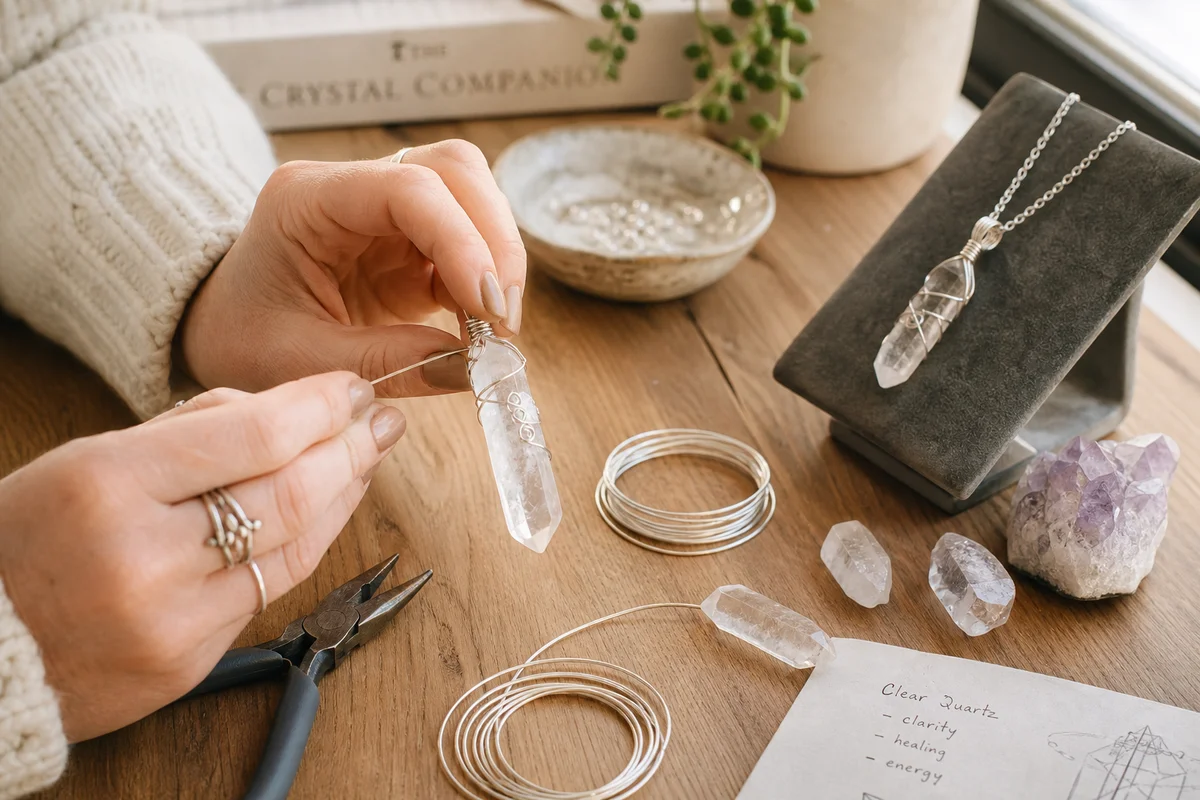
Silver companions (cool stones): Amethyst (purple), Aquamarine (pale blue), Labradorite (blue-green flash), Moonstone (silver-blue), Lapis Lazuli (deep blue), Blue Lace Agate (pale blue), Clear Quartz (neutral crystal). Silver and cool stones create a refined, elegant palette that feels clean and sophisticated.
Universal stones (work with both): Rose Quartz (pink — bridges warm and cool), Peridot (yellow-green — works either way), Tourmaline (multi-color — match to dominant tone), Opal (multi-color — match to fire or body tone), Fluorite (multi-color — match to dominant color).
In mixed metal pieces, use the stone as your color anchor and let the two metals complement it. A carnelian pendant with copper frame + silver accent coils creates a warm dominant palette with cool highlights that mirror the stone's own color range (red-orange body with occasional blue flashes in some specimens).
Finishing and Polishing Mixed Metal Pieces
Polishing mixed metal jewelry requires care because the two metals respond differently to polishing agents and tools.
Initial cleanup: After construction, use very fine steel wool (grade 0000) to smooth tool marks. Work gently — steel wool can scratch silver if you press too hard. Focus on the transition points where copper and silver meet, smoothing any sharp edges or burrs.
Polishing silver: Use a silver polishing cloth (impregnated with micro-abrasives and anti-tarnish compounds) on the silver elements only. Rub gently in one direction, not back and forth. The cloth will darken slightly as it removes tarnish — this is normal.
Polishing copper: Don't use silver polish on copper — the chemicals are formulated for silver and can leave copper looking splotchy or unnaturally bright. Instead, use a dedicated copper polish, lemon juice + salt paste (rinse thoroughly after), or simply let the copper develop its natural patina over time. Many wire wrappers intentionally leave copper unpolished after construction, allowing it to age naturally.
Sealing (optional): If you want to preserve the fresh-copper look, apply a thin coat of Renaissance Wax or clear acrylic spray lacquer. This slows oxidation but doesn't stop it entirely. Reapply every 3-6 months for pieces worn regularly. Sealing the copper also prevents the green copper oxidation from transferring to the wearer's skin.
Common Mistakes and How to Avoid Them
Over-tightening mixed metal wraps: When wrapping copper and silver wire together, the softer metal (usually copper) will compress while the harder metal (silver) maintains its round profile. This can create uneven wraps where one wire appears thinner. Solution: maintain light, even tension and don't pull wraps excessively tight.
Galvanic corrosion: When two different metals are in contact in the presence of moisture (including sweat), a tiny electrical current can flow between them, causing the less noble metal (copper) to corrode faster than it would alone. This is a slow process in jewelry and rarely causes structural problems, but it can create unsightly darkening at the copper-silver contact points. Sealing the piece with wax or lacquer minimizes this.
Color confusion from similar tones: Fresh copper and brass look similar. Fresh silver and bright platinum-fill look similar. If you're mixing metals, make sure the contrast is clear. Copper + silver is the classic combination because the color difference is obvious. Copper + brass or silver + white gold require closer inspection to distinguish — which reduces the visual impact of the mixing.
FAQ
Do I need to solder mixed metal wire wrapped jewelry?
Not at all. The vast majority of wire wrapped mixed metal jewelry uses cold connections only — wrapping, weaving, coiling, and binding. No torch, no solder, no heat. Cold connections are actually more accessible to beginners and produce the distinctive handmade look that defines wire wrapped jewelry. Soldering is an optional advanced technique for specific structural joints, not a requirement.
How do I remove oxidation from copper without affecting silver?
Use a targeted approach. Dip a cotton swab in lemon juice (mild acid) and apply it only to the copper areas. Let it sit for 30 seconds, then wipe clean. For stubborn oxidation, make a paste of lemon juice + baking soda and apply it to copper areas with a soft brush. The silver elements should be protected by their natural tarnish resistance, but if any gets on the silver, polish it immediately with a silver cloth.
Is mixed metal wire wrapping harder than single metal?
The construction isn't significantly harder — you're still bending, wrapping, and coiling wire. The challenge is design: making the two metals work together cohesively rather than fighting each other visually. Start with the 70/30 rule, choose your dominant metal first, and use the secondary metal sparingly. As you gain experience, you'll develop an intuitive sense for how much of each metal a particular design needs.
Frequently Asked Questions
Will wearing copper and silver wire wrapped jewelry turn my skin green?
It is possible for the copper portion of your handcrafted jewelry to leave a temporary green tint on your skin. This is a completely natural reaction between the copper and your skin's natural oils or pH levels. To prevent this, we recommend keeping the piece dry or applying a thin layer of clear polish to the copper. The green washes off easily with soap and warm water.
What crystals look best with mixed copper and silver wire?
Mixing the warm, earthy tones of copper with the cool elegance of silver creates a stunning contrast that flatters many natural crystals. We love pairing this dynamic mix with stones that feature both warm and cool hues, such as Watermelon Tourmaline, Ametrine, or Rainbow Moonstone. Darker stones like Obsidian or Lapis Lazuli also make the dual-metal detailing truly pop.
Comments