How to Make Wire-Wrapped Crystal Pendants: A Complete Beginner Tutorial
Why Wire Wrapping Is the Best Starting Point for Crystal Jewelry
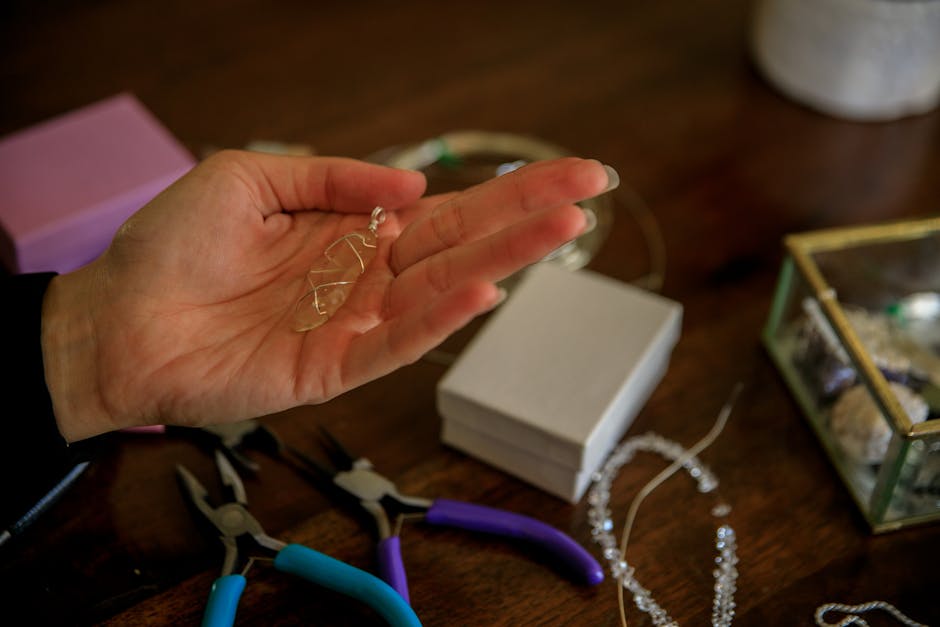
If you've been browsing handmade jewelry on Instagram or Etsy and thought "I could probably do that," you're right. Wire wrapping is where most people start because it strips away all the intimidating parts of jewelry making. No soldering, no torches, no chemical etchants. Just wire, pliers, and a stone.
The appeal is simple: you can go from complete beginner to wearing your own handmade pendant in a single afternoon. The barrier to entry is genuinely low — maybe $30 to $50 for a basic toolkit and some wire. Compare that to silversmithing, where a decent torch alone runs $150+, or metalsmithing where you need a bench, a flex shaft, polishing wheels, and months of practice.
Wire wrapping also has this meditative quality. You're working with your hands, shaping something tangible, and the repetitive motions of wrapping wire are genuinely calming. An hour of focused, quiet work that produces something beautiful at the end — it's the kind of craft that people describe as "therapeutic" without it sounding like a stretch.
And for people who already collect crystals, wire wrapping lets you turn any stone into wearable art without drilling holes or using adhesives — the wire holds it, and the stone stays exactly as it was. That's a big deal when you've found a stone with a particular meaning or memory attached to it and want to keep it close.
The Essential Tool Kit (and What It Costs)
The number of pliers available can be confusing. Do you need five different kinds? No. You need three, plus a wire cutter, and maybe one optional tool.
The Four Tools You Actually Need
Round nose pliers. Non-negotiable. The conical jaws create loops and curves of different sizes. Cheaper ones work fine starting out, but if the jaws aren't smooth, they'll leave marks on your wire.
Chain nose pliers. Flat, tapered jaws for gripping wire, flattening wraps, opening jump rings, and pushing wire into tight spots. Your all-purpose workhorse.
Flush cutters. Not hardware store diagonal cutters — flush cutters cut wire flat on one side, meaning less filing. Cheap ones work but wear out faster on thicker wire.
Mandrel (optional). A tapered cylinder for creating consistent loops. A steel one costs about $8, but a pen or dowel works in a pinch.
Budget Breakdown
A functional starter kit runs $30 to $50. A basic three-piece plier set (round nose, chain nose, flush cutter) is $15 to $25 on Amazon. A spool of 20-gauge copper wire is about $6 for 30 feet. Add 24-gauge for detail work ($4) and a handful of tumbled stones at $1 to $3 each, and you're looking at maybe $40 total — enough to make your first 10 to 15 pendants.
Choosing the Right Wire
Wire is where beginners either save money or waste it. The wrong choice makes your first project frustrating instead of fun.
Copper wire is cheap, soft, and forgiving. It bends easily and costs about a third of sterling silver. It tarnishes to a brownish patina over time, which some people actually like. For practicing and learning, copper is the obvious choice.
Sterling silver wire (92.5% silver) is harder and holds shapes better but is harder to manipulate. A 30-foot spool of 20-gauge runs $20 to $30, so save it for pieces you're confident about.
Gold-filled wire has a thick gold layer bonded to brass. Unlike plating, it wears like solid gold. It's 5 to 10 times the cost of copper but adds real value if you're selling or gifting.
Gauge Matters More Than You Think
Wire gauge is counterintuitive: higher numbers mean thinner wire.
18 to 20 gauge: Structural wire for frames, bails, and anything holding weight. 20 gauge is the single most useful size for beginners.
22 to 24 gauge: Wrapping wire for coiling, binding, and decorative work. 22 gauge balances strength and flexibility well.
26 gauge: Very fine wire for weaving patterns and delicate coiling. Easy to accidentally kink — handle gently.
Picking Stones That Work With Wire Wrapping
Not every crystal is wire-wrap friendly. These shapes give beginners the best results.
Tumbled stones are the smooth, polished stones from crystal shops. The smooth surface means wire won't catch, and the rounded shape is easy to wrap. Pick stones between 1 and 2 inches for pendants that look prominent without feeling heavy. You can learn more about choosing materials in our guide on raw crystals vs tumbled stones.
Crystal points create dramatic pendants but are trickier because the irregular shape means wraps follow angles instead of curves. Start with small points (1 to 2 inches) and use thicker wire (18 to 20 gauge) for the frame.
Crystal slabs — thin, flat slices of agate or jasper — make beautiful pendants when wrapped along the edges. The flat profile sits nicely against the chest. Wrapping slabs often looks like miniature artwork, which is why they sell well. For more on identifying quality stones, see our natural stone vs synthetic crystal guide.
Five Beginner Wire Wrapping Techniques
Technique 1: The Simple Wrap
The foundation everything else builds on. Creates a bail at the top of a stone with a few decorative wraps. Clean, minimal, works well with tumbled stones and small points.
What you need: One tumbled stone (1 to 1.5 inches), 12 inches of 20-gauge wire, 6 inches of 22-gauge wire.
Step 1. Bend the 20-gauge wire in the middle around your round nose pliers to create a small bail loop. Twist the two ends together below the loop.
Step 2. Hold the twisted section against the stone's top. Separate the wire ends and bend them downward along opposite sides, curving to follow the stone's shape.
Step 3. At the bottom, cross the wire ends over each other and twist once or twice. Bend them back upward.
Step 4. Use your 22-gauge wire to coil tightly around the structural wires near the top — 3 to 5 tight coils for decoration and security.
Step 5. Trim wire ends with flush cutters and press cut ends flat with chain nose pliers. Thread a chain through the bail.
Technique 2: The Cage Wrap
A step up from the simple wrap — the stone appears to float inside a wire cage. Works beautifully with irregularly shaped stones.
What you need: One stone (any shape, 1 to 2 inches), about 24 inches of 20-gauge wire.
Step 1. Find the wire's middle and bend it around the stone's widest point, creating a U-shape that cups the bottom.
Step 2. At the top, cross the wire ends and wrap one around the other 2 to 3 times to form the bail base.
Step 3. Take the remaining wire lengths and wrap them around the stone in spirals or crossing patterns, creating enough contact points that the stone can't fall out.
Step 4. Trim wire ends and tuck them inside the cage. Shape the bail loop at the top.
Technique 3: The Weave Wrap
Weaving adds a textured, fabric-like quality by passing thinner wire between thicker structural wires. Looks intricate and professional even as a beginner.
What you need: One tumbled stone, two 8-inch pieces of 18-gauge wire for the frame, about 3 feet of 26-gauge wire for weaving.
Step 1. Place your 18-gauge wires parallel and about a quarter inch apart. Bend both into a U-shape at the bottom to cradle the stone.
Step 2. Bend wire ends upward along the stone's sides, then outward and back down at the top to create a full frame.
Step 3. Wrap your 26-gauge wire 3 to 4 times around one frame wire near the bottom. Carry it across to the other frame wire and wrap there. Repeat this back-and-forth pattern, moving upward — each crossover creates one row of weaving.
Step 4. Continue until the area between frame wires is covered. Keep rows as even as possible.
Step 5. At the top, twist frame wires together and form a bail loop. Trim and tuck the weaving wire.
Technique 4: Tree of Life
One of the most popular designs — you create a tree shape from wire with roots, trunk, and spreading branches. Stone chips or beads become the "leaves."
What you need: About 10 feet of 24-gauge wire (for the tree), 8 inches of 20-gauge wire (for the frame), small tumbled chips or beads.
Step 1. Bend your 20-gauge wire into a 2 to 2.5 inch circle and twist the ends at the bottom to close it.
Step 2. Cut 24-gauge wire into 12 to 16 pieces, each 5 to 7 inches. Group into bundles of 3 to 4.
Step 3. Hold all pieces at their midpoints and twist together for about 0.5 inches to form the trunk. Separate wires outward, twisting in pairs to create branches that fill the upper half of the frame.
Step 4. Thread small stone chips onto branch ends, then bend wire tips down to secure them.
Step 5. Secure the trunk base to the frame bottom with tight wraps. Create a bail at the top and trim all ends.
Technique 5: The Frame Wrap
Creates a bordered, picture-frame effect — especially effective with flat slabs and polished slices. The most "jewelry-like" of the beginner techniques.
What you need: One flat stone slab (1.5 to 2.5 inches), 15 inches of 18-gauge wire for the frame, 10 inches of 22-gauge for binding.
Step 1. Place the stone on your 18-gauge wire and bend the wire around the perimeter, following the edge closely. Leave 1 inch extending past where ends meet.
Step 2. Remove the wire, cut a second piece to match, and you have two identical frame pieces.
Step 3. Sandwich the stone between both frame pieces. Use 22-gauge wire to bind them together every 0.5 to 0.75 inches — 3 to 4 tight wraps at each point.
Step 4. At the top, shape both frame wires into a bail loop. Twist them together, form the loop with round nose pliers, and wrap ends back down.
Step 5. Trim all binding ends and press flat. The frame should hold the stone with no wobble.
Common Mistakes and How to Fix Them
Wire kinking. Bending too sharply creates creases instead of curves. Bend slowly, guide with pliers, and support wire on both sides. Deeply kinked wire usually needs replacing.
Gaps between wire and stone. Shape structural wire against the stone first, press it into contours with your fingers, and only then start wrapping. The wire should hug the stone before you secure it.
Bail too small or weak. Make your bail from your thickest wire and test it with your chain before finishing. The loop should slide easily without flopping.
Sharp wire ends snagging. After every cut, press the end flush with chain nose pliers. If you can feel a sharp point with your fingertip, it will catch on something.
Stone falling out. You need at least four to five distinct contact points distributed around the stone's shape. Think of it like a fist — each finger grips, and the stone shouldn't move in any direction.
Leveling Up: Intermediate Techniques
Oxidation and patina. Liver of sulfur darkens copper and silver, then you polish the high spots to reveal the metal underneath. The contrast between dark recesses and bright surfaces makes wrapping patterns pop. Labradorite looks especially stunning in darkened wire frames — see our labradorite guide for pairing ideas.
Incorporating beads. Small 3 to 4mm beads threaded onto wire before wrapping add color and detail. They can sit within wrap patterns, hang from branch ends, or accent the bail.
Mixed metals. Combining copper with silver or gold-filled creates visual contrast that draws the eye. Use one metal for the frame and another for wrapping. This technique pairs well with skills from crystal bracelet making.
Should You Sell Your Wire-Wrapped Jewelry?
The handmade jewelry market is accessible through Etsy, Instagram, and local craft markets. A few practical tips:
Pricing. Calculate material costs, add an hourly rate ($15 to $20/hour minimum), then add markup for handmade quality. A pendant costing $4 in materials and taking 45 minutes should sell for $25 to $40, not $10. Underpricing hurts you and undercuts other sellers.
Photography. Natural daylight, a simple background, and clean close-ups outperform elaborate studio shots. Shoot from multiple angles, include a scale shot with the pendant on a chain, and keep colors accurate — no heavy filters that change how the crystal actually looks. A clean white or neutral background lets the stone and wire work speak for themselves.
Building a style. The most successful wire wrappers develop a recognizable aesthetic. This takes time, so just make a lot of pieces early on and pay attention to which designs get the most compliments.
Frequently Asked Questions
What wire gauge should a complete beginner start with?
Buy one spool of 20-gauge and one of 22-gauge. The 20-gauge handles structural work and the 22-gauge handles detail. These two sizes cover 90% of beginner projects.
Do I need to polish my stones before wire wrapping?
No. Tumbled stones are easier to wrap because of their smooth surface, but raw crystals and rough points have an organic look many people prefer. Simpler wraps suit rough stones; detailed wraps suit smooth ones.
How long does it take to get good at wire wrapping?
Most people make something wearable on their first try. After 10 to 20 pieces, wraps look consistently clean. After 50 to 100 pieces, you'll create genuinely professional-looking work. The biggest improvements happen in the first few weeks.
Can I use craft wire from a craft store?
It's fine for practicing, but most craft wire is aluminum or copper-plated — very soft and doesn't hold complex shapes. For pieces you want to wear long-term or sell, switch to bare copper, sterling silver, or gold-filled wire.
Is wire wrapping hard on your hands?
Working with thicker gauges (16 to 18 gauge) can cause hand fatigue. Take breaks, stretch your hands, and build up gradually. If you have pre-existing wrist issues, stick with 22 to 26 gauge wire and simpler wraps.
Getting Started Today
Wire wrapping is one of those skills where reading only gets you so far. Pick up some copper wire, a tumbled stone, and the cheapest pliers you can find. Your first pendant won't look like the photos online, and that's fine. Your tenth will look three times better. Your fiftieth will look like something you'd buy.
The tools are affordable, the materials are accessible, and the learning curve is gentle enough for real progress within a weekend. Whether you're making jewelry for yourself, gifts for friends, or the start of a creative business, wire wrapping crystal pendants connects you to the stones you love in a hands-on, tangible way.
This article was created with the assistance of AI writing tools. The techniques, tool recommendations, and wire wrapping methods described are based on widely practiced jewelry making methods. SageStone encourages readers to verify specific techniques with additional sources and practice in a safe environment.

Comments