Top 5 Mala Bead Materials: Wood, Seeds, Stones
May 28, 2026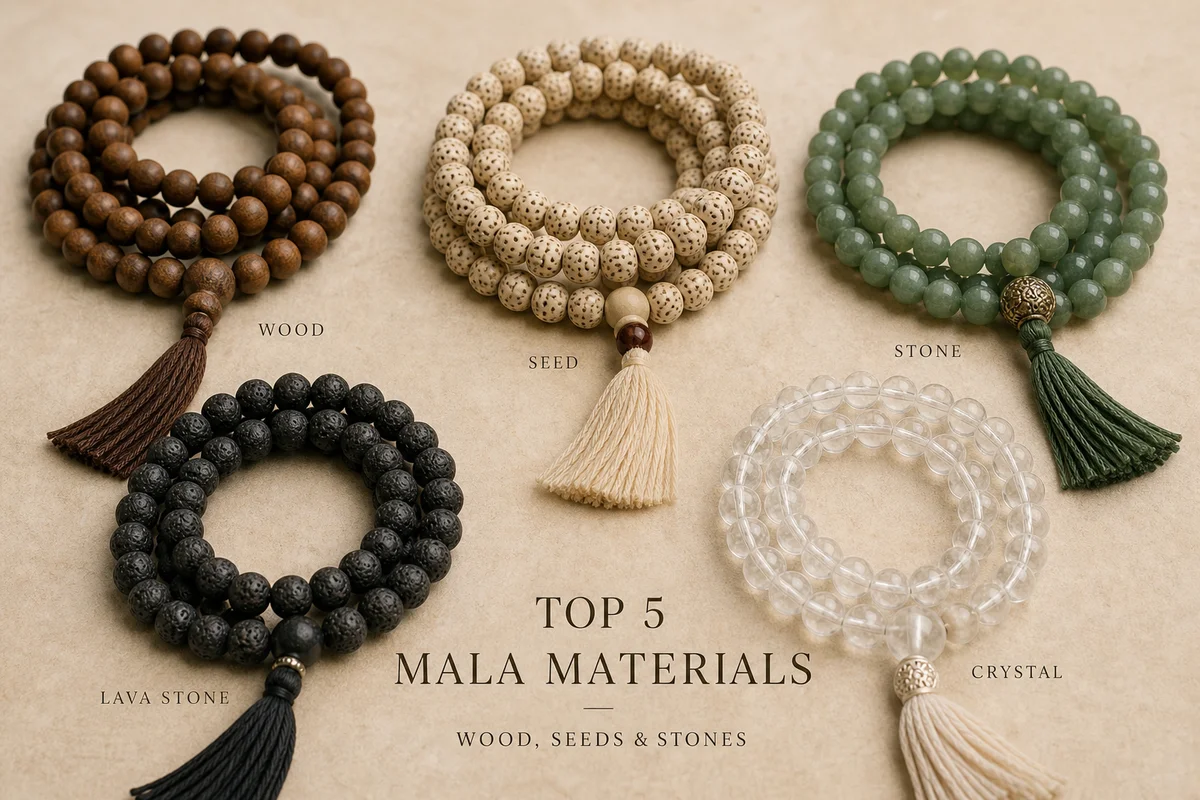
Mala Bead Materials: Wood, Seeds, Stones & Everything Between
The Material Changes Everything
Most people choose a mala based on how it looks. Fair enough — you're going to wear or use this thing regularly, so it should appeal to you visually. But the material of your mala beads affects much more than appearance. It changes the weight around your neck, the texture between your fingers, how the beads sound when they click together, how long the mala lasts, and whether you can wear it in the shower.
Different materials also carry different cultural and religious associations. A rudraksha seed mala has been used in Hindu and Buddhist practice for thousands of years and carries specific significance. A rose quartz mala is a modern creation that blends the mala format with crystal culture. Neither is more "authentic" than the other — but understanding these distinctions helps you make an informed choice.
This guide covers every major mala bead material, with practical information about sourcing, durability, care, and what to expect at each price point.
Seed-Based Malas
Rudraksha Seeds
Rudraksha seeds come from the Elaeocarpus ganitrus tree, found primarily in Nepal, Indonesia, and India. The name comes from Sanskrit: "Rudra" (another name for Shiva) and "aksha" (tears). According to Hindu tradition, rudraksha beads are Shiva's tears, and they've been used in meditation practices for at least 3,000 years.
The seeds are characterized by natural surface grooves called "mukhi" (faces). The number of mukhi — ranging from 1 to 21 — is one of the factors that determines value. Five-mukhi seeds are the most common and most affordable; one-mukhi seeds are extraordinarily rare and can cost thousands of dollars for a single bead.
| Property | Details |
|----------|---------|
| Hardness | Moderate — seeds are organic material |
| Texture | Rough, textured surface with visible grooves |
| Weight | Lightweight |
| Water resistance | Poor — prolonged water exposure causes swelling and cracking |
| Durability | 5-15 years with proper care |
| Price range | $15-50 (standard 5-mukhi) / $100-500+ (rare mukhi) |
| Cultural origin | Hindu, Buddhist, yogic traditions |
| Best for | Traditional meditation, mantra practice |
Care: Keep rudraksha dry. Oil them occasionally with a drop of mustard oil or sesame oil to prevent the seeds from drying out and cracking. Don't wear in the shower or while swimming. Store in a cloth bag when not in use.
Lotus Seeds
Lotus seed malas are made from the seeds of the Nelumbo nucifera (sacred lotus) plant. The dried seeds are hard, smooth, and typically brown to dark brown. They're lightweight and produce a soft, gentle sound when the beads slide against each other during meditation.
| Property | Details |
|----------|---------|
| Texture | Smooth, slightly porous |
| Weight | Very lightweight |
| Water resistance | Poor — organic material swells in water |
| Durability | 3-8 years |
| Price range | $10-30 |
| Cultural origin | Buddhist tradition |
| Best for | Lightweight daily wear, gentle meditation |
Care: Keep dry. Lotus seeds are more fragile than rudraksha and can crack if dropped on hard surfaces. The natural brown color may darken slightly over time with skin oils.
Bodhi Seeds
Bodhi seed malas are made from the seeds of the Ficus religiosa (sacred fig / bodhi tree) — the same species of tree under which the Buddha is said to have attained enlightenment. The seeds are small, hard, and typically grey-brown with a smooth texture.
| Property | Details |
|----------|---------|
| Texture | Smooth, dense |
| Weight | Lightweight |
| Water resistance | Poor to moderate |
| Durability | 5-10 years |
| Price range | $20-60 |
| Cultural origin | Tibetan Buddhist tradition |
| Best for | Traditional Buddhist practice, travel malas |
Wood-Based Malas
Sandalwood
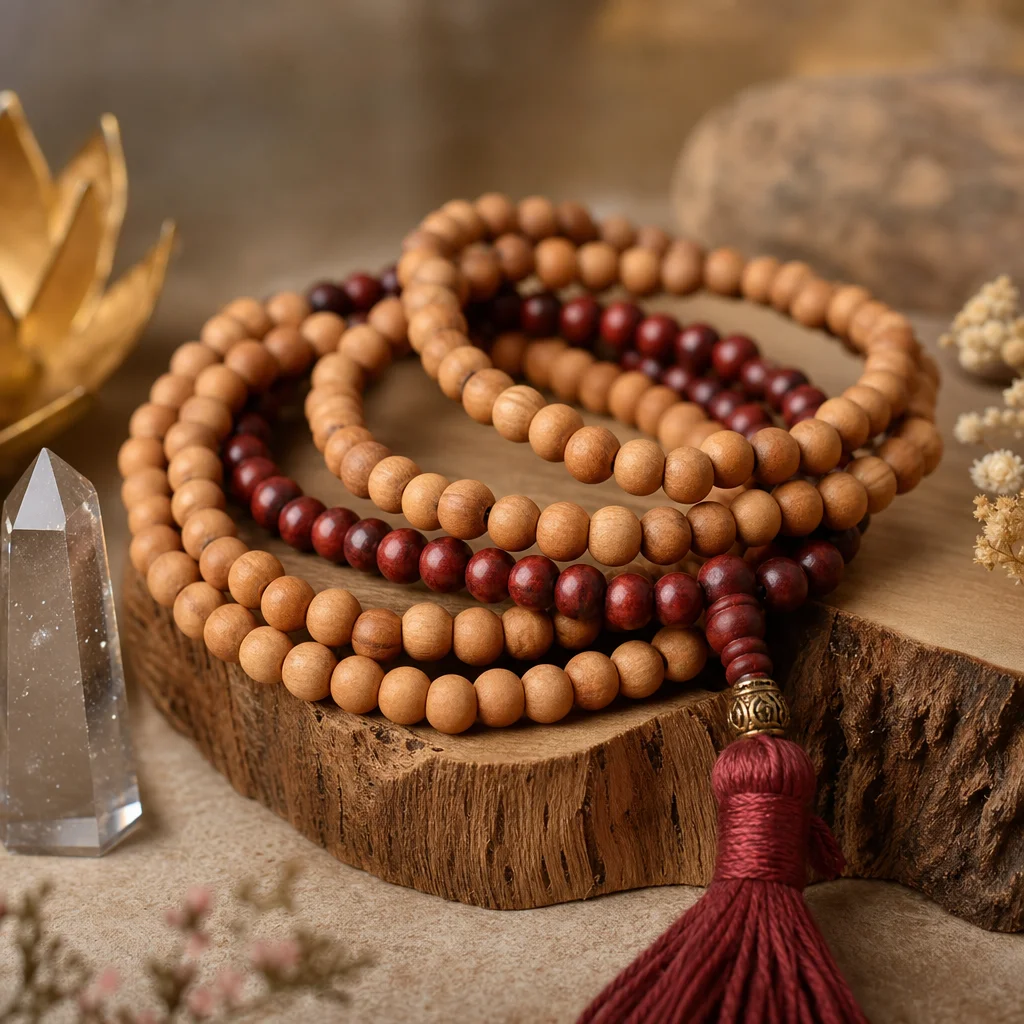
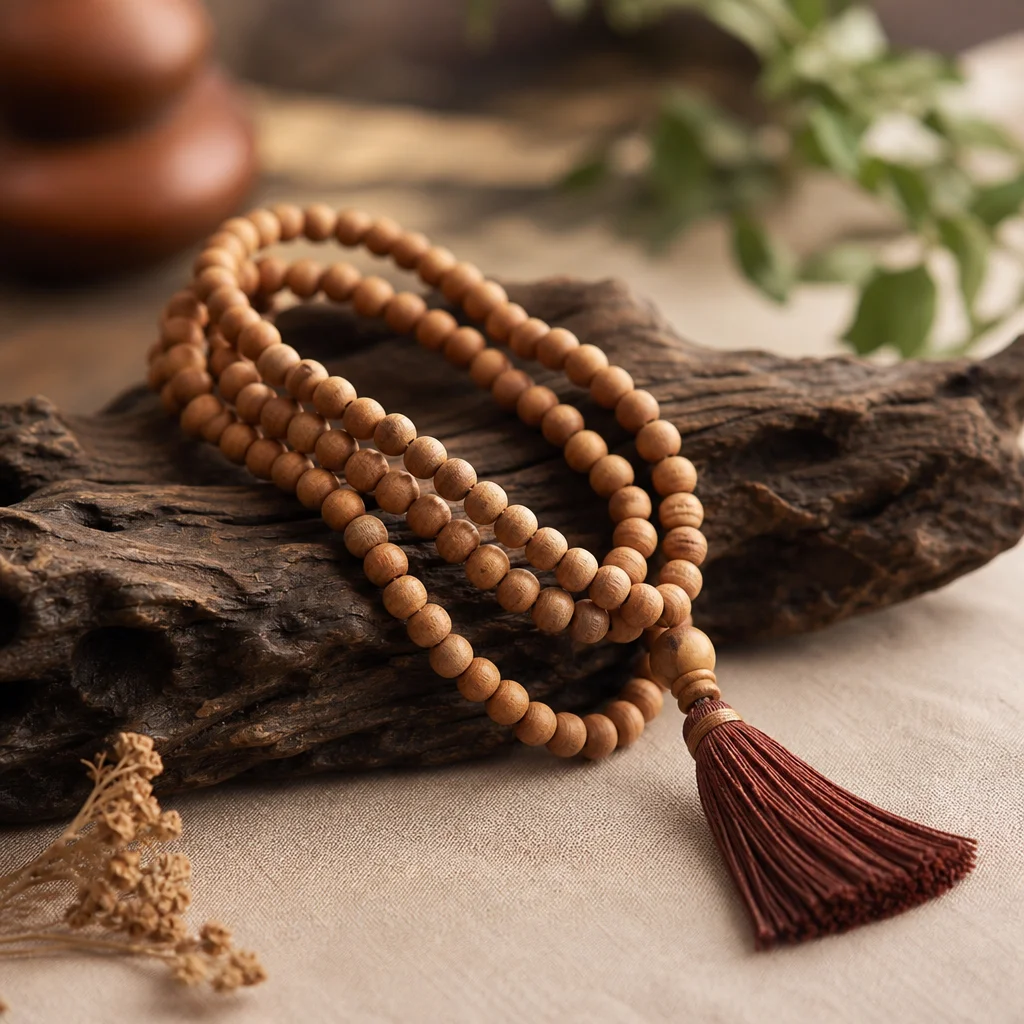
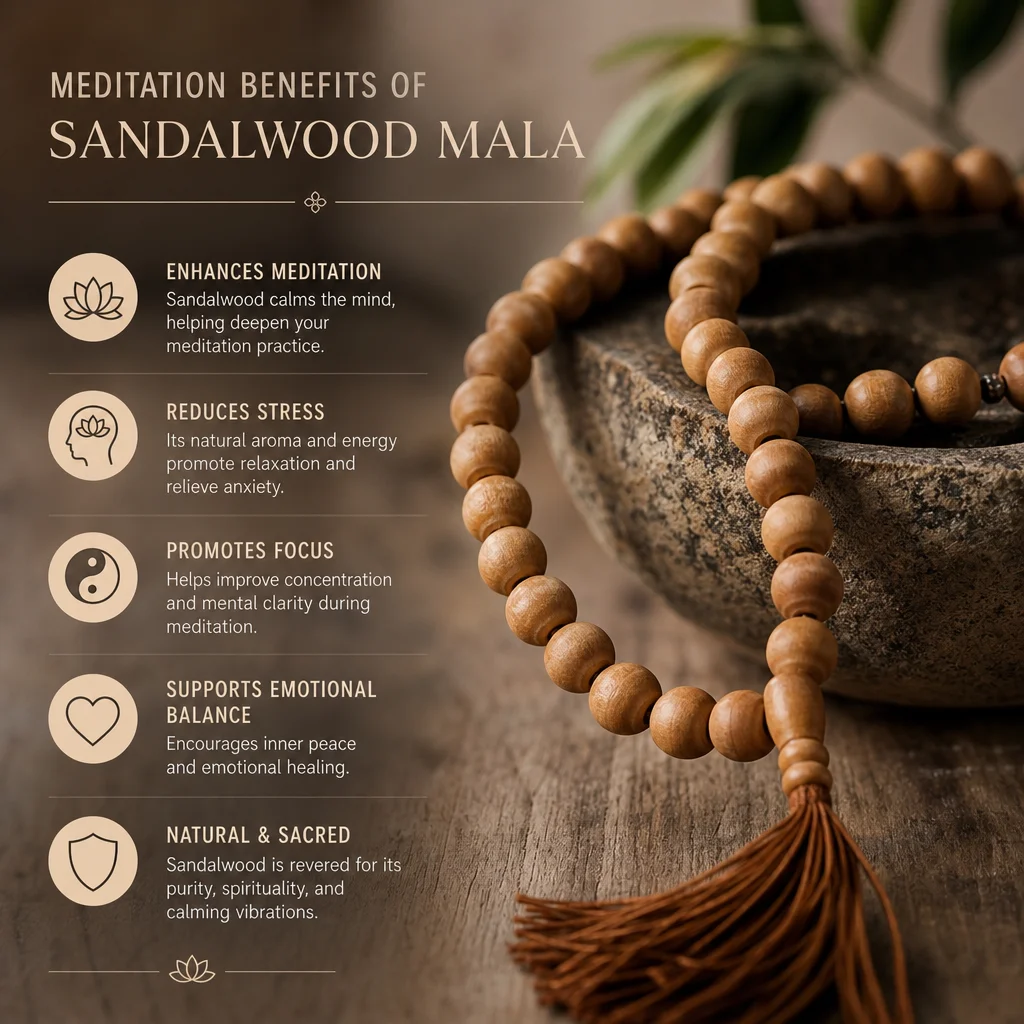
Sandalwood malas are prized for their natural fragrance — the wood retains its scent for years. White sandalwood (Santalum album) from India and red sandalwood (Pterocarpus santalinus) are the two main varieties used. White sandalwood is more fragrant; red sandalwood is more visually striking.
| Property | Details |
|----------|---------|
| Texture | Fine-grained, smooth |
| Weight | Very lightweight |
| Fragrance | Natural woody aroma (white sandalwood) |
| Water resistance | Poor — water destroys the fragrance and can warp the beads |
| Durability | 3-7 years (fragrance fades first) |
| Price range | $15-40 |
| Best for | Meditation, fragrance lovers, warm climates |
Care: Never get sandalwood malas wet — water strips the natural oils that produce the fragrance. Rub the beads gently with your fingers occasionally; the warmth helps release the scent. The fragrance will gradually fade over several years.
Tulsi (Holy Basil)
Tulsi malas are made from the stems and roots of the Ocimum tenuiflorum (holy basil) plant, which is considered sacred in Hindu tradition. The beads are typically light brown to dark brown with a smooth, warm texture.
| Property | Details |
|----------|---------|
| Texture | Smooth, warm |
| Weight | Very lightweight |
| Water resistance | Very poor — organic material |
| Durability | 2-5 years |
| Price range | $8-25 |
| Cultural origin | Hindu devotional practice (Vaishnavism) |
| Best for | Devotional practice, warm-climate wear |
Rosewood and Ebony
Various hardwoods are used for malas, with rosewood (warm reddish-brown) and ebony (deep black) being the most popular. These woods are harder and more durable than sandalwood or tulsi.
| Property | Rosewood | Ebony |
|----------|----------|-------|
| Color | Reddish-brown | Deep black |
| Hardness | High | Very high |
| Weight | Medium | Heavy |
| Price | $10-30 | $20-50 |
| Best for | Everyday wear | Statement pieces |
Stone-Based Malas
Semi-Precious Gemstone Malas
Stone malas are the heaviest and most durable option. Common stones include:
| Stone | Color | Weight | Price Range | Key Feature |
|-------|-------|--------|-------------|-------------|
| Clear Quartz | Transparent | Heavy | $25-60 | Versatile, durable |
| Rose Quartz | Pink | Heavy | $25-60 | Popular, widely available |
| Amethyst | Purple | Heavy | $25-70 | Color can fade in sunlight |
| Black Tourmaline | Black | Very heavy | $30-70 | Durable, opaque |
| Tiger Eye | Golden-brown | Heavy | $25-55 | Chatoyant flash |
| Lapis Lazuli | Deep blue | Heavy | $30-80 | Historical significance |
| Amazonite | Teal-green | Heavy | $25-55 | Calming color |
| Howlite | White with grey | Medium | $15-35 | Often dyed to imitate turquoise |
Pros of stone malas:
- Extremely durable (quartz is 7 Mohs)
- Water resistant (can get wet without damage)
- Wide color variety
- Holds polish and shine indefinitely
Cons of stone malas:
- Heavy — a full 108-bead mala can weigh 150-250 grams
- Cold to the touch initially
- Can be noisy (beads clicking together)
- More expensive than wood/seed options
Mixed Material Malas
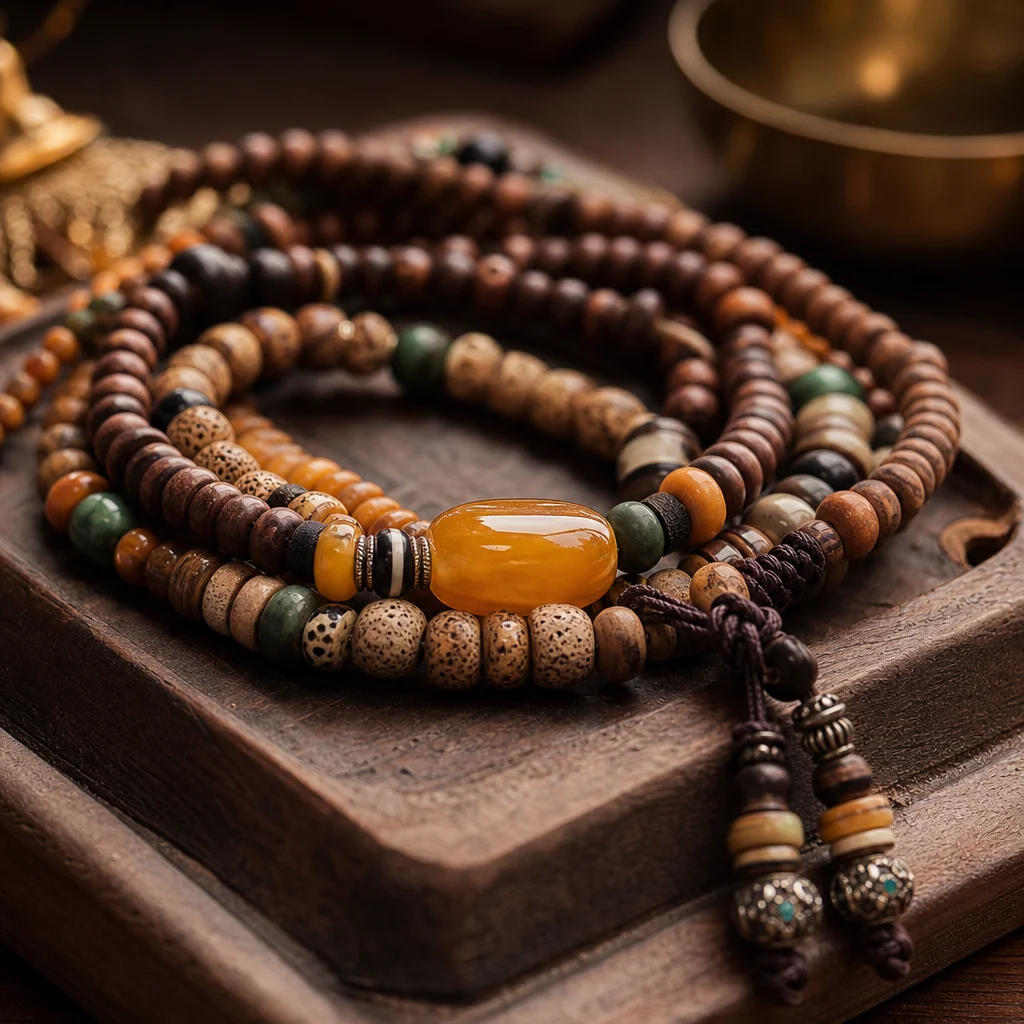
Many modern malas combine materials — for example, sandalwood beads with gemstone marker beads (the beads that divide the mala into sections), or rudraksha seeds with a stone guru bead. These hybrid malas combine the lightweight comfort of organic materials with the visual appeal of semi-precious stones.
Choosing the Right Material for You
For Daily Meditation
Choose: Rudraksha or sandalwood
Why: Lightweight, traditional, comfortable for extended handling, culturally significant for meditation practice.
For Jewelry / Daily Wear
Choose: Gemstone or rosewood
Why: Durable, attractive, can withstand daily wear. Stone malas handle moisture and impact better than organic materials.
For Travel
Choose: Lotus seed or bodhi seed
Why: Lightweight, compact, won't break the bank if lost.
For Sensitive Skin
Choose: Sandalwood or polished gemstone
Why: Smooth surfaces, no chemical treatments. Avoid dyed howlite or any bead that's been chemically treated.
For Hot / Humid Climates
Choose: Gemstone or ebony
Why: Won't degrade in humidity, sweat won't damage them, and stone stays cool against the skin.
Guru Bead Considerations
The guru bead (the 109th bead, the largest one that marks the starting/ending point of the mala) is often made from a different material than the rest of the mala. Common guru bead materials:
- Same material as the mala — Traditional and cohesive
- Larger specimen of the same stone — Subtle variation
- Contrasting stone — Visual focal point
- Metal (silver, brass, copper) — Durable and distinctive
- Rudraksha seed — Even on non-rudraksha malas, a rudraksha guru bead adds traditional significance
Stringing Material Matters Too
The beads are only half the equation. How they're strung affects comfort and durability:
| String Material | Pros | Cons | Lifespan |
|-----------------|------|------|----------|
| Cotton thread | Traditional, natural | Stretches, breaks | 1-3 years |
| Nylon cord | Strong, flexible | Can be slippery | 3-5 years |
| Silk thread | Smooth, traditional | Delicate, expensive | 1-2 years |
| Elastic cord | Stretchy, easy on/off | Degrades with time | 6 months-2 years |
| Wire (beading wire) | Permanent shape | Not flexible, uncomfortable | Indefinite |
Traditional malas are strung on cotton or silk thread with a knot between each bead. The knots serve multiple purposes: they keep the beads from sliding too quickly during meditation, they prevent all 108 beads from scattering if the string breaks, and they create a satisfying tactile rhythm as your fingers move from bead to bead.
FAQ
Q: Which mala material is most traditional?
A: Rudraksha seeds have the longest documented history in meditation practice, with references dating back over 3,000 years in Hindu texts. Sandalwood and tulsi also have centuries of traditional use. Gemstone malas are a more modern development that gained popularity in the 20th century.
Q: Can I wear my mala in the shower?
A: It depends on the material. Stone malas can handle water fine. Wood, seed, and organic material malas should stay dry. If your mala is strung on cotton or silk, water will weaken the string even if the beads themselves are water-resistant.
Q: Why are some rudraksha malas so much more expensive than others?
A: Price depends on the mukhi count (number of natural grooves on each seed), the size and uniformity of the seeds, and the origin. Five-mukhi rudraksha from Indonesia is the most affordable. Rare mukhi counts (1, 14, 21) from Nepal command premium prices. Also, some rudraksha on the market is fake — molded plastic or carved wood — so buy from reputable sources.
Q: How do I clean my mala?
A: For stone malas, wipe with a damp cloth. For wood and seed malas, use a dry soft brush or cloth only. Never submerge organic material malas in water. If the string gets dirty on a traditional mala, it's usually time to restring it rather than try to clean the string.
Q: Can I use different materials for different purposes?
A: Absolutely. Many practitioners own multiple malas — a rudraksha for daily meditation, a gemstone mala for specific intention work, and a lightweight sandalwood mala for travel. The material doesn't need to match the practice, but many people find that certain materials feel more natural for certain types of meditation.
Frequently Asked Questions
What is the best wood material for mala beads?
For mala beads, teak or sandalwood are highly recommended due to their durability and spiritual significance. They are also less likely to splinter, which ensures your beads will last longer.
Can I wear mala beads made of seeds everyday?
Yes, you can wear seeds like rudraksha or gemstones like jade daily. These materials are gentle on the skin and can withstand regular use without damaging.
Are stone mala beads suitable for meditation?
Stone mala beads are ideal for meditation, as they are grounding and have specific healing properties. Materials like quartz and amethyst are particularly favored for their meditative benefits.
How do I clean my wooden mala beads?
Clean your wooden mala beads with a soft cloth and mild soap. Avoid soaking them in water, as wood can warp. Let them air dry completely before storing.
What's the difference between natural and synthetic gemstone mala beads?
Natural gemstone mala beads are formed by natural geological processes, while synthetic ones are created in a laboratory. Natural beads tend to have unique imperfections, while synthetics can have a more uniform appearance and cost less.
Understanding the Basics
This section covers important aspects of understanding the basics. For detailed information, please refer to the FAQ section below.
Key Factors to Consider
This section covers important aspects of key factors to consider. For detailed information, please refer to the FAQ section below.
Step-by-Step Instructions
This section covers important aspects of step-by-step instructions. For detailed information, please refer to the FAQ section below.
Common Mistakes to Avoid
This section covers important aspects of common mistakes to avoid. For detailed information, please refer to the FAQ section below.
Comments