Traditional Buddhist Prayer Bead Materials: Wo..
June 2, 2026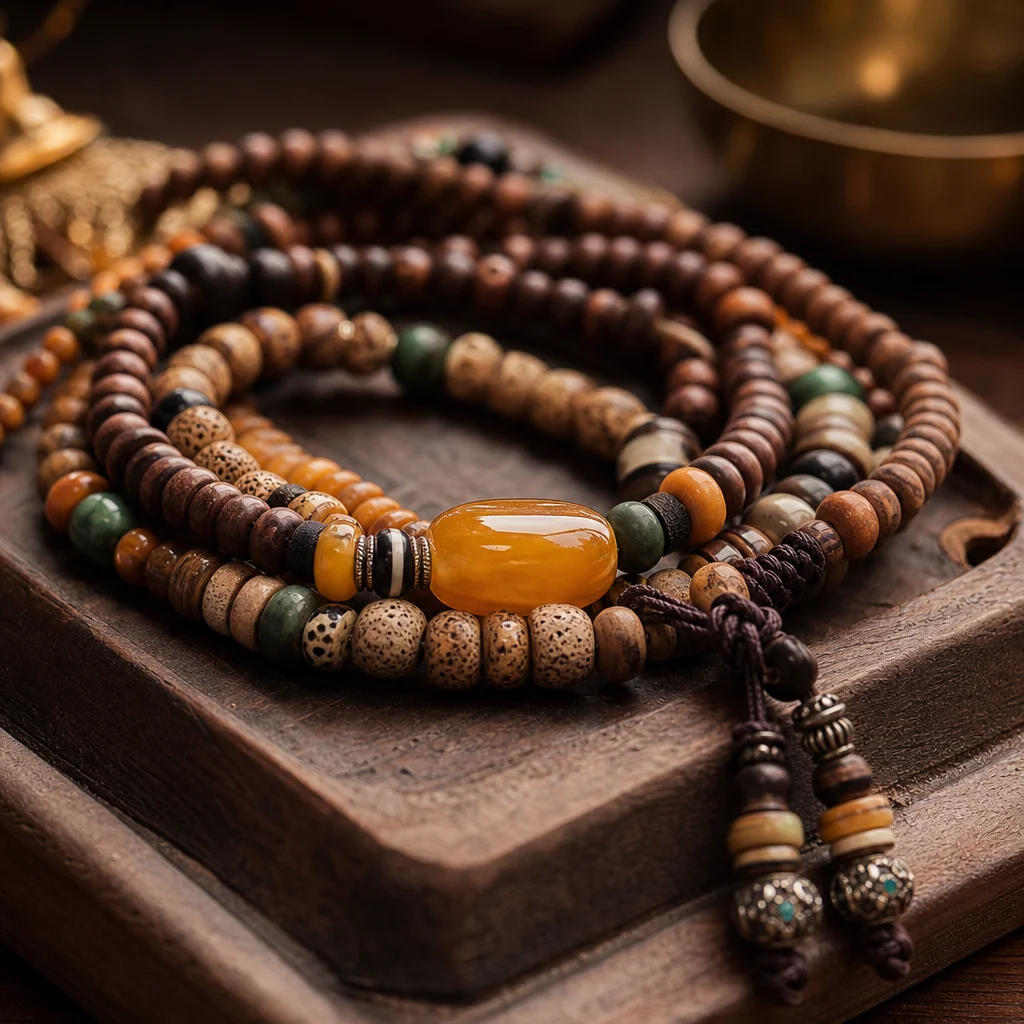
The Spiritual Meaning Behind Mala Materials
In Buddhist tradition, the material of your mala isn't just decorative — it carries specific associations that practitioners consider meaningful. Different materials connect to different aspects of practice: some are grounding, others promote clarity, and still others represent devotion or particular Buddhist figures. While these associations come from centuries of cultural tradition rather than scientific evidence, they influence how practitioners choose their malas and add depth to the practice.
Understanding these materials helps you make an informed choice, whether you're drawn to the botanical simplicity of seed malas, the aromatic warmth of wood malas, or the stark seriousness of bone malas. Each material has practical considerations too — durability, feel in hand, care requirements, and cost all vary significantly between types.
Rudraksha Seeds: The Tears of Shiva
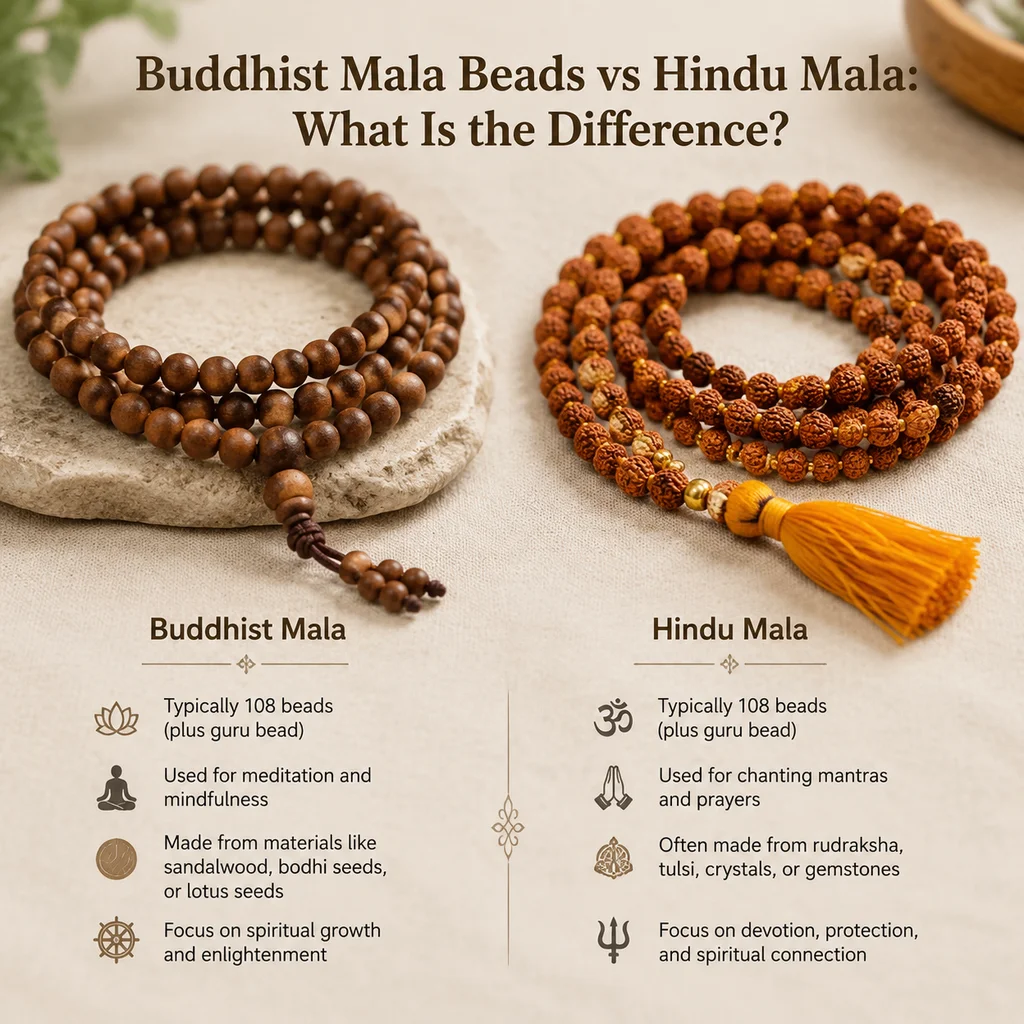
Rudraksha is arguably the most important and widely used material in Buddhist and Hindu prayer beads. The name comes from Sanskrit — "Rudra" (a name for Shiva) and "aksha" (eyes), often translated as "Tears of Shiva." According to tradition, Shiva meditated for thousands of years, and upon opening his eyes, tears of compassion fell to earth and grew into rudraksha trees.
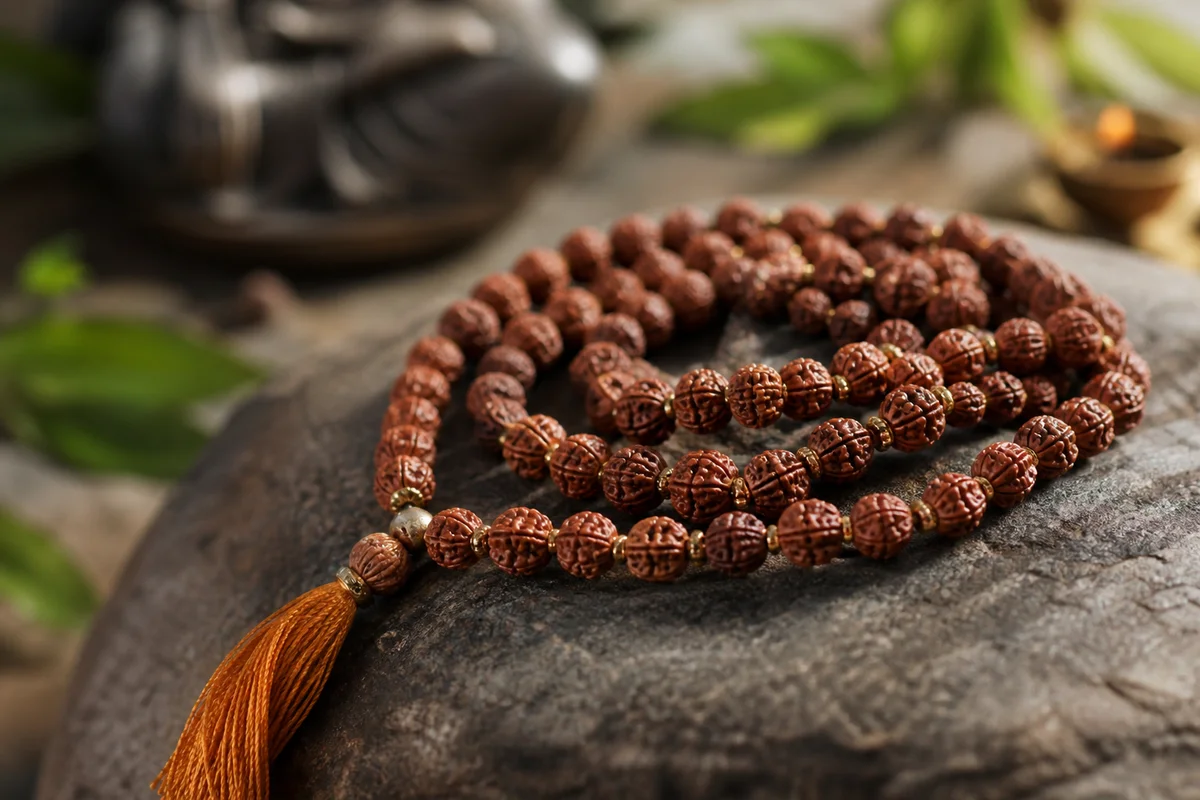
Botanical identity: Rudraksha seeds come from Elaeocarpus ganitrus, a large evergreen tree found primarily in Nepal, Indonesia, and parts of India. The seeds form inside a blue outer fruit (sometimes called "blue marble beads" because the fruits look like small blue marbles). The dried seeds reveal their characteristic segmented surface — deep grooves running from top to bottom that form natural facets.
Mukhi (faces): Rudraksha seeds are classified by the number of natural grooves or segments (called mukhi or faces). Five-faced (pañcmukhi) rudraksha is by far the most common and is considered suitable for everyone. Other mukhi counts are rarer and carry specific associations: one-faced (ekmukhi) is the rarest and most expensive, sometimes selling for thousands of dollars. Fourteen-faced is associated with the third eye, six-faced with Kartikeya, and so on. For daily meditation practice, five-faced rudraksha is the standard recommendation.
Feel and durability: Rudraksha seeds are lightweight, slightly rough in texture, and become smoother with extended use — a quality many practitioners appreciate, as the mala literally develops with the user. They're quite durable and can last decades with basic care. Avoid soaking them, and apply a small amount of sandalwood oil occasionally to prevent the seeds from drying out and cracking.
Price range: Common five-faced Nepali rudraksha malas cost $15–40 for standard quality. Premium seeds with deep, well-defined grooves and good luster run $40–100. Indonesian rudraksha (typically smaller beads) is less expensive at $8–25. Rare mukhi counts command extreme prices.
Sandalwood: The Meditation Wood
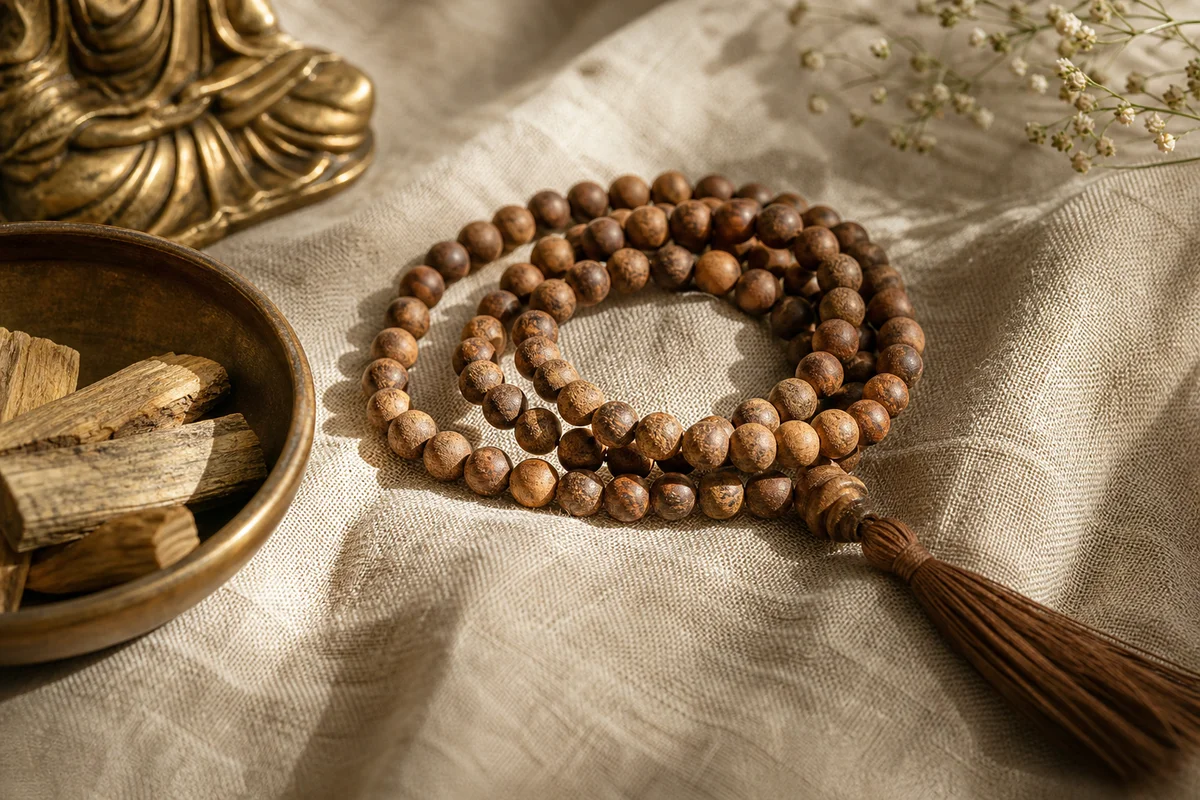
Sandalwood has been used in meditation practice for millennia across multiple traditions — Buddhist, Hindu, Taoist, and others. Its primary appeal is aromatic: the warm, sweet, lingering scent of sandalwood creates an olfactory anchor for meditation that many practitioners find grounding and pleasant.
Species: True sandalwood comes from Santalum album (Indian sandalwood) or Santalum spicatum (Australian sandalwood). Indian sandalwood is the traditional choice and carries the strongest aromatic qualities, but it's endangered in its native range due to overharvesting. Australian sandalwood is the ethical alternative — it produces similar aromatic oil, though some practitioners note a slightly different scent profile.
Red sandalwood (Pterocarpus santalinus): Often confused with true sandalwood but is a completely different tree. Red sandalwood has a striking deep red-brown color but minimal scent. It's used in Tibetan Buddhist practice for its visual beauty and associations with the Medicine Buddha. If scent is important to your practice, confirm you're getting aromatic sandalwood, not red sandalwood.
Feel and durability: Sandalwood is relatively soft for a wood (not rated on the Mohs mineral scale, but comparable to ~3–4 in hardness). Beads develop a polished patina with handling, becoming smoother and more fragrant over time. The wood can crack if it dries out — occasional application of a tiny amount of natural oil (coconut or the wood's own essential oil) keeps it in good condition.
Price: Genuine sandalwood malas from Indian sandalwood cost $30–80. Australian sandalwood is $20–50. Beware of extremely cheap "sandalwood" — much of it is dyed poplar or other inexpensive wood with synthetic sandalwood fragrance added.
Bodhi Seeds: The Tree of Awakening
Bodhi seeds come from trees in the genus Ficus religiosa — the same species under which the Buddha attained enlightenment. The name "bodhi" means "awakening" or "enlightenment" in Sanskrit, making these seeds particularly significant in Buddhist practice.
Appearance: Bodhi seeds are typically round to slightly irregular, with a hard, dark brown surface. Unlike rudraksha, they don't have segmented grooves. The surface texture is slightly rough with natural pitting. High-quality bodhi seeds have a rich, dark color and smooth feel after some use.
Common types: Standard bodhi seed malas use seeds from Ficus religiosa. Several popular varieties exist in the market, each with distinctive visual features. Lotus seed malas (from Nelumbo nucifera) are sometimes grouped with bodhi seeds in Buddhist practice. Xingyue bodhi seeds have natural markings that some interpret as star patterns. Vajra bodhi seeds have a distinctive ridged surface texture.
Practical notes: Bodhi seeds are quite hard and durable — more resistant to impact damage than rudraksha or sandalwood. They're heavier than rudraksha, giving the mala a substantial feel in the hand. The main care concern is moisture: prolonged exposure to water can cause the seeds to swell and crack as they dry. Keep them dry and occasionally wipe with a barely damp cloth to clean.
Price: Standard bodhi seed malas cost $10–25 for basic quality. Premium, well-matched seeds with dark coloration run $25–60. Special varieties (Xingyue, Vajra) tend to be more expensive.
Tulsi (Holy Basil) Seeds: The Devotion Bead
Tulsi malas hold special significance in Hindu practice (particularly Vaishnavism) and are also used by some Buddhist practitioners. Tulsi wood comes from Ocimum tenuiflorum, the holy basil plant revered across Indian spiritual traditions.
The beads are lightweight, with a light brown to tan color and a distinct herbal scent — much lighter and more herbaceous than sandalwood. They're among the most affordable mala materials, making them accessible for beginners.
Tulsi beads are quite fragile compared to other materials. They can chip, crack, and break with rough handling. This fragility is actually part of the practice in some traditions — the impermanence of the physical beads mirrors the impermanence teachings central to Buddhism. Replacing a broken tulsi mala can be seen as a practice in non-attachment rather than a nuisance.
Price: Tulsi malas are very affordable at $5–15, making them an excellent starter mala.
Lotus Seeds: Purity from the Mud
Lotus seeds make meaningful mala beads because of the lotus flower's central metaphor in Buddhism — a beautiful flower growing from muddy water, representing purity arising from difficult conditions. The seeds are hard, round to oval, and typically light brown with natural surface texture.
Lotus seed malas are durable, lightweight, and have a pleasant natural feel in the hand. They don't carry fragrance like sandalwood or tulsi, which some practitioners prefer if they find scented beads distracting. The neutral, earthy appearance makes lotus seed malas versatile — they look appropriate in both formal meditation settings and as everyday wearable necklaces.
Price: $12–30 for standard quality.
Bone Mala: The Tibetan Tradition
Bone malas are most strongly associated with Tibetan Buddhism, particularly in practices related to impermanence and the chöd tradition. The use of animal bone (typically yak bone in the Himalayan region) carries a powerful symbolic meaning in Tibetan practice — a direct confrontation with mortality and the physical nature of existence.
Cultural context: In Tibetan Buddhist practice, bone malas serve as a meditation on death and impermanence (maranasati). The beads are literally made from the remains of a living being, making each mala a concrete reminder of impermanence. This isn't morbid in context — it's a practice tool for developing wisdom about the nature of existence.
Source concerns: The provenance of bone mala materials matters significantly. Ethically sourced bone malas come from animals that died naturally or were used for food (yak in Himalayan regions). Avoid malas made from endangered species or unknown sources. Many modern sellers clearly state that their bone comes from naturally deceased animals.
Appearance: Bone beads range from bright white (polished) to cream to yellowish-white. Many are carved with Buddhist symbols — lotus, dorje, om mani padme hum mantra — adding visual significance. The natural texture of bone gives these malas a distinctive weight and cool-to-the-touch feel.
Price: $20–60 for standard yak bone malas. Hand-carved or antique pieces can be significantly more expensive.
Choosing Your First Mala Material
If you're new to mala meditation and unsure which material to start with, consider these practical factors:
Budget: Tulsi and standard bodhi seeds are the most affordable options ($5–25). They're perfectly functional and widely used by experienced practitioners.
Durability needs: If you'll wear your mala daily, choose a harder material — rudraksha, bodhi seeds, or bone. Sandalwood and tulsi are better suited to gentle, meditation-only use.
Scent preference: If you want aromatic beads, sandalwood is the classic choice. If scent doesn't matter (or is distracting), any non-aromatic material works.
Weight preference: Rudraksha and tulsi are lightweight. Bodhi seeds and bone are heavier. The weight affects how the mala feels during extended counting — some people prefer light beads for long sessions, others prefer the substantial feel of heavier materials.
Frequently Asked Questions
Can I mix materials in one mala?
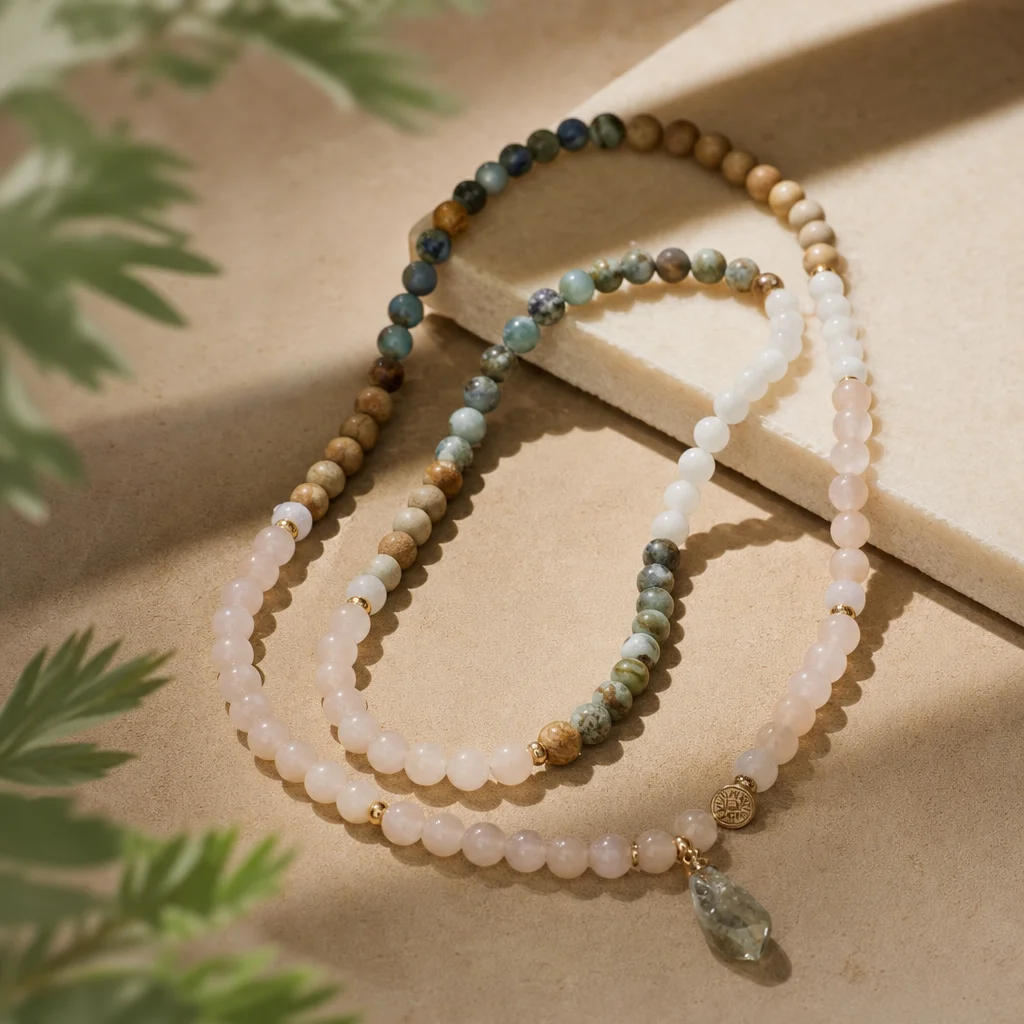
Yes, mixed-material malas are common and perfectly acceptable. A common combination is rudraksha beads with a sandalwood guru bead, or alternating stone and seed beads. The practical consideration is that different materials have different hardness — very hard stone beads next to very soft wood beads can cause the wood to wear faster at the contact points.
How do I know if a sandalwood mala is genuine?
Real sandalwood has a persistent, warm, creamy-wood scent that lasts for years. If the scent fades quickly or is absent from new beads, the material may not be genuine sandalwood. The wood should have a fine, even grain and a warm yellow-brown to golden-brown color. Very dark red-brown wood labeled as "sandalwood" is likely red sandalwood (Pterocarpus), which has a different botanical identity and minimal scent.
What's the difference between Nepali and Indonesian rudraksha?
Nepali rudraksha tends to have deeper, more defined grooves and is slightly larger. Indonesian rudraksha (from Java or Sumatra) typically has shallower grooves and smaller bead size. Both are genuine Elaeocarpus ganitrus seeds. Nepali is often preferred for its more pronounced appearance, but Indonesian works identically well for meditation practice. The price difference reflects rarity and visual appeal more than function.
How often should I oil my wooden or seed mala?
Once every 2–4 weeks is usually sufficient. Use a very small amount of natural oil (sandalwood oil for sandalwood, coconut oil for most seeds) applied with your fingertip, then rub it into the beads. The goal is to prevent drying and cracking, not to saturate the material. If your beads look and feel fine, they don't need oiling — only apply it when the surface appears dry or the beads start feeling rough.
Is it disrespectful to buy Buddhist prayer beads as a non-Buddhist?
Not at all. Mala beads are meditation tools used across multiple traditions. Respectful use — treating the beads with care and using them for genuine practice — is what matters, not religious affiliation. Many people of various faiths (and none) use mala beads effectively for meditation and mindfulness.
Comments