Rudraksha Mala Benefits for Meditation
May 31, 2026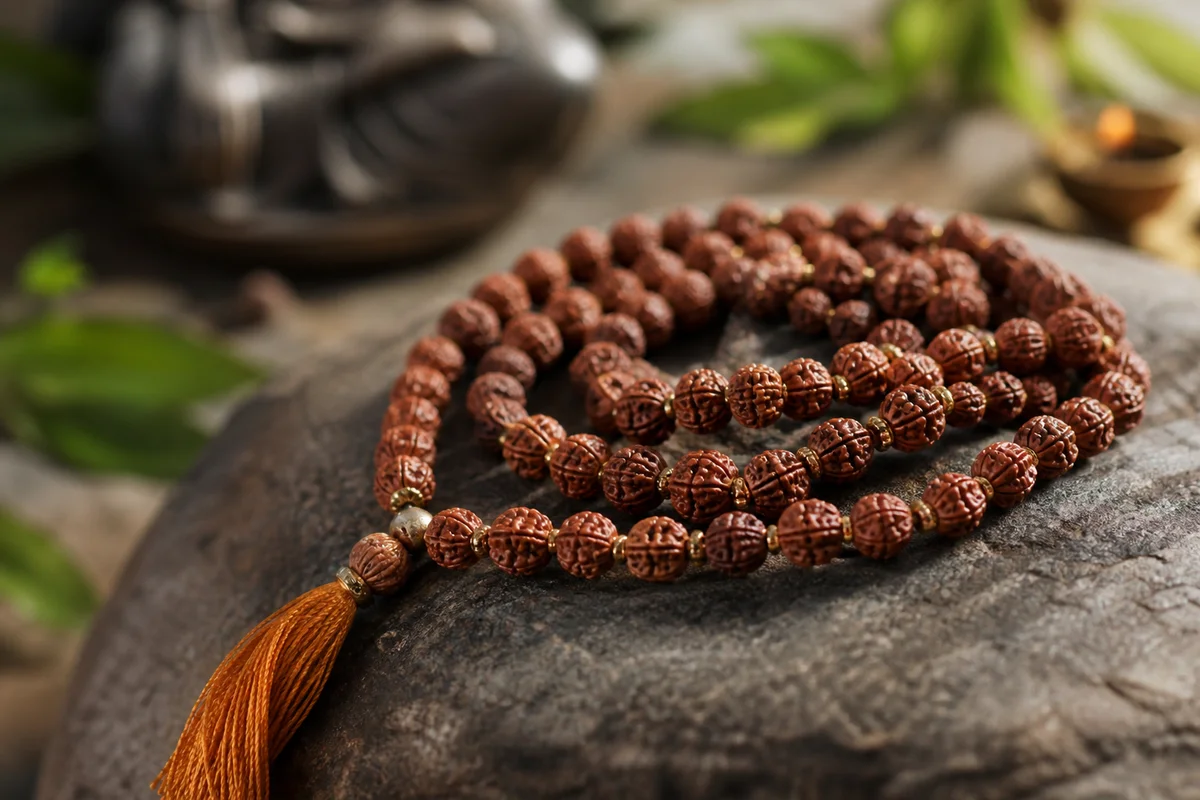
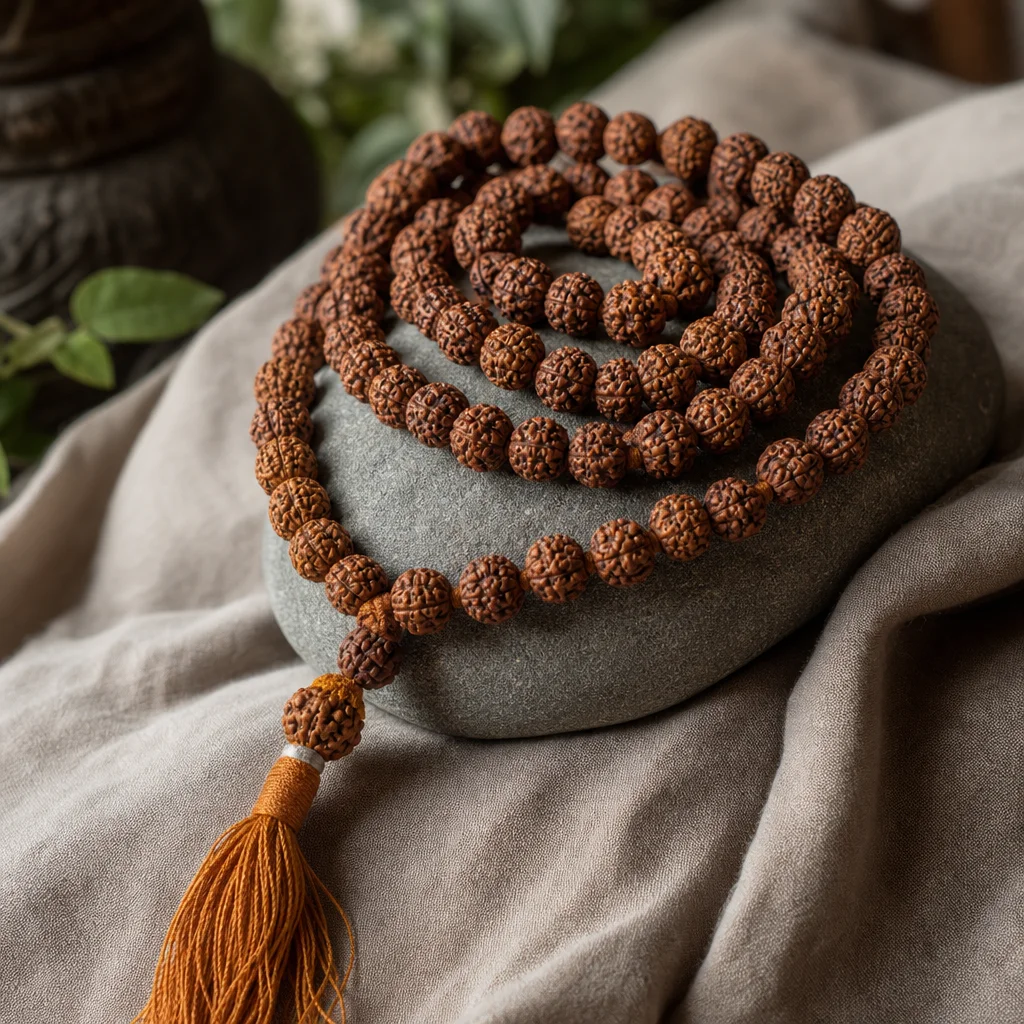
Of all the materials used for prayer beads across the world's spiritual traditions, rudraksha seeds are perhaps the most visually distinctive and culturally charged. Their natural, deeply furrowed surface, their warm brown color, and the weight of mythology attached to them make a rudraksha mala immediately recognizable. Whether you encounter one in a Hindu temple, on the wrist of a yoga practitioner, or in the collection of a bead enthusiast, there's something about rudraksha that commands attention.
The Tree and the Seed
Rudraksha comes from Elaeocarpus ganitrus, an evergreen tree that grows in the foothills of the Himalayas (particularly Nepal, northern India, and parts of Indonesia). The tree produces bright blue drupes (fruit) that contain the hard, brown seeds used for malas. The blue color of the fruit is striking — it comes from the same pigment family as blueberries — but it's the seed inside that matters for bead-making.
The seeds are roughly spherical with a natural hole running through the center, created during the fruit's development. This pre-existing hole is part of what makes rudraksha ideal for bead-making — the stringing channel exists naturally without drilling, though many seeds do need the hole slightly enlarged to accommodate standard threading material.
The surface of a rudraksha seed is covered with deep, natural grooves or segments. The number of these segments determines the seed's "mukhi" (face) classification. A five-mukhi rudraksha has five natural grooves dividing its surface into five sections, a one-mukhi has a single continuous groove, and so on. The number of mukhi ranges from 1 to 21 in natural seeds, with the most common being 4, 5, and 6 mukhi.
The Mythological Origin: Shiva's Tears
The name "rudraksha" literally translates from Sanskrit as "Rudra's eye" or "Rudra's teardrop." Rudra is an early Vedic deity that evolved into the more familiar Shiva in later Hindu tradition. The most widely told origin story goes like this:
After thousands of years of meditation, Shiva opened his eyes and saw the suffering of humanity. The intensity of his compassion was so great that tears fell from his eyes. Where those tears landed on the ground, the rudraksha tree grew. This is why rudraksha is considered sacred to Shiva — the seeds are literally his compassion made physical.
This mythology has practical implications in Hindu practice. Wearing a rudraksha mala is an act of connection to Shiva's energy, his compassion, and his meditative discipline. It's why Shiva is almost always depicted wearing rudraksha beads, often in multiple layers around his neck, arms, and hair.
Understanding Mukhi: The Faces of Rudraksha
The mukhi system is central to rudraksha tradition. Each number of faces is associated with specific properties, deities, and uses. Here are the most commonly encountered mukhi and their traditional associations.
One Mukhi (Ek Mukhi)
The rarest and most expensive of all rudraksha. A genuine one-mukhi seed has a single natural groove creating one continuous surface. These are extremely scarce — genuine one-mukhi seeds from Nepal command prices of $1,000-10,000 or more. The traditional association is with supreme consciousness and ultimate truth. Because of their rarity and value, most one-mukhi rudraksha in the market are either from Southeast Asian sources (where the seeds are smaller and the mukhi classification is different) or are modified/fake.
Five Mukhi (Panch Mukhi)
By far the most common type, making up about 60-70% of naturally occurring rudraksha seeds. Five-mukhi seeds are the standard choice for meditation malas and are what most people mean when they say "rudraksha mala." They're associated with the five elements (earth, water, fire, air, ether) and with Kalagni Rudra (a form of Shiva). A 108-bead five-mukhi mala costs $20-60 for basic quality, with larger or more symmetrical seeds costing more.
Other Common Mukhi
Four mukhi: Associated with Brahma (the creator deity). Considered good for study, learning, and intellectual development. About 15-20% of natural seeds.
Six mukhi: Associated with Kartikeya (Shiva's son, the war god). Considered beneficial for willpower and focus. About 5-10% of natural seeds.
Seven mukhi: Associated with the seven sages (Saptarishi). About 2-5% of natural seeds. Relatively uncommon and moderately expensive.
Eleven mukhi: Associated with the 11 Rudras (forms of Shiva). Considered beneficial for meditation depth and wisdom. Uncommon and increasingly expensive.
Fourteen mukhi: Associated with the third eye of Shiva. One of the more sought-after higher mukhi for meditation practitioners seeking deeper intuition. Rare and expensive.
Higher Mukhi (15-21)
Seeds above 14 mukhi are genuinely rare in nature. Most are found as individual seeds rather than enough to make a full 108-bead mala. Collectors and serious practitioners pay premium prices for these — a genuine 21-mukhi seed can cost thousands of dollars. Because of the high prices, the market for higher mukhi is plagued by fakes and misrepresentations.
How to Identify Genuine Rudraksha
The rudraksha market has a significant fake problem, particularly for rare mukhi. Knowing the difference saves you money and prevents you from basing your practice on inauthentic materials.
The water test: Genuine rudraksha sinks in water. Seeds that float are either immature, damaged, or carved from lighter woods to mimic the appearance. This test is widely used but not 100% reliable — some genuine seeds with internal damage can float.
The X-ray test: The most definitive identification method. A genuine rudraksha seed has internal compartments (the number matching the mukhi count) that are visible on X-ray. Seeds carved to look like high-mukhi will not have matching internal structures.
The copper test: Place the seed between two copper coins or copper plates and touch a multimeter's conductivity probes to the copper surfaces. Genuine rudraksha shows some conductivity due to trace minerals. This test is not universally reliable but is used in traditional verification.
Visual inspection: Genuine rudraksha has natural, slightly irregular grooves that follow organic patterns. Carved or etched grooves (common on faked high-mukhi seeds) tend to be more uniform, mechanical-looking, and follow patterns that natural erosion wouldn't produce. The surface should have natural variation — not perfectly smooth, not obviously carved.
Price reality check: If someone offers you a 14-mukhi or higher rudraksha for $50, it's almost certainly fake. Genuine higher-mukhi seeds are genuinely rare and command premium prices. Be skeptical of deals that seem too good to be true.
Choosing and Using Your Rudraksha Mala
For most practitioners, a five-mukhi rudraksha mala is the practical and traditional choice. Here's what to consider when selecting one.
Size: Rudraksha beads come in several sizes, measured by their diameter. Standard meditation beads are 12-14mm. Smaller seeds (8-10mm) are used for wrist malas. Larger seeds (15-18mm and above) are heavier and chunkier — better for sitting meditation than all-day wear. Larger seeds are also more expensive because they come from older, more mature trees.
Origin: Nepali rudraksha (from Nepal and northern India) is generally considered the highest quality, with well-defined mukhi grooves, good density, and a rich brown color. Indonesian rudraksha tends to be smaller with less pronounced grooves but is more affordable. Both are genuine Elaeocarpus ganitrus, but the growing conditions affect the seed's appearance.
Stringing: Traditional rudraksha malas are strung on red or black cotton thread, with or without knots between beads. Knots between beads add durability but make the mala slightly longer and bulkier. Some modern malas use nylon thread or elastic (for wrist wear). Avoid metal wire, which can cut into the soft seed material.
Caring for Rudraksha
Rudraksha seeds are more durable than tulsi wood but still require basic care.
Wearing frequency: Rudraksha can be worn daily, including during sleep. In fact, many practitioners believe the seeds should be in constant contact with the body for maximum benefit. The natural oils from your skin actually condition the seeds over time, deepening their color and enhancing the surface texture.
Water exposure: Occasional water contact is fine — bathing or swimming while wearing a rudraksha mala won't damage the seeds. Prolonged soaking should be avoided, as it can cause the seeds to swell slightly and loosen the stringing. If the mala gets soaked, dry it gently with a cloth.
Oiling: Some practitioners apply a drop of sandalwood oil or mustard oil to their rudraksha beads every few months. This prevents the seeds from becoming too dry and brittle. Apply the oil with a cloth, not directly, and let it absorb before wearing.
Cleaning: If the seeds accumulate dirt (visible in the grooves), clean gently with a soft dry brush. Avoid soap, detergent, or chemical cleaners, which can damage the natural seed surface.
Rudraksha in Buddhist Tradition
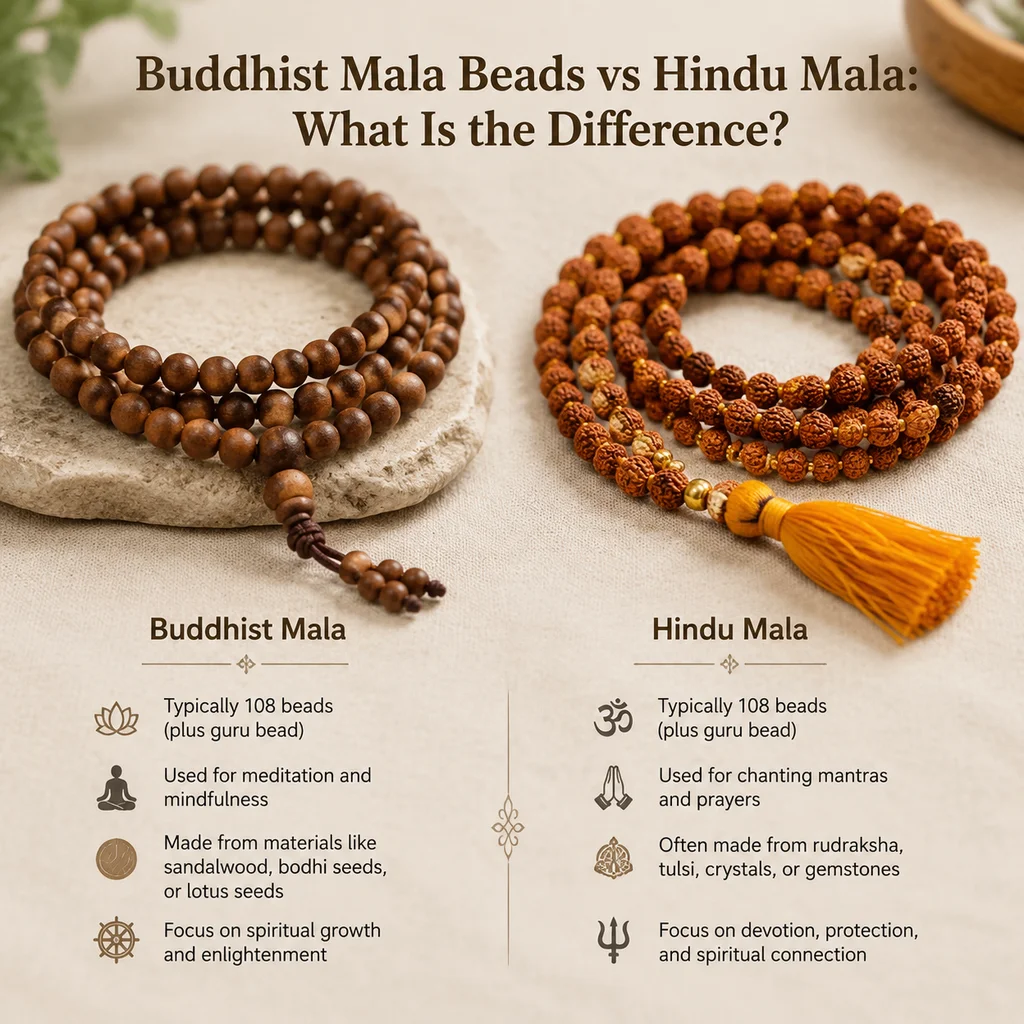
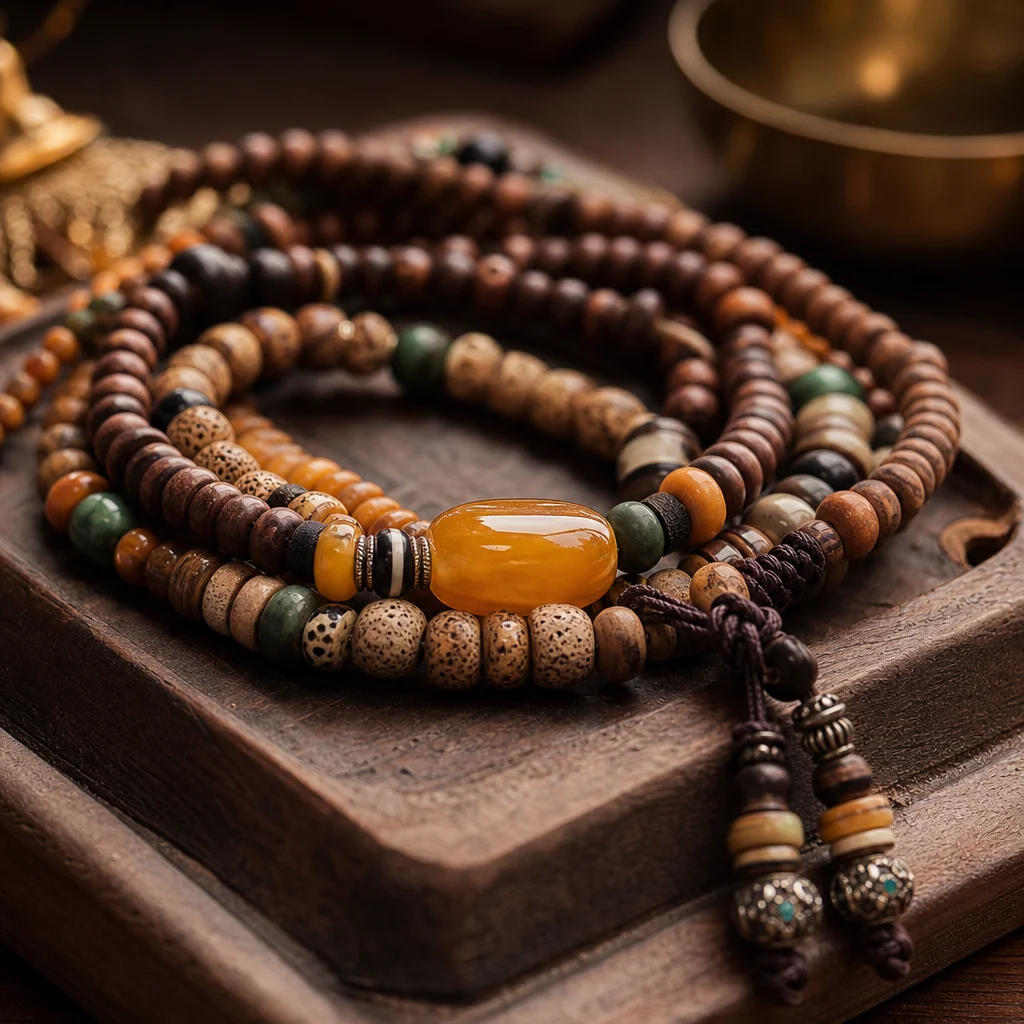
While rudraksha is most strongly associated with Hindu Shiva worship, it's also used in certain Buddhist traditions, particularly Vajrayana Buddhism and in practices with Shiva-related deities. In Tibetan Buddhism, rudraksha malas are often combined with other materials — bodhi seed, amber, turquoise, and coral — creating mixed-material malas that reflect the practitioner's specific practice lineage.
The Buddhist use of rudraksha doesn't carry the same Shiva mythology but acknowledges the beads' traditional power and focuses more on the physical practice of counting mantras. In this context, rudraksha is valued for its durability, tactile quality, and the meditative discipline its use encourages.
Frequently Asked Questions
Can women wear rudraksha?
Yes. While some traditional sources suggest restrictions (particularly around one-mukhi rudraksha, which was traditionally reserved for male practitioners in certain Hindu lineages), five-mukhi and other common rudraksha malas are worn by practitioners of all genders worldwide. Most modern Hindu teachers and gurus explicitly confirm that anyone can wear rudraksha regardless of gender.
Do I need to energize or consecrate my rudraksha mala?
In some traditions, new rudraksha malas are consecrated through specific mantras and rituals before first use. This is a matter of personal practice and lineage. If you don't have a specific tradition to follow, simply beginning to use the mala in your meditation practice is sufficient. The intention behind your practice matters more than any formal consecration ritual.
How can I tell how many mukhi my rudraksha has?
Count the natural grooves or lines running from one end of the seed to the other along the equator. Each complete groove is one mukhi. On a five-mukhi seed, you'll see five clearly defined grooves dividing the surface into five sections. Use a magnifying glass for small seeds where the grooves might be hard to distinguish. If you're unsure, consult an experienced dealer who can verify with X-ray imaging.
Is rudraksha the same as a beetlenut?
No. Rudraksha comes from the Elaeocarpus ganitrus tree, while betel nut comes from the areca palm (Areca catechu). The seeds look somewhat similar in size and shape but are completely different plants with different properties. Some sellers of fake rudraksha do use betel nut shells carved to look like rudraksha, particularly for high-mukhi fakes.
Frequently Asked Questions
Which mukhi rudraksha is best for meditation?
The 5 Mukhi (Panchmukhi) Rudraksha is widely considered the best for daily meditation. It is the most common bead, known for promoting inner peace, calming the mind, and enhancing focus. At SagStone, our artisans love crafting malas with these five-faced seeds because they naturally support spiritual growth and deep tranquility during your mindful practices.
Comments