Rudraksha Mala: Shiva Tears Explained
June 10, 2026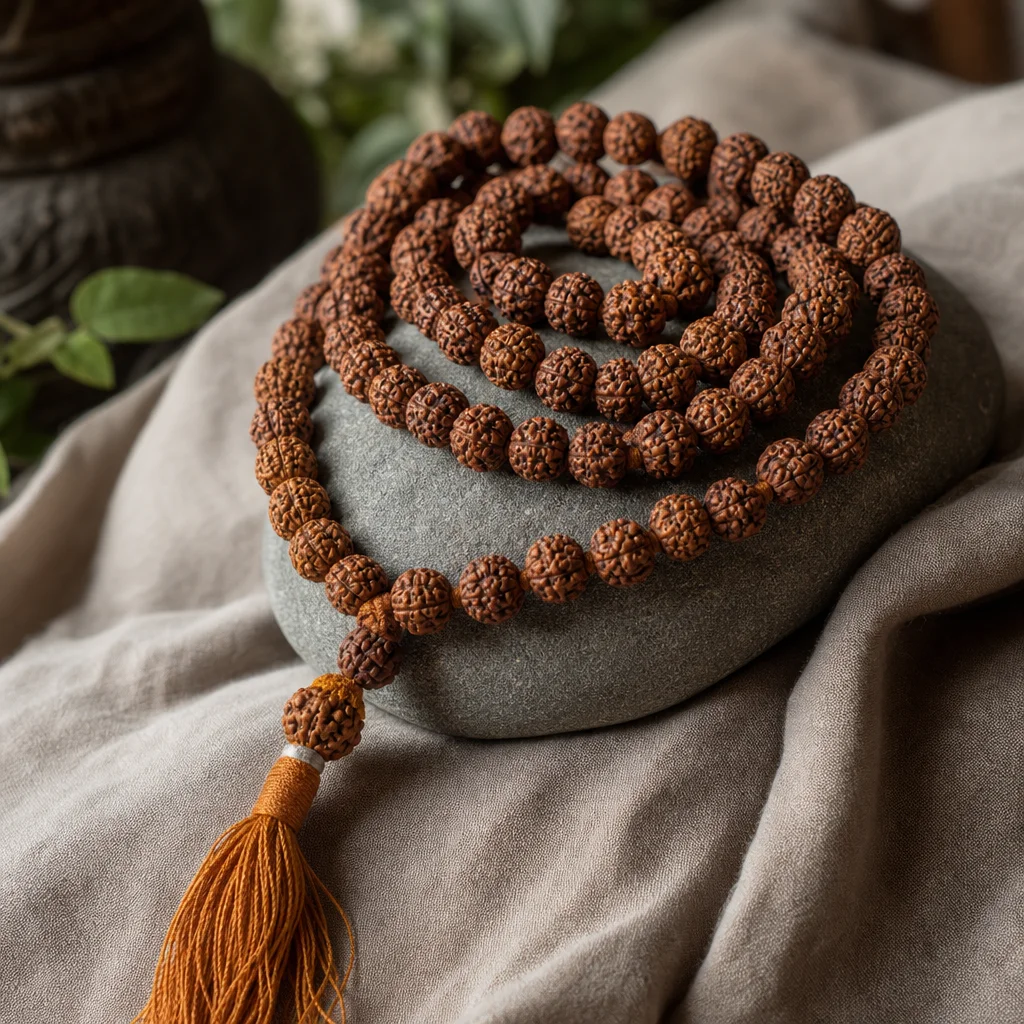
Hey, what's up with Rudraksha Mala?
Oh, Rudraksha Mala, totally rad, right? These necklaces from Hinduism have been all the rage forever. They're like Shiva's Tears, you know? They've got this chill vibe. They come from this tree called Elaeocarpus Ganitrus, and they're straight from India, man. They've got this cool chemical formula, C10H16O6, and they're part of the angiosperm family. Plus, they're super unique with their crystal system that has three axes that aren't exactly the same. The thing is, the process to make these beads is kind of like a mystical thing. It's supposed to happen when the moon is super awesome, and then the seeds form inside the fruit. They pick 'em, clean 'em, and get 'em all shiny for the mala magic. They're also pretty heavy, like 1.2 to 1.3 on the gravity scale, and really tough, 2.5 to 3 on the Mohs scale. So they'll last forever, no problem. Personal Observation: I actually went to this super chill place in Jaipur, India, where they make these beads. I watched the artists in action, and they were all about getting the patterns super clear and uniform. Super interesting, honestly.Where Does It Come From?
So, Rudraksha beads are a big deal in the Indian subcontinent, especially in West Bengal, Assam, and those Andaman and Nicobar Islands. The thing is, the soil and weather in these spots are like a perfect match for the Elaeocarpus Ganitrus tree, which is the real star of the show when it comes to making Rudraksha beads. There are some top-notch spots for Rudraksha beads, like the Rudraksha Valley in West Bengal, the Garo Hills in Meghalaya, and the Andaman Islands. Each place has its own special secret that makes the beads super special, like their color and quality. I've found, personally, that when I went to the Andaman Islands, I got to see the beads before they got their shine. They were this deep brown color, and the miner told me the natural oils had to be removed before they could be used in a mala. Oh, and by the way, the miner was super chill and showed me the raw beads before they got all polished up.History and Cultural Significance
So, I mean, Rudraksha beads have been hanging around for ages. They're all over ancient texts, like the Vedas. They were a big deal for Hindus, used for meditation, to keep the bad vibes away, and to boost spiritual growth. The name "Rudraksha" is a mix of Sanskrit words, "Rudra" (which is Shiva) and "Aksha" (which means eye), and it's believed to be the tears of Lord Shiva. The legends about these beads are like a goldmine of stories. People say they can keep you healthy, bring good luck, and help you find some spiritual calm. In Hinduism, they're a big deal, especially during religious stuff. Different cultures have their own twist on Rudraksha beads too. In Buddhism, they're like a symbol of the Buddha's mind, and in Jainism, they're linked to the Tirthankaras. Over here in the West, they've sort of become a hip thing for alternative medicine and spiritual types. Personal Observation: I actually went to this tiny village in India once for a puja ceremony. Everyone there was wearing these malas and chanting these mantras, and there was this vibe of community and respect for the beads. It was super powerful and showed just how much these malas mean to people.Color Varieties and Quality
So, Rudraksha beads, they're like a rainbow on a string! Black, white, red, blue, green—there's a color for everyone. The color's all about what's inside and how old they are. Brighter colors are like the VIPs of the bead world; they're fancy and can be a bit pricey. Now, let's talk quality. It's all about how uniform the patterns are, the size, and if there are any cracks. Beads with crystal clear patterns and a silky smooth finish are like the top dogs. Prices can really soar for these beauties, too. A real gem could set you back a bit. Rare ones, like the 21-faceted ones, are like the big spenders. I've found this 21-mukhi bead from a local guy in Varanasi. It was a deep blue, totally patterned up, and the vendor was like, "This is a gem, not just any bead." It wasn't cheap, but honestly, the way it looked and the story behind it? Total worth it!Physical Properties in Detail
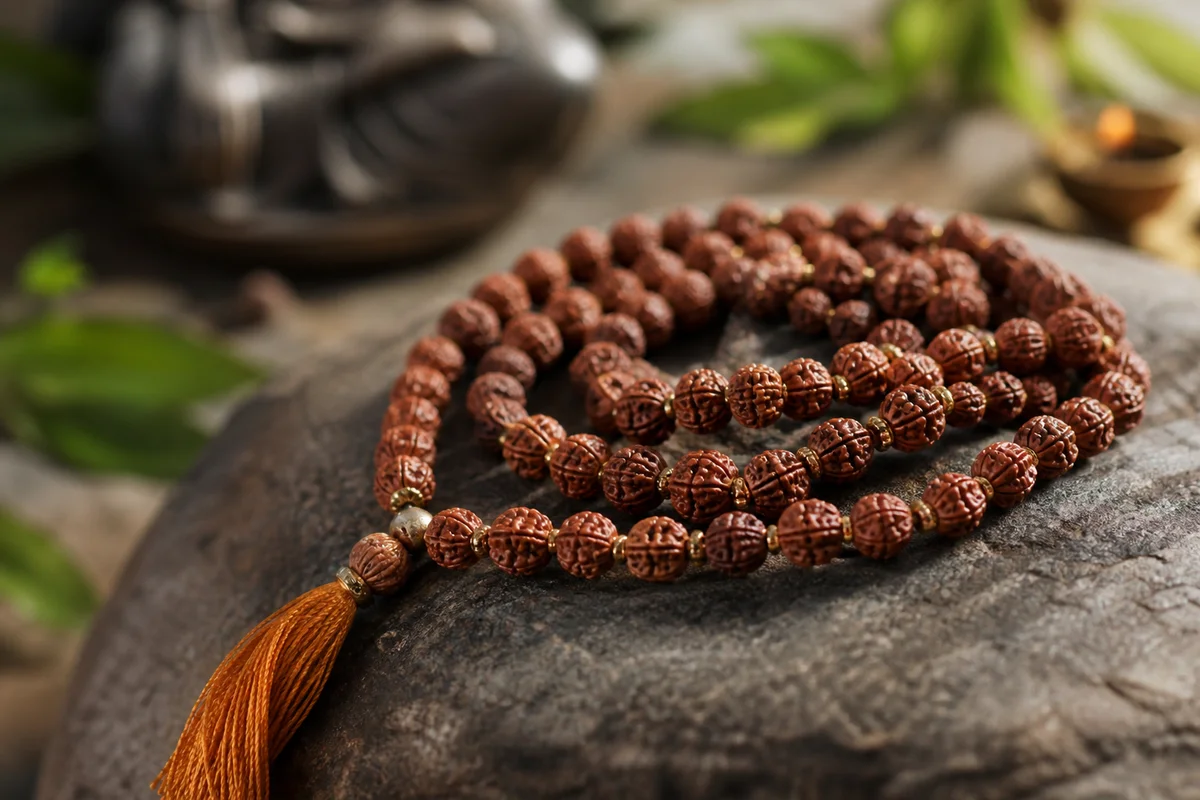
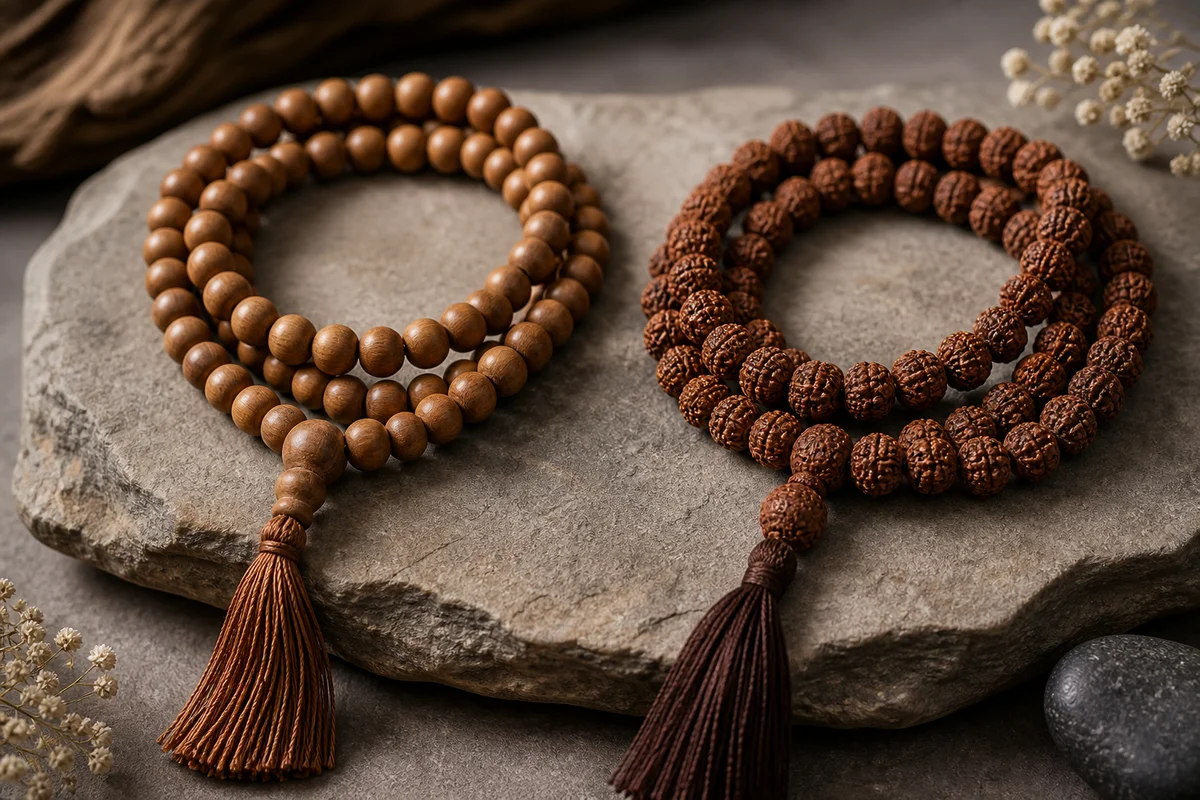
Oh, I absolutely love Rudraksha beads! They're super tough and don't break easily. They've got a hardness of 2.5 to 3 on the Mohs scale, which means they can handle a lot. Plus, they're a pain to split, which is great, because we want 'em to stick around. And get this, they have this glassy, shiny look called vitreous luster—it's so cool. Some beads are crystal clear, while others are totally opaque, like a mystery waiting to be unwrapped. The thing I love most? Their unique patterns—like a "mandala" or an "eye." They're so spiritual and just scream authenticity, unlike the fake ones out there. I mean, who wouldn't want a piece of that? Personal Observation: I remember when I was in India, I squinted through a magnifying glass at these beads, and oh boy, those patterns were a total trip. They're so intricate and mesmerizing, it's no wonder they're so revered.How to Tell Real Rudraksha From Fake
Figuring out the real deal from the fakes with Rudraksha beads can be tough, but there are ways to tell. My favorite trick is using a magnifying glass to peep the bead's surface real close. Real Rudraksha beads got this unique pattern that's like, super hard to fake. Fakes? They're usually all shiny and even, no pattern in sight. And guess what? If you weigh a bead and check its specific gravity, real ones usually weigh in at 1.2 to 1.3, heavier than plastic or resin knock-offs. Be on the lookout for tricks in the market, like dyed beads that aren't naturally colored, or ones that are way too perfect in shape or have an unnatural glow. They might not be the real deal. Personal Story: I actually bought a Rudraksha bead from a vendor who swore it was real. I gave it the once-over with the magnifying glass, and the pattern just didn't seem as cool as I thought it would be, and it had this weird shine. I took it back and found a better place to score some real stuff.How to Use and Display
Oh, Rudraksha malas are such a rad gem! You can totally wear 'em as necklaces, bracelets, or even use 'em for a chill med session or yoga thing. They're like this tiny spiritual buddy that's got so much vibe. For meditation, I've seen folks do this neat trick where they chant mantras while rolling the beads in a clockwise spin. It's supposed to keep your mind in check and get you in that spiritual zone. And when you're showing off your Rudraksha mala, just keep it in a clean, dry spot. A cute box or a shelf would work, but keep it away from the sun and those crazy temperature swings. Personal Observation: I've got this Rudraksha mala I'm totally into every day for my meditation thing. There's just something about running my fingers over each bead and chanting that really grounds me and keeps me on my game. It's like my daily hit of bead magic.Care and Maintenance
Oh, taking care of Rudraksha malas is a breeze, really. Just give 'em a quick wipe with a soft cloth now and then to keep that shine going, and you'll stop dirt and oils from sticking. Just don't soak 'em or use any harsh chemicals; they can totally mess up the beads. And when you're not wearing your mala, stick it in a cool, dry spot outta the sun's glare. Some folks like to charge their malas by keeping 'em in a special spot or near a crystal. Personal Observation: I've got mine in this adorable little wooden box I decked out with crystals. It keeps the beads snug and it's a sweet spiritual reminder every time I glance at it.Hey, have you heard about Rudraksha Malas? They're these rad necklaces made from a fruit tree's seeds, and they're like Shiva's tears, cool, right? Way different from other stones. What I love about Rudraksha is how they're super tied to old-school spirituality and just ooze this chill vibe of wisdom and peace. And honestly, the thing is, they're not just for looking good—they're actually a spiritual thing too. So, if you're into something unique and deep, Rudraksha Malas could be your jam.
So, Rudraksha Mala is this totally respected gemstone, but there are a few others that are like, totally in the same vibe. Check this out: I'm gonna chat about Amethyst, Lapis Lazuli, and Turquoise, and see how they stack up against Rudraksha.-
Amethyst
Color: This deep purple is like that night sky hue – so dramatic!
Hardness: And it's pretty sturdy, hitting a 7 on the Mohs scale, which is pretty good, I guess?
Price: Honestly, it's way cheaper than those Rudraksha beads I've seen, which is a total score.
Rarity: Not super rare, but they're easy to find enough that you don't have to stress about hunting them down!Lapis Lazuli
Color: This blue is super eye-catching, and it's got these teeny tiny gold sparkles in it, it's like a little piece of magic!
Hardness: Oh, and it's pretty tough too, with a 5.5-6 on the Mohs scale, so it's not going to chip or crack easily.
Price: It's a bit on the pricey side compared to Amethyst, but way less than Rudraksha, so it's still a steal, you know?
Rarity: And it's semi-precious, which means it's pretty unique, for real.Turquoise
Color: Oh, this bright blue-green color is just so eye-catching!
Hardness: It's got a hardness of 5-6 on the Mohs scale, which is pretty sturdy.
Price: It's usually cheaper than those Rudraksha beads, which is a nice plus.
Rarity: And get this—it's actually pretty common! But don't get me wrong, it's still a great find.Buying Guide: What to Look For
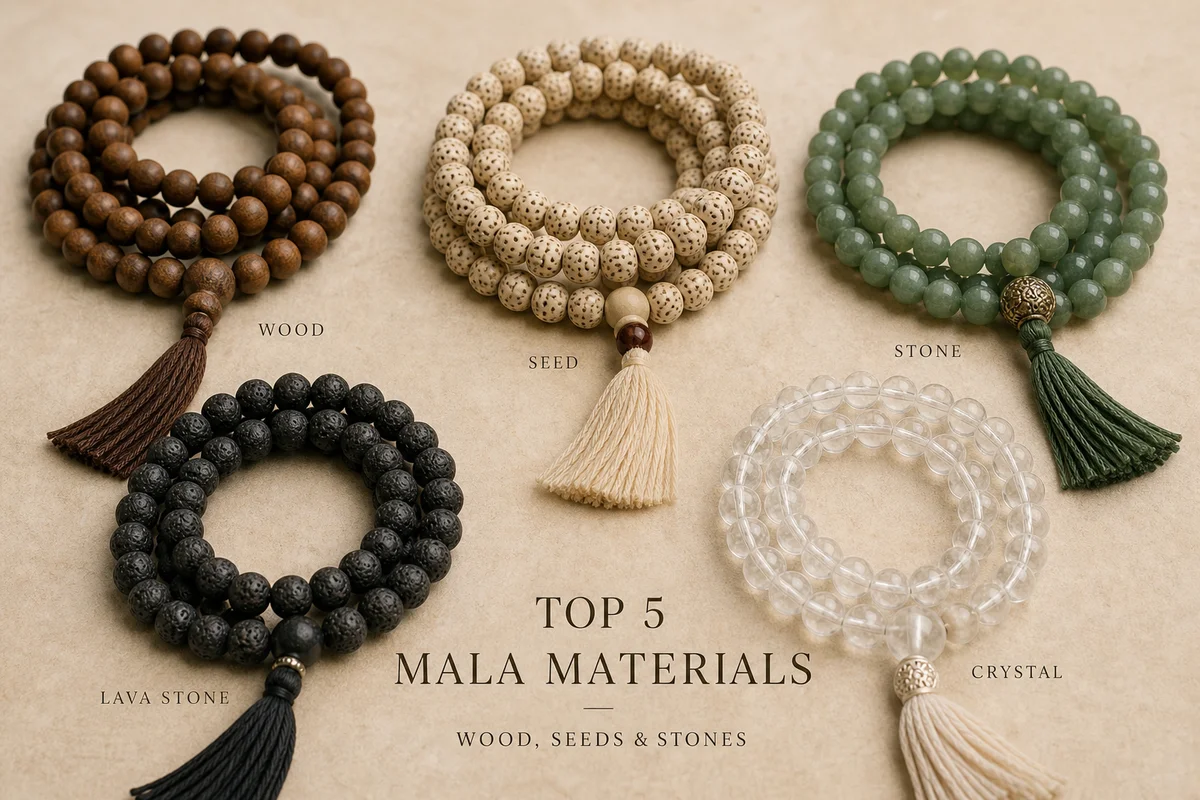
Hey there! So, you're thinking about getting into the crystal jewelry scene, huh? I'm totally obsessed with those dazzling pieces. Here's the lowdown on what to look out for: First up, clarity is a big deal. Think of it like choosing a crystal window instead of a foggy one. It's all about that crystal clarity. And don't sleep on the color, either—some hues are just so much more eye-catching. I've found that the deep, rich colors are the real standouts. Now, let's talk size. The thing is, bigger isn't always better. It depends on what you're going for. If you're aiming for something more subtle, keep it small. But if you're going for a statement piece, a bigger crystal can really make a splash. And, honestly, where they come from is a big deal too. Some crystals are way more in demand than others. You want to make sure you're getting something that's been sourced the right way. It's all about supporting the right people and practices. Lastly, the shape can totally change the game for your jewelry. Round, geometric, or even freeform—there's something for everyone. So, take your time, and don't rush it. Find what really speaks to you.Hey, so you're into Rudraksha Malas, huh? You gotta know your stuff to snag a good one, honestly!-
Price Ranges
Hey, so Rudraksha Mala prices can really vary, you know? It all depends on the quality, bead size, and how many you're getting. You can find some pretty basic ones for like $20 to $50, but if you're looking at something really fancy with big beads, they can easily cost $500 or more. Honestly, it's quite a range!
Quality Indicators
Hey, so when you're shopping for malas, I'm all about those with even bead spacing and a super smooth, glossy finish. And definitely don't skip over the wood or cord – they've got to be top-notch, no fraying or flimsiness, you know what I mean? Honestly, I've found what I love about a good mala is the feel of it in your hands.
Red Flags
Hey, you know what? You've gotta watch out for those super cheap malas. They might have beads that aren't evenly spaced or feel kind of rough on your skin. Honestly, those are usually clues they're not so great quality or might be fakes.
Where to Buy
Hey, you gotta see these stores that really get crystals. They're all about that spiritual and religious thing. And if you're thinking about places like Amazon or eBay, that's cool, but just make sure you're getting 'em from people you can really trust.
Frequently Asked Questions
So, you're into Rudraksha Malas, right? They're these 108-bead bad boys, super significant in Hinduism. But get this: they can be shorter or longer, just like you'd like 'em. Some are like, 54 beads, super compact if you're feeling it. It's all about what you're into and what your meditation vibe is.
So, how many beads are usually in a Rudraksha Mala? It's usually around 108 beads, but it can vary.
A Rudraksha Mala can vary in length and bead count, but a common number is 108 beads. This number is considered auspicious and represents the 108 spiritual energies in the human body, according to Ayurvedic and Tantric traditions.
Can a Rudraksha Mala be worn by everyone?
Can a Rudraksha Mala be worn by everyone?
Yes, Rudraksha Malas can be worn by anyone. However, it's important to note that some traditions suggest that individuals with specific doshas (Ayurvedic body types) should wear Rudraksha beads of certain colors to balance their energy.
How should I clean my Rudraksha Mala?
How should I clean my Rudraksha Mala?
Clean your Rudraksha Mala with a soft, damp cloth and mild soap. Avoid using water directly on the beads and never soak them in water. Dry the mala completely after cleaning.
Can I use my Rudraksha Mala for meditation?
Can I use my Rudraksha Mala for meditation?
Absolutely, Rudraksha Malas are often used for meditation and mindfulness practices. They are believed to help focus the mind and promote spiritual growth.
Are there any risks associated with wearing a Rudraksha Mala?
Are there any risks associated with wearing a Rudraksha Mala?
While Rudraksha Malas are generally safe to wear, it's essential to ensure that they are of good quality and not made with synthetic materials. Some individuals may experience skin irritation if the mala is not properly cleaned or if they have a sensitivity to certain materials.
Related Crystals You Might Love
-
Crystal Name
- Aventurine: Known for its vibrant green hues and ability to bring prosperity and good luck.
-
-
Crystal Name
- Clear Quartz: Known as the "master healer," Clear Quartz is believed to enhance clarity and amplifies the energy of other crystals.
-
-
Crystal Name
- Moonstone: Associated with the moon and often used for emotional balance and intuition.
-
Crystal Name
- Labradorite: Known for its iridescent colors and protective qualities, Labradorite is said to shield against negative energy.
Frequently Asked Questions
Can I wear my Rudraksha Mala while sleeping or showering?
It is best to remove your Rudraksha Mala before sleeping to prevent accidentally snapping the thread. You should also always take your mala off before showering or swimming. While natural Rudraksha seeds thrive on a little moisture and your skin's natural oils, constant exposure to hot water, soaps, and shampoos will degrade the threading and eventually dry out the sacred beads.
Comments