Buddhist vs Hindu Mala: 5 Key Differences
June 3, 2026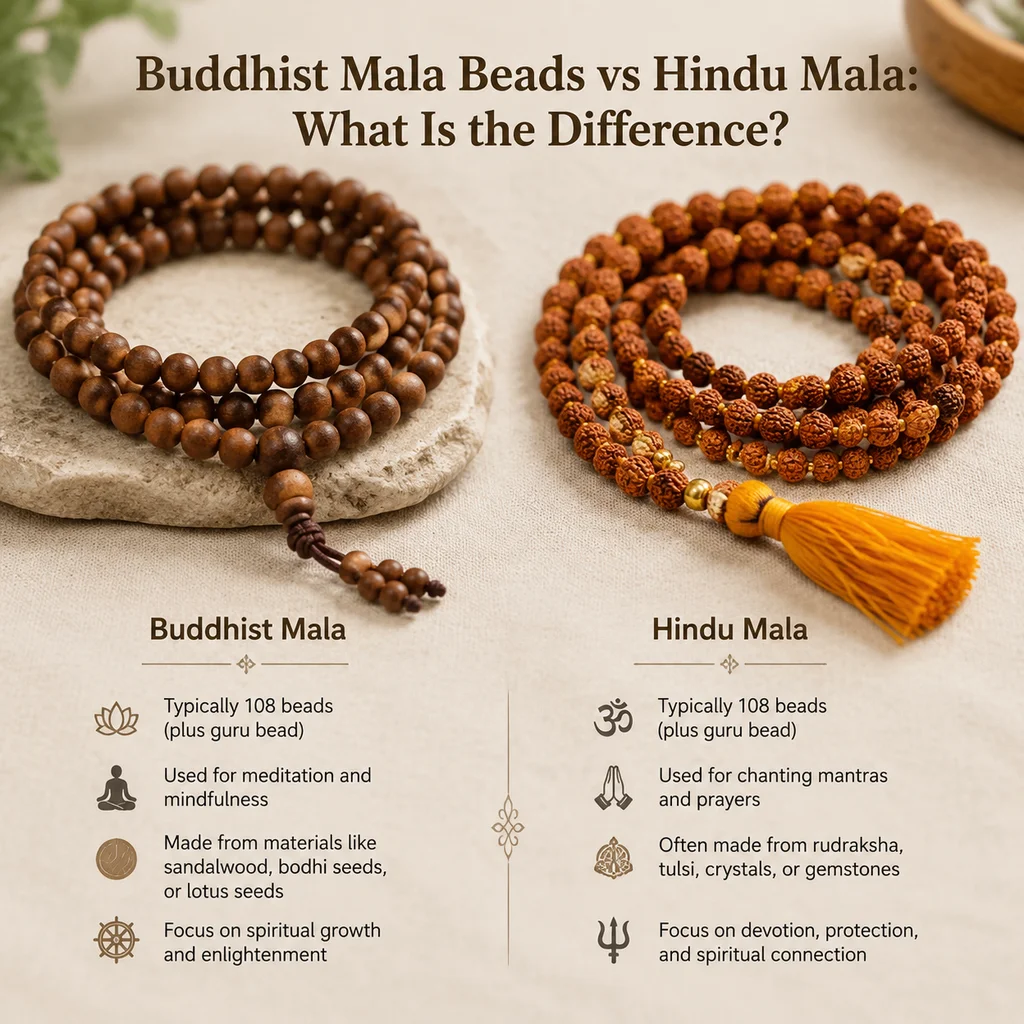
The Shared Foundation: 108 Beads
Both Buddhist and Hindu mala traditions share the number 108 as their standard bead count. This is not a coincidence—it reflects the deep historical and philosophical connections between the two traditions. Buddhism originated within a Hindu cultural context, and many practices, including the use of prayer beads, were adapted and refined as Buddhism spread across Asia.
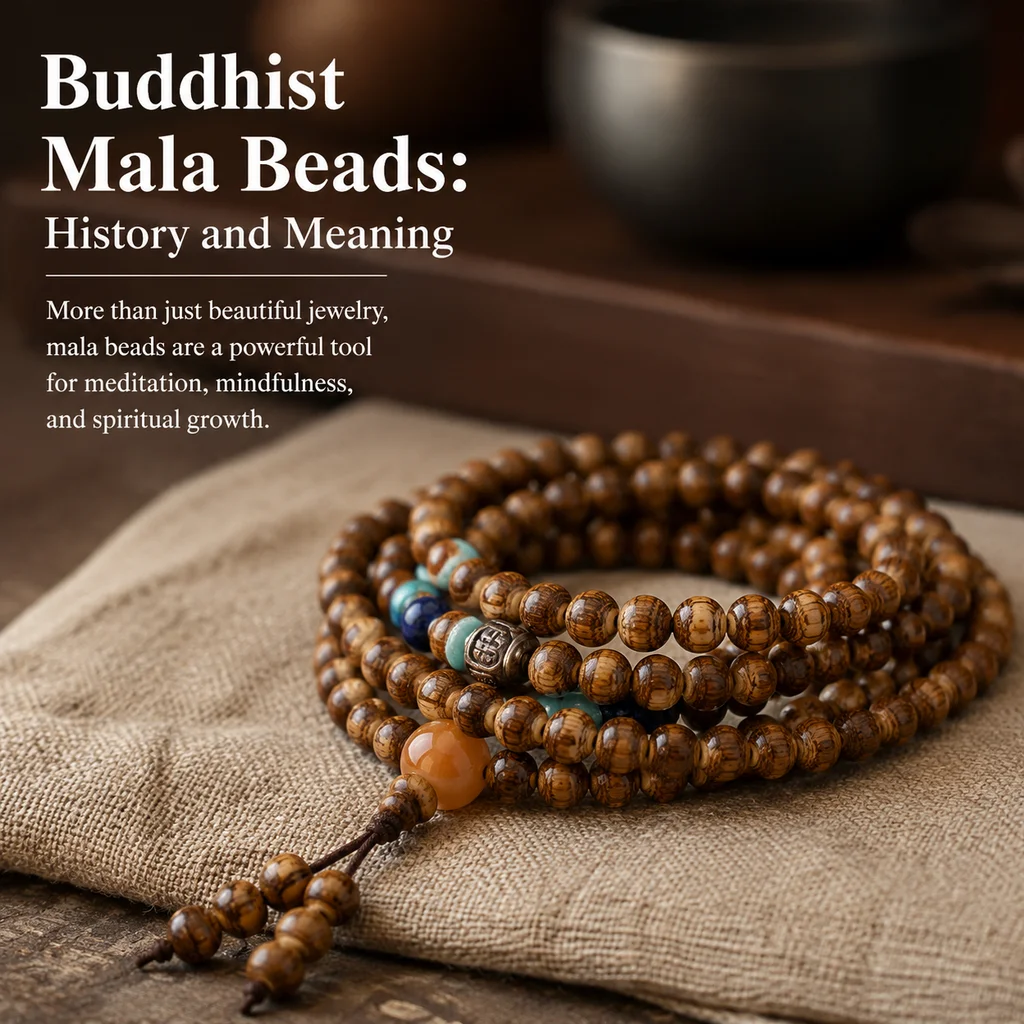
A standard mala in both traditions consists of 108 counting beads plus one larger guru bead (called the meru bead in Buddhist practice). The 108 beads are sometimes divided into sections by smaller marker beads—typically at the 27th position (four sections of 27) or the 54th position (two sections of 54).
Despite this shared structure, the details of how each tradition uses the mala differ in specific, meaningful ways. These differences matter if you are choosing a mala for a particular tradition's practice, or if you simply want to understand the cultural context of your beads.
Hand Usage: The Most Noticeable Difference
The most immediately visible difference between Buddhist and Hindu mala practice is which hand holds the beads:
Buddhist tradition: The mala is held in the left hand, draped over the middle or ring finger, with the thumb moving the beads. In some lineages, the mala is held in the right hand instead—the specifics vary by school (Theravada, Mahayana, Vajrayana). The general principle is that the dominant hand moves the beads while the mala rests over a specific finger.
Hindu tradition: The mala is typically held in the right hand. The beads are moved with the middle finger and thumb, while the index finger is kept extended away from the mala. The index finger is considered representative of the ego in Hindu practice, and keeping it away from the beads symbolizes setting aside the ego during prayer.
This hand difference is not just ceremonial—it affects the ergonomics of counting. A mala designed for right-hand use (Hindu style) may feel less natural in the left hand, and vice versa. However, most commercially made malas are symmetric enough that they work in either hand. The difference is in the practice, not the beads themselves.
Material Preferences
Each tradition has favored materials that have developed over centuries:
Buddhist Mala Materials
- Rudraksha seeds: The seeds of the Elaeocarpus ganitrus tree are perhaps the most iconic Buddhist mala material. These brown, textured seeds have natural faces (mukhis, or grooves) that range from 1 to 21 faces per seed. Five-faced rudraksha is the standard for meditation malas.
- Bodhi seeds: Seeds from the Ficus religiosa (sacred fig) tree under which the Buddha attained enlightenment. These dark, smooth seeds are increasingly popular as a sustainable alternative to sandalwood.
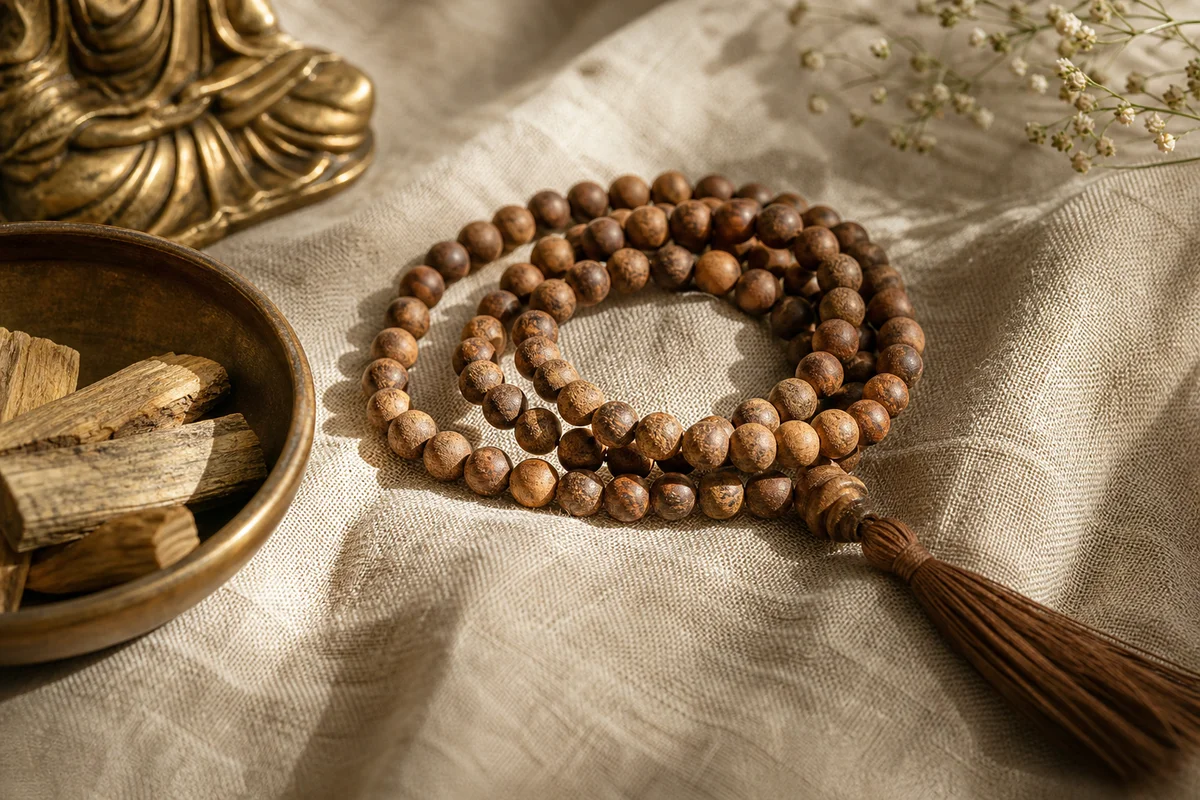
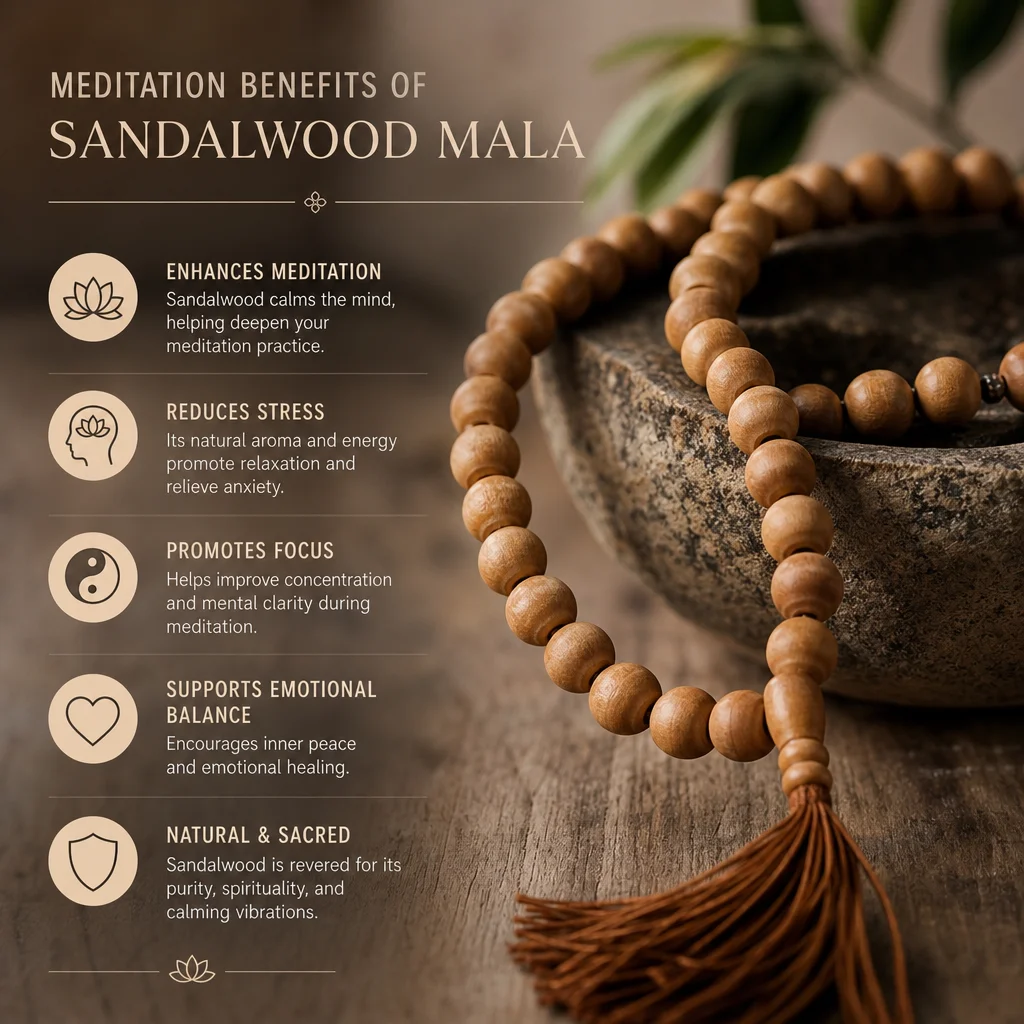
- Sandalwood: The fragrance of sandalwood is central to many Buddhist meditation practices. Sandalwood malas release a subtle scent during handling that many practitioners find calming and centering.
- Lotus seeds: Light gray, textured seeds from the lotus plant. Symbolically important in Buddhism as the lotus grows from mud but blooms pristine above the water.
- Bone and horn: In Tibetan Buddhism, bone malas (typically yak bone) are common, symbolizing impermanence and the preciousness of human rebirth. These are often carved with mantras or symbols.
Hindu Mala Materials
- Rudraksha: Equally important in Hindu practice. In Shaivism (worship of Shiva), rudraksha malas are considered the most sacred form. Different mukhi counts are associated with different deities and purposes.
- Tulsi (holy basil): Wooden beads made from Ocimum tenuiflorum. Tulsi malas are primarily associated with Vaishnavism (worship of Vishnu/Krishna/Rama). The wood is lightweight and carries a distinctive herbal scent.
- Neem: Bitter-tasting wood with antiseptic properties, used in some Hindu prayer bead traditions. Less common than tulsi or rudraksha.
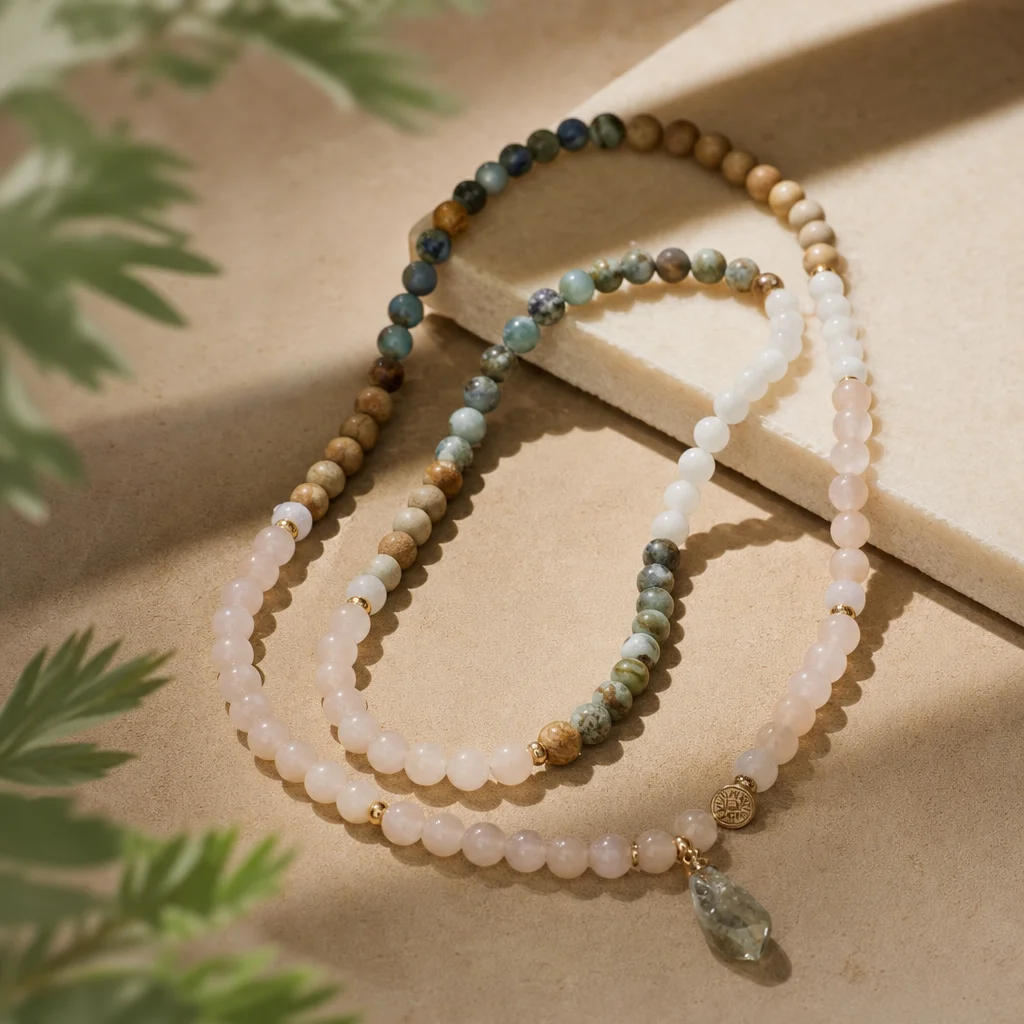
- Crystal and gemstone malas: In both Hindu and Buddhist practice, crystal malas (especially clear quartz, rose quartz, and amethyst) are used for specific purposes related to the stone's traditional associations. These are less tradition-specific than seed malas.
- Pearl and coral: Used in certain Hindu worship practices, particularly those associated with Lakshmi (goddess of wealth) or specific planetary remedies in Vedic astrology.
Overlap and Exceptions
In practice, there is significant overlap. Rudraksha is used in both traditions. Sandalwood is used in both. Crystal and gemstone malas are universal. The material alone does not definitively indicate whether a mala is Buddhist or Hindu—the context of its use matters more.
Direction of Counting
How the beads move during counting also differs subtly:
Buddhist practice: Beads are typically moved forward (away from the guru bead) during mantra recitation. When you reach the guru bead, you reverse direction and count back toward the starting point. Some lineages teach that you should not cross over the guru bead in either direction.
Hindu practice: The general direction is similar—forward away from the guru bead, reverse at the end. However, some Hindu practices incorporate a more specific ritual around the guru bead: it may be touched to the forehead or third eye at the beginning and end of each cycle as a gesture of respect.
These differences are subtle and not universal—individual teachers and lineages may have their own specific instructions. If you are learning from a specific teacher, follow their guidance rather than relying on general descriptions.
Guru Bead and Tassel Design
The guru bead (the large bead that marks the start/end of the 108 count) varies between traditions:
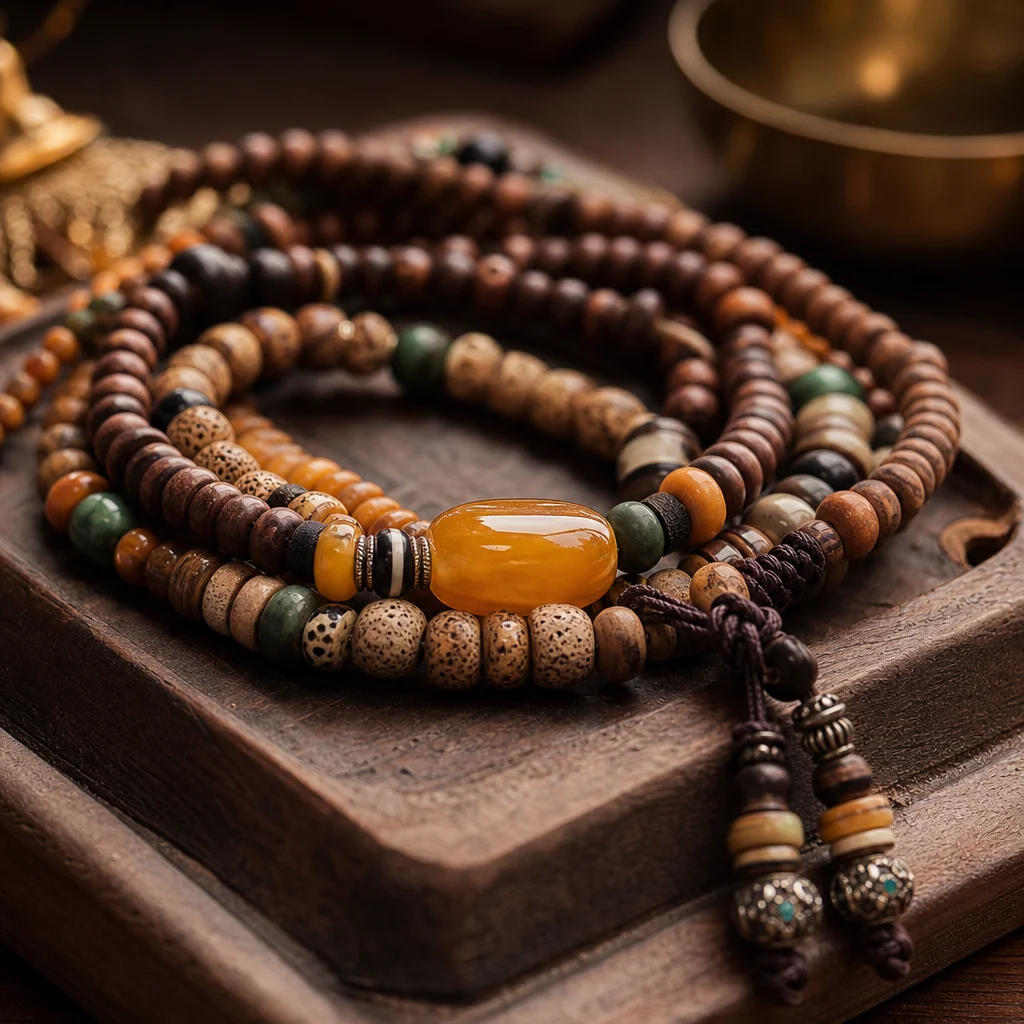
- Buddhist malas: Often have a guru bead that is noticeably larger than the counting beads, sometimes with a different shape (barrel, cylinder, or lotus-shaped). The tassel (if present) is attached below the guru bead. In Tibetan Buddhism, the guru bead area often includes additional counter beads (sometimes turquoise or coral) and bells.
- Hindu malas: The guru bead may be a larger version of the same material (a bigger rudraksha seed, for example) or a different material entirely (a crystal, metal, or carved wooden bead). The tassel is common but not universal in Hindu practice—some practitioners prefer a plain thread finish.
Some Tibetan Buddhist malas have elaborate guru bead sections with multiple counter beads, a bell, and a vajra (dorje) dangling from the bottom. These are functional tools for more advanced meditation practices that involve multiple types of counting.
The Role of Specific Numbers Within 108
Both traditions sometimes subdivide the 108 beads into meaningful sections:
- Four sections of 27: Common in both traditions. The marker beads at each 27-bead interval may represent the four noble truths (Buddhist) or the four Vedas (Hindu).
- Two sections of 54: Less common but used in some lineages. The midpoint marker divides the mala into equal halves.
- Six sections of 18: Used in some Hindu japa (repetition) practices where specific mantras are assigned to different sections.
Can You Use a Buddhist Mala for Hindu Practice (and Vice Versa)?
There is no inherent prohibition against using a mala across traditions. A rudraksha mala works for both Buddhist and Hindu recitation. A sandalwood mala is welcome in either context. The beads themselves are neutral—it is the intention and practice that give them context.
If you are practicing within a specific tradition and working with a teacher, follow their guidance on mala selection. They may recommend specific materials, bead sizes, or styles that align with your particular practice. If you are creating a personal practice that draws from multiple traditions, choose the mala that feels right in your hands—comfort and personal connection are the most important factors.
Choosing Your First Mala: Practical Advice
- Material: Start with what you are drawn to visually and tactilely. Rudraksha and sandalwood are the most versatile choices—they work in virtually any context and are affordable ($15-50 for a good quality mala).
- Size: 8mm is the standard and most practical for daily use. 6mm if you prefer a lighter, shorter piece that doubles as a necklace.
- String quality: Silk thread is the most durable and traditional option. Nylon is more affordable and slightly more water-resistant. Avoid cheap cotton thread that will stretch and break quickly.
- Source: Buy from reputable sellers who disclose materials and treatments. A mala described as "natural" should show variation in the beads—perfect uniformity suggests synthetic or heavily processed material.
Frequently Asked Questions
Do I have to choose between Buddhist and Hindu?
No. Many practitioners use malas that blend elements from both traditions. Choose based on what supports your personal practice, not rigid categories.
Why does the Hindu tradition keep the index finger away?
The index finger is traditionally associated with the ego or self-identity in Hindu philosophy. By not using it to move the beads, practitioners symbolically set aside the ego during prayer. This is a meaningful gesture within the tradition, not a superstition.
Are gemstone malas Buddhist, Hindu, or both?
Both. Crystal and gemstone malas (amethyst, quartz, rose quartz, etc.) are used in both traditions without any restriction. The material is less tradition-specific than seed or wood malas.
What if my mala breaks?
In some traditions, a broken mala is said to have absorbed a difficult energy or completed its purpose. Practically, most malas can be restrung by a skilled jeweler or mala maker. Keep the original beads and have them re-strung on new thread.
Frequently Asked Questions
Can I wear my mala beads as a daily necklace or bracelet?
Yes, you can absolutely wear your mala as a necklace or wrapped around your wrist as a bracelet! Wearing your handcrafted crystal mala throughout the day allows you to carry the grounding energy and intentions of your practice with you. Many people wear them to keep their healing gemstones close to their skin, maximizing the natural energetic benefits of the stones while serving as a beautiful, spiritual reminder of daily mindfulness.
Comments