Mala Beads vs Rosary: Understanding the Sacre...
June 5, 2026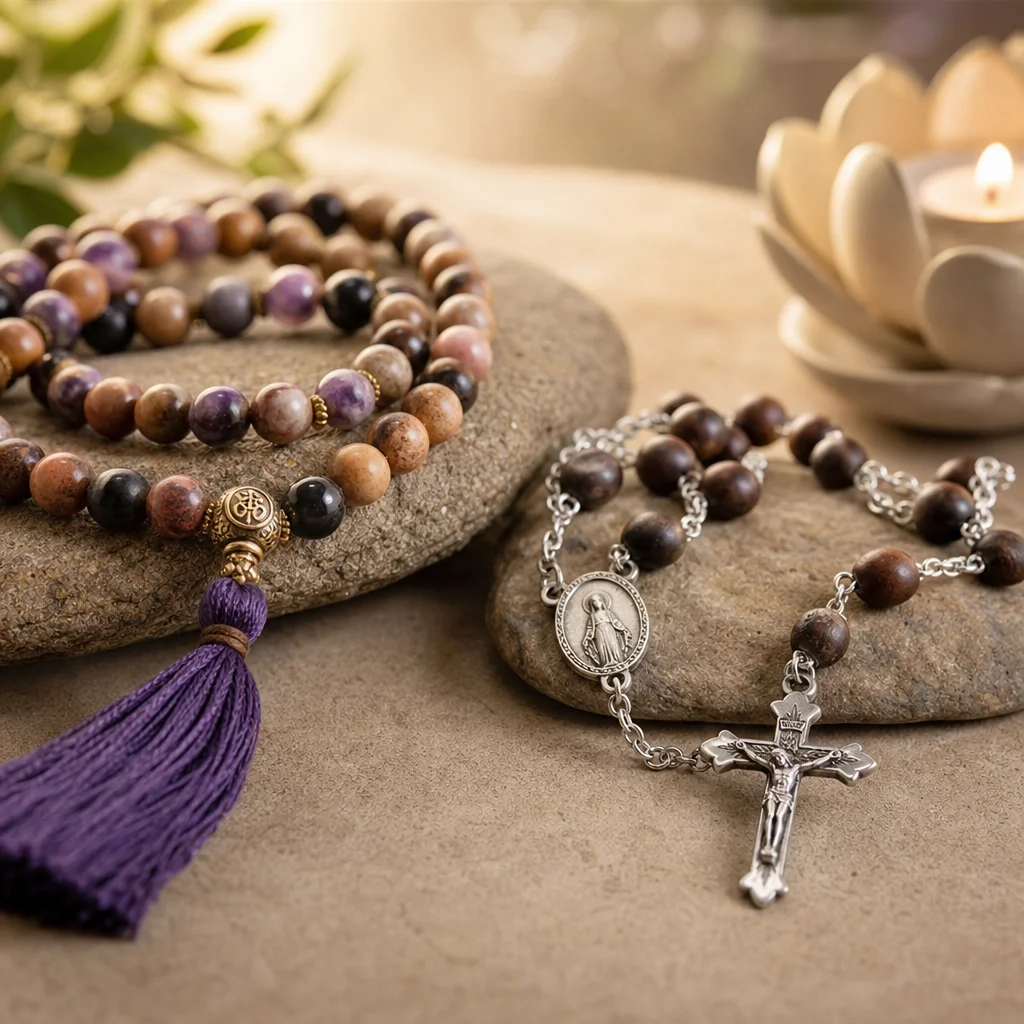
The Shared Ancestor of Prayer Beads
Before diving into the differences between mala beads and rosaries, it helps to understand what they share. Both are prayer bead systems — strings of beads used to count repetitive prayers, mantras, or devotions. Both serve the same fundamental purpose: keeping track of recitations so the practitioner can focus on the words and meaning rather than counting numbers. And both share a common historical origin that traces back to ancient India.
The earliest evidence of prayer beads comes from archaeological finds in India dating to roughly the 3rd century BCE, during the Maurya Empire. Buddhist monks used simple garlands of seeds or beads to count recitations of the Buddha's name and sutras. From India, the concept of counting prayers with beads spread along trade routes in every direction — west through Central Asia to the Middle East and eventually Europe, east through Southeast Asia to China, Japan, and Korea, and south through the Indian Ocean to Sri Lanka and Indonesia.
This diffusion explains why virtually every major world religion has some form of prayer beads: Hinduism and Buddhism have malas, Catholicism has the rosary, Islam has the misbaha (tasbih), Eastern Orthodoxy has the komboskini (prayer rope), Sikhism has the mala, and even some Hindu-influenced traditions in Japan use beads. The underlying mechanism is universal — human brains need help tracking large numbers, and beads are the most elegant counting tool ever invented.
Mala Beads: The Hindu and Buddhist Tradition
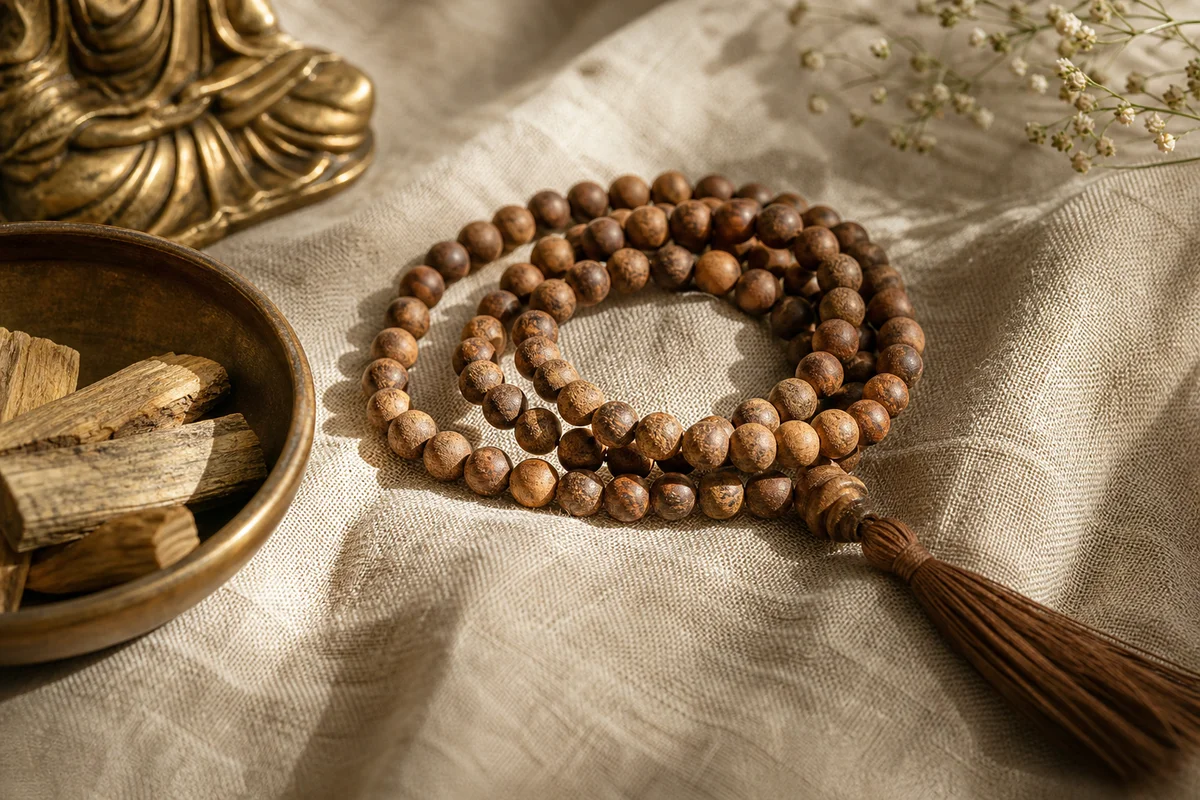
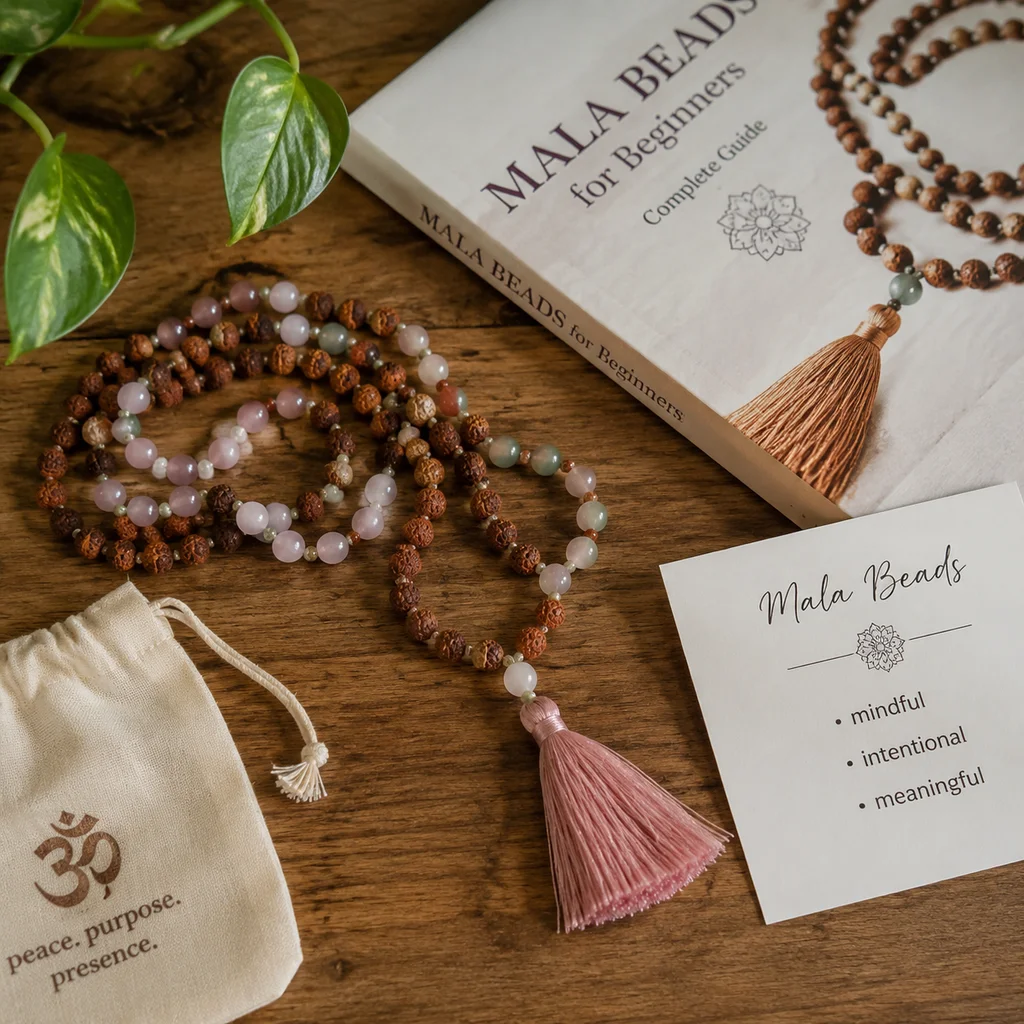
Mala beads consist of 108 beads (usually) plus one larger guru bead, strung on a thread with a tassel hanging from the guru bead. The word "mala" comes from Sanskrit and means "garland" or "wreath." In Hindu tradition, malas have been used for thousands of years in the practice of japa — the repetition of a mantra or divine name. In Buddhism, the mala serves the same function for counting recitations of mantras, Buddha names, and sutra passages.
The number 108 is central to the mala tradition. Its significance comes from multiple sources in Hindu cosmology and Vedic mathematics: there are said to be 108 Upanishads (principal Hindu philosophical texts), 108 sacred sites throughout India, 108 marma points (energy centers) in the body, 108 earthly desires in Buddhist cosmology, and the diameter of the sun is approximately 108 times the diameter of the Earth. Whether or not these mathematical and cosmological correspondences are intentional, the number 108 has accumulated profound symbolic weight across South and East Asian spiritual traditions.
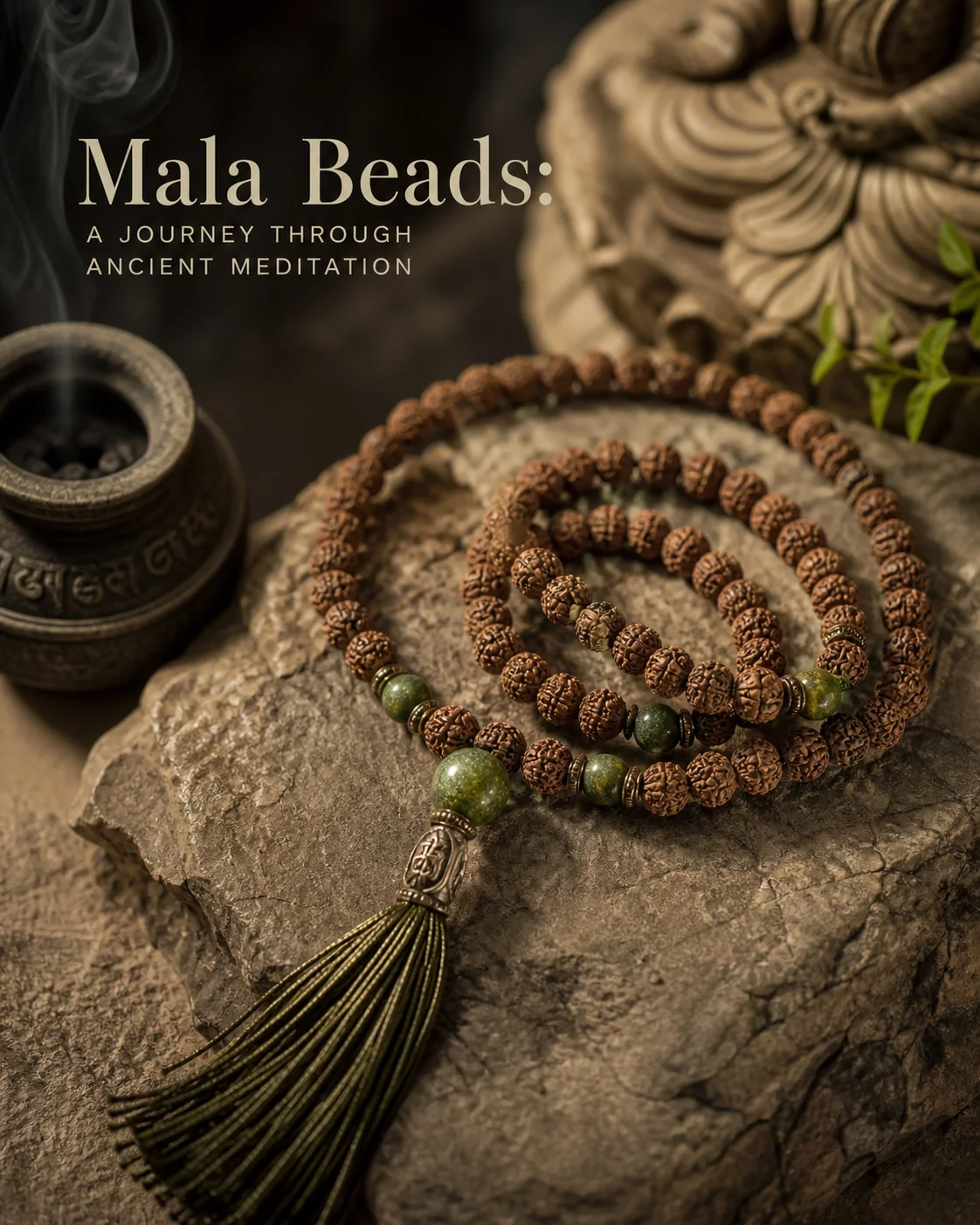
Mala beads are traditionally made from natural materials — sandalwood, rudraksha seeds, lotus seeds, tulsi wood, bone, and various gemstones. The material isn't random; different stones and woods carry specific associations. Rudraksha seeds (from the Elaeocarpus ganitrus tree) are associated with Lord Shiva and are considered especially powerful for meditation. Sandalwood is calming and purifying. Crystal and gemstone malas align the beads with the specific healing properties of the stone — rose quartz for heart-centered practice, amethyst for spiritual development, and so on.
The practice of using a mala involves draping the beads over the middle finger of the right hand (in most traditions) and using the thumb to push each bead past the finger while reciting the mantra. One full circuit through all 108 beads counts 108 repetitions. The guru bead is not counted — when you reach it, you reverse direction or stop, symbolizing the relationship between teacher and student.
The Catholic Rosary: A European Evolution
The Catholic rosary developed independently from the mala but likely drew inspiration from similar bead-counting traditions that existed in medieval Europe. The word "rosary" comes from the Latin "rosarium," meaning "rose garden" — the prayers were seen as a garland of roses offered to the Virgin Mary.
The modern Dominican rosary consists of 59 beads arranged in decades (groups of ten) separated by larger beads. There are five decades of Hail Mary prayers (50 beads total), each preceded by an Our Father (on the larger separator beads) and followed by a Glory Be. The rosary also includes an introductory section with an additional Our Father, three Hail Marys (for faith, hope, and charity), and a Glory Be, plus a crucifix at the end.
The structure of 50 Hail Marys connects to the 150 Psalms of the Bible. In medieval monastic tradition, monks recited all 150 Psalms daily as part of the Divine Office. Lay people who couldn't read Latin adopted the practice of saying 150 Pater Nosters (Our Fathers) instead. Over time, the 150 prayers were divided into groups of 50, each group separated by a Gloria Patri, and eventually the Hail Mary replaced the Our Father as the primary prayer. By the 15th century, the basic structure of the modern rosary was in place, and the Dominican Order formalized its use.
Rosary beads are traditionally made from glass, wood, metal, plastic, or stone. Unlike malas, where the material carries spiritual significance, rosary materials are primarily chosen for durability and aesthetics. Olive wood rosaries from the Holy Land carry special significance due to their origin rather than the material itself. Many rosaries are passed down as family heirlooms, carrying personal and generational meaning.
Key Differences at a Glance
Bead count: Malas have 108 beads. Rosaries have 59 beads (50 small + 9 large). The fundamental counting philosophy differs — malas count one mantra per bead, while rosaries count ten Hail Marys per decade.
Thread structure: Malas are a single continuous loop with a tassel. Rosaries are a chain with a crucifix pendant. The mala's loop symbolizes the cyclical nature of spiritual practice, while the rosary's chain-with-pendant structure reflects the narrative progression of the mysteries.
Physical manipulation: Mala beads are moved by pushing each bead past the middle finger with the thumb. Rosary beads are typically held in the left hand and counted by moving through the beads with the thumb. The mala practice is smoother and more meditative in rhythm; the rosary practice includes deliberate pauses at each decade for reflection on the mystery.
Content of recitation: Mala practitioners typically repeat a single mantra (one to a few words) for all 108 beads. The rosary involves four different types of prayers (Our Father, Hail Mary, Glory Be, Fatima Prayer) plus optional introductory and concluding prayers. The rosary is structurally more complex.
Cultural context: Malas are used in Hindu and Buddhist traditions across South and Southeast Asia. The rosary is used in Catholic Christianity worldwide. While both serve similar mechanical purposes, they exist within completely different theological frameworks.
The Misbaha and Tespih: Islamic Prayer Beads
Islam has its own bead tradition that deserves mention alongside malas and rosaries. The misbaha (also called tespih or tasbih) typically contains 33 or 99 beads, corresponding to the 99 names of Allah in Islamic tradition. Muslims recite "Subhan Allah" (Glory be to God), "Alhamdulillah" (Praise be to God), and "Allahu Akbar" (God is great) in rounds of 33 each, totaling 99. The misbaha shares the mala's single-loop construction but uses fewer beads and different prayers.
The Islamic prayer bead tradition likely developed independently, though some scholars suggest possible transmission from Buddhist traditions through Central Asian trade routes. Regardless of origin, the misbaha demonstrates the universal human tendency to use physical counting tools for devotional practice.
Can You Use a Mala as a Rosary?
Functionally, you could count rosary prayers on any string of beads, including a mala. However, most practitioners would advise against mixing the traditions. The rosary's structure (decades, mysteries, specific prayer sequence) doesn't align with 108 beads, and using a mala for rosary prayers would feel awkward and interrupt the flow. Similarly, using a rosary for japa meditation with a Hindu mantra would work mechanically but miss the rhythmic continuity that 108 identical beads provide.
If you practice both traditions, the respectful approach is to maintain separate bead strings for each. This honors the distinct cultural and spiritual contexts of both practices. It's not that one is better than the other — it's that each tool is designed for its specific purpose, and using the right tool matters.
Choosing Between a Mala and a Rosary
Your choice depends on your spiritual tradition and practice. If you practice Hindu or Buddhist meditation, mantra recitation, or yoga-based spirituality, a mala is the appropriate tool. If you practice Catholic Christianity, the rosary is the traditional choice. If you're not affiliated with either tradition but want a mindfulness counting tool, consider what type of practice you want to develop:
Mala beads suit a repetitive, rhythmic meditation practice where the same phrase or mantra is repeated continuously. This approach is excellent for mental calm, focus development, and setting specific intentions. Rosaries suit a structured, narrative-based prayer practice that progresses through specific themes (joyful, sorrowful, glorious, luminous mysteries). This approach is excellent for contemplative reflection and scriptural meditation.
Modern Trends and Cross-Cultural Respect
In recent years, mala beads have gained popularity outside their traditional Hindu and Buddhist contexts. Western yoga practitioners, secular meditators, and crystal enthusiasts have adopted malas as mindfulness tools, intention-setting aids, and fashionable accessories. This cross-cultural adoption is generally positive when done with respect for the tradition's origins.
The key to respectful engagement is education. Understanding that malas are sacred objects in their traditions of origin, learning the correct way to hold and use them, and approaching the practice with sincerity rather than superficial trend-following — these attitudes honor the tradition while making it accessible to new practitioners. Whether you're a Hindu reciting a Sanskrit mantra or a secular meditator using a mala to count breaths, the practice of focused, intentional repetition is valuable across all contexts.
Frequently Asked Questions
Why 108 beads specifically?
The number 108 has multiple layers of significance in Hindu and Buddhist traditions. In Hinduism, it relates to 108 Upanishads, 108 sacred sites, and cosmological mathematics. In Buddhism, it represents the 108 earthly desires that cause suffering. Practically, 108 repetitions of a mantra at a comfortable pace takes about 15 minutes — an ideal meditation session length for most people.
Can I wear my mala as a necklace?
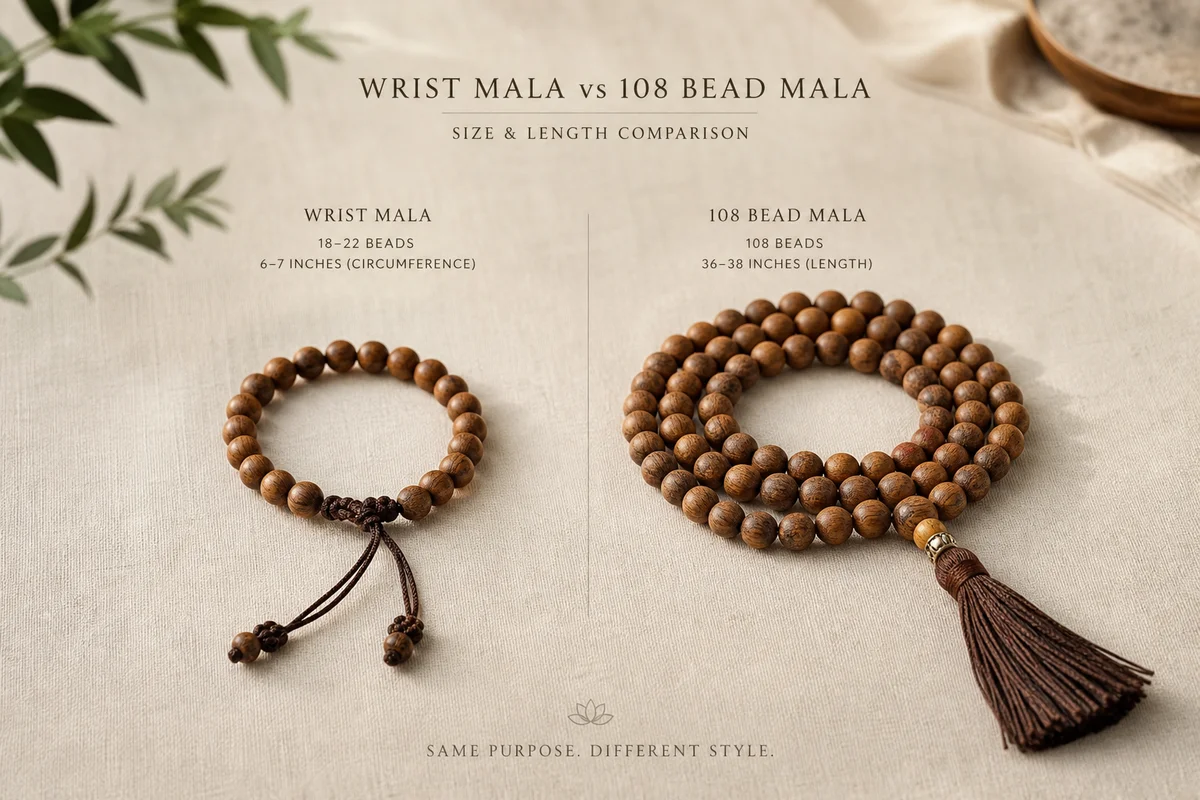
Yes, many practitioners wear mala beads as necklaces or wrapped around the wrist as bracelets. This is a common practice that keeps the mala accessible for spontaneous meditation throughout the day. In some traditions, the mala should rest against the skin for full energetic contact. In others, wearing it over clothing is perfectly acceptable.
What's the guru bead for?
The guru bead (also called the meru bead or bindu) is the larger bead that marks the starting and ending point of the mala. It represents the teacher-student relationship in the tradition. When you reach the guru bead during japa, you don't cross over it — you stop, reflect briefly, and either reverse direction or end the session. This pause symbolizes gratitude and respect for the wisdom that guides your practice.
Frequently Asked Questions
What is the main difference between a mala and a rosary?
While both are sacred tools for prayer, a traditional mala features 108 beads and is rooted in Hindu and Buddhist traditions for mantra meditation. A Catholic rosary usually consists of 59 beads and is used for specific Christian prayers like the Hail Mary. Both help focus the mind and track spiritual repetitions, but they stem from completely different cultural lineages.
How do you hold and move mala beads during meditation?
To use your handcrafted mala beads, drape them over your middle or ring finger of your right hand, avoiding the index finger which represents ego. Use your thumb to gently pull each natural stone bead toward you as you recite your mantra or affirmation. Start at the guru bead and move clockwise around the circle until you reach the starting point again.
Comments