Mala Beads for Beginners: How to Use
June 11, 2026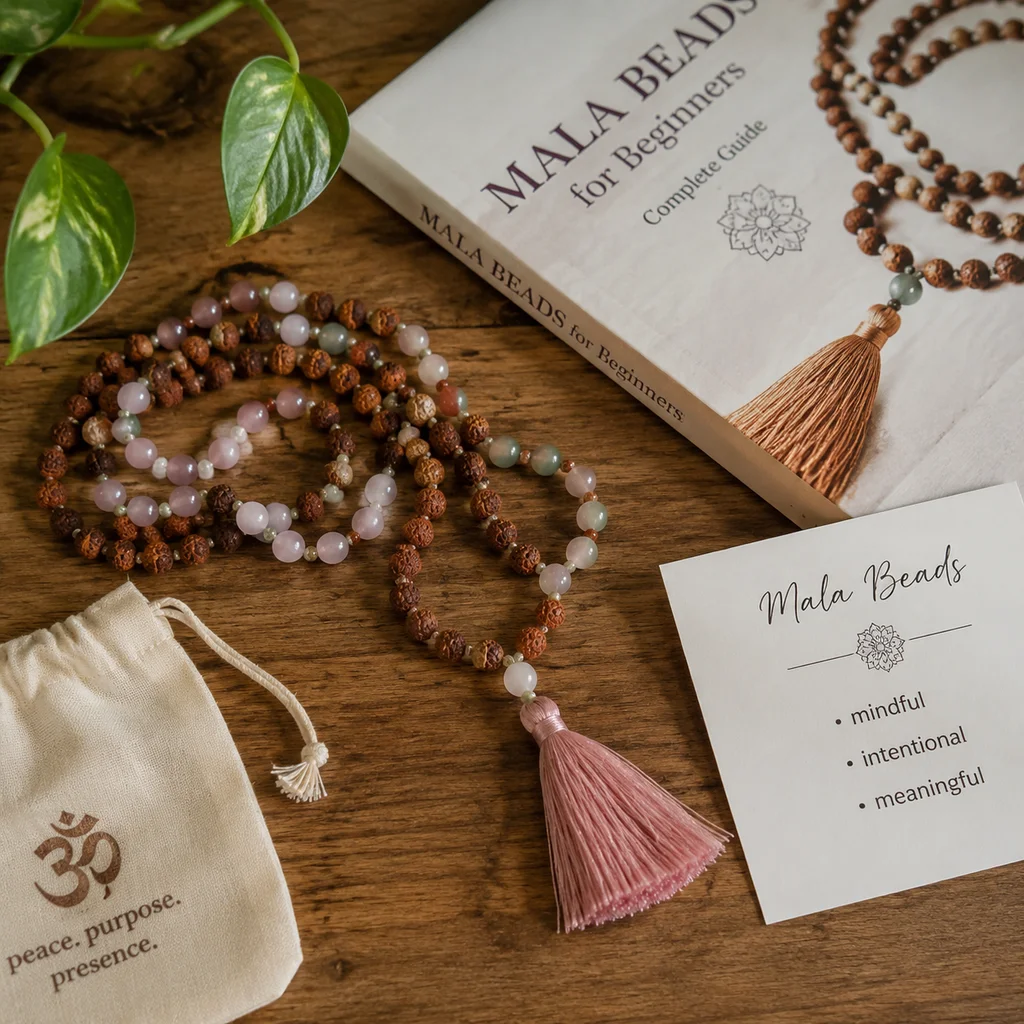
What Are Mala Beads, Really?
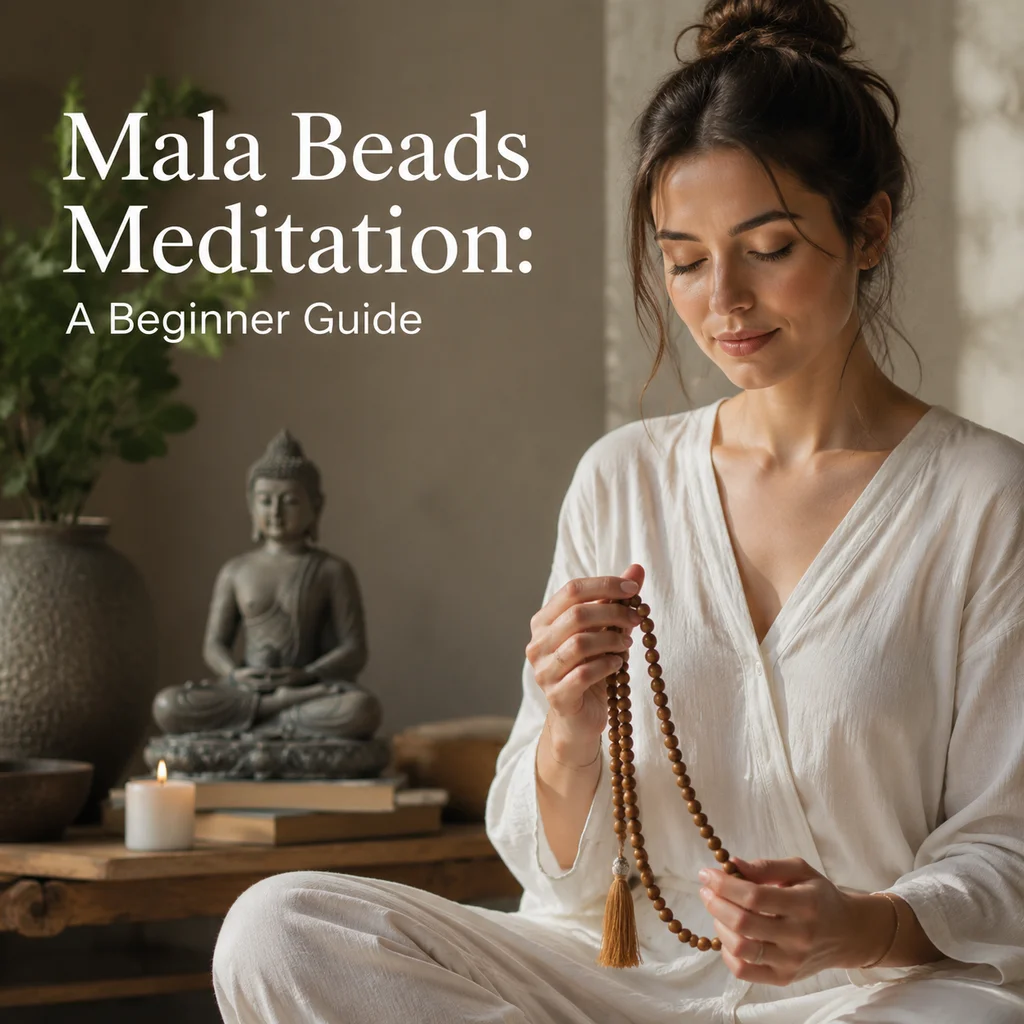
OMG, I'll never forget the first time I touched a mala necklace. A buddy brought one back from this rad trip to Rishikesh, and as those 108 sandalwood beads slid through my fingers, I just knew something was up. It wasn't just some regular jewelry — it was like this tool from the past, a tradition that's been going on for like, thousands of years and across continents. Mala beads are like the holy grail in the spiritual world right now, and I totally get why. They're this perfect blend of mindfulness and personal flair that's like nothing else out there.
So, mala beads are like these cool prayer beads. The word "mala" is from Sanskrit and it's like "garland" but more spiritual. A full mala usually has 108 beads, plus one big bead, the guru or meru bead, that's like the start and end of the whole thing. When you meditate with a mala, you run your fingers over each bead while you're saying a mantra, affirmation, or whatever intention you're into. And once you've gone through 108 beads, you've done a whole round.
Hey, check this out! Beginners might not realize it, but mala beads predate Buddhism and Hinduism. They've been around for ages, like in ancient Egypt, Greece, and even during the early Christian era. Speaking of which, the number 108 is a big deal. It's everywhere—12 squared times 3 in math, a number of virtues in some traditions, and even in astronomy, the Earth-Sun distance is about 108 times the Sun's diameter. It's also in yoga, where there are supposedly 108 energy lines converging at the heart chakra. Whether you think it's a cosmic coincidence or there's a deeper meaning, that number's been around for a long time, honestly.
So, the 108 bead tradition, right? Why that number? Honestly, it's a bit of a mystery, but I've found it really fascinating. The thing is, in Buddhism, it's all about achieving balance and harmony, and 108 is supposed to represent the number of ways we can find ourselves out of balance. It's like, you've got all these different karmic factors, and each one has a little bead. There are also 108 different passions and 108 different delusions we have to conquer. Plus, it's just a nice, round number that feels really good to count. It's not like we're counting to 10 or 20, it's a whole other level of intentionality. Cool, huh?
I've seen a TON of stuff about why 108 is a big deal, and honestly, some of it's a bit of a reach. But a few theories actually make sense:
- Yoga anatomy: So, in the Vedic tradition, there are these 108 marma points, like energy intersections all over the body. Each bead is like a little nod to one of those spots.
- Astronomical: And get this, the distance from Earth to the Sun, divided by the Sun's diameter, is about 108. The same goes for the Moon. Ancient folks were like, "Whoa, that's interesting!"
- Mathematical elegance: Now, 108 is a Harshad number, which means it's divisible by the sum of its digits (1+0+8=9, and 108/9=12). It's also a combo of the sacred numbers 9 and 12. Cool, right?
- Spiritual traditions: In Hinduism, there are 108 Upanishads. Buddhism has 108 earthly desires to conquer. Tibetan Buddhism has 108 sacred texts. So many 108s in spirituality!
So, here's the deal: doing 108 repetitions takes about 15-20 minutes if you're chillin' and not in a hurry. It's just the right amount of time for a meditation sesh — long enough to really get your mind to chill, but not so long that you lose your focus. Honestly, I don't really care if you think 108 is some mystical number or not; the timing is perfect.
Do You Have to Use All 108?
Hey, you know? Wrist malas with 21 or 27 beads are all the rage for folks who like to zip through their practice or just wanna rock the beads daily. I've seen some peeps split a 108-bead mala into four chunks of 27, which is a big deal in Tibetan Buddhism. But, honestly, it's not all about the number of beads—it's really all about the intention and the practice, you know?So, let's chat about mala beads! Here's a quickie guide to what they're made of
Alright, so mala shopping can be super exciting but also kind of overwhelming, you know? The material your mala is made from is huge, not just for looks, but for how long it lasts, how it feels, and in some traditions, there's this whole energy thing tied to the material.
Hey, have you seen our Wood Malas? There's Sandalwood, Rosewood, and so much more! What I love about them is how the grain and texture really pop. It's like they've got a story to tell. But honestly, they feel just amazing on your wrist. So smooth and grounding. Now, if you're looking for something special, these are totally the way to go! Check 'em out!
Wooden malas are like the MVPs of the mala game. Sandalwood is the go-to, especially the real deal from Mysore, India. It's got this amazing, warm scent that really helps deepen your meditation. The thing is, if you store it right, that scent can last for ages. You'll probably shell out $30-80 for the real stuff, and honestly, anything under $15 is a red flag—it's probably not the real deal or made from a different wood.
Hey, you should totally check out rosewood! It's like the cooler, darker version of sandalwood, and it's got this super subtle scent. Rosewood malas are super popular in the Zen Buddhist community and they're actually pretty affordable—like, $20 to $50. Plus, they're way more water-resistant, which is huge if you're always on the go with your mala. Honestly, I've found they're the best!
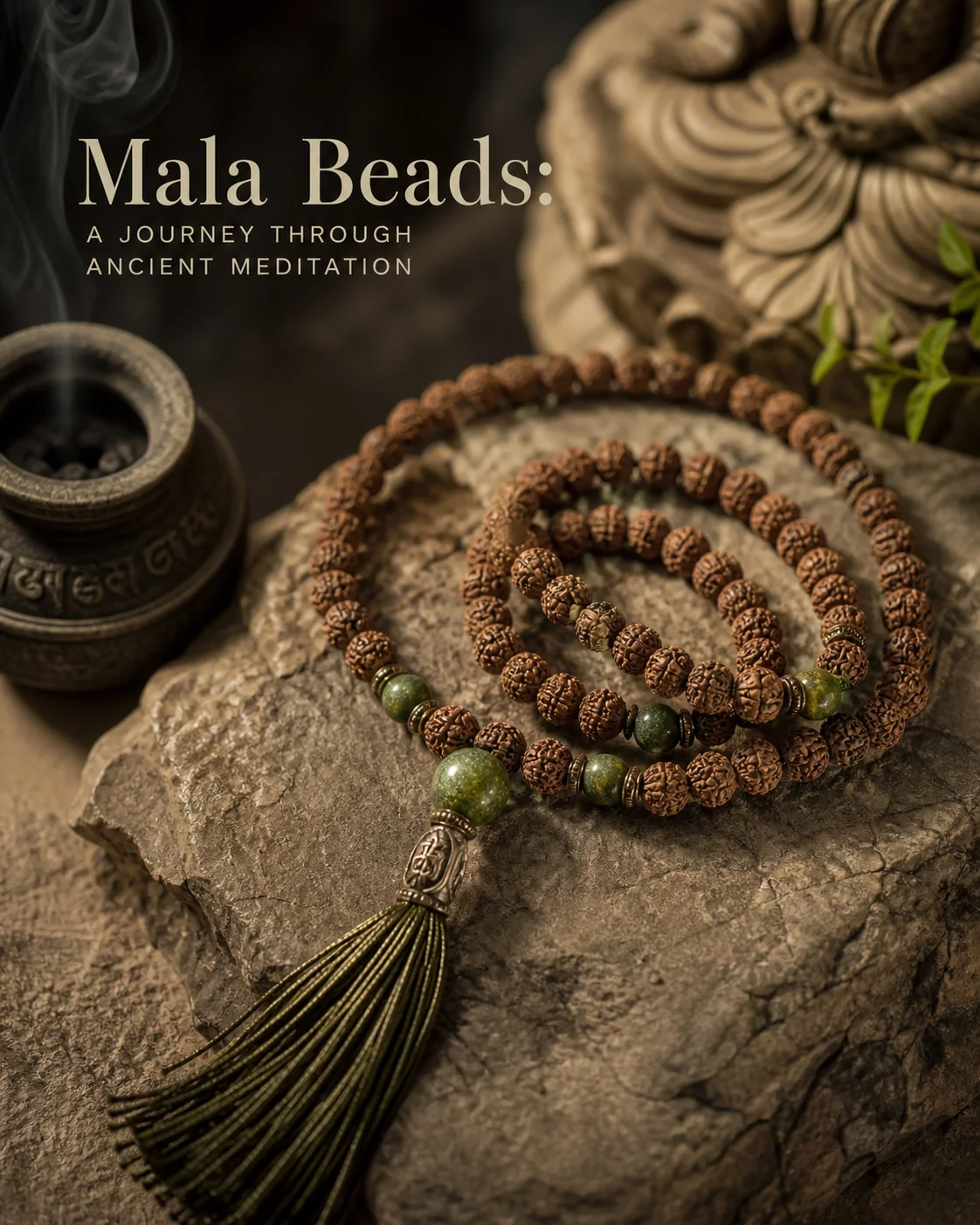
Oh, you have to check out Rudraksha seeds! They're actually seeds, not wood, from this tree called Elaeocarpus ganitrus, mostly found in Nepal and Indonesia. The Rudraksha malas are so cool, they've got this rough texture that's super grounding to touch. In Hindu tradition, each "mukhi" or face of the Rudraksha has its own meaning. Like, the five-mukhi is the most popular one and it's like the universal fit, you know?
Crystal and Stone Malas
Crystal malas are totally on the radar right now, and let me tell you, they're stunning! Each stone has its own little energy, you know? So here's a quick list of my faves:
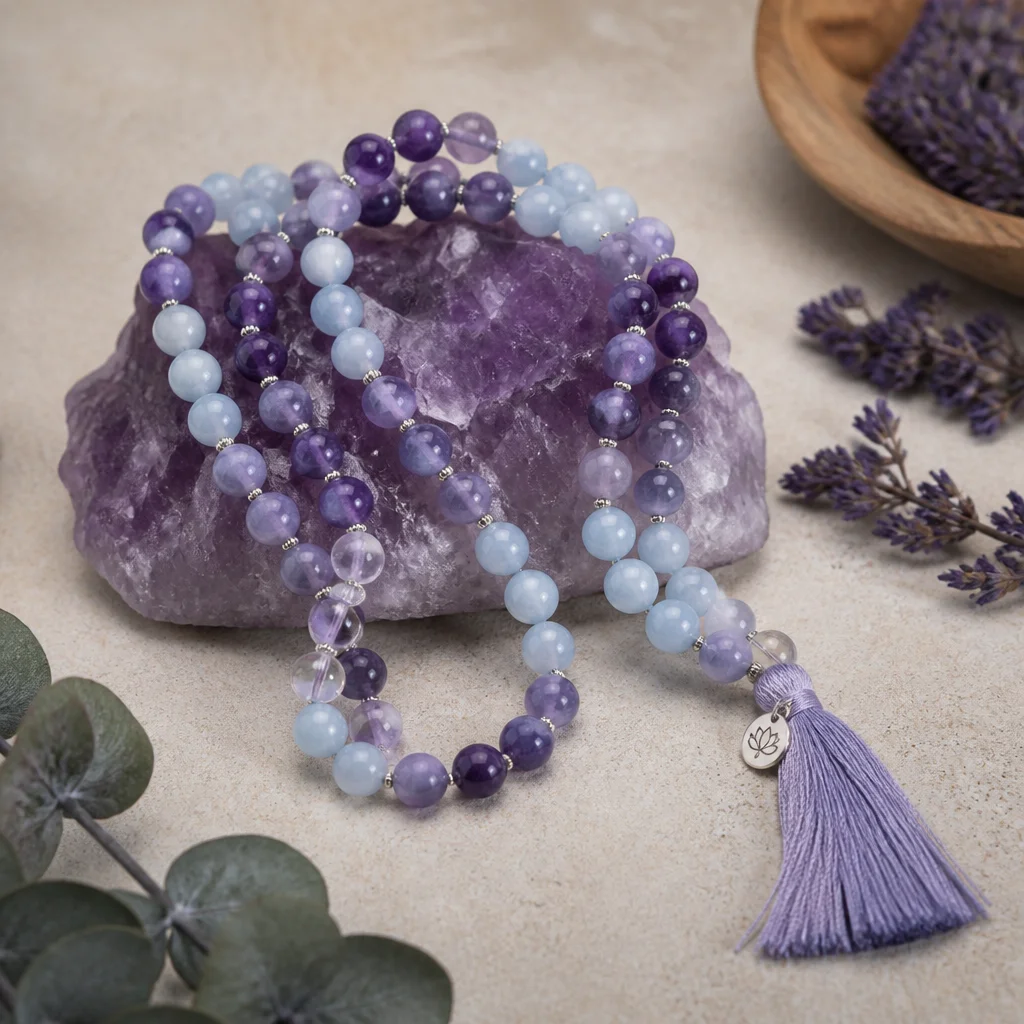
- Amethyst: Hands down, the most popular crystal mala! Those deep purple hues are just to die for, and it's not too pricey. You can find it almost everywhere, and a nice 8mm bead mala usually runs about $25-60.
- Rose quartz: Such a soft pink, it's almost see-through, and it's just so nice to hold. It's super popular for heart stuff, and guess what? It's about the same price as amethyst.
- Clear quartz: This one's the "universal" crystal, y'know? It's clear as can be and goes with any vibe you're into. Plus, it's usually the cheapest option out there. Such a steal!
- Lapis lazuli: Now, this one's a stunner. It's this deep blue with gold sparkles. It's a bit more expensive, like $40-100, but oh so beautiful. Worth every penny.
- Black onyx or tourmaline: These are great for keeping grounded. They've got this sleek, uniform black look that's just so modern. Super chic and grounding, if you know what I mean.
Hey, have you heard about seed malas? They're like the hidden treasures of the jewelry world. I mean, those bodhi seeds from the sacred fig tree (Ficus religiosa) are a must-have for Buddhist peeps. They're super smooth and organic, and they get this amazing patina as you use them. And then there are the lotus seeds, they're lighter and have this cool, irregular shape that makes each mala stand out. Honestly, they're a real showstopper!
Hey, I'm really into seed malas. They're way lighter than crystals, aren't they? Half the weight, for sure. And, honestly, they're super budget-friendly too. You can grab a bodhi seed mala for like $15-35. Plus, they're these little growth trackers for your practice. The bits you hold get darker and smoother as you go, like a mini keepsake of your journey.
Figuring Out Your First Mala: Super Easy Tips
I've watched friends spend weeks agonizing over their first mala purchase. Here's my straightforward advice:
- So, start with what you're aiming for. Are you into meditation, need a stress-buster, or just want something cute to wear daily? Your goal will lead you to the right kind of crystal.
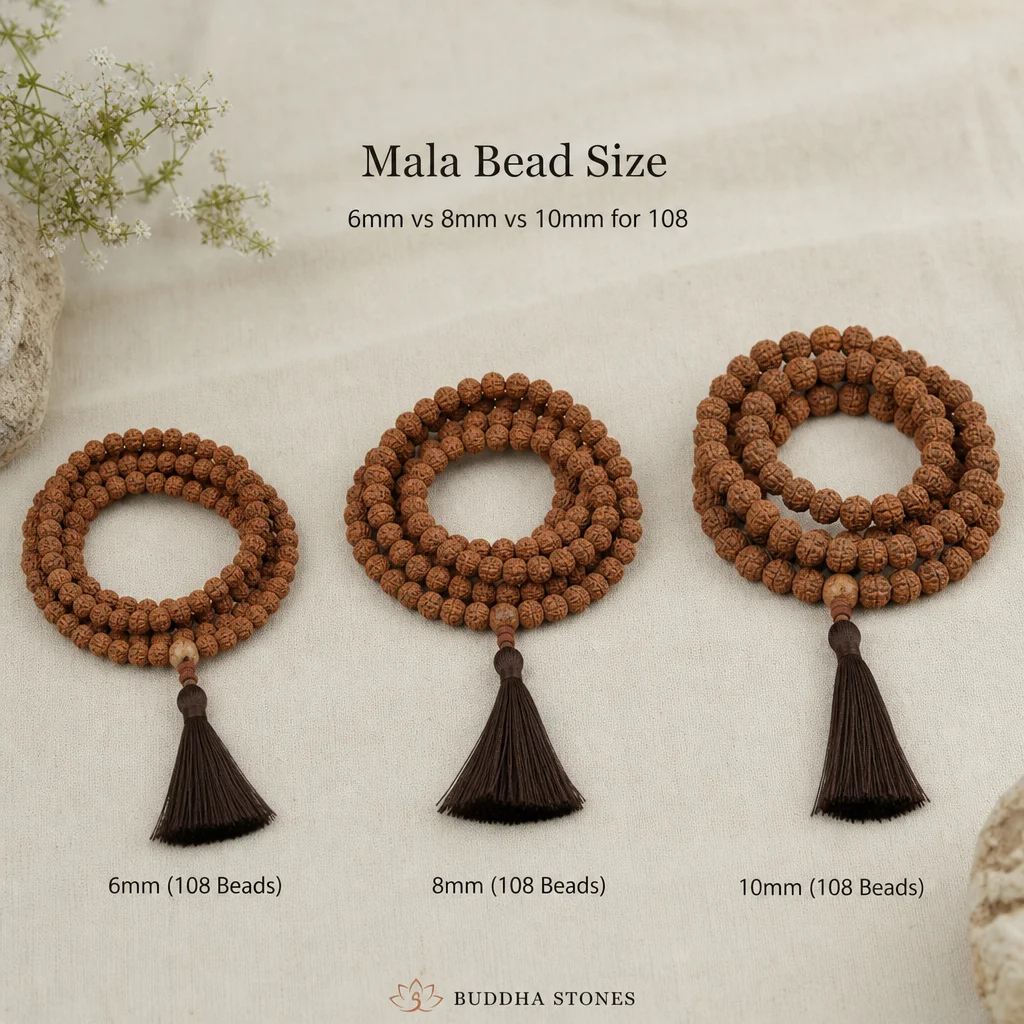
- And don't forget to check out the beads. They come in all sizes, like 4mm, 6mm, 8mm, and 10mm. Smaller beads mean there are a lot of 'em in one mala, like 216 for a 6mm one if you're counting them one by one, and they feel really smooth. Bigger beads, though, are easier to feel and count.
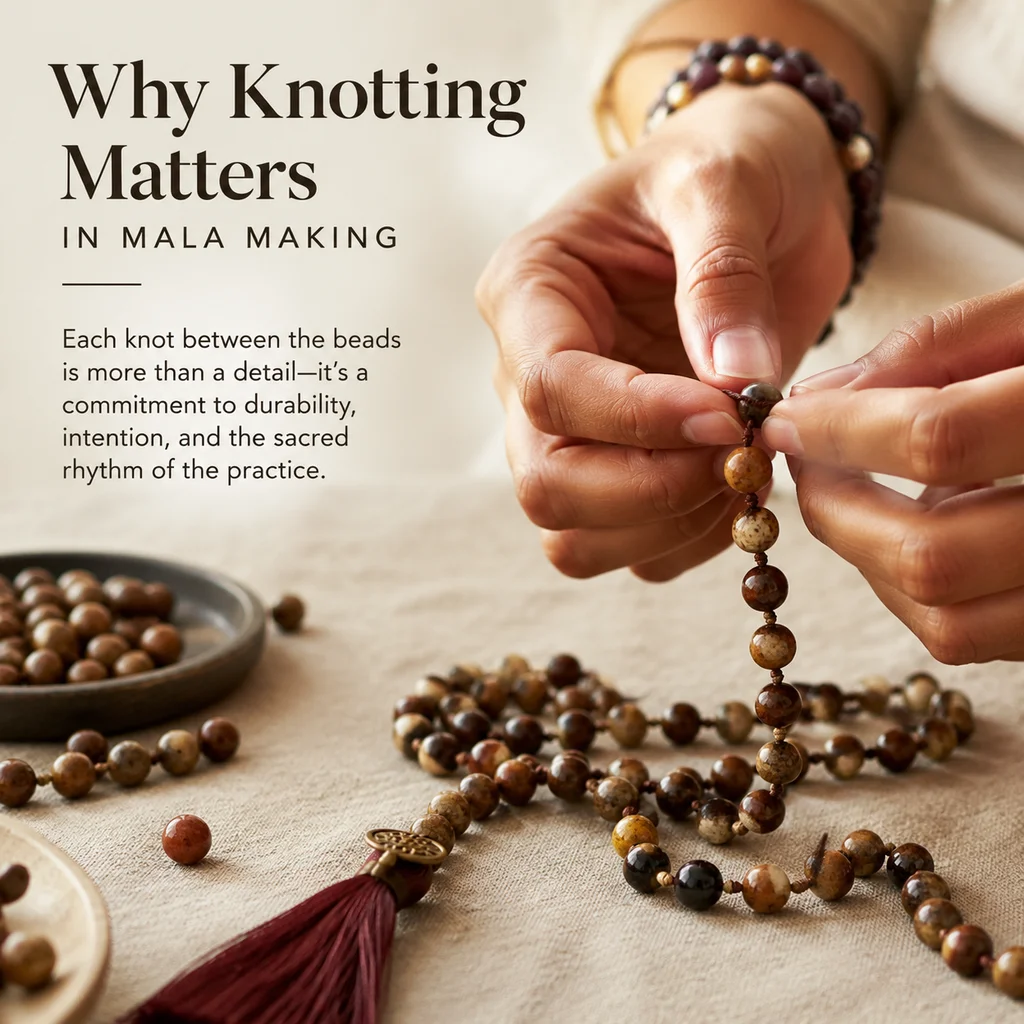
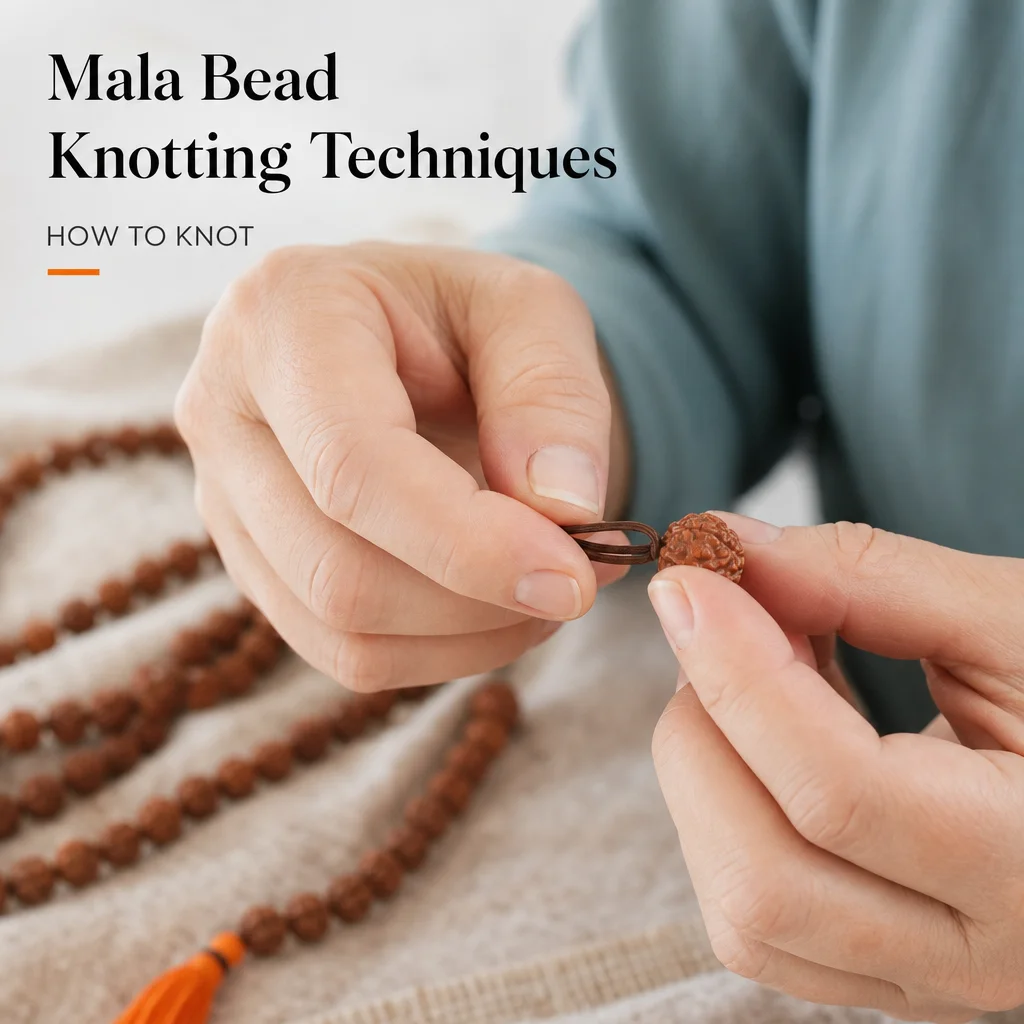
- Now, look at the stringing. The old-school way, with silk thread and knots between each bead, is classic and strong. It keeps the beads from falling out if the string snaps. And honestly, a lot of cheap ones skip the knots, which is a red flag.
- And you know, trust your gut. I get it, it's a bit out-there, but when I've handled loads of malas, I've seen that most people just go for one they connect with right away. It's like the right mala just feels "right" in your hand.
Budget Expectations
Okay, here's the deal: A really good mala is gonna run you $25 to $80. If it's cheaper than $15, it's probably made in a big batch and the stones are fake. And if it's over $150, it's either super fancy handmade stuff or just overpriced. I've found that the best range for a nice first mala is $30 to $50. That's where you get the real deal—stuff like real sandalwood, crystal beads, or real seeds—and it's properly knotted with a good guru bead.
Using Mala Beads in Meditation: The Japa Practice
Here's the basic technique that's been around for ages, you know?
- So, hold the mala in your right hand. Drape it over your middle finger, and your thumb's gonna be the bead counter.
- Start right next to the guru bead. It's the big one — don't count it, just chill.
- Chant your mantra or intention once. Then give your thumb a little tug to grab the next bead.
- Keep going. One bead, one chant. Keep rolling around the circle.
- Hit the guru bead and stop. Don't even think about crossing it. Just reverse or wrap it up there.
The mantra you choose is personal. In Sanskrit traditions, "Om Mani Padme Hum" is the most common. But it can be anything — a word like "peace" or "love," an affirmation, or even just focusing on your breath with each bead. I've used everything from traditional Sanskrit mantras to "let go" on rough days. The mala doesn't judge your choice.
Wrist Mala Technique
Oh, wrist malas, they're a bit different, aren't they? Instead of just wrapping around like a regular bracelet, you hold 'em like a tiny rosary and count backwards and forwards. One trip from one end to the other counts as one "round." So, four rounds get you 84 repetitions. A lot of people do an extra round, stopping just before the guru bead, making it 105. It's pretty close to the sacred 108, and it's perfect for a quick 5-minute practice in a break!
Caring for Your Mala
A few practical tips I've learned the hard way:
Hey there! Just a few tips for keeping your crystal malas in tip-top shape: - Don't shower with your crystal malas. Water can weaken the string and some stones, like malachite or turquoise, don't like moisture much. - When it comes to cleaning your wood malas, use a soft cloth. If your sandalwood mala starts to lose its scent, you can gently sand it with a fine-grit sandpaper to refresh the fragrance. But hey, don't go overboard. A light touch is all you need. - Store your malas in a cloth bag. Silk or cotton pouches help keep them from tangling and protect the string from sunlight. Keeps 'em nice and cozy! - Keep an eye on the string. If you notice it stretching or looking a bit frayed, it's time to restring it. Most bead shops do this for around $10-20. No stress! - And if you're into that whole energetic charging thing, many folks put their malas in moonlight during a full moon or on a selenite charging plate. Even if you're not into it, keeping your mala clean and purposefully placed can be a nice part of your practice. Just sayin'.Wrist Mala vs Full 108 Mala: Which Should You Get?
It's always a thing, you know? I'm like, "Get both eventually, but just start with what fits your lifestyle."
So, if you're into meditating for at least 15 minutes, a full 108 mala is the way to go. It's like the classic choice, gives you that nice, satisfying feel, and you can wear it as a necklace too. Plus, it's super versatile for counting different mantras. I've found it's really great for keeping track of my meditation time!
A wrist mala is ideal if you want something you can use in short bursts throughout the day — during a commute, before a meeting, or waiting in line. It's more discreet and easier to carry. Most practitioners who start with a wrist mala eventually add a full mala as their practice deepens.
The third option, and one I've come to love, is a half mala (54 beads). It gives you a 7-10 minute meditation — perfect for people who find 20 minutes too long but 5 minutes too short. Half malas are less common but absolutely valid.
Frequently Asked Questions
Can I wear my mala as jewelry?
Absolutely. Many practitioners wear their mala daily as a reminder of their intentions. Traditionally, malas are worn on the left hand (receiving side in energy work) or as a necklace. Just be mindful of the material — crystal malas can chip if knocked against hard surfaces, and wood malas can absorb perfume or sweat.
How do I know if my mala is genuine?
Check for proper knotting between beads (a sign of quality construction). Real sandalwood should have a noticeable scent. Genuine crystal beads will have slight variations in color and inclusion patterns — perfectly uniform beads often indicate synthetic materials. Price is also a decent indicator: genuine malas with natural materials rarely cost under $20.
What hand do you hold a mala in?
Traditional practice uses the right hand (or the non-dominant hand), draped over the middle finger, with the thumb doing the counting. Some Buddhist traditions specify different hand positions for different purposes. The most important thing is consistency — use the same hand and technique each time to build muscle memory.
How long does it take to complete 108 repetitions?
At a comfortable pace, roughly 15-20 minutes. This naturally creates a meditation session long enough to settle your mind but not so long that it becomes unsustainable for daily practice. If you're short on time, a wrist mala with 21 beads takes about 3-5 minutes.
Comments