Mala Beads Meditation: A Beginner Guide
May 28, 2026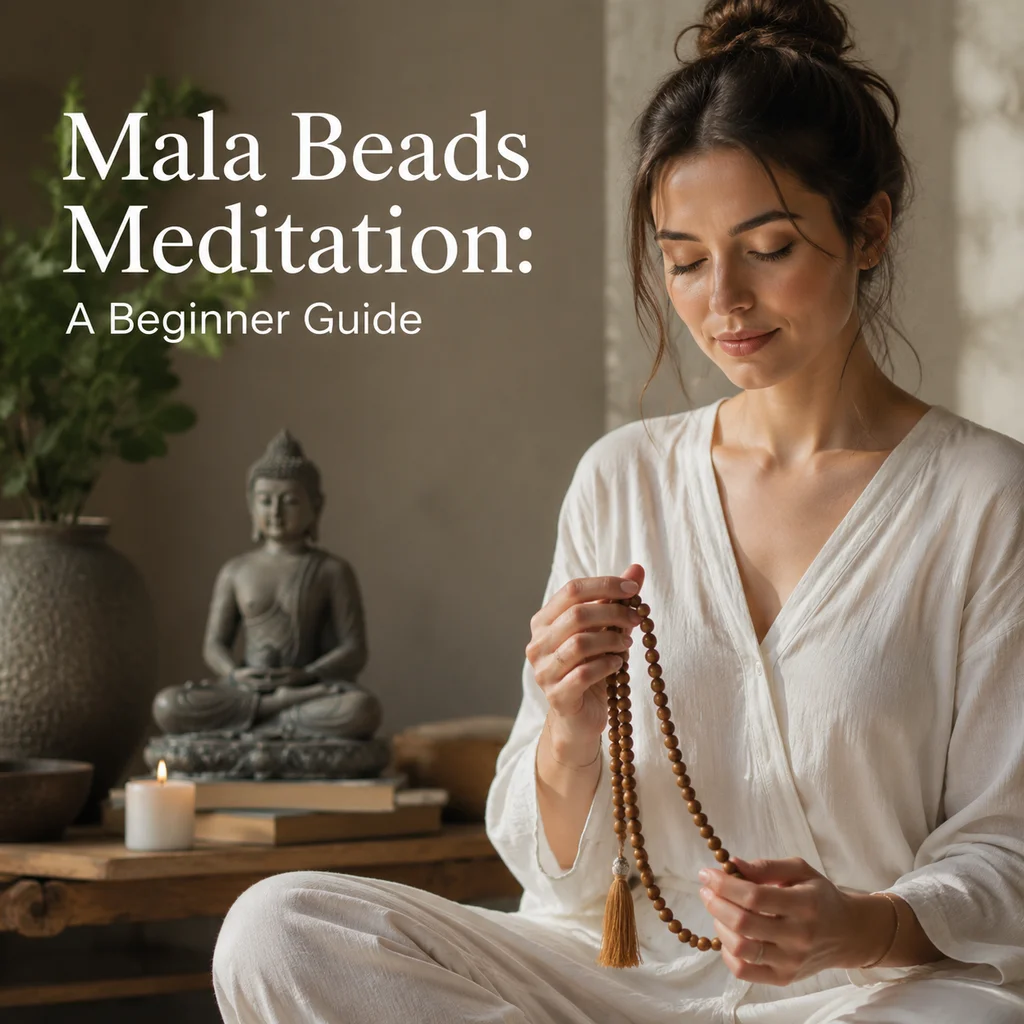
Mala Meditation Isn't Complicated — Here's How to Start
Using mala beads for meditation is one of the simplest meditation practices to learn, which is exactly why it's been around for thousands of years. You don't need special training, a teacher, or a retreat. You need a mala, a quiet spot, and about 10 minutes.
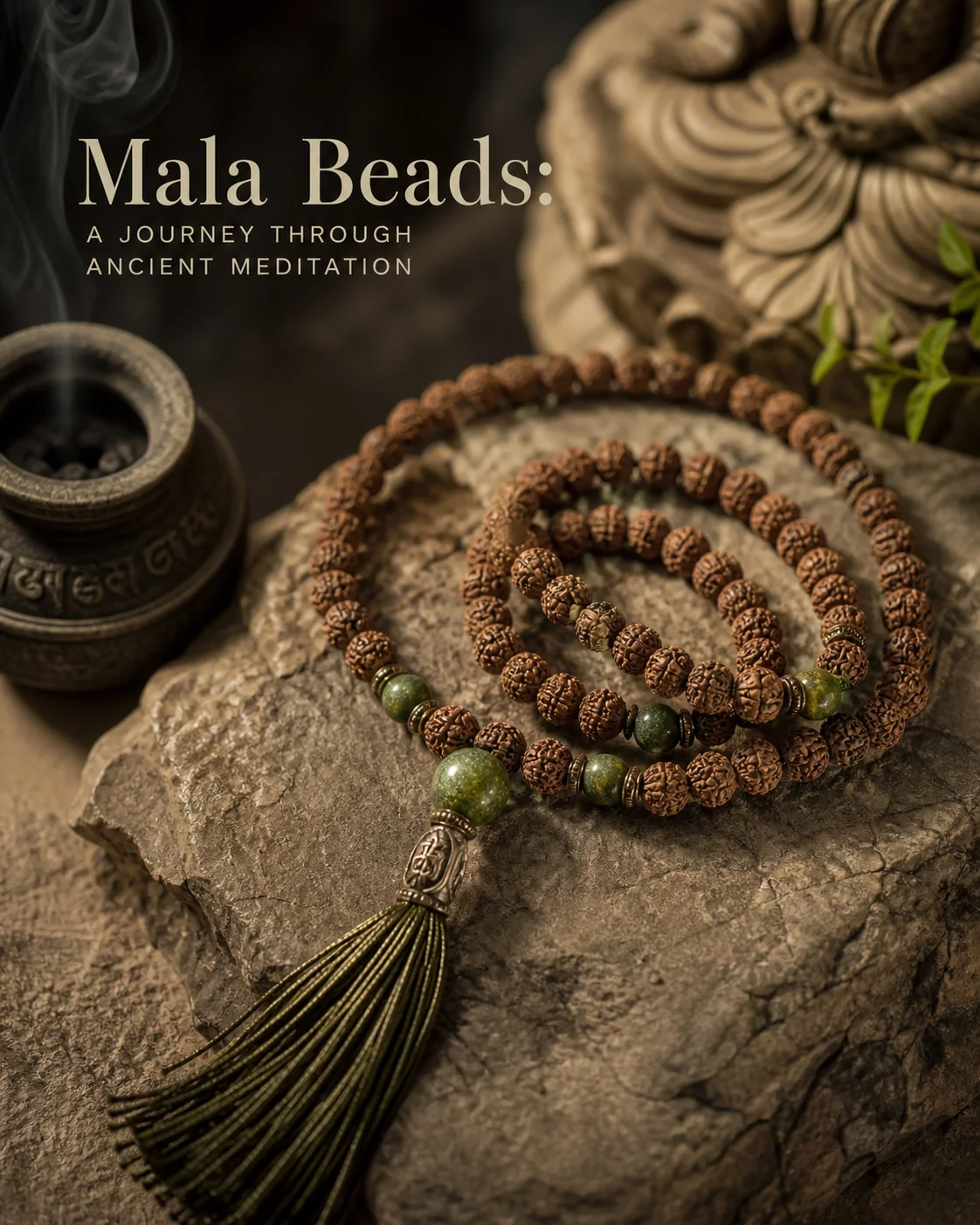
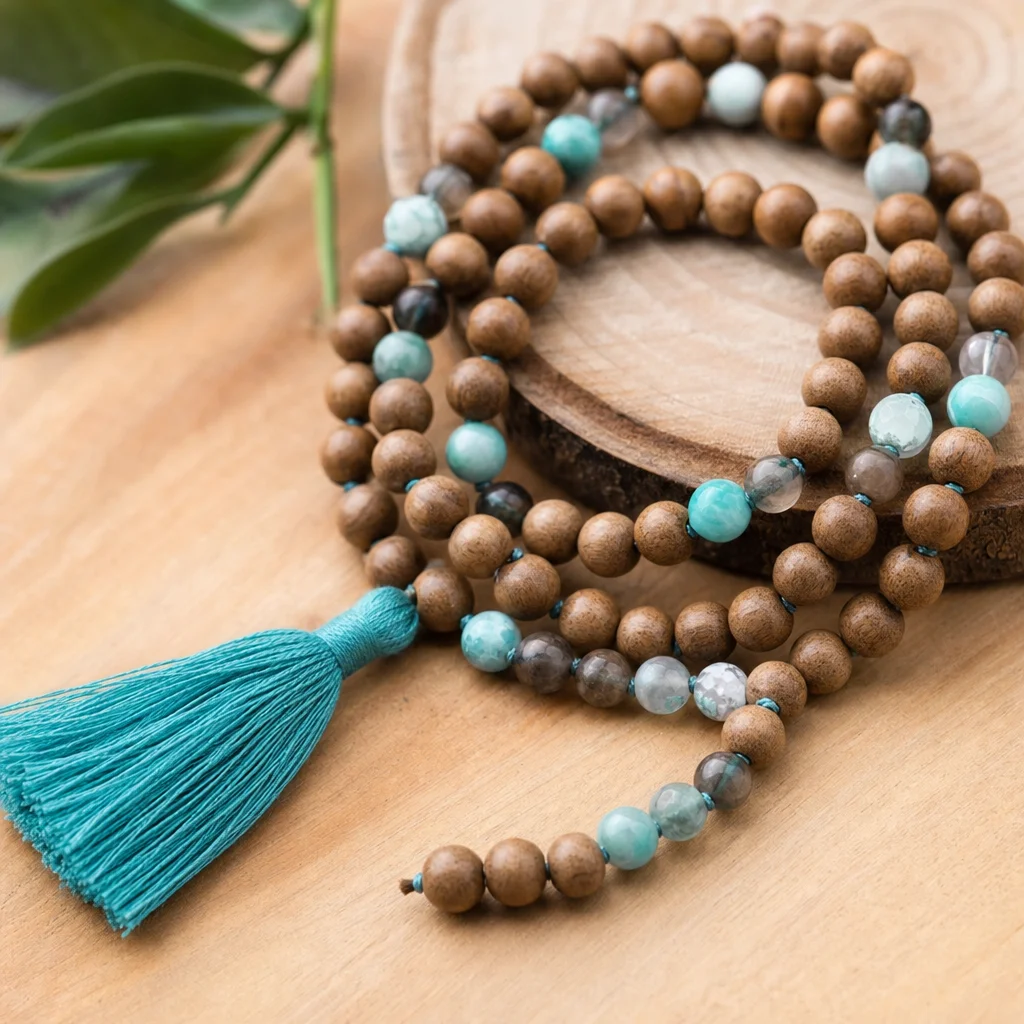
This guide covers everything from how to physically hold the beads to choosing a mantra and building a consistent daily practice. Whether your mala is made of rudraksha seeds, sandalwood, or crystal beads, the technique is the same.
Before You Start: Setting Up
Choose Your Space
Find a spot where you won't be interrupted for 10-15 minutes. It doesn't need to be a dedicated meditation room — a corner of your bedroom, a quiet park bench, or even your parked car works. The key is consistency: using the same spot regularly creates a mental association that helps you drop into meditation faster.
Choose Your Posture
Sit in a position you can hold comfortably without fidgeting. Options:
- Cross-legged on a cushion — traditional, keeps your spine straight
- In a chair, feet flat on the floor — perfectly fine, especially if sitting on the floor is uncomfortable
- Kneeling with a meditation bench — good for people with tight hips
- Lying down — works for breath counting, but you might fall asleep during mantra practice
Straight spine matters more than crossed legs. Slouching restricts breathing and makes it harder to focus.
Choose a Mantra (or Don't)
You have three options for what to recite while moving through the mala:
| Option | How It Works | Best For |
|---|---|---|
| Sanskrit mantra | Traditional syllables (Om, So Hum, Om Mani Padme Hum) | People who connect with the tradition and want something time-tested |
| Personal affirmation | A phrase in your own language ("I am calm," "let go," "peace") | People who want meaning without cultural context |
| Breath counting | No words — just count each breath as you move a bead | People who find words distracting during meditation |
There's no wrong choice. Try all three approaches over your first week and see which one keeps your attention most effectively.
How to Hold the Mala
This is the part most beginners get wrong on their first try. Here's the traditional method:
- Right hand only. In Hindu and Buddhist tradition, the right hand is used for japa meditation. The left hand rests in your lap or on your knee.
- Drape the mala over your middle finger. The mala hangs loosely from the middle finger, with the beads resting in the curve between your middle finger and thumb.
- Use your thumb to pull beads toward you. Don't use your index finger to move the beads — in traditional practice, the index finger represents the ego, and it shouldn't touch the mala during meditation.
- Start at the bead next to the guru bead. The guru bead is the larger or differently shaped bead at the top of the mala (where the tassel attaches). Start with the first regular bead after the guru bead.
Each time you recite your mantra (or count one breath), use your thumb to pull the next bead toward you. The bead slides from the far side of your middle finger to the near side. One mantra = one bead = one pull.
The Complete Meditation Sequence
Step 1: Settle In (1–2 Minutes)
Close your eyes. Take 5-10 deep breaths. Let your shoulders drop. Notice the physical sensation of the mala in your hand — the texture of the beads, the weight of the string, the tassel brushing your palm. This sensory connection to the mala is part of what makes this form of meditation effective for people who struggle with purely breath-based practices.
Step 2: Begin the Recitation
Start with the first bead. Recite your mantra once — either aloud, whispered, or silently in your mind. Pull the bead toward you with your thumb. Move to the next bead.
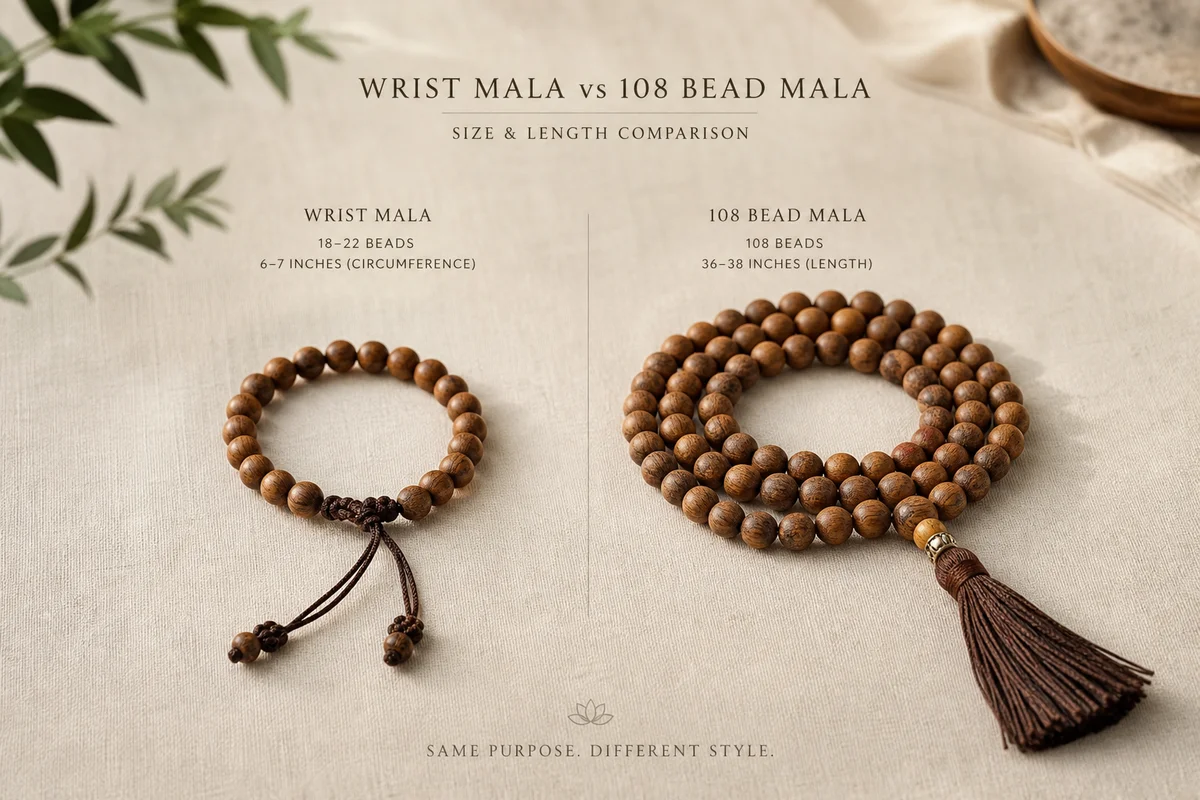
Pace: A comfortable pace is about one bead every 3-5 seconds, which means a full mala of 108 beads takes 5-9 minutes. Don't rush. The rhythm matters more than the speed.
Step 3: Maintain Focus
Your mind will wander. This is normal — it's what minds do. When you notice you've lost track of the mantra and started thinking about your grocery list or an email you need to send:
- Acknowledge the thought without judgment
- Gently return your attention to the mantra and the next bead
- Continue
The act of noticing that you've drifted and returning to the mantra is the meditation. It's not a failure — it's the core exercise. Every return to focus is like a bicep curl for your attention.
Step 4: Reaching the Guru Bead
After 108 recitations, you'll reach the guru bead. Here's what to do:
- Pause. Don't cross over the guru bead.
- Take a deep breath. Acknowledge completing a full round.
- If you want to continue, reverse direction and go back the way you came. Many practitioners do 2-3 rounds (216-324 recitations).
- If you're done, simply open your eyes and sit for a moment before getting up.
Step 5: Close the Practice (30 Seconds)
Before opening your eyes, take three deep breaths. Notice how you feel compared to when you started. There's no right answer — sometimes you'll feel calmer, sometimes the same, occasionally more agitated (if something came up during meditation). All of these are fine.
Shorter Sessions: Using Partial Malas
You don't always have time for a full 108-bead round. Here are common shorter practices:
| Length | Beads | Time | When to Use |
|---|---|---|---|
| Quarter mala | 27 beads | ~2 minutes | Quick reset during a work break |
| Third mala | 36 beads | ~3 minutes | Morning or evening routine |
| Half mala | 54 beads | ~4 minutes | Lunch break meditation |
| Full mala | 108 beads | ~5-9 minutes | Dedicated meditation session |
Use the spacer beads (at positions 27, 54, and 81 on most malas) to track your progress without opening your eyes.
Building a Daily Practice
The hardest part of mala meditation isn't the technique — it's consistency. Here's what works:
Anchor It to an Existing Habit
Don't try to "find time" for meditation. Attach it to something you already do every day:
- After brushing your teeth in the morning
- Before opening your laptop for work
- After your evening shower
- During your morning coffee (before looking at your phone)
Start Absurdly Small
Commit to 27 beads (about 2 minutes) per day for the first two weeks. Anyone can do 2 minutes. The goal isn't to become enlightened — it's to build the habit of sitting down with the mala every day. You can always do more, but the minimum commitment is 27 beads.
Track Your Streak
Use a simple habit tracker (a calendar where you mark an X for each day you practiced). Visual streaks are surprisingly motivating. The mala itself also serves as a physical tracker — over time, the beads develop a patina from handling, and you can see (and feel) the accumulated practice in the texture of the wood or stone.
Mantra Options for Different Goals
| Goal | Mantra | Pronunciation |
|---|---|---|
| General calm | So Hum | "So Hoom" |
| Compassion | Om Mani Padme Hum | "Ohm Mah-nee Pahd-may Hoom" |
| Letting go | Om Shanti | "Ohm Shahn-tee" |
| Focus/clarity | Om Gam Ganapataye Namaha | "Ohm Gahm Gah-nah-pah-tah-yay Nah-mah-hah" |
| Gratitude | Dhanyavad (or just "thank you") | "Dhahn-yah-vahd" |
| Presence | Be here now (English) | — |
FAQ
Q: Can I use my mala while walking?
A: Yes — walking meditation with a mala is a well-established practice, particularly in Thai Forest Tradition Buddhism. Walk slowly and deliberately, reciting one mantra per step per bead. Keep your gaze soft and about 6 feet ahead of you.
Q: What if I lose count?
A: It doesn't matter. Pick a bead that feels roughly right and continue. The exact count is less important than the sustained attention. If you're using the mala for a specific practice that requires exact counts (some Vedic traditions do), use the spacer beads as checkpoints.
Q: Should I say the mantra out loud or silently?
A: Either works. Many practitioners start with whispered or aloud recitation (it's easier to stay focused when you can hear yourself) and gradually shift to silent recitation as their concentration improves. Out loud is also fine permanently — there's no "graduation" to silent practice required.
Q: Can I use my crystal mala for this practice?
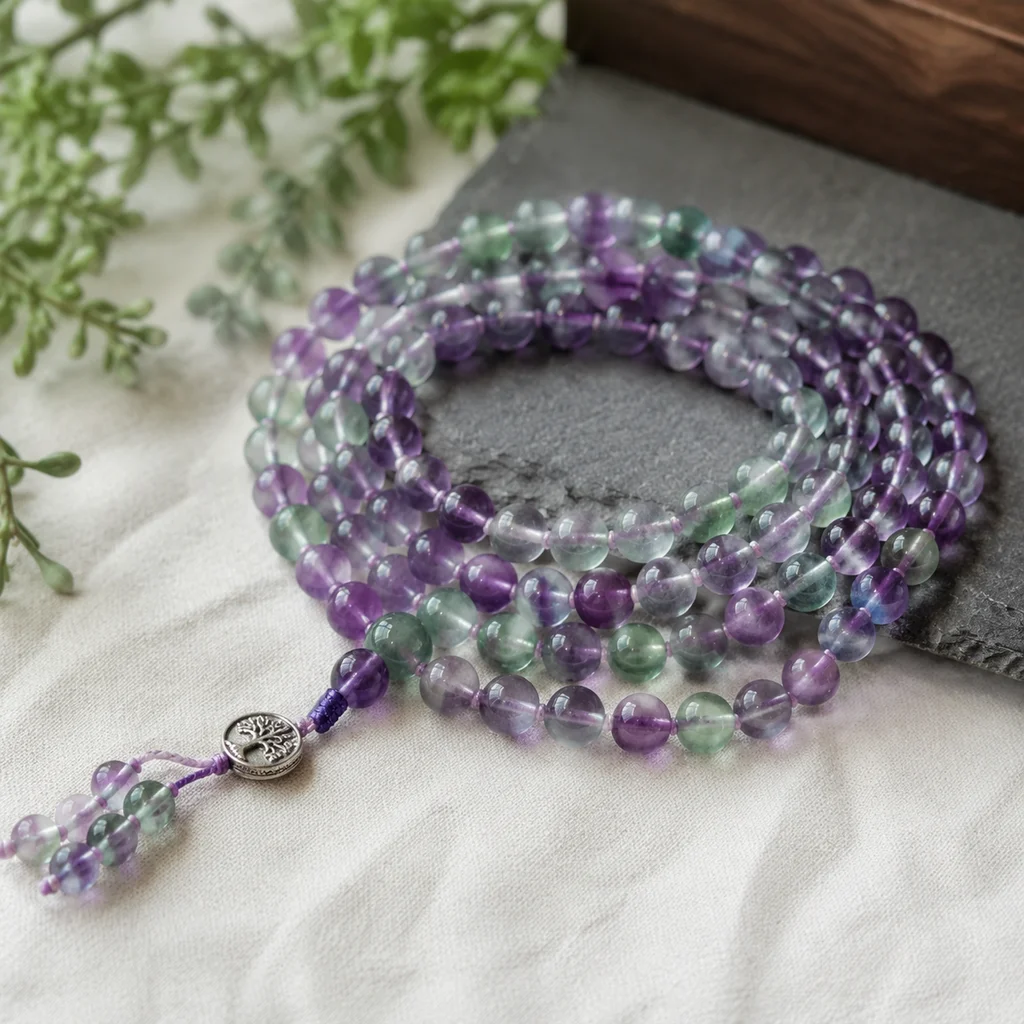
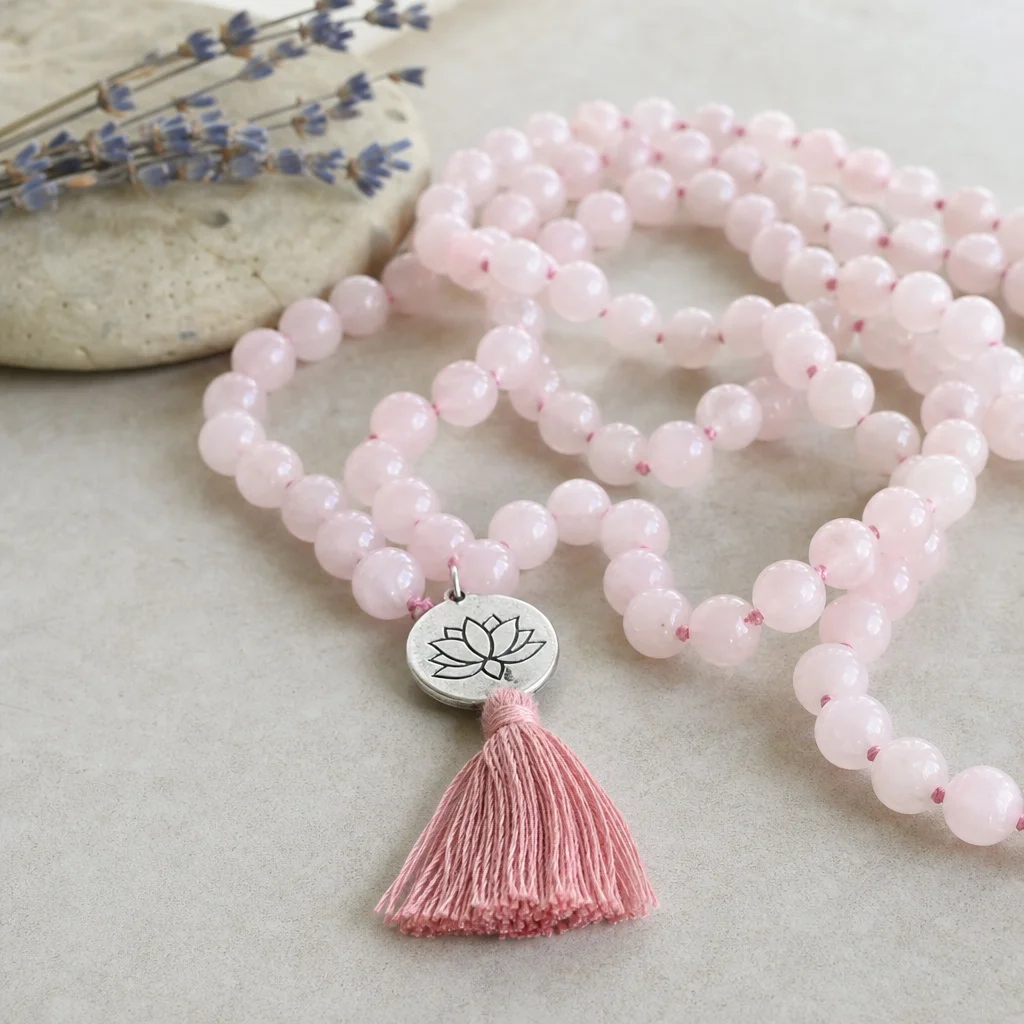
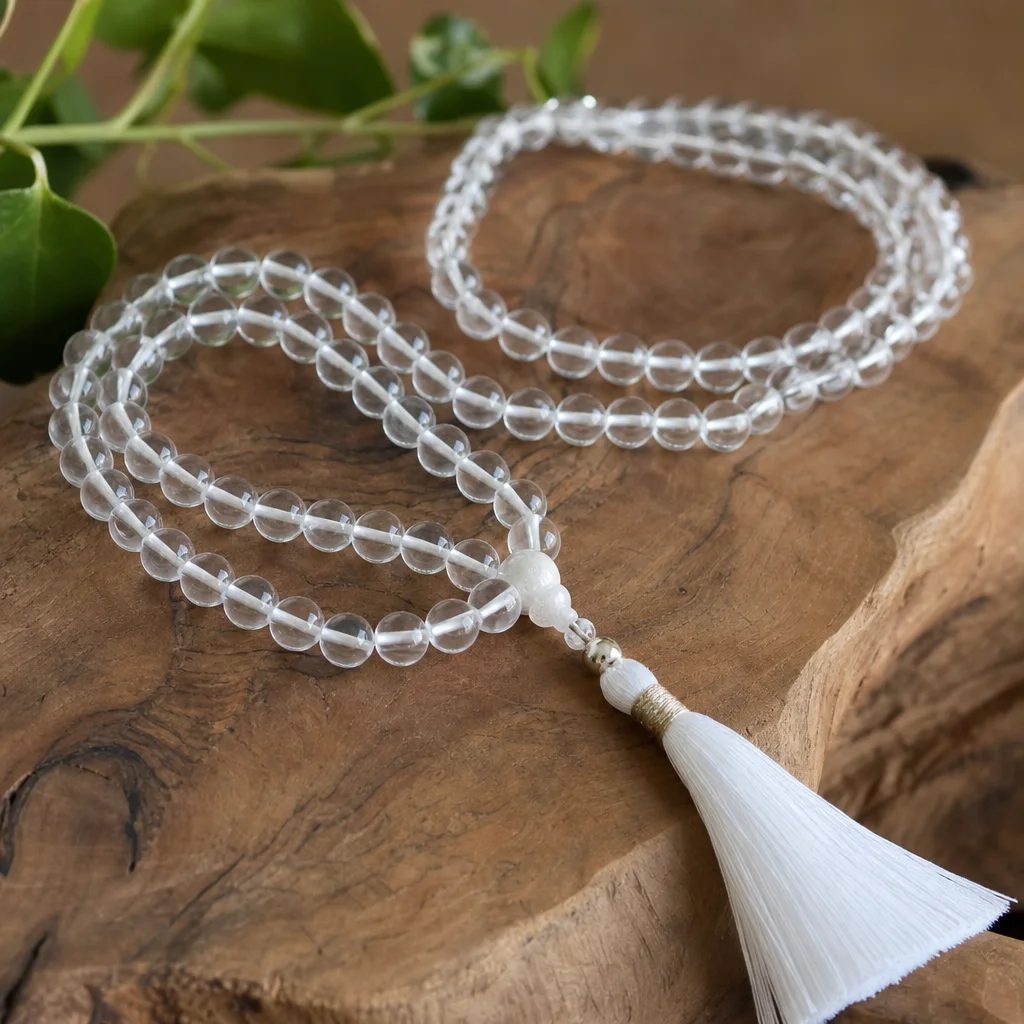
A: Absolutely. Crystal malas (amethyst, rose quartz, black tourmaline) work just as well as traditional seed or wood malas. Some practitioners choose crystals that align with their meditation intention — amethyst for clarity, rose quartz for self-compassion, clear quartz for general amplification.
Frequently Asked Questions
Can I wear my mala beads all the time or only during meditation?
You can absolutely wear your mala beads throughout the day! Wearing your handcrafted mala allows the natural crystals to stay connected to your energy field and serves as a beautiful reminder of your daily intentions. Just remember to treat your artisan jewelry with care, keeping it away from harsh chemicals or water to preserve the natural stone's integrity and hand-knotted silk.
Which hand do you hold mala beads in during meditation?
Traditionally, mala beads are held in the right hand during meditation. You gently drape the beads over your middle or ring finger, using your thumb to pull each natural crystal bead toward you as you recite your mantra. The index finger is typically kept extended and never touches the sacred beads, as it represents the ego. Do what feels most natural and comfortable for your practice.
How do I choose the right crystal mala for my intentions?
Choosing a handcrafted mala comes down to personal intuition and your specific goals. If you seek calming energy, amethyst or rose quartz are excellent choices. For grounding, black tourmaline is highly protective. Because our natural crystals carry unique earth energies, the best approach is to look at different artisan designs and pick the stone you feel naturally drawn to.
Can I use the same mala for different mantras and intentions?
Yes, you can use the same mala for different mantras, but many practitioners prefer to dedicate a single handcrafted mala to one specific intention. Because natural crystal gemstones absorb and hold the energy of your vibrations, using a dedicated strand for a specific goal—like healing or abundance—deepens the connection and amplifies the energetic power of your meditation practice over time.
What should I do if I lose count while using my meditation mala?
Don't worry if you lose count—this is completely normal for beginners! The purpose of using a handcrafted mala is to anchor your mind, not achieve perfection. If you notice you've drifted, simply pause, take a deep grounding breath, find the last natural stone bead you remember, and gently resume your mantra. The gap itself is a beautiful part of the mindfulness journey.
Comments