What Do Mala Beads Mean? Complete Symbolism
May 28, 2026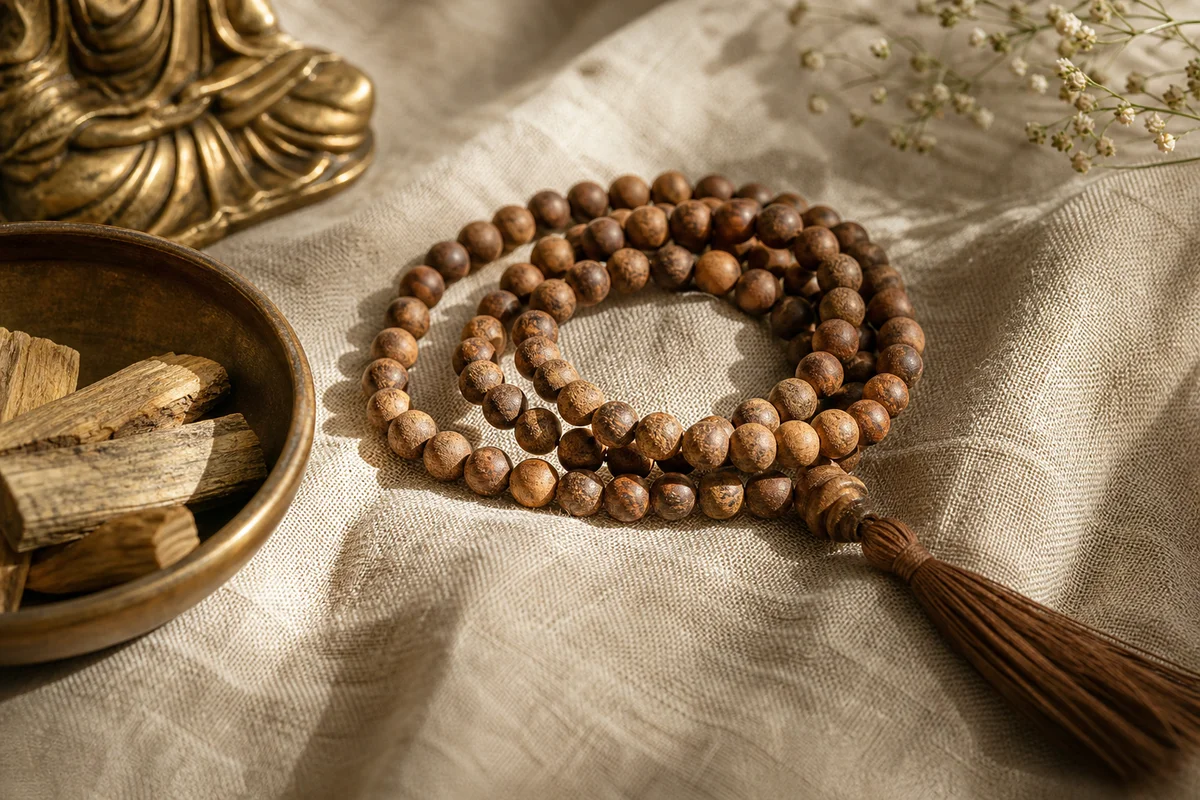
What Are Mala Beads, Exactly?
A mala is a string of beads used for counting mantra recitations during meditation. Think of it as the Eastern equivalent of a Catholic rosary — same basic concept (counting prayers or mantras on beads), different tradition. The word "mala" comes from Sanskrit and simply means "garland" or "string of beads."
Malas have been used for at least 2,000 years across Hindu, Buddhist, Jain, and Sikh traditions. They're one of the oldest meditation tools still in active use, and their design hasn't changed much in all that time — because it doesn't need to. The form follows the function perfectly.
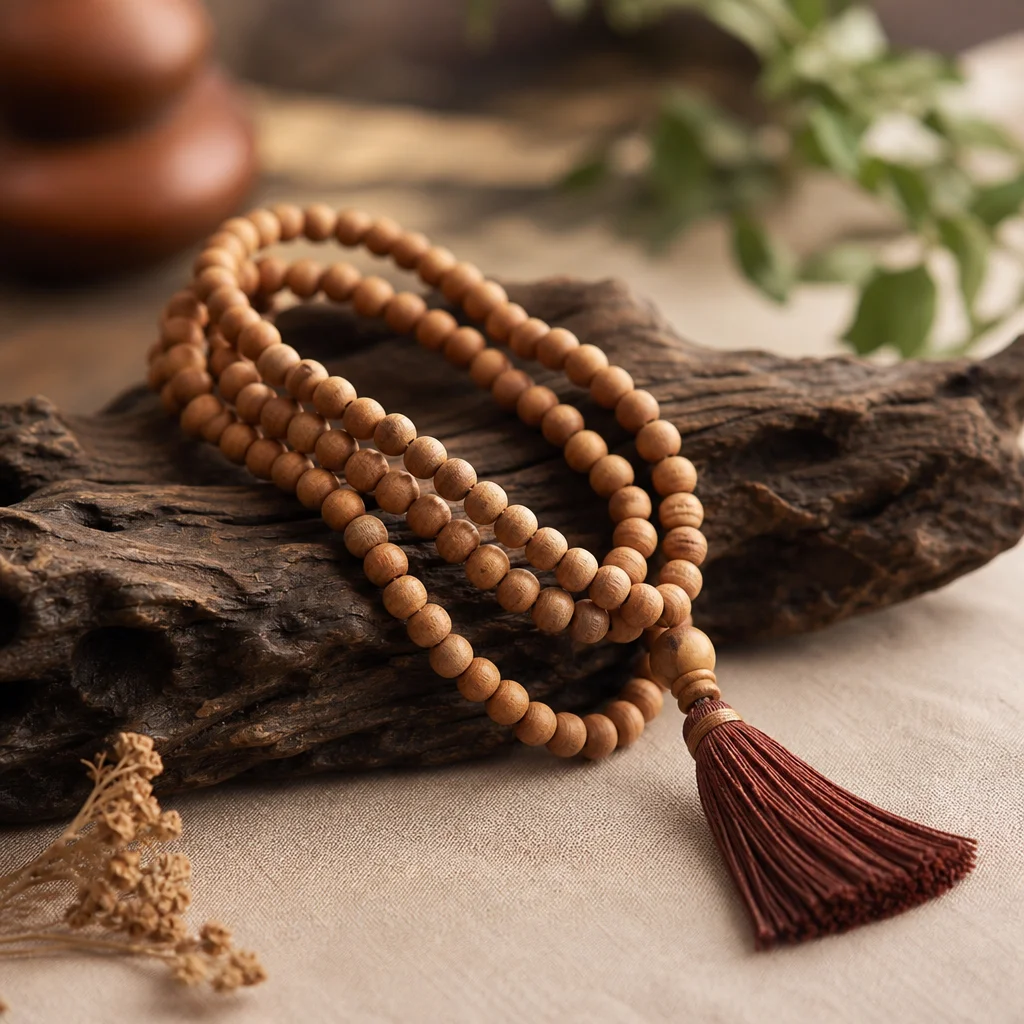
A standard mala has 108 beads plus one additional bead called the guru bead (sometimes called the meru or summit bead). The string itself has meaning, the tassel has meaning, the number 108 has meaning — practically every element of a mala carries symbolic weight that traces back centuries.
The Number 108 — Why This Specific Number?
If there's one question about malas that comes up more than any other, it's "why 108?" The number shows up repeatedly across Eastern traditions, and there are several explanations — none of which are mutually exclusive.
The Mathematical Explanation
In Vedic mathematics and astronomy, 108 is considered a sacred number:
- The average distance from the Earth to the Sun is approximately 108 times the Sun's diameter
- The average distance from the Earth to the Moon is approximately 108 times the Moon's diameter
- The diameter of the Sun is approximately 108 times the diameter of the Earth
These ratios aren't exact to the decimal, but they're remarkably close — close enough that ancient astronomers noticed the pattern and gave it significance. Whether this is a genuine cosmic coincidence or numerical cherry-picking depends on your perspective, but the association stuck.
The Heart Chakra Explanation
In some Tantric traditions, it's said that there are 108 energy lines (nadis) converging to form the heart chakra. When you recite a mantra 108 times, you're symbolically addressing each of these energy channels.
The Hindu Deity Explanation
In Hinduism, there are 108 Upanishads (sacred texts), and the god Shiva is said to have 108 names. The goddess Saraswati is also associated with 108 sacred sites across India.
The Practical Explanation (Often Overlooked)
108 is divisible by 2, 3, 4, 6, 9, 12, 18, 27, 36, and 54. This makes it easy to break a mala into smaller sections for shorter meditations — doing a quarter mala (27 beads), a third (36 beads), or a half (54 beads) are all common practices. The mathematical convenience of 108 probably influenced its adoption as much as any spiritual reasoning.
The Anatomy of a Mala — What Each Part Means
The Guru Bead
The guru bead is the 109th bead — the one that sits at the center of the mala, typically larger or differently shaped than the others. "Guru" means "teacher" or "guide" in Sanskrit.
When you reach the guru bead during mantra recitation, you don't cross over it. Instead, you pause, offer gratitude (to your teacher, your practice, the tradition), and then reverse direction. Crossing the guru bead is considered disrespectful in traditional practice — it would be like stepping on your teacher's head.
The guru bead also marks completion. Reaching it means you've done a full round of 108 recitations.
The Tassel
The tassel at the end of a mala isn't just decorative. It represents:
- Unity: Many threads coming together into one — symbolizing the connection between individual consciousness and universal consciousness
- The lotus flower: In Buddhist tradition, the tassel is sometimes said to represent the roots of a lotus, grounding the practice in the material world while the flower blooms above
- Prayers accumulated: In some practices, the tassel grows more personal meaning over time as the mala is used — it becomes a physical record of your practice
The String
The thread that holds the mala together represents the thread of consciousness that connects all beings, according to Hindu philosophy. It's sometimes compared to the sutratma — the "thread of the soul" in Vedantic thought. A broken mala string isn't considered bad luck; it's simply time to restring, often done as a meditative practice itself.
The Spacer Beads
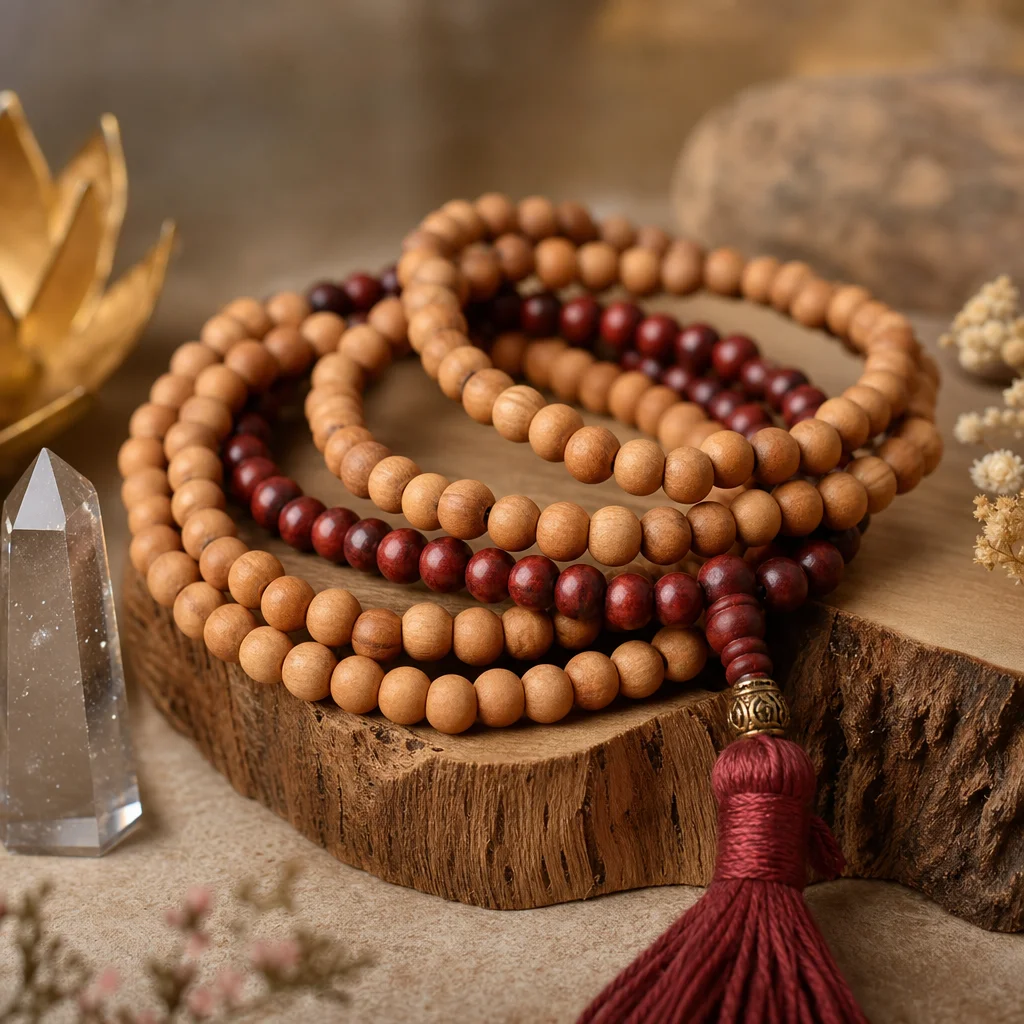
Many malas have smaller marker beads at the 27th, 54th, and 81st positions (dividing the mala into four equal sections). These serve both practical purposes (letting you know where you are without looking) and symbolic ones — some traditions associate each quarter with a different aspect of the meditation or a different deity.
Materials and Their Meanings
The material a mala is made from adds another layer of symbolism:
| Material | Tradition | Symbolism |
|---|---|---|
| Rudraksha seeds | Hindu (Shiva devotion) | Lord Shiva's tears. The most traditional material for Hindu malas. Each seed has natural grooves called "mukhi" (faces) — 5-mukhi seeds are most common. |
| Sandalwood | Hindu and Buddhist | Purity and calm. Sandalwood's natural fragrance is believed to support meditation. Associated with Lord Vishnu. |
| Tulsi (Holy Basil) wood | Hindu (Vishnu/Krishna devotion) | Devotion and purity. Tulsi malas are worn by Vaishnavas (devotees of Vishnu) as a sign of their practice. |
| Lotus seeds | Buddhist | Spiritual awakening — the lotus grows from mud but blooms above the water unstained. |
| Bodhi seeds | Buddhist | Enlightenment. Named after the Bodhi tree under which the Buddha achieved enlightenment. |
| Crystal/gemstone beads | Both traditions | Varies by stone. Amethyst malas for clarity, rose quartz for compassion, clear quartz for amplification. |
How Malas Are Used in Practice
Japa Meditation (Mantra Recitation)
The primary use of a mala is japa — repetitive recitation of a mantra. Here's the basic method:
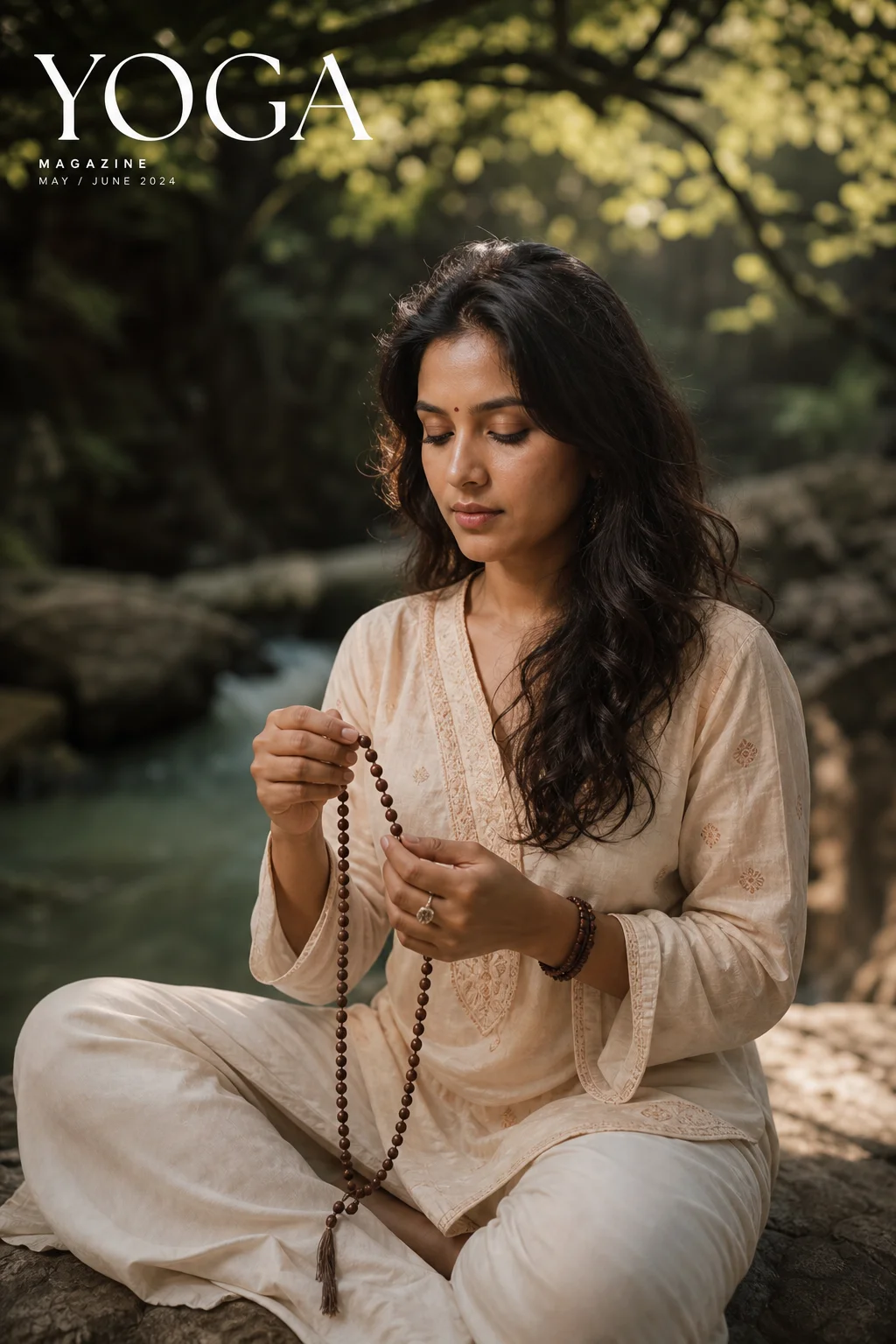
- Hold the mala in your right hand, draped over your middle finger
- Start at the bead next to the guru bead
- Recite your mantra once
- Use your thumb to pull the next bead toward you
- Repeat until you reach the guru bead
- Pause, offer gratitude, and reverse direction (don't cross the guru bead)
One full circuit = 108 mantra recitations.
Breath Counting
Some practitioners use malas without mantras, simply counting breaths. One bead = one full breath cycle (inhale + exhale). This is particularly common in Zen Buddhist adaptations of mala practice.
Wearing a Mala
Many people wear their mala as a necklace or wrapped around their wrist when not actively meditating. In Tibetan Buddhism, wearing a mala around the neck is a sign of devotion. In Hindu traditions, wearing a rudraksha mala is common among Shaivites (Shiva devotees).
There's no rule against wearing a mala if you're not part of these traditions — just be aware that in some cultural contexts, a mala signals active spiritual practice. Wearing one as pure fashion can read as disrespectful.
Common Mantras Used With Malas
| Mantra | Tradition | Meaning |
|---|---|---|
| Om | Universal | The primordial sound of the universe |
| Om Mani Padme Hum | Buddhist (Tibetan) | Praise to the jewel in the lotus — associated with compassion |
| Om Namah Shivaya | Hindu (Shaivite) | I bow to Shiva — one of the most common Hindu mantras |
| So Hum | Universal | I am That — a non-dualistic mantra connecting individual and universal |
| Om Shanti Shanti Shanti | Hindu/Buddhist | Peace, peace, peace — for body, mind, and spirit |
FAQ
Q: Can I use a mala if I'm not Hindu or Buddhist?
A: Yes. The mala is a meditation tool, and meditation itself is not limited to any one religion. Approach it with respect for its origins, and it's a perfectly accessible practice for anyone.
Q: Do I have to recite a Sanskrit mantra?
A: No. You can use any word, phrase, or affirmation that has meaning for you. "Peace," "let go," or even a simple count works. The mala's function is to track repetitions — the content of those repetitions is up to you.
Q: What's the difference between a mala and a rosary?
A: They serve the same basic purpose (counting prayers/mantras on beads), but malas typically have 108 beads while Catholic rosaries have 59 beads arranged in five decades. The traditions, prayers, and symbolism are entirely different, though the underlying concept is remarkably similar.
Q: Can I make my own mala?
A: Absolutely. Making your own mala is considered a meditative practice in itself. Stringing 108 beads with intention — choosing the materials, tying the knots, adding the tassel — adds personal significance that a purchased mala might not have. See our mala-making guide for step-by-step instructions.
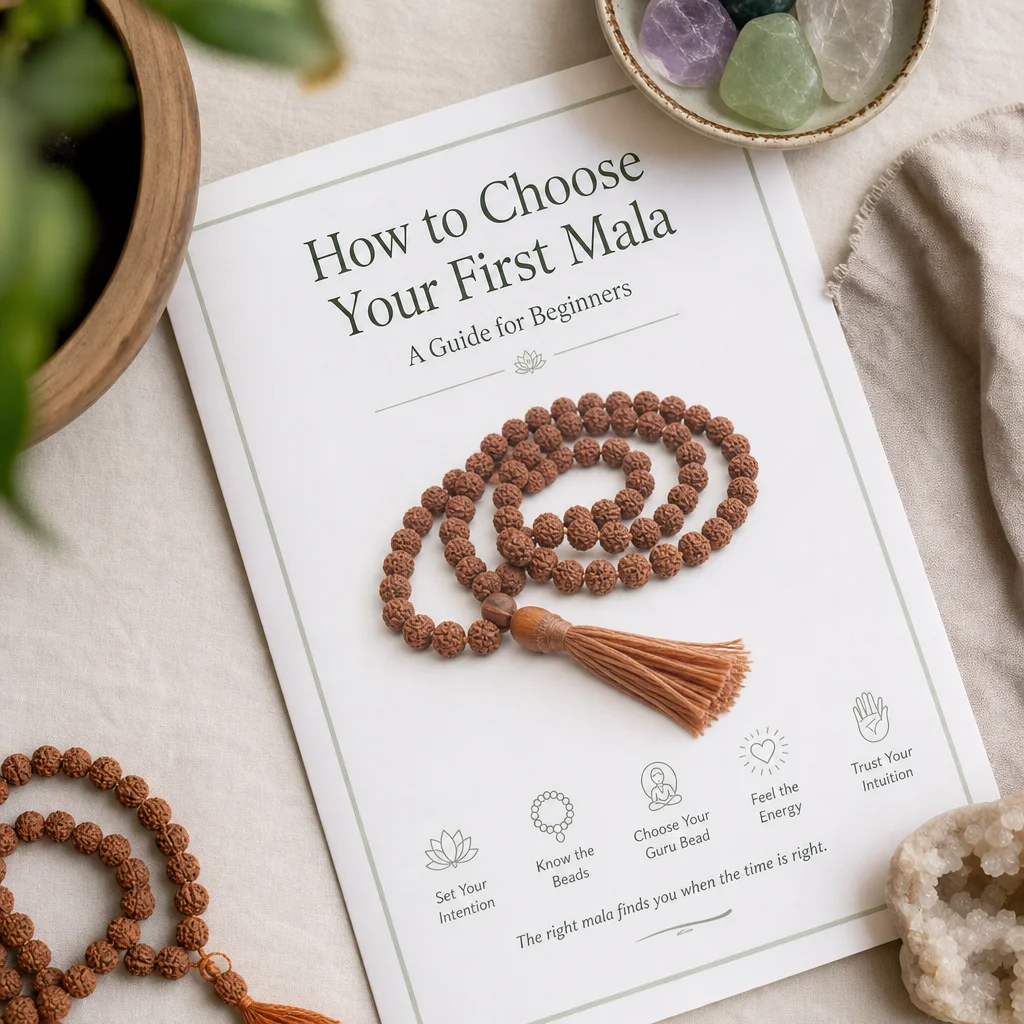
Choosing the Right Mala for You
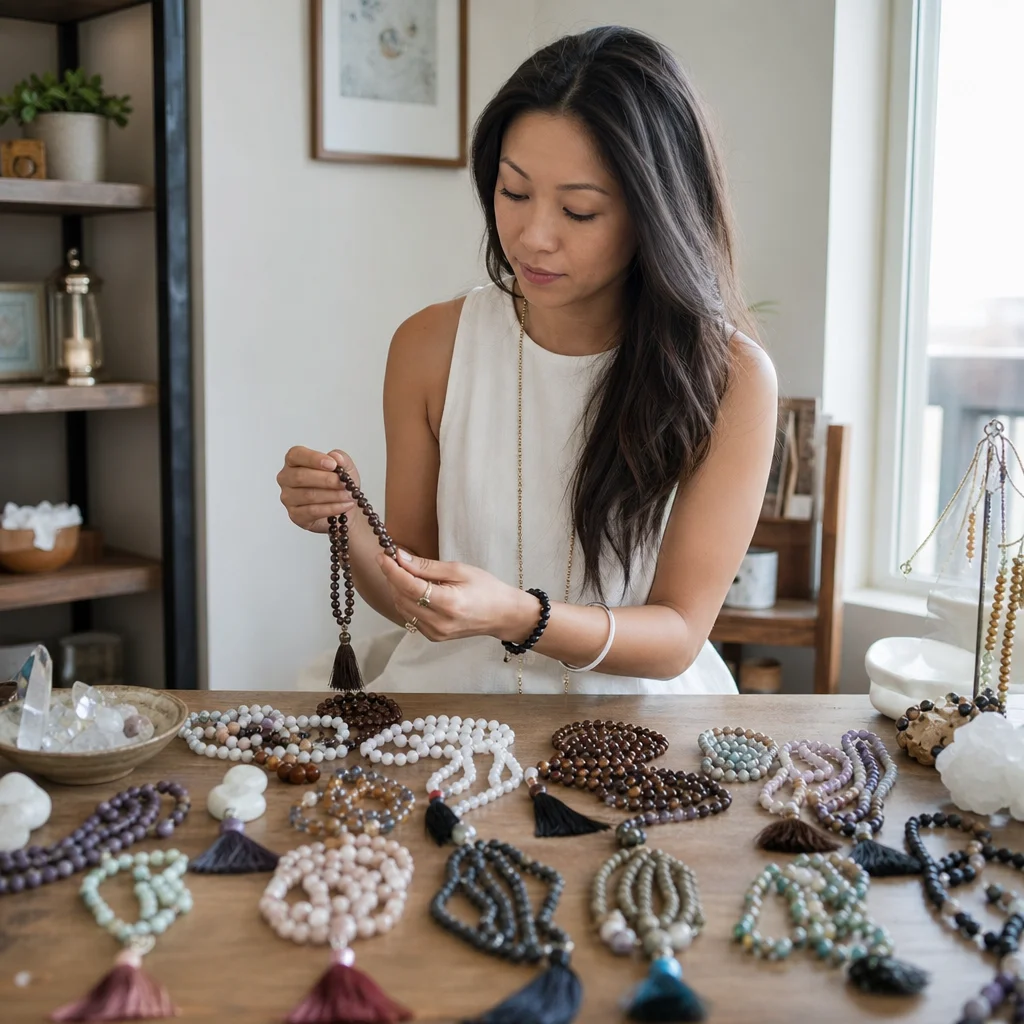
Now that we've dig into into the rich symbolism and history of mala beads, it's time to think about what type of mala might be right for you. With so many options available, it can feel overwhelming, but with a few considerations, you can find the perfect mala to complement your meditation practice and personal style.
Material Matters
One of the first decisions you'll make is the material of your mala. Common materials include gemstones, wood, metal, and even recycled materials. Each material has its own properties and meanings:
- Gemstones: Gemstone malas are popular for their beauty and metaphysical properties. For example, a rose quartz mala is often used for its love and healing properties, while a malachite mala is believed to bring emotional balance.
- Wood: Wooden malas, such as sandalwood or rosewood, are known for their grounding and calming effects. They also have a natural, organic aesthetic that many find appealing.
- Metals: Metal malas, such as silver or brass, can offer a sense of strength and resilience. They are also durable and can have a polished, sophisticated look.
- Recycled Materials: For those who are environmentally conscious, recycled materials like glass or plastic offer a sustainable option that doesn't compromise on quality or beauty.
Size and Length
The length of your mala is another important consideration. Standard malas are typically 27 inches long, but you can find shorter or longer ones depending on your preference. A shorter mala is easier to handle and can be more convenient for travel. A longer mala, on the other hand, can offer a more immersive meditation experience.
Count of Beads
The number of beads in a mala can vary, but the most common is 108. Some people prefer a shorter or longer count, depending on their meditation practice and personal preference. For example, a 54-bead mala is perfect for a half mala meditation, while a 21-bead mala can be used for a full mala meditation.
Design and Style
The design and style of your mala can also reflect your personal taste. Some malas are simple and elegant, while others are more intricate and artistic. You might choose a mala with a specific color, pattern, or even a combination of materials to make it unique to you.
How to Use a Mala for Meditation
Once you've chosen your mala, it's time to learn how to use it effectively. Here's a step-by-step guide to help you get started:
- Find a Quiet Space: Choose a peaceful and comfortable place to meditate. This could be a quiet room, a serene garden, or even a quiet corner of your home.
- Take a Deep Breath: Begin by taking a few deep breaths to center yourself and relax.
- Hold the Mala: Hold the mala in your dominant hand, with the guru bead at the center. Place the index finger of your other hand on the guru bead to prevent it from turning.
- Start Reciting Your Mantra: Begin reciting your chosen mantra, moving from bead to bead. As you pass each bead, silently repeat your mantra.
- Return to the Guru Bead: When you reach the end of the mala, return to the guru bead and take another deep breath. Repeat the meditation for as long as you feel comfortable.
- End Your Meditation: When you're ready to finish, take another deep breath and slowly bring your awareness back to the present moment.
Common Mistakes to Avoid
As you begin your journey with mala beads, it's helpful to be aware of some common mistakes to avoid:
- Not Using the Guru Bead Properly: The guru bead is not part of the counting process. It is a symbol of respect for your teacher or spiritual guide. Always place your index finger on the guru bead to prevent it from turning.
- Skipping the Counting Process: While it's important to focus on your mantra and meditation, it's equally important to count your beads. This helps you stay grounded and focused during your practice.
- Forcing Yourself to Meditate: Meditation should be a relaxing and enjoyable experience. If you find yourself feeling frustrated or overwhelmed, take a break and try again another time.
- Ignoring the Symbolism: The symbolism of mala beads is an important part of their tradition. Take the time to learn about the meanings behind each bead and how they relate to your meditation practice.
- Not Caring for Your Mala: Like any personal item, your mala needs to be cared for. Keep it clean and store it in a safe place when not in use.
FAQ
Can I use any type of bead for a mala?
Can I use any type of bead for a mala?
Yes, you can use any type of bead for a mala, but it's important to choose beads that are suitable for your meditation practice and personal preferences.
How often should I meditate with my mala?
How often should I meditate with my mala?
There is no strict schedule for meditating with a mala. The frequency and duration of your meditation practice are entirely up to you. Some people meditate with their mala daily, while others use it during specific times of the year or for special occasions.
Can I use my mala for other purposes besides meditation?
Can I use my mala for other purposes besides meditation?
While malas are primarily used for meditation, some people also use them for other purposes, such as yoga, prayer, or even as a decorative item.
How do I clean my mala?
How do I clean my mala?
It's important to clean your mala regularly to keep it in good condition. Depending on the material, you can use a soft cloth, gentle soap and water, or even essential oils. Always consult the care instructions for your specific type of mala.
Can I wear my mala around my neck?
Can I wear my mala around my neck?
Some people choose to wear their mala around their neck for convenience or as a symbol of their practice. However, it's important to make sure the beads are not loose and that you are not disturbing the counting process.
Conclusion
Mala beads are much more than just a meditation tool; they are a symbol of tradition, spirituality, and personal growth. By understanding the symbolism behind each bead and using your mala with intention, you can enhance your meditation practice and deepen your connection to your spiritual path.
As you embark on your journey with mala beads, remember to approach it with curiosity and respect. Each bead is a reminder of the rich history and spiritual significance of this ancient practice. May your mala guide you on a path of peace, clarity, and self-discovery.

Comments