How to Clean and Care for Mala Beads Without D..
June 2, 2026
Why Mala Beads Need Specialized Care
A mala isn't just a piece of jewelry — it's a devotional tool, a meditation companion, and often a personal keepsake that accumulates meaning over years of use. But the materials that make up most malas — wood, seeds, stone, silk thread — each have specific vulnerabilities that generic jewelry care advice doesn't address. Clean a rudraksha seed mala the same way you'd clean a gemstone bracelet and you could cause serious damage. Store a sandalwood mala in direct sunlight and you might find it cracked and faded within weeks.
The key to caring for mala beads is understanding that you're managing multiple different materials at once, each with different needs. The beads, the thread, the tassel, and any guru bead all require different care strategies. This guide covers each material type and component specifically so you can keep your mala in excellent condition for decades of use.
Identifying Your Mala's Materials
Before cleaning or caring for your mala, identify what it's made of. Different materials require fundamentally different approaches:
Wood Malas
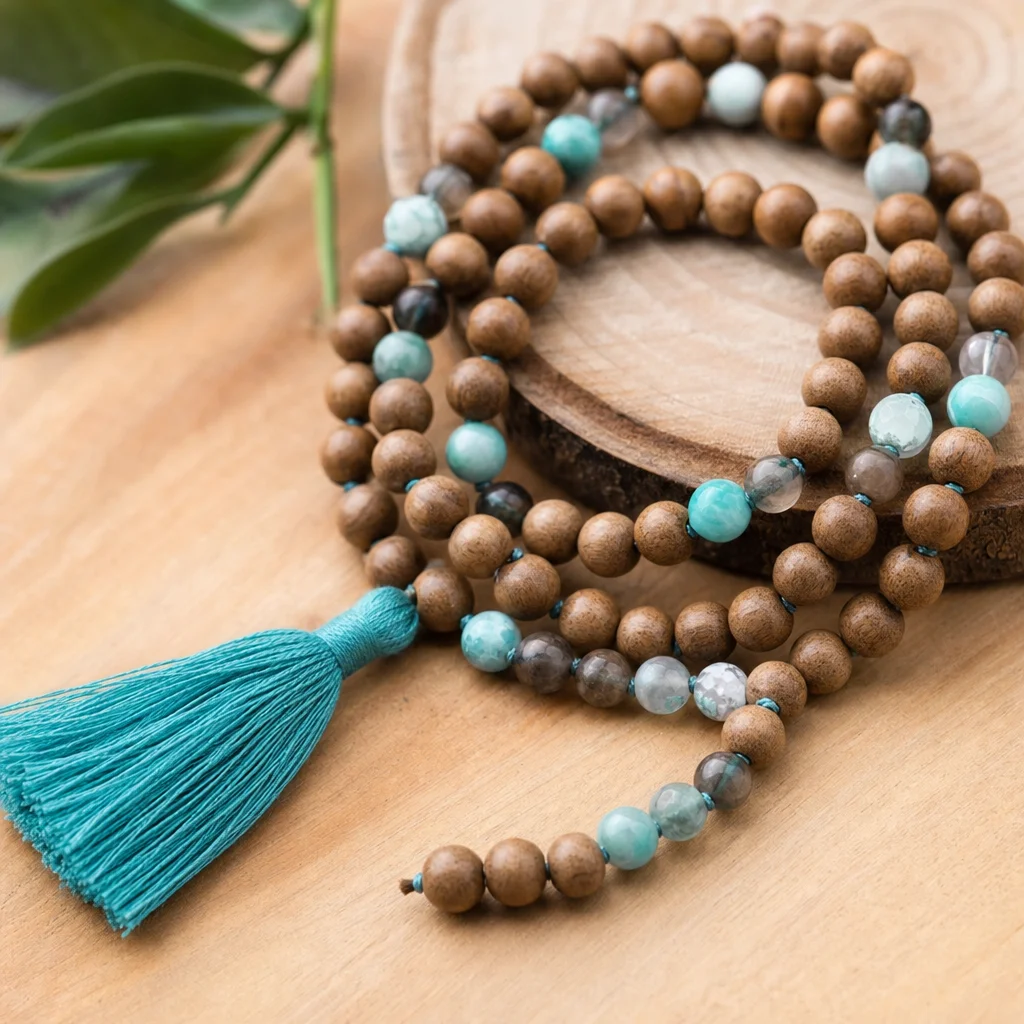
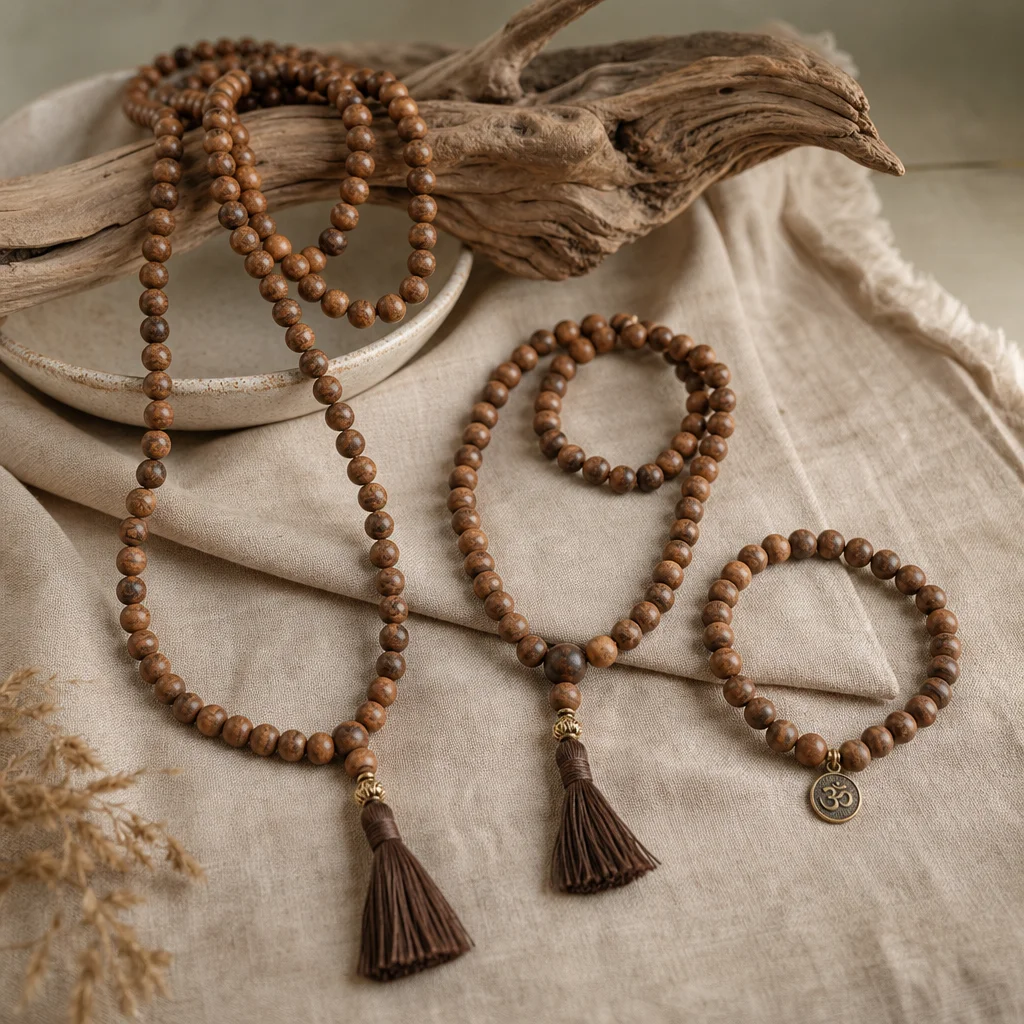
Common wood materials include sandalwood, rosewood, ebony, and bamboo. These are among the most vulnerable mala materials and require the most careful handling. Wood beads are porous — they absorb moisture, oils from your skin, and environmental scents. They're also prone to cracking from rapid temperature or humidity changes.
Identification: Wood beads are lightweight (much lighter than stone of the same size), warm to the touch, and have a natural grain pattern visible on the surface. Sandalwood often has a distinctive fragrance, especially when rubbed gently.
Seed Malas
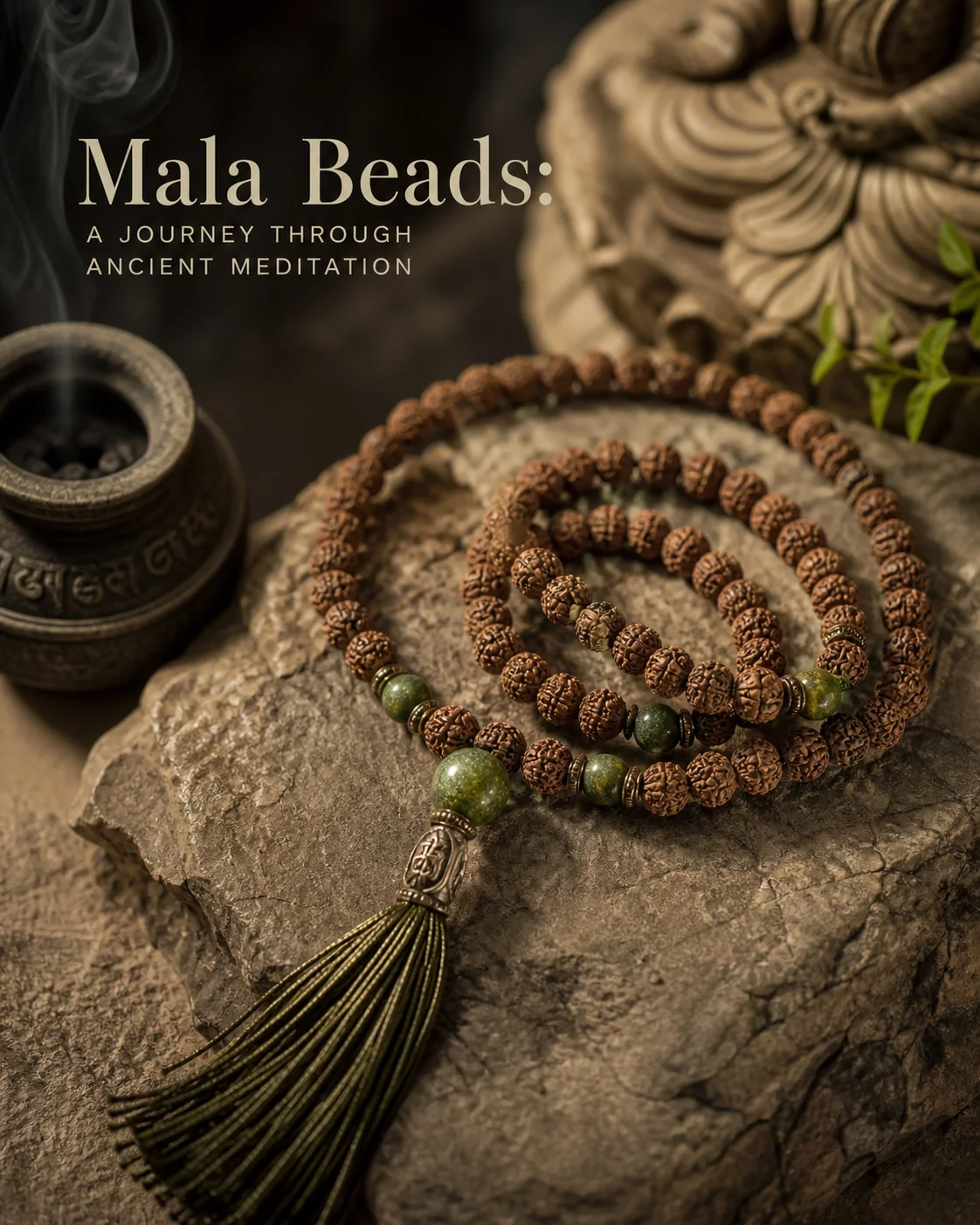
Rudraksha seeds (from the Elaeocarpus ganitrus tree), bodhi seeds, lotus seeds, and tulsi (holy basil) wood are the most common seed materials. Seeds are generally more durable than wood but still require care. Rudraksha seeds have a distinctive textured surface with natural grooves and facets.
Identification: Seed beads have an organic, slightly irregular shape and texture. Rudraksha seeds are round with visible surface lines (mukhi faces). Bodhi seeds resemble small, round nuts with a smooth or slightly textured surface. They're moderately lightweight — heavier than wood but lighter than most gemstones.
Gemstone Malas
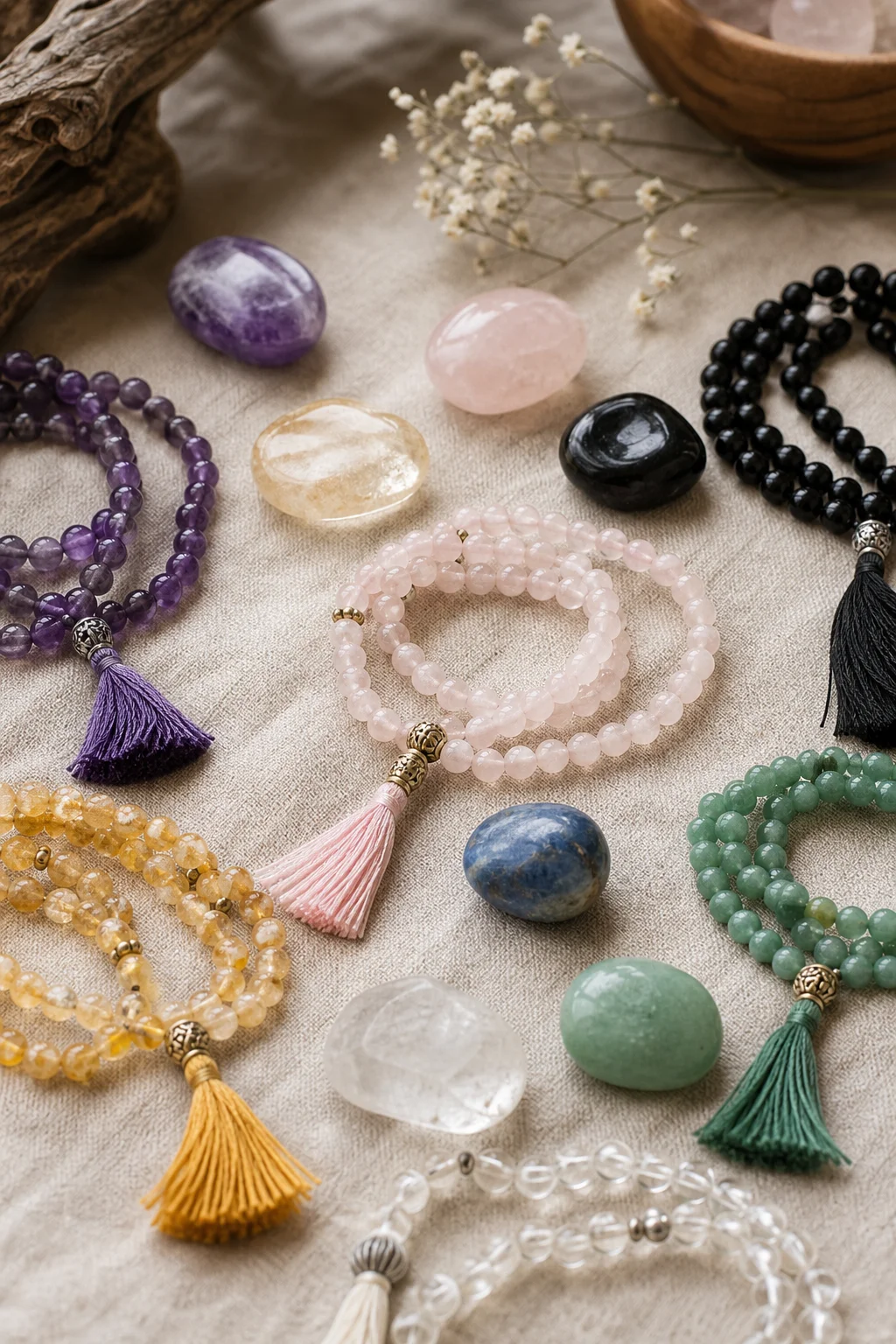
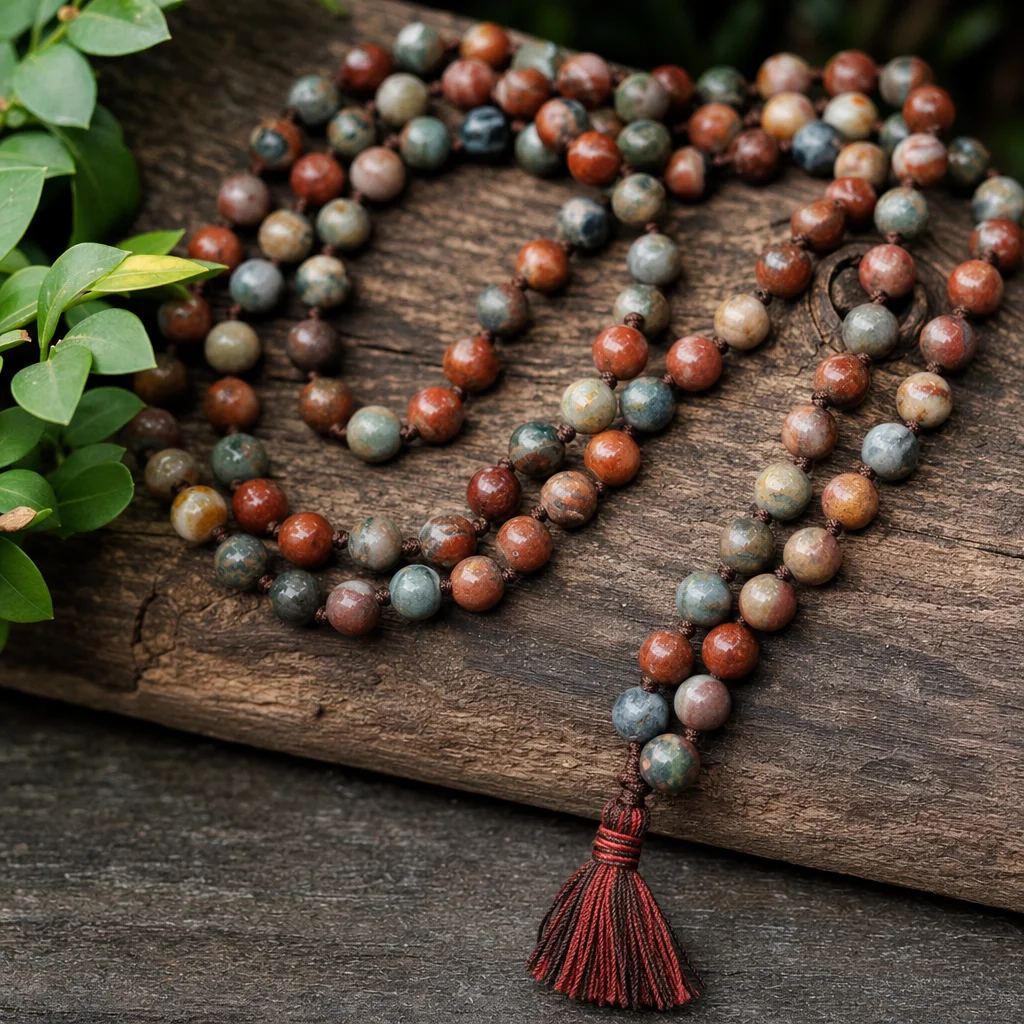
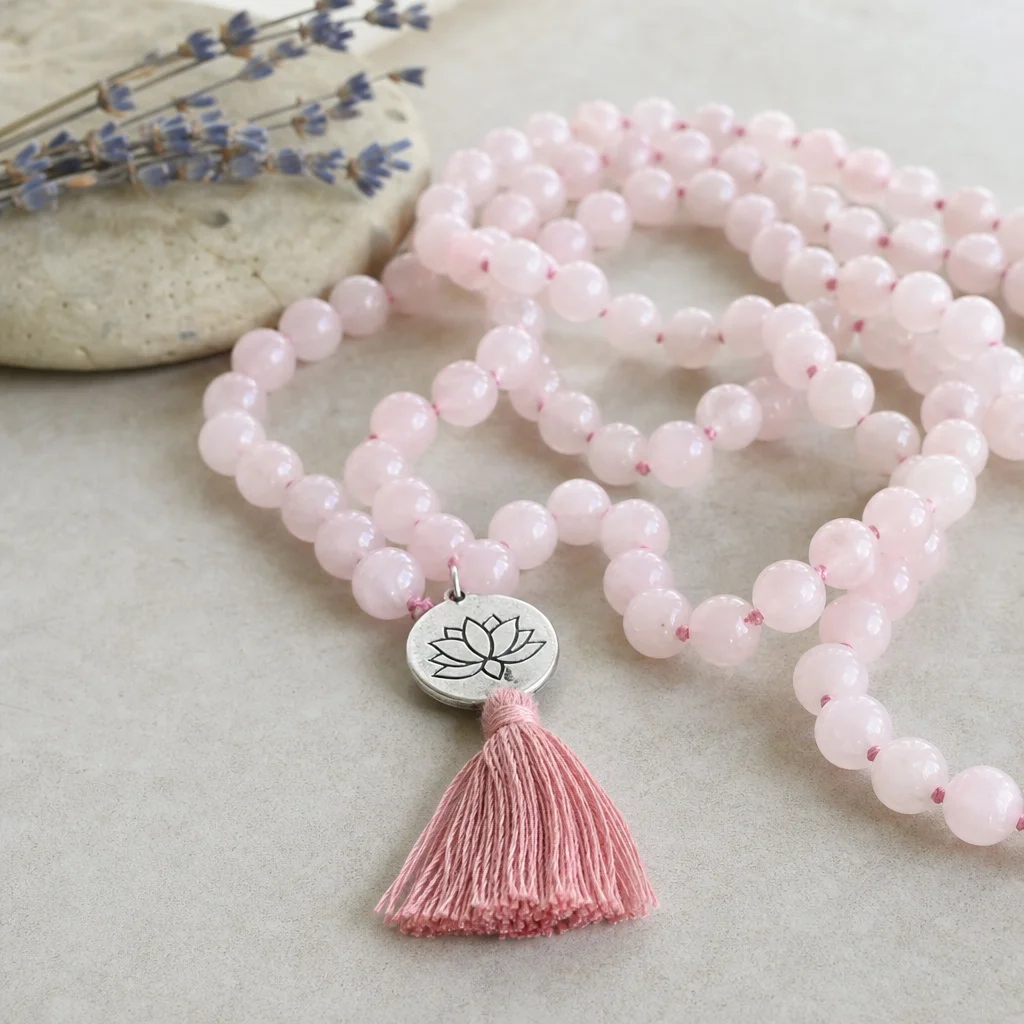
Crystal and gemstone malas use beads made from amethyst, rose quartz, lapis lazuli, tiger's eye, and dozens of other minerals. These are generally the most durable malas from a cleaning perspective but can have specific vulnerabilities depending on the mineral type.
Identification: Gemstone beads are noticeably heavier than wood or seed beads, cool to the touch, and typically have a uniform shape and polish. They feel hard and dense when handled.
Cleaning by Material Type
Wood Malas: The Gentle Approach
Wood malas require the most cautious cleaning of any mala type:
Daily maintenance: Simply wipe the beads gently with a soft, dry cloth after use. This removes skin oils and sweat that can cause wood to darken unevenly or develop sticky residue over time. A microfiber cloth works well — soft enough not to scratch the wood, absorbent enough to lift surface oils.
Deeper cleaning: If your wood mala has accumulated visible grime, lightly dampen (not wet — damp) a soft cloth with water and wipe each bead individually. Dry immediately with a separate cloth. Never submerge wood beads in water — they absorb moisture rapidly, which can cause swelling, warping, and cracking as they dry.
Rejuvenating fragrance: For sandalwood malas that have lost their scent, very light sanding with fine-grit sandpaper (600+ grit) can remove the oil-saturated surface layer, revealing fresh aromatic wood underneath. Sand very gently — just a few light passes on each bead. Apply a tiny drop of sandalwood essential oil after sanding to restore the fragrance. Note that this is a maintenance procedure, not something to do frequently.
What to absolutely avoid: Soaking in water, soap, cleaning solutions, steam, ultrasonic cleaners, and exposure to high humidity (like leaving the mala in a bathroom). All of these can cause irreversible damage to wood beads.
Seed Malas: Moderate Care
Seed malas are more forgiving than wood but still need attention:
Rudraksha: Wipe with a dry or very slightly damp cloth. If beads become dull from skin oils, you can apply a small amount of sandalwood oil or mustard oil to a cloth and rub each bead gently — this is a traditional practice in Hindu culture. Let the oil absorb for a few hours, then wipe off any excess. Once every few months is sufficient.
Bodhi and lotus seeds: Dry cloth wipe is usually sufficient. These seeds are relatively hard and don't absorb oils as readily as wood. If cleaning is needed, a slightly damp cloth is acceptable. Avoid prolonged water exposure.
Tulsi: Tulsi wood malas are the most fragile seed type and should be treated similarly to wood malas — dry cloth only, avoid moisture, protect from physical impact. Tulsi is quite soft and can dent or chip with rough handling.
Gemstone Malas: The Most Durable
Gemstone malas are the easiest to clean because most gemstones tolerate water and mild soap:
Standard cleaning: Warm water with a drop of mild soap on a soft cloth. Wipe each bead individually. Rinse with a damp cloth (no soap residue) and dry thoroughly. This is safe for quartz varieties (amethyst, rose quartz, clear quartz), agate, jasper, and most common mala stones.
Caution with specific stones: Some gemstones in malas require special treatment:
- Pearl or coral malas: Wipe with a damp cloth only — no soap. These are organic gems that can be damaged by chemicals.
- Turquoise: Avoid water entirely — turquoise is porous and can discolor. Dry cloth only.
- Opal: Slightly damp cloth only, no prolonged water exposure. Opal contains water in its structure and can crack if it dehydrates.
- Lapis lazuli: Avoid prolonged water contact — lapis is porous and can have pyrite inclusions that may discolor when wet.
- Malachite: Mildly toxic in powdered form — avoid any cleaning method that might create dust. Damp cloth only.
Caring for the Thread and Knots
The silk or cotton thread that holds your mala together is arguably its most vulnerable component. A broken thread means the entire mala falls apart, potentially losing beads. Thread care is preventive maintenance:
Knot integrity: Traditional malas have a knot between each bead — this prevents beads from rubbing against each other (which causes wear) and ensures that if the thread breaks, you only lose a few beads rather than the entire mala. Check the knots periodically. If any are loose or the thread looks frayed, it's time for restringing before a break occurs.
Avoid moisture on the thread: Silk thread is strong when dry but weakens when wet. For wood and seed malas, this isn't an issue because you shouldn't be getting those wet anyway. For gemstone malas, take care not to soak the thread while cleaning individual beads.
Storage to prevent thread stress: Don't hang your mala on a hook or nail by the guru bead. This concentrates stress on a single point of the thread. Instead, coil the mala loosely and store it flat or in a pouch. If you must hang it, use a smooth, wide hook or drape it over something that distributes the weight across the full loop.
Restringing a Mala
If your mala thread is showing wear, restringing is a worthwhile investment. While some people restring their own malas, the process requires patience and practice. Each bead must be individually threaded with knots between them — typically 108 beads plus the guru bead. Professional mala restringing services are available and recommended if you're not confident in your knotting skills.
When restringing, consider using a stronger thread material. Silk is traditional and aesthetically pleasing but not the strongest option. Nylon or polyester beading thread is significantly more durable and available in colors that closely match traditional silk. For malas that see heavy daily use, the durability upgrade is worth the slight aesthetic trade-off.
Tassel Care
The tassel on a mala (usually attached at the guru bead or dangling below it) requires its own care routine. Tassels are typically made from silk or cotton thread and are prone to tangling, fraying, and collecting dust.
Daily care: After each use, gently run your fingers through the tassel from top to bottom to separate any tangled strands. This 10-second habit prevents major tangles from developing.
Detangling: If the tassel has become tangled, don't pull forcefully — this breaks threads. Work through tangles gently from the bottom up, separating small sections at a time. A wide-tooth comb (never a fine-tooth comb) can help with severely tangled tassels.
Washing: Silk tassels can be hand-washed in cool water with a gentle soap (baby shampoo works well). Submerge the tassel only (keep the beads dry), swish gently for 30 seconds, rinse in clean cool water, and lay flat on a towel to dry. Shape the tassel while damp to maintain its form. Cotton tassels tolerate this process even better than silk.
Trimming frayed ends: If the tassel ends have become frayed and trimming is needed, cut the threads at an angle rather than straight across for a more natural look. Some people burn-cut the ends with a candle flame (quickly passing the threads through flame) to seal them — this works for synthetic fibers but not natural silk or cotton.
Storage Best Practices
How you store your mala between uses significantly affects its longevity:
Pouch or box: Store your mala in a cloth pouch or a dedicated box. This protects it from dust, physical contact with other objects, and accidental damage. Many malas come with a storage pouch — use it. A simple cotton bag is perfect.
Temperature stability: Avoid storing malas in places with extreme temperature fluctuations — car dashboards, windowsills, unheated garages, or near heating vents. Wood and seed beads are particularly sensitive to temperature changes, which cause expansion and contraction that leads to cracking.
Avoid direct sunlight: Prolonged sunlight exposure fades wood (sandalwood bleaches noticeably), darkens some gemstones (amethyst turns brown over years of sun exposure), and can dry out seeds. Store your mala in a closed container when not in use.
Humidity management: In very dry environments, wood malas benefit from stored alongside a small humidity source (a slightly damp cotton ball in a separate compartment of the storage pouch). In very humid environments, ensure adequate ventilation in the storage container to prevent mold growth on silk thread and organic materials.
Keep flat: Don't pile heavy objects on top of your stored mala. The weight can distort the thread, create flat spots on softer beads, or damage the tassel.
Energetic Cleansing Practices
Beyond physical care, many mala users practice energetic cleansing — rituals intended to refresh the stone or bead's spiritual qualities. While these are cultural and personal practices rather than scientifically validated maintenance, they're worth understanding for those who find them meaningful.
Smoke cleansing: Passing the mala through sage, palo santo, or incense smoke is one of the most common practices. From a practical standpoint, this is harmless to all mala materials (don't hold the mala in the flame — just the smoke). It also serves as a mindful pause that connects you with your mala before meditation.
Sound cleansing: Using singing bowls, bells, or tuning forks near the mala is another common practice. Sound vibrations don't physically affect most mala materials, making this one of the safest methods across all material types.
Moonlight: Placing the mala outdoors during a full moon is widely recommended. This is safe for all materials, though extended outdoor exposure means exposure to humidity, dew, and potential pests. For valuable malas, a windowsill (protected from rain but exposed to moonlight) is a safer compromise.
What to avoid energetically: Salt water cleansing (damages wood, seeds, silk thread, and many gemstones), direct sunlight charging (fades many materials), and any method involving burying the mala in earth (obviously impractical and potentially damaging).
When to Seek Professional Help
Not all mala problems can be fixed at home. Consider professional help if:
- The thread is visibly frayed or broken — professional restringing saves your beads
- Wood beads are cracking — a conservator can assess whether stabilization is possible
- The guru bead or metal findings are loose — jewelers can tighten or replace these
- The tassel is severely damaged — professional re-tasseling creates a clean, even result
- You have an antique or culturally significant mala — conservation specialists can provide appropriate care
With proper care matching your mala's specific materials, a quality mala can last a lifetime and be passed down through generations. The care routine becomes part of the mala's story — each cleaning, each mindful moment of maintenance, adds another layer of personal connection to a tool that was designed to be used and cherished.
Frequently Asked Questions
How do I clean and straighten the tassel on my mala?
To clean a dirty tassel, gently hand wash it with a mild soap and lukewarm water, then allow it to air dry completely. Once dry, you can use a fabric steamer or a light starch spray while combing the strands with a fine-tooth brush to restore its sleek appearance. Avoid excessive pulling, as the delicate silk or cotton threads can easily snap or lose their shape.
Is it safe to wear my mala beads in the shower or while swimming?
You should always remove your mala before showering, swimming, or exercising, as prolonged water exposure and chemicals can weaken the threading cord. Soaps, shampoos, and chlorine can also leave a harmful residue on delicate bead surfaces, stripping them of their natural oils. Keeping your beads dry ensures the structural integrity of the string and the finish of the materials remain completely intact.
What is the best way to store mala beads when they are not being used?
Store your mala in a cool, dry place away from direct sunlight, ideally wrapped in a natural fabric like cotton or silk. Direct sunlight and extreme temperature fluctuations can cause certain materials to fade, crack, or expand over time. Keeping them in a dedicated mala bag or a soft jewelry pouch also prevents the cord from snagging and protects the beads from dust and scratches.
How can I energetically cleanse my mala without using physical liquids?
You can clear accumulated energy from your mala by placing it in moonlight overnight or bathing it in the smoke of burning sage, cedar, or palo santo. Another effective method is placing the mala on a bed of selenite or clear quartz crystals for a few hours to absorb stagnant vibrations. These gentle methods purify the spiritual energy of the beads without risking any water damage or physical degradation.
How often should I restring my mala beads?
With daily use, a traditional silk or nylon thread will naturally stretch and weaken, so it is generally recommended to restring your mala every one to two years. If you notice the thread fraying, stretching significantly, or losing its shape, it is time for immediate repair to prevent a sudden break. Restringing not only prevents the loss of your beads but also gives you the perfect opportunity to give them a deep, individual cleaning.
Comments