Rose Quartz Mala Beads: Love, Compassion & He...
June 5, 2026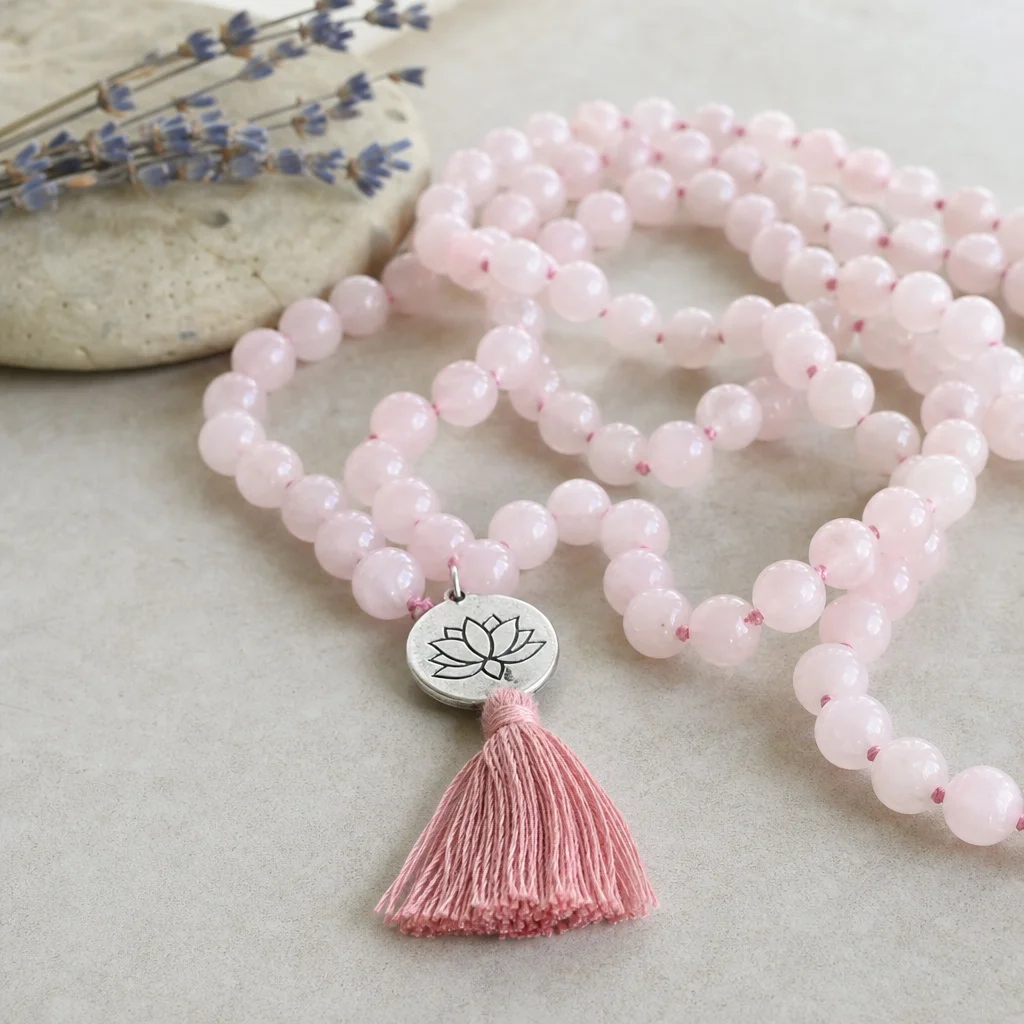
What Makes Rose Quartz Mala Beads Unique
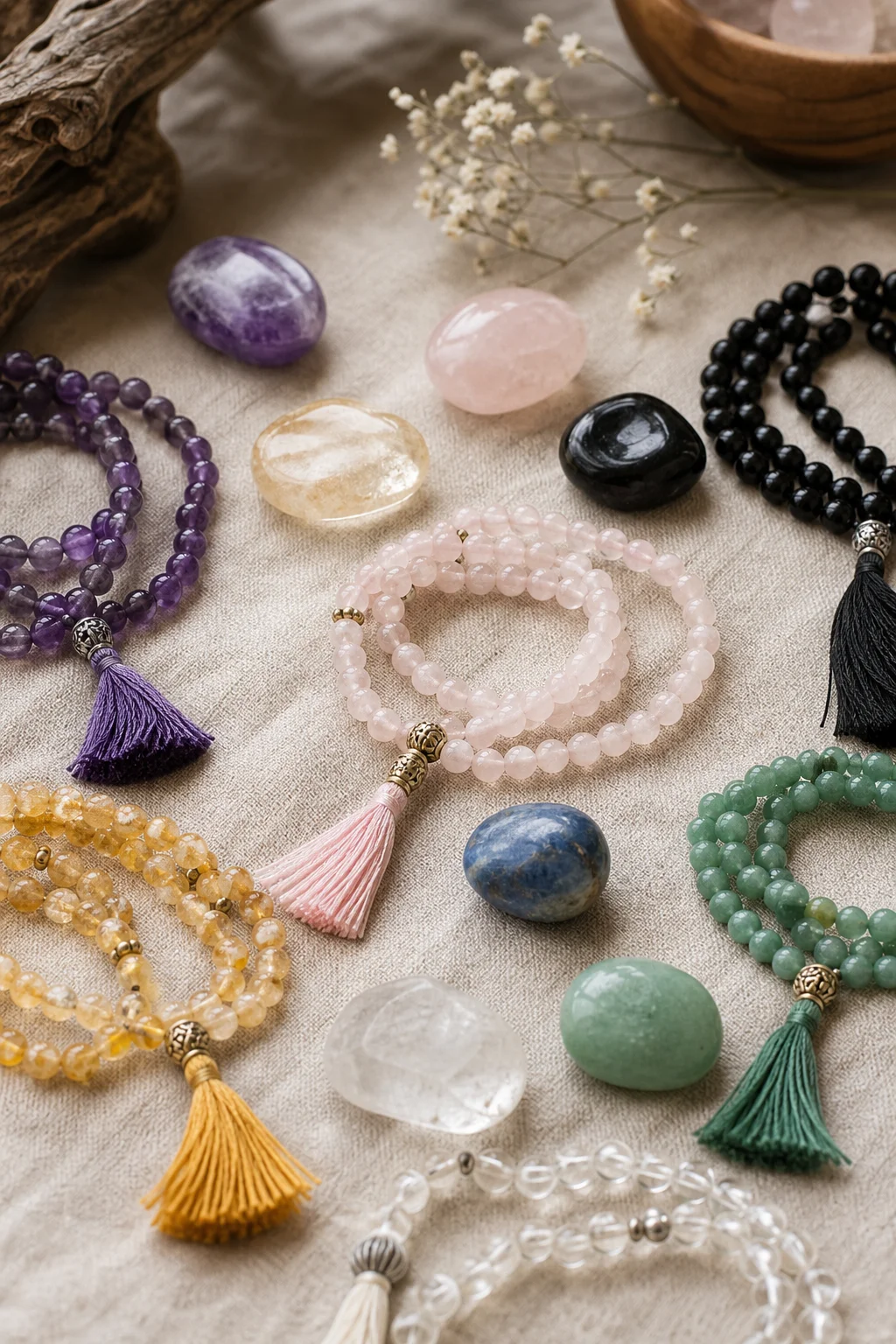
A rose quartz mala is a string of 108 beads made from rose quartz, traditionally used in meditation and prayer practices. While malas can be made from many materials — wood, seeds, various gemstones, bone, metal — rose quartz occupies a special place in mala traditions because of its long-standing association with love, compassion, and emotional well-being.
The number 108 is significant across multiple spiritual traditions. In Hinduism and Buddhism, 108 is considered a sacred number representing the wholeness of existence. Reciting a mantra 108 times is believed to complete one full cycle of spiritual practice. In meditation, 108 repetitions typically take about 15 minutes when performed at a measured pace, which is long enough to settle the mind but short enough to fit into a daily routine.
What sets a rose quartz mala apart from other varieties is the cumulative energetic effect of 108 rose quartz beads in sequence. In crystal traditions, rose quartz is associated with the heart chakra (anahata), unconditional love, self-acceptance, and emotional healing. A single rose quartz bead carries these associations, and a full mala of 108 beads is traditionally believed to amplify and sustain that energy throughout an entire meditation session, creating a focused, heart-centered practice that a few beads cannot achieve.
The History of Rose Quartz in Spiritual Traditions
Rose quartz has been used in ritual and decorative contexts for thousands of years. Ancient Egyptians associated rose quartz with Isis, the goddess of love and healing, and used the stone in facial masks and beauty rituals. Greek and Roman cultures linked rose quartz to Aphrodite and Venus respectively. In Eastern traditions, rose quartz has been carved into talismans and prayer beads for centuries, particularly in regions where the mineral is naturally abundant.
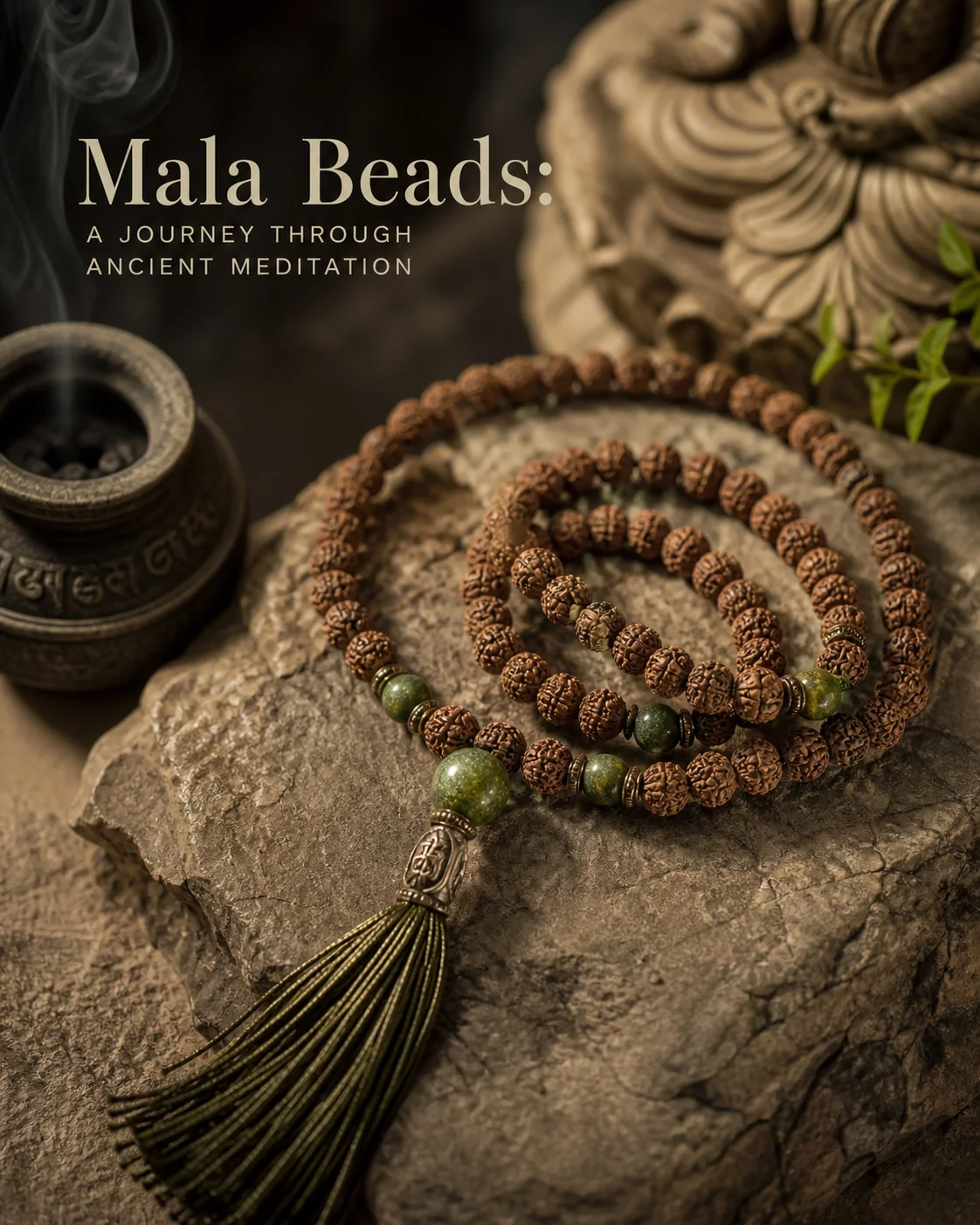
The combination of rose quartz with the mala format is a natural fusion of crystal tradition with Buddhist and Hindu meditation practices. While wood malas (sandalwood, rosewood, rudraksha) have the longest history in these traditions, gemstone malas became popular as the properties of different minerals became more widely known and as the exchange between crystal healing traditions and meditation practices deepened.
Today, rose quartz malas are among the most popular gemstone mala varieties, used by practitioners of all experience levels and spiritual backgrounds. The stone's soft pink color and smooth texture make it tactile and calming to handle during meditation, and its relative affordability compared to stones like lapis lazuli or ruby makes it accessible for most budgets.
Choosing Your Rose Quartz Mala: What to Look For
Quality varies significantly in rose quartz malas, and several factors affect both the visual appeal and the tactile experience of the beads:
Bead size: The most common sizes for mala beads are 6mm, 8mm, and 10mm. A 108-bead mala in 8mm beads produces a necklace roughly 36-40 inches in circumference, long enough to wrap twice around most wrists or hang comfortably below the chest. 6mm beads produce a more delicate, lighter mala that is less obtrusive for daily wear. 10mm beads create a chunkier, more substantial piece that may be preferred for meditation-only use.
Color intensity: Rose quartz ranges from very pale, almost translucent pink to a deeper, more opaque peach-pink. Neither extreme is inherently better — personal preference dictates the choice. Very pale stones transmit more light and have an ethereal quality, while deeper-colored stones feel more grounded and substantial. The most sought-after shade is a medium, even pink without cloudy white patches.
Translucency and clarity: Higher-quality rose quartz is semi-translucent with an even color throughout each bead. Avoid beads with visible cracks, chips, or large cloudy inclusions, as these weak points may cause the bead to break under the tension of the mala string over time.
Stringing and knotting: A properly made mala should have a knot between each bead. This knotting serves two purposes: it prevents beads from scattering if the string breaks (important during meditation — you do not want 108 beads cascading across the floor), and it creates a consistent spacing that makes it easier to count during Japa practice. Silk or cotton cord is traditional; nylon is more durable but less traditional.
Guru bead: Every traditional mala has a "guru bead" — a larger bead or tassel that marks the end point of the 108 count. The guru bead is not counted in the 108 repetitions; instead, you stop when you reach it, reverse direction, and continue. On a rose quartz mala, the guru bead is often a larger rose quartz bead or a complementary stone like clear quartz.
Heart Chakra Meditation with Rose Quartz Mala
The most common meditation practice with a rose quartz mala is heart-centered Japa meditation. Here is a step-by-step guide for beginners:
Find a quiet, comfortable seated position. Hold the mala in your right hand, draped over your middle finger. Use your thumb to move the beads one at a time, pulling each bead toward you. Close your eyes and take five slow breaths to settle.
Begin reciting your chosen mantra or affirmation with each bead. Common choices for rose quartz malas include: "I am worthy of love," "May I be filled with loving-kindness," "I open my heart to compassion," or a traditional Sanskrit mantra like "Om Mani Padme Hum." The specific words matter less than the sincerity and consistency of repetition.
With each bead you pass, inhale the mantra and exhale any tension or emotional resistance you feel. Move through the beads slowly — rushing defeats the purpose. A pace of roughly 6-8 seconds per bead will bring you through the full 108 in about 15 minutes. When you reach the guru bead, pause. Do not cross over it. Sit quietly for a few breaths before ending the session.
This daily practice builds a strong association between the physical act of moving the mala beads and the mental state of heart-centered awareness. Over time, simply holding the mala begins to trigger that mental state even before you start counting — a form of classical conditioning that supports your meditation practice.
Self-Love Practices: The Core of Rose Quartz Mala Work
While rose quartz is often associated with romantic love or love for others, the deepest traditional use of this stone in meditation practice is directed inward — toward self-love, self-acceptance, and self-compassion. The heart chakra is not about receiving love from external sources; it is about cultivating the capacity to love unconditionally, beginning with yourself.
A powerful self-love Japa practice involves using specific affirmations at different stages of the 108-count. During the first 36 beads, focus on self-acceptance: "I accept myself as I am in this moment." During the next 36 beads, focus on self-compassion: "I treat myself with the kindness I would offer a dear friend." During the final 36 beads, focus on self-love: "I am worthy of deep, unconditional love." This three-phase structure transforms a simple repetition into a progressive emotional practice.
Many practitioners find that this self-love work is the most challenging and also the most transformative aspect of rose quartz mala meditation. It requires sitting with uncomfortable feelings, acknowledging self-criticism, and consciously redirecting attention toward acceptance — a process that is emotionally demanding but deeply rewarding.
Rose Quartz Mala vs. Rose Quartz Bracelet: Energy Differences
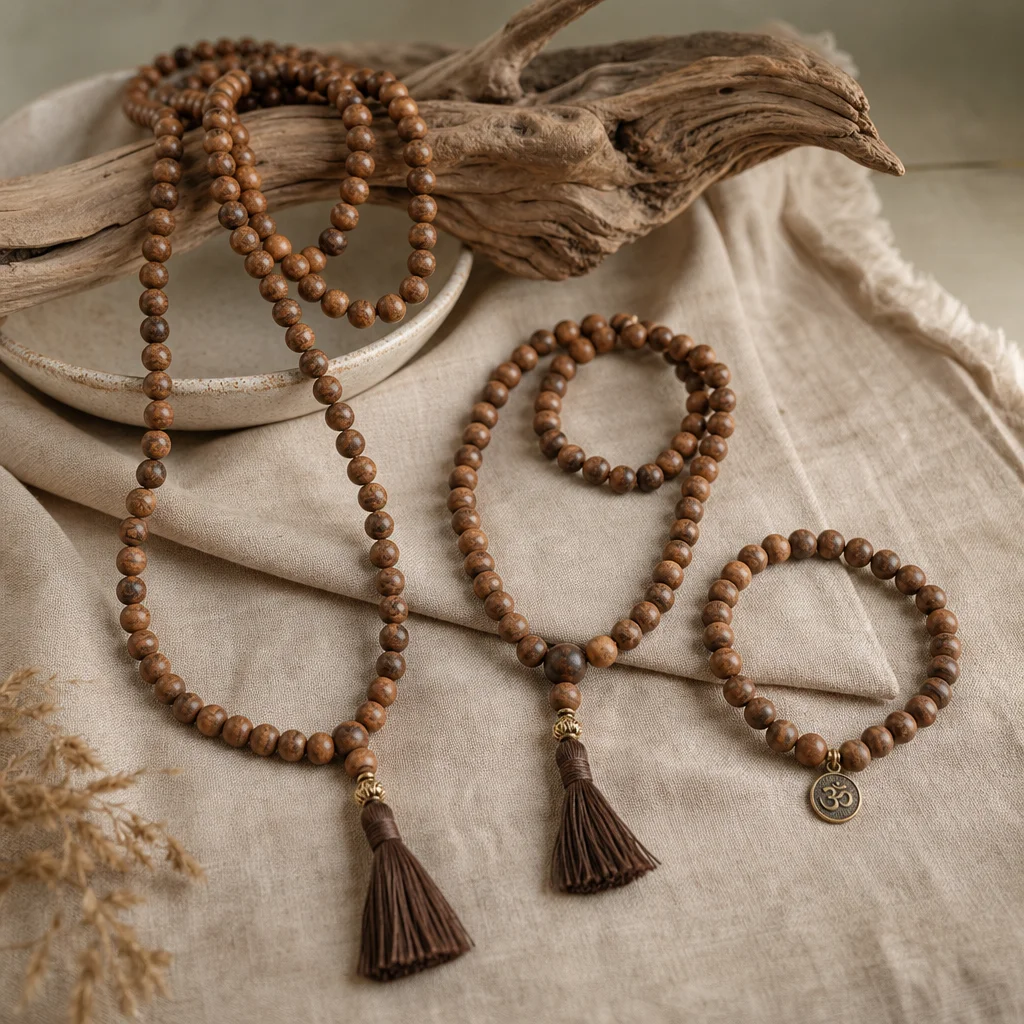
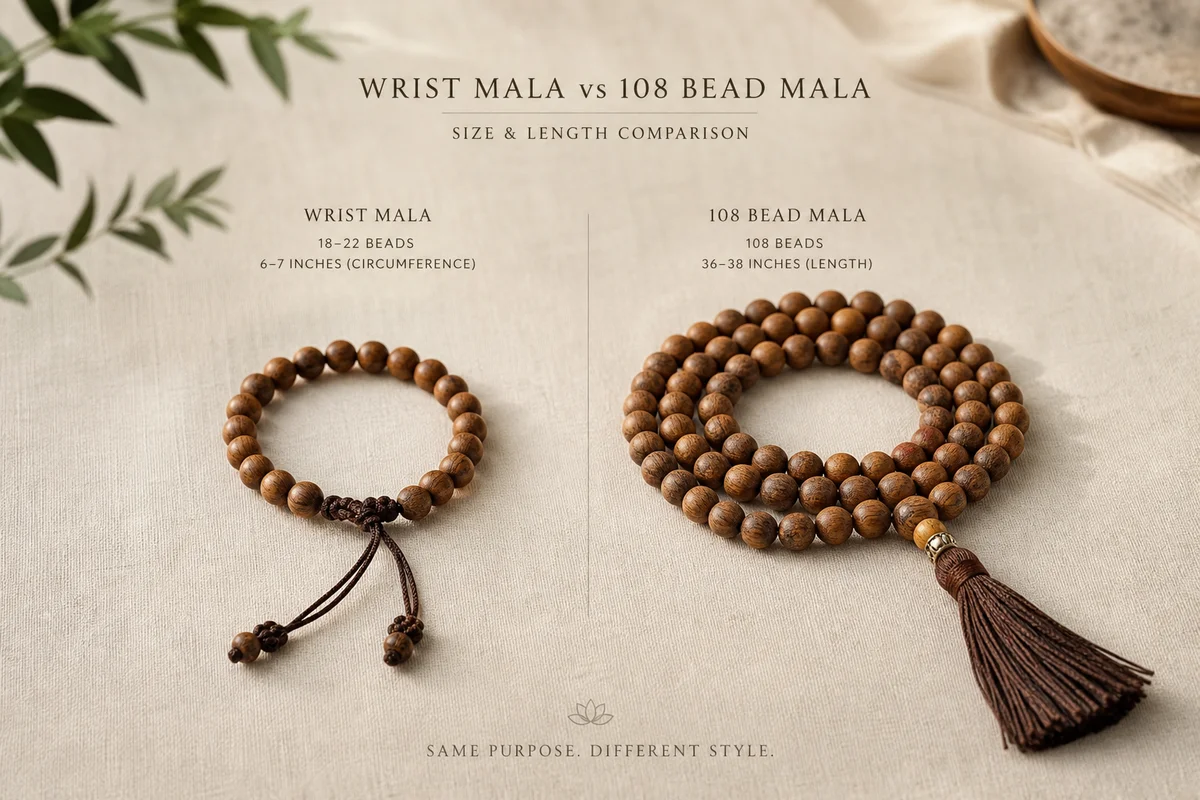
Some people wonder whether a rose quartz bracelet serves the same purpose as a full mala. In practical terms, a wrist mala (typically 16-27 beads) can be used for shorter meditation sessions, but the 108-bead format offers a qualitatively different experience for several reasons.
The full 108-bead count creates a sustained meditation session of 12-18 minutes, which is long enough for most people to move past the initial restlessness of the mind and enter a calmer, more focused state. Shorter counts with a wrist mala may not provide enough time to reach that threshold. Additionally, the cumulative presence of 108 rose quartz beads creates a denser, more continuous field of the soft pink stone in your hands, which many practitioners report feeling as a distinctly different tactile and visual experience compared to 20 beads on a wrist.
That said, a rose quartz wrist mala is not useless. It is an excellent tool for brief centering moments throughout the day — a few minutes during a lunch break, a brief pause before a meeting, a few breaths before sleep. Many practitioners use both: a full 108-bead mala for dedicated morning or evening meditation, and a wrist mala for portable, on-the-go practice.
Caring for Your Rose Quartz Mala
Rose quartz is relatively durable (Mohs hardness 7), but malas receive a lot of handling over months and years of daily use. A few maintenance habits will extend the life of your mala significantly:
Avoid exposing your rose quartz mala to prolonged direct sunlight — the stone can fade over time under UV exposure. Keep it in a soft cloth pouch when not in use, protected from harder objects that could scratch or chip the beads. If the cord stretches over time (which is normal after months of daily use), have it restrung by a jeweler or mala maker before individual beads are loose enough to slip off. Clean the beads periodically with a soft, slightly damp cloth — avoid soap and chemicals that can leave residue in the pores of the stone or degrade the cord.
If your rose quartz mala breaks — and this does eventually happen with daily use — the traditional interpretation in mala practice is that the mala has absorbed a significant amount of difficult energy and "broke on purpose" to protect you. Whether or not you hold this belief, a broken mala is an opportunity to have it restrung, perhaps with a new intention, starting a fresh chapter in your practice.
Frequently Asked Questions
What is the significance of using Rose Quartz in meditation?
Rose Quartz is known for its ability to open and heal the heart chakra, promoting love, empathy, and compassion. It is commonly used in meditation to enhance self-love and connect with others on a deeper, more empathetic level.
Can a Rose Quartz Mala Bead help with anxiety?
Yes, Rose Quartz is believed to help alleviate anxiety by promoting feelings of calm and tranquility. It is often used in meditation and as a personal talisman to reduce stress and encourage a sense of inner peace.
Is there a difference in the size of Rose Quartz Mala Beads compared to regular beads?
Yes, Rose Quartz Mala Beads are typically slightly larger than standard gemstone beads to accommodate the structure of the Mala, which includes tassels and stringing materials. This size difference adds to the unique, handcrafted look of a Mala Bead.
Are Rose Quartz Mala Beads suitable for people with sensitive skin?
Yes, Rose Quartz Mala Beads are generally safe for most skin types. They are a natural material and do not contain harsh chemicals or irritants. However, if you have sensitive skin, it's always a good idea to perform a patch test with a small area of skin before wearing a Mala Bead continuously.
How can I tell if my Rose Quartz Mala Beads are genuine?
True Rose Quartz has a distinct, warm pink color and often exhibits a cloudy or milky appearance. Genuine Rose Quartz will also feel smooth to the touch and may have inclusions, which are natural marks that can be indicative of its authenticity. It's also important to ensure that the product is from a reputable source that specializes in artisan handcrafted natural crystal jewelry.
Comments