Mala Beads for Better Sleep
May 31, 2026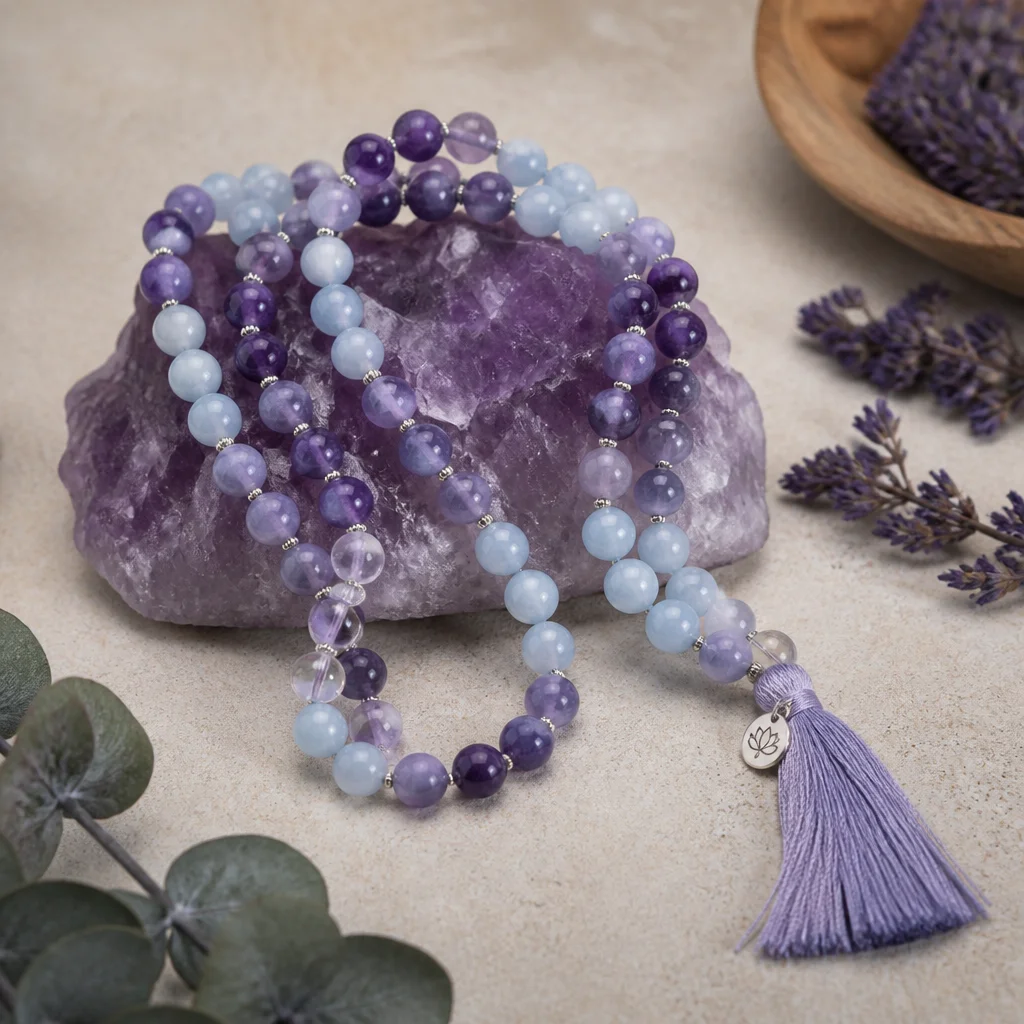
Why a Mala Works Better Than Counting Sheep
The connection between repetitive counting and sleep induction isn't mystical—it's neurological. When you engage in a simple, repetitive motor task (counting beads, reciting a mantra, breathing rhythmically), you activate the parasympathetic nervous system—the "rest and digest" division that counteracts the stress-driven sympathetic nervous system. Heart rate slows, cortisol drops, and brainwave patterns shift from active beta waves toward calmer alpha and theta waves.
A 108-bead mala provides a structured, tangible focal point for this process. Unlike sheep (abstract, mentally constructed), mala beads are physical—you feel them under your fingertips, you hear the subtle click of each bead, and you have a defined endpoint (108 repetitions) that gives your mind a sense of completion and closure. This sensory engagement makes the practice significantly more effective than purely mental counting.
The specific stones used in the mala add another layer. While scientific evidence for crystal-induced sleep is limited, the color, weight, and tactile quality of different gemstones create different sensory experiences that can support or hinder relaxation. A heavy, cool amethyst bead feels different from a warm, light sandalwood bead, and your body responds to these subtle sensory differences.
Best Stone Choices for Sleep Malas
Amethyst — The Classic Sleep Stone
Amethyst is the most commonly recommended stone for sleep-related crystal use, and it's been associated with calm and rest for centuries across multiple cultural traditions. From a practical standpoint, amethyst's cool purple color has a psychologically calming effect, and its smooth, cool surface temperature feels grounding when held during a pre-sleep meditation.
For mala beads specifically, amethyst 6mm or 8mm rounds are widely available and affordable. The 6mm size produces a lighter, more comfortable mala for bedtime use—108 beads of 8mm amethyst can feel surprisingly heavy around the neck or wrist during prolonged meditation. If weight is a concern (and it should be for sleep comfort), go with 6mm beads.
One practical consideration: amethyst can be slightly translucent, and when polished to a high gloss, it can catch ambient light (from a nightlight or electronics) in ways that might be distracting in a dark bedroom. A matte or satin finish amethyst bead is less likely to create this visual distraction.
Lepidolite — The Lithium Connection
Lepidolite is a lithium-bearing mica mineral that's gained significant popularity in the sleep and anxiety crystal community. As mentioned in our empaths guide, lepidolite contains the same lithium compounds used in psychiatric mood-stabilizing medication—not in a quantity that would have pharmacological effects through skin contact, but the association has made it a go-to stone for calming practices.
For mala beads, lepidolite presents a practical challenge: it's soft (Mohs 2.5–3) and naturally forms in thin, sheet-like layers. This makes lepidolite beads more fragile than quartz-based alternatives. A lepidolite mala needs careful handling—the beads can chip or flake if knocked against hard surfaces, and the stringing thread needs to be checked regularly for wear at the drill holes.
If you choose lepidolite, look for stabilized or resin-coated beads, which are more durable for daily mala use. The lilac-purple color is beautiful and inherently calming, and the stone's lightweight (it's less dense than amethyst) makes for a comfortable sleep mala.
Howlite — The Anti-Overthinking Stone
Howlite is a calcium borosilicate mineral that forms in nodular masses with distinctive gray veining against a white background. It's inexpensive, widely available as 6mm and 8mm beads, and has a hardness of 3.5—soft enough to be gentle on skin but hard enough for bead durability with reasonable care.
In crystal healing traditions, howlite is associated with calming an overactive mind, reducing insomnia caused by racing thoughts, and promoting patience. Whether or not you subscribe to crystal energy concepts, the visual effect of howlite—soft white with gray webbing—is calming, and the stone's light weight makes it one of the most comfortable mala materials for bedtime use.
For sleep malas, howlite is arguably the best practical choice for beginners: it's affordable (a full 108-bead howlite mala costs $15–$25), lightweight, visually calming, and durable enough for nightly use with basic care.
Moonstone — The Lunar Connection
Moonstone is a feldspar mineral famous for its adularescence—a billowy, floating light effect that moves across the stone's surface as it's tilted. The association with the moon and lunar cycles makes moonstone a natural choice for sleep-related crystal practice—many traditions link moon energy with rest, dreams, and the unconscious mind.
Practically, moonstone beads have a smooth, slightly warm surface that feels pleasant in the hand. The adularescence effect is subtle in small beads but still visible, providing a gentle visual element for nighttime meditation. White/blue moonstone (the most common variety) is associated with calming energy, while rainbow moonstone (with its multi-colored flashes) can be more visually stimulating—stick with white/blue for sleep purposes.
Moonstone has a Mohs hardness of 6–6.5, making it more durable than lepidolite or howlite. It's water-safe for cleaning and holds up well to regular handling. The main drawback is price—quality moonstone beads are 2–3x more expensive than amethyst or howlite equivalents.
The Bedtime Japa Practice: How to Actually Do It
Having the right mala is only half the equation. How you use it determines whether the practice actually helps you sleep or just becomes another frustrating routine. Here's a method that's been refined through extensive trial and error:
Timing: Begin 20–30 minutes before your target sleep time. Not 5 minutes (too rushed) and not 2 hours (too early, the effect dissipates). 20–30 minutes gives you enough time for one complete round of 108 repetitions at a relaxed pace.
Posture: Sit in bed with your back against the headboard or a wall, or lie down on your back with the mala held in both hands at chest level. Sitting slightly upright is better than lying flat because it prevents dozing off mid-practice and maintains conscious engagement with the beads.
The mantra: Choose a single word or short phrase that evokes calm for you personally. Common choices include "peace," "let go," "I release," "rest," or a traditional Sanskrit mantra like "Om Shanti" (peace). The word itself matters less than the repetition. What matters is that the word feels calming and authentic to you, not imposed by someone else's tradition.
The counting: Hold the mala in your right hand (traditional in Hindu practice; left hand is also fine if more comfortable). Use your thumb to pull each bead toward you, one at a time, while silently reciting your mantra. At the 108th bead (the larger "guru bead"), stop. Don't cross over the guru bead—simply pause, take three deep breaths, and set the mala aside.
Speed: One bead per 3–4 seconds. This produces a complete round in approximately 6–8 minutes. Faster counting defeats the purpose—you're not trying to "get through" the mala, you're using each bead as a micro-meditation. If you finish in under 5 minutes, you're rushing.
What happens after: Set the mala on your nightstand (not under your pillow—bracelets and necklaces can present tangling/strangulation hazards during sleep, even if the risk is small). Lie down and allow yourself to drift off. The parasympathetic activation from the japa practice creates a physiological window of calm that typically lasts 15–30 minutes—plenty of time to fall asleep.
Full 108 vs. Simplified 21-Bead Practice
A traditional mala has 108 beads, and completing a full round takes 6–8 minutes at meditative pace. For beginners or people who find even that commitment daunting on a tired night, a simplified practice uses 21 beads (roughly 1/5 of the mala). Start at any bead, count 21 repetitions, and stop. This takes about 1–2 minutes and still provides the parasympathetic activation effect.
21 is chosen because it's a sacred number in multiple traditions (3 × 7) and provides enough repetitions to shift brainwave patterns without requiring sustained attention. On nights when you're exhausted and a full 108 feels overwhelming, 21 is a practical compromise that keeps the practice consistent rather than all-or-nothing.
Weight and Comfort: Practical Considerations
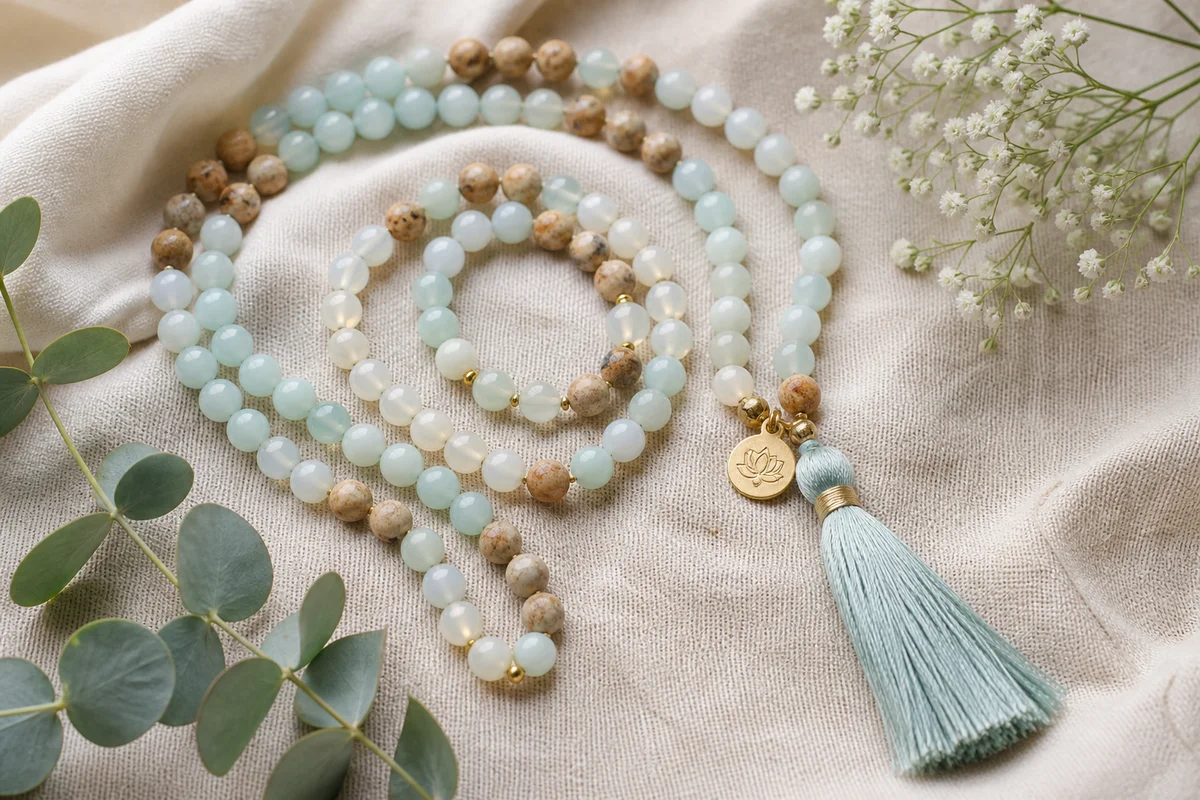
A full mala necklace weighs 30–80 grams depending on the bead material and size. That's roughly the weight of a small apple hanging around your neck. For sleep purposes, lighter is better—heavier malas can create a subtle pressure sensation that's more distracting than calming for some people.
Bead size directly affects weight and comfort:
- 6mm beads: Lightest option. Full 108-bead mala weighs 20–35g. Most comfortable for sleep and bedtime use.
- 8mm beads: Standard size. Full mala weighs 40–70g. Fine for occasional sleep use but can feel heavy on the neck during prolonged meditation.
- 10mm beads: Heavy. Full mala weighs 70–120g. Not recommended for sleep practice—too weighty and bulky.
If you prefer a wrist mala (usually 21 or 27 beads), the weight is negligible regardless of bead size. Wrist malas can be worn during sleep (unless the elastic cord is worn and risks breaking) and provide a tactile anchor if you wake during the night.
Frequently Asked Questions
Can I wear my mala while sleeping?
Technically yes, but consider two things: comfort (any necklace can feel restrictive during sleep) and safety (if the string breaks in your sleep, beads scatter and could be a choking hazard for children or pets). For safety and comfort, place the mala on your nightstand after your japa practice rather than sleeping in it.
Does the guru bead position matter?
In traditional practice, the guru bead (the larger bead or tassel) marks the start and end of your 108 repetitions. You begin next to the guru bead, count away from it, and stop when you reach it again—never crossing over it. This creates a "circuit" of 108 beads with a defined beginning and end, which provides psychological closure to the practice.
What if I lose count?
That's actually fine—and common. Losing count means your mind has drifted, which is a normal part of meditation. Simply pick up where you think you left off, or start over if you've completely lost track. The goal isn't perfect counting; it's the repetitive practice itself. Over time, the counting becomes more automatic.
Frequently Asked Questions
What are the best crystals to use in a sleep mala?
When choosing a sleep mala, we recommend soothing natural stones like Amethyst, Howlite, or Lepidolite. Amethyst is widely cherished for calming an overactive mind, while Howlite and Lepidolite are known for easing insomnia and promoting deep, restorative rest. Our handcrafted designs combine these gentle gemstones to help quiet nighttime anxiety.
Should I use a heavy or light mala for bedtime meditation?
For sleep meditation, a lighter mala is often preferred so it doesn't cause wrist strain if you drift off wearing it. However, a slightly heavier natural stone can provide a grounding, comforting "weighted blanket" effect in your hands during your practice. We design our artisan malas to strike the perfect balance between physical ease and comforting weight.
Comments