Mala Beads for Anxiety: Best Stones & How to U..
June 2, 2026
Understanding Mala Beads and Meditation
Mala beads have served as meditation tools for centuries across Buddhist, Hindu, and yogic traditions. A standard mala contains 108 beads strung in a loop with one guru bead (the larger bead marking the start and end point). By running your fingers across each bead while reciting a mantra or focusing on your breath, you create a tactile anchor that helps quiet an anxious, racing mind.
The practice works on a simple principle: your hands stay occupied with the beads, your mouth or mind stays occupied with the mantra, and this physical-mental engagement interrupts the spiral of anxious thoughts. It's not magic — it's a structured focus technique that's been refined over thousands of years of contemplative practice.
In modern terms, mala bead meditation combines several anxiety-reduction strategies: rhythmic repetitive movement (similar to a worry stone or fidget tool), breath awareness (a core component of most anxiety management approaches), and focused attention (a mindfulness technique proven to reduce rumination). The beads simply provide the structure that makes these techniques accessible to beginners.
Best Crystal Combinations for Anxiety Mala Beads
While the meditative practice itself does the heavy lifting, choosing stones with visual and tactile qualities that feel calming to you can enhance the experience. Here are the combinations that practitioners commonly recommend:
The Calming Trio: Amethyst, Lapis Lazuli, and Howlite
This is probably the most popular anxiety-focused mala combination, and for good reason. Amethyst brings a cool purple calm to the visual experience. Lapis lazuli adds depth with its golden pyrite flecks catching light as you move through the beads. Howlite provides the tactile element — its soft gray-white surface with subtle veining is pleasant to touch repeatedly.
For a 108-bead mala, a typical arrangement uses 36 beads of each stone, alternating in groups of 3 or 6. The guru bead is often a larger amethyst or lapis piece. This even distribution creates visual rhythm as you progress through the meditation cycle.
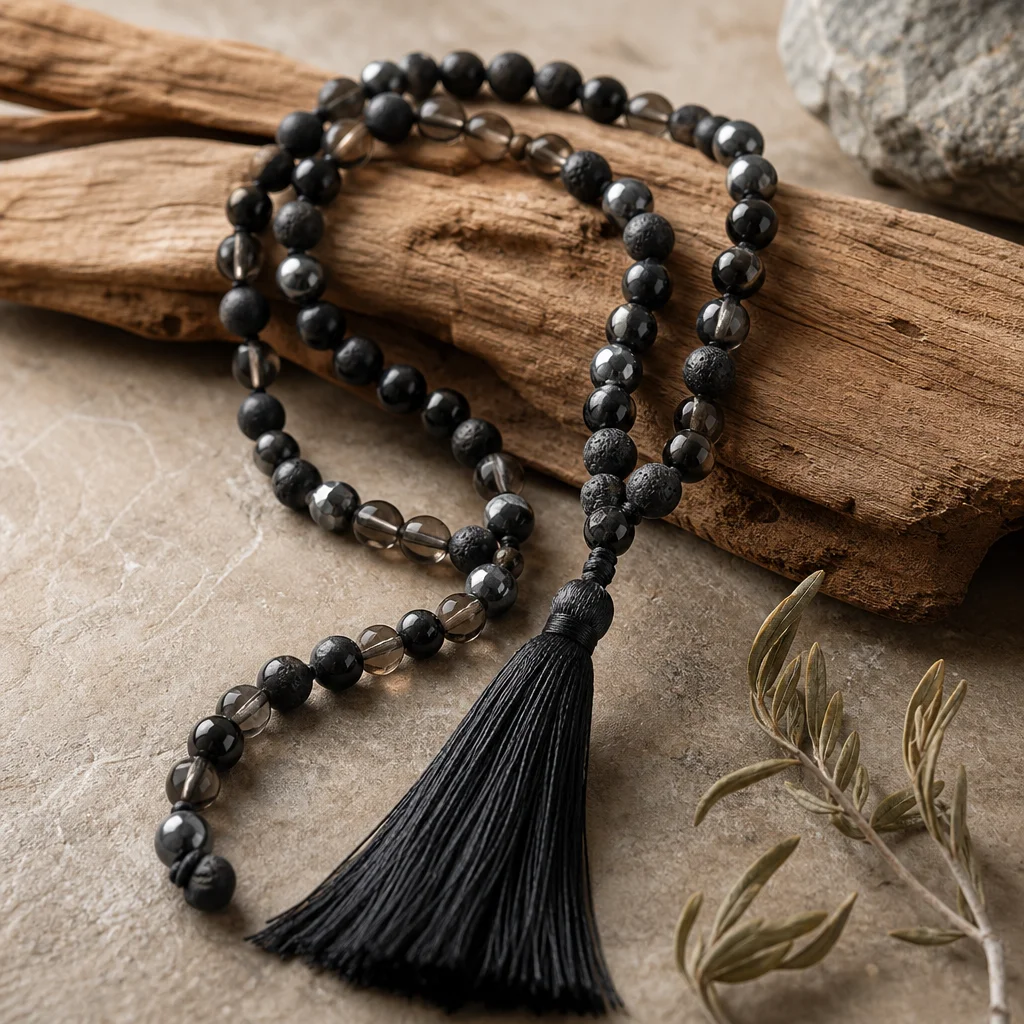
The Grounding Pair: Black Tourmaline and Smoky Quartz
People who experience anxiety as scattered, unfocused energy — rather than as worry or dread — often prefer this combination. Black tourmaline is dense and heavy, giving each bead a satisfying weight in your hand. Smoky quartz has a translucent warmth that grounds the visual experience.
This combination is especially popular for anxiety that comes with physical symptoms: muscle tension, restless legs, or that buzzing feeling of too much energy in your body. The dark, grounding tones create a different meditative atmosphere than the lighter calming stones above.
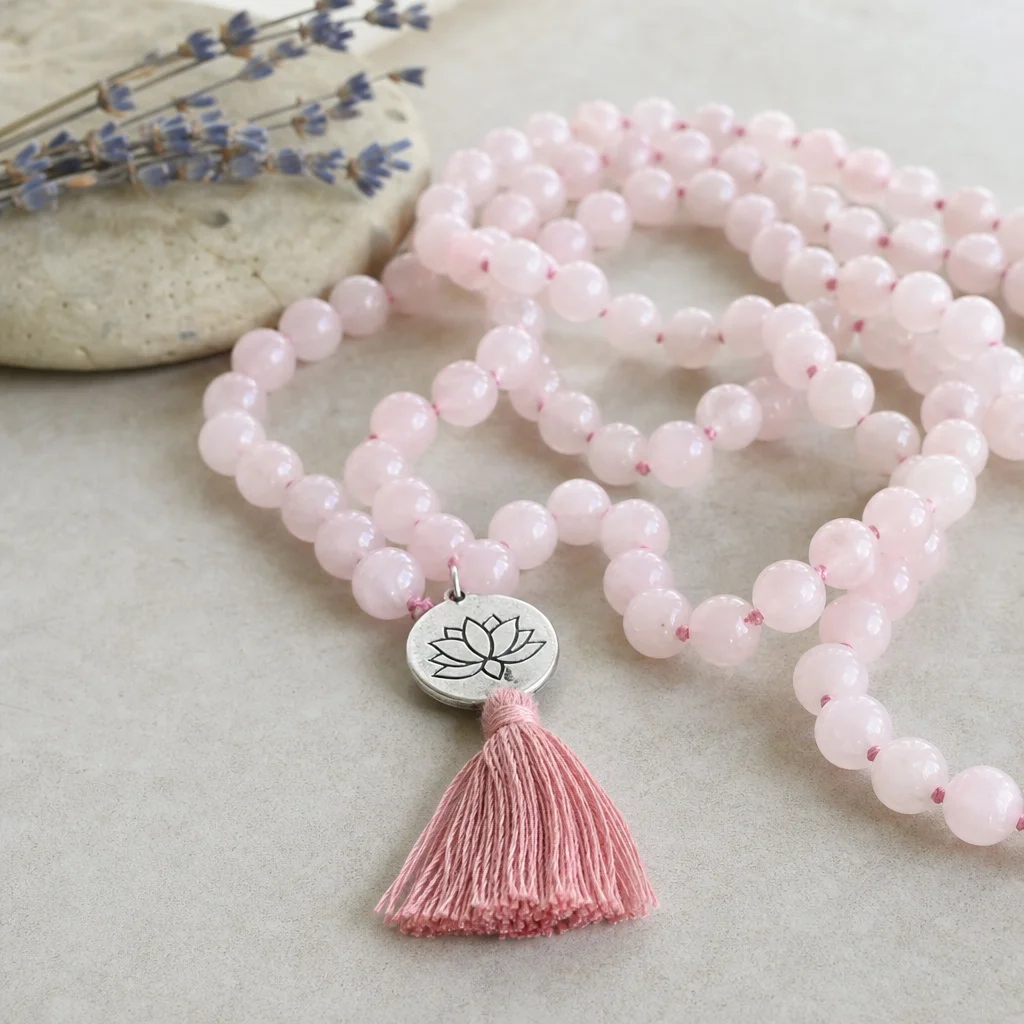
The Heart-Centered Approach: Rose Quartz and Aquamarine
If your anxiety centers around relationships, self-worth, or emotional vulnerability, rose quartz and aquamarine make a thoughtful combination. Rose quartz's warm pink tones create an immediate sense of softness. Aquamarine's cool blue-green adds a calming water-like quality to the visual experience.
For a shorter wrist mala (21 or 27 beads), this combination works especially well as an everyday wearable piece that also serves as a grounding tool during stressful moments throughout the day.
The Simplest Option: Single-Stone Amethyst Mala
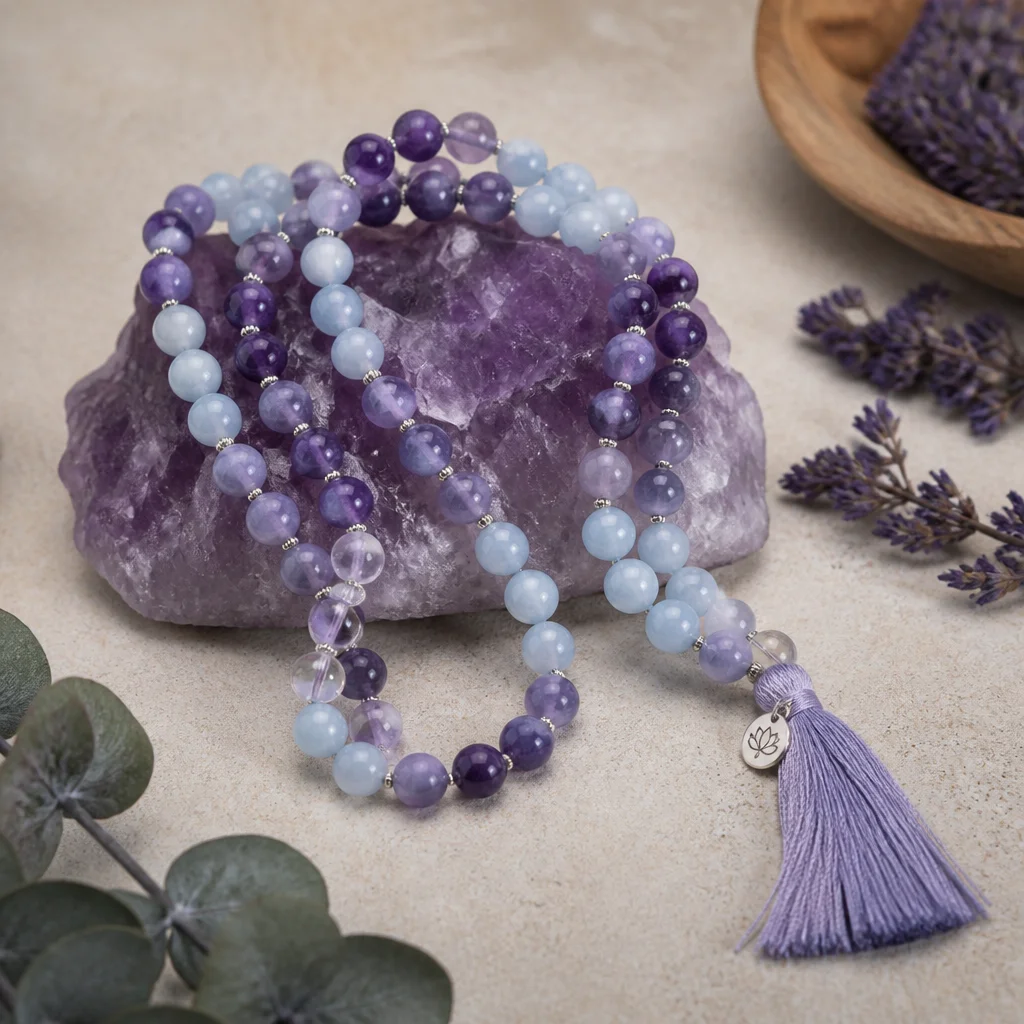
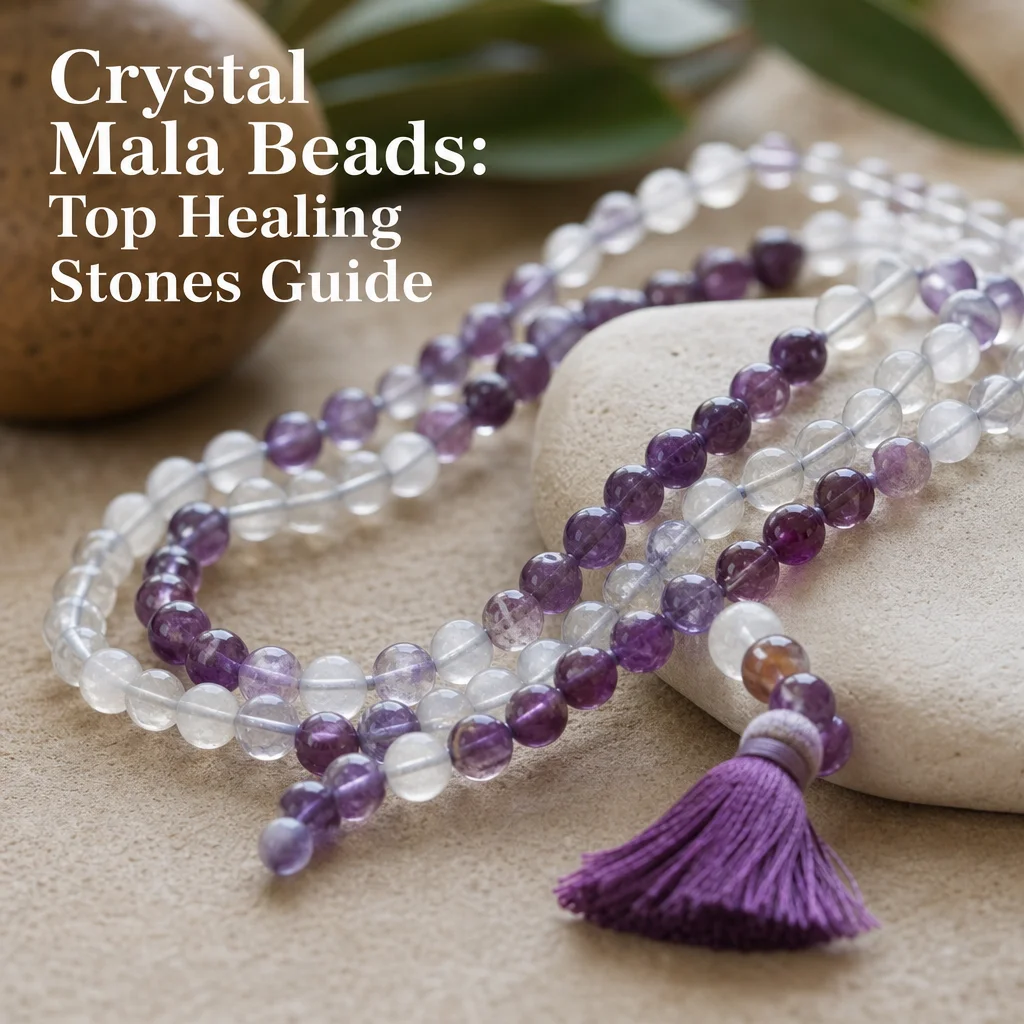
Don't overcomplicate it. A full mala of amethyst beads — all 108+1 the same stone — is perfectly effective. Amethyst has been associated with calm and clarity in crystal traditions across many cultures. The uniform color and texture of a single-stone mala creates a seamless, unbroken meditation experience that some people find easier to work with than alternating patterns.
Wrist Mala vs. Full Mala for Anxiety
The right choice depends on how and when you plan to use your mala:
Full 108-bead mala: Best for dedicated meditation sessions. The longer count means each round of bead-counting takes about 15–20 minutes at a moderate pace — long enough to settle into a meditative state, short enough to fit into most daily schedules. Use it seated, in the morning or evening.
21 or 27-bead wrist mala: Best for anxiety management throughout the day. You can wear it on your wrist and reach for it whenever you feel anxiety rising — in a meeting, during a commute, or while waiting in line. The shorter count means each round takes just 2–3 minutes, making it practical for quick calming exercises.
54-bead half mala: A compromise option. Works as a shorter meditation tool (7–10 minutes per round) that can also be worn as a necklace. Good for people who find 108 beads too long for daily practice but want more depth than a wrist mala provides.
Many anxiety practitioners end up owning both a full mala for structured practice and a wrist mala for on-the-go use. Starting with one and adding the other later is perfectly fine.
How to Use Your Anxiety Mala: A Step-by-Step Technique
Here's a simple but effective mala technique specifically designed for anxiety reduction. It takes 15 minutes with a full 108-bead mala, or 3 minutes with a 27-bead wrist mala:
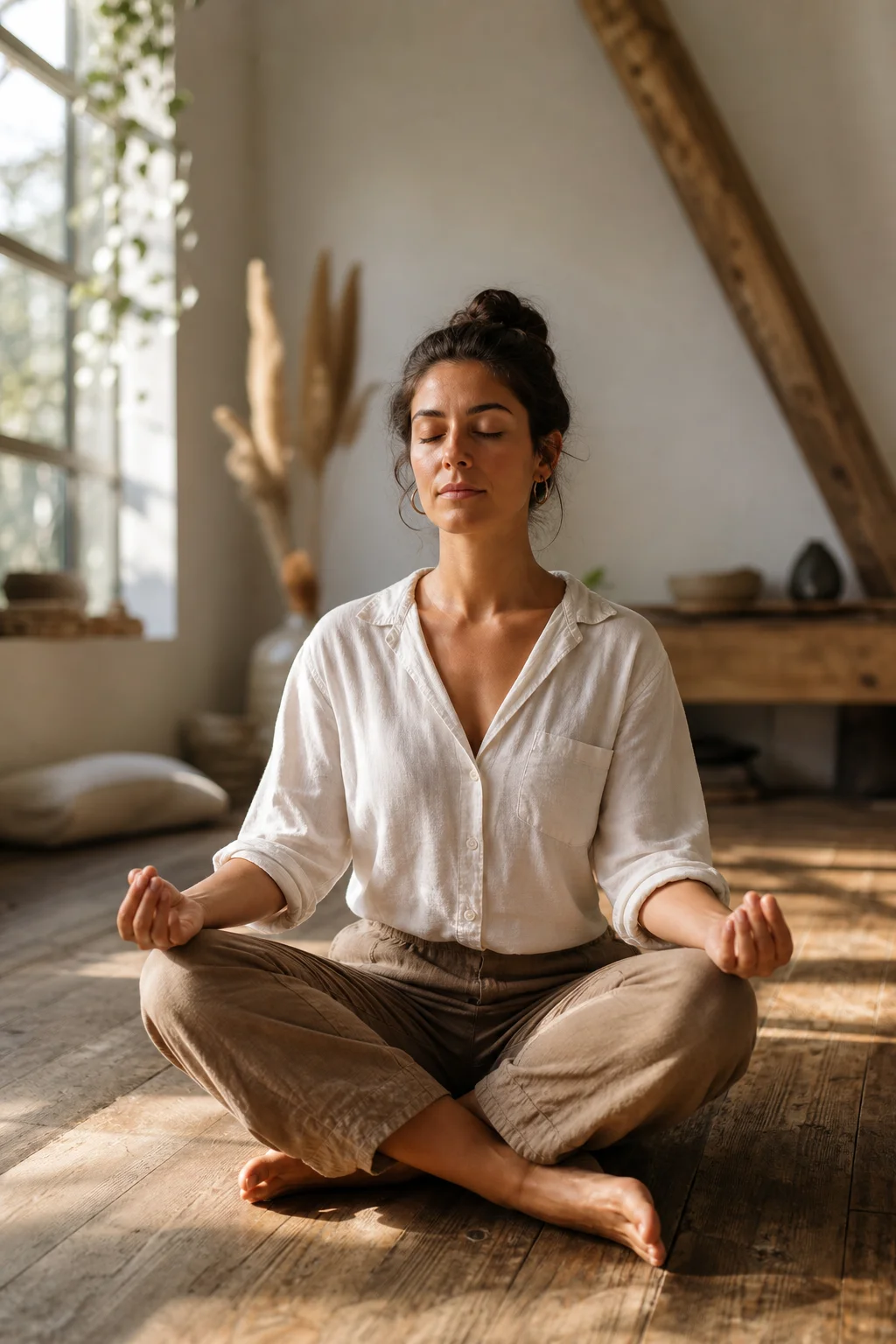
Step 1 — Find your position: Sit comfortably, back straight but not rigid. Hold the mala in your right hand (traditional in Hindu practice) or left hand (traditional in Buddhist practice — either works). Let the mala drape over your middle finger.
Step 2 — Settle in: Take five deep breaths before you start counting. Breathe in through your nose for a count of four, hold for two, out through your mouth for six. This activates your parasympathetic nervous system before the bead work begins.
Step 3 — Begin counting: Hold the guru bead between your thumb and middle finger. With each exhale, pull one bead toward you with your thumb. Use the mantra "So Hum" (inhale "So," exhale "Hum") or simply focus on the sensation of the bead passing under your thumb.
Step 4 — Stay present: When your mind wanders to anxious thoughts (it will — that's normal), notice the thought without judgment, gently return your attention to the bead in your fingers. This returning-to-focus is the actual practice, not a failure.
Step 5 — Complete the cycle: When you reach the guru bead again, pause for three breaths. Notice how you feel compared to when you started. Don't judge the difference — just observe.
Anxiety Mala for Specific Situations
Different anxiety triggers call for slightly different approaches:
Morning anxiety: Use a full 108-bead mala with the breathing technique above. Morning is ideal for a longer practice because it sets a calmer baseline for the day. Amethyst-based malas work well here — the cool purple tones feel refreshing rather than sedating.
Flight or travel anxiety: Wear a wrist mala and use it during takeoff and turbulence. The repetitive bead-counting gives your brain something concrete to focus on when the environment feels threatening. Keep the beads in your carry-on bag and start counting as soon as you sit down.
Social anxiety: Hold a wrist mala in your pocket during social situations. You don't need to complete full rounds — just running your thumb across a few beads while someone is talking gives you a grounding micro-meditation that nobody else notices. Howlite-based malas work particularly well for this because the light color doesn't draw attention.
Work/meeting anxiety: A wrist mala worn as a bracelet doubles as both a grounding tool and a normal-looking piece of jewelry. Practice a 27-bead round before an important meeting, then use individual beads during the meeting itself when needed.
Sleep anxiety: Run through a short 27-bead wrist mala while lying in bed. Use slower breathing than the daytime technique — in for four, out for eight. The combination of breathwork and bead-counting helps transition your mind from anxious rumination to physical relaxation. Amethyst and moonstone combinations are popular for sleep-focused practice.
DIY vs. Purchased Anxiety Mala
Both options have merit. Purchasing a ready-made mala ensures consistent bead size, proper knotting between beads (which prevents beads from scattering if the string breaks), and professional finishing. Prices for quality anxiety malas typically range from $25–80 for a wrist mala and $40–150 for a full mala.
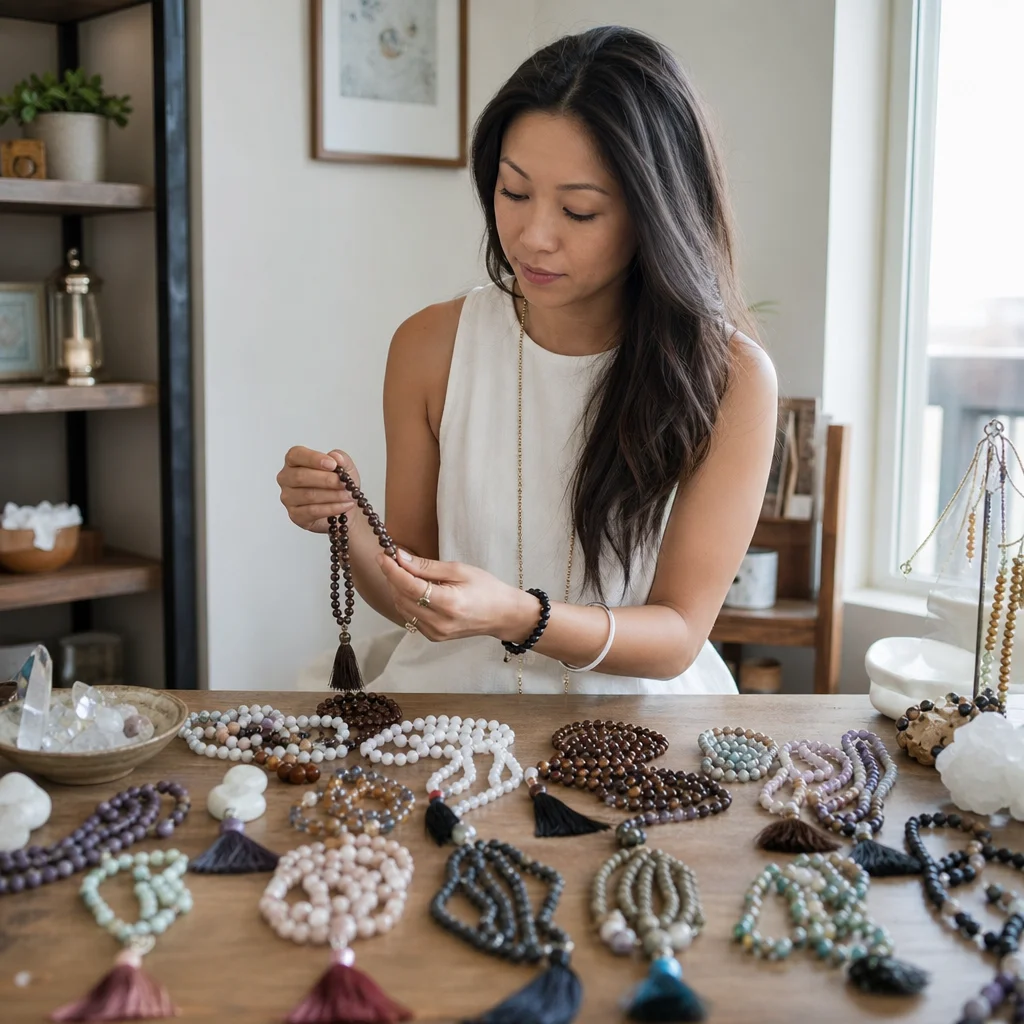
Making your own mala adds a layer of personal investment in the practice. The process of stringing 108 beads — choosing, arranging, knotting — is itself meditative. Many people find that malas they've made themselves feel more meaningful during practice. DIY also lets you customize the exact stone combination and bead size to your preferences.
If you're new to mala meditation, buy your first one to establish the practice, then consider making a second one once you know what you like. Premade malas from reputable sellers take the guesswork out of material quality and construction.
Frequently Asked Questions
Do mala beads actually help with anxiety?
The structured meditation practice that mala beads facilitate is supported by research on mindfulness and repetitive focus techniques. Studies on meditation, breath awareness, and rhythmic movement for anxiety reduction are well-established. Whether the specific stones in the mala provide additional benefit beyond the meditation practice itself hasn't been scientifically demonstrated. The practice is the primary mechanism; the stones are personal preference.
How long does it take to feel calmer using mala beads?
Most people notice a difference within the first few sessions of dedicated practice. Consistency matters more than duration — 15 minutes daily for two weeks typically produces more noticeable results than one 2-hour session. The anxiety-reduction effects are cumulative and strengthen over time with regular practice.
Which hand should I use?
Hindu tradition recommends the right hand (middle finger and thumb). Buddhist tradition commonly uses the left hand. In practice, use whichever hand feels natural and comfortable. There's no evidence that one hand works better than the other — the mechanism is focused attention, not hand-specific energy.
Can I wear my anxiety mala all day?
Yes, especially wrist malas designed for daily wear. Full 108-bead necklaces can also be worn but may be cumbersome for active lifestyles. The benefit of wearing a mala all day is having your grounding tool always accessible. Just be mindful of the durability — softer stones like howlite can scratch, and the string will eventually wear from daily wear.
What if I lose count?
It doesn't matter. The purpose isn't to reach exactly 108. If you lose your place, simply start again from the nearest bead or continue from where you think you were. The practice is about maintaining focus, not achieving a number. Over time, you'll naturally develop a rhythm where losing count becomes rare.
Crystals and mala bead meditation are complementary practices, not substitutes for professional mental health treatment. If you're experiencing persistent or severe anxiety, please consult a qualified mental health professional.
Comments