Crystal Mala Beads: Top Healing Stones Guide
May 28, 2026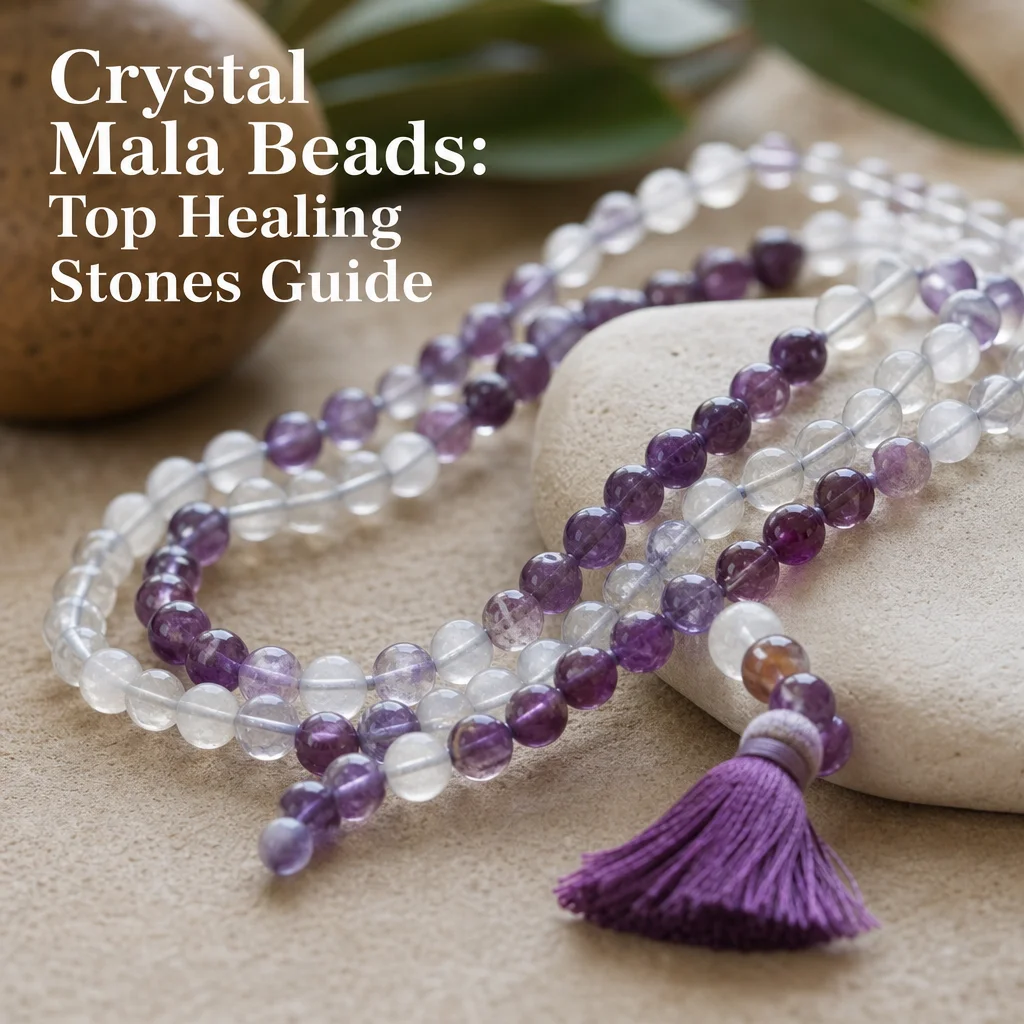
Why Choose a Crystal Mala Over Wood or Seed
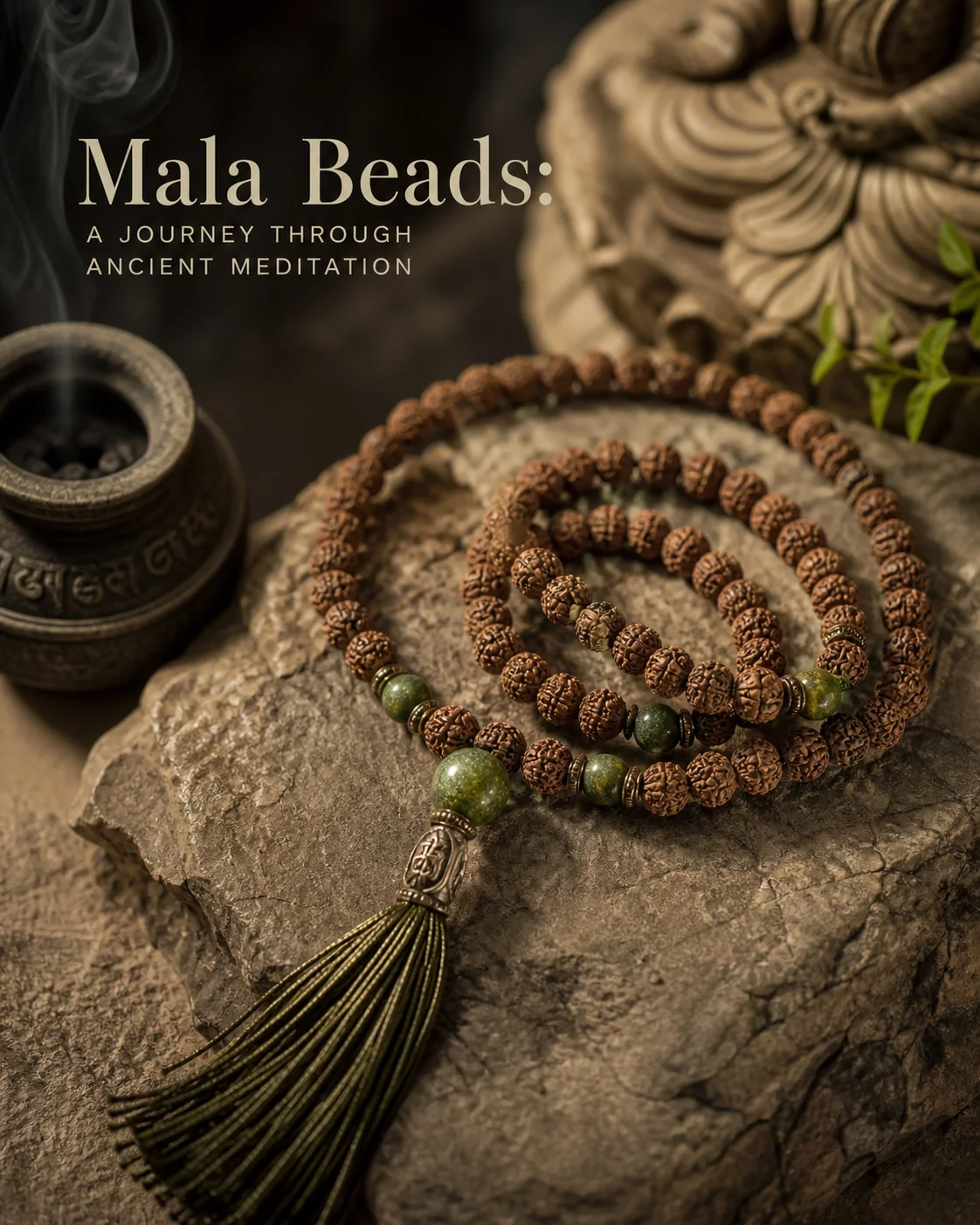
Traditional malas are made from materials like sandalwood, tulsi (holy basil), rudraksha seeds, or lotus seeds. These materials have been used for thousands of years, and they're excellent choices. But crystal malas offer something different: each stone brings its own established historical associations and energetic qualities to your meditation practice.
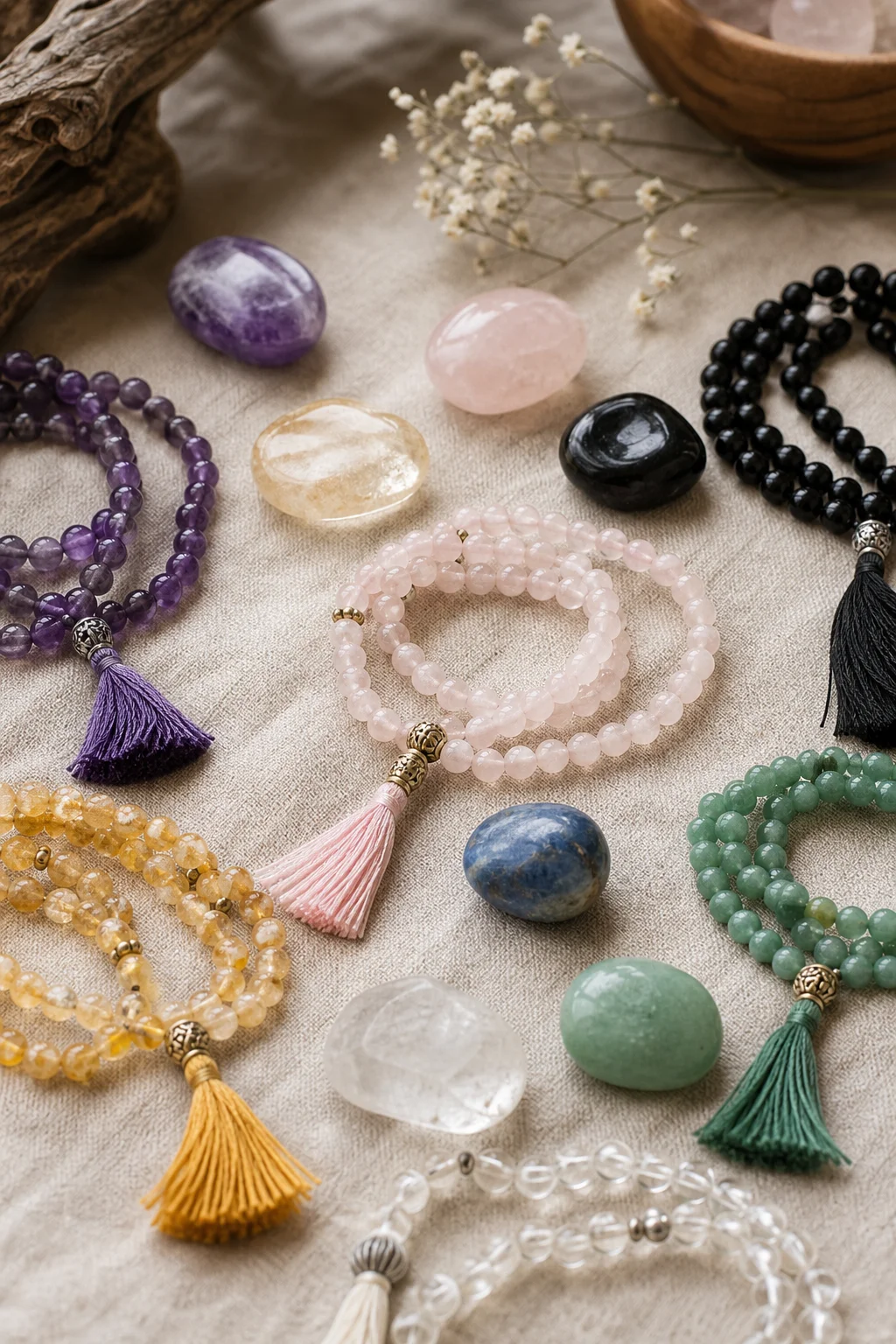
Think of it this way — a sandalwood mala is like a trusted, neutral tool. It supports any practice without adding its own flavor. A crystal mala is more like a specialized instrument. A rose quartz mala will naturally support heart-centered practices. An amethyst mala will support meditation focused on clarity and insight. A black tourmaline mala will support grounding and protection.
This doesn't mean crystal malas are "better" than traditional ones. But if you meditate with a specific intention — and most people eventually develop specific intentions for their practice — a crystal mala can serve as both a counting tool and a focus anchor that reinforces your intention.
Crystal Mala Stones by Intention
For Calm and Peace
Howlite: White with grey veining, howlite is one of the most calming stones available. It's affordable and widely used in mala making. A howlite mala is ideal for beginners who find meditation anxiety-producing rather than relaxing. Use it for general calming practices or before sleep.
Blue Lace Agate: Pale blue with delicate white banding. Blue lace agate supports peaceful communication and is excellent for mantra practices focused on speaking your truth gently. If your meditation practice includes visualization of peaceful scenes or calming affirmations, blue lace agate amplifies that energy.
Lepidolite: Lilac to purple, lepidolite contains natural lithium (in trace amounts) and has a noticeably calming effect. A lepidolite mala is particularly helpful for people who experience anxiety during meditation — the tendency for the mind to race faster when you try to slow it down. Lepidolite helps bridge the gap between active mind and meditative stillness.
For Love and Compassion
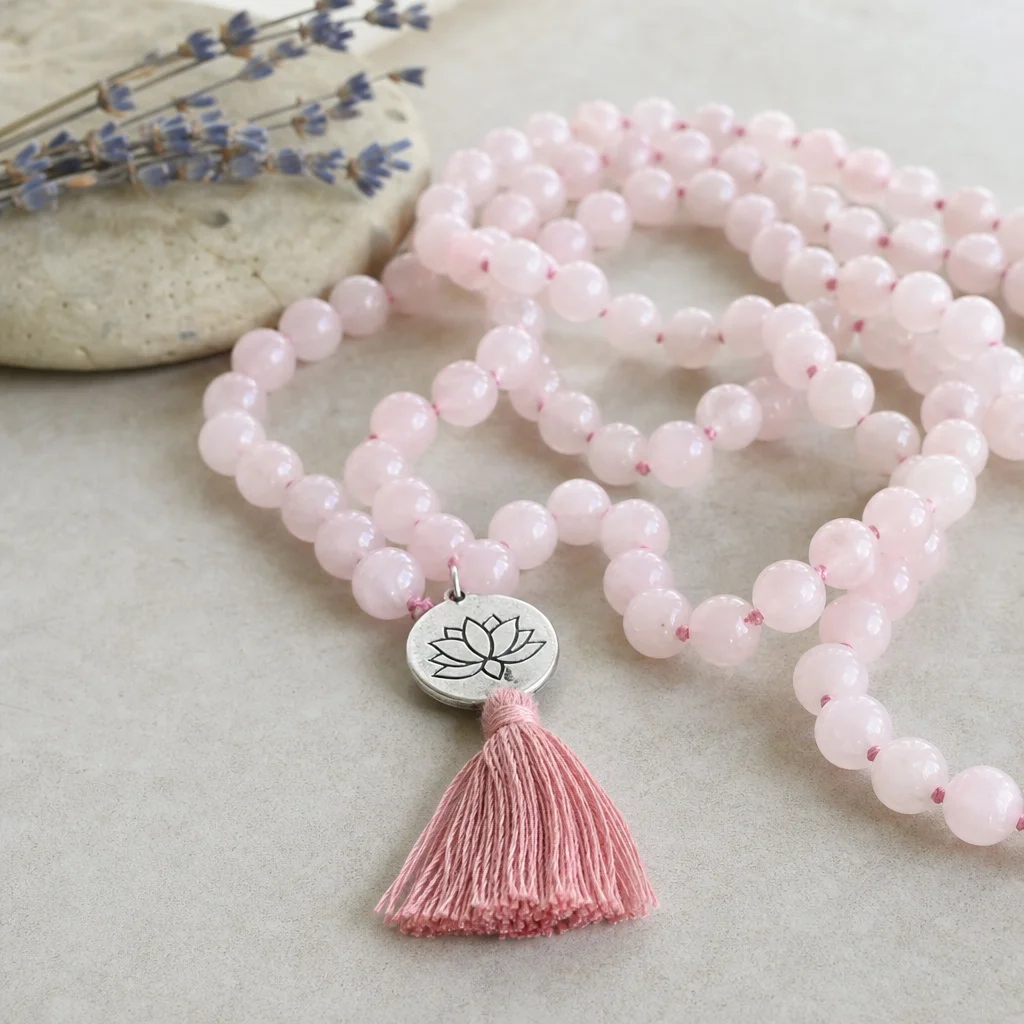
Rose Quartz: The most popular stone for heart-centered meditation. A rose quartz mala supports practices focused on self-love, compassion for others, or healing from heartbreak. The pink color is gentle and non-intimidating, making it a good choice for daily wear as well as seated practice.
Rhodonite: Pink with black veining, rhodonite supports forgiveness practices — forgiving others, and often more importantly, forgiving yourself. If your meditation practice includes sending compassion to people you're in conflict with, rhodonite provides support for that difficult but transformative work.
Green Aventurine: Green aventurine is sometimes called the "stone of opportunity," and in mala form, it supports staying open-hearted after disappointment. If you tend to close down emotionally after being hurt, a green aventurine mala helps you remain receptive without being naive.
For Focus and Clarity
Clear Quartz: The universal amplifier. A clear quartz mala works with any intention — it simply amplifies whatever you bring to your practice. It's also one of the most durable mala materials (Mohs 7), making it practical for daily use. If you're not sure which crystal to choose, start with clear quartz.
Fluorite: Available in purple, green, and blue, fluorite supports mental organization and concentration. A fluorite mala is ideal for meditation practices that involve studying spiritual texts, learning new concepts, or working through complex problems. It helps maintain focus during longer sessions.
Sodalite: Deep blue with white calcite veins, sodalite bridges logic and intuition. A sodalite mala supports analytical meditation — practices where you're examining your thoughts, beliefs, or assumptions. It's the crystal equivalent of a clear-thinking friend who asks good questions.
For Protection and Grounding
Black Tourmaline: The most recommended protection stone. A black tourmaline mala creates a sense of energetic safety during meditation, which is especially important if you're doing deep inner work that brings up difficult emotions. It's like having a reliable bodyguard while you explore vulnerable inner territory.
Black Obsidian: Volcanic glass with a mirror-like surface. An obsidian mala supports truth-facing meditation — practices where you're committed to seeing yourself clearly, including parts you'd rather avoid. Obsidian doesn't let you hide from yourself, which makes it powerful but intense. Not recommended for beginners.
Hematite: Metallic silver-grey, hematite is one of the most grounding stones available. A hematite mala helps you stay connected to your body during meditation, preventing the spaciness or disorientation that some people experience during deep practice. It's especially useful for people who tend to "float away" during meditation.
For Spiritual Growth
Amethyst: The classic meditation stone. An amethyst mala supports regular meditation practice by quieting mental chatter and creating a bridge between everyday awareness and deeper states of consciousness. Its purple color has been associated with spiritual practice across cultures for millennia.
Lapis Lazuli: Deep blue with gold pyrite specks, lapis lazuli supports meditation focused on truth and self-knowledge. A lapis mala is ideal for practices where you're seeking insight into your life purpose, your authentic values, or your relationship with the divine.
Selenite: Translucent white with a moonlit glow, selenite has one of the highest vibrations of any stone commonly used in malas. A selenite mala (or selenite beads interspersed with other crystals) supports connection to higher consciousness. Note: selenite is very soft (Mohs 2) and requires gentle handling.
For Creativity and Passion
Carnelian: Orange-red and warm, carnelian supports creative expression and motivation. A carnelian mala is ideal for artists, writers, and anyone whose meditation practice is connected to creative work. Use it before creative sessions or during meditation focused on removing creative blocks.
Citrine: Golden yellow, citrine supports confidence and manifestation practices. A citrine mala is popular for morning meditation focused on setting daily intentions, as well as practices related to abundance and success (not in a materialistic sense, but in the sense of feeling worthy of good things).
Sunstone: Orange with flashes of light (aventurescence), sunstone supports optimism and vitality. A sunstone mala is like carrying sunshine — it supports practices focused on joy, playfulness, and reconnecting with the parts of yourself that feel alive and enthusiastic.
Building a Custom Crystal Mala
One of the advantages of crystal malas is that you can create custom combinations. Here are some tested combinations:
| Mala Name | Composition | Intention |
|---|---|---|
| The Peacemaker | Rose quartz + blue lace agate + clear quartz guru bead | Peace, self-compassion, gentle communication |
| The Seeker | Amethyst + labradorite + selenite guru bead | Spiritual insight, meditation depth, connection |
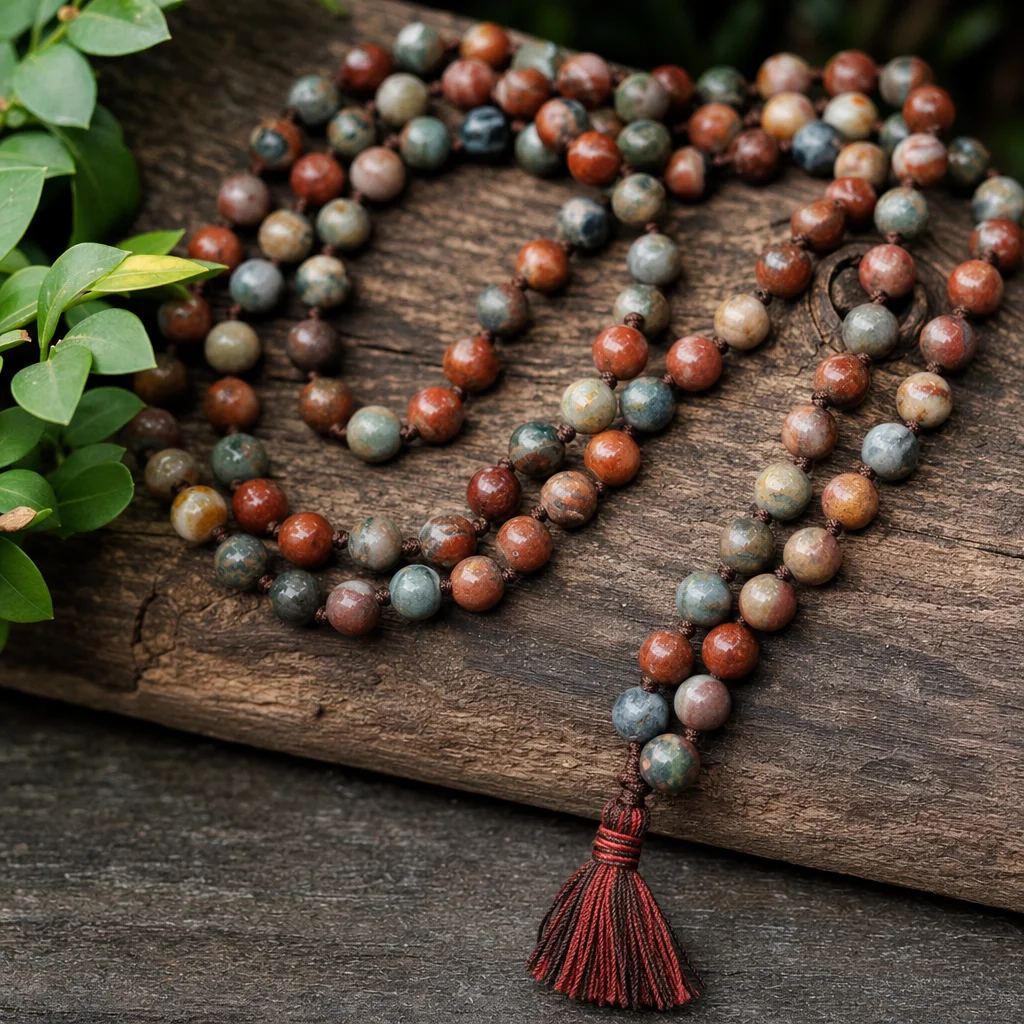
| The Grounded One | Black tourmaline + hematite + red jasper accents | Protection, grounding, stability |
| The Creative Fire | Carnelian + citrine + sunstone + clear quartz guru bead | Creativity, motivation, passion |
| The Heart Opener | Rose quartz + green aventurine + rhodonite markers | Love, forgiveness, openness |
| The Wisdom Path | Lapis lazuli + sodalite + fluorite + amethyst guru bead | Truth, clarity, learning, insight |
When building a custom mala, follow these guidelines:
- Choose 1-3 crystal types maximum. More than that creates a "busy" energy that works against the focused intention of mala practice.
- Use a contrasting guru bead. The guru bead should stand out from the counting beads. Clear quartz or selenite make good guru beads because they amplify the properties of the surrounding stones.
- Consider durability. If you'll use your mala daily, avoid very soft stones (selenite, calcite) for the main counting beads. Reserve softer stones for the guru bead or markers where they won't experience as much friction.
- String on silk or nylon cord. Crystal beads are heavier than wood or seeds, and they need strong cord. Silk thread has traditional significance and produces a beautiful drape, but nylon is more durable for daily use.
Caring for Your Crystal Mala
Crystal malas need more care than wooden ones:
- Avoid water: Don't wear your crystal mala in the shower or while swimming. Many crystals (selenite, malachite, calcite, lepidolite) can be damaged by prolonged water exposure. Even durable stones like quartz can loosen on the cord if the string gets wet repeatedly.
- Avoid perfumes and oils: Crystal surfaces can be dulled by skincare products, perfumes, and essential oils. Put your mala on after applying products, not before.
- Store flat or hanging: Don't crumple your mala into a pocket or drawer. The cord will stretch and weaken over time. Hang it on a hook or lay it flat in a pouch.
- Cleanse regularly: Place your mala on a selenite plate overnight once a week, or pass it through sage or palo santo smoke. Avoid salt water cleansing for crystal malas — the salt can damage both the stones and the cord.
- Re-string annually: Even with careful handling, the cord will stretch and weaken over time. Have your mala re-strung every 12-18 months, or sooner if you notice the beads becoming loose.
Crystal Mala vs. Crystal Bracelet: When to Use Each
Both are valid meditation tools, but they serve different purposes:
| Feature | Mala Necklace (108 beads) | Wrist Mala (27 beads) |
|---|---|---|
| Session length | 15-20 minutes (full round) | 3-5 minutes (full round) |
| Portability | Worn as necklace or carried | Worn as bracelet, always with you |
| Physical engagement | Both hands, seated practice | One hand, any position |
| Best for | Formal meditation sessions | Quick centering throughout the day |
| Crystal quantity | More stones = stronger field | Fewer stones = more subtle effect |
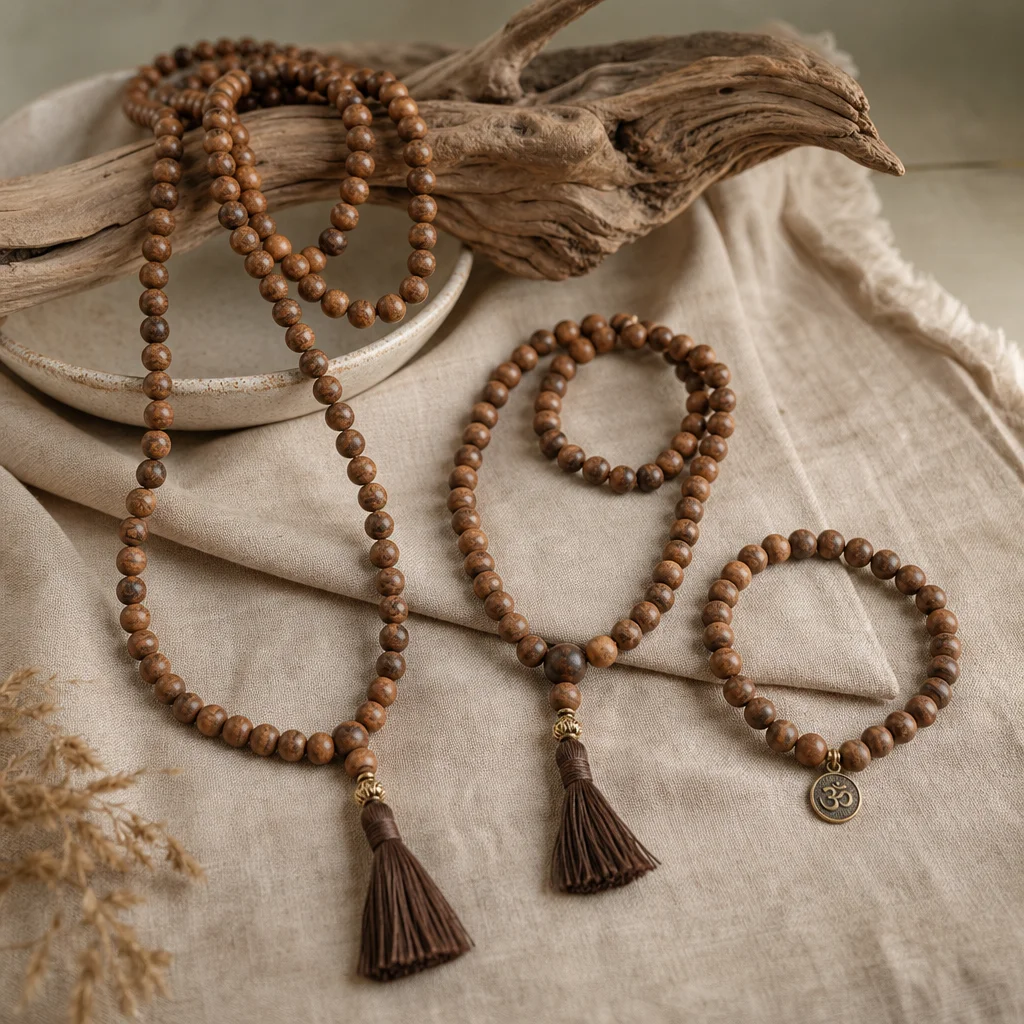
Many practitioners own both — a full mala for morning and evening practice, and a wrist mala for quick centering moments during the day (before a meeting, in traffic, during a break).
FAQ
Q: Can I use a crystal mala for practices from any tradition?
A: Yes. The mala is a counting tool, not tied to any specific religion. Buddhists, Hindus, Sikhs, Jains, Christians (using prayer beads), and secular meditators all use similar bead-based counting systems. The crystals add their own qualities regardless of your spiritual framework.
Q: How do I know which crystal mala is right for me?
A: Start with your primary meditation intention. If you meditate for stress relief, choose lepidolite or howlite. For self-love, rose quartz. For spiritual growth, amethyst. For protection during deep inner work, black tourmaline. Don't overthink it — the crystal that catches your eye is usually the right one.
Q: Can I wear my crystal mala all day, or only during meditation?
A: You can wear it all day. Many practitioners believe the mala "absorbs" your energy throughout the day, making meditation sessions with it more connected and personal. Just be mindful of water and physical damage during daily activities.
Q: Are crystal malas more expensive than wooden ones?
A: Generally yes, because crystal beads cost more to produce than wooden ones. However, you can find affordable crystal malas in the $20-40 range (using common stones like howlite, aventurine, or dyed agate). Rare stone malas (like lapis lazuli or high-grade amethyst) can cost $100+.
Q: Can I combine different crystals in one mala?
A: Absolutely — this is actually one of the most popular approaches. See the "Building a Custom Crystal Mala" section above for tested combinations. The key is to keep the combination focused on 1-2 primary intentions rather than trying to address everything at once.
Frequently Asked Questions
Why do crystal malas have 108 beads?
Traditional crystal malas feature 108 beads, a sacred number deeply rooted in spiritual traditions. This number represents the universe as one, reflecting our connection to the stars, planets, and our own breath. As an artisan handcrafted brand, SagStone ensures each 108-bead mala is carefully crafted to support your daily meditation, helping you track mantras or breathwork while keeping your specific healing intentions close.
How do you use a crystal mala for meditation?
To use a crystal mala during meditation, drape it over your middle or ring finger, resting the beads gently. Use your thumb to pull each bead toward you as you recite a mantra or take a deep breath. Start at the guru bead and continue around the strand until you reach it again. This grounding practice enhances your focus and allows the natural stones to channel healing energy.
Can I wear my crystal mala necklace every day?
Yes, you can absolutely wear your crystal mala necklace every day! Wearing your mala allows the natural energy of the stones to stay in continuous contact with your body, promoting ongoing healing and intention-setting. Treat it as a beautiful piece of artisan jewelry, but be mindful of rigorous activities to protect the silk threading and delicate natural crystals from damage.
What hand do you hold crystal mala beads in?
Traditionally, crystal mala beads are held in the right hand during meditation or prayer. The strand is usually draped over the middle finger, while the thumb is used to glide the beads one by one. The index finger is kept extended, as it traditionally represents ego. Holding your handcrafted mala in this specific way brings a deeper sense of mindfulness to your daily healing practice.
What does the tassel on a crystal mala mean?
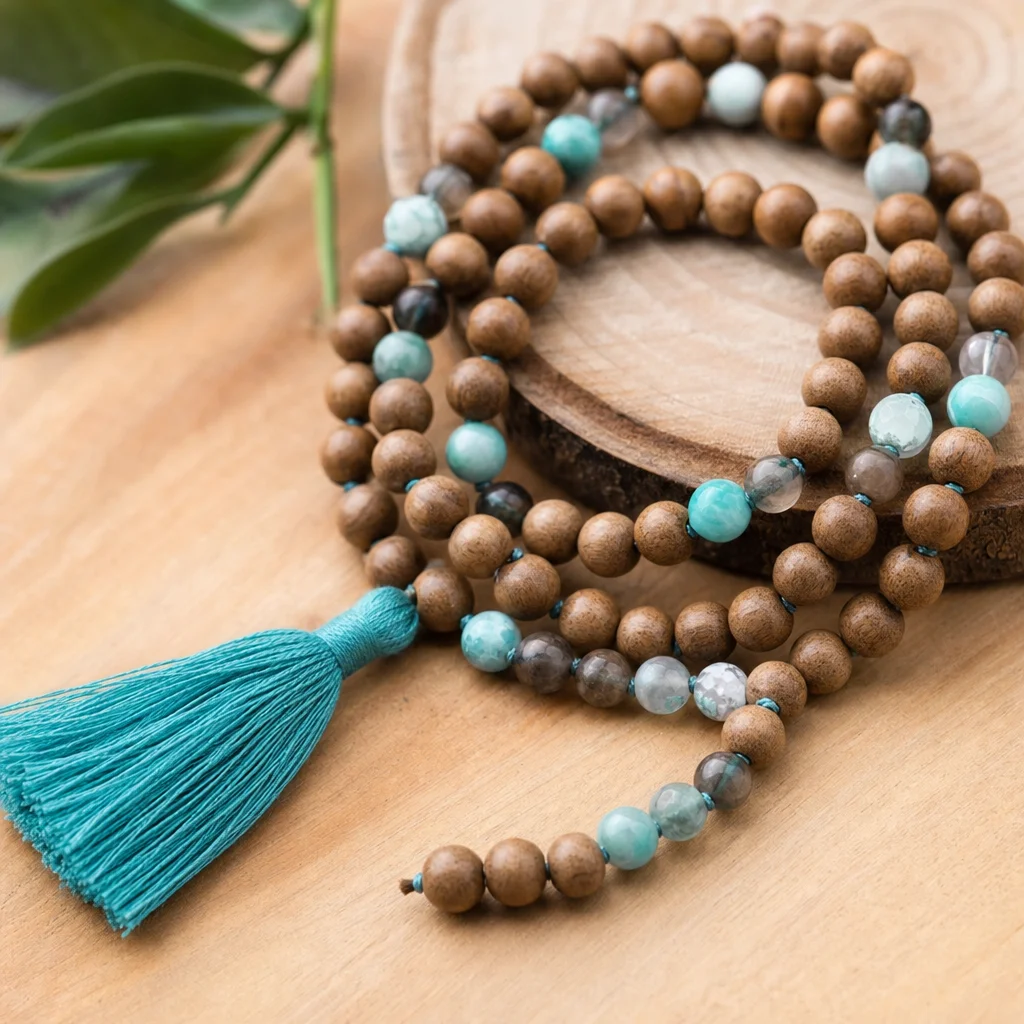
The tassel on a crystal mala holds deep spiritual symbolism, representing a lotus flower and the connection between the universe and our highest consciousness. Beyond its beautiful artisan detail, the tassel binds the threads of your intentions together. When choosing a handcrafted SagStone mala, the tassel serves as a beautiful reminder of your shared spiritual connection and awakening.
Comments