What Grounding Actually Means in Meditation P...
June 4, 2026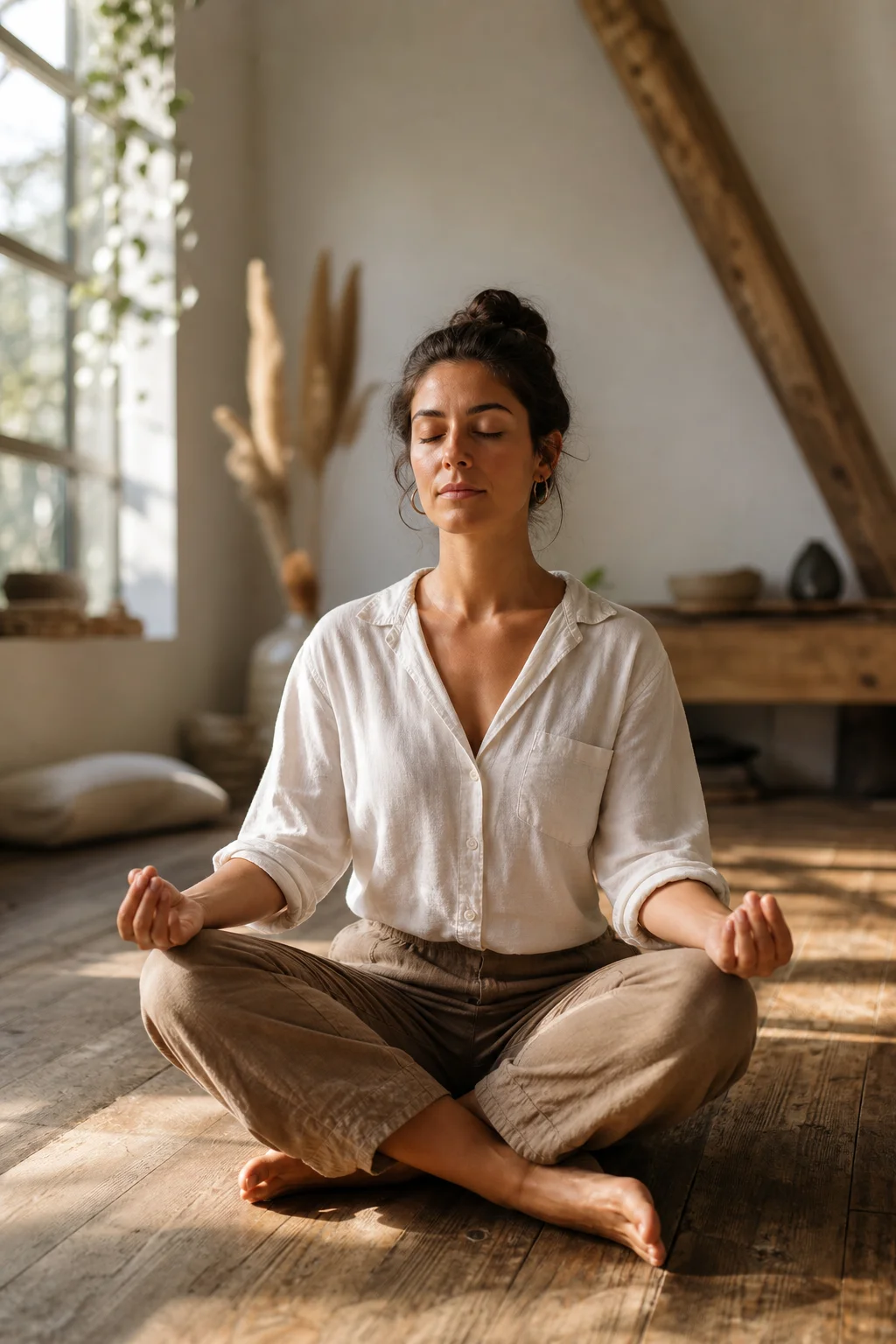
What Grounding Actually Means in Meditation Practice
Grounding, in the context of mala bead use, refers to the practice of anchoring your awareness to the present moment and your physical body. During meditation, it is common for the mind to drift into abstract thinking, future planning, or anxiety loops. A grounding practice brings attention back to sensation—specifically, the tactile feedback of each bead passing through your fingers. This is not a mystical concept but a well-documented mindfulness technique: using a physical object as a focus point prevents the mind from wandering and creates a measurable rhythm (108 beads = 108 breath cycles or mantra repetitions).
For people who experience anxiety, racing thoughts, or a general sense of being "uncentered," grounding malas are often recommended. The idea is that certain stones, through their weight, texture, and visual qualities, provide stronger tactile and visual anchors than lighter, smoother stones. Whether this is due to the stones' inherent properties or simply the fact that a heavier, more textured bead requires more attention to manipulate is less important than the practical result: a meditation session that stays present rather than drifting.
Why Stone Choice Matters for Grounding Malas
Not all stones are equally suited for grounding practice. The most effective grounding stones share several characteristics: they are relatively dense (heavy for their size), they have a matte or slightly rough texture rather than a high polish, and they are dark or earth-toned in color. These qualities are not coincidental—they are precisely what make the mala more effective as a physical anchor.
A heavy bead requires more deliberate finger movement to push past the thread, which means each bead passage is a more distinct tactile event. A matte texture creates more friction against the skin, again making each bead transition more noticeable. Dark colors reduce visual distraction during eyes-closed meditation compared to bright, sparkly stones that catch the light.
Hematite: The Heavy Anchor
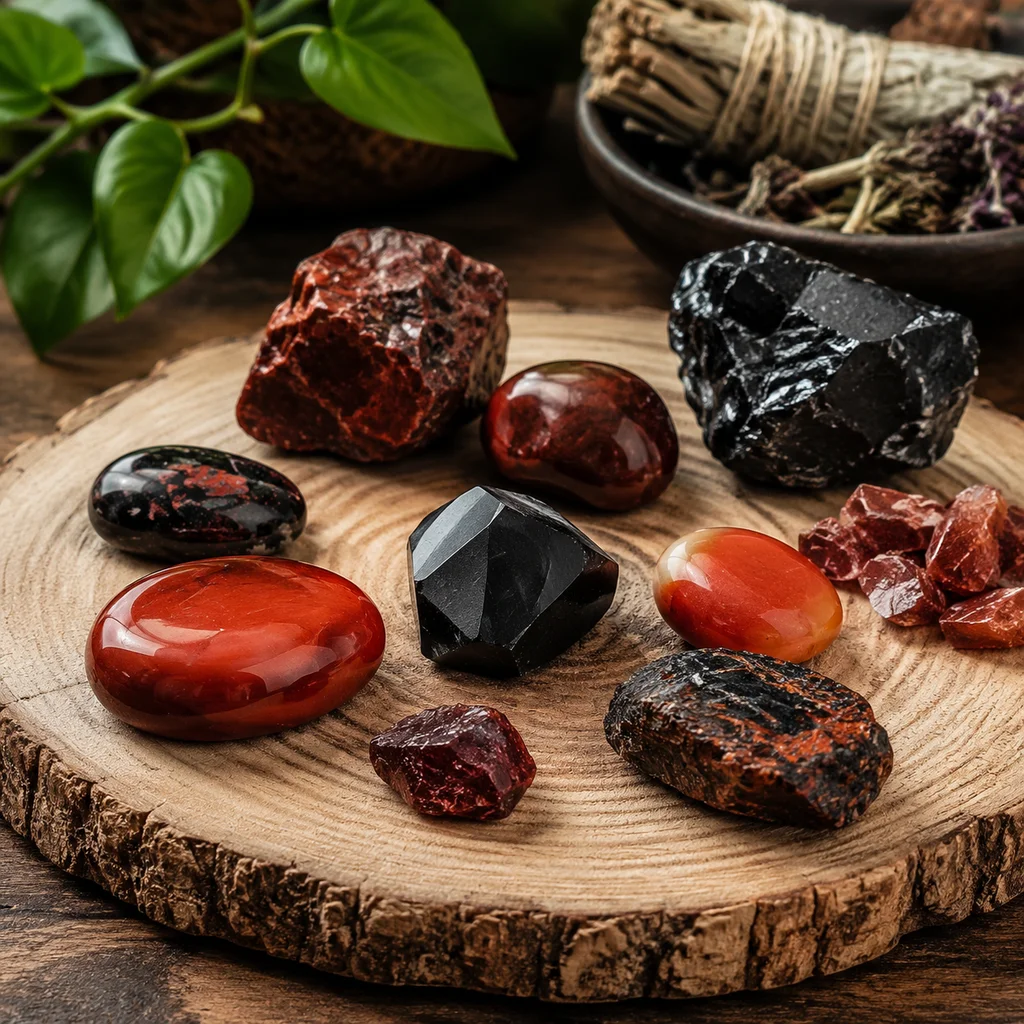
Hematite (Fe₂O₃, iron oxide) is one of the heaviest stones commonly used in mala making. Its specific gravity is approximately 5.3—roughly five times heavier than an equivalent-sized quartz bead. This means a full 108-bead hematite mala weighs noticeably more on your wrist or around your neck, and each bead's passage through your fingers carries real physical weight. For grounding practice, this heaviness is the primary advantage: you cannot absentmindedly push through a hematite bead the way you might glide over lighter wood or glass beads.
However, hematite has drawbacks that affect mala durability. It rates 5.5-6.5 on the Mohs scale, which means it can be scratched by harder stones and surfaces. More critically, hematite can rust if exposed to water for prolonged periods—the iron content oxidizes. Hematite malas should be kept dry and stored in a low-humidity environment. Tumbled hematite beads (8mm) cost $15-30 for a full mala, making them mid-range in price.
Black Tourmaline: The Grounding Standard
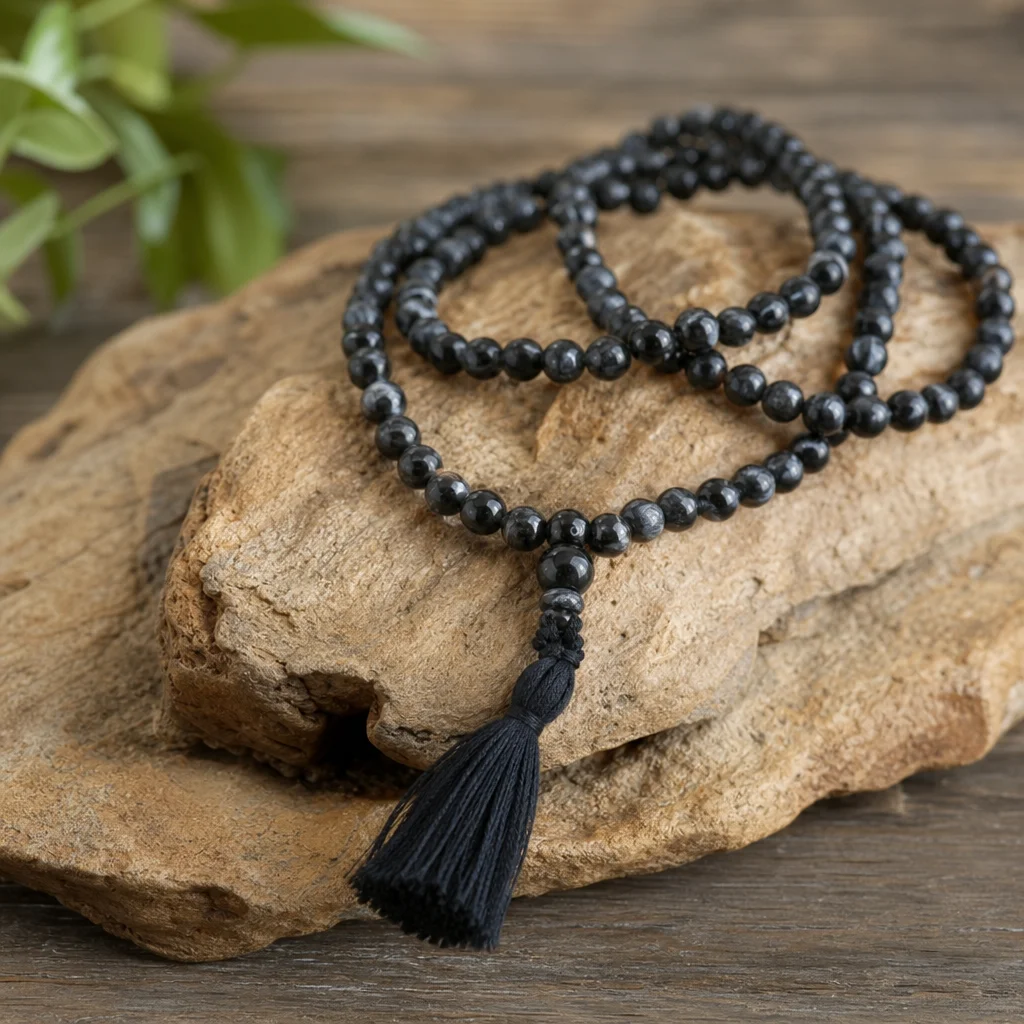
Black tourmaline (schorl) is arguably the most commonly recommended grounding stone in mala making, and the reasons extend beyond metaphysical associations. At Mohs 7-7.5, black tourmaline is significantly more durable than hematite—it will not scratch easily, will not rust, and can tolerate the regular handling that a mala receives during daily practice. It is opaque, which means it does not chip or show wear the way translucent stones can.
The weight of black tourmaline is moderate—noticeably heavier than wooden beads but lighter than hematite. This middle ground makes it a comfortable daily-wear mala that provides enough tactile feedback for grounding without being fatiguing during longer meditation sessions. An 8mm black tourmaline mala (108 beads) typically costs $25-50, depending on bead quality and whether guru bead and tassel are included.
For people who want a single grounding mala that handles daily wear, black tourmaline is the safest and most versatile choice.
Smoky Quartz: The Warm Dark Stone
Smoky quartz provides an interesting alternative to the fully opaque hematite and black tourmaline. It is translucent brown-to-gray, which means it retains some of the visual qualities that make quartz popular while having a darker, more subdued appearance that suits grounding practice. Its hardness (Mohs 7) matches black tourmaline for durability.
The translucency of smoky quartz is actually an advantage for certain practitioners: during eyes-open meditation, the muted brown color is visually calming without being completely dark. Some people find fully black stones (hematite, black tourmaline) visually heavy during longer sessions, and smoky quartz offers a middle ground. Weight is similar to clear quartz—lighter than hematite but adequate for tactile feedback. Smoky quartz malas cost $20-45.
Building a Grounding Mala: Stone Combinations
While single-stone malas are simpler and more traditional, combination malas can be more effective for grounding because different stones contribute different qualities. A well-designed grounding mala might combine:
- Primary beads (80-90 of the 108): black tourmaline or hematite for the main grounding effect
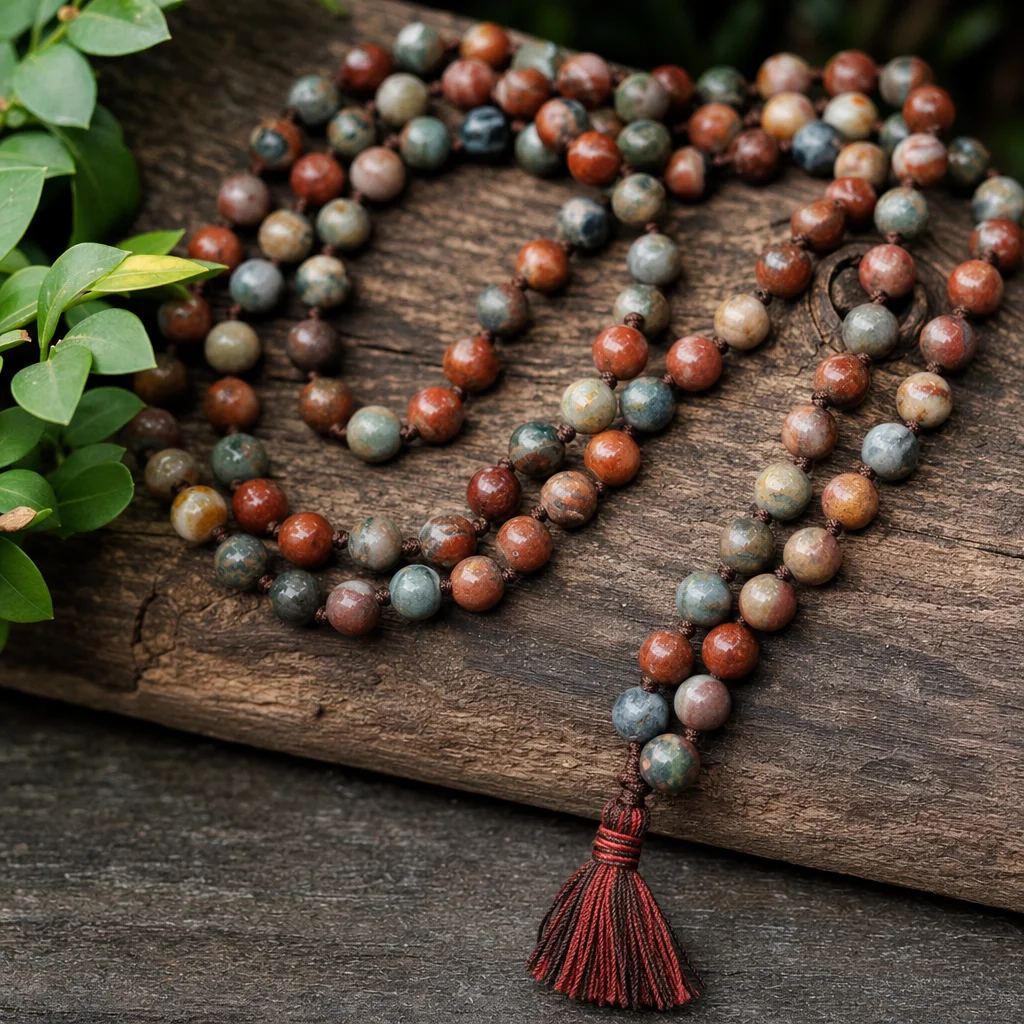
- Marker beads (every 27 beads, 4 total): a contrasting stone like red jasper or bloodstone for counting reference points
- Guru bead: a larger grounding stone (larger hematite or lava stone)
- Spacer beads: small wooden beads (sandalwood or cedar) between stone beads to reduce weight and provide textural variation
This combination approach is common in custom mala making and allows you to fine-tune the weight, texture, and visual qualities of the finished mala to your preferences.
Lava Stone as a Grounding Element
Lava stone (basalt) deserves a mention because it is one of the most affordable grounding mala materials available. A full lava stone mala costs $10-20, making it the cheapest option on this list. Lava stone is lightweight (specific gravity 2.8-3.0), porous, and black, which gives it a matte, slightly rough texture that provides excellent tactile feedback. The porosity also means lava beads can be used with essential oils—a few drops of sandalwood, cedarwood, or frankincense on the beads adds an olfactory dimension to the grounding practice.
The downside is durability: lava stone can chip if dropped on hard surfaces, and the porous surface can absorb sweat and oils from regular handling, changing the stone's appearance over time. For some practitioners, this patina is seen as a positive (the mala "absorbs" your practice), while others prefer the consistent appearance of non-porous stones.
Grounding Meditation Technique with Mala Beads
The actual practice of grounding meditation with a mala is straightforward and does not require any special training:
- Find a seated position: cross-legged on a cushion or in a chair with feet flat on the floor. The physical contact with the ground (or floor) is part of the grounding mechanism.
- Hold the mala in your right hand: drape it over your middle finger and use your thumb to push each bead past. In Buddhist tradition, the mala is passed over the middle finger while the index finger (associated with ego in some traditions) stays away from the beads.
- Coordinate breath with bead movement: inhale as your thumb pushes one bead forward, exhale as you move to the next. 108 beads equals 108 breath cycles, which at a natural breathing rate takes roughly 15-20 minutes.
- Focus on sensation: when your mind wanders (it will), return attention to the physical sensation of the bead under your thumb—its texture, its temperature, its weight. This return to sensation is the grounding moment.
- Stop at the guru bead: when you reach the large guru bead (the 109th bead, or the tassel), do not pass it. Instead, pause, take three deep breaths, and either reverse direction or end the session.
Walking Meditation with Grounding Malas
Walking meditation with a mala is one of the most practical applications of a grounding practice because it combines physical movement with bead counting. The technique is simple: hold the mala in your hand, walk at a moderate pace, and advance one bead for every step or every breath (whichever rhythm feels natural). The combination of foot contact with the ground and bead contact with the fingers creates a dual physical anchor that is exceptionally effective at keeping the mind present.
This practice is particularly useful for people who find seated meditation difficult—those with anxiety, ADHD, or simply a preference for movement over stillness. A grounding mala worn as a bracelet or wrapped around the wrist during a walk can serve this function without requiring you to hold it in your hand the entire time.
Daily Grounding Routine: A Practical Schedule
You do not need hour-long meditation sessions for a grounding mala to be effective. Here is a realistic daily framework:
- Morning (5 minutes): seated breath-counting meditation with your grounding mala. 27 beads (one quarter of the mala) takes about 3-5 minutes.
- During the day: wear the mala as a bracelet or keep it in your pocket. When you feel scattered or anxious, spend 2-3 minutes with a few beads, coordinating breath with bead movement.
- Evening (5-10 minutes): a second seated session, this time completing the full mala (108 beads). This takes 15-20 minutes at a relaxed breathing pace.
Consistency matters more than duration. Five minutes every day is more effective than 60 minutes once a week.
Frequently Asked Questions
Can I use a grounding mala if I am not anxious?
Absolutely. Grounding practice is beneficial for anyone who wants to improve present-moment awareness during meditation. The stones traditionally associated with grounding are simply more effective tactile anchors, not specifically medicinal.
How do I clean a grounding mala?
Wipe with a soft, slightly damp cloth. Do not submerge hematite malas in water (risk of rust). For black tourmaline and smoky quartz, brief rinsing under running water is fine. Dry thoroughly before storing.
What wrist should I wear my grounding mala on?
In most traditions, the left hand (receiving hand) is recommended for wearing. However, this is a cultural convention, not a hard rule. Wear it on whichever wrist is comfortable and allows you to access the beads easily during your practice.
Frequently Asked Questions
What are the best crystals for a grounding mala?
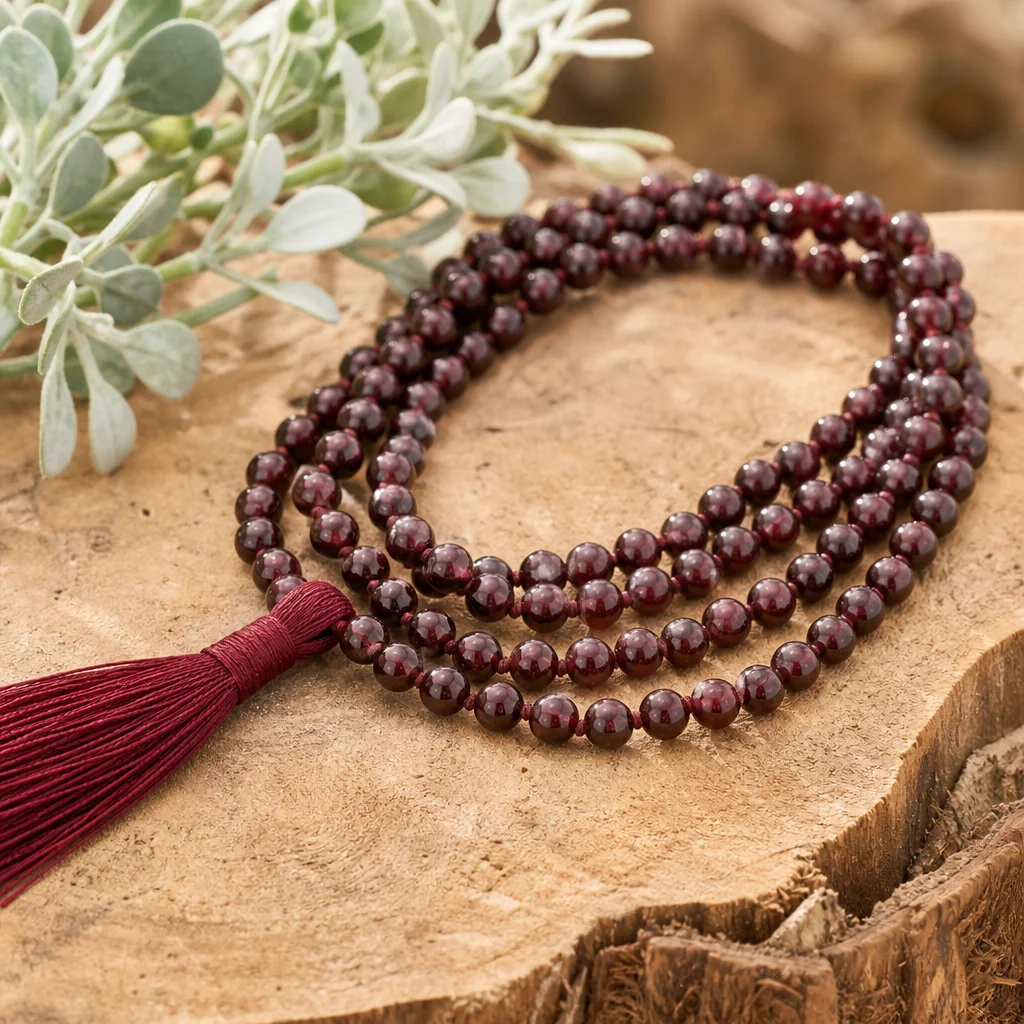
The best crystals for grounding connect directly to the root chakra. At SagStone, we love using black tourmaline, smoky quartz, and hematite because they absorb negative energy and promote stability. Tree agate and jasper are also beautiful, handcrafted options that help anchor your spirit to the earth during deep meditation practice.
Can I wear my grounding mala necklace as a bracelet?
Yes, you can absolutely wear your grounding mala as a bracelet! Many people wear their handcrafted malas wrapped around their wrist to keep the stones' stabilizing energy close throughout the day. Gently wrap it around your wrist three to four times, depending on the bead size. This ensures your artisan jewelry stays secure while you move.
Comments