Turquoise Mala Beads: Protection in 108 Prayers
June 11, 2026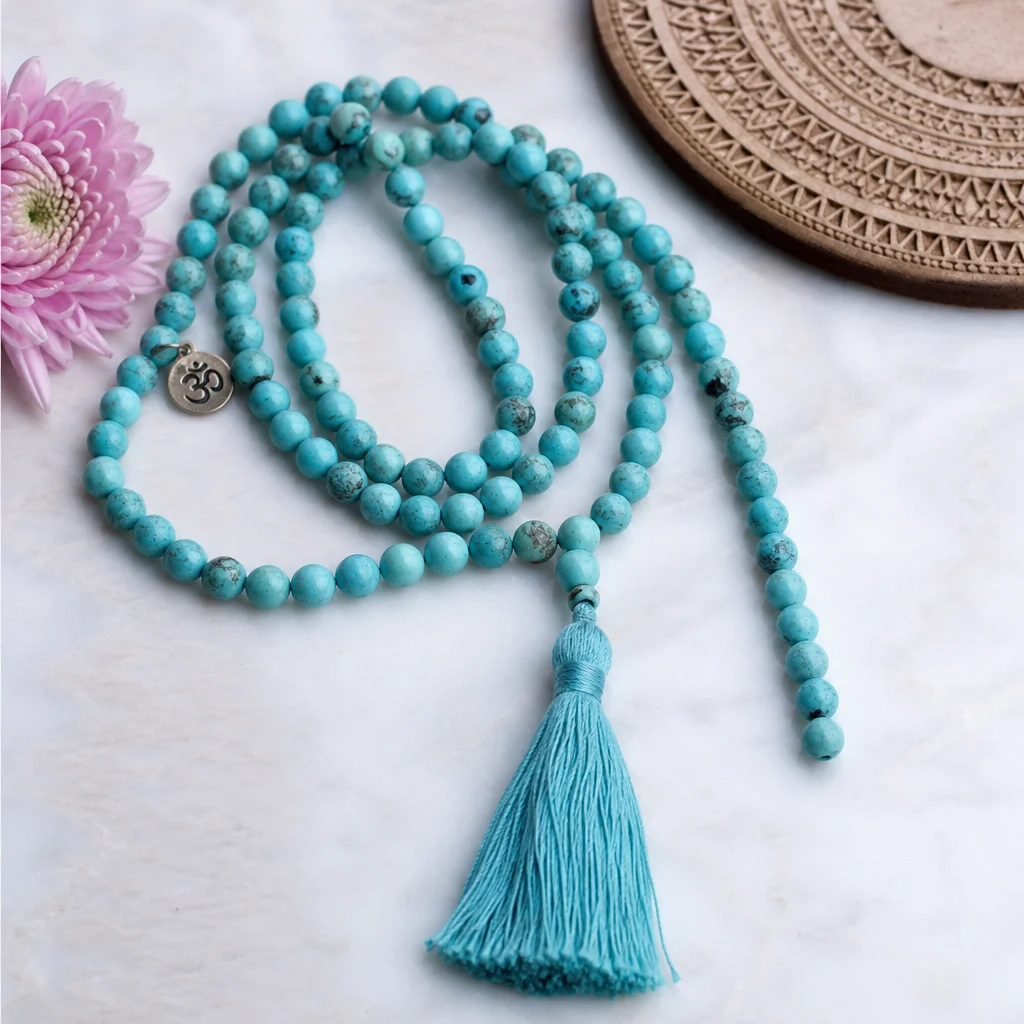
Why Turquoise Has Been a Sacred Stone for 9,000 Years
Turquoise and mala beads share something rare: both have been used in spiritual practice for thousands of years. Turquoise is arguably the oldest gemstone in human history — we have evidence of turquoise mining in the Sinai Peninsula dating back to 5000 BCE. Ancient Egyptians called it "mefkat," meaning joy and delight. Persian traders carried it along the Silk Road. Native American tribes in the Southwest have worked with turquoise for at least 2,000 years, considering it a bridge between sky and earth.
So when you combine turquoise with the meditative structure of a mala, you're working with two traditions that have deep roots across multiple cultures. I've been collecting turquoise malas for years, and what strikes me most is how differently this stone shows up in each tradition. A Tibetan turquoise mala looks nothing like a Navajo one, yet both carry the same fundamental reverence for this blue-green stone.
What Makes Turquoise Special for Mala Beads?
From a purely practical standpoint, turquoise works beautifully in mala beads for several reasons. The stone is relatively soft (5-6 on the Mohs scale), which means it develops a warm patina with handling. After months of daily use, the beads in a turquoise mala take on a softer, almost waxy luster that you can't get from harder stones like quartz or agate. I've seen practitioners treasure this "worn-in" quality the way a leather worker treasures a broken-in tool.
Culturally, turquoise carries protective associations in virtually every tradition that uses it. In Tibetan Buddhism, turquoise is one of the most commonly used stones in malas, believed to absorb negative energy and protect the wearer. Many Tibetan practitioners believe that turquoise changes color to reflect the wearer's health — darkening when you're ill and brightening when you recover. While there's no scientific basis for this, it's a meaningful practice for millions of people.
In Native American traditions, turquoise represents the sky (blue) and the earth (green-brown matrix). A turquoise mala in this context becomes a physical representation of balance between the celestial and terrestrial. Navajo sand painters and Zuni fetish carvers treat turquoise with particular reverence.
The Color Spectrum: Understanding Turquoise Varieties
Not all turquoise in malas is the same. The stone actually occurs in a range from pure sky blue to deep green, with varying amounts of dark matrix (the web-like patterns of the host rock). Here's what you'll encounter:
- Sleeping Beauty turquoise: From the now-closed mine in Globe, Arizona. Pure robin's egg blue with little to no matrix. The most valuable and most copied variety. Genuine Sleeping Beauty beads in a mala will cost $200-500+. Many "Sleeping Beauty" malas on the market are actually Chinese or treated turquoise.
- Kingman turquoise: From Arizona, known for its rich blue with pyrite (golden) matrix. More affordable than Sleeping Beauty ($80-200 for a mala) and arguably more interesting to look at.
- Natural Chinese turquoise: Often green-blue with dark matrix. The most common material in mid-range malas ($40-80). Quality varies enormously — some is genuinely beautiful, some is stabilised or dyed.
- Persian/Iranian turquoise: Historically the finest, with an intense medium blue. Genuine Persian turquoise is rare and expensive in mala form. Most "Persian turquoise" malas sold online are actually Chinese material.
- Tibetan turquoise: Often greener and more heavily matrixed than American varieties. Tibetans tend to value turquoise with visible matrix, considering it a sign of authenticity and character.
Spotting Fake Turquoise in Mala Beads
This is where I need to be blunt: most turquoise malas under $30 are not genuine turquoise. The market is flooded with imitations, and some are surprisingly convincing. Here's how to tell:
The Plastic Test
The most common fake is plastic or resin molded to look like turquoise. It's lighter than real stone, feels warmer to the touch, and often has too-perfect matrix patterns. Genuine turquoise has a cool initial feel (like most stones) and the matrix patterns are irregular, not symmetrical.
The Dye Test
Howlite and magnesite are porous white stones commonly dyed blue to imitate turquoise. They're real stones, just not turquoise. You can usually tell by looking at bead holes — if the color is concentrated at the surface and paler inside, it's dyed. Also, howlite has distinctive gray veining that shows through blue dye as darker blue-black lines. Genuine turquoise's color goes all the way through.
The Scratch Test
Real turquoise scratches more easily than glass, quartz, or agate. If you can scratch a bead with a copper coin and it leaves a mark, that's consistent with turquoise. If it's harder than copper, it's likely a different stone. Be careful with this test — you don't want to damage your mala.
Price as an Indicator
Genuine turquoise bead malas with natural (unstabilized) stones start around $80-100 for Chinese material and go up to $400+ for American mine varieties. Stabilized turquoise (injected with resin for durability) is more affordable at $50-120. If someone is selling a "genuine turquoise" 108-bead mala for $25, it's almost certainly dyed howlite or plastic.
Turquoise Mala vs Other Blue Stone Malas
If you're drawn to blue mala beads but want to explore beyond turquoise, here are the main alternatives and how they compare:
Turquoise vs Lapis Lazuli
Lapis lazuli is deeper blue with gold pyrite flecks. It's harder (5.5-6) and heavier than turquoise. Lapis malas have a more regal, formal feel. The energy is different too — lapis is associated with communication and intellect in crystal lore, while turquoise is protective and grounding. Price-wise, lapis malas run $40-120, comparable to mid-range turquoise.
Turquoise vs Larimar
Larimar is a rare blue variety of pectolite found only in the Dominican Republic. It has a translucent, ocean-like quality that turquoise can't match. Larimar malas are expensive ($100-300) because the stone is genuinely rare. If you want something visually unique, larimar wins. For spiritual tradition and cultural depth, turquoise wins.
Turquoise vs Dyed Agate
Blue agate (naturally blue or dyed) is sometimes sold as a turquoise alternative. It's harder and more durable but lacks the cultural significance. I'd only recommend dyed agate if you specifically want a durable blue mala and don't care about the stone's origin or meaning.
Caring for Your Turquoise Mala
Turquoise requires more care than most mala materials. It's porous, which is both what gives it character and what makes it vulnerable.
- Keep away from chemicals. Perfume, sunscreen, cleaning products, and even some lotions can damage turquoise's surface and alter its color. Put your mala on after applying any products.
- Remove before swimming or bathing. Chlorine, salt water, and even extended fresh water exposure can discolor turquoise and weaken the stringing.
- Store properly. Keep your turquoise mala in a soft cloth bag away from direct sunlight. Prolonged sun exposure can cause turquoise to fade or change color (ironically, the traditional belief that turquoise darkens with poor health may actually be about oil absorption from skin, not mystical color change).
- Clean with a soft, dry cloth. If your mala gets dirty, wipe gently. Avoid any cleaning solutions or water. For stubborn grime, a barely-damp cloth is the most moisture you should use.
- Be careful with stabilization. If your turquoise mala is stabilized (most commercial ones are), it's more durable but the resin can yellow over time with heat exposure. Don't leave it in a hot car.
Turquoise Mala Combinations That Work Well
While a pure turquoise mala is beautiful, combining turquoise with complementary stones can create a mala that's both visually striking and rich in symbolic meaning:
- Turquoise + Coral: The classic Tibetan combination. Red and blue together represent fire and water, passion and calm. Most Tibetan malas use natural red coral (not dyed).
- Turquoise + Amber: Warm gold against cool blue-green. Amber adds a grounding, ancient quality. This combination is especially popular in Nepalese malas.
- Turquoise + Silver spacer beads: Not a stone combination, but using sterling silver marker beads (at positions 21 and 54) with turquoise creates a clean, modern look that's easier to count on.
- Turquoise + Clear Quartz: Clear quartz between turquoise beads creates visual contrast and, in crystal lore, is said to amplify turquoise's protective properties.
Frequently Asked Questions
Does turquoise really change color?
Yes, but not for mystical reasons. Natural turquoise is porous and absorbs oils, moisture, and chemicals from your skin and environment. This can cause it to darken, green-shift, or yellow over time. Stabilized turquoise (injected with epoxy resin) is much less prone to color change. The "health indicator" belief is cultural rather than scientific, but it's a genuine traditional practice.
Is stabilized turquoise still real turquoise?
Yes. Stabilized turquoise is genuine turquoise stone that has been treated with epoxy resin to harden it and prevent color change. About 90% of the turquoise on the market is stabilized. It's still real stone — just more durable. Natural (unstabilized) turquoise is softer, more prone to color change, and more expensive. Both are genuine, just at different points on the treatment spectrum.
Can turquoise mala beads get wet?
You should avoid getting genuine turquoise wet. Prolonged water exposure can damage the stone's surface, affect its color, and weaken the string. Brief contact (like washing your hands while wearing a wrist mala) is unlikely to cause immediate damage, but I recommend removing your mala before bathing, swimming, or heavy exercise. Stabilized turquoise handles moisture better but is still not waterproof.
How much should a real turquoise mala cost?
Expect to pay $50-120 for a stabilized turquoise mala, $80-200 for Chinese natural turquoise, and $200-500+ for American mine turquoise (Kingman, Sleeping Beauty). Anything under $40 is likely dyed howlite, magnesite, or resin. Price alone isn't definitive, but it's a useful filter — if it seems too cheap to be real turquoise in a handcrafted 108-bead necklace, it probably is.
Frequently Asked Questions
How do I cleanse and charge my turquoise mala beads?
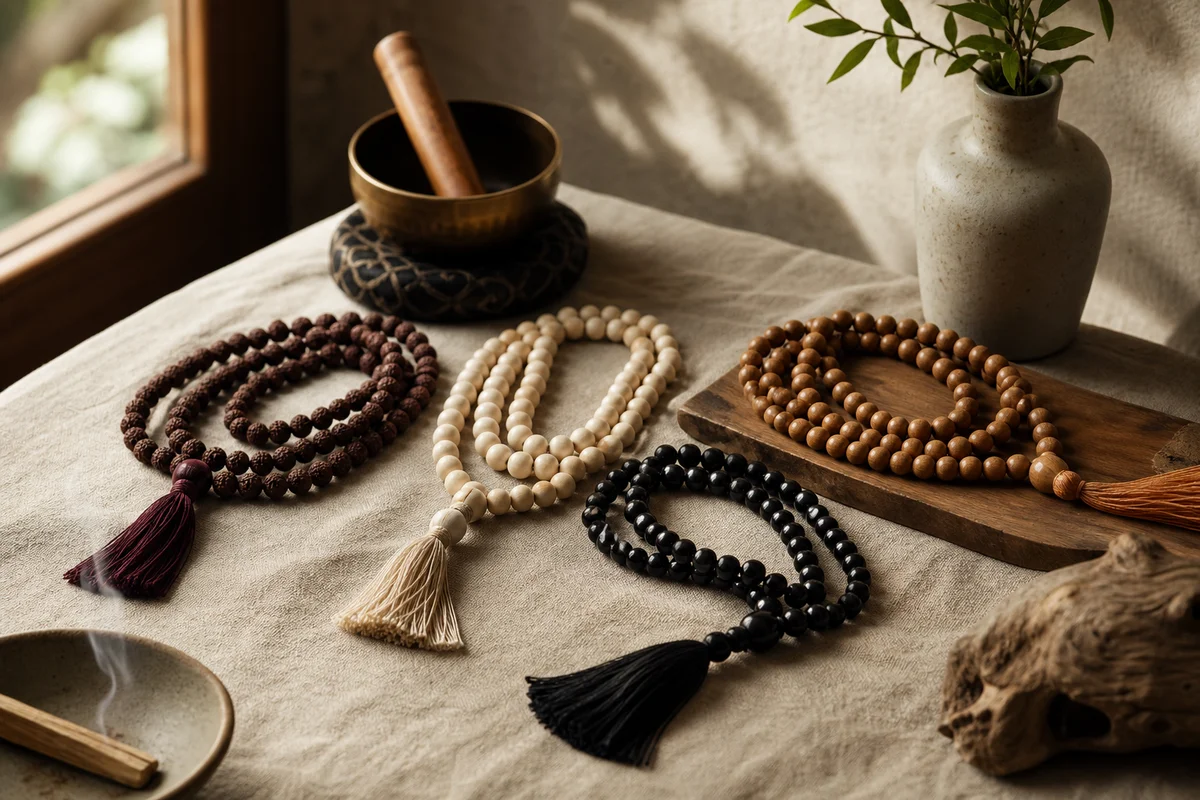
To keep your handcrafted turquoise mala vibrating with protective energy, cleanse it regularly using gentle methods. Because turquoise is a porous stone, avoid water or salt. Instead, use sound healing, smudging with sage or palo santo, or place your beads on a selenite charging plate overnight. You can also lay them under the moonlight to safely recharge their spiritual properties.
Comments